

What to Grow to Feed Chickens a Homesteader's Guide
Growing your own chicken feed is hands-down one of the best ways to slash costs and give your flock a major health boost. The real winners for a homegrown diet are high-energy grains like corn and sorghum, protein-heavy legumes and seeds such as sunflowers and field peas, and vitamin-rich greens like kale and clover. When you get the right mix of these, you're giving your chickens the solid nutritional foundation they need to truly thrive.
Laying the Foundation for a Homegrown Diet
Figuring out what to plant for your chickens can seem like a huge task at first, but it really just comes down to balancing three key nutritional pillars. It's a lot like planning a healthy meal for your own family—you need carbs for energy, protein for building strength, and plenty of greens for vitamins. It’s the exact same principle for chickens, just with different crops from the garden.
Taking this route doesn't just lighten the load on your wallet; it gives you total control over what your birds are eating. You know every single ingredient, ensuring they get fresh, wholesome nutrition without any mystery additives. You'd be surprised how much you can cut your reliance on commercial feed by starting with just a simple plot and a few key plants.
The Three Pillars of Chicken Nutrition
A sustainable feeding plan that actually works is built on a pretty simple strategy. To make sure your flock has everything it needs for great health and steady egg production, you'll want your garden to focus on these three core categories:
- High-Energy Grains: Think of these as the fuel. They provide the calories your chickens burn every day while scratching, foraging, and, of course, laying those delicious eggs.
- Protein-Packed Legumes and Seeds: Protein is essential. It’s the building block for everything from muscle and feather growth to producing strong, high-quality eggs.
- Nutrient-Dense Greens: Fresh greens are the multivitamins of the chicken world. They deliver a powerhouse of vitamins, minerals, and antioxidants that keep the immune system strong and give you those beautiful, deep-orange egg yolks.
This diagram helps visualize how these three groups come together to form a complete diet straight from your backyard.
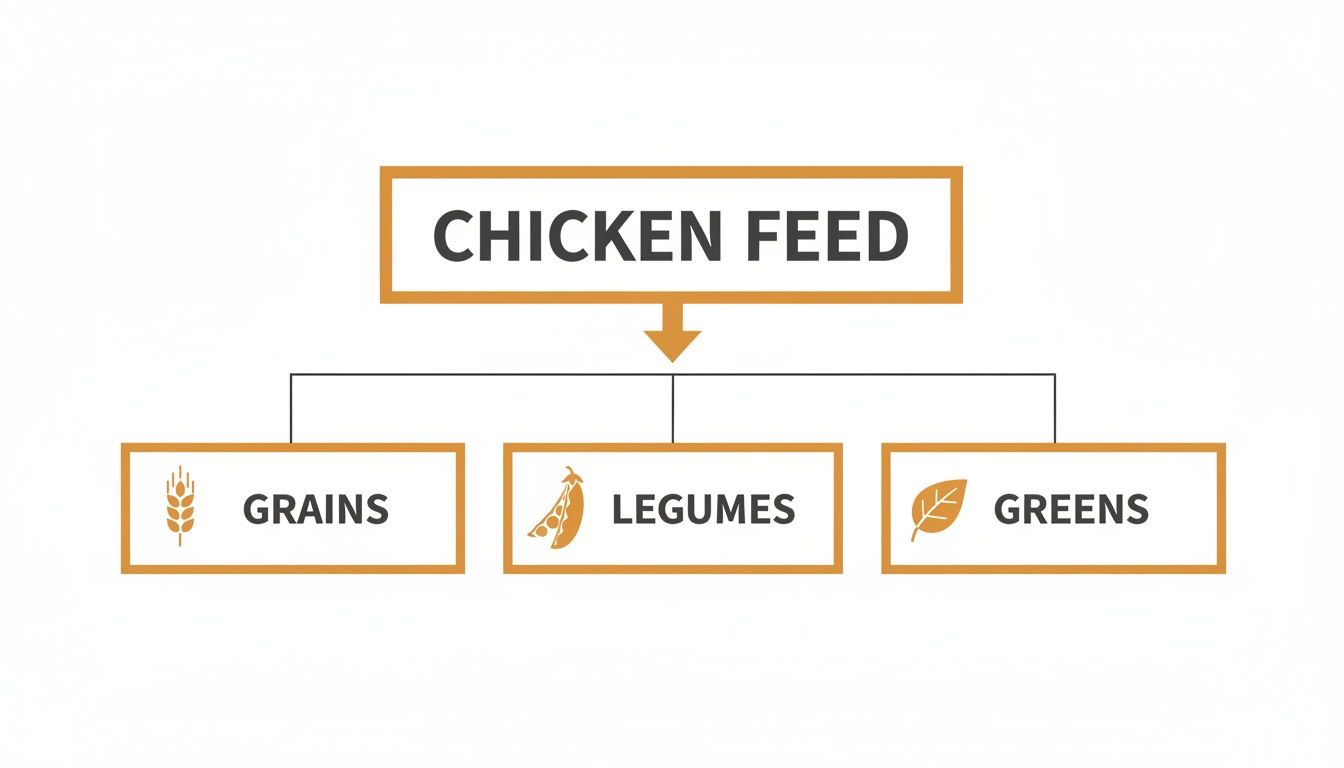
As you can see, a successful system isn’t about growing a ton of one thing. It's all about creating a thoughtful, balanced mix from each of these nutritional groups.
To help you get started with planning your chicken garden, here's a quick look at some of the best crops you can grow. We'll dive deeper into each of these later, but this table gives you a great starting point. If you're looking for inspiration on how to mix and match these, our guide on crafting a homemade chicken feed recipe is a fantastic resource.
Top Crops for a Balanced Chicken Diet at a Glance
This table breaks down some of the best plants to grow, showing you exactly what they contribute to your flock's diet.
| Crop Category | Primary Nutrient | Top Crop Examples | Best For |
|---|---|---|---|
| Grains | Carbohydrates (Energy) | Corn, Wheat, Sorghum, Barley | Fueling daily activity and maintaining body weight. |
| Legumes & Seeds | Protein | Sunflowers, Field Peas, Soybeans | Strong feather growth and consistent egg laying. |
| Greens & Forage | Vitamins & Minerals | Kale, Clover, Alfalfa, Mustard Greens | Boosting immunity and improving egg yolk color. |
Think of these categories as your blueprint for a garden that not only feeds your chickens but helps them flourish.
Growing High-Energy Grains for Your Flock
Grains are the engine of your flock's diet. Think of them as the primary fuel source that powers everything from scratching around the yard to the demanding work of laying a daily egg. They’re the carbohydrates in a chicken's meal plan, providing the raw energy for a healthy, active, and productive life. If you're looking to grow your own chicken feed, starting with a solid base of energy-dense grains is the smartest move you can make.
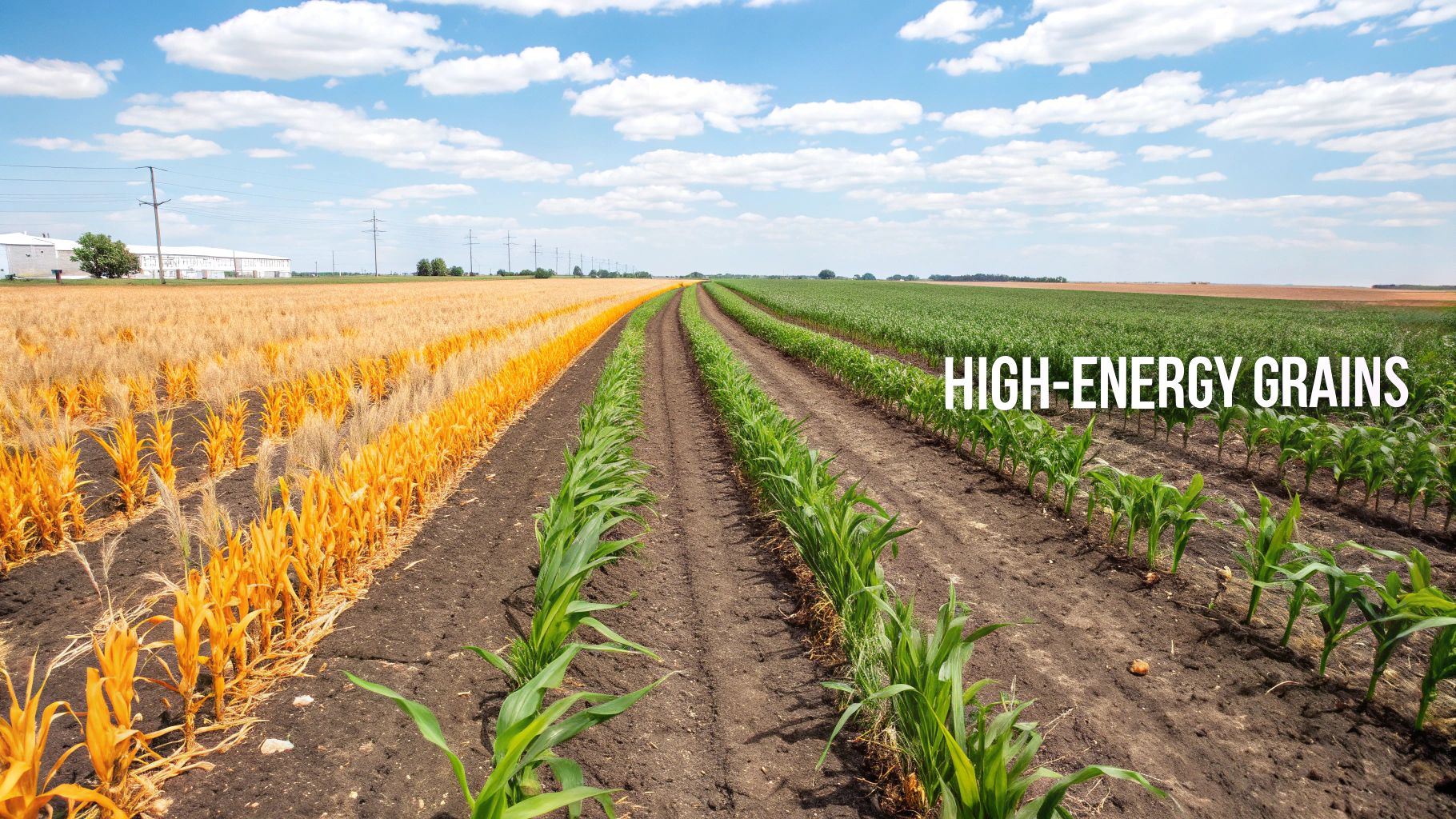
Dedicating even a small plot in your garden to these crops can slash your dependence on commercial feed and give you incredible control over your flock’s nutrition.
Corn: The Undisputed Champion
When it comes to pure, unadulterated energy, corn is king. It's the global standard for poultry feed for one simple reason: it delivers more digestible energy per pound than any other common grain. Its high carbohydrate content is an incredibly efficient way to meet your flock's daily calorie needs.
In fact, corn is so dominant that it's projected to make up 43.0% of the global poultry feed market in 2025. This isn't just a commercial trend; it highlights how effective corn is as a core feed ingredient. For the homesteader, growing your own corn can cut your energy feed costs by a staggering 40-50%, a huge step toward self-sufficiency. You can dig into more of these market insights on FactMr.com.
For feeding your flock, you'll want to grow field corn (also called dent corn), not the sweet corn we eat off the cob. Field corn is bred to have lower moisture and much higher starch content, making it perfect for long-term storage and grinding into animal feed.
Homesteader's Tip: Look for flint corn varieties like 'Argentine Cateto Orange' or higher-protein types like 'Greenfield'. Flint corn has a rock-hard outer layer, which makes it far more resistant to pests and spoilage in your barn—a massive plus for small-scale growers.
Once harvested, let the cobs dry completely. You can toss them into the run whole for a bit of "enrichment" (the chickens will have a blast pecking the kernels off), or run them through a simple hand-cranked sheller to make cracked corn for easier eating.
Wheat: A Versatile and Hardy Staple
While corn wins on raw energy, wheat offers a more well-rounded nutritional package, boasting a higher protein content that's typically around 12-14%. It's a fantastic, all-around grain that chickens find very palatable and easy to digest.
The beauty of wheat is its versatility; it can be grown in a huge range of climates. There are two main types to think about for your garden:
- Winter Wheat: You plant this in the fall. It establishes its roots before going dormant for the winter, then explodes with growth in the spring for an early summer harvest. It's a great way to get more out of your growing season.
- Spring Wheat: Sown in early spring, this type grows all summer and is harvested in the fall. It's a better choice for places with seriously harsh winters.
Chickens go crazy for whole wheat berries. Tossing a handful into their run as a "scratch grain" encourages their natural instinct to forage. Even better, try sprouting the wheat berries before feeding. This simple step unlocks a powerhouse of vitamins and enzymes, turning a basic grain into a genuine superfood.
Oats and Barley: Cooler Climate Powerhouses
For those of us in cooler or more northern climates where corn might struggle, oats and barley are absolute lifesavers.
Oats are a great source of fiber and contain unique compounds that can actually improve your flock's gut health. The one catch is their fibrous outer hull, which makes them a bit less digestible than other grains. Because of this, it’s best to use oats as part of a mix, keeping them to no more than 20-25% of the total grain portion of their diet.
Barley is another tough, cool-season crop that you can rely on for a good harvest. Like oats, it’s a bit higher in fiber than corn or wheat. It’s a key ingredient in many commercial feeds and is the hands-down favorite for anyone running a fodder system. Its fantastic germination rate and nutritional profile when sprouted make it the perfect grain for growing fresh, green feed indoors.
Planting Protein for Strong Birds and Rich Eggs
If grains are the fuel that keeps your flock running, protein is the engine. It's the essential building block for everything from healthy feather growth to the daily production of those beautiful, nutrient-packed eggs. If you're wondering what to grow to feed your chickens for their absolute best health, setting aside some garden space for protein-rich crops is a must.
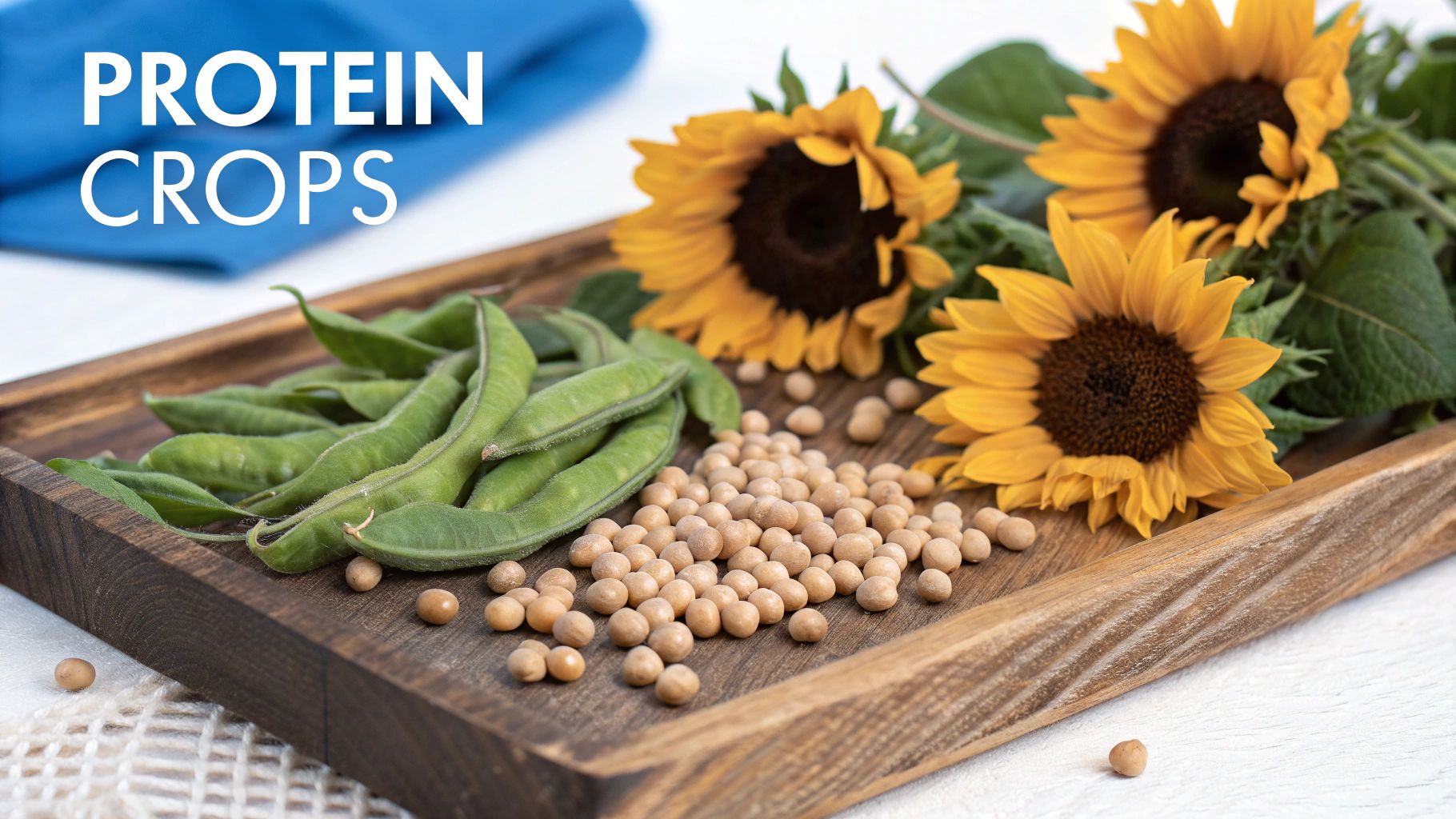
Raising your own protein gives you incredible control over your flock's nutrition. The result? Healthier birds, richer yolks, and a more self-sufficient homestead.
Soybeans: The Commercial Standard
Peek inside any bag of commercial chicken feed, and you'll likely find soybeans at the top of the ingredient list. They're the industry's gold standard for a reason—their complete amino acid profile is fantastic for supporting the rapid growth of meat birds and keeping laying hens in peak production.
This reliance isn't just anecdotal. With complete feeds projected to hold a 61.0% market share in 2025, soy remains the cornerstone. For a broiler flock, adding soy to their diet can increase egg yields by a whopping 10-15%.
But here's the catch for the backyard grower: you can't just toss raw soybeans to your flock. They contain trypsin inhibitors that interfere with protein digestion and can make your chickens sick. Soybeans must be cooked or roasted before feeding, which means an extra processing step on your part.
Field Peas: A Simpler Alternative
Looking for a protein crop that's a bit less fussy? Field peas are a fantastic choice. These hardy plants are not only easy to grow but also act as nitrogen-fixers, which means they'll actually improve the health of your garden soil. Protein-wise, they pack a respectable punch at around 23-25%.
Better yet, unlike soybeans, you can feed dried field peas to your flock raw. Just let the pods dry on the vine, shell them, and store them for the winter months. Chickens love them, and they mix easily with grains for a more balanced homegrown ration.
Lentils: A Small but Mighty Crop
Lentils are another wonderful legume for the chicken garden. They are incredibly tough, tolerating drought and maturing quickly. This makes them a perfect fit for homesteaders with shorter growing seasons or less-than-perfect soil conditions.
Just like field peas, dried lentils are safe to feed whole and raw. They offer a similar protein content and are loaded with other key nutrients. Their small size makes them an ideal addition to a scratch mix, encouraging natural foraging while delivering a solid dose of protein.
A Quick Note on Legumes: It's critical to know that while dried field peas and lentils are safe to feed raw, many other common dried beans (like kidney beans) are toxic if they aren't cooked thoroughly. When in doubt, stick with these proven, flock-safe options.
Sunflowers: The Homesteader's Favorite
Of all the crops you can grow for your chickens, sunflowers are easily one of the most rewarding. They're simple to plant and provide a two-for-one benefit: high-protein seeds packed with healthy fats. Black oil sunflower seeds are a flock favorite because their thinner shells are much easier for chickens to crack open.
Harvesting couldn't be simpler:
- Wait until the flower heads start to droop and the back turns a yellowish-brown.
- Cut the heads off, leaving a few inches of stalk attached.
- Hang them in a dry, well-ventilated spot (away from rodents!) until they're completely dry.
Once they're ready, you don't even need to do the work of shelling them. Just toss a whole, dried sunflower head into the run and watch the fun begin. Your flock will spend hours happily pecking away at the seeds, a perfect combination of great nutrition and boredom-busting enrichment.
While these plant-based options are fantastic, a well-rounded diet is key. You can dive deeper by exploring our guide on the best sources of protein for chickens to get the full picture on flock nutrition.
More Than Just Scratch: Why Your Chickens Crave Greens
If you want truly healthy chickens with those incredible, deep-orange yolks, you have to think beyond just grain. A chicken's natural diet is a smorgasbord of bugs, seeds, and—you guessed it—fresh greens. Commercial feed is great for baseline nutrition, but it often lacks the vibrant vitamins, minerals, and antioxidants found in living plants.
Think of fresh greens as the multivitamin in your flock's diet. They're what pack the nutritional punch that leads to richer eggs and glossier feathers. But it's not just about nutrition. Pecking at plants, tearing up leaves, and scratching for roots is what chickens do. It satisfies their natural instincts, fights boredom, and ultimately leads to a happier, healthier flock.
The Best Greens to Grow for Your Flock
When you're planning a chicken-friendly garden, some plants give you more bang for your buck. You want to focus on things that grow fast, are packed with nutrients, and can handle a bit of abuse from eager beaks.
Here are a few of my go-to choices:
- Leafy Brassicas: This is your powerhouse category. Think kale, collards, and mustard greens. These guys are tough as nails, often surviving well into the winter and providing fresh forage when everything else has died back.
- Hearty Lettuces: While not as nutrient-dense as kale, chickens go absolutely wild for lettuces like romaine and other leaf varieties. They grow incredibly fast, making them perfect for filling in empty garden space or for feeding out plants that have started to bolt in the summer heat.
- Root Vegetable Tops: Don't you dare throw away the tops from your turnips, beets, or radishes! Those leafy greens are loaded with nutrients and are basically a free bonus harvest from your main garden plot.
My Favorite Trick: To give your flock a long-lasting treat and a bit of entertainment, try making a "cabbage tetherball." Just drill a hole through a head of cabbage, run a rope through it, and hang it in the run. It’s a great boredom buster and prevents the whole thing from being devoured in five minutes flat.
Cut Your Feed Bill with Forage Crops
Ready to take it to the next level? Instead of just tossing your flock some garden scraps, you can plant dedicated forage areas that act as a living salad bar. These cover crops can create a sustainable food source that will seriously slash your feed bill over time.
Forage crops like alfalfa and grasses are a fantastic way to supplement your flock’s diet, especially when feed prices are all over the map. Alfalfa is a real game-changer; it can have an 18-20% protein content. For laying hens, integrating alfalfa can replace up to 20% of their commercial feed, and you'll see the difference in their egg quality. This strategy alone can lead to savings of 25-35% on feed costs—a huge deal for any homesteader. You can find more data on global feed trends over on Alltech.com.
A few of the best forage options include:
- Clover: Both red and white varieties are fantastic. They're nitrogen-fixers, so they actually improve your soil while feeding your birds. Plus, they’re incredibly resilient and bounce back quickly after being pecked down.
- Alfalfa: Like I mentioned, this is the protein king. It’s perfect for laying hens thanks to its high protein and calcium levels. It takes a little more work to get established, but a good stand can provide forage for years.
- Hardy Grasses: For a pasture that can really take a beating, you can't go wrong with a mix of rye, fescue, and orchard grass. This creates a tough turf that stands up to constant scratching and foraging.
Simple Ways to Serve Up the Greens
Getting these greens to your flock can be as simple or as sophisticated as you want it to be. For most backyard keepers, it really comes down to two practical methods.
1. The "Chop and Drop" Method
This is exactly what it sounds like. You harvest a bunch of greens from your garden, chop them up (or not), and toss them straight into the chicken run. It's the perfect solution if you have a stationary coop or limited space. Your main garden stays safe from destruction, but your flock still gets all the benefits of fresh, homegrown food.
2. The Rotational Grazing Method
If you have a bit more land to work with, rotational grazing is the gold standard. The idea is to divide a larger pasture into several smaller sections, or "paddocks." You let the flock graze one paddock for a few days or weeks, then move them to the next.
This gives the grazed-down paddock time to recover and regrow, preventing the land from being turned into a barren dust bowl. It’s an amazing system that provides a constant supply of fresh forage, dramatically cuts feed costs, and spreads chicken manure—nature's best fertilizer—evenly across your pasture.
Unlocking Nutrients with Fodder and Sprouts
Imagine turning a handful of dry, hard grain into a thick, seven-inch-tall mat of lush, living green food that’s bursting with nutrition. That's the simple yet powerful magic behind sprouting grains to create fodder. This technique is a total game-changer for homesteaders, especially if you're working with limited space. It lets you produce a massive amount of fresh food indoors, no matter the season.
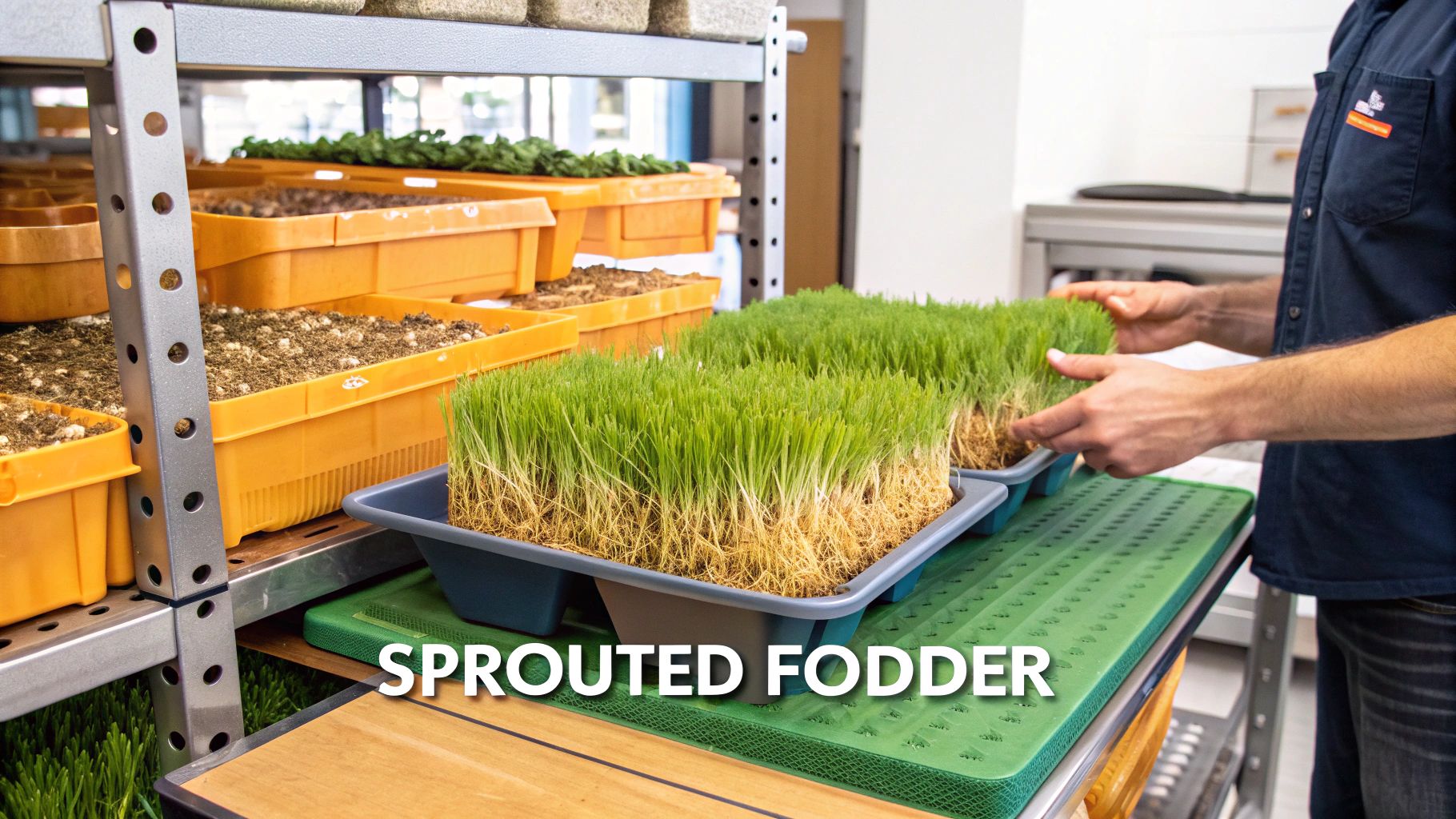
But this process is so much more than just growing tiny plants. You're actually unlocking the full nutritional potential locked inside the grain itself. When a seed sprouts, it releases enzymes that break down complex starches into simpler, more digestible sugars. This single transformation makes a world of difference, making key vitamins and minerals far more available for your chickens to actually absorb and use.
The Superfood Transformation
Sprouting is basically like waking up a dormant nutritional powerhouse. The whole process fundamentally changes the grain's composition, converting stored energy into living, bioavailable nutrients. This is exactly why so many chicken keepers call fodder a 'superfood'—it offers a significant health boost, especially during those lean winter months when fresh forage is just a memory.
The benefits are truly impressive, and it's all thanks to this clear nutritional shift:
- Massive Vitamin Boost: The sprouting process dramatically increases vitamin content, especially vitamins A, B-complex, C, and E.
- Peak Digestibility: Those enzymes activated during germination make the entire plant—root, seed, and sprout—incredibly easy for chickens to digest. Nothing goes to waste.
- Built-In Hydration: Fresh fodder is packed with water, providing an excellent and natural source of hydration for your flock, which is absolutely crucial for overall health and steady egg production.
The efficiency here is incredible. Sprouting grain for fodder can multiply its weight by six to eight times in just over a week. This means one pound of dry barley can become six to eight pounds of highly nutritious, fresh green feed.
To see just how significant this nutritional upgrade is, take a look at the difference between a dry grain and its sprouted counterpart.
Nutrient Comparison Whole Grain vs Sprouted Fodder
| Nutrient | Whole Barley Grain (Approx.) | 7-Day Barley Fodder (Approx.) | Nutritional Benefit |
|---|---|---|---|
| Crude Protein | 12% | 15-18% | Higher protein for muscle and feather development. |
| Vitamin A | 22 IU/kg | 28,000 IU/kg | Drastic increase supports vision and immune health. |
| Vitamin E | 35 mg/kg | 110 mg/kg | Triples, providing a powerful antioxidant boost. |
| Digestibility | 40-50% | 80-90% | Enzymes make nutrients far more bioavailable. |
As you can see, the jump in key nutrients isn't just a small bump—it's a massive leap forward for your flock's diet.
How to Start Your Own Fodder System
Getting a basic fodder system going is surprisingly simple and doesn't require a bunch of expensive, specialized equipment. You can get started with just a few trays, some good seed, and a spot with some indirect light. Barley is really the gold standard for fodder because it germinates so reliably and has a fantastic nutritional profile, but wheat is another great option that works just as well.
Here’s a simple step-by-step guide to get your first batch growing:
- Measure and Soak: Start by measuring out enough dry grain (barley or wheat is best) to cover the bottom of your tray in a thin, even layer. Give the grains a good rinse, then soak them in a bucket of clean water for 8-12 hours.
- Drain and Spread: After the soak, drain the water completely. Spread the now-damp grains evenly across your fodder trays. It's important that your trays have drainage holes!
- Rinse and Repeat: Place the trays on a shelf or rack where they can drain freely. You’ll need to rinse the grains with fresh water 2-3 times per day to keep them perfectly moist and, more importantly, to prevent mold.
- Watch it Grow: Within a day or so, you’ll see tiny white sprouts emerge. Over the next 7-9 days, these will grow into a thick, green mat of beautiful fodder.
- Harvest and Feed: Once the fodder is about 4-6 inches tall, it's ready for the chickens. Just pull the entire mat out of the tray—roots, seeds, and greens—and watch them go nuts. They'll devour the whole thing.
The most common issue people run into with fodder is mold. To avoid it, make sure you have good air circulation around your trays and be super diligent about your rinsing and draining routine. A little splash of apple cider vinegar in the initial soak can also help inhibit any unwanted growth from the get-go.
Balancing Your Homegrown Chicken Feed
Growing a garden brimming with grains, proteins, and greens for your flock is a serious accomplishment. But the real art lies in that final step: turning your harvest into a complete, balanced meal. This is where you put on your flock nutritionist hat. Your job is to blend all these wonderful homegrown ingredients into a diet that fuels vibrant health and top-notch egg production.
Creating a balanced ration is more than just tossing a bit of this and a bit of that into a bucket. It's about knowing what your birds need at different stages of their lives. A laying hen's dietary requirements are a world away from a growing meat bird's, and different still from a young chick's. Each needs a specific ratio of energy, protein, and key nutrients to really thrive.
Crafting the Perfect Mix
A great starting point for your homemade layer feed is to create a base mix that delivers a solid foundation of energy and protein. This ensures your hens have the get-up-and-go for their daily foraging and the essential building blocks for producing strong, consistent eggs.
A simple, effective ratio to start with looks something like this:
- 60-70% Grains: This forms the bulk of the feed, providing the carbohydrates they need for energy. A combination of corn, wheat, and barley is a classic for a reason—it works.
- 20-30% Protein: This is absolutely critical for feather health and, of course, for making eggs. This is where your homegrown sunflowers, field peas, or processed soybeans come into play.
- 10% Greens & Extras: Think of this as the "salad bar" portion. Fresh greens, fodder, and other nutrient-packed additions provide those vital vitamins and minerals.
While this basic formula gives you a solid nutritional footing, it's not the whole story. A diet built entirely from the garden will almost always have a few nutritional holes you'll need to plug with supplements. Ignoring them can lead to serious health problems down the road.
Filling the Nutritional Gaps
Even the most thoughtfully planned garden can't provide every single thing a modern laying hen needs for peak performance. The two most critical things you must add are calcium and grit. Skimping on these can cause a cascade of issues, from weak eggshells and egg-binding to poor digestion.
A laying hen pulls a staggering amount of calcium from her body to form a single eggshell—up to four times the amount stored in her entire skeleton. A homegrown diet alone simply cannot keep up with that demand.
This is why "free-choice" supplementation is non-negotiable. You should always have two small, separate containers in the coop or run: one for oyster shell (for calcium) and another for insoluble grit (for digestion). Your chickens are smarter than we often give them credit for; they will instinctively take exactly what they need, when they need it.
For a truly sustainable, homegrown boost of both protein and calcium, many of us are turning to Black Soldier Fly Larvae (BSFL). These little critters are a nutritional powerhouse, packed with protein and naturally rich in calcium. They're a fantastic way to "close the loop" on the homestead, efficiently turning kitchen scraps into high-quality chicken feed. If you're looking for more ways to support eggshell strength, you can explore other calcium-rich foods for chickens in our comprehensive guide.
Answering Your Top Questions About Growing Chicken Feed
Diving into growing your own chicken feed is a rewarding step, but it's totally normal to have a bunch of questions swirling around. Figuring out the details, from how much space you’ll need to which plants are off-limits, is key to getting started on the right foot. Let's dig into the things I hear most often from fellow homesteaders.
How Much Space Do I Really Need to Feed My Flock?
This is always the first question, and the honest answer is: it depends on your flock and your goals. The good news is you don't need a huge acreage to make a real dent in your feed bill.
For a typical backyard flock of 5-10 chickens, you can do a lot with a dedicated 10x20 foot garden plot. That's enough room for some high-impact crops like corn or big-headed sunflowers. If you pair that with a small fodder system you run indoors, you've suddenly slashed your reliance on bagged feed.
Now, if you're aiming for 100% self-sufficiency for that same flock, the game changes. You’re looking at a much bigger footprint—probably a quarter-acre or more—to have enough space for a proper rotation of grains and protein-rich legumes. My advice? Start small. See what you can do with a few key crops and then scale up from there.
Can I Actually Ditch Commercial Feed for Good?
While being completely feed-independent sounds amazing, it’s a serious undertaking that requires a ton of careful management. For most of us, a hybrid approach works best and keeps the flock healthier in the long run.
Commercial feeds are carefully balanced with specific amino acids, vitamins, and minerals. It's tough to perfectly match that scientific formulation with just what you can grow. A well-planned homegrown diet can replace the bulk of their feed, but cutting it out completely puts the nutritional responsibility squarely on your shoulders.
If you do go all-in on homegrown, you absolutely must provide free-choice calcium (like oyster shells) and insoluble grit. You also have to be a stickler about protein, making sure your flock gets all the essential amino acids. This is where things like raising your own Black Soldier Fly Larvae can be a lifesaver.
What Common Plants Are a "No-Go" for Chickens?
Knowing what not to plant is just as critical as knowing what to grow. A surprising number of common garden plants can make your chickens sick, or worse.
Make sure your flock can't get to these:
- Uncooked Beans: Dried beans, especially kidney and broad beans, are a big no.
- Avocado: Both the pit and the skin are toxic.
- Rhubarb Leaves: They're loaded with oxalic acid.
- Nightshade Plants: The leaves from tomato and potato plants, as well as any green potato skins, are toxic.
- Ornamental Flowers: Be careful with landscaping. Many popular flowers like azaleas, foxglove, and daffodils are poisonous.
When in doubt, always look it up before you toss garden scraps over the fence or let the flock forage in a new spot.
For a reliable, high-protein, and calcium-rich supplement grown right in the USA, Pure Grubs offers premium Black Soldier Fly Larvae to support strong eggshells and healthy feathers. Learn more about boosting your flock's nutrition at puregrubs.com.