

calcium rich foods for chickens: Top sources and tips
When it comes to raising healthy hens, a few things are as crucial as calcium. The best calcium-rich foods for chickens are things like crushed oyster shell or even their own properly prepared eggshells, always offered on the side, separate from their main feed. This simple practice is the key to strong eggshells and, more importantly, a hen’s long-term skeletal health.
Why Calcium is the Cornerstone of Your Flock's Health
A perfect, sturdy eggshell is the most obvious sign of a healthy, well-nourished hen. But that shell is just the final product of a massive biological effort, and calcium is the star player.
Think of it this way: a laying hen runs a personal 'calcium bank.' Every single egg she lays is a huge withdrawal, demanding an incredible amount of this one mineral. If her daily diet doesn't deposit enough calcium back into that bank, her body has to find it somewhere else. The only other place to get it is by pulling it directly from her own bones.
If this goes on for too long, she essentially drives herself into a state of biological bankruptcy. Her entire skeleton weakens, putting her long-term health and well-being at serious risk.
The Master Mineral for More Than Just Eggshells
Forming a strong eggshell, which needs about 2 grams of pure calcium, is a hen's most demanding calcium-related job. But this mineral is also the quiet workhorse behind almost everything she does. It’s the spark that ignites her most basic bodily functions.
Calcium is essential for:
- Muscle Contractions: It powers everything from scratching in the dirt to the intense contractions required to lay an egg.
- Nerve Signals: It's the messenger that lets her brain talk to the rest of her body, coordinating every little movement.
- Blood Clotting: A critical function that keeps a small scrape from turning into a big problem.
- Bone Strength: It maintains the very framework of her body, keeping her bones strong and resilient.
Grasping how fundamental calcium is will help you raise a flock that doesn't just produce eggs, but truly thrives for years.
The Dramatic Shift in a Hen's Calcium Needs
A young pullet, a female chicken that hasn't started laying yet, has pretty simple calcium needs. Her body is just focused on growing up. But the day she starts laying eggs, everything changes—almost overnight.
This moment triggers a massive metabolic shift. A laying hen suddenly needs 4 to 6 times more calcium than a non-laying bird or a rooster. As she gets older, especially after about 40 weeks of age, it gets even trickier. Her ability to absorb calcium from her food can drop by as much as 50%. This means you have to be even more strategic with her diet to keep her bones from becoming dangerously thin. If you want to dive deeper, you can learn more about the metabolic demands on laying hens.
A hen is biologically wired to prioritize her eggshell over her own bones. If her diet is lacking, she will literally pull her skeleton apart to make that shell.
The Alarming Signs of Calcium Deficiency
When a hen's calcium bank starts running low, she'll send out warning signs. At first, they might be subtle—eggs that feel a little thin or crack too easily. Don't ignore these! They're a clear signal that her internal reserves are getting dangerously low.
If the problem isn't fixed, you'll start to see more serious issues:
- Fewer eggs, or none at all, as her body desperately tries to conserve what little calcium she has left.
- Brittle bones, which can lead to heartbreaking leg and wing fractures from normal activities like hopping off a roost.
- Lethargy and weakness, because her muscles and nerves simply can't function properly without enough calcium.
In the most severe cases, a hen can suffer from a condition sometimes called "cage layer fatigue," where she becomes paralyzed because her bones are too weak to even support her own weight. This is why providing plenty of calcium isn't just about getting better eggs—it's a fundamental part of responsible, humane chicken keeping.
Ranking The Best Calcium Sources For Chickens
Figuring out the best calcium sources for your flock doesn't have to be complicated. When you get right down to it, there are a handful of excellent, reliable options. The key is understanding that not all calcium is created equal—some sources are absorbed slowly, others quickly, and they all come at different price points. Let's break down the top contenders to help you build a "calcium bank" that keeps your flock healthy and their eggshells tough.
The difference in calcium needs between a young pullet and a hardworking laying hen is massive. You can really see just how much a hen's requirements jump once she starts laying eggs.
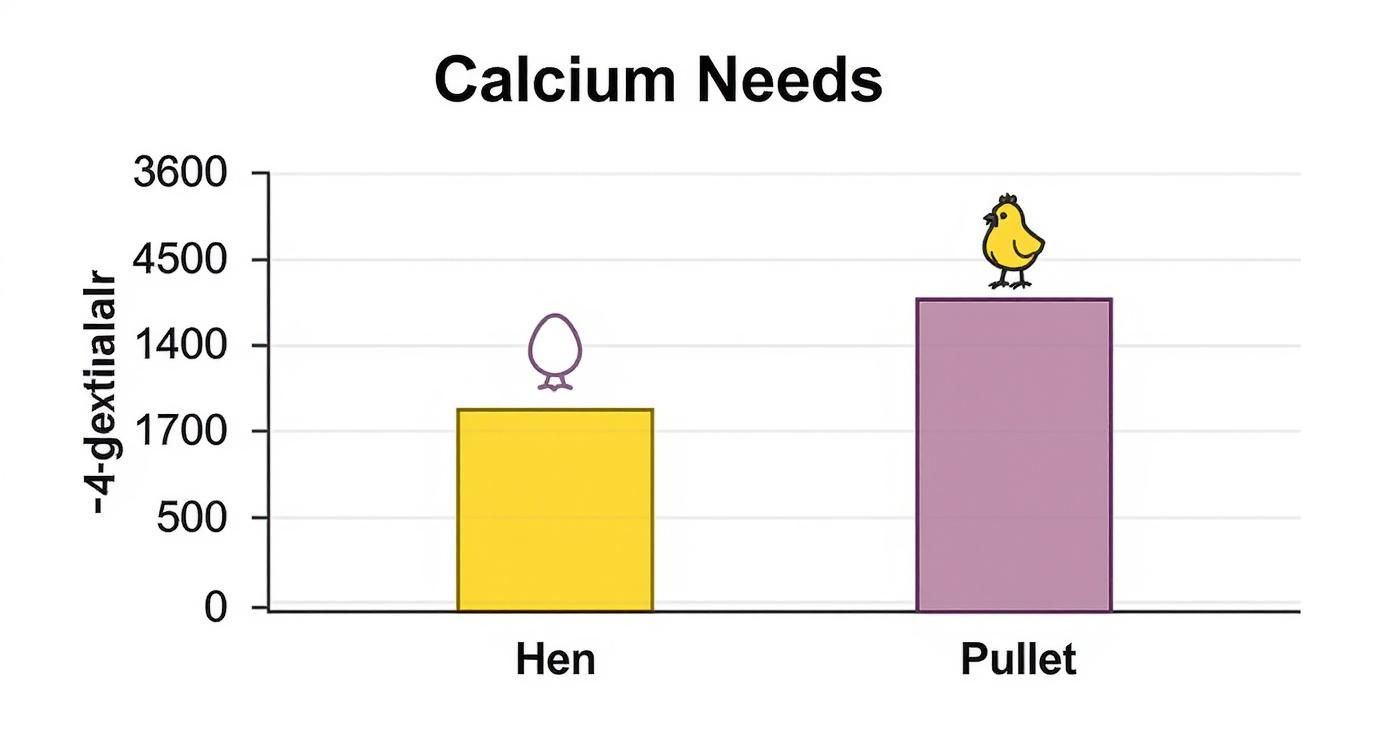
As the chart shows, a laying hen needs a staggering amount of calcium to produce an egg every day without robbing her own bones to do it. This is precisely why just tossing out layer feed often isn't enough on its own.
1. The Gold Standard: Oyster Shell
For generations, crushed oyster shell has been the go-to calcium supplement for backyard chicken keepers and commercial farmers alike. There's a good reason for its reputation. It's almost pure calcium carbonate (about 96%), making it an incredibly potent source.
The real magic, though, is in its slow-release design. The coarse, flaky bits of shell don't dissolve instantly. Instead, they hang out in the gizzard and break down gradually over hours. This provides a slow, steady drip of calcium into the bloodstream—perfect for the long, overnight process of forming a strong eggshell. By offering it "free-choice" in a separate dish, you let each hen take exactly what her body tells her she needs.
2. The Sustainable Choice: Crushed Eggshells
One of the best and most budget-friendly calcium sources is probably already in your kitchen: eggshells! Instead of throwing them out, you can easily recycle them into a top-notch supplement for your girls.
But preparation is key. You can't just toss them out whole. This is non-negotiable if you want to prevent the spread of bacteria and, crucially, avoid teaching your flock the bad habit of egg-eating.
Here’s how to do it right:
- Rinse the shells well to get rid of any leftover egg white.
- Bake them on a cookie sheet at a low heat, around 250°F (120°C), for about 10 minutes. They should be completely dry and brittle. This step is vital for sterilization.
- Crush them into tiny, unrecognizable pieces—smaller than a pea. The idea is that they look nothing like a whole egg.
Eggshells are a fantastic way to supplement your flock's diet, but for a large or highly productive flock, they might not be enough on their own. Think of them as a fantastic, zero-waste booster.
3. The Two-in-One Powerhouse: Black Soldier Fly Larvae
A more modern and incredibly effective option is dried Black Soldier Fly Larvae (BSFL), like Pure Grubs. These little critters are a nutritional powerhouse, offering a one-two punch of high protein and a ton of naturally occurring calcium.
Here’s what sets them apart: unlike mealworms, which have a terrible calcium-to-phosphorus ratio, BSFL have a near-perfect balance for poultry health.
Black Soldier Fly Larvae can contain up to 85 times more calcium than mealworms. This makes them a far superior choice for supporting both eggshell quality and healthy feather growth.
This unique profile makes BSFL a fantastic treat that also acts as a powerful supplement. You're giving your chickens the protein to build the egg and the calcium to build the shell, all in one tasty, wriggly package. To learn more about their benefits, you can read about adding grub worms for chickens to a balanced diet.
Top Calcium Sources for Chickens Compared
Sometimes, seeing things side-by-side makes the decision easier. Each of these top calcium sources has its own unique strengths that might fit your flock, management style, and budget.
| Calcium Source | Approx. Calcium % | Primary Benefit | Best For |
|---|---|---|---|
| Oyster Shell | ~96% | Slow, steady calcium release overnight | The primary, all-around supplement for layers |
| Crushed Eggshells | ~94% | Free and sustainable; reduces waste | Supplementing other sources; small flocks |
| BSFL (Pure Grubs) | Varies (~1-3%) | High in both calcium and protein | A nutritious treat that doubles as a supplement |
| Limestone (Coarse) | ~97% | Inexpensive and widely available | Budget-conscious keepers; must be poultry-grade |
In the end, you don't have to pick just one. Many chicken keepers find the best approach is a combination. By providing a constant, free-choice supply of oyster shell or limestone and tossing out BSFL as a healthy, calcium-rich treat, you create a robust system that keeps your hens thriving from the inside out.
How to Feed Calcium for Maximum Benefit
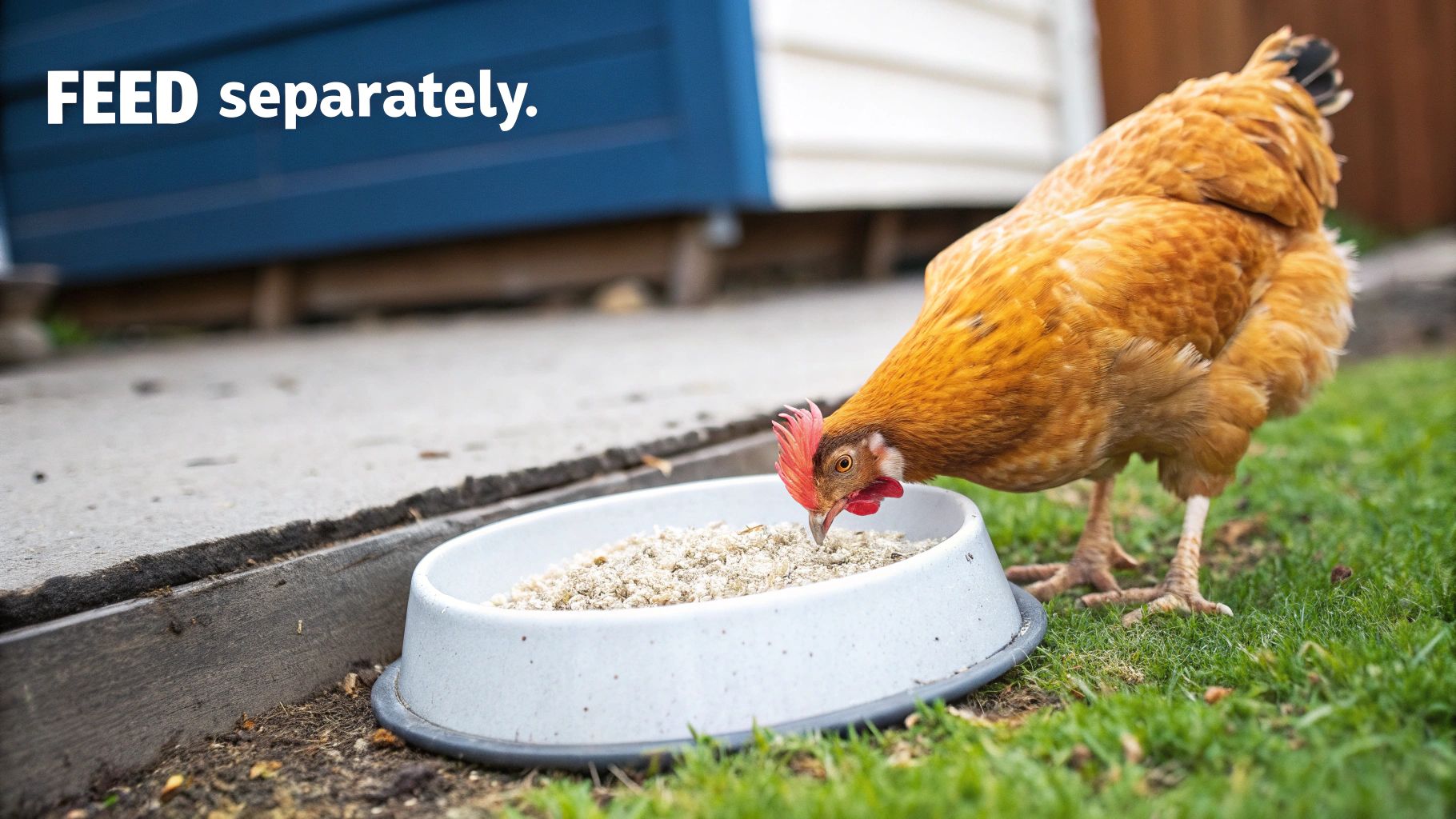
Knowing which calcium rich foods for chickens to use is only half the battle. How you actually offer them makes all the difference in the world. The right strategy ensures every hen gets what she needs without forcing it on the rest of the flock. It's a simple tweak that can make a huge impact on eggshell quality and your birds' health.
The best way to do this is with free-choice feeding. It’s a beautifully simple concept. Instead of mixing calcium like oyster shell directly into your flock's main feed, you offer it in a completely separate dish. This one small change lets each hen act as her own personal nutritionist.
A laying hen's calcium needs can change from one day to the next, all depending on her laying cycle. By offering it on the side, you’re giving her the power to self-regulate. She'll take what she needs when her body is gearing up to form an eggshell and leave it alone when she doesn't. This clever approach prevents both deficiencies and the very real dangers of calcium overload.
The Art of Perfect Timing
Believe it or not, when you offer calcium is just as important as how. Forming a perfect eggshell is an overnight marathon for a hen. The most demanding part of the process happens while she’s sound asleep on the roost.
This is why timing her calcium intake is a game-changer. If you make sure coarse calcium supplements are available in the afternoon, you're essentially stocking her gizzard with a slow-release supply. That calcium will be digested and absorbed all through the night, right when her body needs it most. It's a brilliant way to work with her natural rhythm.
Science backs this up, too. Studies show that feeding coarse limestone particles—around 1.5 to 4 millimeters—in the afternoon or evening helps a hen use more calcium directly from her food. This means she doesn't have to pull as much from her own bones, which is a huge win for her long-term health. It reduces metabolic stress and can even lower the phosphorus in her manure, all without costing you an extra dime in feed.
Practical Tips for Your Feeding Station
Getting your calcium station set up is easy. The main goals are to keep it clean, dry, and easily accessible for your layers.
- Choose the Right Feeder: A small, heavy dish that won't tip over is perfect. You could also use a specialized grit feeder. The key is to stop them from scratching it all out.
- Place it Strategically: Put the calcium dish near the main feeder and waterer, but not so close that it gets filled with feed or droppings. Keeping it under a covered part of the run will protect it from rain.
- Keep it Topped Up: Check the dish every couple of days and refill it as needed. You never want it to run empty, especially during the peak laying months in spring and summer.
By providing calcium free-choice, you are trusting the hen's incredible innate ability to manage her own nutritional needs. She knows precisely when her body is gearing up for egg production and will seek out the resources she requires.
Your flock's eggs are the best report card for your feeding strategy. If you consistently see strong, smooth, well-formed shells, you know your hens are getting the calcium they need, right on schedule. If you're weighing your options, our guide to the best calcium supplement for chickens can help you decide.
Matching Calcium Needs to Every Bird in Your Flock
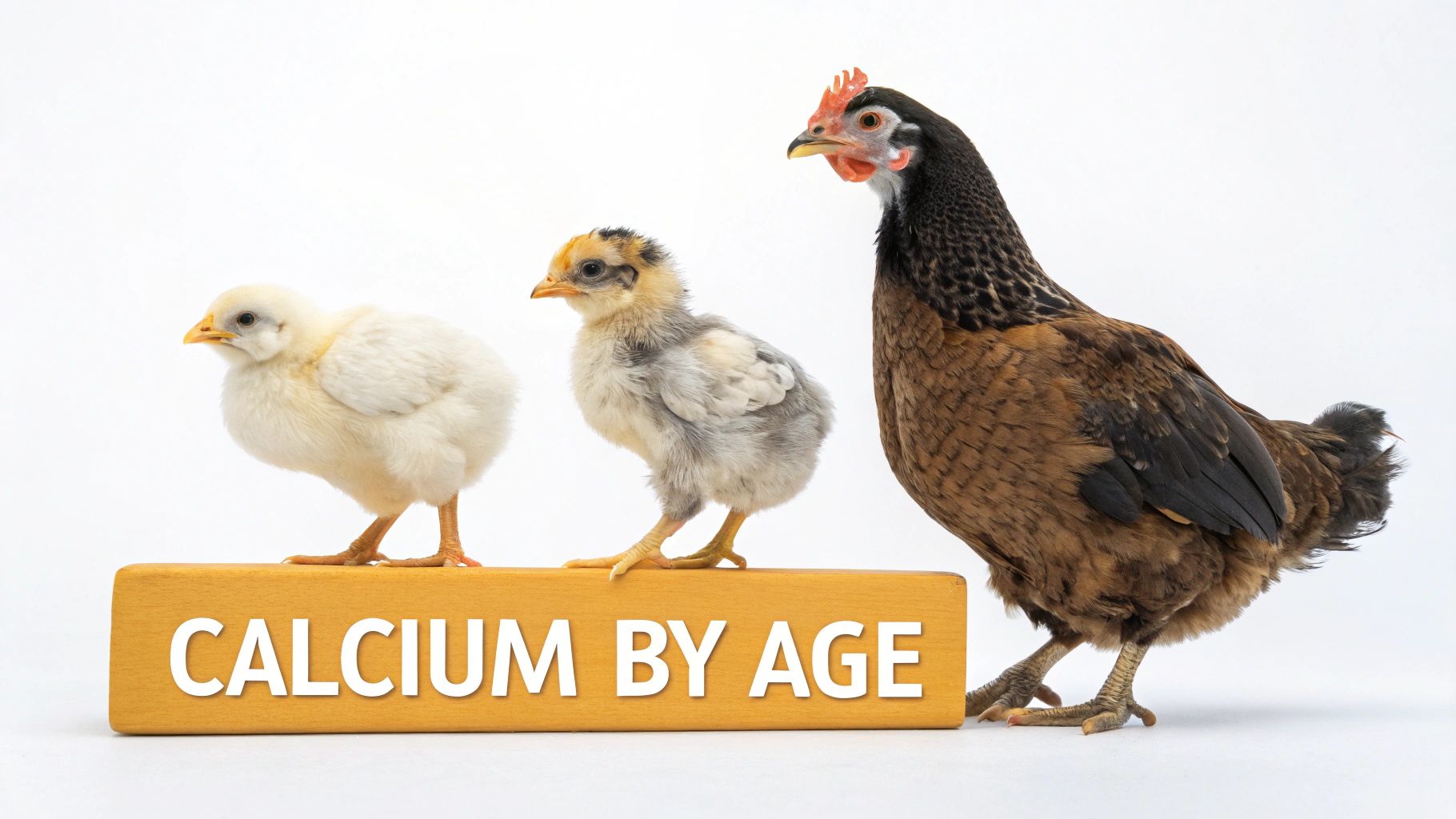
When it comes to calcium rich foods for chickens, a one-size-fits-all approach just doesn't work. In fact, it can be downright dangerous. Every bird in your flock, from a peeping chick to a proud rooster, has completely different dietary needs. Nailing their calcium intake for each life stage is one of the most important things you can do for their long-term health.
Think of it this way: you wouldn't feed a toddler the same meal as a professional athlete. Their bodies have different demands, and the same logic applies to your chickens. Giving the right amount of calcium at the right time is simply good chicken keeping.
Young Chicks and Growing Pullets
From day one until they're about 18 weeks old, a young chicken's job is to grow. All their energy goes into building strong bones, healthy organs, and those first fluffy feathers. During this all-important growth spurt, they need a feed with a much lower calcium level, somewhere around 0.9% to 1.2%.
This is exactly why you see "starter" and "grower" feeds on the shelf. They're scientifically formulated to give young birds the perfect balance of protein and minerals for healthy development, without overwhelming their small bodies.
A common and devastating mistake is giving young, non-laying pullets a high-calcium "layer feed." Their kidneys are still developing and simply can't handle the excess calcium. This can lead to permanent organ damage, kidney failure, and a tragically shortened life.
The Peak Needs of Laying Hens
The day a pullet lays her first egg, everything changes. She's officially a laying hen, and her need for calcium skyrockets to support daily egg production. To keep up, her feed needs to contain between 3.5% and 5.0% calcium. This ensures she can form strong eggshells without having to steal calcium from her own bones.
This is the point where offering a separate, free-choice calcium source like oyster shell becomes absolutely essential. As hens get older, they often become less efficient at absorbing calcium from their feed, so having a high-quality supplement available at all times is key to their health and productivity. For a deeper dive into crafting the perfect menu, check out our guide on what to feed laying hens.
Roosters and Non-Laying Hens
It’s easy to focus on the egg-layers, but don't forget the rest of the flock! Roosters and non-laying hens—like older retired girls or birds going through a molt—need far less calcium than your active layers. A simple maintenance diet, like a flock raiser or even the same grower feed you give your pullets, is perfect for them.
If your roosters and non-layers live with your hens, it's critical that you don't mix extra calcium into the main feed. This highlights why offering supplements "free-choice" in a separate dish is always the best method. The hens who need it will take what they need, while the roosters and other birds are kept safe from consuming dangerously high levels. It’s the best way to make sure every single bird gets exactly what their body requires to thrive.
Even the most seasoned chicken keepers can make a few missteps when it comes to calcium. We all want what's best for our flock, but sometimes our good intentions can go a little sideways, leading to health problems we were trying to prevent.
Knowing the common pitfalls is half the battle. The real goal isn't just to pump calcium into your birds; it's about creating a balanced system that supports their overall health. Steering clear of these frequent mistakes will keep your flock safe and ensure they get the right nutrients, in the right amounts.
The Dangers of Unreliable Sources
It’s tempting to grab whatever calcium source is cheap or convenient, but this is one area where you really don't want to cut corners. For instance, using unwashed eggshells—especially from an unknown source—can be a fast track to introducing nasty bacteria like salmonella into your coop.
The same goes for grabbing a bag of limestone from the local garden center. That stuff isn't meant for animals to eat and can be loaded with contaminants or heavy metals. Your best bet is to always stick with sources specifically labeled for poultry. That way, you know what you’re offering is both safe and effective.
Why You Should Never Mix Calcium into Feed
This is a big one. One of the worst things you can do is mix a fine calcium powder, like oyster shell flour, directly into the main feed. It might seem like an easy shortcut, but it forces every single bird—including your roosters and non-laying hens—to consume high levels of calcium they absolutely do not need.
Forcing this on them can cause some serious damage. In birds that aren't laying, all that extra calcium can lead to severe kidney problems and a painful condition called gout.
The golden rule for calcium is simple: always offer it "free-choice" in a separate container. This one small step empowers each hen to take exactly what her body tells her she needs, while keeping the rest of your flock safe from a dangerous overdose.
The Critical Calcium-to-Phosphorus Balance
Calcium doesn't work in a vacuum. In a chicken's body, it has a critical partner: phosphorus. While a laying hen’s diet needs a lot more calcium than phosphorus, phosphorus is still vital for everything from energy to strong bones.
The problem is, when you throw too much calcium into the mix, you completely disrupt this delicate balance. An overload of calcium can actually block the absorption of phosphorus and other important minerals. It’s a strange paradox, but you can end up with nutrient deficiencies even if you're using a top-notch feed. The digestible calcium in something like limestone can vary wildly—from as low as 20 percent to nearly 80 percent, all depending on where it came from and how it was processed. Research even shows that overdoing it can make other nutrients less available and potentially make a flock more vulnerable to disease. You can dig deeper into calcium digestibility in poultry to see just how complex this is.
To keep things in balance, just follow these simple guidelines:
- Start with a solid foundation: Use a high-quality commercial feed specifically formulated for laying hens.
- Offer calcium on the side: Put your coarse oyster shell or crushed eggshells in a completely separate dish.
- Trust your hens: Let them decide how much extra calcium they need. They're surprisingly good at it.
By getting a handle on these common mistakes, you’re doing more than just giving your chickens calcium—you’re thoughtfully managing their entire nutritional health. It's this careful approach that keeps every bird in your flock healthy, productive, and thriving.
Common Questions About Calcium for Chickens
Even the most seasoned chicken keepers have questions, especially when it comes to something as crucial as nutrition. Getting calcium right is a big part of keeping a healthy, productive flock. Let's tackle some of the most common questions that come up.
How Can I Tell if My Chickens Need More Calcium?
Your hens will give you the most obvious clues in their nesting boxes. The quality of their eggshells is the number one indicator of a calcium deficiency. If you're seeing shells that are thin, soft, weak, or have weird wrinkled or bumpy textures, that’s a huge red flag.
But the signs aren't just in the eggs. Keep an eye on your hens themselves for other important clues.
You might notice things like:
- Shell-less eggs: Finding a soft, membrane-bound egg (sometimes called a “rubber egg”) is an urgent sign of a severe calcium shortage.
- A drop in laying: If one of your star layers suddenly stops producing or becomes inconsistent, her body might be conserving its low calcium stores.
- Lethargy or weakness: Calcium is vital for muscle function. A hen that seems unusually tired or sluggish could be struggling.
- A "penguin" stance: In more serious cases, a hen might stand strangely upright because her bones have become too weak to support her normally.
By watching both the eggs and your birds' behavior, you can catch a deficiency early and fix it before it becomes a serious health issue.
Can Chickens Get Too Much Calcium?
Absolutely, and it can be just as dangerous as not getting enough. An overload of calcium can cause some serious, and sometimes irreversible, health problems. It's all about balance.
Way too much calcium can lead to severe kidney damage as the bird’s system struggles to process it all. This can also trigger visceral gout, a painful condition where urate crystals build up on their internal organs. On top of that, excess calcium can actually block the absorption of other key minerals like phosphorus, zinc, and manganese, creating a domino effect of nutritional problems.
Roosters and young, non-laying pullets are the most at-risk for calcium toxicity. Their bodies simply aren't built to handle the high levels a laying hen needs, which is why offering calcium "free-choice" is so important in a mixed flock.
Is Oyster Shell the Same as Poultry Grit?
This is a super common mix-up, but no—they do two totally different jobs for a chicken's digestion. Think of them as separate tools in a chicken's digestive toolkit.
Oyster shell is what we call a soluble grit. That means it’s meant to break down and dissolve in the gizzard. Its whole purpose is to provide a slow, steady release of calcium into the bloodstream, which is perfect for building strong eggshells while a hen sleeps.
Poultry grit, on the other hand, is an insoluble grit. It's usually made of tiny, hard rocks like granite or flint. Because it doesn't dissolve, it hangs out in the gizzard and acts like teeth, grinding down tough grains, seeds, and greens so the chicken can digest them.
While a coarse oyster shell might do a tiny bit of grinding, it dissolves too fast to replace real grit. For your flock's best health, you should always offer both oyster shell and insoluble grit in separate containers, letting the birds take what they need, when they need it.
Is It Safe to Feed Eggshells Back to My Chickens?
Yes! Feeding eggshells back to your flock is a brilliant, zero-waste way to recycle nutrients. You just have to prep them correctly to keep them safe and avoid starting a bad habit. Tossing whole shells into the coop can introduce bacteria and, worse, teach your hens that eggs are food—which can lead to them pecking their own fresh eggs.
To do it safely, just follow these simple steps:
- Rinse Them Out: First, give the shells a good rinse under the tap to get rid of any leftover egg white or yolk. This prevents bacteria from growing.
- Bake to Sanitize: Spread the clean shells on a baking sheet and pop them in the oven at a low temp, around 250°F (120°C), for about 10 minutes. This is the most important step—it kills any nasty pathogens like salmonella and makes the shells super brittle and easy to crush.
- Crush 'Em Up: Finally, crush the baked shells into tiny, unrecognizable pieces. You want them to look more like confetti or coarse sand than pieces of an egg. This way, your chickens won't make the connection and start sampling the eggs in the nesting box.
Follow that process, and you can confidently turn a kitchen scrap into one of the best calcium rich foods for chickens right in your own backyard.
Ready to give your flock a calcium boost that’s both nutritious and delicious? Pure Grubs offers USA-grown Black Soldier Fly Larvae that are naturally high in calcium and protein. Support strong eggshells and healthy feathers with a treat your chickens will love. Shop Pure Grubs today!