

Grub Worms for Chickens A Simple Guide
If you've ever seen your flock go wild, scratching and pecking at the ground with pure joy, you know chickens are born foragers. They live for the thrill of finding a tasty bug, and that's exactly why grub worms are such a fantastic treat.
The Ultimate Guide to Grub Worms for Chickens
Tossing a handful of grubs to your chickens isn't just giving them a snack; it's tapping directly into their natural, deep-seated instinct to forage for insects. It's the closest you can get to providing a "wild" food source in a safe, clean, and totally controlled way.
So, what are these little powerhouses? Grub worms are the larvae of the Black Soldier Fly (BSFL), a harmless insect that's a champion of sustainability. These grubs are nature's perfect recipe for converting organic leftovers into high-quality protein, making them a true superfood for your birds.
They provide critical nutrients that support everything from vibrant feather growth to strong eggshells. When you're thinking about treats, it helps to understand the full range of healthy snacks for chickens you can offer.
What Makes Grubs a Poultry Superfood
What lifts grub worms from just another treat to a genuine superfood? It all comes down to their incredible life cycle and what they're made of.
It starts when an adult Black Soldier Fly lays its eggs. Those eggs hatch into tiny larvae—the grub worms we know and love—and these little guys have one mission: eat and grow.
During this intense growth spurt, they feast on pre-consumer food waste, like fruits, veggies, and grains. They are masters at converting this material into body mass packed with protein, healthy fats, and essential minerals. It's a natural bioconversion process that creates a nutrient-dense food source perfect for poultry.
Insect farming is a big deal. The industry that produces grubs for poultry and other animals was valued at USD 1.5 billion in 2023 and is only expected to grow. This boom is driven by people like us who are looking for more natural and sustainable ways to feed our animals.
This amazing natural cycle gives us a food that’s not only bursting with benefits for our chickens but is also good for the planet. When you feed your flock grub worms, you’re giving them a treat that's as smart as it is delicious.
Why Grub Worms Are Better Than Mealworms
When you're browsing the treat aisle for your flock, it’s easy to assume grub worms and mealworms are pretty much the same thing. They're both dried insects that chickens go absolutely wild for, right? While that's true, digging a little deeper reveals a massive nutritional difference.
Mealworms are certainly a popular snack, but grub worms (BSFL) pack a far more powerful and complete nutritional punch. This is especially true if you have laying hens.
Think of it this way: mealworms are like a tasty snack, but grub worms are a full-on superfood. The real story is in the details, particularly when it comes to the single most important mineral for a laying hen: calcium.
The Unbeatable Calcium Advantage
For a laying hen, calcium is everything. It's the essential raw material she uses to produce strong, healthy eggs. Every single egg she lays draws from her body's calcium reserves, and those reserves need to be topped up constantly.
If she doesn't get enough, you’ll start seeing the consequences pretty quickly: thin, weak, or even soft-shelled eggs that break easily. This can also lead to serious health problems for the hen, like becoming egg-bound.
This is exactly where grub worms make all the difference.
Grub worms contain over 50 times more calcium than mealworms. That isn't a small upgrade; it's a complete game-changer for your flock's health. This massive calcium boost gives your hens the exact building blocks they need to form perfect, strong eggshells day after day.
What’s more, the calcium in grub worms is more bioavailable. Thanks to a balanced calcium-to-phosphorus ratio, your chickens can absorb and use it efficiently instead of just passing it through their system. It goes directly to strengthening bones and making those picture-perfect eggs.
More Than Just Calcium: A Complete Nutritional Profile
While the incredible calcium content gets most of the attention, the benefits of grub worms for chickens don't stop there. They are also an amazing source of high-quality protein, which is vital for feather growth and quality.
This becomes critical during a molt. When chickens are shedding old feathers and growing a new set, their protein requirements go through the roof. A handful of grub worms provides the essential amino acids they need to regrow a lush, glossy coat of feathers quickly and bounce back to their energetic selves.
In fact, black soldier fly grubs are gaining recognition as a nutritional powerhouse. BSF grubs contain 39-48% protein and are loaded with other vitamins and minerals, particularly when they're raised on a quality, controlled diet. You can learn more about how BSF farming is a win for both chickens and the environment over at Randy's Chicken Blog.
The growing interest in sustainable, nutrient-dense feeds like grub worms is clear from industry trends.
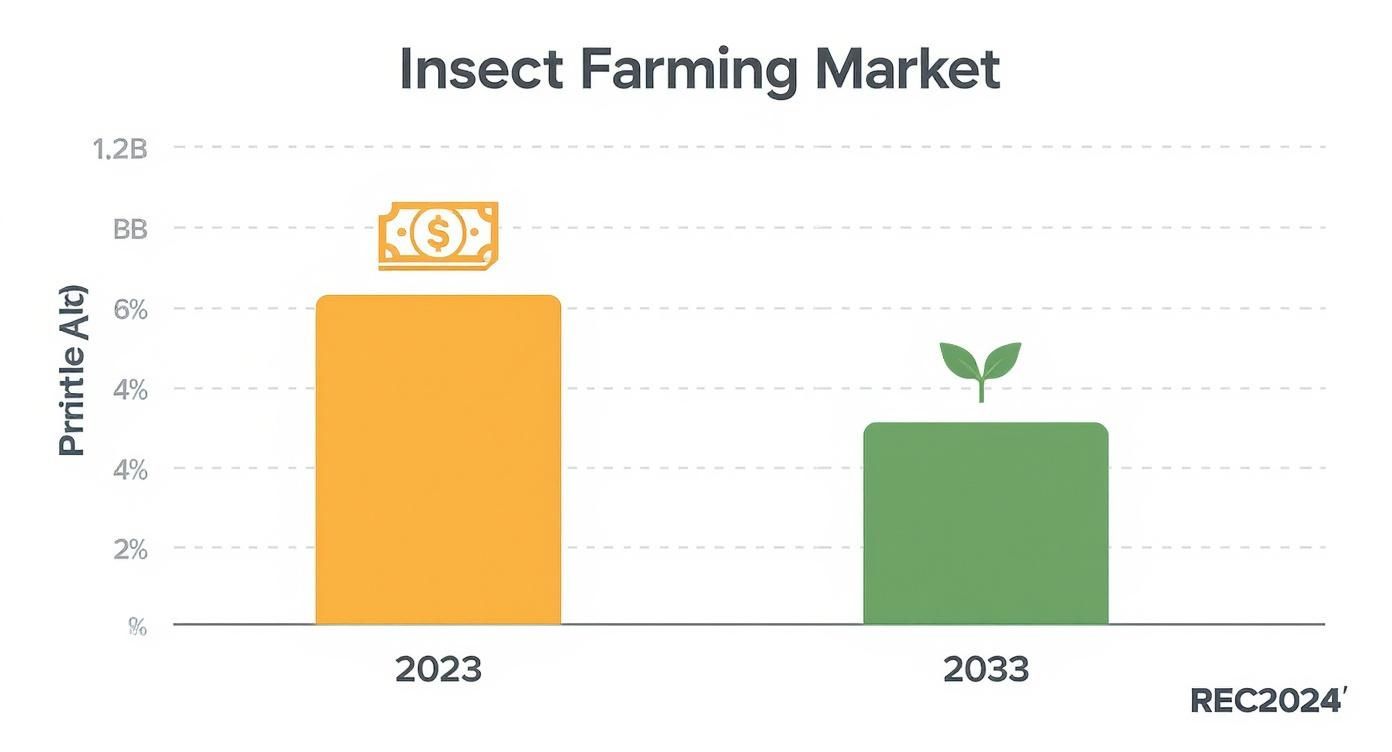
The insect farming market is on track to grow from $1.5 billion in 2023 to $2 billion by 2033. This shows a major shift in how we think about feeding our animals, with a clear move toward more sustainable and nutritionally superior options.
Let's break down the key nutritional differences in a simple table.
Nutritional Comparison: Grub Worms vs. Mealworms
Here's a side-by-side look at how these two popular treats stack up. As you'll see, the numbers speak for themselves.
| Nutrient | Grub Worms (BSFL) | Mealworms |
|---|---|---|
| Protein | 39-48% (High-quality, complete protein) | ~50% (Slightly higher, but lacks other key benefits) |
| Fat | 28-32% (Rich in beneficial fatty acids) | ~25% (Good energy source) |
| Calcium | ~1.5% (Extremely high and bioavailable) | ~0.03% (Very low, almost negligible) |
| Ca:P Ratio | ~2:1 (Ideal for absorption and bone health) | ~1:7 (Poor ratio, can inhibit calcium uptake) |
| Lauric Acid | Present (Supports gut health and immunity) | Absent (Lacks this antimicrobial benefit) |
The takeaway is clear: while mealworms offer good protein, they fall completely flat on calcium. Grub worms, on the other hand, provide a much more balanced and beneficial package for your flock's overall health.
Here’s a quick rundown of what else those grubs are doing for your chickens:
- Healthy Fats: This is pure, concentrated energy. It helps your birds stay warm during cold snaps and maintain a healthy body condition year-round.
- Lauric Acid: A special fatty acid with natural antimicrobial properties, lauric acid helps support a robust immune system and a healthy gut.
- Essential Minerals: Beyond calcium, grubs deliver phosphorus, magnesium, and zinc. These are all crucial for metabolism, bone density, and overall vitality.
In the end, choosing grub worms over mealworms is about more than just giving your chickens a treat they love. It’s a smart investment in their long-term health, productivity, and resilience. You're giving them a nutritionally superior option that truly supports them from the inside out.
When you're deciding on a new treat for your flock, nothing is more important than safety. After all, our chickens depend on us to make good choices for them.
While it's true that chickens are natural foragers and will happily snatch up any bug they find in the yard, there's a world of difference between a wild insect and a commercially raised grub worm. Where your grubs come from matters. A lot.
Think about it this way: you wouldn't pull vegetables for your own dinner from a garden sprayed with unknown chemicals. The same principle applies here. Grubs are a product of their environment and their diet. A random bug from the yard could have been exposed to pesticides, parasites, or nasty bacteria from a questionable compost pile.
This is exactly why choosing safely sourced grub worms for chickens is a non-negotiable. The best suppliers raise their grubs in completely controlled environments, feeding them a clean, traceable diet. This simple step eliminates all those scary unknowns.
What "Safely Sourced" Actually Means
When a brand talks about safety, it shouldn't just be a marketing term. It should be a promise backed by a specific, verifiable process. For grub worms, this means the larvae are raised exclusively on pre-consumer food waste—things like leftover grains from a brewery or unsold fruits and vegetables from a distributor. It’s clean, healthy, and traceable right back to the source.
This careful feeding strategy ensures the grubs are free from contaminants that could make your chickens sick or, even worse, find their way into the eggs you eat. It's a "clean-in, clean-out" system you can trust.
The gold standard for safety isn't just a clean diet; it's rigorous testing and following established feed regulations. The most reputable producers adhere to guidelines from the FDA and the Association of American Feed Control Officials (AAFCO), which means the product is quality-controlled from the moment the larva hatches to the moment it's sealed in the bag.
This kind of oversight gives you peace of mind. You know you’re giving your flock a treat that’s not just nutritious, but genuinely safe. It takes all the guesswork out of the equation.
Why Pathogen and Contaminant Testing is a Must
The final piece of this safety puzzle is regular testing. The brands that truly care about your flock's health will voluntarily test their products for a whole host of harmful substances. This is the ultimate proof of quality.
Here’s what they should be looking for:
- Pathogen Screening: Testing for dangerous bacteria like Salmonella and E. coli is critical to prevent a flock-wide illness.
- Heavy Metal Analysis: This checks for nasty toxins like lead, mercury, and arsenic, which can build up in a chicken's body over time.
- Mycotoxin Prevention: Good producers ensure the grubs' food source is free from the dangerous molds that can produce these toxins.
The easiest way to ensure you're getting a safe product is to choose a brand that's transparent about its U.S. origins and its testing protocols. When you invest in high-quality, tested grub worms for chickens, you’re not just buying a treat—you're making a smart investment in the long-term health and vitality of your flock.
How to Feed Grub Worms to Your Flock
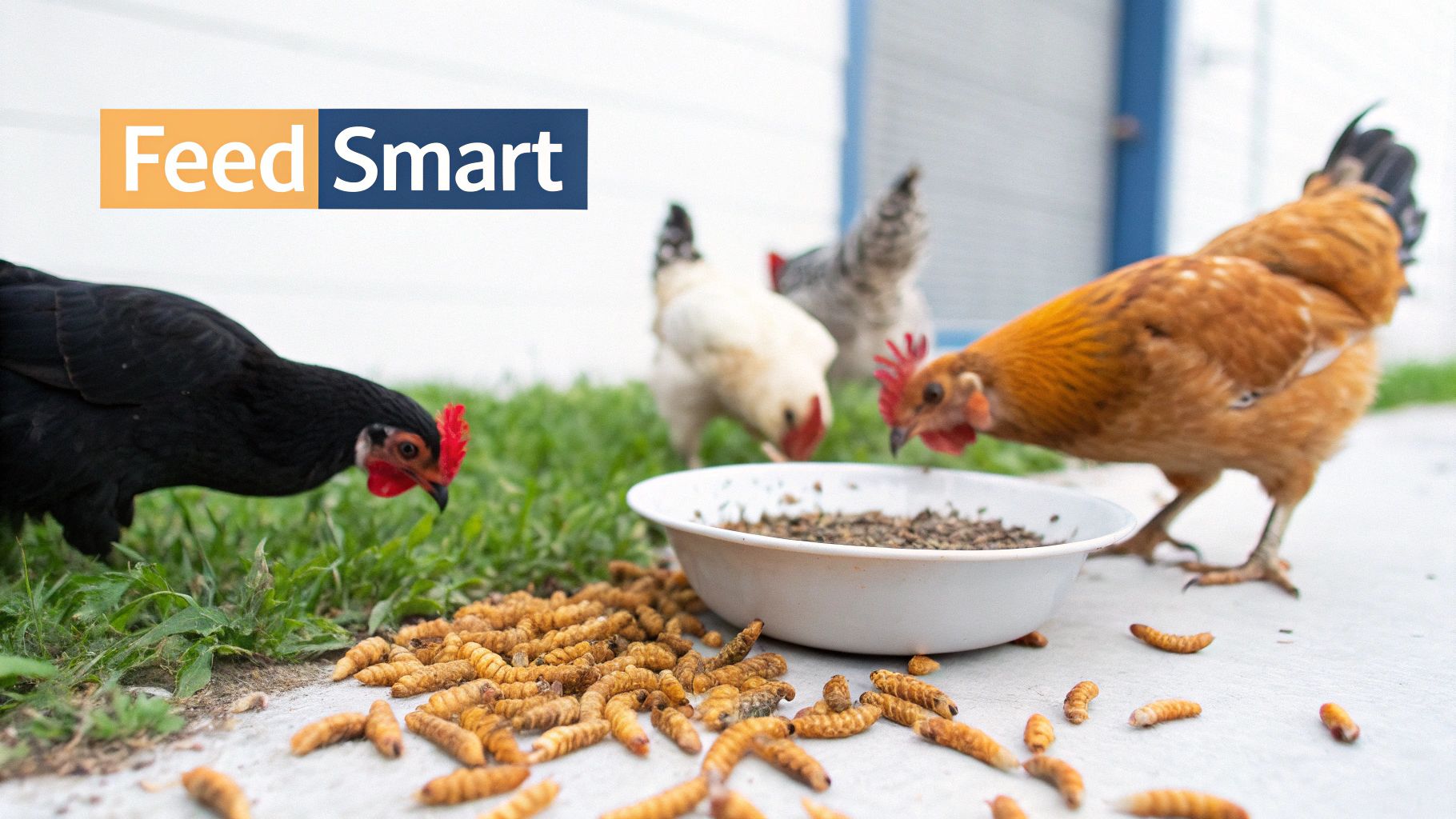
Alright, you're sold on the amazing benefits packed into these little grubs. Now for the fun part—actually sharing them with your flock. Feeding grub worms for chickens is dead simple, but a few clever tricks can make this super-treat even better for your birds.
Think of it less like just giving them food and more like giving them an activity. It's a fantastic chance to provide some enrichment that taps right into your chickens' natural instincts. Turning snack time into a game keeps your flock happy, healthy, and entertained.
And don't worry, there's no single "right" way to do it. The best method really just comes down to your flock's personality and whatever fits into your daily routine.
Creative Ways to Serve Grub Worms
Why just dump them in a bowl? Mixing things up keeps your flock on their toes. Trying a few different ways to serve grubs will stimulate their minds and get them moving.
Here are three of my favorite tried-and-true methods:
- The Scatter Method: This is as easy as it sounds. Just grab a handful of grubs and toss them across the coop or run. This gets your chickens scratching and pecking, just like they would if they were foraging for real. It's the perfect boredom-buster and gives them a great mental and physical workout.
- The Feed Mix-In: Want to make sure everyone gets some? Simply mix the grubs right into their daily feed. This guarantees even your pickiest eaters get a solid dose of that high-protein, high-calcium goodness. It’s also a great tactic when your flock has higher nutritional needs, like during a molt.
- The Hand-Tamed Treat: This is my personal favorite for building a connection. Offering grubs right from your hand is the fastest way to build trust and bond with your chickens. They learn very quickly who brings the good stuff, making them friendlier and way easier to handle over time.
By rotating through these methods, you keep treat time exciting and something your chickens will genuinely look forward to every day.
Portion Sizes and Feeding Frequency
As healthy as grubs are, it's important to remember they are a treat. Moderation is the name of the game to keep their overall diet perfectly balanced.
As a solid rule of thumb, plan on giving about 10-12 grubs per adult chicken each day. That comes out to roughly one tablespoon and is plenty to give them a major nutritional kick without ruining their appetite for their main feed.
Of course, you can tweak this. When your birds are going through a heavy molt and desperately need more protein, or during the coldest winter days when they need extra fat for energy, feel free to increase the amount slightly. Just always make sure their main layer feed accounts for at least 90% of what they eat. For a deeper dive into this, check out our guide on dried grubs for chickens.
At the end of the day, treats should always supplement, never replace, their complete feed. That’s how you ensure they get all the vitamins and minerals they need for fantastic health and strong egg production.
How to Choose the Best Grub Worms
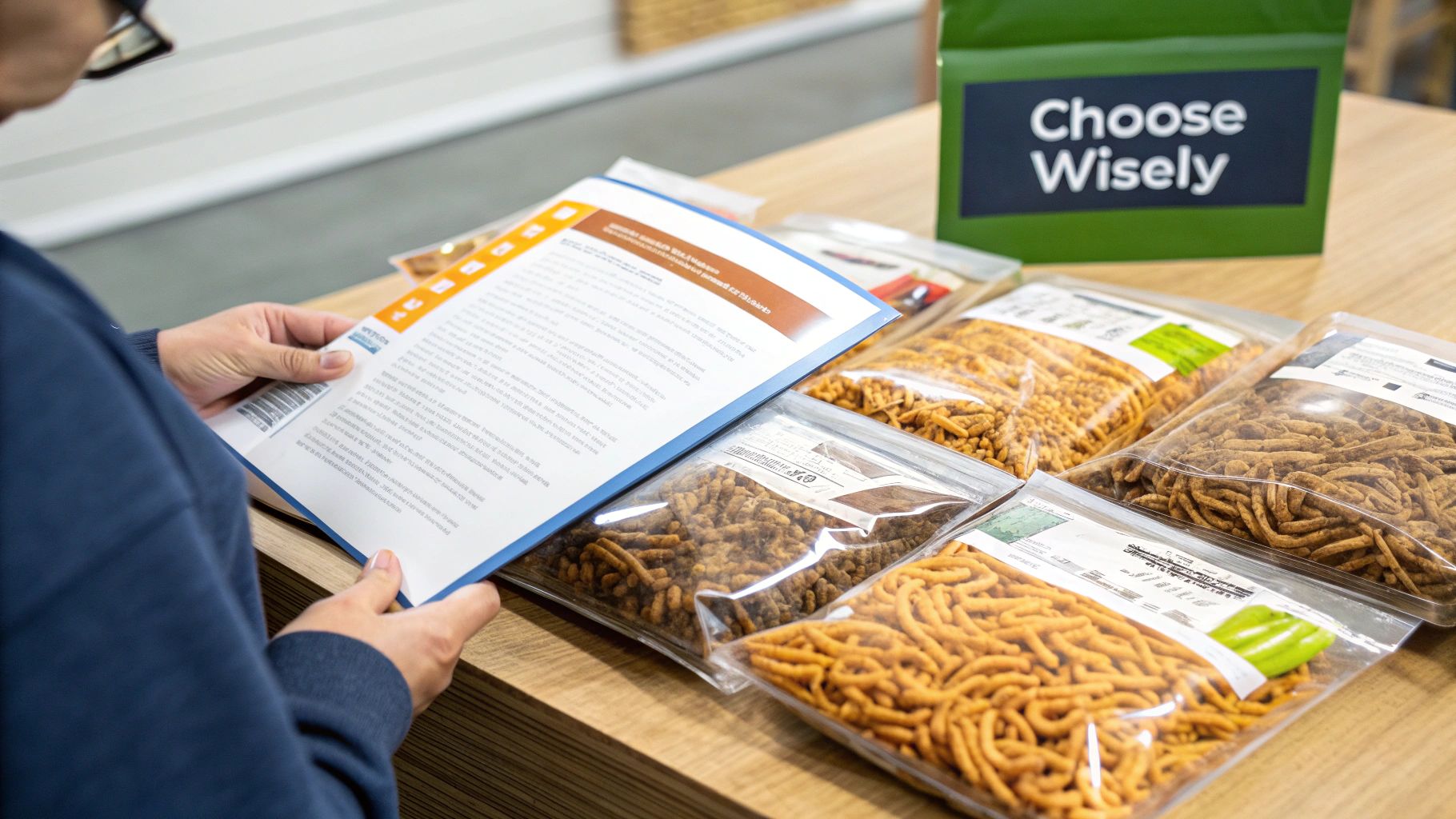
When you start shopping for grub worms for your chickens, the number of options can feel a bit dizzying. But here’s the thing: not all grubs are created equal. Taking a moment to understand what separates the good from the bad is the best thing you can do for your flock’s health.
Think of it like buying apples at the farmers market. You naturally gravitate toward the ones that look fresh and healthy, and you probably feel better buying from a local farmer you can talk to. The same gut instinct applies to picking out treats for your chickens. A little label-reading goes a long way.
H3: Look for U.S. Sourced and Processed Grubs
If there's one thing to prioritize, it's the country of origin. Choosing grubs that are grown, harvested, and packaged right here in the USA is a game-changer for safety and quality.
Why? Because U.S.-based producers operate under strict guidelines from organizations like the FDA and the Association of American Feed Control Officials (AAFCO). This isn't just bureaucracy—it means the grubs you buy have been raised on a clean, traceable diet, which directly impacts your chickens' health and the quality of their eggs.
When you choose USA-grown grubs, you’re not just buying a product; you’re buying peace of mind. It’s the simplest way to avoid the risks associated with imported feeds that may have questionable sourcing or processing standards.
H3: Check for a Guaranteed Nutritional Analysis
A trustworthy company will never hide what’s in the bag. Always flip the package over and look for a "Guaranteed Analysis." This is just like a nutrition label on your own food, breaking down the minimum percentages of essentials like protein, fat, and fiber.
The most critical number to find is the calcium content. This is your proof that you’re actually getting the high-calcium advantage that makes dried black soldier fly larvae so special. If a brand doesn’t bother to list this, consider it a major red flag.
H3: Prioritize Safety and Purity
Great grub worms aren't just nutritious; they're incredibly clean. Look for brands that are upfront about raising their grubs on a pre-consumer diet. This means the larvae are fed clean food scraps, not random post-consumer garbage that could be full of contaminants.
Beyond that, the best suppliers take safety a step further by testing their final product. Make sure the brand you choose screens for nasty stuff you don't want anywhere near your flock, such as:
- Heavy Metals like lead, arsenic, and mercury.
- Pathogens like Salmonella and E. coli.
This commitment to testing is what lets you know the treats are safe for your birds and, by extension, your family.
The demand for high-quality insect protein is absolutely booming. The global mealworms market, for example, is expected to jump from USD 1.38 billion in 2025 to USD 7.15 billion by 2032. As more people catch on, it’s more important than ever to know what you’re buying. You can dive deeper into these market trends with this report from Coherent Market Insights.
To make it even easier, here’s a quick checklist to run through when you’re shopping.
Buyer's Checklist for High-Quality Grub Worms
| Quality Factor | What to Look For | Why It Matters |
|---|---|---|
| Country of Origin | "Product of USA" on the label. | Ensures adherence to strict FDA and AAFCO safety and quality standards. |
| Nutritional Info | A clear "Guaranteed Analysis" with protein and calcium percentages. | Verifies you're getting the high-calcium, high-protein benefits you're paying for. |
| Diet of the Grubs | Mention of a "pre-consumer" or "clean" diet. | Prevents potential contamination from waste materials. |
| Safety Testing | Statements about testing for heavy metals and pathogens. | Guarantees the treats are free from harmful substances like Salmonella or lead. |
| Appearance & Smell | Whole, plump grubs with a nutty, earthy smell. | Avoid broken, dusty products or those with a foul, chemical odor. |
By keeping an eye on U.S. origin, nutritional transparency, and rigorous safety testing, you can feel confident that you’re choosing a top-tier treat that will help your flock thrive.
Common Questions About Grub Worms for Chickens
It’s one thing to read about all the great benefits of grub worms, but it's another to start tossing them out to your flock. It's totally normal to have a few last-minute questions before you make them a regular part of your chickens' diet.
Getting straight answers helps you feed your birds with confidence. Let's dig into some of the questions I hear most often from fellow chicken keepers.
Can Chickens Eat Too Many Grub Worms?
That’s a great question, because if you've ever seen a chicken go after a grub, you know they'd eat them all day if they could! While grub worms are packed with nutrition, they really are best served as a treat. Think of them as a healthy supplement, not the main course.
A good quality layer feed should always be the foundation of your flock's diet, making up about 90% of what they eat. All the other fun stuff—grubs, kitchen scraps, scratch grains—should only be about 10% of their total intake. Sticking to this simple rule ensures your birds get the balanced nutrition they need to stay healthy and lay great eggs. Too many treats, even healthy ones, can throw that balance out of whack.
Are Dried or Live Grubs Better?
Both live and dried grubs are fantastic for chickens, but they fit into your routine in different ways.
- Dried Grubs: Honestly, this is the go-to for most of us. They're incredibly convenient, easy to store, and last forever. You get a super-concentrated source of protein and calcium that’s ready to scoop and serve anytime, year-round.
- Live Grubs: These are an amazing way to bust boredom in the coop! Tossing a few live grubs into the run encourages natural scratching and foraging, which is great for your chickens' mental health. The downside is they're harder to find, a bit of a pain to keep alive, and don't last long.
For sheer nutritional impact and everyday ease, dried grubs are the clear winner. You get all the benefits without turning your mudroom into a bug nursery.
Can Baby Chicks Eat Grub Worms?
Yes, they can, but you have to get the timing right. For the first few weeks, a baby chick's digestive system is incredibly delicate. They need to stick exclusively to a high-quality starter crumble that's designed for their specific needs.
Once they hit about three or four weeks old, you can start introducing a few grubs as a special treat. The trick is to crush them up first—their little beaks can't quite handle a whole grub yet. Just sprinkle a tiny amount of the crushed pieces over their feed. It gives them a nice protein boost, but always remember it’s a treat, not a meal replacement.
How Should I Store Dried Grubs?
Keeping your dried grubs fresh and crunchy is simple if you protect them from their three biggest enemies: moisture, heat, and pests.
The best way to store dried grub worms is in an airtight container placed somewhere cool, dark, and dry. Think of a sealed bucket or a big plastic tub in your garage, shed, or pantry. This keeps them from getting damp and moldy and ensures they stay tasty for your flock.
Try to keep the container out of direct sunlight, which can break down the healthy fats in the grubs over time. Stored this way, a bag of dried grubs will easily stay fresh for a year or more, so you'll always have a high-quality treat ready for your feathered friends.
Ready to give your flock the U.S.-grown, high-calcium treat they deserve? Pure Grubs are raised, tested, and packaged in the USA, ensuring the highest standards of safety and quality for your birds. Shop Pure Grubs today and see the difference it makes.