

best source of protein for chickens: feeds, insects, and natural options
The best protein source for your chickens isn't a single magic ingredient. It's a combination of a high-quality commercial feed that serves as the dietary foundation, supplemented with natural, high-protein boosters like black soldier fly larvae.
This balanced approach is the secret to getting everything right—health, vitality, and fantastic egg production. It ensures your flock has complete nutrition, whether they're fluffy chicks or seasoned laying hens.
Why High-Quality Protein Is So Important for Your Flock
Think of protein as the engine that runs a healthy chicken. It's not just a number on the feed bag; it's the core component that impacts everything from feather quality to immune strength. Getting this right is the first step to raising a thriving flock.
Specifically, protein delivers the amino acids that are non-negotiable for a chicken's daily functions. These compounds are the MVPs of poultry health.
- Consistent Egg Production: A single egg is about 13% protein. Without a steady supply, you'll see egg production drop off a cliff.
- Strong Feather Growth: Feathers are roughly 85% protein (mostly keratin). When your flock goes through their annual molt, their protein needs skyrocket to regrow a full set of feathers.
- Healthy Muscle and Tissue: From day one, protein is crucial for building and maintaining strong muscles, organs, and all the tissues that keep a chicken active and healthy.
- A Robust Immune System: The antibodies that fight off illness are made from protein. A flock with the right protein intake is simply better prepared to handle stress and stay healthy.
Matching Protein to Your Flock's Needs
A chicken's protein requirements change throughout its life. A brand-new chick needs a high-protein starter feed (20-24% protein) to fuel its incredible growth spurt. A mature laying hen, on the other hand, does best on a layer feed with 16-18% protein—enough to support egg-laying without overdoing it.
A molting hen's protein needs can jump right back up to the level of a young, growing pullet. She's not just regrowing feathers; she's rebuilding her entire body condition for the next laying season.
The Foundation of Modern Poultry Nutrition
For decades, the undisputed champion of poultry protein has been soybean meal. Containing 44-48% crude protein, it became the industry standard back in the 1950s due to its excellent amino acid profile and how easily chickens can digest it.
Even today, soybean meal accounts for about 70% of the protein in commercial broiler diets worldwide. While it’s undeniably effective, a growing awareness around sustainability is pushing farmers and backyard keepers alike to look for powerful, more eco-friendly alternatives. You can read more about these global protein consumption trends on spglobal.com.
A Head-to-Head Comparison of Chicken Protein Sources
Choosing the right protein for your chickens comes down to a balancing act between nutrition, cost, and what’s practical for your setup. Not all protein is created equal, and what works for a commercial farm might not be the best fit for your backyard flock. Let's break down the most common options so you can make the best choice for your birds.
Commercial Feeds: The Dependable Foundation
For most chicken keepers, a high-quality commercial feed is the non-negotiable cornerstone of a healthy diet. These feeds are put together by animal nutritionists to be a complete, balanced meal, which really takes the guesswork out of feeding your flock.
A standard commercial layer feed will have 16-18% crude protein, which is the sweet spot for supporting consistent egg production without overtaxing a hen's system. They're also fortified with all the essential vitamins and minerals, including just the right amount of calcium for strong eggshells. You can get a deeper dive into different formulas in our guide on the kinds of poultry feeds.
The bottom line: The biggest win for commercial feed is reliability. Every single scoop delivers a consistent, complete nutritional profile. This ensures your flock gets all the amino acids, vitamins, and minerals they need, day in and day out.
The main downside? You don't have control over the ingredients. Formulas can change, and some folks prefer to avoid common fillers like corn and soy for their own reasons.
Soybean Meal: The Industry Powerhouse
Soybean meal is the dominant protein source in most commercial feeds for a reason. It’s a plant-based juggernaut, packing a hefty 44-48% crude protein. This makes it incredibly effective for getting young birds to grow quickly and keeping laying hens in peak production.
Its amino acid profile is one of the best you can find in a plant source. It's just a little low in methionine, but feed makers simply add a supplement to create a perfect balance. For decades, it's been the poultry industry's go-to because it's affordable and always available.
The chart below shows just how much impact soybean meal has had on key poultry metrics, based on its widespread use in commercial feeds.
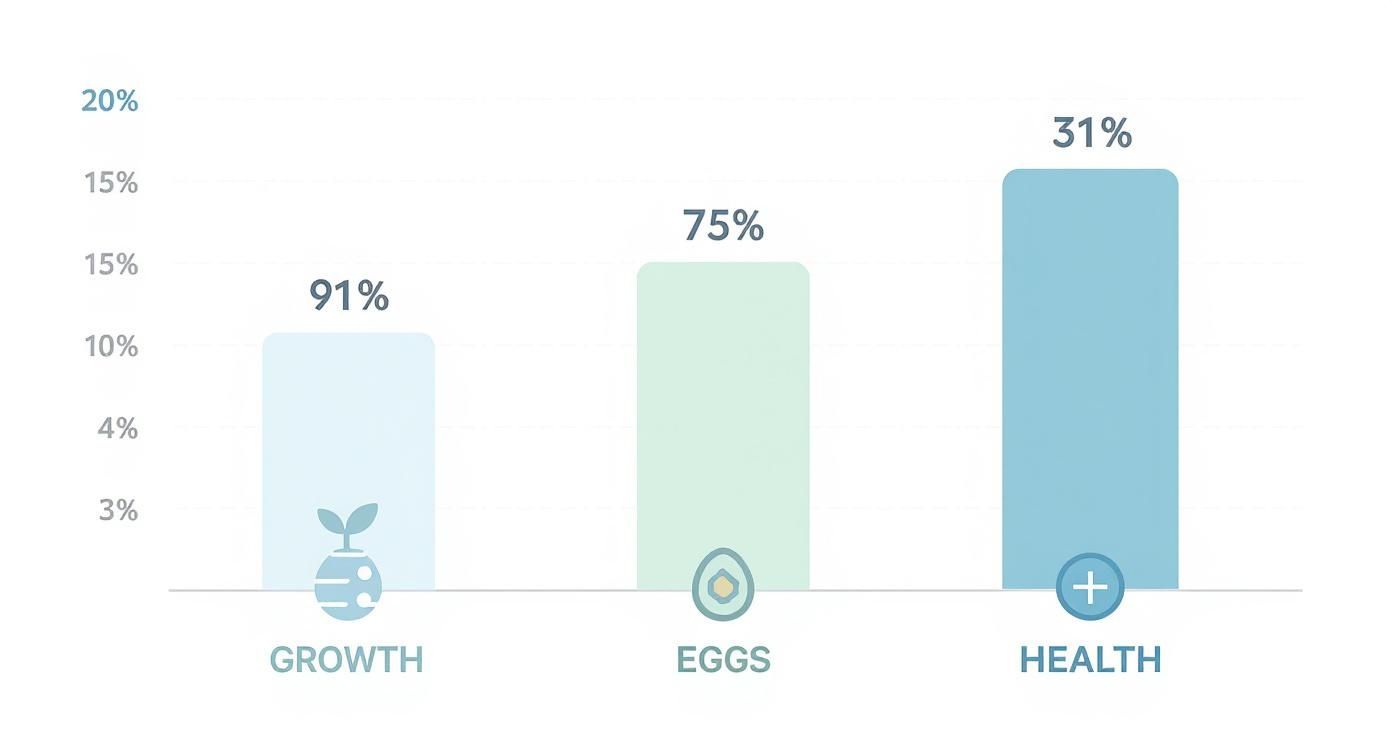
As you can see, it’s a champ for growth and egg-laying, but it doesn't move the needle as much on specific health markers when compared to more nutrient-packed supplements.
But it’s not all good news. Concerns over genetically modified crops and the environmental footprint of massive soy farms have many flock owners looking for other options.
Fish Meal: The Nutrient-Dense Animal Protein
Years ago, fish meal was the gold standard in poultry feeds, especially for young chicks. It has a massive crude protein content of 60-72% and a top-tier amino acid profile that chickens can digest very easily.
On top of the protein, fish meal is a fantastic source of omega-3 fatty acids, which can lead to better quality eggs and a stronger immune system. Chickens also love the savory smell, which can encourage picky or stressed birds to eat.
So why isn't it used more often? A few big reasons. Global production has hit a plateau, and with more competition for it, prices have shot up. It's just not economical anymore for most feeds. Plus, sustainability issues around overfishing have made it a less appealing choice for many. Today, you'll mostly find fish meal in specialty starter feeds, and even then, usually at less than 3% of the total formula.
Black Soldier Fly Larvae: The Sustainable Superfood
This is where things get exciting. Black Soldier Fly Larvae (BSFL), like our Pure Grubs, are quickly becoming the superior protein supplement for chickens. They tap right into a chicken's natural desire to forage for insects and offer a seriously impressive nutritional punch.
Dried BSFL contain around 40% protein and are loaded with key amino acids like methionine, which is vital for healthy feather growth. The fat content is also a great source of energy, something your flock desperately needs during a tough molt or a cold winter.
But the real game-changer with BSFL is the calcium. They have an almost perfect calcium-to-phosphorus ratio, which is crucial for strong bones and consistently tough eggshells. This alone makes them a far more complete treat than other insects.
Mealworms: The Popular but Flawed Treat
There’s no doubt about it—chickens go absolutely nuts for mealworms. They are a fun, high-protein treat that can make your flock come running. And with about 50% crude protein, they seem like a great choice.
However, mealworms have one major nutritional flaw: their calcium-to-phosphorus ratio is way out of whack. They are packed with phosphorus but contain very little calcium. When you feed too many, this imbalance can actually block calcium absorption in your hens.
Here's how to use them: Think of mealworms as a special, high-value reward for training or bonding, not a daily supplement. Overdo it, and you could see a decline in your eggshell quality over time.
If you're focused on supporting strong eggshells, BSFL are the smarter choice by a long shot. The balanced minerals in BSFL actively help your hens, while mealworms should only be a treat given in moderation.
Kitchen Scraps: The Variable Supplement
Tossing kitchen scraps to the flock is a classic way to reduce food waste and give your birds some variety. Healthy leftovers like leafy greens, chopped veggies, and cooked grains can provide some nice supplemental vitamins and minerals.
The big problem with scraps is the wild inconsistency. The protein, fat, and nutrient content changes every single day, making them completely unreliable as a core part of the diet. A diet that's too heavy on low-protein, high-carb scraps like bread or pasta can lead to nutritional gaps and overweight birds.
Safety is also a huge concern. A lot of common human foods are toxic to chickens, including:
- Raw potato peels
- Avocado skin and pits
- Large amounts of onions or garlic
- Anything salty, sugary, or processed
- Uncooked rice or beans
Always make sure scraps are fresh and never moldy. The golden rule is that scraps should be a small treat, making up no more than 10% of your flock's daily food intake. They're a bonus, not a replacement for a balanced feed.
Comprehensive Comparison of Chicken Protein Sources
To help you see everything side-by-side, we've put together this table. It breaks down the key nutritional and practical details of each protein source, making it easier to decide what's best for your flock's specific needs.
| Protein Source | Crude Protein % | Amino Acid Profile | Key Benefits | Primary Concerns | Best For |
|---|---|---|---|---|---|
| Commercial Feed | 16-18% | Complete & Balanced | Nutritionally complete, convenient, consistent | Lack of ingredient control, potential fillers (corn/soy) | The foundational diet for all backyard and small farm flocks. |
| Soybean Meal | 44-48% | Very Good (needs added methionine) | High protein, cost-effective, boosts growth & egg production | GMO concerns, environmental impact of monoculture | A primary protein ingredient in most commercial feed formulations. |
| Fish Meal | 60-72% | Excellent & Highly Digestible | High in Omega-3s, very palatable | High cost, sustainability issues (overfishing) | Specialty starter feeds or premium formulas where cost is not a major factor. |
| BSFL (Pure Grubs) | ~40% | Excellent & Complete | Ideal Calcium:Phosphorus ratio, sustainable, promotes natural foraging behavior | Higher initial cost than some treats | A daily health supplement for strong eggshells, feather health, and energy. |
| Mealworms | ~50% | Good, but lacks balance | Extremely palatable, high in protein | Poor Calcium:Phosphorus ratio, can hinder calcium absorption | An occasional, high-value treat for training or bonding; not for daily feeding. |
| Kitchen Scraps | Variable | Inconsistent & Unreliable | Reduces waste, provides dietary variety | Nutritional inconsistency, risk of feeding toxic or unhealthy foods | A minor dietary supplement (less than 10%) alongside a complete feed. |
Ultimately, the best approach is a layered one. A high-quality commercial feed should always form the base of your flock's diet, ensuring their core nutritional needs are met every day. From there, you can add supplements like BSFL for targeted health benefits or offer occasional treats like mealworms and safe kitchen scraps for enrichment.
Why Insect Protein Is a Game-Changer for Modern Flocks
For decades, traditional protein sources have done the job. But as we learn more about what makes chickens truly thrive, it's clear that a shift toward more natural, biologically appropriate nutrition is the way to go. And what's more natural for a chicken than eating bugs? It's an instinct they've had forever.
Tapping into that instinct with a high-quality insect protein isn't just a treat—it's one of the best things you can do to boost the health and vitality of your flock. While there are a few options out there, Black Soldier Fly Larvae (BSFL) have quickly proven to be the top choice. They aren't just a protein snack; they offer a complete nutritional package that supports a chicken's entire system.
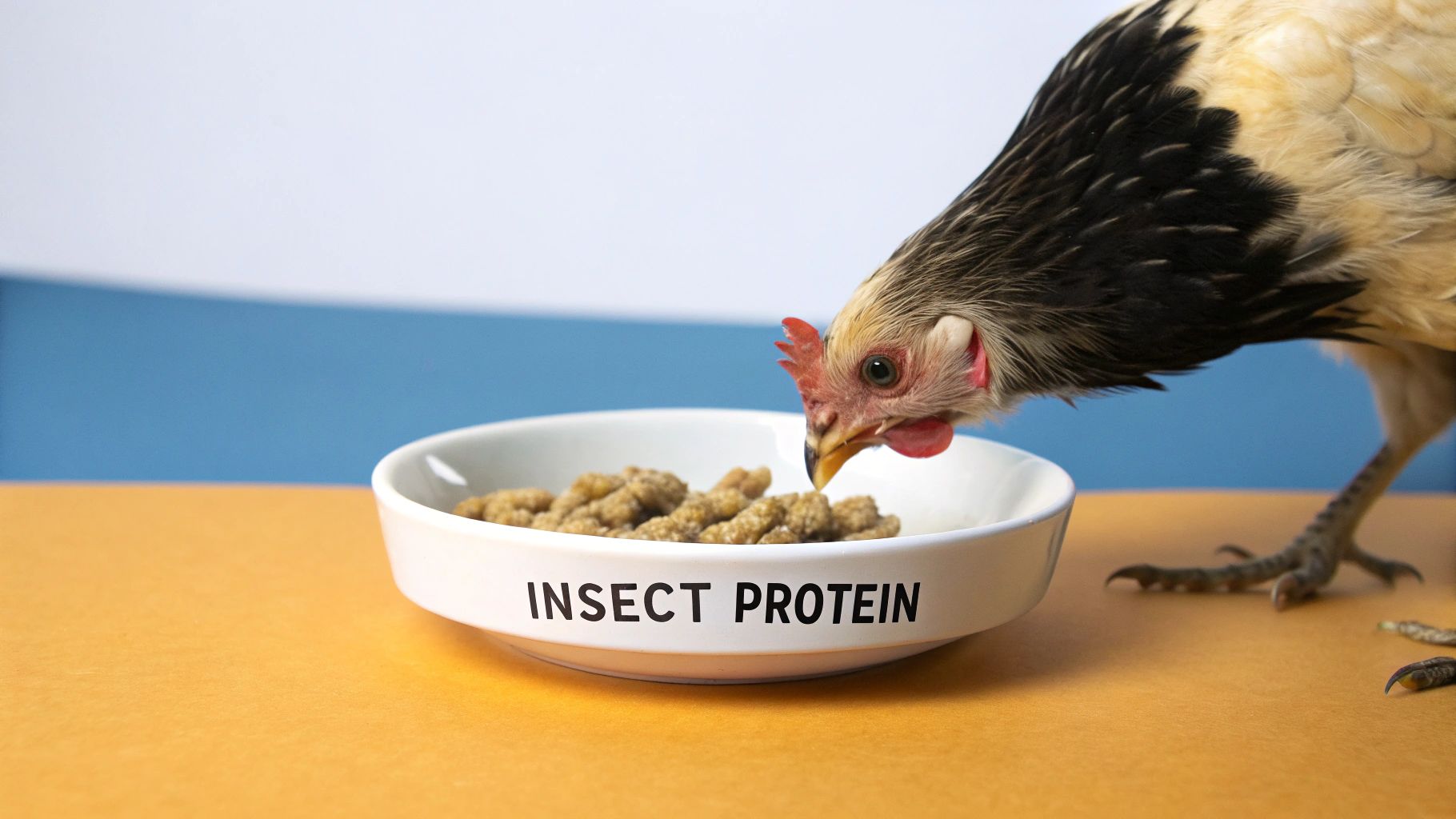
The Unmatched Nutritional Profile of BSFL
Dried Black Soldier Fly Larvae pack a serious punch. When added to a quality commercial feed, they provide a targeted boost that directly supports a hen’s most demanding functions, especially laying and molting.
Let's break down what's inside:
- High-Quality Protein: BSFL deliver around 40% protein, loaded with the essential amino acids chickens need for everything from feather growth to immune support.
- Excellent Energy Source: A healthy fat content provides a concentrated blast of energy, which is incredibly useful during cold snaps or the draining molting season.
- Essential Minerals: They’re a natural source of phosphorus, potassium, and magnesium, all of which keep a chicken’s metabolism humming.
But here’s the real secret to BSFL’s power: their perfectly balanced calcium-to-phosphorus ratio. This synergy is non-negotiable for laying hens. It ensures the calcium they consume is actually absorbed and put to work creating strong, solid eggshells.
This unique mineral profile makes BSFL far more than a simple protein boost. It's a complete health supplement.
BSFL vs. Mealworms: A Clear Winner for Flock Health
If you've been keeping chickens for a while, you know how much they love mealworms. And while they're a guaranteed flock favorite, they come with a major nutritional flaw that can cause real problems if you feed them too often.
Mealworms are packed with protein—often around 50%—but their mineral balance is way off. They're incredibly high in phosphorus and contain almost no calcium. This lopsided ratio can actually block a hen from absorbing calcium from her feed, which can lead to thin, weak, or soft-shelled eggs over time. Because of this, mealworms should only be an occasional treat, not a daily staple.
BSFL, on the other hand, deliver both the protein and the right mineral balance. You can read more about why the balanced nutrition of dried black soldier fly larvae makes them the superior daily choice for supporting your flock’s long-term health.
Practical Ways to Feed Insect Protein
Bringing insect protein into your routine couldn't be easier. You don't need to change your flock's main feed at all. Just think of BSFL as a powerful tool to enhance their diet when they need it most.
Here are a few easy ways to use them:
- Daily Health Supplement: A small handful sprinkled over their regular feed each morning gives them a consistent dose of extra protein, usable calcium, and energy.
- Molting Season Support: When your flock starts dropping feathers in the fall, their protein needs go through the roof. Doubling their daily BSFL ration gives them the building blocks to regrow strong, beautiful feathers quickly.
- Foraging Enrichment: Toss a scoop of larvae around the run or yard. This encourages their natural instinct to scratch and forage, keeping them active and occupied. A busy chicken is a happy chicken, and this simple activity can help prevent boredom-related problems like feather picking.
By adding BSFL to your feeding strategy, you're offering a protein source that perfectly mirrors their natural diet. It's a simple step that leads to visibly healthier birds, stronger eggs, and a more vibrant, active flock.
Putting It All Together: A Practical Feeding Strategy for Your Flock
Knowing the stats on protein sources is great, but how do you actually use that information day-to-day? The truth is, there isn't one single "best" source of protein for chickens. The real secret is building a smart, flexible feeding plan that adapts to what your flock needs, right when they need it. Let’s walk through how to build a real-world plan for the most common situations you'll face as a chicken keeper.
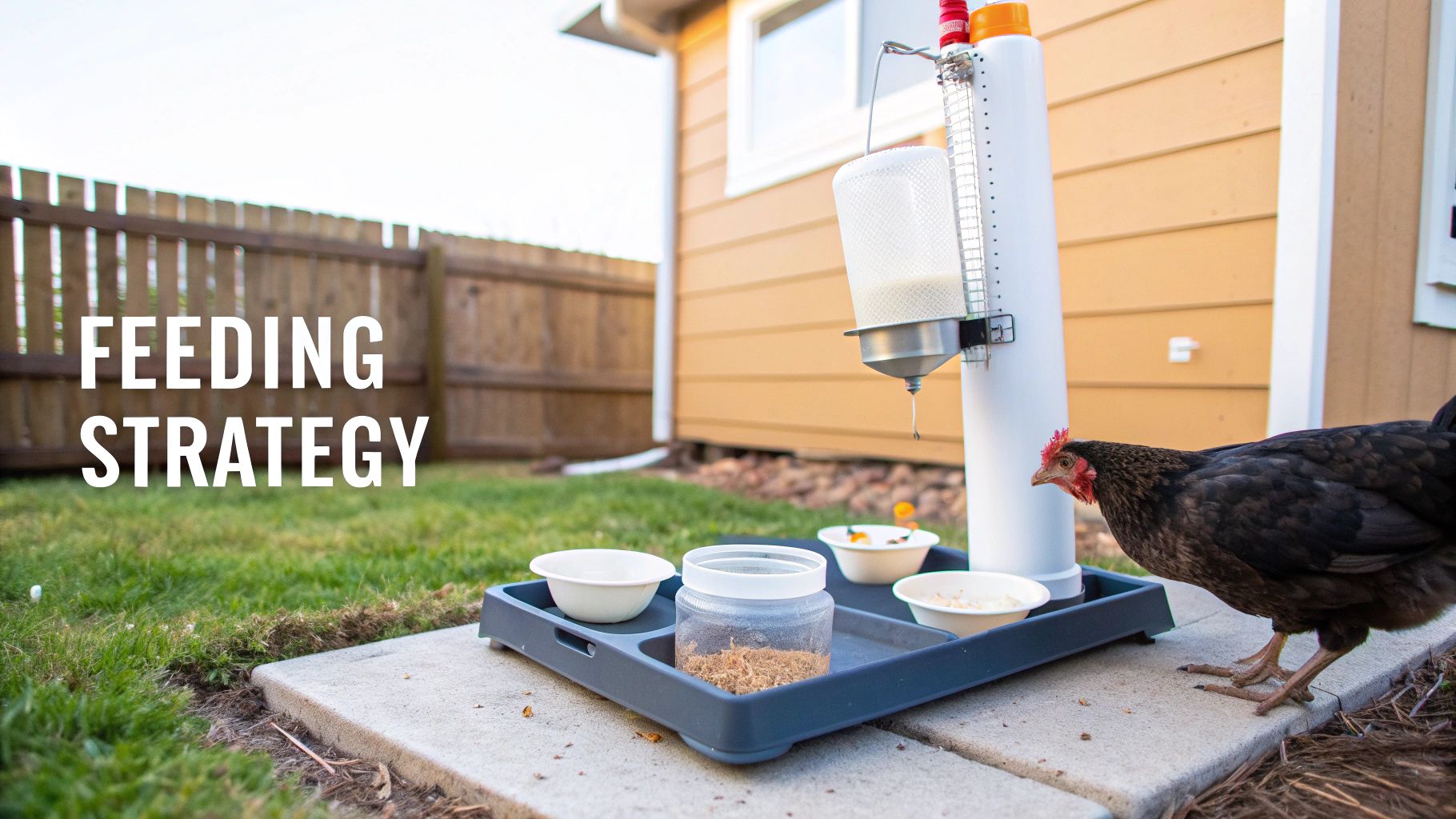
This isn't about a rigid, one-size-fits-all approach. It's about knowing how to adjust on the fly to keep your birds healthy and productive all year round.
Maximizing Egg Production
A laying hen is an incredible little engine, cranking out an egg almost every single day. That process demands a consistent, reliable supply of top-notch protein and calcium. You can't skimp here.
The foundation of any good layer's diet is a high-quality commercial feed with 16-18% protein. This is non-negotiable and should be available to your flock 24/7. It provides the essential baseline they need to stay healthy and form those beautiful eggs.
To really help them thrive and produce strong shells, bring in Black Soldier Fly Larvae (BSFL) like Pure Grubs as a daily supplement.
- Daily Routine: Give each bird about 1-2 tablespoons of BSFL a day. You can mix it into their feed or just scatter it for them to enjoy.
- Why It Works: This little boost provides a burst of easily digestible protein and, crucially, a fantastic source of calcium. It gives them exactly what they need to form thick, strong eggshells, which helps prevent those frustrating soft-shelled or broken eggs.
Supporting Birds During the Molt
The annual molt is easily one of the most stressful events in a chicken's life. They are losing and regrowing thousands of feathers—which are made of about 85% protein—and that takes a massive amount of nutritional energy. Hens will even stop laying because their bodies divert every available resource to making new feathers.
Your job is to give them the fuel they need to get through it.
During a molt, a hen's protein needs can shoot up from the usual 16% to over 20%—that's the same level a fast-growing chick requires. If they don't get it, they'll struggle through a slow, difficult molt and take much longer to start laying again.
To help them, temporarily switch their main feed to a higher-protein formula, like a flock raiser or grower feed (20-22% protein). At the same time, you'll want to seriously up their BSFL supplement.
- Molting Strategy: Double their daily BSFL treat to 3-4 tablespoons per bird.
- The Benefit: The concentrated, high-quality protein in the grubs gives them the direct building blocks for quick, healthy feather growth. This helps them get through the molt faster, with less stress, and gets them back to laying eggs in much better shape.
Supplementing a Free-Range Diet
Free-ranging chickens have it pretty good, enjoying a diverse diet of bugs, seeds, and fresh greens. This is fantastic for their happiness and overall health. The problem is, you can't really count on what they find out there. The nutritional value of their foraged food is unpredictable and changes drastically with the seasons. To learn more about what they look for in the wild, check out our guide on what chickens eat naturally.
Even with free-ranging, a good layer feed should always be available to them back at the coop. Chickens are pretty smart about balancing their diet and will top up at the feeder if their foraging efforts fall short.
Your goal is to fill in any nutritional gaps without overdoing it.
- Free-Range Plan: Use BSFL as a reliable "end-of-day" supplement. When your flock comes back to the coop to roost for the evening, offer them 1-2 tablespoons per bird.
- Practical Impact: This simple routine guarantees that no matter what they did—or didn't—find while foraging, they go to bed with a full dose of complete protein and vital minerals. It's a great way to support steady egg production and keep them in prime condition, preventing the slumps that can happen when you rely on foraging alone.
Common Protein Mistakes and How to Avoid Them
Even the most caring flock owners can accidentally get a few things wrong when it comes to protein. We all want what's best for our birds, but simple missteps can lead to subtle health issues or a sudden drop in those beautiful eggs. Knowing what these common traps are is the first step toward getting your feeding routine just right for a healthier, more productive flock.
One of the easiest mistakes to make is going overboard with high-protein treats. It feels right, doesn't it? More protein must be better, especially for our hard-working laying hens. The truth is, consistently feeding too much protein puts a huge strain on a chicken's kidneys, which have to work overtime to process all that excess nitrogen.
This isn't to say you should ditch supplements altogether. The key is to use them strategically—as a targeted boost to a balanced commercial feed, not as a replacement for it.
Relying Too Heavily on Unbalanced Sources
Another common pitfall is letting kitchen scraps or scratch grains become a main part of the menu instead of a special treat. Chickens will gobble them up, but these foods are far from nutritionally complete and can throw off the carefully crafted diet their main feed provides.
A chicken that fills up on low-protein, high-carb foods like bread, corn, or pasta simply won't have room for the nutrient-dense feed she needs to lay eggs and stay healthy. This can quickly lead to deficiencies and unhealthy weight gain, which is a sure-fire way to hurt egg production.
Think of these goodies as dessert, not dinner. They should never make up more than 10% of your flock’s total daily food intake. Any more than that, and you're just displacing the essential nutrients they really need.
The Dangers of Ignoring Water Intake
You can offer the best feed in the world, but without enough water, it's almost useless. Proper protein metabolism is impossible without constant access to clean water. It’s absolutely essential for digestion, nutrient absorption, and even regulating body temperature. A chicken can go for weeks without food, but only a day or two without water.
When a chicken is even slightly dehydrated, its ability to process protein plummets. Feed consumption drops, and their whole nutritional system starts to break down.
To make sure this critical mistake never happens in your coop:
- Provide Multiple Waterers: Always have water available in more than one spot. This stops a single bossy hen from hoarding the supply and keeping others away.
- Clean Waterers Daily: Chickens are messy. A daily scrub prevents the buildup of that nasty slime and bacteria that can make them avoid drinking.
- Keep Water Cool in Summer: Tossing some ice blocks into the waterers on hot days encourages drinking. It also helps prevent heat stress, which only makes it harder for them to absorb nutrients.
At the end of the day, avoiding these common protein mistakes comes down to a simple rule: foundation first. Start with a complete commercial layer feed, use a high-quality supplement like Black Soldier Fly Larvae for a targeted boost, and make sure fresh, clean water is always within reach. That balanced approach is your most reliable path to a thriving flock.
Common Questions About Protein for Chickens
Even when you think you've got your feeding plan dialed in, questions pop up. It happens to everyone. Here are some of the most common things I hear from other chicken keepers, with straight-to-the-point answers to help you get it right.
How Can I Tell If My Flock Isn't Getting Enough Protein?
Spotting a protein deficiency early is the key to turning things around quickly. The signs can be subtle, but a drop in egg production is almost always the first red flag you'll see. If the nesting boxes are suddenly a little emptier, it's time to investigate.
Keep an eye out for these other classic symptoms:
- Rough Feathers: Outside of a normal molt, their feathers might look dull, brittle, or just plain ragged.
- Stunted Growth: For your younger birds, a lack of protein will seriously slow down their development.
- Low Energy: Your flock might seem listless, less active, or just generally "off."
- Weight Loss: You might notice a gradual loss of body mass, especially if you feel their breast muscle. It’s a sure sign something is wrong.
If you spot these issues, your first move should be to check their main feed. Make sure they always have access to a quality commercial layer feed with at least 16% protein.
What Happens If They Get Too Much Protein?
It’s less common in a backyard flock, but you can overdo it with protein. The biggest problem is that it forces their kidneys to work overtime processing all the excess nitrogen from protein metabolism, which can cause serious health issues down the road.
The most obvious sign of too much protein? Wet, sticky droppings. This happens because they drink a lot more water to flush their systems. Not only is it messy, but it can also lead to a dirty coop and even ammonia burns on their feet. In really bad cases, you're looking at potential kidney damage or gout. Just stick to the recommended 16-18% protein for your laying hens to keep them healthy.
Are Worms and Grubs from the Garden Safe for My Chickens?
Absolutely. Chickens love scratching around for grubs, worms, and beetles, and it's fantastic for them. This is what they're meant to do! It provides great mental stimulation and a nice little protein snack.
There’s just one major thing to watch out for: pesticides and chemicals. If you’ve recently treated your lawn or garden with any chemicals, herbicides, or pesticides, do not let your flock forage there. Those toxins are incredibly harmful if ingested. But if your yard is chemical-free, then by all means, let them enjoy the bug buffet.
A Quick Word of Advice: The best protein plan always starts with a complete, balanced commercial feed. All the extra treats and foraged goodies are fantastic supplements, but they should never take the place of that solid nutritional foundation.
Can Chickens Live on Kitchen Scraps Alone?
This is a big one, and the answer is a hard no. Feeding chickens leftovers is a classic tradition, but a diet of only kitchen scraps is a recipe for disaster. Scraps are all over the place in terms of protein, fat, and vitamin content.
Relying on them alone will cause serious nutritional deficiencies, poor health, and will bring egg production to a screeching halt. Plus, a lot of common people-food is actually toxic to chickens. Think of scraps as a small, occasional treat—they should never make up more than 10% of what your flock eats in a day.
Ready to give your flock a truly premium protein boost? Pure Grubs are USA-grown Black Soldier Fly Larvae, packed with the high-quality protein and essential calcium your chickens need for stronger eggs and brilliant health. It’s the safe, sustainable choice for a thriving flock.