

Best Protein for Bearded Dragons: Top Insects & Nutrition
If you're trying to pin down the single best protein source for your bearded dragon, you might be asking the wrong question. The real secret isn't finding one perfect insect; it’s about creating a rotational diet that includes several high-quality feeders. Top contenders will always include Black Soldier Fly Larvae (BSFL) for their amazing calcium balance, Dubia roaches for their protein-packed bodies, and crickets for getting your dragon moving.
Why Variety is the Best Protein Strategy
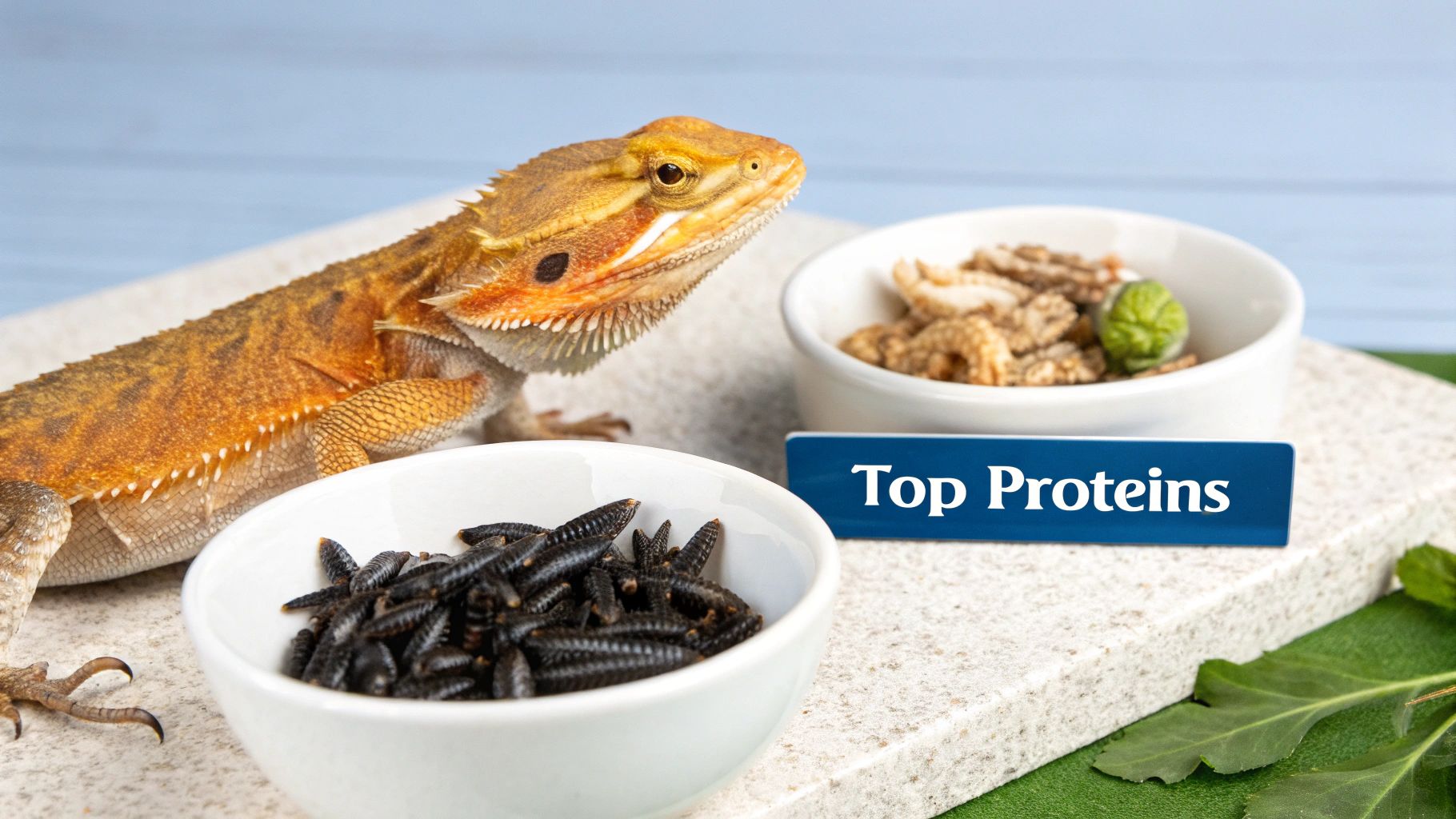
It’s tempting to look for that one "superfood" that checks all the boxes. But think about it from a human perspective—you wouldn't be very healthy if all you ate was grilled chicken, even though it's a fantastic protein. Your bearded dragon is the same; they need a wide range of nutrients that no single insect can deliver on its own.
Building a Balanced Menu
A varied diet does more than just cover the nutritional bases. It also keeps your dragon from getting bored and becoming a picky eater—a frustrating problem many owners face. By rotating between a few different staple insects, you ensure your pet stays interested in mealtime while getting a much more complete nutritional package.
Here’s why mixing it up matters so much:
- Nutritional Completeness: Every insect has a unique profile of protein, fat, fiber, and crucial minerals. Variety fills in the gaps.
- Prevents Picky Eating: Offering different tastes and textures stops your dragon from getting hooked on just one food.
- Mental Stimulation: The thrill of the hunt is real! Chasing after a quick cricket versus a slower-moving roach provides valuable enrichment and encourages natural instincts.
A rotational diet is really the cornerstone of responsible bearded dragon care. It mirrors how they would eat in the wild, snapping up all sorts of different bugs, and helps you avoid the common health problems that pop up from nutritional imbalances.
For a closer look at the different live feeders out there, take a look at our guide on the best live food for bearded dragons. It's a great resource for building out your dragon's menu.
Top Protein Sources for Bearded Dragons at a Glance
To help you get started, we've put together a quick comparison of the most popular and beneficial feeder insects. This table breaks down what makes each one a great choice for your dragon's diet.
| Insect Type | Protein Content (Approx.) | Calcium:Phosphorus Ratio | Best For Life Stage | Key Benefit |
|---|---|---|---|---|
| Black Soldier Fly Larvae | 17-20% | ~2:1 (Ideal) | All Stages | Naturally high in calcium, no dusting needed. |
| Dubia Roaches | 22% | ~1:3 (Needs Dusting) | All Stages | High in protein, low odor, and easy to keep. |
| Crickets | 20% | ~1:9 (Needs Dusting) | All Stages | Encourages active hunting and is widely available. |
| Superworms | 17-20% | ~1:13 (Needs Dusting) | Juvenile & Adult | High in fat, excellent for adding weight. |
As you can see, each insect brings something different to the table. Black Soldier Fly Larvae are a hassle-free staple thanks to their perfect calcium content, while crickets and Dubias offer a great protein punch and encourage natural behaviors. By rotating between these options, you're not just feeding your dragon—you're providing them with a foundation for a long and healthy life.
How Protein Needs Change as Your Dragon Grows
A bearded dragon's diet isn't a one-size-fits-all plan. It changes dramatically as they grow, and getting it right at each stage is one of the most important things you can do for their health.
Think of a baby bearded dragon like a tiny athlete in constant training. Their body is a construction zone, working around the clock to build strong bones, muscles, and tissues. This intense development demands a massive amount of protein to fuel that growth.
Without enough high-quality protein, a young dragon's growth can be seriously stunted. They need those essential building blocks to transform from a fragile hatchling into a strong, healthy juvenile.
The High-Energy Hatchling Phase
From the day they hatch until they're about five months old, a baby dragon is in a state of explosive growth. Their only job is to get bigger and stronger, fast. It’s a survival instinct baked into their DNA.
To keep up with this incredible pace, their diet needs to be packed with insects—about 60-80% protein, in fact. This protein-rich fuel is what builds their skeleton and powers those little legs. It's not uncommon for a hatchling to devour dozens of small insects multiple times a day just to keep their internal construction crew running.
The Juvenile Transition Period
Once your dragon hits the juvenile stage, usually from five to eighteen months, their growth starts to slow from a sprint to a more steady jog. They're still putting on significant size and muscle, just not at the breakneck speed of a baby.
During this phase, their protein needs are still high but begin to taper off. A diet of roughly 60% protein and 40% vegetation hits the sweet spot. This slow transition helps them continue to grow while getting their digestive system ready for the plant-heavy diet of an adult. Getting this balance right is a cornerstone of good care, and you can learn more about what bearded dragons eat at every age.
A common mistake is messing up the timing of this dietary shift. If you reduce their protein too soon, you can slow their growth. Wait too long, and you risk health problems. Following the age guidelines is the best way to give them exactly what they need, when they need it.
The Adult Dragon's Balanced Diet
By the time a bearded dragon reaches adulthood at around 18 months, they're done growing. Their body’s focus flips from building new structures to simply maintaining what’s already there. Because of this, their protein requirement plummets.
An adult dragon's diet should be mostly plant-based. The numbers tell the story: while babies need 60-80% protein, a healthy adult only requires 15-30%. The rest of their plate should be filled with leafy greens and chopped veggies. This isn't just a suggestion—it's critical for preventing some very serious health issues.
Feeding an adult the high-protein diet of a juvenile can lead to a cascade of problems:
- Obesity: All that extra protein gets stored as fat, leading to unhealthy weight gain that puts a huge strain on their heart and joints.
- Gout: This is an incredibly painful condition where byproducts from protein digestion form sharp crystals in their joints.
- Kidney Strain: Their kidneys have to work overtime to filter out the excess waste from a protein-heavy diet, which can cause long-term damage and even failure.
Ultimately, knowing how your dragon’s dietary needs evolve is fundamental. The best protein isn't just about what kind of insect you offer, but about feeding the right amount for their stage in life. Get that right, and you’re setting them up for a long, healthy, and happy life.
Comparing The Top Feeder Insects For Your Dragon
Think of yourself as the personal chef for a tiny, scaly athlete. Your job is to know which ingredients offer the best nutrition, which ones are perfect for daily "training" (staples), and which are more like a once-in-a-while cheat meal (treats). The world of feeder insects can feel a bit overwhelming at first, but when you compare them side-by-side, it gets much easier to build a healthy, engaging menu for your dragon.
The real key isn't finding one single "perfect" insect. It's about understanding the unique pros and cons of each one. Some are absolute protein powerhouses, others boast a fantastic mineral balance, and some are just plain fun for your dragon to hunt. By rotating a few top-tier options, you can easily create a diet that covers all the bases and helps your dragon thrive.
This chart really puts into perspective how a dragon's need for protein changes as they grow up.
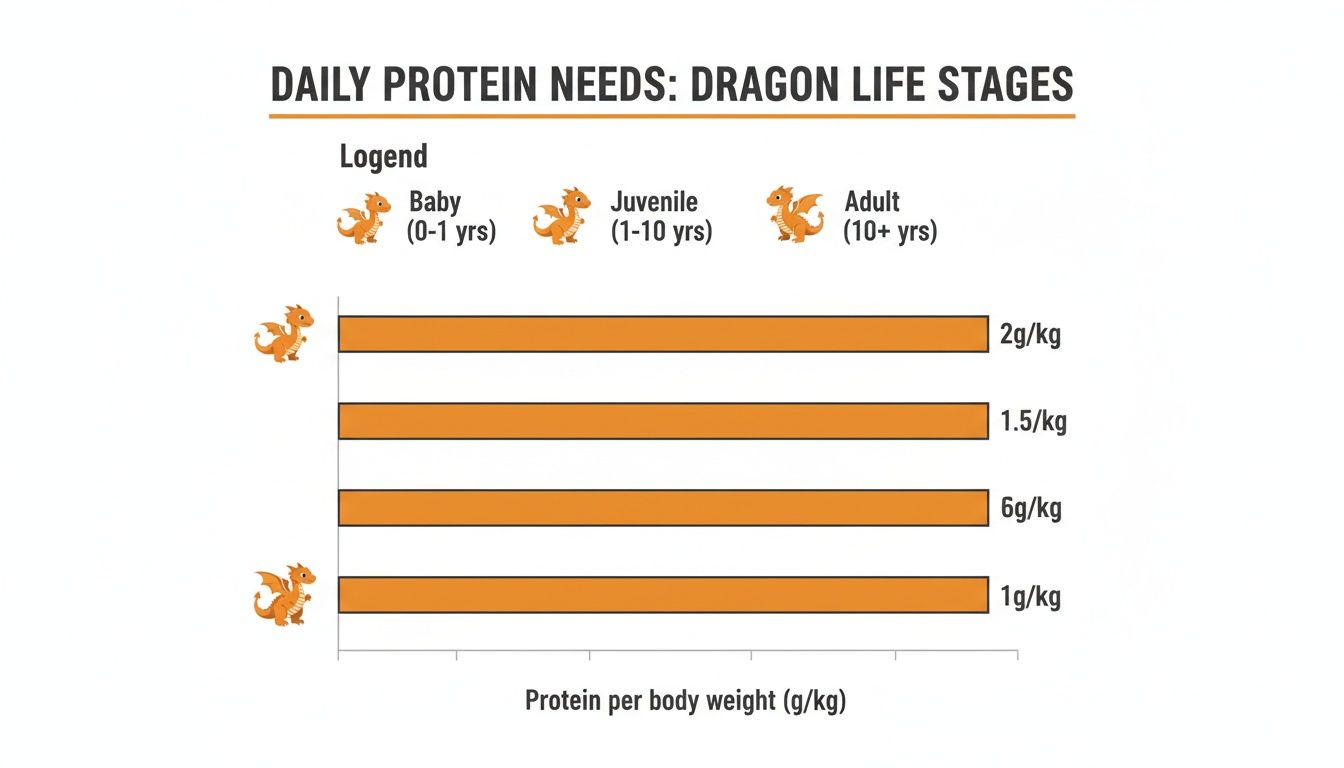
As you can see, the intense growth spurts of baby and juvenile dragons demand a diet packed with insects. This reliance gradually tapers off as they cruise into adulthood.
The A-List Staples
Staple insects are the foundation of your dragon's protein intake. These are the bugs you can rely on for most meals because they are nutritionally solid, easy to digest, and safe to offer frequently.
Dubia Roaches (Blaptica dubia) Often crowned the king of feeders, Dubia roaches are a fantastic choice. They pack a serious protein punch at around 22% and are relatively low in fat, making them an excellent fuel source for both growing youngsters and active adults.
- Pros: High in protein, very low odor, and they can't climb smooth surfaces or fly. Plus, they're quiet and have a softer exoskeleton than many other feeders.
- Cons: They can be a bit pricier than other options and, for a small number of people, handling them often can trigger allergies. You'll also need to dust them with calcium.
Crickets (Acheta domesticus) Crickets are the classic feeder insect for a reason—they get the job done. They’re available everywhere, they're affordable, and their constant movement is great for triggering a dragon's natural hunting instinct. It's dinner and a workout all in one!
- Pros: Excellent for encouraging activity and enrichment. They're also budget-friendly and easy to find.
- Cons: Let's be honest, they can be noisy and smelly. They're also notorious escape artists, and their poor calcium-to-phosphorus ratio means dusting with supplements is an absolute must.
A Game-Changing Feeder For Calcium Balance
Among the best staple insects, one truly stands out for solving one of the biggest headaches in bearded dragon nutrition: getting the calcium balance right.
Black Soldier Fly Larvae (BSFL) (Hermetia illucens) Black Soldier Fly Larvae, which you'll often see sold as Pure Grubs, are a true nutritional powerhouse. Their biggest claim to fame is a naturally perfect calcium-to-phosphorus ratio, typically sitting around 2:1.
This incredible mineral profile means that BSFL often do not require any calcium dusting. This makes your feeding routine so much simpler and drastically reduces the risk of over-supplementation. It's what makes them one of the safest and most convenient staple feeders you can buy.
Beyond their amazing calcium content, BSFL are soft-bodied and incredibly easy for dragons to digest. This makes them a perfect food for all life stages, from tiny hatchlings to senior dragons. If you want to take a deeper dive, you can learn more about why black soldier fly larvae are great for bearded dragons in our detailed guide.
Occasional Treats And Their Place
"Treat" insects are bugs that are high in fat or have a less-than-ideal nutritional profile. They're great for adding some exciting variety or helping a skinny dragon put on a little weight, but they should never become a main part of the diet.
Superworms (Zophobas morio) Superworms are a treat that many dragons go absolutely nuts for. They’re large, active, and their high fat content makes them irresistible. But that high fat content is also exactly why they have to be fed sparingly.
- Pros: Amazing for getting a picky eater interested in food again or for helping an underweight dragon gain mass.
- Cons: Very high in fat, which can lead to obesity and liver problems if you feed them too often. They also have a hard exoskeleton and a poor Ca:P ratio.
Waxworms (Galleria mellonella) Often called "reptile candy," waxworms are extremely fatty and should only be offered as a very rare treat—maybe just a few times a month. They can be a lifesaver, though, for coaxing a sick or recovering dragon to start eating again.
When you look at the numbers, you can see how different these insects really are. To make it clearer, here’s a breakdown of the nutritional content of some of the most common feeder insects.
Nutritional Breakdown Of Common Feeder Insects
| Feeder Insect | Protein % | Fat % | Calcium (mg/kg) | Phosphorus (mg/kg) | Ca:P Ratio |
|---|---|---|---|---|---|
| Black Soldier Fly Larvae | 17-19 | 14-16 | 8,100 | 3,600 | 2.25:1 |
| Dubia Roaches | 22-23 | 7-9 | 800 | 2,600 | 0.3:1 |
| Crickets | 18-21 | 6-7 | 345 | 4,100 | 0.08:1 |
| Superworms | 17-20 | 16-18 | 177 | 2,370 | 0.07:1 |
| Waxworms | 15-16 | 22-24 | 243 | 2,100 | 0.11:1 |
(Note: Values are approximate and can vary based on the insect's diet and age.)
This table really highlights why insects like crickets and superworms need that calcium dusting, while Black Soldier Fly Larvae come perfectly balanced right out of the box.
By understanding these key differences, you can craft a varied, rotational feeding plan that gives your bearded dragon the best protein sources available, setting them up for a long, healthy, and happy life.
The Calcium and Phosphorus Balancing Act
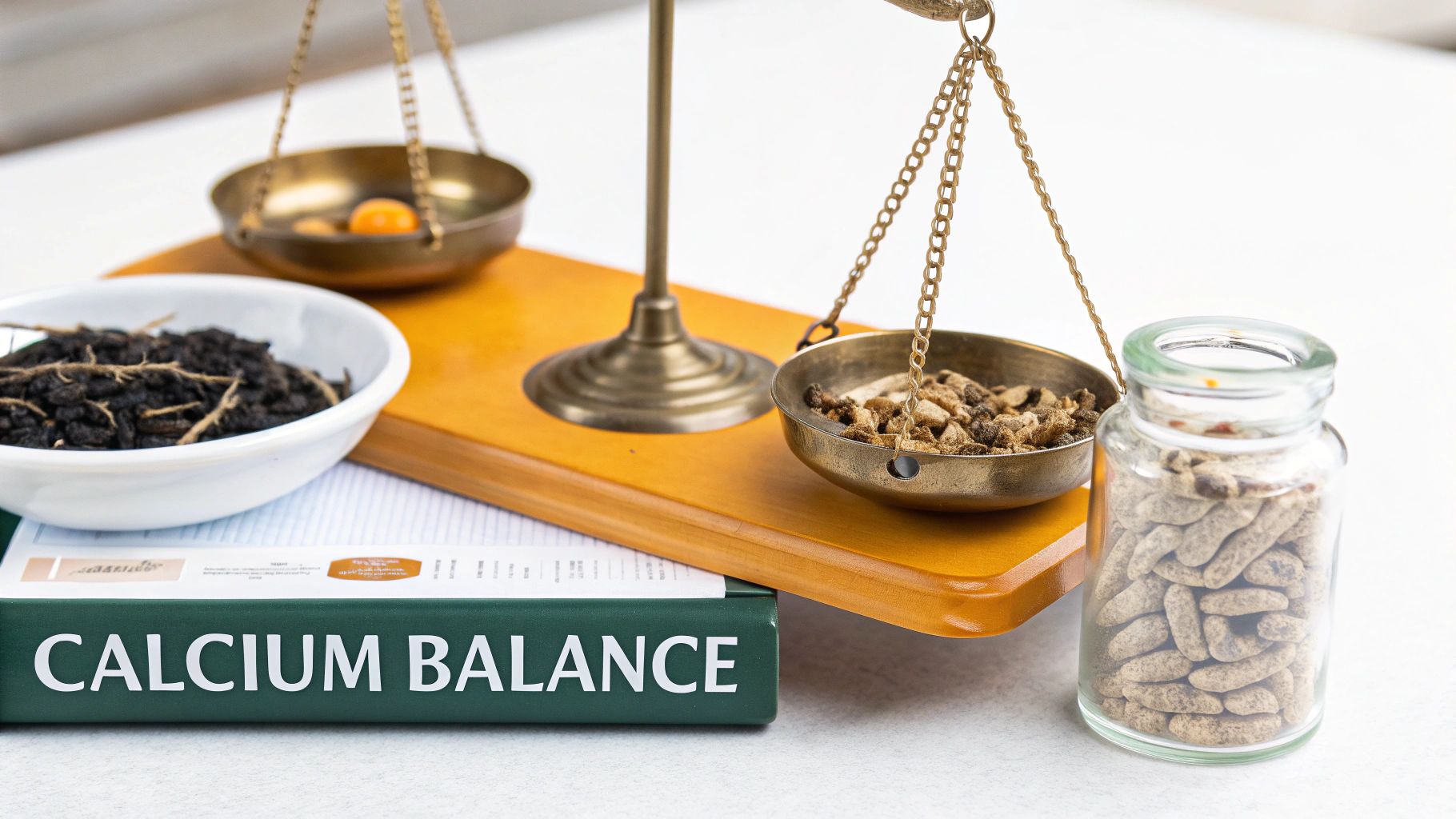
When we talk about the best protein for bearded dragons, it's easy to get fixated on just the protein content. But honestly, that's only part of the story. One of the most crucial pieces of the puzzle—and one that many new owners miss—is the delicate balance between two key minerals: calcium and phosphorus.
Getting this relationship right is absolutely fundamental to your dragon's health. It's the difference between a strong, active lizard and one plagued by serious health issues.
Think of it like building a brick house for your dragon's skeleton. Calcium is the bricks. It’s the raw material that builds strong, dense bones, allowing your beardie to run, climb, and live a full life. Without enough calcium, you can't even start building.
But you can't build a house with just a pile of bricks. You need mortar to hold everything together. In your dragon's body, that "mortar" is Vitamin D3. It’s what allows their system to actually absorb the calcium from their food and put it to work. This is exactly why that UVB light in their enclosure isn't just a suggestion—it's non-negotiable. It gives them the power to create the D3 they need to use the calcium they eat.
The Problem with Phosphorus
So, where does phosphorus fit in? Well, phosphorus is the troublemaker in this scenario. While it's a necessary mineral, it has a nasty habit of binding to calcium, which stops your dragon from being able to absorb it.
Imagine phosphorus as a chemical that dissolves your mortar before the bricks can set. If an insect has more phosphorus than calcium, it actually creates a calcium deficit. No matter how much calcium you provide, the excess phosphorus in that meal can block it from ever getting to the bones.
When this happens over and over, the dragon's body is forced to make a terrible choice. It starts to leach calcium from its own skeleton just to keep vital bodily functions, like muscle contractions, running.
This is the direct path to a devastating condition called Metabolic Bone Disease (MBD). When the body steals calcium from the skeleton, the bones become soft, rubbery, and incredibly fragile. It leads to fractures, painful deformities, and, in the worst cases, paralysis.
This is why just sprinkling some calcium dust on your feeders isn't always enough. If the insect itself has a horrible calcium-to-phosphorus ratio, you're fighting a constant, uphill battle.
Hitting the Golden Ratio
So, what's the magic number? For a healthy bearded dragon, you're aiming for a calcium-to-phosphorus ratio of roughly 2:1. That means their food should contain about twice as much calcium as phosphorus. This ensures there are plenty of "bricks" to go around, easily overcoming the blocking effect of that "mortar-dissolving" phosphorus.
Let's take a look at how some of the most common feeder insects stack up:
- Crickets: Their ratio is way off, at about 1:9. That’s nine times more phosphorus than calcium.
- Superworms: Even worse, with a staggering ratio of approximately 1:13.
- Dubia Roaches: These are a better option but still have an inverted ratio of about 1:3.
Seeing those numbers makes it crystal clear why dusting these insects with a quality calcium supplement isn't optional—it's mandatory. You have to manually add enough calcium to overcome the huge amount of phosphorus they naturally contain.
This is also what makes Black Soldier Fly Larvae (BSFL), like the ones found in Pure Grubs, such a game-changer for bearded dragon owners. They naturally have an almost perfect ratio of 2:1. Right out of the bag, they provide the building blocks for strong bones in the balanced way nature intended, dramatically lowering the risks that come with improper supplementation.
If you want to figure out the best protein source for your bearded dragon, the first place to look isn't a pet store—it's the Australian outback. The diet we build for our pets should mirror what their wild relatives have been eating for millions of years. Nature, after all, has already created the perfect blueprint for their health.
Out in the wild, bearded dragons are the definition of opportunistic omnivores. There's no curated menu waiting for them. Their meals are a mix of whatever they can hunt, find, or forage in a tough, arid environment. This means their diet is incredibly varied, shifting with the seasons and whatever bugs happen to be plentiful.
This isn't just a guess; scientists have taken a close look to confirm it.
A Diet Forged in the Outback
When researchers have examined the stomach contents of wild bearded dragons, the results tell a fascinating story. These reptiles eat a huge range of arthropods, from beetles and ants to spiders and grasshoppers. They aren't naturally picky eaters. They're survivors, built to consume a wide spectrum of prey to get the nutrients they need.
One detailed analysis of wild Central Bearded Dragons (Pogona vitticeps) found that animal matter made up 61% of what they ate. This protein came from nine different types of arthropods. But within that mix, one insect stood out in a big way: termites made up a whopping 95% of the total prey items. You can check out the specifics in the full study on wild bearded dragon diets.
Now, that's an interesting tidbit. While we don't typically feed termites in captivity, it shows how wild dragons will zero in on a single, abundant protein source when it's available. It highlights just how adaptable they are.
The big lesson here isn't that we should start feeding our dragons termites. It's that their bodies are designed for variety and adaptation. The most important thing we can do for their long-term health is to copy that principle at home.
Bringing the Wild Diet Home
This look into their natural history is the "why" behind every feeding recommendation you'll ever get. When you hear experts insist on rotating different feeder insects like Dubia roaches, crickets, and Black Soldier Fly Larvae, it’s because we're trying to mimic that diverse menu they'd find in the wild. A diet of just one or two types of bugs can't possibly match the complex nutritional profile their bodies are expecting.
The same goes for their greens. In the outback, dragons graze on native flowers, fruits, and leaves. This vegetation balances out the heavy protein with crucial fiber, vitamins, and hydration. This directly explains why adult dragons should have a diet that's mostly plant-based.
By understanding what a bearded dragon eats in its natural habitat, we can make much smarter choices for our pets. We learn that finding the "best" protein isn't about a single perfect bug. It's about creating a varied, balanced diet that respects their evolutionary blueprint. This approach doesn't just support their physical health; it also encourages their natural instincts, leading to a much happier and more active dragon.
Creating a Practical Feeding Schedule
Knowing what to feed your bearded dragon is the first step, but knowing when and how much is just as important. Think of it like a training plan for an athlete—what they eat changes depending on whether they're in a growth spurt or maintaining their physique. Creating a consistent, age-appropriate feeding schedule is the single best thing you can do to prevent common health issues like obesity or undernourishment.
A baby dragon's metabolism is a raging furnace, demanding constant fuel for rapid growth. An adult's needs are completely different; their metabolism slows way down, and their diet shifts heavily toward plants. Getting this rhythm right is key.
Feeding Baby and Juvenile Dragons
Baby bearded dragons (from hatchling to about 5 months) are basically eating machines. Their entire focus is on growing, and that requires a diet packed with protein—we're talking 60-80% of their total food intake.
- How Often? You should offer them insects 3-5 times every single day.
- How Much? Let them eat as many insects as they want within a 10-15 minute timeframe. When the timer goes off, mealtime is over. It's important to remove any uneaten bugs from their home.
As they enter the juvenile stage (around 5-18 months), they’re still growing, but the pace isn't quite so frantic. This is when you start easing them toward their adult diet.
- How Often? Cut back the insect feedings to just 1-2 times per day.
- How Much? You can stick with the 10-15 minute rule for now, but this is the time to start offering a daily bowl of fresh greens. Their diet should be around 60% protein at this point.
A simple rule of thumb for any age: never feed an insect that is wider than the space between your dragon's eyes. This is a classic keeper's trick to prevent choking and impaction, which is a serious and potentially fatal digestive blockage.
Feeding Adult Dragons
Once your dragon hits adulthood (around 18 months), their growth plates have closed, and their dietary needs do a complete 180. Their diet should now flip to be 70-85% vegetables and only 15-30% protein.
This is where many owners make a mistake. Continuing to feed an adult dragon a high-protein diet is a recipe for health problems down the road, including obesity and gout.
- How Often? A large, fresh salad of appropriate greens should be offered daily.
- How Much Protein? Insect feedings should be scaled back to just 2-3 times per week. A good portion is about 5-10 properly sized insects per meal, though this can vary a bit depending on the feeder you're using.
Following this kind of structured plan ensures your dragon gets exactly what its body needs at every critical stage of life, setting the foundation for years of good health.
A Few Common Questions About Bearded Dragon Protein
Figuring out the fine details of your bearded dragon's diet always brings up a few questions. Getting straight answers is the best way to feel confident you're doing right by your pet. Let's tackle some of the most common things owners ask about protein.
This is all about giving you quick, reliable info so you can make great choices for your dragon's health and happiness.
Can My Bearded Dragon Just Eat One Type of Insect?
I really wouldn't recommend it. Think of it this way: if a person ate nothing but chicken for every single meal, they'd be missing out on a whole range of other vital nutrients. It's the same for your dragon. Feeding only one type of insect, especially a fatty one like superworms, can lead to serious health problems like obesity down the road.
The best approach is to rotate between 2-3 staple insects. By mixing it up with feeders like Black Soldier Fly Larvae, Dubia Roaches, and crickets, you ensure your dragon gets a much wider array of nutrients. Plus, it helps prevent them from becoming a picky eater!
Are Dried Insects as Good as Live Ones?
High-quality dried insects, particularly those like BSFL that hold onto their nutritional goodness, are an incredibly convenient and excellent option. They're fantastic for adding variety to the diet or for those times when you just can't get your hands on live feeders.
That said, live insects offer something dried ones can't: mental and physical exercise. Chasing their food taps into a dragon's natural hunting instincts. So, the ideal diet really uses both. Use live insects for primary meals to keep your dragon active and engaged, and mix in premium dried insects to round out their nutrition.
The Bottom Line: The best diet combines the thrill of the hunt from live insects with the no-fuss nutritional punch of high-quality dried feeders. This gives your dragon a diet that's both exciting and complete.
How Can I Tell if My Dragon is Getting Too Much or Too Little Protein?
Keeping a close eye on your dragon is key to spotting dietary issues early. The signs can be subtle at first, but catching them is crucial for their long-term health.
- Too Little Protein: For a young, growing dragon, this usually looks like stunted growth, general weakness, and lethargy. They might not seem very active and won't be gaining weight like they should.
- Too Much Protein: This is a major concern for adult dragons. It can lead to rapid weight gain and obesity, sluggishness, and even severe health problems like gout (which causes painful joint swelling) or kidney issues from processing all the excess waste.
Your best bet is to stick closely to the feeding guidelines for your dragon's specific age and to monitor their weight and energy levels regularly.
Are There Any Insects I Should Never Feed My Bearded Dragon?
Safety first, always. You should never, ever feed wild-caught insects to your pet. You have no idea what they've been exposed to—parasites, pesticides, or other toxins that could be deadly.
On top of that, some insects are just plain toxic to bearded dragons and must be avoided. This includes:
- Fireflies (and any other glowing bugs)
- Spiders
- Wasps and hornets
- Certain caterpillars (brightly colored ones are often a warning sign)
Always get your feeder insects from a trusted supplier. That's the only way to know they're clean, properly gut-loaded, and completely safe for your dragon to eat.
For a safe, high-calcium, and incredibly convenient protein source, look no further than Pure Grubs. Our USA-grown Black Soldier Fly Larvae provide the perfect 2:1 calcium-to-phosphorus ratio, promoting strong bones without the hassle of dusting. Give your dragon the best by visiting the Pure Grubs website to see our premium feeders.