

Guide: what do bearded dragons eat and how to feed
So, what exactly do bearded dragons eat? The short answer: a bit of everything. As omnivores, they need a healthy mix of both insects and plants. But here's the crucial part—that "healthy mix" changes dramatically as they get older.
Your Bearded Dragon’s Perfect Plate Explained
Think of feeding your bearded dragon like learning a recipe that evolves over time. A rapidly growing baby needs a very different menu than a full-grown adult, and getting this right is the cornerstone of their health. It can sound a little intimidating at first, but it's really just about understanding a few key building blocks.
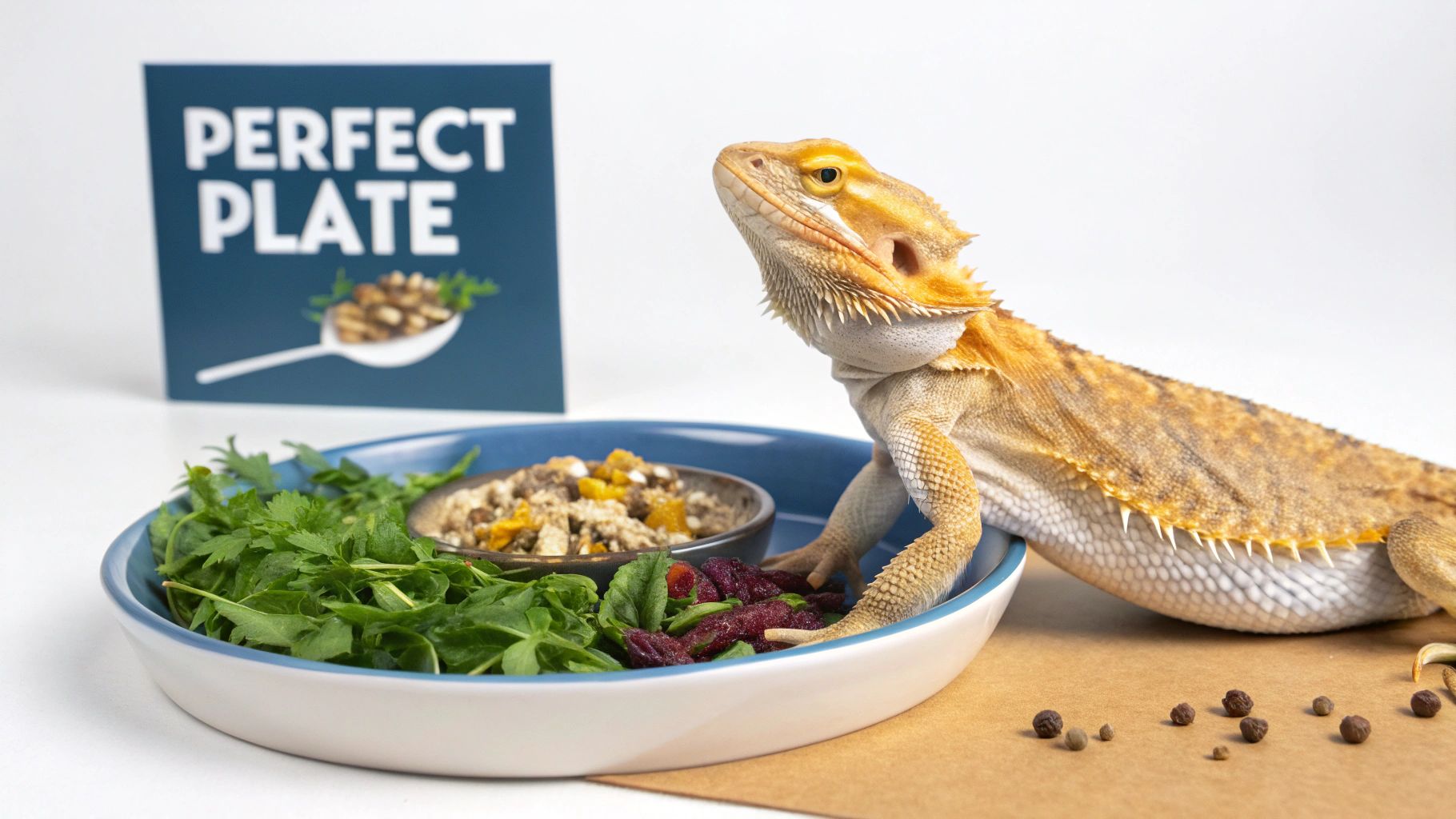
This guide will serve as your go-to cheat sheet, breaking down everything from the best staple insects and essential greens to the absolute necessity of calcium supplements.
The Protein-To-Plant Shift
The single most important concept to grasp is how a bearded dragon's diet shifts with age. Young dragons are like little protein-burning machines, needing tons of insects to fuel their incredible growth spurts. Adults, on the other hand, require far less protein and a whole lot more plant matter to stay healthy.
The numbers tell the story. Hatchlings start with a diet that's 60-80% protein from insects. For juveniles, that number sits around 60%. But once they hit adulthood, the ratio flips dramatically to just 15-30% protein. An adult’s plate should be piled high with greens and veggies (70-80% of their diet), with insects becoming more of a special-occasion meal served a few times a week.
One of the most common mistakes new owners make is keeping their dragon on a high-protein diet for too long. This can lead to serious health problems down the road. The trick is to adjust their meals as they grow, mimicking what they'd eat in the wild.
Bearded Dragon Diet At A Glance
To make this simple, here's a quick look at the main food groups. Think of these as the essential ingredients you'll use to build every meal.
| Food Category | Best Examples | Role in Diet | Frequency |
|---|---|---|---|
| Staple Insects | Dubia Roaches, Black Soldier Fly Larvae, Crickets | Primary protein source for growth and energy. | Daily for babies/juveniles; 2-3 times per week for adults. |
| Staple Greens | Collard, Mustard & Dandelion Greens, Turnip Greens | The foundation of the plant-based portion of their diet. | Daily for all ages, forms the bulk of an adult's meal. |
| Vegetables | Butternut Squash, Bell Peppers, Carrots | Adds variety, vitamins, and hydration to their "salad." | A few times per week, mixed in with staple greens. |
| Fruits | Papaya, Mango, Berries (sparingly) | A high-sugar treat, not a dietary staple. | Offered once or twice a month at most. |
| Supplements | Calcium (with & without D3), Multivitamins | Essential for bone health and preventing MBD. | Dusted on insects/salads at nearly every feeding. |
This table gives you a framework for building a balanced plate, ensuring your dragon gets the right nutrients at the right time.
Core Food Groups: The Building Blocks
Let's break those categories down a bit further.
- Staple Insects: These are the protein powerhouses. Dubia roaches and black soldier fly larvae (BSFL) are fantastic choices because they have a great nutritional profile and are naturally high in calcium.
- Staple Greens: Dark, leafy greens should be the base of every salad. Think collard greens, mustard greens, and dandelion greens.
- Safe Vegetables: Veggies like squash, bell peppers, and shredded carrots are perfect for adding variety, extra vitamins, and a bit of color to their meals.
- Supplements: Calcium and multivitamin powders are completely non-negotiable. They are the only way to prevent serious and debilitating conditions like Metabolic Bone Disease (MBD).
If you're looking for a convenient and nutrient-dense insect option, you might want to look into the benefits of dried black soldier fly larvae as a great supplemental feeder. Throughout this guide, we'll show you exactly how to combine all these elements to create the perfect meal for your beardie, no matter its age.
Building a Healthy Diet with Plants and Greens
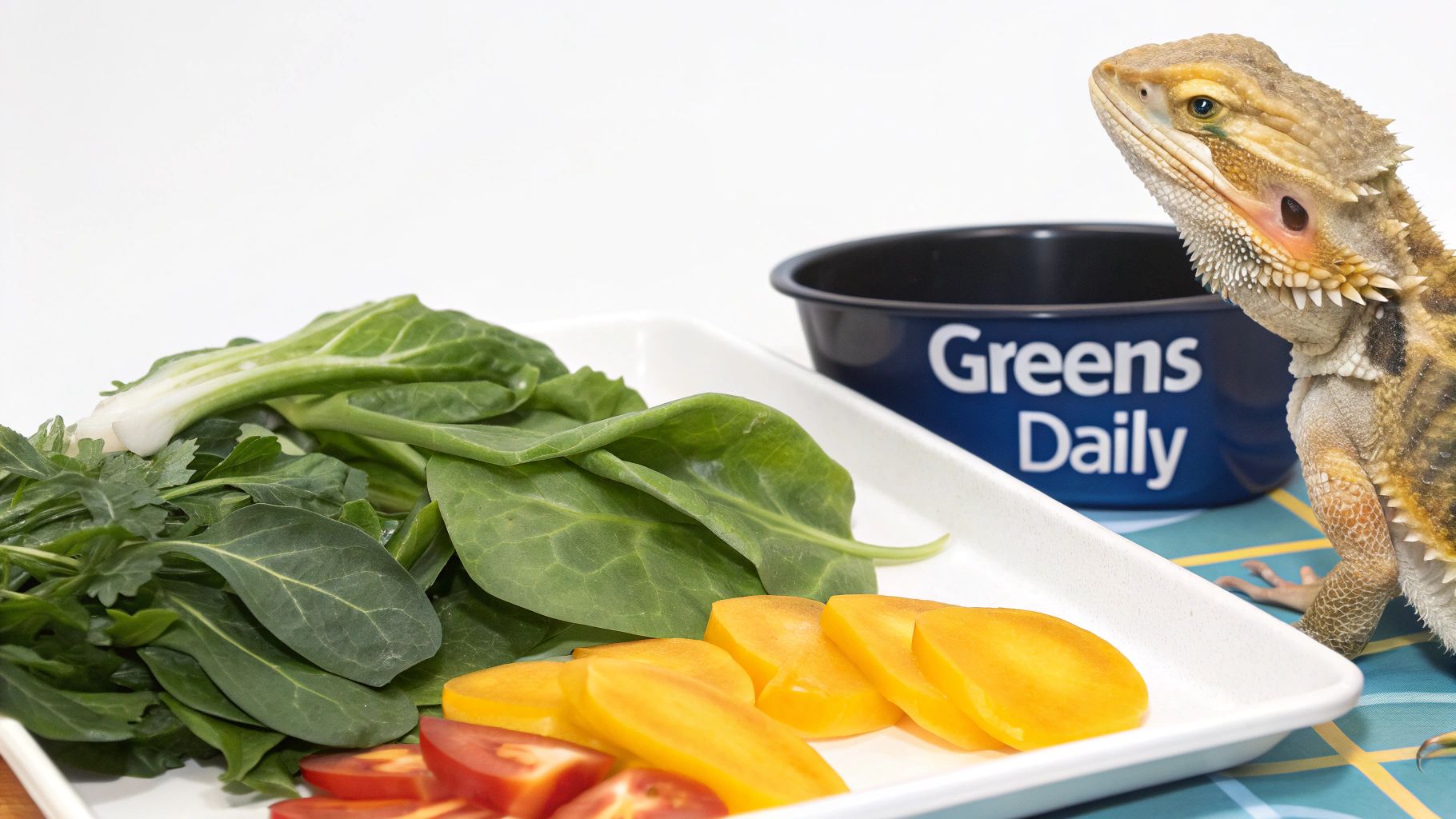
While watching a bearded dragon chase down a cricket is always entertaining, it's the plant-based part of their diet that truly forms the foundation for a long and healthy life. Think of their daily salad as the bedrock of their well-being. Especially for adult dragons, greens and veggies aren't just a side dish—they're the main event, delivering the critical vitamins, minerals, and hydration they need to thrive.
This is a common point of confusion for many keepers. A survey of 405 bearded dragon owners in North America painted a clear picture: there's a big gap between expert advice and what happens at home. The study revealed that around 50% of owners were feeding diets made up of less than 50% plant matter, leaning heavily on insects instead. This is a direct reversal of established guidelines for adults, which call for a diet dominated by greens. You can read more about these common feeding practices and supplement use findings.
So, how do you build the perfect salad? The easiest way is to group plants by how often they should be on the menu.
Staple Greens: The Daily Powerhouses
Staple greens are the non-negotiable, everyday items that should form the base of your dragon's salad. These are the nutritional heavy-lifters. You're looking for dark, leafy greens that are loaded with calcium and other crucial nutrients.
Think of these as the sturdy bricks for building a healthy dragon:
- Collard Greens: A true champion, packed with calcium and vitamins.
- Mustard Greens: Another fantastic, nutrient-dense option.
- Dandelion Greens: High in calcium and a natural favorite for many beardies.
- Turnip Greens: A great staple with a rock-solid nutritional profile.
- Butternut Squash: While technically a fruit, its nutrition makes it a perfect daily staple. Just grate it raw right over their greens.
Offering these staples ensures your dragon gets a steady stream of what they need to thrive. I like to mix two or three of these together for a little daily variety.
Occasional Veggies for Excitement and Variety
While staples are the foundation, occasional vegetables add that crucial variety in both flavor and nutrition. These should be chopped up and mixed into the main greens a few times a week, not served as the entire meal.
Think of these additions like colorful, healthy toppings on a salad. They make the meal more exciting but don't replace the core ingredients. A varied diet doesn't just provide a broader range of nutrients—it keeps your dragon interested in their food.
Good occasional options to mix in include:
- Bell Peppers: Red, yellow, and green peppers add a splash of color and vitamins.
- Carrots: Grate them finely to prevent any impaction risk. They're a great source of Vitamin A.
- Yellow Squash & Zucchini: These are wonderfully hydrating and easy to chop or grate.
- Green Beans: Finely chopped, they bring a different texture and set of nutrients to the bowl.
Tossing these in a few times per week helps prevent "diet boredom" and ensures your beardie is getting a well-rounded mix of different vitamins and minerals.
Knowing which greens and veggies are safe and how often to offer them can feel overwhelming at first. To make it easier, I've organized some of the most common options into a simple chart based on how frequently they should appear in your dragon's bowl.
| Plant Type | Examples | Feeding Frequency | Key Nutrient Notes |
|---|---|---|---|
| Staples (Daily) | Collard greens, mustard greens, turnip greens, dandelion greens, butternut squash, prickly pear cactus pads | Every Day | High in calcium, low in phosphorus, packed with essential vitamins (A, C, K). Forms the base of every salad. |
| Occasional (Weekly) | Bell peppers, carrots (grated), zucchini, yellow squash, green beans, acorn squash | 2-3 Times a Week | Adds variety, color, and different vitamins. Use as "toppings" to enhance the staple greens. |
| Treats (Rarely) | Fruits like berries, melon, apple (no seeds). Spinach, kale, parsley. | Once or Twice a Month | Fruits are high in sugar. Spinach and kale contain oxalates that can interfere with calcium absorption if fed too often. |
This table should serve as a quick reference guide. The key is to build a salad primarily from the "Staples" column and then sprinkle in items from the "Occasional" list to keep things interesting and nutritionally diverse.
Getting a Picky Dragon to Eat Their Salad
It’s a classic story: you prepare a beautiful, nutritious salad, and your bearded dragon gives it a look of complete disdain. This happens a lot, especially with younger dragons who are hardwired to chase moving prey. Don't worry, getting them to love their greens is a challenge you can win.
First off, be persistent. Offer a fresh salad every single morning, even if they don't touch it. This builds a routine and gives them the chance to try it when they're ready.
If that’s not enough, here are a few tricks I’ve learned over the years:
- The "Wiggle" Method: Use tongs to gently wiggle a piece of green. That little bit of movement can trigger their prey drive and trick them into taking a curious bite.
- Mix in a Treat: Chop their favorite insects (like dubia roaches or black soldier fly larvae) right into the salad. As they hunt for the bug pieces, they'll get mouthfuls of greens along the way and start getting used to the taste.
- Add a Colorful Topper: A tiny dash of bee pollen powder or a few finely chopped pieces of red bell pepper can make the salad more visually appealing. Those bright colors often catch their eye.
And a final pro-tip: always finely chop or shred all their greens and veggies. This makes everything easier to eat and digest, and it dramatically reduces any potential choking hazards. With a little patience and a few clever strategies, you can turn even the fussiest insect-lover into a salad enthusiast.
Picking the Best Live Insects for Your Dragon
Live insects are the high-octane fuel that powers a bearded dragon’s growth, especially when they're young. For babies and juveniles, insects are more than just a meal—they're the primary source of protein and fat needed to build strong bodies. Think of insects as the action-packed part of their diet that also satisfies their natural instinct to hunt.
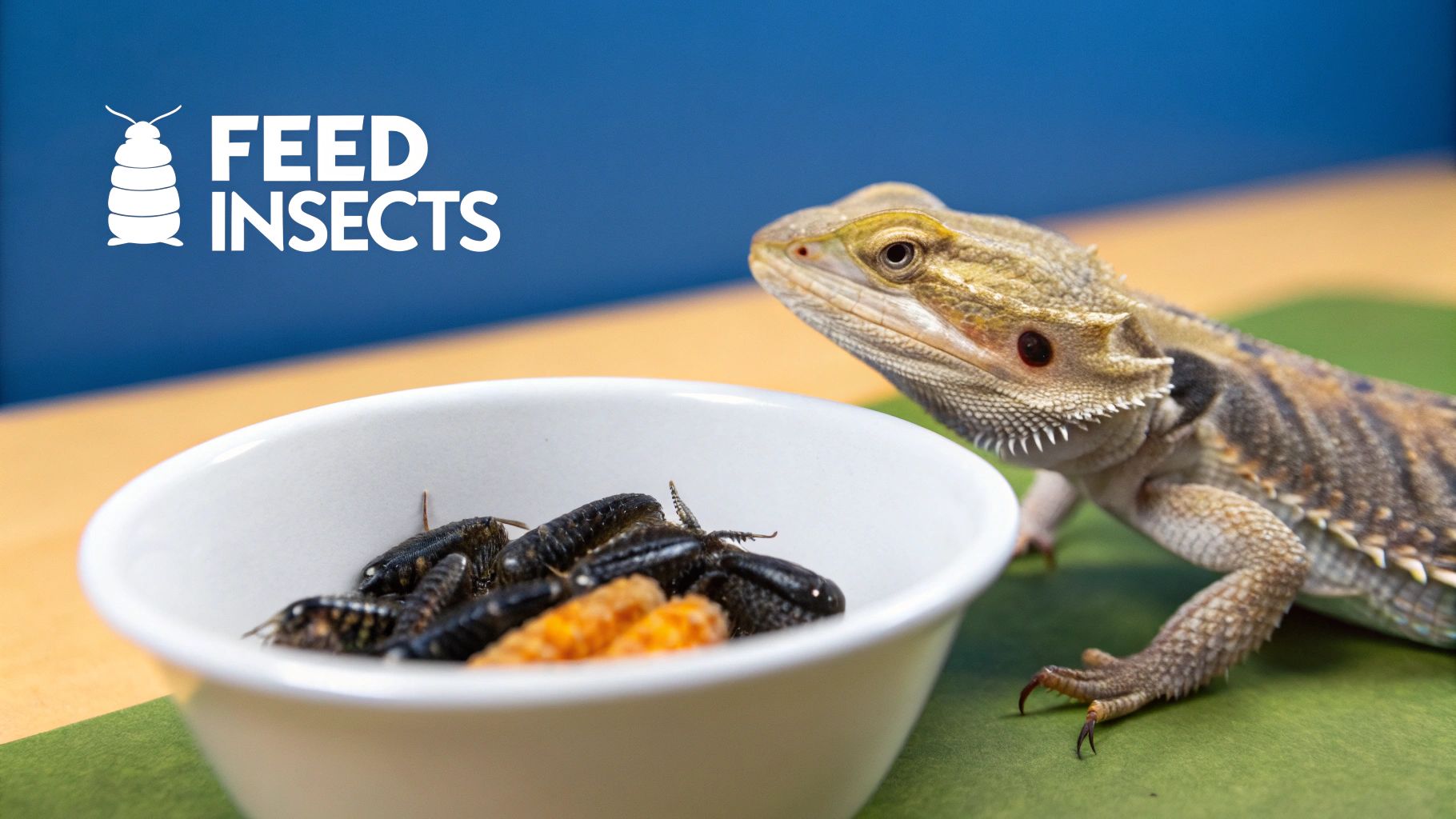
But here's the thing: not all bugs are created equal. The trick is to pick staple feeders that are packed with nutrition, easy for your dragon to digest, and completely safe. This is how you ensure they get the most out of every crunchy bite.
The Best Staple Feeder Insects
Staple insects are the bugs you can—and should—feed your dragon regularly. They hit that sweet spot of protein, fat, and minerals, making them the foundation of the protein portion of your dragon's diet.
- Dubia Roaches: Many experienced keepers consider these the gold standard, and for good reason. Dubia roaches are high in protein, low in fat, and their softer exoskeleton makes them much easier to digest than crickets. Plus, they don’t jump, chirp, or smell, which is a huge win for you.
- Black Soldier Fly Larvae (BSFL): These little guys are a nutritional powerhouse, especially when it comes to calcium. BSFL are naturally loaded with it and have an almost perfect calcium-to-phosphorus ratio. This means they often don't need heavy calcium dusting, making them an incredibly convenient and healthy choice. You can learn more about the specific benefits of black soldier fly larvae for bearded dragons.
- Crickets: As a classic and easy-to-find option, crickets are a solid staple. They definitely get your dragon moving and hunting. On the downside, they can be noisy, smelly, and have a higher chance of carrying parasites compared to roaches or BSFL.
These three should make up the bulk of your insect offerings, providing a reliable and well-rounded source of protein.
Occasional Treats High in Fat
Just like we enjoy a slice of cake, bearded dragons love a special treat every now and then. Certain insects are very high in fat, which makes them delicious but not something you'd want on the daily menu. Overfeeding these can quickly lead to obesity and other health problems.
It's best to think of these fatty insects as candy—perfect for a rare reward, but definitely not a staple food.
- Waxworms: These are basically the reptile equivalent of a candy bar. They are incredibly high in fat and should only be offered once or twice a month, at most.
- Superworms: While a bit better than waxworms, superworms are still quite fatty and have a tough exoskeleton. They're best saved as an occasional treat for adult dragons only.
The Critical Step of Gut-Loading
Now, let's talk about one of the most important things you can do: gut-loading. You've heard the saying "you are what you eat," and that goes for your dragon's food, too. Gut-loading is simply the process of feeding the insects a super-nutritious meal 24-48 hours before you feed them to your dragon.
Imagine an empty delivery truck. It’s not very useful. Gut-loading is like filling that truck with essential vitamins and minerals before it makes its final delivery to your bearded dragon. This single step transforms a basic insect into a nutrient-packed superfood.
To properly gut-load, give your feeder insects a high-quality commercial gut-load formula or a mix of healthy greens and veggies like collard greens, sweet potato, and carrots. This ensures all those vital nutrients get passed directly to your pet.
Sourcing Insects Safely
Where you get your feeder insects matters. A lot. Never, ever feed your bearded dragon wild-caught bugs from your backyard or local park. These insects can be contaminated with pesticides, herbicides, or carry internal parasites that could make your dragon incredibly sick.
Always buy your feeders from a reputable supplier, whether it's a trusted local pet store or an online breeder. This is your guarantee that the insects were raised in a clean environment and are free from harmful chemicals. Safe sourcing is a simple but non-negotiable part of being a responsible owner—it protects your dragon from invisible dangers and helps keep them healthy for years to come.
Why Supplements Like Calcium and Vitamins Are So Important
Think of supplements as a non-negotiable part of your bearded dragon's care. It’s not just a bonus—it's absolutely essential. Without the right vitamins and minerals, they can develop severe, life-altering health problems. It's like trying to build a house without mortar; no matter how good the bricks are, the whole thing will eventually fall apart.
The most critical trio to understand is calcium, vitamin D3, and UVB light. Imagine UVB light as the key that unlocks your dragon's ability to use calcium. They could be eating the most calcium-rich diet imaginable, but without enough UVB exposure to create D3, their body simply can't absorb and use that calcium.
This entire process is what stands between your pet and one of the most heartbreaking illnesses in captive reptiles: Metabolic Bone Disease (MBD).
The UVB and Calcium Connection
Metabolic Bone Disease (MBD) is a brutal condition. It happens when a dragon's body, starved of usable calcium, starts pulling it from its own bones. This makes them soft, brittle, and deformed, leading to things like a rubbery jaw, bowed legs, and even paralysis.
The good news? It's almost entirely preventable. Here’s how the pieces fit together:
- UVB Light: A high-quality UVB bulb in the enclosure acts as a stand-in for the sun. When your beardie basks under it, their skin naturally produces vitamin D3.
- Vitamin D3: This is the magic ingredient. It’s a hormone that allows their body to actually absorb and process the calcium from their food. Without it, the calcium just passes right through them.
- Calcium Powder: Dusting your dragon’s insects and greens with a calcium supplement gives them the raw material they need to build and maintain a strong skeleton.
This is why your lighting setup is every bit as crucial as the food you put in their bowl. A good UVB bulb isn’t just a light source; it’s a fundamental piece of health equipment.
A Simple Supplement Dusting Schedule
Figuring out a supplement routine can feel overwhelming at first, but it doesn't have to be complicated. The goal is to lightly coat their food. Think of it like a dusting of powdered sugar on a donut, not like you're breading chicken for frying.
Out in the Australian wild, a bearded dragon's diet is incredibly varied. Adults get about 54% of their nutrition from plants and the rest from a huge buffet of insects, with termite alates making up around 26% of their summer diet. This, combined with basking in the real sun, gives them all they need. Our job is to mimic that balance through smart supplementation. To see just how diverse their natural diet is, you can read more about their wild feeding habits and behaviors.
Here’s a straightforward schedule that takes the guesswork out of it:
| Life Stage | Age Range | Calcium with D3 | Calcium without D3 | Multivitamin |
|---|---|---|---|---|
| Baby | 0-6 months | 5 feedings per week | 2 feedings per week | 2 feedings per week |
| Juvenile | 6-18 months | 4 feedings per week | 2 feedings per week | 2 feedings per week |
| Adult | 18+ months | 2-3 feedings per week | 1 feeding per week | 1 feeding per week |
For babies and juveniles, you'll be dusting their daily insect meals. Once they're adults, this schedule applies to both their insect and salad feedings. Just rotate through the powders as shown in the chart. This simple system ensures they get everything they need to thrive without the risk of over-supplementing, keeping your dragon healthy and strong for years to come.
Customizing Diets for Every Life Stage
One of the biggest mistakes new owners make is assuming a bearded dragon's diet stays the same its whole life. It absolutely doesn't. Think about it—a growing human baby has wildly different nutritional needs than a full-grown adult, and it's the exact same for beardies.
Getting the diet right for each life stage is probably the single most important thing you can do for their long-term health. Young dragons are protein-fueled growth machines, while adults need a diet focused on maintenance to avoid serious health problems. Let's break down what that looks like in practice.
The Baby Dragon Diet (0 to 6 Months)
A baby bearded dragon has one mission: grow, and grow fast. Their metabolism is a raging furnace, and they need a constant supply of high-quality protein to build strong bones and muscles. This is their most protein-intensive life stage by a long shot.
For babies, the diet should be about 80% insects and 20% plants. They need to eat a lot and often to keep up with their body's demands.
- Feeding Frequency: Offer bugs 2 to 3 times per day. During these feedings, let them eat as many as they can in a 10 to 15-minute period.
- Portion Size: This is a non-negotiable safety rule: never feed an insect larger than the space between your dragon's eyes. Anything bigger is a serious choking and impaction risk.
- Salad Time: Even though they'll mostly ignore it, get in the habit of offering a small, finely chopped salad every single morning. It’s all about building good habits early.
Here’s what a typical day of feeding might look like.
Baby Dragon Daily Meal Plan (Example)
- Morning (8 AM): A small dish of fresh, finely chopped salad (like collard greens with a bit of butternut squash).
- Mid-Day (12 PM): First bug feeding. Offer properly sized Dubia roaches or black soldier fly larvae for about 10-15 minutes.
- Evening (5 PM): Second bug feeding. It's a good idea to offer something different, like crickets, to give them some variety.
The Juvenile Dragon Diet (6 to 18 Months)
Welcome to the "teenager" phase. Your dragon's explosive growth is starting to level off, but they're still very much under construction. Their need for protein is still high, but now we need to start seriously introducing more plant matter.
At this stage, we're aiming for a diet that's closer to a 50/50 split between insects and plants. This gradual shift is crucial for their digestive system and sets them up for a healthy adulthood.
- Feeding Frequency: You can now cut back the insect feedings to just once per day. Keep offering that fresh salad every morning, but make the portions a bit bigger.
- Portion Size: The "space between the eyes" rule for insect size still applies. As your dragon gets bigger, their feeder insects should too.
- Encouraging Greens: This is often when picky eating starts. If your juvenile is turning its nose up at the salad, don't give up! A great trick is to finely chop a few insects and mix them into the greens to get them interested.
It's also during these crucial growth stages that proper nutrient absorption becomes critical. This diagram shows how UVB light, vitamin D3, and calcium all work together—a process that’s essential for building strong bones.

Think of UVB as the key that starts the engine. It allows your dragon to produce D3, which then unlocks their body's ability to actually use the calcium from their diet and supplements.
The Adult Dragon Diet (18+ Months)
Once your bearded dragon hits adulthood, the dietary tables completely turn. They’re done growing, and their metabolism has slowed way down. The goal is no longer growth; it’s all about maintenance. Sticking to a high-protein diet now is a recipe for disaster, often leading to obesity, gout, and organ damage.
An adult dragon's diet should be the opposite of a baby's: 75-80% plants and only 20-25% insects. The salad is now the star of the show, with bugs becoming more of a special treat.
- Feeding Frequency: A large bowl of fresh salad should be offered every day. Insect meals should be cut way back to just 2-3 times per week.
- Portion Size: No more all-you-can-eat bug buffets. Offer a specific number of insects, like 5-10 Dubia roaches, per feeding.
Weekly Meal Plan for an Adult Dragon (Example)
- Daily: A large, fresh salad made from staple greens like mustard or dandelion greens, topped with chopped veggies like bell pepper and squash.
- Monday: Salad only.
- Tuesday: Salad in the morning, insects in the evening.
- Wednesday: Salad only.
- Thursday: Salad only.
- Friday: Salad in the morning, insects in the evening.
- Saturday: Salad only.
- Sunday: Salad in the morning, with an optional small insect feeding if they look lean.
By following this roadmap, you’re giving your beardie exactly what its body needs at every critical point in its life. Of course, every species is different; for a look at another popular pet's needs, check out our guide on what leopard geckos eat.
Of course! Here is the rewritten section with a more natural, human-expert tone.
Foods That Can Harm Your Bearded Dragon
Knowing what to feed your bearded dragon is half the battle; knowing what not to feed them is just as critical. Many common foods we have in our homes can be dangerous, and some are even deadly for these lizards. Think of this list as your non-negotiable "do not feed" guide to keep your dragon safe.
Some foods are straight-up toxic. For instance, avocado is a huge no-go. It contains a toxin called persin, which can cause severe respiratory problems and even heart failure in a beardie. Rhubarb is another one to keep far away, as its leaves are loaded with oxalic acid that can shut down their kidneys.
Insects and Plants to Strictly Avoid
You have to be incredibly careful with certain bugs and plants. A golden rule is to never, ever feed your dragon wild insects you've caught outside. You have no idea what pesticides they've been exposed to or what parasites they might be carrying. Of all the wild bugs, fireflies are the absolute worst.
Fireflies, sometimes called lightning bugs, are fatally toxic to bearded dragons. They produce a defensive steroid called lucibufagin. Ingesting even a single firefly can kill a bearded dragon, and there is no antidote. Prevention is the only option here.
Here are a few other common items that should never end up in your dragon's enclosure:
- Wild-Caught Insects: The risk of poisoning from pesticides or introducing internal parasites is simply too high to ever be worth it.
- Onions, Leeks, and Garlic: These alliums contain compounds that can lead to serious blood disorders.
- Mushrooms: With so many toxic varieties out there, it's safest to avoid all mushrooms to prevent a tragic mistake.
- Lettuce (Iceberg): While not exactly toxic, iceberg lettuce is basically crunchy water. It offers zero nutritional value and can easily cause diarrhea.
Foods That Cause Long-Term Problems
Beyond the immediately toxic stuff, there's a category of foods that cause trouble over the long haul. These items won't poison your dragon overnight, but feeding them regularly can lead to serious health issues by messing with their ability to absorb vital nutrients.
The main culprits are foods high in oxalates and goitrogens. Oxalates are compounds found in plants like spinach, kale, and parsley. They bind to calcium in the digestive system, preventing your dragon from actually using it. Over time, this calcium deficiency can lead straight to Metabolic Bone Disease (MBD), a devastating and preventable condition.
Goitrogenic foods, like broccoli and cabbage, can disrupt proper thyroid function if they become a regular part of the diet. A tiny piece once or twice a month probably won't hurt, but they should never be a staple. It's always a better and safer bet to stick with greens that are nutrient-rich and low in these problematic compounds.
Common Bearded Dragon Feeding Questions
Even with the best plan, you're bound to run into a few feeding hiccups. It's just part of the journey. Here are some of the most common questions I hear from fellow owners, with straightforward answers to help you get things back on track.
Why Is My Bearded Dragon Not Eating Its Salad?
Ah, the classic salad strike. This is incredibly common, especially with young dragons who are hardwired to chase down insects. Don't give up! The key here is gentle, consistent persistence.
Keep offering a fresh, finely chopped salad every single morning. To sweeten the deal, try "garnishing" it with a few of their favorite insects wiggling on top, or add a pop of color with some finely diced red bell pepper. A tiny sprinkle of bee pollen can also be a game-changer for picky eaters.
Before you worry too much, always double-check your tank's temperatures. If the basking spot isn't warm enough, their appetite will be the first thing to disappear.
How Do I Know if I Am Feeding the Right Amount?
This is a great question. For live feeders, a good rule of thumb is to offer as many insects as your dragon will enthusiastically eat in a 10-15 minute window. For little ones, this might happen a few times a day, while for adults, it's more like a few times a week. When it comes to their salad, just put out a fresh bowl daily and toss whatever they don't eat.
Your dragon’s body is the best report card. A healthy, well-fed beardie will be active and alert with a nice, thick tail base. If you start seeing little fat pads bulging around their legs and belly, it's time to cut back. On the flip side, if you can clearly see their hip bones, they're underweight and need bigger portions.
Can Bearded Dragons Eat Fruit?
They can, but think of fruit as a very rare dessert—like a birthday treat. Because it's so high in sugar, fruit should make up less than 5% of their entire diet.
Offering a few tiny pieces of mango, papaya, or a blueberry once or twice a month is perfectly fine. Any more than that can lead to an upset stomach and other health problems down the road.
At Pure Grubs, we're committed to providing the highest quality, USA-grown Black Soldier Fly Larvae to keep your pets healthy and strong. Our grubs are a safe, high-calcium choice you can trust. Learn more about our premium feeder insects.