

Black Soldier Fly Larvae for Bearded Dragons Guide
When it comes to picking the right feeder insect for your bearded dragon, black soldier fly larvae are in a class of their own. They're a fantastic staple food, mostly because they are naturally loaded with calcium.
This unique trait helps prevent the dreaded Metabolic Bone Disease without the hassle of constantly dusting their food, making them a safe and incredibly nutritious choice.
The Ultimate Staple Feeder for Your Bearded Dragon
If you've ever felt overwhelmed trying to get your bearded dragon's diet just right, you're definitely not alone. It can feel like a full-time job making sure they get the perfect balance of nutrients, especially with serious health issues on the line. The constant need for calcium dusting and gut-loading feeders just adds to the stress.
Now, what if there was a feeder insect that did most of the heavy lifting for you? That's exactly what black soldier fly larvae (BSFL) bring to the table. Think of them less as just another bug and more like a perfectly balanced, all-natural multivitamin for your dragon. They come pre-loaded with the high calcium and ideal mineral ratios essential for strong bones and a vibrant, healthy pet.
A Game-Changer for Dragon Health
So, what makes BSFL so special compared to crickets, mealworms, or even dubia roaches? It all boils down to their unique nutritional profile. Most other common feeders are low in calcium and unfortunately high in phosphorus, which is a recipe for trouble. BSFL, on the other hand, boast a naturally perfect balance.
This is a huge deal. An incorrect calcium-to-phosphorus ratio can actually prevent your dragon from absorbing the calcium they eat, leading directly to Metabolic Bone Disease (MBD)—a painful and sadly common condition in captive reptiles. With BSFL, that risk drops dramatically because the calcium is already built-in and ready for their bodies to use.
Another great feature is their soft exoskeleton. This makes Black Soldier Fly Larvae incredibly easy for your dragon to digest, ensuring they absorb all the good stuff—from essential proteins to healthy fats—without the digestive upset that harder-bodied insects can cause.
To really see why they're such a powerhouse, let's break down the main advantages.
BSFL Benefits at a Glance
This table offers a quick snapshot of why incorporating Black Soldier Fly Larvae into your bearded dragon's diet is such a smart move.
| Key Benefit | Why It Matters for Your Dragon |
|---|---|
| High Natural Calcium | Drastically reduces the risk of Metabolic Bone Disease (MBD). |
| Perfect Ca:P Ratio | Ensures optimal calcium absorption for strong bones and growth. |
| No Dusting Required | Simplifies feeding routines and eliminates guesswork. |
| Highly Digestible | Soft bodies allow for easy nutrient absorption and less digestive stress. |
| Excellent Protein Source | Fuels healthy muscle development and supports overall energy levels. |
This powerful combination is exactly why so many experienced keepers and vets now recommend black soldier fly larvae as a core part of a bearded dragon's diet.
If you're looking for a reliable, nutrient-packed feeder, high-quality black soldier fly larvae offer a simple and effective way to support your dragon's health for years to come. They provide a solid foundation for a complete diet, making your job as a reptile owner that much easier and safer.
Unpacking the Nutritional Power of BSFL
When you hear people rave about black soldier fly larvae for bearded dragons, it’s easy to think they’re just another good protein source. But to really get why they’re such a game-changer, you have to look deeper at what they’re made of. It's not just one thing; it's the entire nutritional package that makes them almost perfectly designed for reptile health. Think of them as a complete, nature-made supplement for building a stronger, healthier pet.
Let's use an analogy. If you’re building a brick wall, you need more than just bricks. You need mortar to hold it all together, and you need it in the right proportion. For your bearded dragon, calcium is the brick for building a strong skeleton, and phosphorus is the mortar. The problem is, too much phosphorus (mortar) can actually stop the calcium (bricks) from being used properly. This leads to weak, fragile bones—a dangerous condition called Metabolic Bone Disease (MBD).
This is where BSFL really shine. Most other feeder insects are way too high in phosphorus and low in calcium, forcing you to constantly dust them. BSFL, on the other hand, come with a naturally perfect calcium-to-phosphorus ratio. This ideal balance means your dragon can actually absorb and use the calcium it eats, building a solid skeletal system from the inside out.
The Calcium Advantage
The single biggest win with black soldier fly larvae is their incredible calcium content. In fact, they’re one of the only feeder insects you don’t need to dust with a calcium supplement. That simplifies your feeding routine and completely removes the guesswork of over-or-under-supplementing.
This infographic gives you a great visual breakdown of why they're so beneficial.

As you can see, it's the combination of sky-high calcium, that perfect mineral balance, and how easily they're digested that makes BSFL a top-tier choice for your beardie's diet.
More Than Just Calcium
While the calcium profile gets all the headlines, the nutritional perks of BSFL don’t end there. Their bodies are loaded with other key nutrients that contribute to your bearded dragon's overall health and happiness.
- High-Quality Protein: BSFL are packed with protein and the essential amino acids needed for muscle growth, tissue repair, and healthy organs. This is especially crucial for rapidly growing babies and juveniles.
- Healthy Fats: They also contain good fats that serve as an excellent energy source. These fats help keep your dragon's skin healthy and support cell function, which translates to vibrant colors and plenty of energy.
- Soft, Digestible Bodies: Forget the hard, crunchy shells of insects like mealworms. BSFL have soft exoskeletons, which makes them incredibly easy for dragons to digest. This means less risk of impaction and more efficient nutrient absorption.
The data backs this up, too. When you compare BSFL to other common feeders, they blow the competition out of the water. Nutritional analyses show BSFL contain around 9,340 mg/kg of calcium—way more than crickets—and maintain that ideal calcium-to-phosphorus ratio. On top of that, their protein levels range from a solid 17.5% to 39.2%. You can dig deeper into these nutritional facts on dubiaroaches.com.
The combination of high protein, essential fats, and unparalleled calcium content makes BSFL a true superfood. They don't just fill your dragon's stomach; they actively work to build a healthier, stronger animal.
This complete nutritional profile makes them an outstanding staple feeder. While many keepers prefer live larvae to encourage a dragon's natural hunting instincts, you can also explore the convenience and long shelf life of dried black soldier fly larvae in our detailed guide. Both live and dried forms offer the same amazing nutritional benefits.
Ultimately, choosing BSFL isn't just about feeding your pet—it's a proactive step toward protecting them from common health problems and ensuring they live a long, vibrant life.
How to Feed BSFL to Your Bearded Dragon
Alright, you're sold on the incredible nutrition packed into black soldier fly larvae. Now for the best part: watching your bearded dragon gobble them up!
Adding BSFL to your dragon's diet is pretty simple, but the key is to tailor it to their age and specific needs. This isn't a one-size-fits-all situation. Getting it right ensures they get all the benefits without the risk of overdoing it. Let's walk through how to serve up this superfood with confidence.
Determining the Right Portion Size
Just like us, a bearded dragon’s dietary needs change dramatically from babyhood to adulthood. A tiny hatchling is a protein-burning machine, needing tons of fuel for rapid growth. A full-grown adult, on the other hand, needs a more balanced approach to stay lean and healthy.
Getting the portion size right is probably the most important part of the equation. It's easy to overfeed, especially with enthusiastic eaters, which can lead to obesity and other health problems down the road.
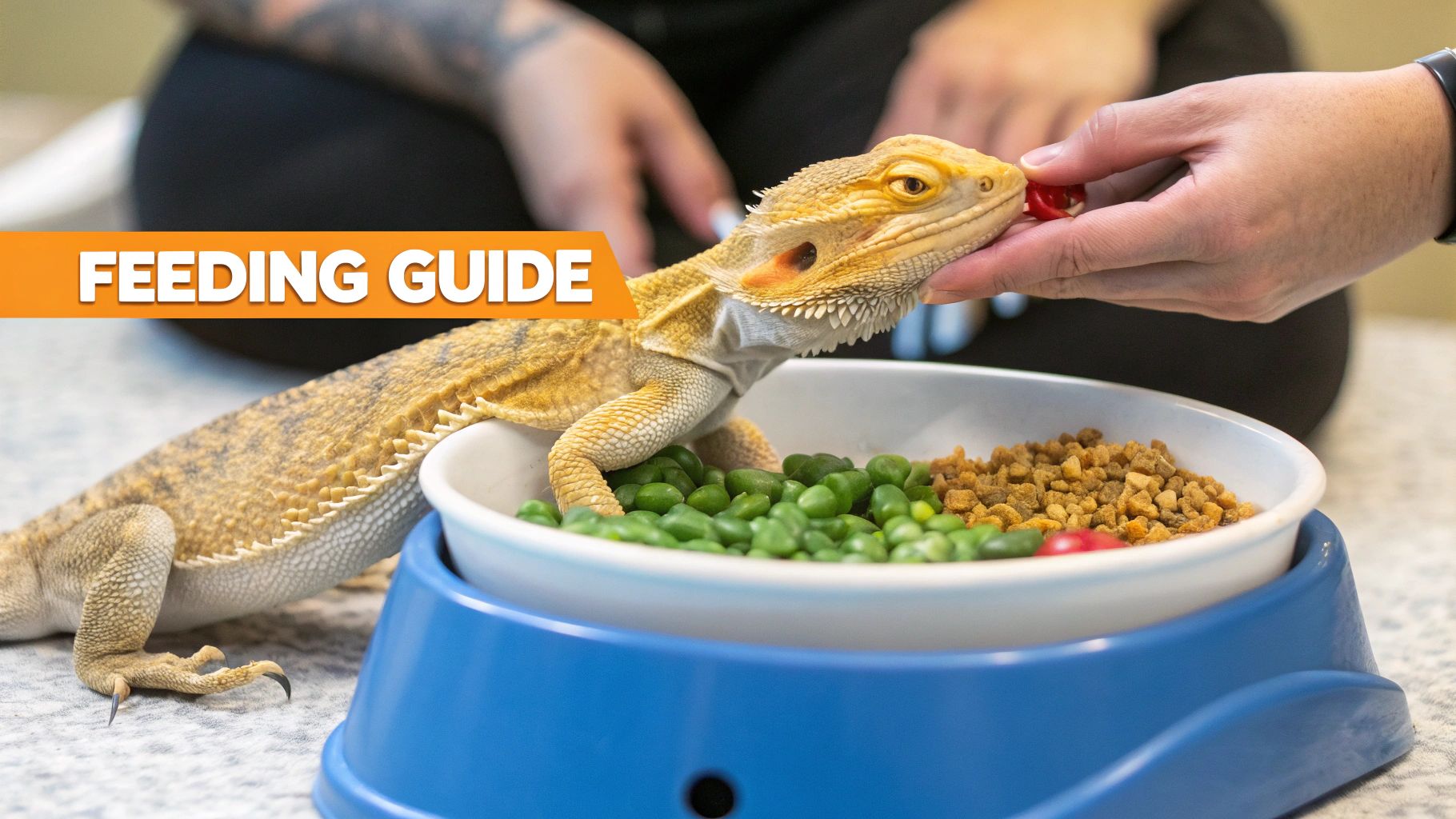
The go-to rule for most keepers is to offer as many larvae as your bearded dragon can eat in a 10-15 minute timeframe. This method lets your dragon eat its fill without you having to meticulously count every single grub.
If you prefer a more structured plan, some solid guidelines can get you started. A baby dragon (1-3 months old) might put away around 60 small BSFL a day, while a juvenile (3-6 months) could handle about 80 medium larvae. Once they hit adulthood (over six months), their insect needs drop to around 15 large larvae per day, with fresh greens making up the bulk of their diet. For a deeper dive, you can find more detailed feeding charts to help you understand your bearded dragon's needs on ecoflys.com.
Best Practices for Serving BSFL
How you serve the larvae matters more than you might think. BSFL are wiggly and love to burrow, so just tossing them onto the substrate is a bad idea. They’ll either disappear before your dragon finds them or get eaten along with a mouthful of sand or dirt.
The best solution is a dedicated feeding dish. It's clean, simple, and effective.
- Use a Smooth-Sided Bowl: A ceramic or plastic dish with high, smooth sides is perfect. The larvae can't climb out, keeping them contained and making it easy for your dragon to hunt.
- Trigger Their Instincts: The sight of all those wiggling larvae in one place is like a dinner bell for a bearded dragon. It kicks their natural prey drive into high gear, making feeding time more engaging and fun for them.
- Keep Things Tidy: A bowl keeps the larvae clean and free of any gunk from the enclosure. Just remember to remove any uneaten bugs after the feeding session to keep the habitat hygienic.
This simple trick makes cleanup a breeze for you and creates a much more enriching mealtime for your pet.
A Feeding Schedule by Life Stage
To simplify things even further, here's a quick reference table breaking down the daily feeding recommendations. Think of this as a starting point—always keep an eye on your dragon’s appetite, weight, and energy levels, and don't be afraid to adjust as needed.
Here’s a quick-reference chart to help you figure out how many larvae to offer based on your dragon’s life stage.
Daily BSFL Feeding Guide for Bearded Dragons
| Life Stage | Larvae Size | Daily Serving |
|---|---|---|
| Hatchling & Baby | Small | 2-3 feedings of what they'll eat in 10-15 min |
| Juvenile | Medium | 1-2 feedings of what they'll eat in 10-15 min |
| Adult | Large | 1 feeding alongside a staple diet of fresh greens |
Remember, these are guidelines, not strict rules. Watching your dragon's behavior and body condition is the best way to fine-tune their diet.
By following these simple steps, you can easily make black soldier fly larvae a regular and beneficial part of your dragon’s diet, ensuring they get the fantastic nutrition they need to thrive at every stage of life.
Fueling Faster Growth in Young Bearded Dragons
Anyone who has raised a baby bearded dragon knows that initial growth spurt is an amazing thing to watch. Hatchlings and juveniles are like little construction sites, working around the clock to build bone, muscle, and tissue. What you feed them during this critical time doesn't just make them bigger—it lays the groundwork for a long, healthy, and active life.
This is where a diet centered on black soldier fly larvae for bearded dragons really shines. Think of it as the ultimate superfood for a growing athlete. The unique nutritional profile of BSFL provides the exact building blocks a young dragon needs to develop a solid frame and healthy body mass, giving them a serious head start.
The Science Behind That Growth Spurt
It’s one thing to say a feeder insect is "good" for them, but it's another to see the proof. The benefits of BSFL aren't just talk; they're backed by solid research. When it comes to reptile nutrition, we're always trying to replicate their natural diet while making sure they thrive in our care, and BSFL nail this, especially for the little ones.
Their high concentration of easily digestible protein provides the raw material for muscle, while their fantastic calcium content directly fuels bone growth. It's a powerful one-two punch. Other feeders might offer plenty of protein, but they often fall short on calcium, which means you have to rely on messy and inconsistent dusting. With BSFL, you get both in one perfect, natural package.
A 2023 study put this to the test, comparing the growth of bearded dragon hatchlings. The results were striking: hatchlings raised on a staple diet of black soldier fly larvae weighed 35.29% more after just eight weeks than the group fed dusted dubia roaches. That’s a huge difference, and it clearly shows how the superior nutrition in BSFL translates directly to faster, healthier development. You can dive into the full study and see why BSFL are proven to accelerate hatchling development on symtonbsf.com.
Building a Stronger Foundation for Life
So, what does all this accelerated growth actually mean for your pet? This isn't about creating some kind of giant dragon. It's about making sure their body develops properly and efficiently, hitting all those important milestones right on schedule.
A stronger start in life pays off for years to come with some major long-term benefits:
- Denser Bones: Getting enough calcium from day one is the best defense against devastating issues like Metabolic Bone Disease (MBD) later on.
- Healthy Organs: High-quality protein and essential amino acids are crucial for the development of strong internal organs.
- Better Resilience: A well-fed juvenile is simply better prepared to handle stress and ward off common illnesses.
Think of it like building the foundation for a house. A strong, well-poured foundation supports a stable, durable home for decades. Feeding BSFL to your young dragon is that same kind of investment in their future health.
By making black soldier fly larvae a staple for your young dragon, you’re taking an active role in their long-term well-being. You aren't just giving them a meal; you're providing the essential materials they need to truly thrive. This proactive approach to nutrition is one of the most powerful things you can do to help your tiny hatchling grow into a magnificent, healthy adult.
Sourcing and Storing Your BSFL Supply
To get the most out of black soldier fly larvae, your work actually starts long before feeding time. It's one thing to know how many grubs to offer your bearded dragon, but knowing where to get high-quality larvae and how to keep them fresh is just as critical. Proper sourcing and storage are the keys to unlocking their full nutritional potential.
Think of it like buying fresh produce for yourself. You wouldn't grab the wilted lettuce, would you? The same principle applies here. Your first step is finding a supplier who takes pride in their product—one who raises healthy, active larvae on a clean, nutritious diet.
Finding a Reputable Supplier
When you're ready to buy, you need to be a discerning customer. Not all BSFL are created equal, and the quality of the grubs has a direct impact on your beardie's health. A trustworthy supplier is consistent and transparent.
Here’s what to look for when your package arrives:
- Active and Healthy Larvae: The larvae should be plump, cream-colored, and wiggling. If you see a bunch of dark, still, or dried-out grubs, you've got a bad batch.
- Minimal Odor: Fresh, healthy BSFL have a faint, earthy smell. A strong, sour, or ammonia-like stench is a major red flag that something is wrong.
- Secure Packaging: Reputable sellers ship their larvae in containers with proper ventilation. This prevents overheating and ensures they show up at your door alive and ready to go.
Keeping these points in mind will help you source a safe, nutrient-dense feeder every time. If you want to dig a bit deeper, our guide on where to buy black soldier fly larvae can help you compare your options.
Proper Storage Techniques
Once your fresh supply of grubs arrives, storing them correctly is the next piece of the puzzle. The good news is that both live and dried BSFL are incredibly easy to care for.
Live Larvae Storage
The goal with live larvae is to slow down their life cycle so they stay fresh for a few weeks. The secret is cool temperatures.
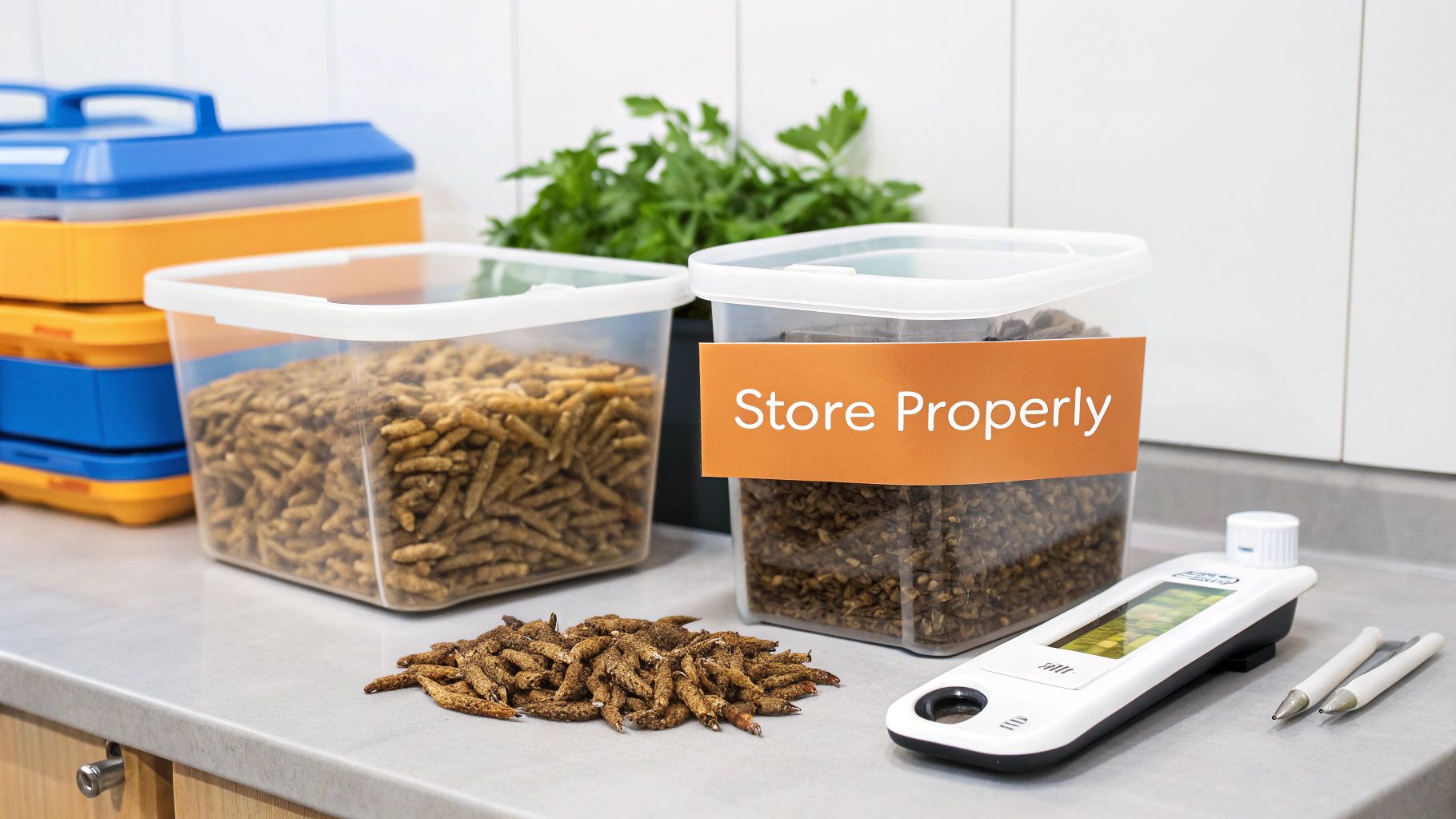
- Find a Cool Spot: You want to keep them between 50-55°F (10-13°C). This is a bit warmer than a standard fridge, making a wine cooler, a cool basement, or even the butter compartment on the fridge door an ideal spot.
- Keep Them Dry: Make sure their container is well-ventilated. Moisture is the enemy and can make them spoil quickly.
- No Food Needed: Here's the best part—unlike crickets or roaches, you do not need to gut-load BSFL. They are naturally packed with all the calcium and nutrients your beardie needs.
Dried Larvae Storage
Dried larvae are all about convenience. They have a fantastic shelf life, often lasting up to a year if stored properly. It couldn't be simpler.
Keep them in an airtight container in a cool, dry place away from direct sunlight, like a pantry or cupboard. This locks in freshness and preserves their nutritional value.
Whether you go with live or dried, these simple steps ensure that every grub you offer your bearded dragon is as healthy and beneficial as the last.
Frequently Asked Questions About Feeding BSFL
Even after hearing all the good stuff, it's totally normal to have a few questions before you start switching up your bearded dragon's diet. When it comes to our pets, we all want to be 100% sure we're doing the right thing. Here, I'll give you some straight, clear answers to the most common questions I hear from owners about black soldier fly larvae.
Think of this as your quick guide to bust any myths or clear up confusion. We'll cover everything from the classic calcium dusting question to dealing with picky eaters, so you can feel completely confident about adding this powerhouse feeder to your rotation.
Do I Need to Dust Black Soldier Fly Larvae with Calcium?
This is easily the question I get asked most often, and the answer is one of the best parts about using BSFL: No, you do not need to dust them.
That’s a huge weight off the shoulders for a lot of owners. Black soldier fly larvae are naturally loaded with calcium and already have a fantastic calcium-to-phosphorus ratio. This means they're basically a complete nutritional package, ready for your dragon to eat and absorb without you having to do anything extra.
When you feed BSFL, you remove the guesswork and risk of using too much or too little calcium powder. It simplifies your routine and gives you real peace of mind, knowing your dragon is getting what it needs to prevent Metabolic Bone Disease.
Can My Bearded Dragon Eat Only BSFL?
While BSFL are an incredible staple feeder, variety is always the secret sauce for a truly healthy diet. It's much better to think of them as the healthy foundation of your dragon's insect meals, not the only thing on the menu.
Offering a mix of different bugs provides a broader range of nutrients and, just as important, it keeps your dragon engaged. Rotating in other insects like dubia roaches or silkworms prevents them from getting bored and encourages their natural hunting instincts. And don't forget, for adult dragons, insects are just one piece of the puzzle—they still need plenty of fresh greens and veggies.
Are BSFL Good for Baby Bearded Dragons?
They aren't just good; they are one of the best possible feeders for baby and juvenile bearded dragons, hands down.
Young dragons are growing like weeds, and they need a massive amount of calcium to build strong, healthy bones. The high levels of naturally available calcium in BSFL directly support this crucial development. On top of that, their soft bodies are super easy for tiny digestive systems to process, which means they get all the good stuff without the risk of impaction. Just make sure you're feeding the right size (small or extra-small) so there's no choking risk.
How Do I Get a Picky Bearded Dragon to Eat BSFL?
It's pretty common for a bearded dragon to give a new food the side-eye. If your little buddy turns up their nose at first, don't throw in the towel. A little patience and a few tricks will usually get them interested.
First off, remember that movement is everything. A dragon’s instinct to eat is triggered by wiggling prey, so make sure the larvae are nice and active.
- Make Them Obvious: Put the larvae in a shallow, light-colored bowl where they stand out and can't easily hide.
- Mix Them In: Try adding just a few BSFL to a bowl of their favorite bugs. Over a few days, gradually increase the ratio of BSFL.
- Use the Tongs: Sometimes, dangling a wiggling larva from feeding tongs is all it takes to grab their attention and make it feel more like a hunt.
Consistency is your best friend here. Keep offering them, and chances are their natural instincts will kick in.
At Pure Grubs, we're passionate about providing top-quality, USA-grown black soldier fly larvae to help your bearded dragon thrive. Our grubs are a clean, safe, and nutrient-dense choice you can feel great about. Learn more on the Pure Grubs website.