

what do leopard geckos eat: A Complete Feeding Guide
When you own a leopard gecko, you're essentially taking on the role of their personal chef and nutritionist. And the first rule? Leopard geckos are strict insectivores. That’s a straightforward way of saying they eat bugs, and only bugs. In captivity, we replicate this with staple feeders like crickets and Dubia roaches, saving fatty treats like waxworms for special occasions.
Understanding Your Leopard Gecko's Natural Diet
To really nail down what leopard geckos eat, we have to look past the terrarium and into the rugged landscapes they call home. These little lizards are native to the arid deserts and dry grasslands of Asia. Out there, nobody is serving them a perfectly gut-loaded mealworm on a platter; they're skilled, opportunistic hunters that eat whatever insects cross their path.
This primal instinct is the most important clue for providing a healthy diet. A leopard gecko's entire digestive system is finely tuned for one job: breaking down insects. They simply don't have the biological tools to process plant matter. This is why you should never, ever feed them fruits or vegetables—it can lead to serious health problems.
The Wild Diet: A Blueprint for Captive Care
In the wild, a leo's diet is incredibly varied. It shifts with the seasons and depends entirely on what prey is available. They'll munch on everything from beetles and spiders to scorpions and centipedes. This natural buffet provides a huge range of nutrients that's impossible to replicate with just one or two types of feeder insects.
By mimicking this varied, insect-based diet, you provide the essential building blocks for your gecko’s growth, immune function, and overall well-being. It’s the difference between a pet that merely survives and one that truly thrives.
What Do Leopard Geckos Eat In The Wild?
Back in their native habitats across Afghanistan, Iran, and Pakistan, leopard geckos are masters of the hunt. Their menu consists almost entirely of insects and other small invertebrates they can easily overpower. They're often on the lookout for crickets, locusts, grasshoppers, and various worms, especially the soft-bodied prey that becomes plentiful after the seasonal rains. You can dive deeper into their wild diet and how it informs pet care over at Exotics Keeper.
This is precisely why one of the most common mistakes new owners make is feeding only one type of insect, like mealworms. It's a recipe for nutritional gaps and can quickly turn your gecko into a picky eater. Rotating through different feeders keeps mealtime interesting and ensures they get the complete nutritional profile they would in the wild.
Choosing The Best Feeder Insects For Your Gecko
Putting together the right diet for your leopard gecko is a bit like being a personal chef for a tiny, scaly athlete. The goal isn't just to feed them, but to provide a rich variety of insects that mimics what they’d find in the wild. This variety is more than just a nice-to-have; it's the cornerstone of their long-term health.
The world of feeder insects really breaks down into two camps: staples and treats. Staples are the nutritional foundation of your gecko's diet—they're lean, well-balanced, and perfect for regular meals. Treats, on the other hand, are the fun stuff. They’re usually higher in fat and should be offered sparingly, kind of like dessert.
This chart gives you a quick snapshot of where leopard geckos fit into their natural food web.
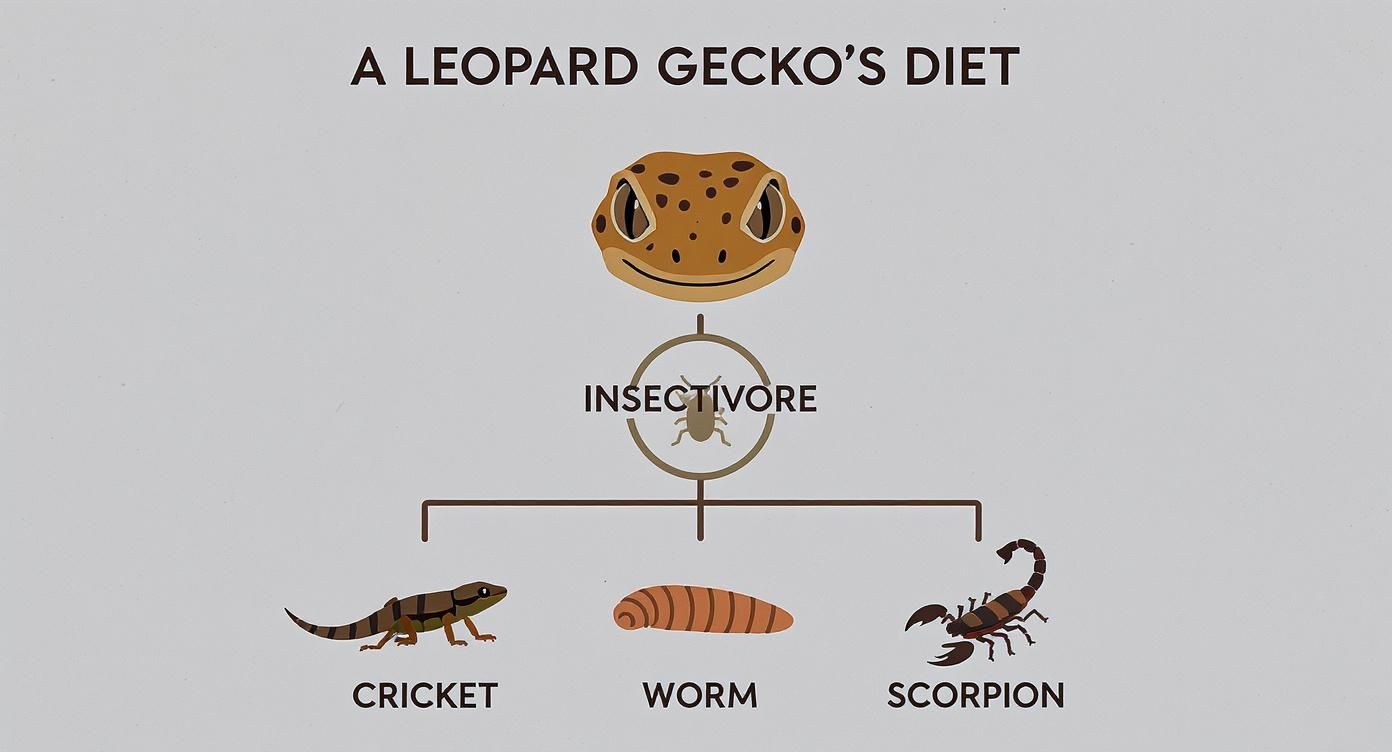
As you can see, these guys are dedicated insectivores, built to hunt and eat a wide range of invertebrates to thrive.
The Best Staple Feeder Insects
Staple feeders should make up the vast majority of your gecko's meals. These insects hit that sweet spot of protein, fat, and other key nutrients that fuel your gecko's daily energy and overall health.
- Dubia Roaches: Ask any seasoned keeper, and they'll likely tell you dubias are the gold standard. They boast a fantastic protein-to-fat ratio, are easy to gut-load, and won't drive you crazy with noise or escape attempts. A true keeper's favorite.
- Crickets: The classic choice for a reason. Crickets are a solid protein source, and their constant movement does a great job of stimulating a gecko's natural hunting drive. The downsides? They can be noisy, a bit smelly, and are notorious escape artists.
- Black Soldier Fly Larvae (BSFL): Often sold under brand names like Calci-Worms, these little guys are a nutritional powerhouse. They're naturally loaded with calcium—a huge plus for preventing Metabolic Bone Disease—and have a great protein profile. If you want to learn more, check out our guide on where to buy Black Soldier Fly Larvae.
- Silkworms: Think of silkworms as the soft, juicy, and hydrating option. They are wonderfully nutritious and low in fat, making them an incredible staple. The catch is they can be a bit pricier and more delicate to care for than other feeders.
The best strategy is to mix it up. Offering a rotation of these staples keeps your gecko from getting bored and ensures a more well-rounded nutritional intake, much like they'd get by hunting opportunistically in their native habitat.
Occasional And Treat Insects
Treats are great for adding excitement to the menu or helping an underweight gecko pack on a few grams, but they absolutely must be used in moderation. They're basically the "junk food" of the gecko world—delicious, but not something you build a healthy diet around.
Overfeeding high-fat insects like waxworms is a fast track to problems. It can lead to obesity, fatty liver disease, and even turn your gecko into a picky eater who refuses their healthier staples.
Here are a few common treats to use sparingly:
- Mealworms: While some keepers use these as a staple, their higher fat content and tougher exoskeleton (chitin) make them better as an occasional food. They're best offered as part of a varied rotation, not as the main course every time.
- Superworms: Essentially mealworms on steroids. They're bigger, more active, and even higher in fat. These should be reserved for larger adult geckos and only as a rare treat.
- Waxworms: These are the gecko equivalent of candy bars. They're incredibly high in fat and absolutely irresistible to most leopard geckos. Save them for coaxing a sick or recovering gecko to eat, or as an extremely rare treat—we’re talking one or two a month, tops.
To help you visualize the differences, here’s a quick comparison of the most popular feeder options.
Comparing Top Feeder Insects for Leopard Geckos
Choosing the right mix of insects can feel overwhelming, but this table breaks down the nutritional pros and cons of common feeders. Use it to help plan a balanced and varied diet for your gecko, ensuring they get the right nutrients from both staple and treat insects.
| Feeder Insect | Nutritional Value (Protein/Fat) | Best For | Feeding Notes |
|---|---|---|---|
| Dubia Roaches | High Protein, Low Fat | Staple | Excellent nutritional profile. Easy to keep and gut-load. Cannot climb. |
| Crickets | High Protein, Moderate Fat | Staple | Great for encouraging hunting. Can be noisy, smelly, and may bite gecko. |
| Black Soldier Fly Larvae | Moderate Protein, Moderate Fat (Naturally high in Calcium) | Staple | No dusting needed for calcium! Excellent for preventing MBD. |
| Silkworms | High Protein, Very Low Fat | Staple | Soft-bodied and very hydrating. Can be expensive and require special care. |
| Mealworms | Moderate Protein, High Fat | Occasional Treat | Tough exoskeleton (chitin) can be hard to digest. Best in moderation. |
| Superworms | Moderate Protein, Very High Fat | Occasional Treat (Adults Only) | Very fatty. Can bite, so crush the head before feeding. Not for juveniles. |
| Waxworms | Low Protein, Extremely High Fat | Rare Treat / Health Boost | Highly addictive and fatty. Use only to entice sick geckos or once a month. |
By rotating through a few different staples and tossing in a treat now and then, you'll create an exciting and healthy feeding routine. This approach not only keeps your gecko physically healthy but also mentally stimulated and engaged with its food.
Mastering Gut-Loading and Supplement Dusting
Feeding a plain insect to your leopard gecko is like eating a plain salad with no dressing or toppings. Sure, it provides some basic value, but it's missing all the good stuff that makes it a truly complete and healthy meal. To properly answer "what do leopard geckos eat?" we need to go one step further than just the insect itself.
This is where two absolutely essential practices come into play: gut-loading and supplement dusting.
Think of your feeder insects as tiny, edible vitamin capsules. Whatever they eat right before your gecko eats them is what your gecko ultimately gets. That's the core idea behind gut-loading.
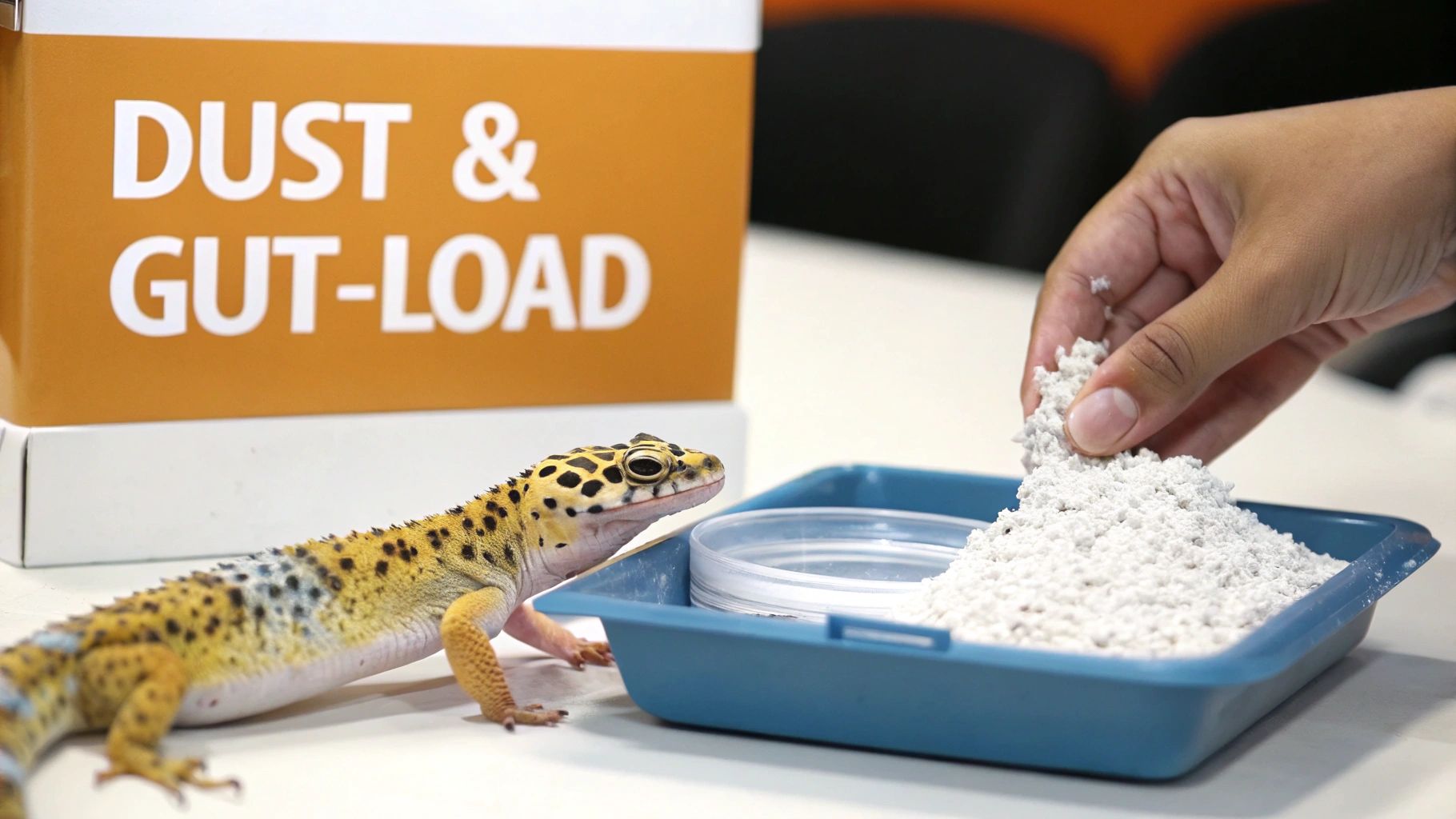
Simply put, you are what you eat, and your gecko is what its food eats. Gut-loading just means feeding your crickets, roaches, or worms a super nutritious diet for at least 12-24 hours before offering them to your gecko. This ensures all those vital nutrients get passed directly to your pet.
The Art of Gut-Loading Your Feeders
Getting started with gut-loading is surprisingly simple. You can buy pre-made commercial formulas or just whip up your own mix of healthy, gecko-safe foods.
- Nutrient-Packed Veggies: Finely chopped carrots, sweet potatoes, and dark leafy greens like collard or mustard greens are fantastic choices. They're loaded with vitamins your gecko needs to thrive.
- Specialized Formulas: If you want to take the guesswork out of it, commercial gut-load products are specifically formulated to provide a balanced nutritional punch.
This single step transforms a standard feeder insect into a powerhouse of nutrition, directly supporting your gecko’s health and vitality. While most feeders benefit from this process, some, like Black Soldier Fly Larvae, are naturally high in certain minerals. You can learn more about the nutritional benefits of dried Black Soldier Fly Larvae in our guide.
The Critical Role of Supplement Dusting
Even a perfectly gut-loaded insect has one major flaw: it's naturally low in calcium. This is a huge deal because calcium is vital for strong bones. Without it, leopard geckos are at a very high risk for Metabolic Bone Disease (MBD), a devastating condition that makes their bones weak and rubbery.
Dusting is the non-negotiable solution to this problem.
Dusting is the simple practice of lightly coating feeder insects with a supplement powder right before feeding. It’s the most direct way to deliver crucial vitamins and minerals that insects just don't have on their own.
You’ll want to have three main supplements on hand:
- Calcium with Vitamin D3: Your gecko needs vitamin D3 to actually absorb and use calcium from its food. This is the go-to for most feedings.
- Calcium without D3: It's good to have this to alternate with, preventing your gecko from getting too much D3.
- Reptile Multivitamin: This covers all the other bases, providing essentials like Vitamin A for healthy eyes and a strong immune system.
For a healthy adult gecko, a common routine is to use calcium with D3 for two consecutive feedings, then use a multivitamin on the third feeding, and just repeat that cycle. This simple schedule is one of the best things you can do to ensure your gecko lives a long, healthy life.
Creating the Right Feeding Schedule for Any Age
Just like with people, a leopard gecko's nutritional needs aren't static—they change quite a bit as they grow up. A hatchling that's growing like a weed needs way more calories and nutrients than a full-grown adult who's just maintaining their weight.
Nailing down the right feeding schedule for your gecko's age is one of the most critical parts of keeping them healthy. It's the secret to avoiding common problems like obesity or, on the flip side, stunted growth.
Think of baby and juvenile geckos as tiny athletes in the middle of a massive growth spurt. Their bodies are working around the clock, building bone and muscle, which demands a ton of fuel. This is why younger geckos need to eat so much more often.
Feeding Baby and Juvenile Geckos
Baby leopard geckos, from the day they hatch up to about 6 months old, have huge appetites for their size. To keep up with their rapid development, they need to be fed every single day. Each meal should be a few small, appropriately sized insects.
Once they hit the juvenile stage (around 6 to 12 months), their growth starts to slow down just a bit. This is a good time to start tapering back their meals to every other day. This gradual change gives their metabolism time to adjust.
A great rule of thumb for choosing the right size feeder insect is to look at the space between your gecko's eyes. You should never offer an insect that's wider than that space. This simple trick helps prevent choking and makes sure their meal is easy to digest.
Feeding Adult Leopard Geckos
When your leopard gecko reaches adulthood at about the 12-month mark, their metabolism really slows down. They're done growing and have shifted into maintenance mode, so they just don't need daily meals anymore. This is where many new owners make a mistake—overfeeding an adult can lead to obesity and a whole host of related health issues pretty quickly.
A healthy adult leopard gecko only needs to be fed two or three times per week. On feeding days, you can offer them a meal consisting of several staple insects. It's really important to keep their diet varied to ensure they get a wide range of nutrients and don't get bored. A good rotation of crickets, dubia roaches, and silkworms is a fantastic foundation for any adult's diet. For a deeper dive into crafting a balanced diet, check out this guide on ExoticsKeeper.com.
Always keep an eye on your gecko's body condition. Their tail is the best indicator of their health; it's where they store their fat reserves. A healthy gecko will have a nice, plump tail that’s roughly the same width as its neck. If the tail starts to look skinny or bony, you might need to increase how much or how often you're feeding. On the other hand, if the tail gets noticeably wider than their body, it's a clear sign to cut back a bit.
While Black Soldier Fly Larvae are a fantastic staple for many reptiles, it's always smart to understand how they fit into specific diets. You can learn more about using BSFL for other reptiles like bearded dragons in our other detailed article.
What to Never Feed Your Leopard Gecko
Knowing what to feed your gecko is important, but knowing what to avoid is absolutely critical for their health and safety. While your little hunter might eagerly pounce on any bug that moves, some are dangerous, and others can be outright lethal. Think of this section as your do-not-feed list.
The number one rule? Never, ever feed your gecko wild-caught insects. A bug from your backyard might seem like a free snack, but it’s a massive gamble. These insects often carry internal parasites that can wreak havoc on your gecko's system. Worse yet, they could be contaminated with pesticides, herbicides, or other chemicals that are poison to reptiles. Always source your feeders from a trusted breeder or supplier—it's the only way to be sure they're clean and safe.
Toxic Insects: The "Absolutely Not" List
Some insects aren't just a bad idea; they're toxic. They contain compounds that can cause serious harm or even death, sometimes very quickly.
- Fireflies (Lightning Bugs): This is the most urgent warning. Fireflies contain a toxic defensive steroid called lucibufagin. For a leopard gecko, ingesting even a single firefly can be fatal. There is no grey area here—keep them far away.
- Monarch Butterflies and Caterpillars: Their bright colors are a warning. Monarchs feed on milkweed, which makes them toxic to most predators, including your gecko.
- Certain Spiders and Centipedes: Your gecko might encounter these in the wild, but the risk is too high in captivity. Many common household species can deliver a venomous bite powerful enough to injure or kill a small lizard. It's simply not worth it.
Other Foods That Don't Belong in Their Diet
It can be tempting to offer variety, but a leopard gecko's digestive system is built for one thing: insects. They are strict insectivores, meaning their bodies are not equipped to handle anything else.
Never offer fruits or vegetables to your leopard gecko. Their digestive tract cannot break down plant matter. Attempting to feed them plants can lead to severe health problems like impaction, digestive distress, and long-term malnutrition.
It goes without saying that human food, dairy, or meat are also completely off-limits. The best way to ensure your gecko lives a long and healthy life is to stick to what their bodies are designed for. By providing a simple diet of safe, captive-bred insects, you take the guesswork out of feeding and keep your pet safe.
The Critical Role of Water and Hydration
Food is only half the battle when it comes to a healthy leopard gecko. Hydration is just as important, and you can't rely on juicy insects to cover all their water needs. Your gecko needs constant access to a bowl of fresh, clean water to truly thrive.
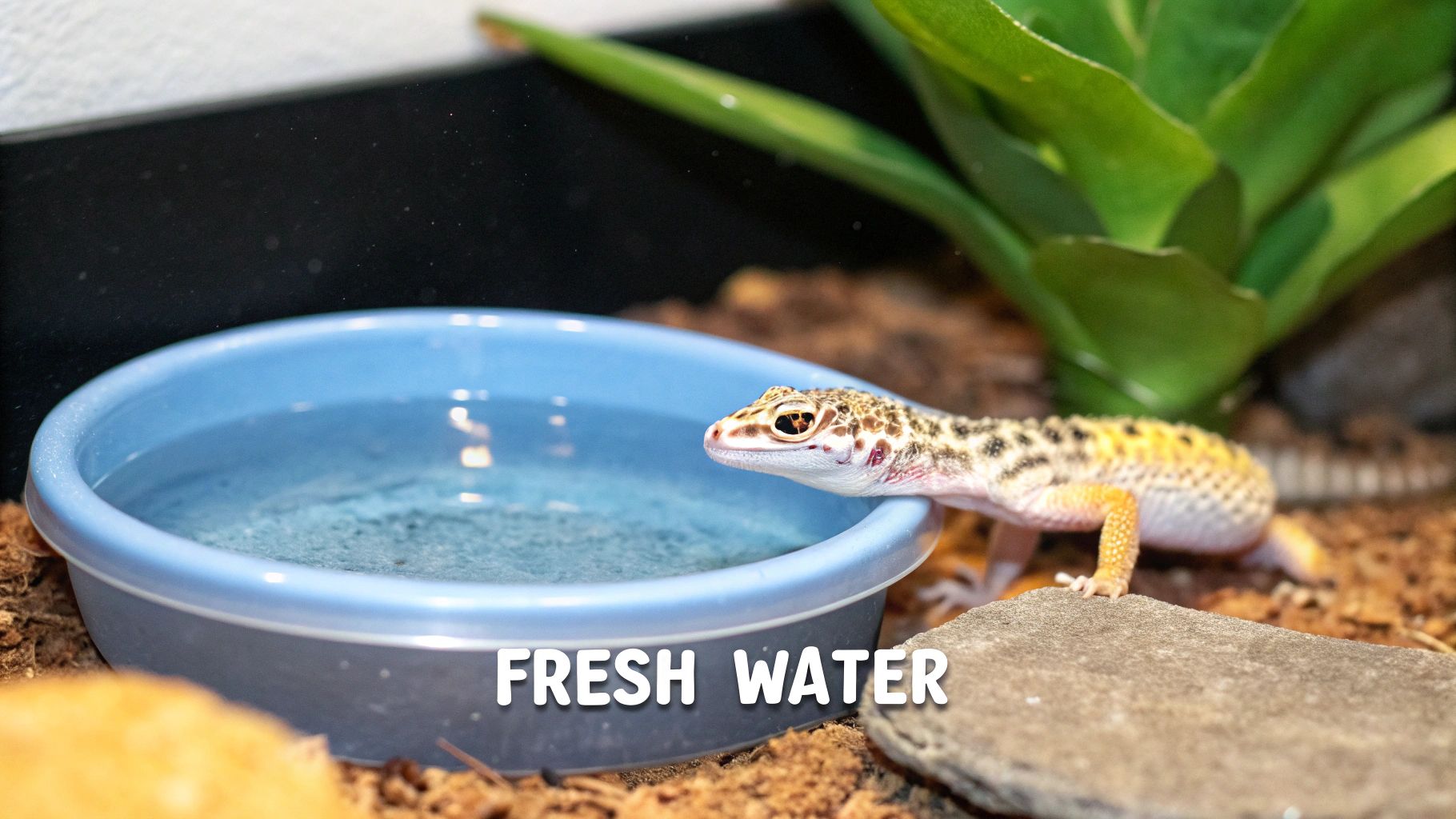
Think of a water dish as an essential piece of tank furniture. The most important thing to remember is to keep it shallow. Leopard geckos are terrible swimmers, and a deep water bowl is a genuine drowning hazard. Look for something sturdy that they can easily climb into and out of without tipping it over.
Keeping Their Water Source Safe and Clean
Just dropping a bowl in there isn't enough—you have to maintain it. Your gecko's water can get dirty fast, becoming a breeding ground for nasty bacteria that could make your pet sick. A daily refresh is a must.
Here are a few simple rules to live by:
- Skip the Tap Water: Tap water is often treated with chlorine and other chemicals. It's much safer to use dechlorinated water or plain bottled spring water.
- Daily Scrub-Down: Give the dish a good scrub with hot water every single day. This gets rid of that slimy film that can build up before you refill it.
- Boost Humidity for Shedding: Proper hydration is also key for a smooth shed. Along with the water bowl, a dedicated humid hide filled with damp moss gives them a moist retreat to help their old skin peel off easily.
By providing a clean water dish and moisture from their food, you're setting them up for a long, healthy life. In fact, with great care, a leopard gecko can live for up to 20 years in captivity! You can dive deeper into their long-term needs in this fantastic leopard gecko care and longevity guide.
Common Questions About Feeding Leopard Geckos
Even with the perfect feeding plan, you're bound to run into a few head-scratchers along the way. That's just part of being a gecko owner! Knowing what to expect can help you sort out any issues quickly and keep your little reptile happy and healthy.
Let's dive into some of the most common questions and worries that pop up, from sudden hunger strikes to frustratingly picky eating habits.
Why Has My Leopard Gecko Stopped Eating?
It's always a bit stressful when your leopard gecko suddenly turns its nose up at food, but don't panic just yet. More often than not, there's a perfectly natural reason. Shedding is the most common culprit—most geckos won't eat for a few days before, during, and right after the process.
Another big one is temperature. If their enclosure is too cool, their metabolism slows down, and they lose their appetite. Always have a good thermometer and double-check that your heating setup is hitting the right numbers.
Stress from a new home or even just rearranging their tank can also put them off their food. And for adults, breeding season often comes with a temporary hunger strike. If your gecko hasn't eaten for more than a week and you've ruled out shedding, it's a good idea to schedule a vet visit to make sure nothing more serious is going on.
Can Leopard Geckos Eat Fruits or Vegetables?
This is one of the easiest questions to answer: a hard no. Leopard geckos are obligate insectivores. Their entire digestive system is built to process insects and nothing else.
Trying to feed them fruits or veggies won't just be ignored; it can cause serious health problems like digestive impaction. They simply can't break down plant matter.
Think about their wild diet—it's a world of insects, spiders, and even scorpions. In fact, they've evolved an impressive immunity to certain scorpion venoms, which gives them a unique edge in their native habitat. You can find more fascinating details about their unique dietary adaptations on a-z-animals.com. So, stick to what they're designed to eat: bugs!
How Do I Handle a Picky Eater?
Every so often, you'll get a gecko that becomes a junk food addict. They get a taste of something rich and fatty, like a waxworm, and suddenly decide they won't eat anything else. It’s the gecko equivalent of a toddler who only wants to eat cookies.
The best approach here is a bit of tough love. Cut out the high-fat "treats" completely.
A healthy adult gecko can safely go on a brief hunger strike. Be patient and continue offering a variety of nutritious staple insects like Dubia roaches and crickets. They will eventually give in and accept the healthier meal.
Don't give in! Their survival instinct will kick in, and they'll eventually eat what's offered.
Is It Safe to Feed My Gecko Wild Bugs?
Please, never feed your gecko bugs you've caught from your yard or house. Wild insects are a huge risk. They can be full of internal parasites that will happily move into your gecko.
Worse, they may have come into contact with pesticides, herbicides, or other chemicals that are incredibly toxic to reptiles. It's just not worth it. Always buy your feeder insects from a reliable breeder or pet store to guarantee they are clean, gut-loaded, and safe for your pet.
At Pure Grubs, we're dedicated to providing safe, high-quality nutrition for your pets. Our USA-grown Black Soldier Fly Larvae are a fantastic, calcium-rich addition to any reptile's diet, ensuring you provide only the best for your scaly friend. Explore our premium feeders at https://puregrubs.com.