

Black Soldier Fly Larvae Bearded Dragon: A Complete Feeding Guide
Absolutely, black soldier fly larvae are a fantastic choice for bearded dragons. In fact, they're one of the best feeder insects you can offer. Think of them as a complete, all-natural meal that also acts as a built-in calcium supplement, making your life and your dragon's diet a whole lot simpler. Their unique nutritional makeup is a game-changer for reptile keepers, especially when it comes to preventing nasty health issues.
The Best Feeder Insect for a Healthy Bearded Dragon
If you're building a diet for your beardie, the sheer number of feeder insects can feel overwhelming. You've got crickets, dubia roaches, mealworms... the list goes on. Each one brings something different to the table, but black soldier fly larvae (which you might see sold as Calci-Worms® or Phoenix Worms®) are truly in a league of their own.
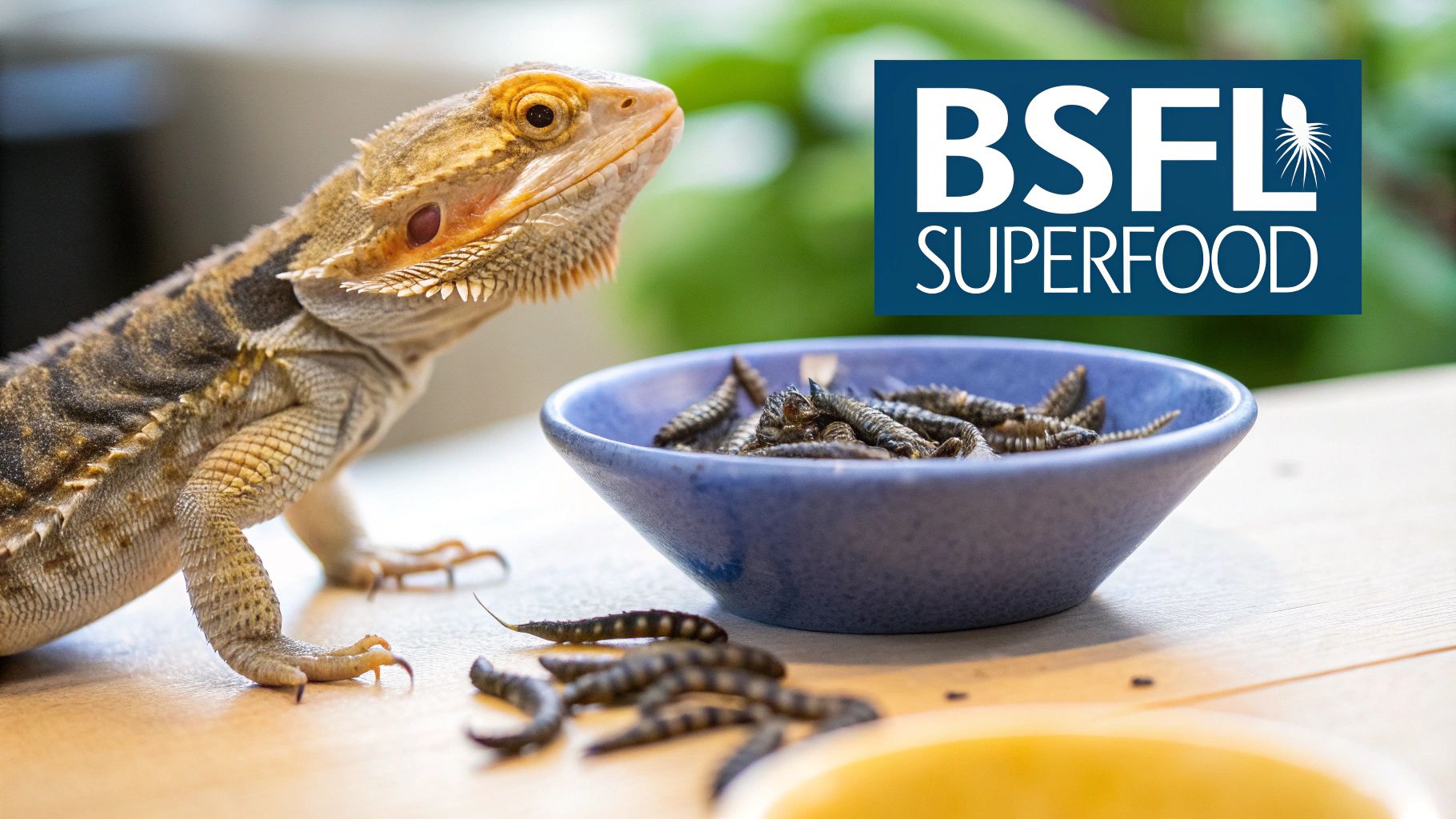
Here’s a good way to think about it: building a healthy dragon is like building a strong house. You need good bricks (protein), strong mortar (calcium), and a solid blueprint (a balanced diet). Most feeder insects are like having a ton of bricks but almost no mortar. You constantly have to "dust" them with calcium powder to keep the whole structure from getting weak.
Black soldier fly larvae, on the other hand, show up with the mortar already mixed in. Their naturally high calcium content and perfect calcium-to-phosphorus ratio make them a uniquely complete nutritional package right out of the box.
This is a huge deal for preventing Metabolic Bone Disease (MBD), a heartbreaking—and completely preventable—condition in reptiles caused by a lack of calcium. By feeding BSFL, you're laying a solid foundation for strong bones and healthy growth without the stress and guesswork of heavy-handed supplementation. This is especially critical for hatchlings and juveniles, whose little bodies are growing like weeds and need a massive amount of calcium to do it right.
A Look at the Nutritional Numbers
What really makes BSFL shine is their nutritional breakdown. When you look at the analysis, you see a well-rounded feeder:
- Around 17.5% protein for building strong muscles.
- A solid 14% fat for energy.
- 61.2% moisture content, which is great for keeping your dragon hydrated.
But the most impressive part? Their calcium can be as high as 9,340mg/kg while phosphorus sits at just 3,560mg/kg. This creates an almost perfect ratio for absorption.
This amazing profile makes your feeding routine easier and gives your dragon a huge leg up for long-term health. To put it in perspective, let's see how they stack up against a couple of other popular feeders.
BSFL Vs Common Feeder Insects Nutritional Snapshot
This table gives you a quick side-by-side look at how Black Soldier Fly Larvae compare to Dubia Roaches and Crickets. Pay close attention to the protein, fat, and especially that all-important calcium-to-phosphorus ratio. Seeing the numbers laid out like this makes it easy to see why BSFL are such a standout choice. For a deeper dive, check out this guide on black soldier fly larvae for reptiles.
| Nutrient | Black Soldier Fly Larvae (BSFL) | Dubia Roaches | Crickets |
|---|---|---|---|
| Protein | ~17.5% | ~23% | ~18% |
| Fat | ~14% | ~7% | ~6% |
| Calcium | High | Low | Very Low |
| Calcium:Phosphorus Ratio | ~2.5:1 (Ideal) | ~1:3 (Poor) | ~1:9 (Poor) |
As you can see, both dubias and crickets have what's called an "inverted" ratio, meaning they contain far more phosphorus than calcium. Without dusting, they can actually pull calcium out of your dragon's system over time. BSFL, with their naturally balanced profile, do the exact opposite.
Fueling Faster Growth in Young Bearded Dragons
The nutritional specs are impressive on paper, but what does that actually mean for your little dragon? The first few months of a bearded dragon’s life are a critical sprint. Hatchlings and juveniles are in a race to grow, and the fuel you provide makes all the difference between a dragon that just gets by and one that truly thrives. Think of Black Soldier Fly Larvae as high-octane fuel, turning their dense nutritional profile into results you can actually see.
Let's picture two hatchlings from the same clutch, living in identical, perfectly maintained enclosures. The only variable is what they eat. One gets the standard fare of calcium-dusted crickets, while the other is raised on a staple diet of BSFL. It wouldn't take long to spot the difference. Within weeks, the BSFL-fed dragon is likely to be more energetic, more colorful, and visibly bigger.
The Visible Impact of a BSFL Diet
This isn't just a hypothetical. The powerhouse nutrition packed into BSFL delivers tangible benefits. The easily absorbed calcium and well-balanced protein go straight to work building stronger, denser bones, setting up a solid foundation for a healthy adult life.
This superior diet also makes shedding, a notoriously stressful process for a growing dragon, much smoother. Shedding takes a ton of energy, and a nutrient-rich diet helps them power through it. Dragons raised on BSFL often have fewer problems with stuck shed and tend to complete the whole process more quickly and cleanly.
Research Confirms Accelerated Development
What experienced keepers have noticed for years is now backed by science. Studies comparing hatchling diets show a clear advantage for the BSFL group. In one eye-opening study, bearded dragon hatchlings fed a staple diet of BSFL weighed about 35.29% more than those fed supplemented dubia roaches after just eight weeks.
This wasn't just about weight gain. The BSFL-fed dragons also molted faster, shedding their skin roughly two days earlier than the other group. This strongly suggests that the naturally high calcium and protein in BSFL provide everything a young dragon needs to grow at an accelerated, healthy pace without relying heavily on extra supplements.
This kind of data takes the numbers off a chart and paints a clear picture of health and vitality. It confirms that BSFL aren't just theoretically good for them; they are a practical, powerful tool for raising a happy, thriving young bearded dragon from day one.
Fueling More Than Just Bones
The perks don't stop with skeletal growth. The balanced fats and complete amino acid profile in BSFL provide the kind of sustained energy that young, hyperactive dragons need. You'll see it in their behavior—they'll hunt with more gusto, explore their habitat more, and just seem brighter and more alert overall.
This energy and nutrient density are also key to building a robust immune system. A well-fed young dragon is simply better equipped to fend off the common stresses of growing up, making them more resilient to potential health problems. A diet built around Black Soldier Fly Larvae gives them the best possible head start.
- Stronger Skeletons: The perfect calcium-to-phosphorus ratio fuels solid bone growth, directly helping to prevent Metabolic Bone Disease.
- Higher Energy Levels: A healthy mix of protein and fat provides the get-up-and-go that active, curious young dragons need.
- Healthier Skin and Sheds: Complete nutrition supports smooth, efficient shedding—a key sign of great health in a growing reptile.
- Robust Immune Function: Giving them all the essential nutrients from the beginning helps build a powerful immune system for life.
Ultimately, choosing the right staple feeder is one of the biggest calls you'll make as a bearded dragon owner. Starting your young dragon on Black Soldier Fly Larvae builds a comprehensive foundation that supports every single aspect of their early development. To get a broader view of their dietary needs, check out our complete guide on what do bearded dragons eat.
A Practical Guide to Feeding BSFL to Your Bearded Dragon
Knowing that black soldier fly larvae are a nutritional powerhouse is one thing, but figuring out how to actually use them is the next step. Bringing BSFL into your bearded dragon’s diet is pretty simple, but the right approach depends entirely on your specific dragon. After all, what works for a tiny hatchling is a world away from what a full-grown adult needs.
This isn't just about dumping some bugs in a bowl. We’ll walk through everything from choosing between live and dried larvae to nailing down portion sizes and feeding frequency. With a few solid guidelines, you can easily make BSFL a cornerstone of a healthy, varied diet that supports your dragon through every stage of life.
Live vs. Dried Larvae: Which Is Better?
One of the first questions keepers ask is whether they should go with live or dried black soldier fly larvae. Both are great options nutritionally, but they fill slightly different roles in your bearded dragon's diet.
Live BSFL are fantastic as a primary feeder insect. Their high moisture content—often over 60%—is a huge plus for keeping your dragon hydrated. Beyond that, their wiggling movement kicks a dragon's natural hunting instincts into gear, providing mental stimulation and exercise that a static bowl of food just can't match.
On the other hand, dried BSFL are all about convenience. They have a super long shelf life and require zero care. While they don't have the hydrating punch of their live cousins, the drying process concentrates their protein and fat, making them a dense source of calories and nutrients. They’re perfect for sprinkling on a salad to get a picky eater interested in greens or as a high-value treat.
For a well-rounded diet, here's what I recommend:
- Use live BSFL as a staple for regular feedings to boost hydration and provide enrichment.
- Keep dried BSFL in the pantry as a convenient backup or to add a little extra protein and flavor to their salads.
This flowchart really drives home how feeding BSFL contributes to faster, healthier growth in a bearded dragon.
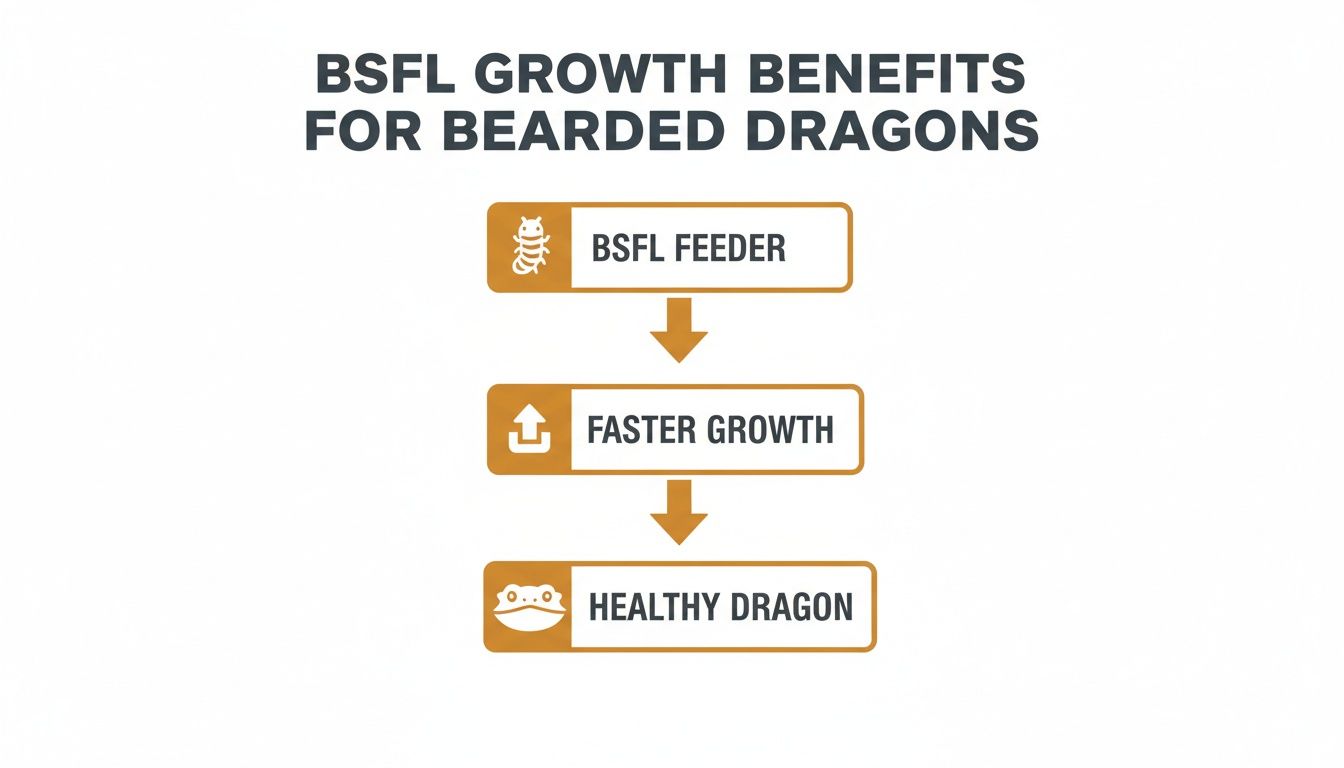
It’s a great visual reminder of the direct line between a quality feeder insect like BSFL and positive developmental results for your pet.
Portion Sizes and Feeding Frequency
Figuring out how many black soldier fly larvae to feed your bearded dragon isn't a one-size-fits-all situation—it's almost entirely dictated by their age. A young, fast-growing dragon burns through energy at a much higher rate than a mature adult.
Getting the numbers right is key. Here's a handy table to guide you based on your dragon’s life stage.
| Age Group | BSFL Size | Feeding Frequency | Approximate Quantity Per Feeding |
|---|---|---|---|
| Hatchling (0-3 Months) | Small | Daily (1-2 times) | ~30-60 total |
| Juvenile (3-6 Months) | Medium | Daily | ~40-80 total |
| Adult (6+ Months) | Large | Every other day / 3-4 times per week | ~10-15 |
These are great starting points, but always watch your dragon. Their individual appetite and body condition are the best indicators. You can find more detailed feeding insights about BSFL quantities for bearded dragons on ecoflys.com.
A Pro Tip From Experience: Always limit feeding sessions to about 10-15 minutes. Once that time is up, remove any uneaten live larvae from the enclosure. This stops them from burrowing into the substrate or bugging your dragon later.
To Dust or Not to Dust? That Is the Question
One of the biggest perks of BSFL is their naturally high calcium content. This naturally leads to a big question from keepers: do I still need to dust them with calcium powder?
The short answer is no, not with plain calcium.
Since BSFL already boast that ideal calcium-to-phosphorus ratio, adding more plain calcium is not only unnecessary but could risk over-supplementation. But hold on—that doesn't mean you should toss out your supplements entirely.
It’s still a great idea to lightly dust the larvae with a high-quality multivitamin powder that contains Vitamin D3 about once or twice a week. This ensures your dragon gets a full spectrum of other essential vitamins and minerals needed for a healthy immune system, good vision, and overall vitality.
Think of it this way: BSFL have the calcium covered, and a light multivitamin dusting fills in the rest of the nutritional gaps. It’s the final touch on a perfectly balanced meal.
Understanding Potential Risks and How to Avoid Them
Black soldier fly larvae are a fantastic feeder insect, but like anything you offer your bearded dragon, it's smart to know about the potential downsides. Being aware of the risks doesn't mean you should avoid BSFL—far from it. It just means you can feed them with confidence, knowing you're doing it the right way.
The biggest concern you’ll hear about with almost any insect feeder is impaction, which is just a serious blockage in the digestive tract. This is often blamed on the insect's exoskeleton, which is made from a tough, fibrous material called chitin.
But here’s the thing most people get wrong: impaction is rarely the fault of the chitin itself. It's almost always a symptom of something else being off in your dragon's environment. Think of it less like a food problem and more like a husbandry problem.
Preventing Impaction and Ensuring Smooth Digestion
A healthy bearded dragon is a digestive powerhouse. Your job is to give their body the tools it needs to break down food efficiently. To do that, you need to nail two things: basking temperatures and hydration.
First, your dragon absolutely needs a hot basking spot—we're talking 95-110°F for adults. This heat is what fires up their metabolism. Without it, their digestive system slows to a crawl, and food just sits there instead of being broken down properly. That's when a traffic jam, or impaction, can happen.
Hydration is the other side of the coin. A well-hydrated dragon has a slick, well-lubricated digestive tract that keeps things moving smoothly. Here's how to make sure they're getting enough water:
- Offer Regular Baths: A good soak in shallow, lukewarm water a couple of times a week helps them absorb moisture through their vent.
- Provide Water-Rich Greens: Fresh veggies are a great, natural way to get more water into their system.
- Feed Live Larvae: Live black soldier fly larvae are full of moisture, making them a much better choice than dried ones for hydration.
When you get the heat and hydration right, your dragon's body is perfectly designed to handle the exoskeletons of BSFL. Excellent care is your best defense against impaction.
Managing Fat Content for Adult Dragons
Another thing to keep in mind is the fat content. BSFL have a fat content of around 14%, which is perfect for growing babies and juveniles who burn through calories like wildfire. That energy fuels their rapid growth.
For adult dragons who aren't nearly as active, that much fat can be a bit much if fed too often. An adult's diet should be mostly greens and vegetables, with insects as a smaller, supplemental part of their meals. Consistently feeding too many fatty insects can lead to obesity and other health issues down the road. The trick is to use BSFL as part of a varied rotation of different feeder insects, not as their only protein source.
Finally, while incredibly rare, it's theoretically possible for a dragon to have an allergic reaction to any new food. When you first introduce BSFL, just keep an eye on your pet. Watch for any out-of-the-ordinary signs like lethargy, swelling, or obvious digestive distress. As long as you're practicing good husbandry and paying attention to your dragon, you can easily make black soldier fly larvae a safe and beneficial part of their diet.
How to Source and Store Your Black Soldier Fly Larvae
Alright, so you're sold on making black soldier fly larvae a regular part of your bearded dragon's diet. Smart move. Now comes the practical part: finding a great source and knowing how to store them properly once you get them home.
It’s not as simple as just buying any old grubs. The quality can vary wildly, and how you store them directly affects their freshness and nutritional punch. Getting these details right is key to making sure your dragon gets all the good stuff.
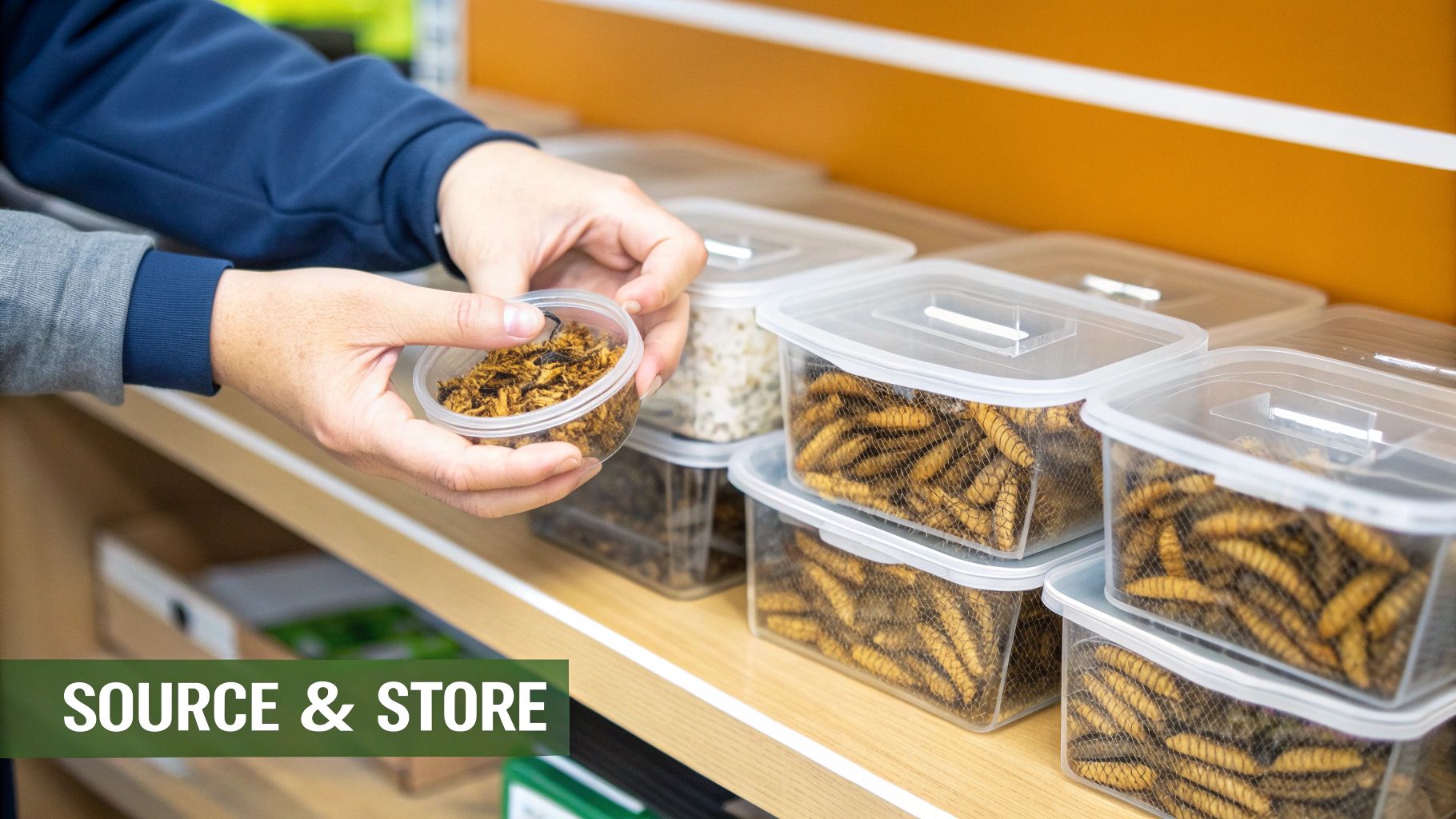
The single biggest factor in a larva’s quality is what it was fed. I like to think of them as tiny, wiggling nutrient shuttles. A larva raised on high-quality, pre-consumer grains is going to pack a much healthier punch for your beardie than one that grew up on inconsistent, low-grade waste. This is exactly why choosing a reputable supplier is non-negotiable.
Finding a High-Quality Supplier
When you're shopping around, transparency is the name of the game. You want a company that's upfront about how they raise their larvae and can guarantee a clean, safe product. A suspiciously low price tag might seem like a win, but it often comes at the expense of your pet's health.
Keep an eye out for these markers of a top-notch supplier:
- USA Origin: Larvae raised right here in the US are held to much stricter safety and quality standards compared to many imported options.
- Transparent Diet: The best companies will proudly tell you what they feed their larvae, which means you can count on a consistent and clean nutritional profile.
- Lab Testing: Reputable brands go the extra mile by testing their products for contaminants like heavy metals, ensuring they’re completely safe for your reptile to eat.
A supplier’s commitment to quality control is a direct investment in your bearded dragon’s health. Opting for a trusted, US-based source like Pure Grubs removes the guesswork and provides peace of mind that you're feeding a safe, premium product.
If you want to dig deeper, we have a whole guide on where to buy black soldier fly larvae that walks you through what to look for in a seller.
How to Properly Store Live Larvae
Storing live BSFL is surprisingly easy. The main goal is to slow down their metabolism and keep them in a sort of hibernation state. This preserves their nutritional value and, just as importantly, stops them from turning into flies before your beardie can eat them.
All you need to do is keep them cool. The sweet spot is a temperature range between 50-55°F. A wine cooler is perfect, but the door of your refrigerator usually works just as well. They’ll arrive in a container with a substrate like bran, and that’s all they need. Just make sure the container has ventilation holes so they can get fresh air.
Keeping Dried Larvae Fresh
Dried BSFL are even more low-maintenance. They have an incredible shelf life thanks to their low moisture content, but you still want to protect them from the elements to keep them at their best.
Just follow a few simple tips for storage:
- Keep them in an airtight container. This is the best way to lock out moisture and prevent spoilage.
- Store in a cool, dark place. A pantry or cupboard is perfect. Direct sunlight will slowly degrade the nutrients.
- Use the original packaging if it's resealable. Good packaging is designed to keep the product fresh for as long as possible.
By following these simple sourcing and storage steps, you’ll ensure every larva you offer your bearded dragon is as safe and nutritious as it can possibly be.
Common Questions About Black Soldier Fly Larvae
Even after laying out all the benefits, it's totally normal to have a few questions before making black soldier fly larvae a regular part of your bearded dragon's diet. This section is all about tackling those common "what ifs" head-on, giving you clear, straightforward answers so you can feed your dragon with confidence.
We'll cover everything from picky eaters to the ins and outs of supplementation. Let's dive into some of the questions I hear most often from fellow bearded dragon keepers.
Can Black Soldier Fly Larvae Completely Replace Other Insects?
While BSFL are an amazing staple feeder, especially for young, growing dragons, variety is still the key to a truly healthy reptile. A balanced diet is about so much more than just hitting the right calcium numbers; it’s about providing a whole range of nutrients and, just as importantly, enrichment.
Think about it this way: you wouldn't eat grilled chicken and broccoli for every single meal, right? Even though it’s healthy, your body needs the different vitamins, minerals, and amino acids found in all sorts of foods. It's the exact same for your bearded dragon.
A varied diet doesn't just cover more nutritional bases—it also fights off dietary boredom. Offering different insects like dubia roaches, silkworms, or hornworms introduces new textures and movements, which stimulates your dragon’s natural hunting instincts and keeps them excited for mealtime.
For adult dragons, rotating feeders is especially important. Since BSFL have a higher fat content, a great strategy is to use them as the main protein source three to four times a week, while offering leaner insects on the other days. This helps manage their weight and keep them in peak condition.
What Should I Do If My Bearded Dragon Refuses to Eat BSFL?
It’s definitely frustrating when you offer up a super-nutritious meal and your beardie just gives it the side-eye. Bearded dragons can be notoriously picky, but don't give up just yet! A little troubleshooting usually does the trick.
First, check the size. If the larvae are too big, especially for a juvenile, your dragon might just be intimidated. Always stick to the golden rule: offer insects that are no wider than the space between your dragon's eyes.
If the size is right, it's time to trigger their prey drive.
- Wiggle It: Use a pair of feeding tongs to gently wiggle a live larva right in front of them. That little bit of movement is often all it takes to entice a reluctant dragon to strike.
- Mix It In: Try tossing a few BSFL in with a feeder they already go crazy for. This can get them used to the new taste and smell in a low-pressure way.
- Try a Different Form: Some dragons are all about live prey, while others might be more willing to try dried larvae. It’s worth experimenting to see if they have a preference.
If you’ve tried a few times and they’re still not interested, don't force it. Every dragon has its own personality and preferences. Just move on to another healthy feeder and make sure their overall diet stays balanced.
Do I Still Need to Dust BSFL with Calcium Powder?
This is one of the most important questions keepers ask. Because BSFL have that naturally perfect calcium-to-phosphorus ratio, you can breathe a sigh of relief—you do not need to dust them with plain calcium powder at every feeding. This is easily one of their biggest advantages over other feeders like crickets or dubia roaches.
But that doesn't mean you can toss your supplements in the trash. Your bearded dragon still needs a whole spectrum of other vitamins and minerals to thrive, like Vitamin A, Vitamin E, and most critically, Vitamin D3.
This is why it's still best practice to lightly dust their BSFL with a high-quality multivitamin powder that contains Vitamin D3 about once or twice a week. This simple step bridges any nutritional gaps and supports everything from their immune system to their eyesight. So, while you get to skip the daily calcium dusting, the weekly multivitamin is a must.
Are Dried BSFL as Nutritious as Live Ones?
Both live and dried black soldier fly larvae are great for your dragon, but they shine in different situations. It’s not about one being "better" than the other; it’s about knowing when to use each one.
Live BSFL have one huge advantage: moisture content. They are made up of over 60% water, which is a fantastic way to help keep your dragon hydrated. Proper hydration is essential for healthy kidney function and smooth digestion. Plus, the wiggling of live larvae gives your dragon crucial mental and physical exercise, letting them hunt just like they would in the wild.
The drying process, on the other hand, removes all that water. This makes dried BSFL a much more concentrated source of protein, fat, and minerals by weight. They also have an incredibly long shelf life and need zero care, making them super convenient to have on hand.
Here's the best way to think about them:
- Live Larvae: The perfect staple feeder for regular meals, providing both nutrition and hydration.
- Dried Larvae: An awesome backup for when you run out of live feeders, a high-value treat, or a "salad topper" to trick a picky dragon into eating their greens.
For the best possible health, live larvae should be your go-to for most feedings. But having dried BSFL in your keeper's toolkit is an invaluable backup plan.
At Pure Grubs, we're dedicated to providing the highest quality, USA-grown Black Soldier Fly Larvae to support your bearded dragon's health and vitality. Our larvae are raised on a clean, plant-based diet and rigorously tested to ensure they are a safe and nutritious choice for your pet.