

Black Soldier Fly Larvae for Reptiles Ultimate Guide
Ask any seasoned reptile keeper what their biggest nutritional worry is, and you'll probably hear two words: calcium and MBD. For years, we’ve relied on dusting crickets and mealworms, hoping we get the balance just right. But what if there was a simpler, more natural way?
That's where Black Soldier Fly Larvae (BSFL) come in, and they're quickly becoming the go-to feeder for keepers who want to provide the best for their animals without the constant guesswork. This guide will walk you through everything you need to know to confidently add this superfood to your reptile's diet.
Why BSFL Are a Game Changer for Reptile Keepers
If you hang around reptile forums or chat with long-time hobbyists, you've definitely heard the buzz about BSFL. But what’s all the fuss about? It’s simple: they solve some of the most frustrating and dangerous problems in reptile nutrition.
We've all been there, meticulously dusting crickets and mealworms before every feeding. The big issue with these classic feeders is their poor calcium-to-phosphorus ratio. If that ratio is out of whack, your reptile can’t properly absorb calcium, which can lead to Metabolic Bone Disease (MBD)—a crippling and often fatal condition. Forgetting to dust, even just a few times, can have serious consequences.
BSFL flip the script entirely.
They come naturally packed with an almost perfect calcium-to-phosphorus ratio. This means for many healthy reptiles, the need for constant dusting is dramatically reduced, and in some cases, eliminated. It’s not just a small convenience; it’s a massive step toward securing your pet's long-term health.
The Core Advantages
So what makes these little larvae stand out from the crowd? It comes down to a few key benefits that make life better for you and your reptile.
- Effortless Nutrition: Their high calcium content means you can stop worrying about dusting every single meal.
- MBD Prevention: Providing a naturally balanced calcium source is your best line of defense against devastating metabolic issues.
- A Boost in Health: Beyond calcium, their ideal blend of protein and healthy fats promotes strong growth, bright colors, and fantastic energy levels.
- Tempting for Picky Eaters: Something about their wiggle and scent drives reptiles wild. They’re a fantastic tool for getting a fussy eater interested in food again.
When you start feeding BSFL, you're doing more than just giving your reptile a meal. You're proactively building strong bones and simplifying your own care routine. It's one of the easiest, most impactful upgrades you can make to your husbandry.
BSFL vs Other Feeders: A Quick Comparison
This table gives you a fast, side-by-side look at why BSFL stand out compared to other common reptile feeder insects.
| Benefit | Black Soldier Fly Larvae (BSFL) | Crickets & Mealworms |
|---|---|---|
| Calcium to Phosphorus Ratio | Naturally ideal (around 1.5:1), no dusting needed for most. | Poor ratio, requires consistent calcium dusting to be safe. |
| Metabolic Bone Disease (MBD) Risk | Low; actively helps prevent MBD due to high calcium. | High risk if dusting is inconsistent or forgotten. |
| Fat Content | Moderate levels of healthy fats for sustained energy. | Mealworms are very high in fat; crickets are leaner. |
| Ease of Care | Extremely easy to keep. No noise, no smell, no escaping. | Crickets are noisy, smelly, and escape. Mealworms can burrow. |
As you can see, BSFL aren't just another option on the menu—they offer a fundamentally safer and more convenient nutritional profile that other feeders just can't match without a lot of extra work on your part.
What's the Big Deal with BSFL Nutrition?
So, what makes black soldier fly larvae such a game-changer for reptile keepers? It’s not just marketing fluff—it's solid nutritional science. To really get it, we need to talk about one of the most critical concepts in reptile health: the calcium-to-phosphorus ratio.
Imagine you're building a brick wall. Calcium is the bricks, providing the core strength, while phosphorus is the mortar that binds them. You need both, but if you have way too much mortar and not enough bricks, the wall will be weak and unstable. It's the same with your reptile’s skeleton.
When there's too much phosphorus in their diet, it literally blocks calcium from being absorbed. This is a huge problem. Their body, needing calcium for vital functions, will start stealing it from its own bones. This is the root cause of Metabolic Bone Disease (MBD), a devastating and often fatal condition.
Getting the Calcium and Phosphorus Balance Just Right
Here’s the catch: most common feeder insects are a nutritional nightmare in this department. Crickets and mealworms, for example, often have a calcium-to-phosphorus (Ca:P) ratio as bad as 1:9. Feeding these without meticulously dusting them with calcium every single time is a recipe for disaster.
This is exactly where black soldier fly larvae for reptiles shine. They are one of the very few feeder insects that naturally have an almost perfect Ca:P ratio. Research has shown that fasted BSFL boast a ratio of around 2.6:1—a number that’s practically unheard of in the insect world. How? Their exoskeletons are actually infused with calcium carbonate, making the mineral an integral part of the bug itself. If you want to dive deeper, you can review the full research on this unique nutritional composition.
In short, BSFL don’t just avoid causing MBD—they actively help prevent it by delivering a perfectly balanced, bioavailable dose of calcium and phosphorus in every single bite.
This infographic really drives home the core benefits, showing how BSFL’s amazing nutritional profile supports overall health while making your life as a keeper much easier.

As you can see, it all starts with superior nutrition, which then branches out to improve your reptile’s health and give you some much-needed peace of mind.
It's More Than Just Calcium
While the mineral balance gets all the attention, the rest of the BSFL nutritional package is what elevates them from a "calcium supplement" to a true dietary staple. A healthy reptile needs a complete and balanced diet, not just a single nutrient.
Here’s a look at what else they bring to the table:
- High-Quality Protein: Essential for growth, muscle development, and tissue repair, BSFL are packed with around 40-45% protein. This provides the fuel your reptile needs to build a strong, healthy body.
- Healthy Fats: Some feeders, like mealworms, are notoriously fatty. BSFL, on the other hand, have a much more moderate and healthy fat profile, providing clean energy without packing on the pounds and leading to obesity.
- Lauric Acid Boost: BSFL are a fantastic source of lauric acid, a fatty acid with known antimicrobial properties. This gives their immune system a little extra support and helps maintain a healthy gut.
The Hidden Benefit of Chitin
There’s one more ace up their sleeve: chitin. This is the fibrous material that makes up the larva's exoskeleton. While your reptile can't digest it, that’s actually a good thing.
Think of chitin as a natural scrub brush for the digestive tract. It acts as a prebiotic, helping to stimulate the gut and encourage the growth of beneficial bacteria. A healthy gut microbiome is directly tied to better nutrient absorption and a stronger immune response. So when your reptile eats BSFL, it’s not just getting protein and minerals—it's getting a dose of functional fiber that supports its health from the inside out.
So, Which Reptiles Can Actually Eat Black Soldier Fly Larvae?
Now that we’ve covered the impressive nutritional specs of black soldier fly larvae, let’s get to the practical stuff. Which of your pets are going to get the most out of them? While a lot of insect-eaters will happily gobble them down, some species seem almost perfectly designed to thrive on a BSFL-rich diet.
It all comes down to matching the feeder insect to the animal's natural needs. For reptiles that are prone to calcium issues or are in a high-growth phase, BSFL aren't just another bug on the menu—they're a core part of keeping them healthy for the long haul. Let’s look at who’s at the top of the list for this little superfood.
Bearded Dragons: The Perfect Match
If I had to pick one reptile that benefits most from black soldier fly larvae for reptiles, it would be the Bearded Dragon. It’s no secret that these guys, especially when they’re young, need a massive amount of calcium to fuel their explosive growth. This makes them prime candidates for Metabolic Bone Disease (MBD) if their diet is off.
This is where BSFL really shine. Their naturally high calcium content directly tackles the biggest nutritional challenge for beardie keepers. When you feed BSFL to a young dragon, you're providing the raw materials for a strong, healthy skeleton without having to meticulously dust every single insect. Many owners notice a real difference in energy levels, growth, and even coloration.
Want to dive deeper into this topic? We’ve put together a complete guide on feeding black soldier fly larvae for Bearded Dragons.
Think of it this way: for a Bearded Dragon, a diet that includes BSFL is like building a house with steel-reinforced concrete instead of plain old bricks. You're fundamentally strengthening their structure from the inside out, setting them up for a long, healthy life.
Leopard Geckos and Other Lizards
Leopard Geckos are another home run. While their calcium demands aren't quite as intense as a growing beardie's, they still need a balanced diet to stay in top shape. The moderate fat content in BSFL makes them a far healthier staple than something like a mealworm or superworm, which can easily lead to obesity—a real problem for captive geckos.
But the list doesn't stop there. A whole host of other lizards can see huge benefits.
- Crested Geckos: They're mostly fruit-eaters, but they still need a protein boost. Small BSFL are a perfect, calcium-packed insect to offer alongside their regular food.
- Chameleons: Variety is everything for a chameleon. The soft bodies of BSFL make them easy to digest and they add a great nutritional punch to the rotation.
- Monitors and Tegus: For these bigger lizards, especially when they're young and growing fast, BSFL offer a dense package of protein and minerals to support that rapid development.
Who Else Can Get in on the Action?
The great thing about BSFL is that their appeal extends way beyond the world of lizards. They are a surprisingly versatile feeder that can round out the diet for a lot of different exotic pets.
Many turtles and tortoises, especially aquatic species like Red-Eared Sliders, will go nuts for BSFL. The larvae give them a fantastic source of both protein and the calcium they need for healthy shell growth. Plenty of amphibians, like Pacman frogs and salamanders, can also have them as part of a varied diet. I've even seen some tarantulas and other invertebrates take them, adding nutrients they might not get from other, more common feeders.
Mastering Your Reptile's Feeding Schedule
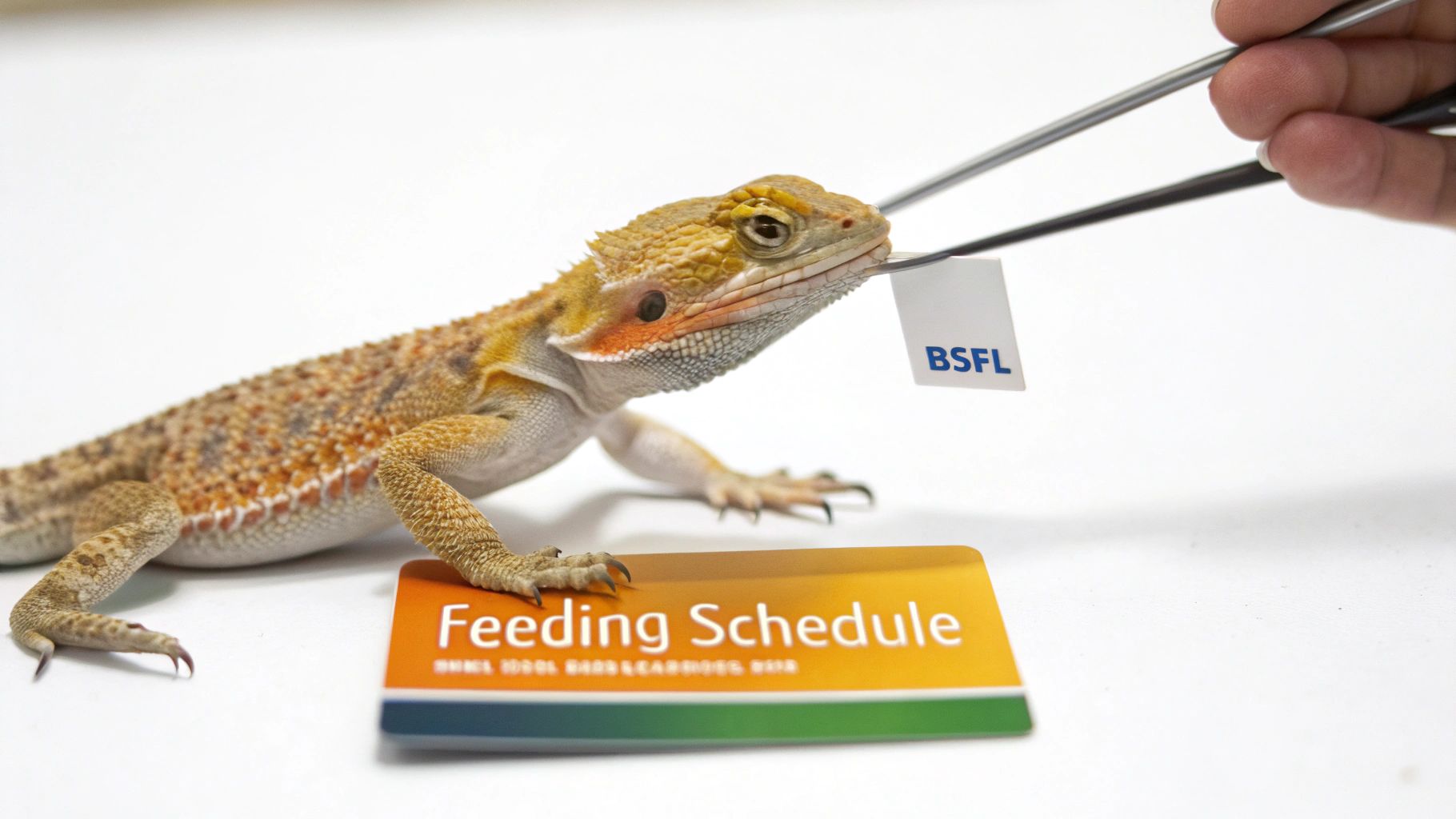
Knowing what to feed your reptile is one thing, but knowing how and when is where experienced keepers really make a difference for their animal's long-term health. A feeding schedule isn't just about staving off hunger; it’s a powerful tool for managing growth, maintaining a healthy weight, and making sure your pet actually absorbs all the benefits from its food.
A thoughtfully planned schedule using black soldier fly larvae provides that crucial, steady stream of calcium and protein a growing reptile needs. For less active adults, it helps prevent the kind of overfeeding that leads to obesity and other health problems. Think of it like a personalized fitness plan—you wouldn't give a growing teenage athlete the same diet as a laid-back adult, and the same logic applies here.
How Much Is Enough?
One of the first questions keepers ask is, "So, how many of these should I be feeding?" The honest answer is: it depends. The right amount always comes down to three things: your reptile's species, its age, and its current activity level. A baby bearded dragon with a metabolism firing on all cylinders is going to need a lot more fuel than a mature leopard gecko that lounges most of the day.
For a real-world example, a young bearded dragon between 1-3 months old might power through 20 quarter-inch BSFL two or even three times a day. On the other hand, a juvenile leopard gecko (4-10 months) would likely do well with just 5-10 half-inch larvae five or six times a week. You can find more specific feeding advice for different black soldier fly larvae for reptiles on The Critter Depot.
The golden rule is always to watch your pet. A healthy reptile should look well-fleshed and solid. If you can see its ribs or its tail looks skinny, it's likely underfed. If you see prominent fat rolls, especially around the legs and tail base, it's time to cut back.
Tailoring Schedules to Life Stages
Your reptile's nutritional needs aren't static; they change dramatically as it grows up. You can't just stick with one feeding plan and expect it to work forever.
-
Hatchlings & Juveniles (The Growth Phase): This is the most demanding period. Your little one is building its entire body from the ground up, so it needs frequent, high-protein and calcium-rich meals. For many, this means daily feedings. BSFL are perfect as a staple during this stage, offering all the right building blocks.
-
Sub-adults (The Transition Phase): As your reptile’s growth starts to slow down, so does its metabolism. Now’s the time to start spacing out meals, maybe switching from every day to every other day. This simple change is key to preventing them from becoming overweight as they settle into their adult size.
-
Adults (The Maintenance Phase): A fully grown, healthy adult is all about maintenance. The goal shifts from fueling growth to simply maintaining a healthy body condition. For most species, feeding just a few times a week is plenty. BSFL can still be a fantastic part of a varied diet, but you'll want to keep an eye on portion sizes.
Unlocking Maximum Nutrient Absorption
Here’s a pro tip that many keepers overlook: how your reptile eats can dramatically affect the nutrition it gets. The amazing calcium content in BSFL is largely locked inside their soft exoskeleton. For your reptile to get to it, that exoskeleton has to be broken open.
Some reptiles, like bearded dragons, are great chewers. They naturally crush the larvae as they eat, unlocking all that nutritional goodness. But many others, like leopard geckos, tend to just swallow their food whole. When that happens, the larvae can pass right through their system without being fully digested, and all that amazing calcium goes to waste.
Luckily, the fix is incredibly simple. For pets that are "gulpers," you can give them a helping hand. Before feeding, just take a second to gently pierce or lightly mash the larvae. This tiny step breaks open the exoskeleton and makes the calcium and other nutrients inside instantly bioavailable for your pet to absorb. It takes almost no time but makes a world of difference.
How to Choose and Store High-Quality BSFL
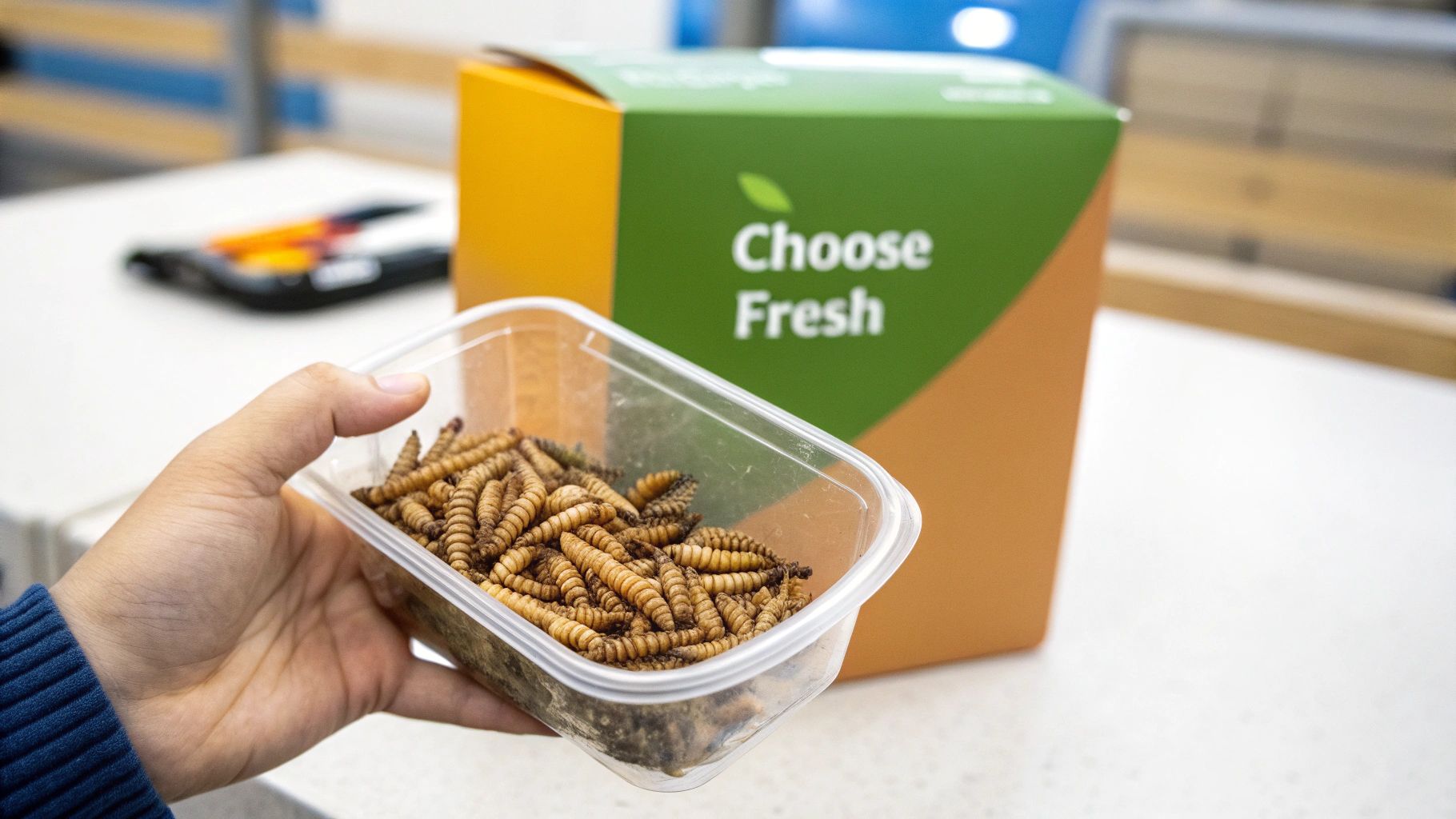
Here's a simple truth: not all black soldier fly larvae are the same. Just like you'd pick the freshest fruits and vegetables for your own family, you want to do the same for your reptile. High-quality larvae come from a high-quality environment, so the first thing you should do is give the insects a good look.
Fresh, healthy BSFL should look plump and be fairly active. You're looking for a gentle wiggle—that's a great sign they're full of life. Their color should be a creamy white or a light tan. If you see darker larvae, don't panic. They aren't bad, they're just older and getting ready to pupate. Just know they might have a tougher exoskeleton that some pickier reptiles might turn their noses up at.
What to Look for in a Supplier
Where you get your grubs is just as critical as what they look like. A reputable supplier is your number one defense against contaminants and low-quality insects. After all, your reptile's health depends on clean, well-managed farming practices.
When you're checking out a supplier, here are a few things to keep in mind:
- Growing Conditions: Don't be afraid to ask what the larvae are fed. What they eat, your pet eats. You want a supplier that uses clean, pre-consumer food waste, not post-consumer garbage or manure, which can be a breeding ground for nasty bacteria.
- Safety and Testing: The best brands take safety seriously and test their products for things like heavy metals. For instance, Pure Grubs are raised in FDA-compliant facilities and regularly tested to make sure they're completely safe for your pet.
- Origin: Knowing where the larvae come from gives you transparency and holds the company accountable. Sourcing from US-based farms usually means they follow much stricter quality control standards than many unregulated international suppliers.
Choosing a reputable source is non-negotiable. Think of it as an investment in your pet's health. A trustworthy supplier gives you the peace of mind that you're providing a clean, safe, and genuinely nutritious meal.
If you're wondering where to start, our guide on where to buy black soldier fly larvae is a great resource for finding reliable sellers.
How to Properly Store Your BSFL
So, you've got your hands on some premium larvae. Now what? Proper storage is the key to keeping them fresh and packed with nutrients. The main goal is to slow down their metabolism so they don't turn into flies before your reptile gets to enjoy them.
The best way to do this is to keep them in a cool, dark place. The door of your refrigerator or a wine cooler is often perfect. You're aiming for a temperature between 50-55°F (10-13°C).
As for the container, a shallow plastic tub with smooth sides works great to keep them from climbing out. Make sure it has good ventilation to stop moisture from building up, which can cause mold. The substrate they came in is usually all they need. When it’s feeding time, just scoop out what you need and leave the rest chilling out until next time.
Unlocking Maximum Nutrition from Every Larva
https://www.youtube.com/embed/SbzedftrQJw
Just tossing some black soldier fly larvae into your reptile’s dish is a great start, but if you're serious about your pet's health, there are ways to get even more nutritional bang for your buck. It’s not just about what you’re feeding, but making sure your reptile can actually absorb all that goodness.
You've probably heard of gut-loading other feeder insects—the practice of feeding them a super-nutritious meal right before they become one. With BSFL, though, that’s not really a concern. They come pre-loaded with so much natural calcium and other key minerals that you can usually skip that extra step. The value is already baked in, which makes your life a lot easier.
The real secret to maximizing their benefits comes down to a concept called bioavailability. Think of it this way: it’s not just about the nutrients in the food, but how much of those nutrients your reptile’s body can actually pull out and put to use.
The Secret Is in the Exoskeleton
That incredible calcium content we keep talking about? It's mostly stored in the larva's soft exoskeleton. For your reptile to get access to it, that outer layer needs to be broken open. This is where your pet’s eating style really comes into play.
Some reptiles, like bearded dragons, are fantastic chewers. Their strong jaws make short work of their food, mashing up the larvae and releasing all the calcium-rich goodness inside. They’re basically pros at getting every last bit of nutrition out of their meal.
But many other popular pets, like leopard geckos and crested geckos, are what we call "gulpers." They tend to swallow their food whole, with little to no chewing. When an intact larva goes down the hatch, a lot of that amazing calcium can stay locked inside the exoskeleton, passing right through their system without being absorbed.
A Simple Trick for Maximum Absorption
So, how do you make sure your little gulper isn't missing out? The fix is surprisingly easy: just give them a helping hand. By breaking the exoskeleton before you feed, you make those nutrients immediately available for digestion.
It’s simple to do. You can:
- Pierce the larvae with your feeding tongs.
- Gently mash or squish them before offering them.
This tiny extra step makes a world of difference. In fact, one study on leopard geckos found that while they struggled to digest calcium from whole BSFL, simply breaking the exoskeleton first boosted their calcium absorption to an incredible 88%. If you want to dive into the science, you can read the full research on calcium accessibility in BSFL.
This simple technique transforms a great feeder into a perfectly optimized one. By ensuring the exoskeleton is broken, you guarantee your pet is absorbing the maximum amount of bone-building calcium from every single larva.
Whether you have a chewer or a gulper, understanding this small detail lets you fine-tune your feeding routine for peak health. This principle also applies to other forms, like dried black soldier fly larvae, which are a convenient, shelf-stable option with the same fantastic nutritional profile. It's these little adjustments that elevate good reptile care into truly great husbandry.
Answering Your Top BSFL Questions
Even after seeing all the incredible benefits, it's totally normal to have a few questions before adding something new to your reptile's diet. I get it. Let's walk through some of the most common things keepers ask about black soldier fly larvae, so you can feel 100% confident.
Do I Still Need to Dust BSFL with Calcium?
This is probably the most common question I hear, and the answer highlights one of the best things about BSFL. For most healthy reptiles, the answer is a resounding no. Their naturally perfect calcium-to-phosphorus ratio means they don't need the extra calcium dusting that crickets, mealworms, and other feeders absolutely require.
Now, there are a couple of important exceptions. If your vet has your reptile on a specific calcium-loading plan—maybe for recovering from MBD or to support an egg-laying female—you should always stick with their advice. But for everyday feeding and a healthy animal, these larvae come with the calcium already built-in.
Is It Possible for My Reptile to Eat Too Many BSFL?
With any food, even the good stuff, balance is everything. While BSFL are a fantastic nutritional powerhouse, overfeeding any insect can lead to an overweight reptile and other health problems. The issue isn't so much the type of bug, but the overall quantity and frequency.
Think of BSFL not as an "all-you-can-eat" pass, but as a much healthier, nutritionally complete staple in a properly portioned diet. Stick to the feeding schedules we covered earlier to keep your pet in peak physical shape.
Phoenix Worms, Calci-Worms, Reptiworms… What’s the Difference?
You’ve probably seen a bunch of different names out there: Phoenix Worms®, Calci-Worms®, Reptiworms®, and more. It can get confusing, but here's the simple truth: they are all just brand names for the exact same insect, the black soldier fly larva (Hermetia illucens).
What really matters isn’t the clever name on the cup, but the quality of the grubs inside. Your focus should be on finding a supplier who is transparent about their clean growing practices, safety testing, and freshness, no matter what they call their product.
How Can I Get My Picky Eater to Try Them?
Reptiles can be creatures of habit, and a new food can sometimes be met with a stubborn refusal. If your pet isn't interested at first, don't throw in the towel. A little patience goes a long way.
Here are a few tricks that usually work:
- The Wiggle Method: Live larvae have a natural wiggle that often triggers a reptile’s hunting instinct. Try holding one with feeding tongs and giving it a little jiggle right in their line of sight.
- Mix Them In: For a little while, try tossing a few BSFL in with their usual insects. This gets them accustomed to the new smell and texture without it being a big shock.
- A Little "Sauce": If your reptile enjoys greens or fruit mixes (like a crested gecko), you can mash a couple of larvae into a paste and mix it into their food to introduce the flavor gently.
Ready to give your pet the safest, highest-quality nutrition you can find? Pure Grubs offers premium, US-grown black soldier fly larvae raised in FDA-compliant facilities and rigorously tested for safety. You can upgrade your reptile's diet today by visiting https://puregrubs.com.