

Best Live Food for Bearded Dragons: How to Choose the Right Options
When it comes to the best live food for bearded dragons, the answer really depends on their age. But for a solid dietary foundation, three feeders consistently come out on top: Dubia Roaches, Black Soldier Fly Larvae (BSFL), and Crickets. These insects have the best nutritional profiles around, making them the cornerstone of a healthy dragon's diet.
Let's break down why they’re such great choices and how to use them to keep your pet thriving.
Why the Right Staple Feeder is So Important
Feeding your bearded dragon isn't just about keeping them full—it’s about giving them the precise fuel they need for healthy growth, sustained energy, and a long life. The single most important dietary decision you'll make is choosing the right live insects. We call the best options "staple" feeders because you can offer them frequently without throwing your dragon's nutrition out of whack.
A top-tier staple feeder has to deliver a balanced blend of protein, fat, and critical minerals. One of the most vital nutritional metrics is the calcium-to-phosphorus ratio. If an insect contains more phosphorus than calcium, it can actually block your dragon from absorbing calcium. This is a huge problem, as it can lead to devastating health issues like Metabolic Bone Disease.
A proper diet is your first line of defense against common reptile health problems. Feeding staple insects with a balanced nutritional profile is non-negotiable for a healthy, active bearded dragon.
Quick Comparison of Top Staple Feeder Insects
Seeing the key differences side-by-side helps clarify why some insects are staples and others are just occasional treats. While offering variety is always a good idea, these three should form the core of any well-rounded diet.
| Feeder Insect | Protein Content | Fat Content | Calcium to Phosphorus Ratio | Best For |
|---|---|---|---|---|
| Dubia Roaches | High | Low | Good (1:1.5) | A fantastic, meaty staple for dragons of all ages. |
| BSFL (Pure Grubs) | Moderate | Moderate | Excellent (1.5:1) | Juveniles and any dragon needing a calcium boost to prevent MBD. |
| Crickets | High | Low | Poor (1:9) | Great for encouraging natural hunting behavior, but needs heavy dusting. |
This table really highlights the strengths of each feeder. Dubia roaches nail the protein-to-fat balance, while BSFL are a calcium powerhouse right out of the box. Crickets bring the protein and stimulate activity, but you absolutely have to supplement them to correct that poor calcium ratio.
Knowing this is especially critical when raising young dragons. A huge part of caring for bearded dragons is understanding that their dietary needs change as they grow. For instance, juvenile dragons need a diet heavy on live insects to fuel their explosive growth. Most experts agree that insects should make up 50% to 80% of a juvenile's diet, with that ratio shifting more toward plants as they get older.
This shift underscores how biologically important live prey is for providing essential proteins and nutrients. You can learn more about what bearded dragons eat throughout their lives in our detailed guide.
A Nutritional Analysis of Common Feeder Insects
When it comes to your bearded dragon's diet, not all bugs are created equal. Figuring out which feeder insect is best isn't just about what your dragon likes—it's about understanding the science behind their nutrition. We need to look at key metrics like protein, fat, and especially the calcium-to-phosphorus ratio to know if an insect is a healthy staple or just a junk food treat.
Building a diet on the wrong insects can lead to serious health problems, so getting this right is one of the most important things you can do as an owner.
The single most critical factor here is the calcium-to-phosphorus (Ca:P) ratio. For a bearded dragon to properly absorb and use calcium, their food needs a ratio of at least 1:1, but the sweet spot is closer to 2:1. If there’s more phosphorus than calcium, it actually blocks the body from using the calcium it takes in. This is a direct path to Metabolic Bone Disease (MBD), a devastating but entirely preventable condition.
To give you a clear picture, let's break down the numbers for the most common feeders. This table offers a side-by-side look at their core nutritional values.
Comprehensive Nutritional Profile of Common Feeder Insects
| Insect | Protein (%) | Fat (%) | Calcium (mg/kg) | Phosphorus (mg/kg) | Ca:P Ratio |
|---|---|---|---|---|---|
| BSFL (Pure Grubs) | 17.5 | 14 | 8155 | 5355 | 1.5:1 |
| Dubia Roaches | 23.4 | 7.1 | 800 | 2600 | 1:3 |
| Crickets | 15.4 | 3.3 | 275 | 2520 | 1:9 |
| Superworms | 19.7 | 17.7 | 177 | 2370 | 1:13 |
| Mealworms | 20.3 | 12.7 | 133 | 3345 | 1:25 |
| Waxworms | 15.5 | 22.2 | 243 | 2085 | 1:8.5 |
As you can see, the numbers vary wildly. The Ca:P ratio, in particular, highlights why some insects are staples while others are best saved for special occasions.
The Staple Feeders: Dubia Roaches and Crickets
Dubia roaches and crickets are the two most popular staple feeders, and for good reason—they're packed with protein, which is essential for growth, especially for young dragons. But nutritionally, they are worlds apart.
Many keepers consider Dubia roaches the superior choice. They have a great protein content (around 23%) with relatively low fat, making them a lean and meaty meal. Most importantly, their Ca:P ratio is far better than crickets. It isn't perfect, but it's much closer to the ideal, meaning you won't have to go as heavy on the calcium supplements. Plus, they are easier to digest and less known for carrying parasites.
Crickets, on the other hand, have a notoriously awful Ca:P ratio, often as low as 1:9. That means they have nine times more phosphorus than calcium. This imbalance makes aggressive calcium dusting before every single feeding an absolute must. While their high protein and jumpy movements are fantastic for triggering a dragon's hunting instinct, you can't ignore that major nutritional drawback.
The Calcium Champion: Black Soldier Fly Larvae
Black Soldier Fly Larvae (BSFL), often sold under brand names like Pure Grubs, are in a league of their own when it comes to calcium. Their naturally high calcium levels give them an almost perfect Ca:P ratio, typically sitting around 1.5:1 or even better.
Black Soldier Fly Larvae are the only common feeder that naturally provides more calcium than phosphorus. This makes them an incredible tool for preventing Metabolic Bone Disease. They're an ideal staple, especially for young, fast-growing dragons who need that constant supply of calcium.
This incredible nutritional profile means BSFL require little to no calcium dusting. This not only simplifies your feeding routine but also gives you peace of mind that your dragon is getting the minerals it needs. Their balanced protein and fat levels make them a fantastic, well-rounded choice for dragons of all ages.
The chart below shows how the protein content of these top-tier feeders stacks up.
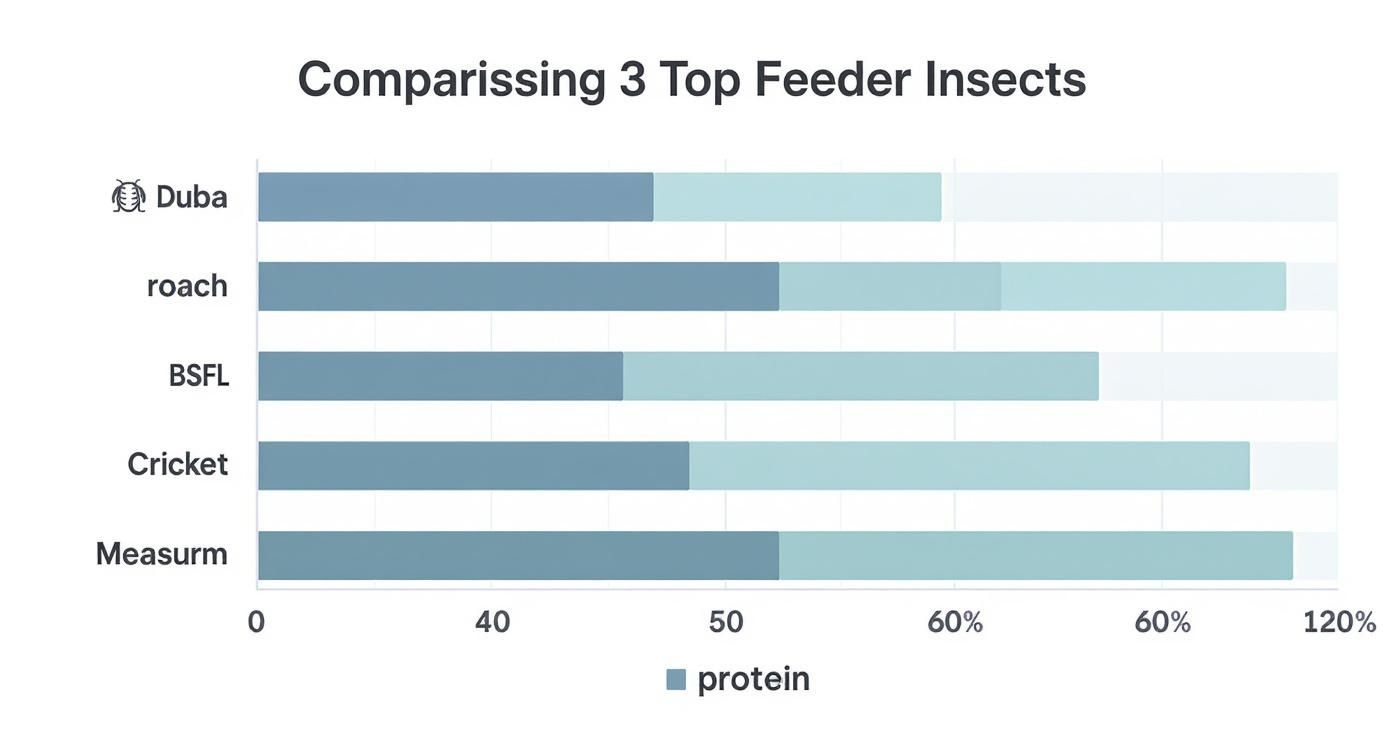
While Dubia Roaches might be higher in protein, the balanced profile and superior calcium content of BSFL make them an outstanding nutritional choice.
Occasional Feeders: Superworms and Mealworms
Superworms and mealworms are easy to find, but their nutrition makes them a poor choice for a daily meal. Both are high in fat and have a very tough exoskeleton made of chitin, which can be difficult to digest.
Too much chitin can lead to impaction, a life-threatening blockage of the digestive tract. This is a particularly serious risk for baby dragons or any beardie that is dehydrated.
Here’s how to use them situationally:
- Superworms: Very high in fat and chitin. Their large size and active wiggling can get a picky eater’s attention, but they should only be given to healthy, adult dragons as a rare treat. Never feed them to juveniles.
- Mealworms: A bit smaller than superworms but still have that hard exoskeleton. They’re a little safer for sub-adults, but should still be offered sparingly to avoid digestive upset and weight gain.
Both of these worms have a terrible Ca:P ratio, so they must be thoroughly dusted with calcium before feeding. Think of them like fast food for your reptile—okay once in a while, but a disaster as a main course.
The High-Fat Treat: Waxworms
Waxworms are, without a doubt, the candy of the insect world. They are soft, squishy, and incredibly high in fat—sometimes over 22%! This makes them irresistible to most bearded dragons, which also makes them one of the least healthy options available.
Because of their poor nutritional value, waxworms should only be used in a few specific scenarios:
- As a very rare treat for variety and enrichment.
- To help an underweight dragon gain weight, usually under a vet's guidance.
- To tempt a sick dragon that has stopped eating.
Giving waxworms more than once or twice a month can quickly lead to obesity and other health issues. They can also be a bit addictive, causing some dragons to turn their nose up at healthier staple insects. Use them strategically, and use them with caution.
Matching Feeder Insects to Your Dragon's Life Stage
A bearded dragon's diet isn't a one-size-fits-all plan. It has to change dramatically as they rocket from a tiny hatchling to a full-grown adult. Getting the nutrition right at each stage is absolutely critical for their health, helping them build strong bodies, avoid obesity, and live a long, happy life. What you feed a six-week-old is completely different from what a six-year-old needs, so an age-based strategy is non-negotiable.
It's this dynamic diet that partly explains why they're such popular pets. Bearded dragons dominate the reptile trade because they're engaging to feed, especially with live insects. In fact, they are the most popular reptile pet in several major markets, holding about 40% popularity in the US and 33% in Canada. In their native Australia, they account for a staggering 78% of reptile-related searches. This fascination is deeply connected to their feeding response, as hunting live insects is a core part of their natural behavior, particularly when they're young. You can learn more about their place in the global pet trade.
Juvenile Dragons (0-6 Months): The Protein Push
Hatchlings and juveniles are in a period of explosive growth, and their diet needs to provide the fuel for that fire. At this stage, their meals should be about 80% live insects and just 20% plant matter. The mission is simple: deliver high-quality protein to build strong bones and muscles.
- Feeding Frequency: Young dragons are eating machines. You'll need to offer them insects two to three times a day in 10-15 minute feeding sessions. Let them eat as many as they can in that time frame.
- Best Live Food: Small, soft-bodied insects are the way to go. Tiny Dubia roaches and small Black Soldier Fly Larvae (BSFL) make fantastic staples. BSFL are a real powerhouse for young dragons because they're naturally packed with calcium, which is crucial for rapid skeletal development.
- The Sizing Rule: This is a golden rule for safety: never feed an insect wider than the space between your dragon’s eyes. This simple check prevents choking and the dangerous risk of impaction.
Sub-Adult Dragons (6-18 Months): The Big Switch
As your dragon enters their "teenage" phase, their growth rate starts to level off. Now is the time to begin a gradual dietary shift to keep them from becoming overweight. You'll want to aim for a more balanced 50/50 split between insects and fresh greens.
This transition requires you to pay close attention. Start reducing the insect feedings from every day to every other day. This little bit of hunger encourages them to start taking their salads seriously, which builds the healthy habits they'll need for the rest of their lives.
Shifting a sub-adult's diet is a proactive measure against obesity. Gradually reducing insect meals and increasing plant matter sets the stage for long-term health and prevents the nutritional problems common in adult dragons.
Adult Dragons (18+ Months): Greens are King
Once a bearded dragon hits adulthood, their nutritional needs flip entirely. Growth has stopped, and their metabolism slows way down. The focus now is all about maintenance. The ideal adult diet becomes about 80% plant matter and only 20% live insects.
Insect meals should be cut back to just two or three times a week. A standard meal for an adult might be 5-7 large Dubia roaches or a dozen crickets. Overfeeding protein is probably the most common mistake owners make at this stage, and it leads directly to obesity and related health problems like fatty liver disease.
- Best Live Food: Stick with high-quality staples like Dubia roaches, BSFL, and locusts.
- Treats: High-fat bugs like superworms or waxworms should be treated like candy—an occasional treat, maybe once a month, to give them some variety and enrichment without wrecking their diet.
- Focus on Greens: The foundation of their diet should be dark, leafy greens. Think collard greens, mustard greens, and turnip greens, mixed with a variety of chopped veggies.
By tailoring your feeding plan to your dragon's life stage, you give them exactly what they need to flourish. This careful management is the cornerstone of being a great beardie owner and the secret to a healthy, happy companion for years to come.
The Role of Gut Loading and Supplementation
Picking the right live feeder insect is a great start, but it's only half the story. The nutritional value of any insect is a direct result of its last meal. A starved feeder is little more than an empty shell, offering almost nothing to your pet. This is why gut loading and supplementation are two of the most important habits for any responsible bearded dragon owner.
Think of gut loading as marinating your feeder insects from the inside out. It's the simple practice of feeding them a highly nutritious diet for at least 12-24 hours before they become a meal for your dragon. This step turns a standard feeder into a nutrient-packed superfood, delivering essential vitamins and minerals directly to your pet.

What to Feed Your Feeders
The entire point of gut loading is to fill the insects with nutrients they're naturally low in, especially calcium and key vitamins. A good gut-loading diet is a mix of a high-quality commercial formula and fresh, healthy produce.
- Commercial Diets: These specially made insect chows are a fantastic foundation, offering a balanced mix of proteins, minerals, and vitamins.
- Fresh Vegetables and Greens: Load them up with dark, leafy greens like collard or mustard greens. Add in shredded carrots, sweet potatoes, and squash for a boost of beta-carotene and other powerful nutrients.
- Foods to Avoid: A simple rule of thumb: if your dragon can't eat it, your feeders can't either. Stay away from avocado, onions, citrus fruits, and anything else known to be toxic to reptiles.
Mastering Supplement Dusting
Even a perfectly gut-loaded insect (with one major exception) will still have a poor calcium-to-phosphorus ratio. This is why dusting your feeders with a supplement powder right before feeding isn't just a good idea—it's essential. This is your number one defense against Metabolic Bone Disease (MBD), a devastating and preventable condition caused by a lack of calcium.
Dusting insects isn’t just a recommendation; it's a critical preventative measure. For bearded dragons kept indoors, using a calcium supplement that includes Vitamin D3 is essential for them to properly absorb and utilize the calcium you provide.
The only feeder that gets a pass here is the Black Soldier Fly Larva. They are naturally packed with calcium, so they almost never need dusting. This convenience is one of the biggest benefits of using black soldier fly larvae for reptiles.
Creating a Dusting Schedule
A consistent dusting routine is key to giving your dragon exactly what it needs without overdoing it. How often you dust depends on your dragon's age and the specific supplements you're using.
A General Dusting Schedule:
- Calcium with D3: This should be used for 4-5 meals each week. Dragons kept indoors rely on this supplement for the D3 they need to absorb calcium.
- Calcium without D3: Dust with this for 1-2 meals per week. It provides extra calcium without the risk of a Vitamin D3 overdose.
- Multivitamin: A high-quality reptile multivitamin fills in the gaps for nutrients like Vitamin A and E. Use it for 1-2 meals a week.
So, what does that look like in practice? For a young dragon eating insects every day, you might dust with Calcium with D3 from Monday to Friday, use a multivitamin on Saturday, and then offer plain (but gut-loaded!) insects on Sunday. An adult eating insects three times a week could get Calcium with D3 at two feedings and a multivitamin at the third. Always be ready to adjust this schedule based on your pet’s needs and your veterinarian's guidance.
How to Source and Maintain Feeder Insects
https://www.youtube.com/embed/4gBUMytxIls
Once you’ve landed on the right live food for your bearded dragon, the next big question is where to get it and how to keep it fresh. Having a steady supply of healthy, well-fed insects is every bit as important as picking the right species in the first place. You’ve really got two main paths: buying from a local pet shop or ordering directly from a specialized online breeder. Each has its pros and cons.
The demand for high-quality live food is absolutely booming, which really says something about how much we've all learned about proper pet care. The global market for small mammal and reptile food—which includes our little feeder friends—was valued at roughly USD 2.06 billion in 2024 and is projected to hit USD 3.14 billion by 2031. It’s a clear sign that owners are getting serious about nutrition. You can find more details about this expanding market on reanin.com.
Choosing Your Feeder Source
Picking between a local store and an online supplier is usually a balancing act between convenience, cost, and overall quality.
-
Local Pet Stores: The main draw here is speed. If you unexpectedly run low, you can just pop in and grab what you need. It's a lifesaver in a pinch. The downside? The selection can be pretty slim, and honestly, the quality of care the insects receive can be hit or miss.
-
Online Breeders: This is where the specialists live. Online breeders typically offer a much wider variety of feeders in all sorts of sizes. Since this is their entire business, the insects are almost always healthier and better cared for. Plus, buying in bulk online is way more economical, you just have to factor in shipping time.
Sourcing from a reputable online breeder often ensures you receive healthier, gut-loaded insects. This directly translates to better nutrition for your bearded dragon, as the feeders arrive ready to serve as a high-quality meal.
Keeping Your Feeder Insects at Home
When you bring feeder insects home, you've essentially adopted a mini-colony. Keeping them alive and thriving is key to making sure they stay nutritious. For most staple feeders like Dubia roaches or crickets, a simple, dedicated enclosure is all it takes.
You can get by with a basic setup: a plastic tub with smooth sides and a lid with good ventilation is perfect. Toss in some cardboard egg flats to give them more surface area and places to hide, which helps cut down on insect-on-insect stress. For water, never use an open water dish—they'll just drown. A much safer bet is using water crystals or a damp sponge for hydration.
Maintaining a Healthy Feeder Colony
A clean environment is your best defense against mold, disease, and nasty smells. Make it a daily habit to pull out any dead insects and old food to keep their home sanitary.
Feeding Your Feeders:
- Provide a Staple Diet: A high-quality commercial insect chow or even a simple mix of ground oats works great as their daily food source.
- Gut-Load with Fresh Produce: This is the most important step. About 12-24 hours before you offer them to your dragon, give the insects a feast of nutrient-rich veggies like shredded carrots, sweet potatoes, and dark leafy greens. This loads them up with vitamins.
- Keep it Clean: Always remove any uneaten fresh food after a few hours to stop mold from taking over.
Taking good care of your feeders guarantees they are a safe and nutritious meal for your pet. If you're leaning toward a low-maintenance, high-calcium feeder, you might want to check out our guide on where to buy Black Soldier Fly Larvae, as they typically require much less fuss than crickets or roaches.
Answering Your Top Bearded Dragon Feeding Questions
Even the most seasoned owners have questions now and then. Feeding a bearded dragon isn't always straightforward, and things like portion sizes, picky eating, and safety concerns are completely normal things to wonder about. Let's tackle some of the most frequent questions to help you build a confident and healthy feeding routine.
Think of this as your go-to troubleshooting guide. Getting these details right makes all the difference in keeping your dragon happy and thriving.
How Many Insects Should I Feed My Dragon Every Day?
This is easily the most-asked question, and the answer isn't a simple number—it changes dramatically as your dragon grows. The best practice isn't to count bugs, but to offer a timed meal. This lets your dragon eat until it's full without the risk of overfeeding, which is a major concern for adults who can easily become obese.
For juvenile bearded dragons (0-6 months), their bodies are in full-on growth mode and need a ton of protein.
- Frequency: Offer insects 2-3 times per day.
- Duration: Let them eat as many properly sized insects as they want in a 10 to 15-minute window.
- What this looks like: A tiny dragon might wolf down 20 to 50 small crickets or BSFL throughout the day.
As they become sub-adults (6-18 months), their explosive growth starts to level off, so you'll want to scale back.
- Frequency: Cut back the insect meals to just once per day.
- Duration: Keep the same 10 to 15-minute feeding session.
- What this looks like: They might now eat 10-15 medium Dubia roaches or a similar number of other staple bugs in one go.
Finally, for adults (18+ months), the goal shifts from growth to maintenance. Here, it’s all about preventing unhealthy weight gain.
- Frequency: Insect meals should only be given 2-3 times per week.
- Duration: A single 10-15 minute session is more than enough.
- What this looks like: An adult might only need 5-7 large Dubia roaches or about a dozen crickets for their insect meal.
Always remember to remove any uneaten live insects from the tank when the meal is over. Crickets are notorious for hiding and can actually bite your dragon while it's sleeping.
Can My Bearded Dragon Eat Insects from the Yard?
Let me make this crystal clear: absolutely not. It might seem like a thrifty, natural way to find food, but feeding your dragon wild-caught insects is one of the most dangerous things you can do.
The biggest risk is pesticide poisoning. Your lawn, your neighbor's garden, and local parks are almost certainly treated with insecticides, herbicides, and other chemicals. These substances are highly toxic to reptiles and can cause neurological damage, organ failure, or death, even from a single bug. You simply have no way of knowing what that insect has crawled through.
Beyond chemicals, you have to worry about parasites. Wild insects are common carriers for nasty internal parasites like pinworms, which can transfer to your dragon and cause serious gut problems, weight loss, and lethargy that will require a trip to the vet.
"Never feed your bearded dragon insects from your yard. The uncontrollable risks of pesticide poisoning, parasitic infection, and accidental ingestion of toxic species like fireflies far outweigh any potential benefit."
Lastly, some insects are just plain toxic. The most infamous example is the firefly (or lightning bug). Every species of firefly contains a steroid called lucibufagin, which is lethally poisonous to bearded dragons and can kill them within hours. Since it’s nearly impossible to correctly identify every bug you find, the only safe rule is to stick to commercially raised feeders from a trusted source.
What Should I Do If My Dragon Stops Eating Insects?
It's incredibly stressful when your bearded dragon suddenly refuses to eat, but don't panic just yet. A hunger strike is usually a symptom of something else, and you can often solve it by running through a quick checklist.
First and foremost, check your enclosure temperatures. Bearded dragons are cold-blooded and physically cannot digest food without proper heat. If their basking spot isn't hot enough (it should be 100-110°F for adults), their metabolism grinds to a halt, and their appetite disappears. Double-check that the cool side is also in a safe range (75-80°F).
If your temperatures are spot-on, it's time to look at other possibilities.
- Try a Different Feeder: Your dragon might just be bored! If they've been eating the same thing for weeks, try rotating in a different staple insect. The lively wiggle of BSFL or the flutter of a locust can often trigger a lazy dragon's hunting instinct.
- Check for Brumation: Is it getting cooler outside? Adult bearded dragons often enter brumation (a reptile's version of hibernation) during the fall and winter months. A dwindling appetite is one of the very first signs of this natural cycle.
- Consider a Natural Nudge: Bee pollen is a great natural appetite stimulant. If your dragon seems healthy but just isn't interested, try sprinkling a tiny pinch over their salad or bugs. Sometimes the scent is all it takes to entice a picky eater.
If the hunger strike lasts more than a few days, or if you notice other red flags like lethargy, weight loss, or strange-looking poop, it’s time to call an exotics veterinarian. An underlying health problem like a parasitic infection or impaction could be the real culprit, and that requires professional medical care.
Ready to provide your bearded dragon with a calcium-rich, low-maintenance live food source? Pure Grubs offers premium, USA-grown Black Soldier Fly Larvae that are naturally packed with the calcium your pet needs for strong bones and optimal health. Eliminate the hassle of dusting and give your dragon a treat they'll love. Shop Pure Grubs today!