

What to Feed Turkeys A Guide for Every Life Stage
When it comes to feeding turkeys, the best thing you can do is stick with a quality commercial feed that's designed for their specific age. Poults (that's what we call baby turkeys) need a high-protein starter feed, while juveniles transition to a grower formula. Once they're adults, they'll move on to a finisher or layer feed. This simple strategy makes sure they get exactly what they need to grow up healthy and strong.
Your Quick Guide to Feeding Turkeys
Figuring out what to feed your turkeys doesn't have to be complicated. It really just comes down to matching their food to their stage in life. Think about it like feeding a person—a baby's nutritional needs are completely different from a teenager's, and different again from an adult's. It's the same principle for turkeys.
The good news is that commercial feeds are scientifically formulated to provide the perfect balance of protein, vitamins, and minerals your flock needs to thrive.
The journey begins with poults, who grow at an astonishing rate in their first few weeks. To fuel all that growth, they need a special starter feed packed with about 28% protein. This high-protein diet is the essential building block for strong bones and healthy muscles. Skimping on this can lead to developmental problems that will stick with them for life.
Once they get past the baby stage and into their "teenage" phase, their dietary needs change. This is where a grower feed comes in, which has a slightly lower protein content of around 20-22%. It’s designed to help them maintain steady, healthy growth without packing on weight too fast. Finally, adult turkeys are switched to a finisher or layer feed with about 16-18% protein to support their everyday health.
For a handy reference, here’s a quick breakdown of what your turkeys need at each stage.
Turkey Feed At-A-Glance By Life Stage
| Life Stage | Age Range | Feed Type | Required Protein Percentage | Primary Nutritional Focus |
|---|---|---|---|---|
| Poult | 0-8 weeks | Starter | 28% | Rapid muscle and bone growth |
| Grower | 8-16 weeks | Grower | 20-22% | Sustained development |
| Adult (Finisher/Layer) | 16+ weeks | Finisher or Layer | 16-18% | Maintenance and egg production |
This table makes it easy to see the right feed for your flock, whether you have a brooder full of poults or a yard of full-grown adults.
This diagram helps visualize how commercial feed lines up with a turkey's life.
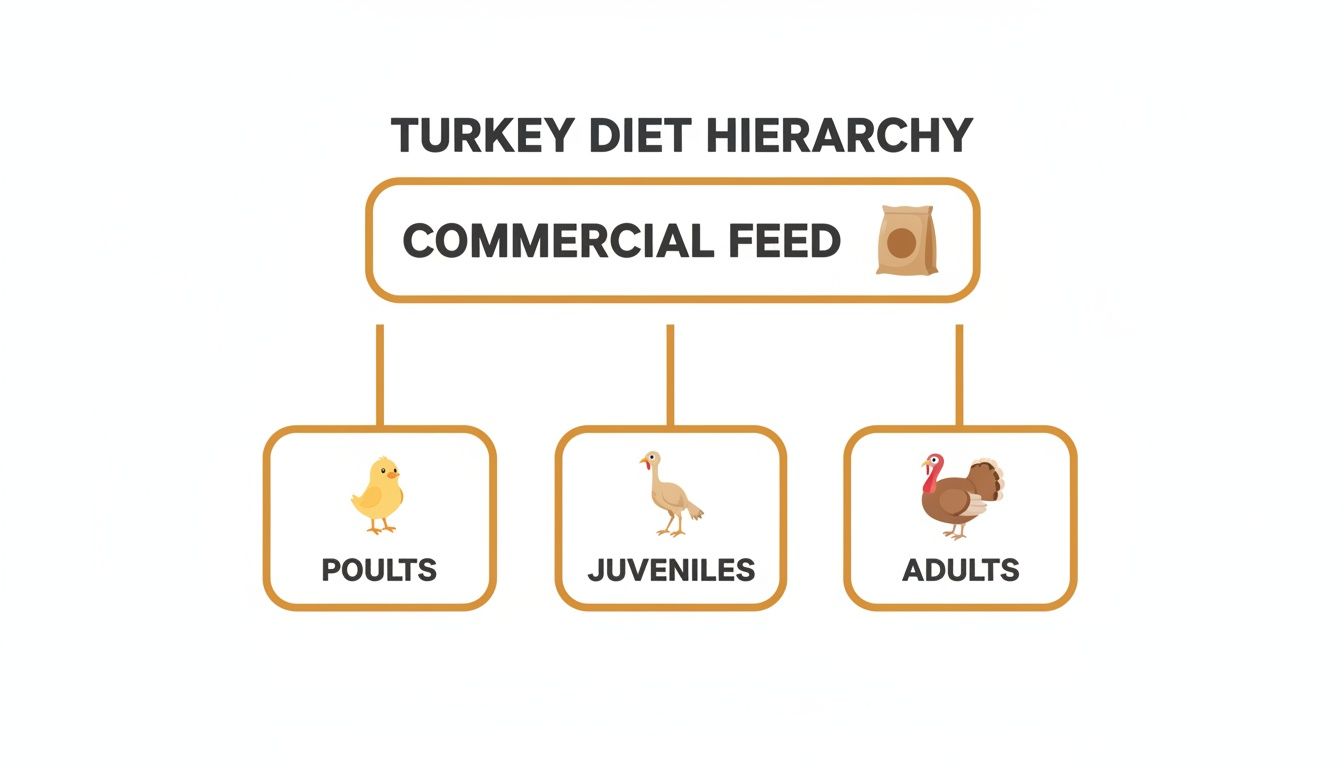
As you can see, a balanced commercial formula tailored to their age—poult, juvenile, or adult—should be the foundation of your turkey's diet. On top of that, things like fresh, clean water and digestive grit are absolutely essential for proper hydration and digestion.
By starting with the right feed, you're setting your flock up for a long and healthy life.
Building a Healthy Diet from Poult to Adult
Feeding turkeys isn't a one-size-fits-all deal. Their dietary needs change drastically as they grow, and getting it right at each stage is the key to raising a healthy, happy flock. Think of it as laying a foundation—you need the right materials at the right time to build something strong and resilient.
It all starts with the most fragile and demanding stage: the poult.
Fueling Rapid Growth in Turkey Poults
From the day they hatch until about eight weeks old, baby turkeys—or poults—are on a mission. Their bodies are working overtime to build a strong frame, develop muscle, and grow feathers, all at a stunning pace. To pull this off, they need a diet absolutely packed with protein.
This is where a specialized turkey starter feed is non-negotiable. This isn't just any old feed; it's formulated with a high protein content, right around 28%. That number is incredibly important. It's the precise fuel needed for all the cellular construction happening inside their tiny bodies. To put that in perspective, it's a huge leap from the 18-20% protein that baby chicks need.
A common mistake I see people make is giving poults a standard chick starter. The lower protein just isn't enough to support their explosive growth, often leading to stunted birds with weaker immune systems down the road.
Simply put, that high-protein starter is the nutritional bedrock for their entire life. Skimping on it during these critical first eight weeks can cause problems you’ll be dealing with for a long time.
Supporting Steady Development in Growers
Once your poults move past that fluffy baby stage and enter their awkward teenage phase (from about eight to sixteen weeks), their dietary needs shift again. They’re still growing, of course, but not at that same frantic pace. The focus changes from initial rapid-fire development to steadily building muscle and maturing their skeleton.
During this grower phase, you'll want to dial back the protein. A quality grower feed will have around 20-22% protein. This change is deliberate and crucial for healthy development. If you keep them on the high-protein starter for too long, they can grow too fast, putting a dangerous amount of strain on their legs and joints. That can lead to serious mobility issues later on.
Switching to a lower-protein formula encourages a more sustainable, balanced growth rate. It ensures their bodies develop in the right proportions, building strength without overwhelming their frame.
Maintaining Health in Adult Turkeys
By the time a turkey hits about sixteen weeks, it’s considered an adult, and its diet changes one last time. The goal is no longer about growth but about maintenance, overall health, and, for your hens, egg production.
At this point, you’ll move them to a finisher or layer feed with a protein content of around 16-18%. Which one you choose really depends on what your turkeys are for:
- Finisher Feed: This is the go-to for meat birds. It has the right balance of protein and energy to help them reach a healthy market weight without packing on too much fat.
- Layer Feed: If you're keeping hens for eggs, a layer feed is a must. It has a similar protein level but is fortified with extra calcium, which is absolutely vital for forming strong, healthy eggshells.
This kind of careful feed management directly impacts how well your flock does. It’s no surprise that the animal feed market is always advancing to meet these needs. In Turkey, for instance, the animal feed market was valued at USD 4,808.12 million in 2024 and is expected to keep growing. This trend is happening everywhere, as farmers know that quality feed is directly tied to their success. You can see more on this in the Turkey animal feed market analysis.
By understanding and catering to these distinct life stages, you’re setting your flock up to not just survive, but truly thrive from their first day to full maturity.
How to Choose the Right Commercial Turkey Feed
Walking into a feed store can be a bit overwhelming. You're faced with a wall of bags, all covered in labels with jargon that can make your head spin. But don't worry—picking the right commercial formula for your flock is actually pretty straightforward once you know what to look for.
It really just boils down to a few key factors that make a huge difference in your turkeys' health and how they grow.
Getting this right isn't just a concern for backyard keepers; it's the backbone of the entire industry. Turkey farming is a massive operation, with the U.S. alone raising an incredible 218 million birds in 2023. Those numbers really highlight why getting the nutrition spot-on is so critical. If you're curious, you can discover more insights about global turkey farming to see just how big the industry is.
Medicated Versus Non-Medicated Feed
One of the very first decisions you’ll make, especially with poults, is whether to go with medicated or non-medicated feed. This choice is all about preventing a nasty intestinal parasite called coccidiosis, which can be really dangerous for young birds.
- Medicated Feed: This feed includes a coccidiostat (usually Amprolium) that helps poults build immunity to coccidiosis without getting sick. It's a fantastic safety net if your birds are in a brooder where they’re in close contact with their droppings or if you've had coccidiosis issues before.
- Non-Medicated Feed: As the name implies, this feed has no coccidiostat. It's the way to go if your poults were vaccinated against coccidiosis at the hatchery. It's also a solid choice if you're a stickler for sanitation and keep their environment perfectly clean and dry.
Here's the critical part: never give medicated feed to vaccinated poults. The medication will completely cancel out the vaccine's benefits. The right choice really hinges on your specific setup and how you plan to manage parasite risk.
How to Read a Turkey Feed Tag
Think of the feed tag as the nutrition label on your own food. Instead of getting bogged down in every detail, you just need to zero in on a few key numbers to understand what you're buying.
The "Guaranteed Analysis" on a feed tag isn't just a suggestion—it's legally required to be accurate. It's your single best tool for comparing brands and making sure your flock is getting exactly what it needs to thrive.
When you scan the tag, look for these three main things:
- Crude Protein: This is the most important number. Make sure it lines up with your turkey's age: around 28% for starters, dropping to 20-22% for growers, and finally settling at 16-18% for adults.
- Crude Fat: This tells you how much energy is packed into the feed. A higher fat content means more calories, which can be a big help for birds living in colder climates.
- Crude Fiber: This is a measure of indigestible material. Some fiber is good, but a really high number can be a red flag that the feed contains a lot of low-quality fillers.
Crumble, Pellets, or Mash
The last piece of the puzzle is the form the feed comes in. Each type is designed for a different age and eating style.
- Mash: This is a fine, unprocessed feed that looks a bit like flour. It can get dusty and messy as birds tend to pick through it, but it's sometimes used for the tiniest of poults.
- Crumbles: Think of this as mash that's been pressed into pellets and then broken into smaller pieces. The bite-sized bits are perfect for poults and make it easy for them to eat without wasting much.
- Pellets: This is the go-to for grower and adult turkeys. Compressing the feed into uniform pellets means every single bite is nutritionally balanced, which dramatically cuts down on waste.
Knowing these basics will give you the confidence to walk into any feed store and choose the perfect formula for a happy, healthy flock. For a deeper dive, you can also explore our breakdown of the different types of poultry feed in our article.
Healthy Treats and Foraging Your Flock Will Love
While that bag of high-quality commercial feed is the cornerstone of your turkey’s diet, it’s not the whole story. Think about it: would you want to eat the same perfectly balanced but boring meal every single day? Treats and the chance to forage are what bring excitement, enrichment, and a welcome boost of extra nutrients into their lives.
This isn’t about spoiling them with junk food; it's about honoring their natural instincts. Offering the right kinds of extras boosts their health, busts boredom, and is a fantastic way to bond with your birds. The trick is to stick to the 90/10 rule.
The 90/10 rule is the golden principle for treating poultry. It just means that 90% of their daily food should come from their balanced commercial feed, while treats and foraged goodies make up no more than the remaining 10%. This simple guideline ensures their core nutritional bases are always covered.
Following this ratio keeps them from filling up on the "fun stuff" and skipping the essential vitamins and minerals they need to truly thrive.
Safe and Healthy Kitchen Scraps
Your kitchen can be a treasure trove of delicious, healthy snacks for your turkeys. So many of the fruits and vegetables you eat can be shared with your flock, giving them a pop of vitamins and a fun change of pace.
Just be sure any scraps you offer are fresh—never moldy—and free from lots of salt, sugar, or cooking oils.
Here are a few flock-favorites that are both safe and good for them:
- Leafy Greens: Things like kale, spinach, chard, and lettuce are loaded with vitamins and get gobbled up in no time. A classic trick is to hang a head of cabbage just above their heads; it's a snack and a toy all in one!
- Cooked Corn: On the cob or just the kernels, cooked corn is a high-energy treat they go crazy for. Just skip giving it to them raw, as it’s a bit tougher for them to digest.
- Berries and Melons: Blueberries, strawberries, raspberries, and big chunks of watermelon are packed with antioxidants and are perfect for helping them stay hydrated on a hot day.
- Cooked Oats: A scoop of plain, cooked oatmeal (no sugar or milk, please!) is a warm, comforting treat that’s easy on their digestive system. It's especially nice on a chilly morning.
The Power of Foraging
Turkeys are foragers at heart. Letting them roam in a safe, fenced-in pasture allows them to tap into those deep-seated instincts and supplement their own diet. As omnivores, they're on the hunt for both plants and critters.
When they get to forage, they’ll seek out all sorts of things:
- Greens and Weeds: They will happily graze on clover, dandelions, and other tender grasses.
- Seeds and Nuts: Wild turkeys are pros at finding acorns, seeds from native plants, and other natural goodies from trees and shrubs.
- Insects and Grubs: A huge—and favorite—part of their natural diet is protein-rich insects, worms, and grubs they unearth while scratching around in the soil.
This activity isn't just great for their diet; it provides crucial mental and physical exercise. Just make absolutely sure their foraging area is free of any toxic plants or pesticide residue.
Choosing a Premium Protein Treat
Sometimes you want to give your flock a special treat that really packs a nutritional punch. While there are a few options out there, one stands out for its incredible benefits, especially when it comes to calcium. This is where Black Soldier Fly Larvae (BSFL), like Pure Grubs, really shine.
Many of us are familiar with mealworms, but BSFL offer a far superior nutritional profile. The most critical difference is the calcium content.
Black Soldier Fly Larvae can contain up to 85% more calcium than mealworms. That’s a game-changing difference, particularly for laying hens who desperately need that calcium for strong eggshells and their own bone health.
Mealworms actually have a poor calcium-to-phosphorus ratio, which can block calcium absorption over time. BSFL, on the other hand, provide a naturally balanced source of this crucial mineral, making them a much smarter supplement. A handful of Pure Grubs delivers a clean, protein-rich, and calcium-dense treat that supports beautiful feather growth, strong bones, and overall vitality. If you want more ideas, check out our guide on other healthy snacks for chickens that your turkeys will love, too.
By thoughtfully combining fresh scraps, foraging time, and premium treats like BSFL, you can create a varied, enriching diet that goes way beyond what’s in the feed bag.
Foods and Plants to Keep Away from Your Turkeys
Knowing what to feed your turkeys is only half the battle. Just as crucial is knowing what they absolutely should not eat. While turkeys are fantastic foragers, a surprising number of common household foods and backyard plants can make them seriously ill, or worse.
Creating a safe environment for your flock means being vigilant about what they can get into, both in their feeders and while they’re out exploring the yard. Many well-intentioned kitchen treats can unfortunately do more harm than good.
Household Foods to Never Feed Turkeys
It can be tempting to share leftovers to cut down on waste, but some human foods are genuinely dangerous for poultry. It’s best to think of your compost bin as a potential hazard and make sure your flock can’t raid it.
Here are some of the most common offenders to keep away from your birds:
- Avocado: Every single part of the avocado—the skin, the pit, the flesh—contains a toxin called persin. It’s incredibly harmful to birds.
- Raw Beans: This is a big one. Uncooked beans contain phytohaemagglutinin, a natural compound that is extremely poisonous to birds and can be fatal very quickly. Always make sure any beans are thoroughly cooked.
- Chocolate: Just like with dogs, chocolate contains theobromine. This compound is toxic to turkeys and can trigger heart problems, seizures, and other severe issues.
- Salty or Sugary Foods: Think chips, candy, and other highly processed snacks. These foods throw a turkey's sensitive electrolyte balance completely out of whack and lead to serious health problems.
- Anything Moldy: Never feed your turkeys anything with even a hint of mold. Molds produce mycotoxins that can cause severe respiratory and digestive damage. When in doubt, throw it out.
Think of your turkey's digestive system as a finely tuned machine built for natural grains, greens, and insects. Throwing processed human snacks or toxic compounds into the mix is like putting the wrong fuel in an engine—it’s bound to cause a breakdown.
Of course, that’s not an exhaustive list. To make it easier, here is a quick-reference guide to some of the most common things to avoid.
Common Foods to Never Feed Your Turkeys
This table highlights some of the most dangerous foods you might find in your kitchen and explains why they're a no-go for your flock.
| Harmful Food or Substance | Primary Danger | Why It Is Harmful |
|---|---|---|
| Avocado (all parts) | Persin Toxicity | Contains persin, a fungicidal toxin that causes respiratory distress and heart failure in birds. |
| Raw or Undercooked Beans | Phytohaemagglutinin | This toxic compound causes red blood cells to clump, leading to rapid and severe illness. |
| Chocolate & Caffeine | Theobromine/Caffeine | These stimulants are toxic to birds, causing heart arrhythmias, seizures, and death. |
| Moldy Food | Mycotoxins | Molds produce toxins that can lead to respiratory infections and fatal organ damage. |
| Onions & Garlic | Thiosulfates | In large quantities, these can damage red blood cells and cause anemia or jaundice. |
| Salty/Sugary Processed Foods | Electrolyte Imbalance | High levels of salt or sugar can cause dehydration, kidney damage, and metabolic stress. |
| Rhubarb Leaves | Oxalic Acid | The leaves contain high concentrations of oxalic acid, which can cause kidney failure. |
| Uncooked Potato Peels (green) | Solanine | The green parts of potatoes contain solanine, a toxin that causes gastrointestinal and neurological issues. |
Keeping this list in mind when you’re sorting kitchen scraps will go a long way in protecting your birds from accidental poisoning.
Common Yard Plants That Are Toxic
A turkey’s instinct is to forage, but not every green thing growing in your yard is safe. Many beautiful ornamental plants and even common weeds contain compounds that can harm your flock. Before you let your turkeys roam free, it’s a good idea to walk the area and identify any potential dangers.
Be sure to remove or fence off any of the following from their foraging areas:
- Nightshade Family: This includes plants like potatoes (especially the green skin and sprouts), tomato leaves and stems, and eggplant. They all contain a toxic alkaloid called solanine.
- Rhododendrons and Azaleas: These popular flowering shrubs look lovely, but they are highly toxic to most animals, including turkeys. Ingesting them can cause severe digestive upset and cardiac distress.
- Foxglove: This is a common garden flower that contains digitalis glycosides, which are potent heart toxins.
- Yew: This ornamental evergreen is a major threat. All parts of the yew plant are extremely poisonous and can be fatal if eaten.
By keeping these foods and plants out of reach, you’re creating a safe space where your turkeys can thrive. Their health depends just as much on avoiding the bad stuff as it does on getting the good stuff. A little bit of prevention makes all the difference.
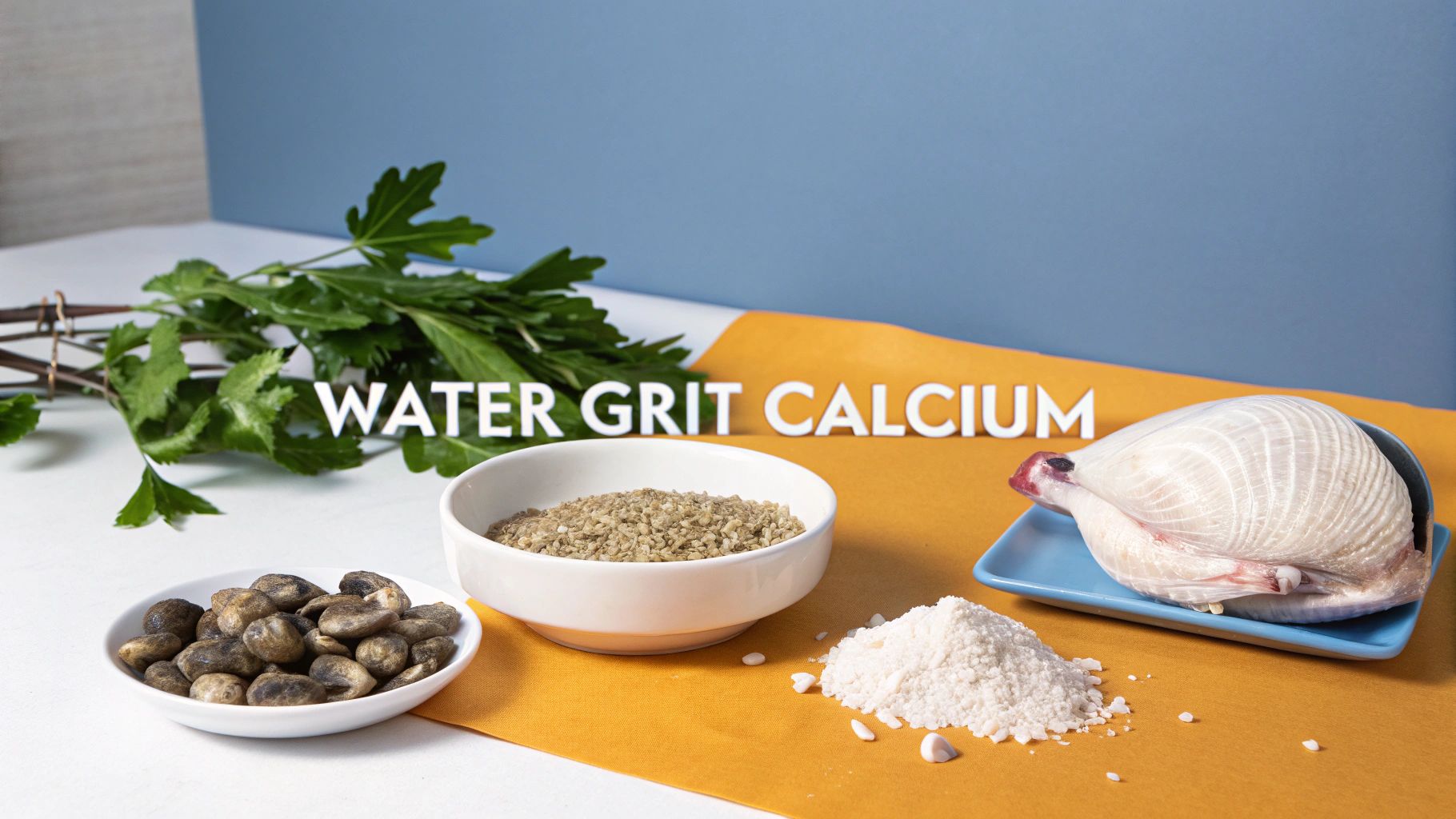
The Essential Roles of Water, Grit, and Calcium
Beyond their main feed, turkeys absolutely need three other things to stay healthy. Think of these as the essential support crew for their diet. Without them, even the best feed in the world won't do its job right.
These three power players—water, grit, and calcium—each have a unique but connected role in digestion, bone strength, and overall health. Let's break down why these simple additions are so critical.
Water: The Unsung Hero of Turkey Health
It’s easy to take for granted, but fresh, clean water is the single most important nutrient for your flock. A turkey can go a surprisingly long time without food, but only a very short time without water. It's tied to literally every function in their body.
Water helps turkeys swallow and soften their food, which is the first step in digestion. It’s also how they regulate their body temperature. On a scorching day, cool, fresh water is what keeps them from overheating. A dehydrated turkey is a sick turkey—it’s that simple.
Your turkeys need access to clean water 24/7. Get into the daily habit of scrubbing their waterers to keep slime and bacteria from building up, which can make your whole flock sick in a hurry.
Grit: A Turkey's Secret Digestive Tool
Ever wonder how a bird with no teeth grinds up tough grains and seeds? The secret is a muscular organ called the gizzard, and it needs a special tool to do its job: grit.
Grit is just small, hard stones like granite or flint that turkeys swallow on purpose. These little rocks hang out in the gizzard, where powerful muscles churn them around to pulverize food into a digestible paste. Without grit, a turkey can't break down its food properly, especially if they're eating anything other than a pre-milled commercial mash.
Make sure the grit size is right for their age:
- Starter Grit: A fine, sand-like grit that’s the perfect size for tiny poults.
- Grower/Adult Grit: As they get bigger, they need larger pieces of stone to handle bigger pellets, grains, and foraged goodies.
Never mix grit into their feed. Always offer it free-choice in a separate container so they can take exactly what their bodies tell them they need.
Calcium: For Strong Bones and Perfect Eggs
Last but not least is calcium. All turkeys need it for strong bones, but it becomes absolutely vital for laying hens. It takes a huge amount of calcium to form a single eggshell. If a hen can’t get enough from her diet, her body will steal it from her own bones, making them weak and brittle.
Even though layer feeds come with extra calcium, it’s still best practice to offer a supplement on the side. This lets each hen take exactly what she needs for egg-laying without overdoing it for the others.
The easiest and most effective way to do this is to provide crushed oyster shells in a separate dish. This free-choice approach gives your hens the boost they need for strong, solid eggshells, and you won’t be forcing extra calcium on the toms or non-laying hens. If you want to dive deeper into how this mineral works for poultry, check out our guide on chicken feed with calcium.
Common Questions About Feeding Turkeys
Even with the best-laid plans, you're bound to have questions as you dial in your flock's diet. It’s easy to get lost in the details, but most feeding puzzles boil down to a handful of common scenarios. Let's walk through some of the questions I hear all the time so you can move forward with confidence.
Can Turkeys Eat Chicken Feed?
In a pinch, yes, but it's definitely not a good long-term plan. The real problem arises with poults. Young turkeys need a starter feed with a massive 28% protein, which is far higher than what baby chicks require. Feeding them a standard chick starter can stunt their growth and lead to health issues right out of the gate.
For adult birds, a high-quality chicken flock raiser might get you by for a short time. But at the end of the day, a feed formulated specifically for turkeys will always be your best bet for meeting their unique dietary needs and keeping them in top condition.
How Much Does a Turkey Eat Each Day?
This is the classic "it depends" question. A turkey's daily intake varies wildly based on its age, breed, and whether it's out on pasture. A mature heritage bird might eat around a pound of feed a day, while a meat-focused Broad Breasted variety will pack away a whole lot more to fuel its incredible growth rate.
The best way to handle this is to offer feed on a free-choice basis. Turkeys are great at eating what they need when they need it. Keep their feeder full with the right kind of feed, and they'll take care of the rest.
Just keep an eye on their body condition to make sure they're not getting too thin or too heavy, and let them self-regulate. It takes all the guesswork out of it.
How Often Should I Give My Turkeys Treats?
Treats are wonderful for building a bond and adding some excitement to their day, but they have to be given sparingly. I live by the 90/10 rule: a complete, balanced feed should make up at least 90% of their diet, leaving just 10% for the fun stuff.
For a grown turkey, that looks like a small handful of grubs or some chopped-up greens just a few times a week. This approach ensures they get all the critical nutrients from their main feed while still enjoying a little variety.
Do My Free-Range Turkeys Still Need Grit?
Absolutely. Think of it as cheap insurance for their digestive system. While your turkeys will definitely peck at small stones and sand while they're out foraging, you can never be sure they're finding enough of the right-sized particles.
By offering grit in a separate, free-choice container, you guarantee they have what they need to properly grind up tough grasses, seeds, and insects in their gizzard. It’s a simple step that goes a long way toward boosting digestion and making sure they get the most out of every bite.
A healthy diet is the cornerstone of a thriving flock, and the right kind of treat can elevate their health. For a high-protein, calcium-rich supplement that promotes strong eggshells and beautiful feathers, look no further than Pure Grubs. Our USA-grown Black Soldier Fly Larvae are a natural, safe, and delicious choice your turkeys will go wild for. Discover the benefits of Pure Grubs today at puregrubs.com.