

A Guide to Chicken Feed With Calcium
Specially formulated layer feeds pack a real calcium punch, typically containing between 2.5% and 4.5% calcium. This isn't by accident. For a productive laying hen, calcium is the single most important nutrient she gets. Think about it: she has to deposit around 2 grams of pure calcium onto every single eggshell she forms.
Why Calcium Is the Cornerstone of Flock Health
It helps to think of a laying hen as a tiny, high-performance factory. In this factory, calcium is the most essential raw material on the assembly line. We all know it's crucial for strong eggshells, but its role goes so much deeper, forming the very bedrock of a healthy, productive flock. Without a steady, adequate supply, the whole system starts to falter.
Picture building a house. Calcium is both the concrete foundation and the structural beams. It’s absolutely vital for building and maintaining strong, dense bones throughout a chicken's life. This skeletal strength isn't just for getting around the coop; it also serves as a hen's personal calcium bank.
Beyond Bones and Eggshells
But the story doesn't end with structural support. Calcium is also the spark that powers a hen's entire muscular and nervous system. Every single muscle contraction, from scratching in the dirt to the powerful, rhythmic process of laying an egg, depends on it. It’s also a key player in transmitting nerve signals, making sure the body's internal communication network is running smoothly.
A laying hen is under tremendous biological pressure. She has to produce a perfect eggshell nearly every day, a feat that demands an enormous amount of this mineral. If her diet comes up short, her body has no choice but to start pulling it directly from her bones.
This constant withdrawal of calcium from the skeleton to form eggshells is a high-stakes biological trade-off. A consistent deficiency can lead to brittle bones, a drop in egg production, and even severe health problems like cage layer fatigue, where a hen becomes too weak to stand.
The Non-Negotiable Nutrient
When you understand these critical functions, it becomes crystal clear why choosing the right chicken feed with calcium is non-negotiable. This isn't just about getting more eggs; it's about safeguarding the long-term health and well-being of every bird in your flock.
A diet rich in easily absorbed calcium prevents a hen from having to sacrifice her own body to produce eggs. For flock owners wanting to take the next step, learning how to improve egg quality is a fantastic resource that covers more than just calcium.
Ultimately, getting the calcium levels right ensures your hens can build strong bones, lay eggs with tough shells, and maintain proper muscle function without draining their internal reserves. It’s one of the most impactful things you can do for the health of your flock.
The Journey From Feed to Eggshell
Ever stop to think about the incredible biological machine that is a laying hen? It's pretty amazing how she can take a simple meal and, within a day, turn it into a perfectly formed egg. That journey, especially the creation of the eggshell, is a demanding process that hinges entirely on calcium. It all starts with a high-quality chicken feed with calcium, but where the mineral goes from there is a fascinating story.
Once a hen eats, the calcium in her feed is broken down and absorbed into her bloodstream. You can picture the bloodstream as a busy highway, rushing this vital mineral to all the places it's needed for daily life—things like muscle function and keeping her nerves firing properly.
But for a laying hen, a huge chunk of that calcium is earmarked for a much bigger job. Her body is smart; it diverts a large portion of her calcium intake to a special, woven-like bone structure called the medullary bone. Found inside the hollow parts of her long bones, this structure is essentially her personal calcium savings account, storing the mineral until it’s time to build an eggshell.
The Overnight Assembly Line
The real magic happens overnight. While the coop is dark and quiet, a hen’s internal factory is kicking into high gear. It takes about 20 hours to form a complete eggshell, and most of that work—the actual calcium deposition—is crammed into the final 15 hours.
During this critical window, she simply can't eat enough feed to supply the massive amount of calcium needed on the spot. So, her body starts making withdrawals from her medullary bone "bank." This internal reserve is called upon, releasing a steady stream of calcium back into her bloodstream, which then travels directly to her shell gland (or uterus) to be meticulously layered onto the developing egg.
In a single night, a hen’s body will deposit a staggering 2 grams of calcium onto the eggshell. To put that in perspective, in just one 24-hour cycle, a laying hen mobilizes and uses an amount of calcium equal to about 10% of her entire skeleton.
This mind-boggling metabolic feat is exactly why a slow, steady release of calcium in her diet is so important. If she doesn't get enough, or if the calcium is absorbed too quickly and doesn't last through the night, her body is forced to pull from her structural bones. This puts her own long-term health and bone integrity at serious risk.
This infographic breaks down the many roles calcium plays in a flock's health, from building strong bones and powering muscles to, of course, creating tough eggshells.
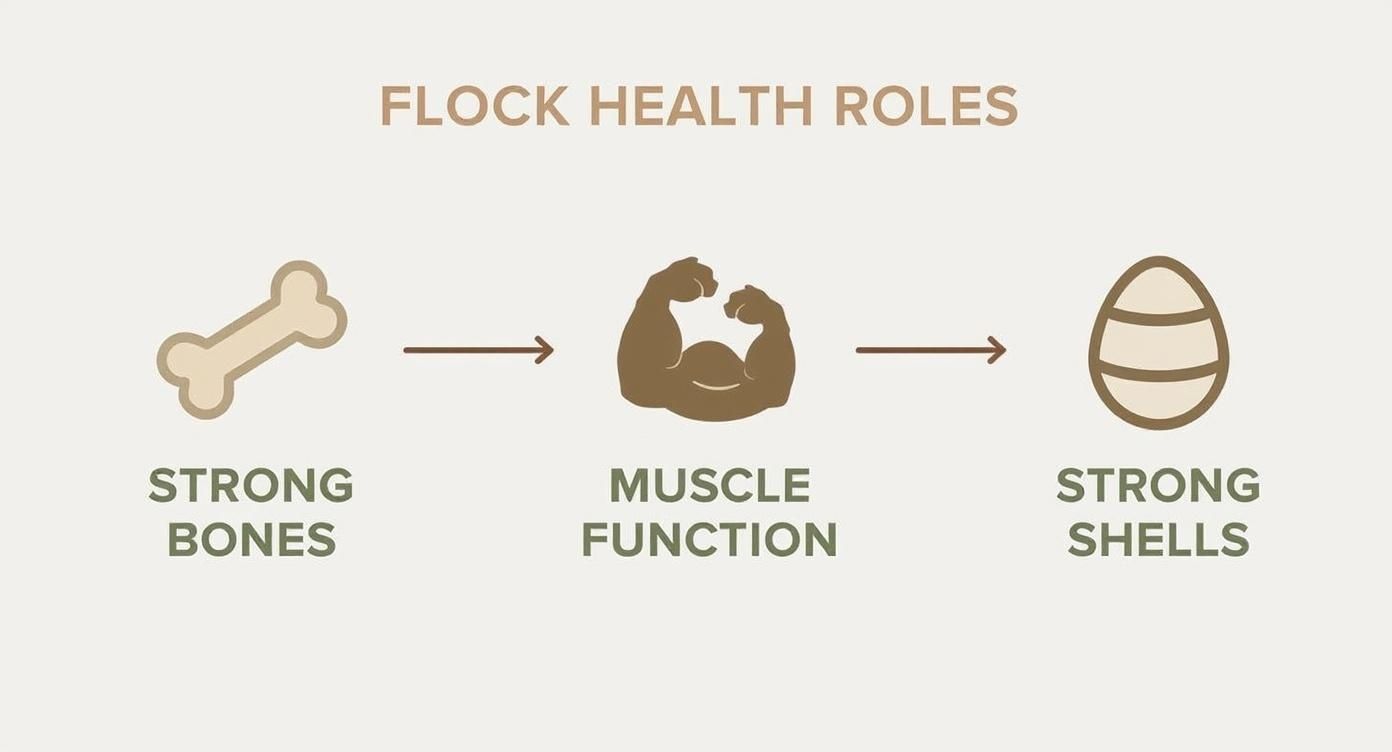
As you can see, calcium is far more than just an eggshell ingredient—it's the cornerstone of a hen's entire body.
Meeting the Intense Demand
The numbers behind this process really drive the point home. The calcium requirement for a laying hen is 4 to 6 times higher than for a non-laying bird. A typical layer eats about 100 grams of feed a day, and that feed needs to contain around 4% total calcium. That comes out to roughly 4 grams of calcium intake, with about 3 grams actually becoming available for her body to use. If you want to dive deeper into their dietary needs, you can explore what to feed laying hens in our detailed guide.
This constant cycle—depositing calcium into the medullary bone from her food and then withdrawing it for eggshells—is a delicate balancing act. It highlights the absolute necessity of providing a consistent, easily absorbed chicken feed with calcium. Without it, a hen simply can't keep up with egg production without sacrificing her own skeletal health, which eventually leads to brittle bones and a sharp decline in her overall vitality.
Comparing Calcium Sources for Your Flock
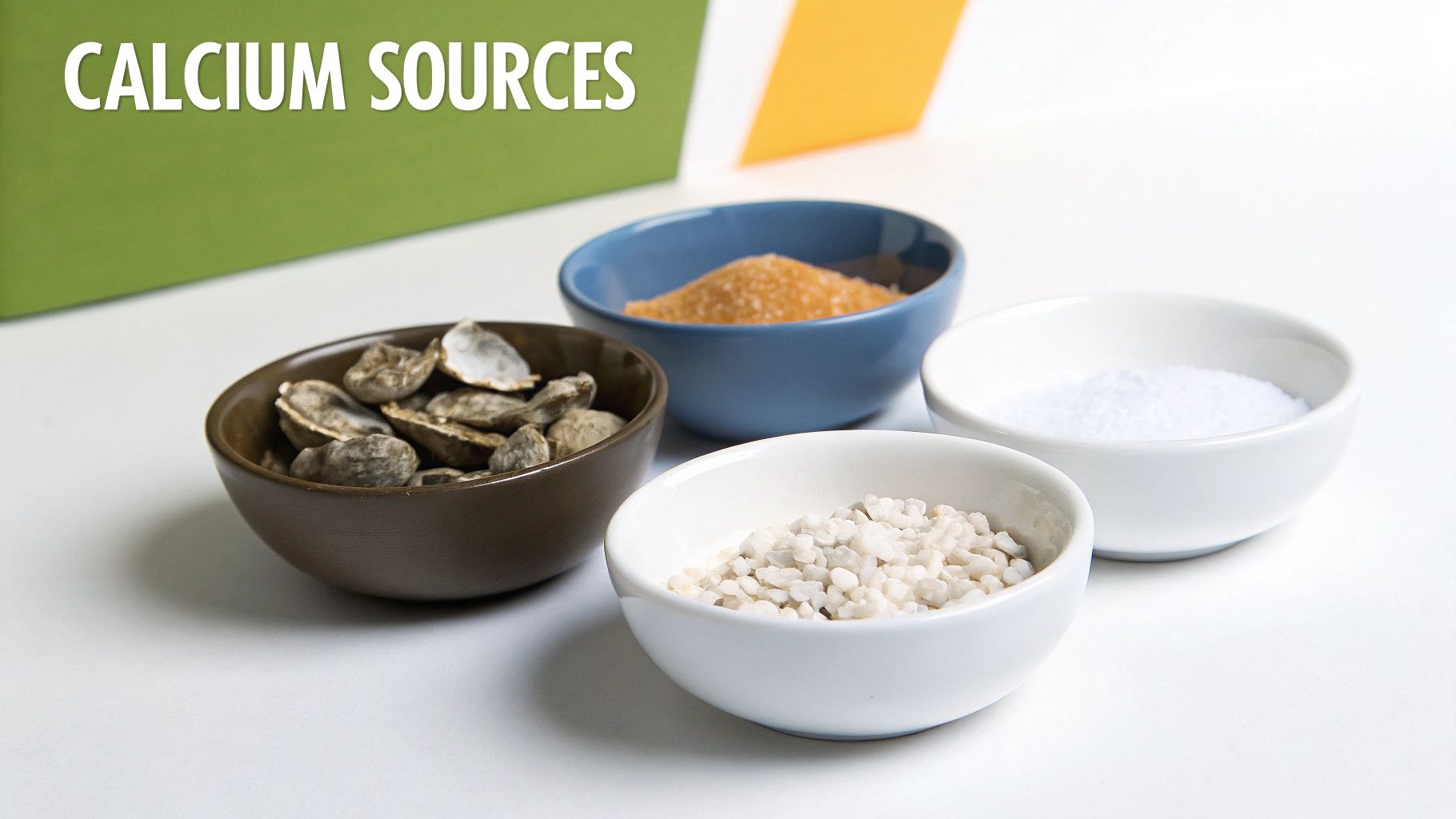
When you're looking for the best chicken feed with calcium, it's easy to assume all sources are more or less the same. They're not. Think of it like choosing the right kind of wood for a building project—different types have unique properties, strengths, and weaknesses. For your flock, picking the right calcium source is a balancing act between cost, effectiveness, and how you like to manage your birds.
You’ll run into a few common options, and each plays a slightly different role. The big players are limestone and oyster shell, but you'll also see sustainable choices like aragonite and even properly prepared eggshells. Understanding how each one works inside a hen is what really matters. You want a slow, steady supply for building strong shells, especially during the overnight hours when all the magic happens.
This knowledge takes you from just grabbing any bag of layer feed to making a smart, informed decision that supports your flock's health for the long haul.
The Industry Standard: Limestone
Walk down any feed store aisle, and you'll find limestone is the star ingredient in most commercial chicken feeds. There's a simple reason for this: it's cheap and it's everywhere. This makes it a no-brainer for keeping production costs down. At its core, it’s a straightforward source of calcium carbonate that gets the basic job done.
But here's the catch with limestone. Its digestibility is all over the map, ranging from a dismal 20% to a respectable 80%. This huge variation comes down to where the stone was mined, its particle size, and how easily it dissolves. To play it safe, feed producers often just add more calcium than needed. The downside is that this can sometimes mess with the absorption of other critical nutrients, like phosphorus.
Why Oyster Shell Is a Flock Favorite
Many backyard chicken keepers swear by crushed oyster shell, and for good reason. Unlike limestone, which can dissolve pretty fast, oyster shell has a more complex, crystalline structure. This unique makeup means it hangs around in the hen's gizzard, breaking down much more slowly.
This slow-release action is its superpower.
Because it lingers in the digestive system, oyster shell provides a steady trickle of calcium into the bloodstream throughout the night. This timing is perfect, as it lines up exactly with the most intense period of eggshell formation. The hen gets a constant supply of raw material without having to pull it from her own bones.
This makes oyster shell a premium choice for anyone chasing consistently strong, high-quality eggshells. Hens also seem to love the particle size, instinctively picking out the pieces they know their bodies need. For a deeper look at your options, check out our guide on choosing the best calcium supplement for chickens.
Sustainable and Alternative Calcium Sources
Beyond the two mainstays, a few other excellent options are popping up, especially for flock owners focused on sustainability.
- Aragonite: This is another form of calcium carbonate, usually harvested from marine sources. Much like oyster shell, its crystalline structure allows for a slower, more sustained release of calcium, making it a fantastic alternative.
- Recycled Eggshells: Want the ultimate closed-loop system? Feed cleaned, dried, and crushed eggshells right back to your flock. As long as you prepare them properly—to kill bacteria and prevent egg-eating—they offer a completely free and highly absorbable source of calcium.
Choosing the right source isn't just about what's in the bag; it's about matching the supplement to what your flock needs and what you're trying to achieve. A quick side-by-side comparison can make the decision a whole lot clearer.
Comparison of Calcium Sources for Poultry Feed
To help you decide, here's a simple breakdown of the most common calcium supplements, highlighting what makes each one unique.
| Calcium Source | Primary Benefit | Key Consideration | Best For |
|---|---|---|---|
| Limestone | Low cost and widely available in commercial feeds. | Digestibility can be inconsistent, requiring careful formulation. | Budget-conscious flock owners or as a base in mixed feeds. |
| Oyster Shell | Slow-release properties provide calcium overnight for shell formation. | Higher cost compared to limestone. | Laying hens needing consistent support for strong eggshells. |
| Aragonite | Sustainable and offers a slow-release profile similar to oyster shell. | Can be less common and slightly more expensive. | Those seeking an effective, eco-friendly alternative to oyster shell. |
| Recycled Eggshells | Free, sustainable, and highly bioavailable. | Requires proper cleaning and crushing to be safe and effective. | Self-sufficient homesteaders looking to reduce waste and cost. |
So, what's the final verdict? Often, the smartest approach is a combination. Start with a quality layer feed that uses limestone, but also offer a separate feeder with free-choice oyster shell. This lets each hen regulate her own intake, ensuring every single bird gets exactly what she needs to thrive and lay perfect eggs.
How to Spot and Fix Calcium Deficiency
Being a good flock owner means becoming a great observer. Your chickens can’t tell you when something is off, but they give you clues all the time through their eggs, their behavior, and their overall health. Learning to read these signs is the key to catching a calcium deficiency early, long before it snowballs into a serious problem.
The most glaring red flag, of course, is a change in egg quality. A hen running low on calcium will start laying eggs with thin, brittle, or even soft shells that have a rubbery feel. In more advanced cases, you might find a shell-less egg—it looks like a delicate water balloon. These are unmistakable signs her body is scrambling for the resources it needs to form a proper shell.
Look Beyond the Eggshell
While wonky eggshells are the classic symptom, the signs don't stop there. A sharp-eyed chicken keeper knows to look for more subtle hints that point to a calcium imbalance brewing under the surface. If you pay close attention, you can often spot trouble before the first soft-shelled egg ever shows up.
For instance, you might notice a hen moving a bit more slowly or walking with a stiff gait. Calcium is vital for muscle contractions and nerve function, so weakness, trembling, or just a general reluctance to move can mean her body is leaching calcium from her bones to keep things running.
Another major clue is a sudden drop in egg production. If one of your star layers suddenly quits or becomes sporadic, it could be her body's way of protecting itself. She's instinctively diverting that precious calcium away from making eggs to preserve her own skeletal health.
Finally, keep an eye out for changes in her demeanor. A hen might seem listless, lose her appetite, or just seem less interested in flock activities. These subtle shifts are often the earliest warnings that something is nutritionally out of whack.
A Practical Action Plan to Restore Balance
Once you've spotted the signs, fixing a calcium deficiency is usually pretty straightforward. The whole idea is to give your hens a source of calcium they can help themselves to whenever they need it. This "free-choice" approach is really the foundation of good flock management.
Here are the immediate steps to take:
-
Set Up a Separate Calcium Feeder: This is critical. Don't just mix extra calcium into their main feed. Instead, put out a small, dedicated dish or feeder filled with a high-quality supplement like crushed oyster shell or aragonite.
-
Choose the Right Particle Size: Always go for larger particle calcium, often sold as grit or flake. Fine powders get absorbed too fast. Larger pieces, on the other hand, hang out in the gizzard and dissolve slowly, providing a steady supply of calcium overnight—exactly when she needs it most for shell formation.
-
Check for Vitamin D3: Calcium is useless without Vitamin D3 to help absorb it. Make sure your flock gets plenty of sunshine and that your commercial layer feed is fortified with this crucial vitamin.
By offering supplemental calcium on the side, you let each hen decide how much she needs. A hardworking layer will instinctively eat more, while a rooster or a hen who isn't laying will simply ignore it.
It's a common mistake to assume that a complete chicken feed with calcium is always enough. A hen's needs can change dramatically based on her age, metabolism, and even heat stress. That's why having a free-choice supplement available isn't just a good idea—it's non-negotiable for a healthy setup.
If you’ve done all this and the symptoms don’t clear up within a week or two, it might be time to investigate other health issues. Sometimes poor absorption points to a more complex problem that needs a vet's input. But for the vast majority of cases, a constant, free-choice source of calcium will get your flock right back on track, laying strong, healthy eggs.
Using Recycled Eggshells as a Calcium Source
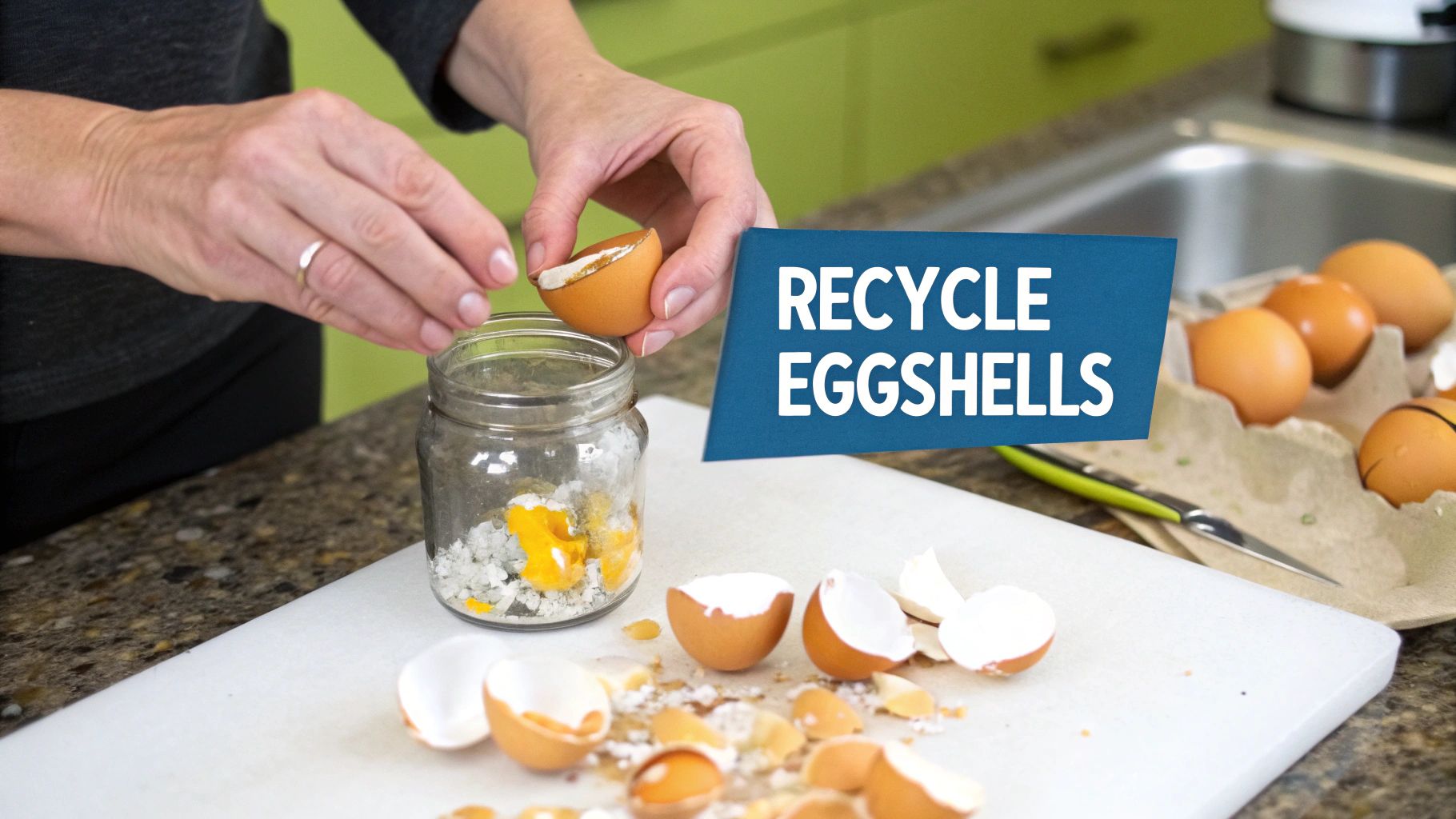
It’s always satisfying to create a sustainable system right in your own backyard, and one of the easiest ways to do this is by recycling eggshells back to your flock. Instead of ending up in the compost bin, those shells can become a fantastic—and free—source of calcium. It’s the ultimate closed-loop system, turning kitchen scraps into the very nutrient needed to build the next batch of strong eggs.
Now, I hear a common concern from flock owners: won't feeding shells back to my hens encourage them to eat their own eggs? It's a valid question, but thankfully, it's a myth rooted in a simple misunderstanding. Hens are after the raw egg, not the shell itself. When you prepare the shells correctly, they become completely unrecognizable, eliminating any risk of starting a bad habit.
The secret is all in the preparation. It's a simple process that makes the shells safe, effective, and easy for your birds to digest. Done right, this turns waste into one of the best supplements you can offer.
The Right Way to Prepare Eggshells
To turn eggshells into a safe and effective part of your flock’s diet, you just need to follow a few key steps. This process gets rid of any leftover egg residue and kills off potential pathogens like Salmonella, leaving you with a clean, highly absorbable final product. Think of it as sterilizing and fortifying the shells for their second act.
The whole process boils down to three main stages: washing, drying, and crushing. Each one is just as important as the last for creating a top-notch calcium supplement.
-
Wash and Clean Thoroughly: Start by rinsing your collected eggshells under cool water. The goal is to wash away all the leftover egg white and yolk. You can leave the thin inner membrane, though—it actually contains beneficial proteins.
-
Dry Them Completely: Once they’re clean, the shells need to be bone-dry. You can let them air-dry on a counter for a couple of days, but for a quicker and more sterile method, pop them in the oven. Just spread them on a baking sheet at 200°F (93°C) for about 10-15 minutes. This dries them perfectly and kills any lingering bacteria.
-
Crush into Small Pieces: After the shells are dry and brittle, it's time to crush them. A food processor, a blender, or even just a sturdy bag and a rolling pin will do the trick. You want to break them down into small, unrecognizable flakes—something around the size of a grain of rice or smaller is perfect.
This last step is the most important for preventing that dreaded egg-eating habit. When the shells are crushed into tiny fragments, your hens won't make the connection to fresh eggs.
A Powerful and Bioavailable Source
Recycled eggshells aren't just a convenient, zero-cost supplement; they are a remarkably potent source of calcium. This makes them an incredibly efficient way to round out your flock’s diet and ensure they have a quality chicken feed with calcium.
A chicken eggshell contains a surprisingly high concentration of calcium—about 380 mg per gram—making it an efficient source with bioavailability comparable to pure calcium carbonate. This is so effective, in fact, that it has been studied as a tool to combat dietary calcium deficiency in humans. You can learn more about the science behind eggshell nutrition and its uses.
By offering these prepared shells "free-choice" in a separate dish, you empower your hens to take exactly what their bodies need. This self-regulation is the key to good calcium management. They’ll instinctively eat more during peak laying season and less when their demand is lower, keeping themselves in perfect health without the risk of getting too much. It’s a simple, resourceful practice that’s a win for your flock, your wallet, and your sustainability goals.
Common Questions About Chicken Feed and Calcium
Navigating the world of chicken nutrition can feel like a bit of a balancing act, especially when it comes to calcium. Even experienced flock owners run into questions about the best chicken feed with calcium and how to get supplements just right. To help you feel more confident, I've rounded up some of the most common questions I hear and broken them down with clear, straightforward answers.
Think of this as your go-to guide for any calcium-related head-scratchers. We’ll cover everything from the risks of too much calcium to the different needs of roosters and hens, so you can manage your flock’s health like a pro.
Can My Chickens Have Too Much Calcium?
Yes, they absolutely can, and it's a serious issue. We spend so much time worrying about a calcium deficiency that it's easy to forget that an excess can cause major health problems. Too much calcium can lead to kidney damage, gout, and can actually block the absorption of other critical minerals like phosphorus, magnesium, and zinc.
This is exactly why the "free-choice" method is the gold standard for supplementation. Instead of mixing extra calcium directly into their main feed, you offer it in a separate dish.
By providing a calcium source like crushed oyster shell on the side, you empower each hen to be her own nutritionist. She’ll instinctively take only what her body needs for that day's egg, leaving the rest. This simple practice prevents anyone from overdoing it and keeps the whole flock in perfect mineral balance.
It's truly the safest and most effective way to meet the high demands of your laying hens without putting the rest of your flock at risk.
Do Roosters or Young Chicks Need Extra Calcium?
Nope, they sure don't. In fact, feeding them a high-calcium diet can be harmful. The nutritional needs of roosters, growing chicks, and non-laying hens are completely different from those of a hen in full production. Their bodies only require a much lower level of calcium—around 1% is perfect—which is what you'll find in standard chick starter, grower, or all-flock maintenance feeds.
Putting them on a high-calcium layer feed, which can contain 4% or more calcium, can seriously overload their systems. In young, growing birds, this can cause developmental issues and lasting kidney damage. For roosters, it can lead to long-term health complications.
If you have a mixed flock of different ages or genders, here’s the best way to handle it:
- Provide a lower-calcium feed, like a grower or flock raiser formula, for everyone to share.
- Offer a separate, free-choice calcium source, like oyster shell or aragonite, in a dish that only your laying hens need to access.
This simple two-step approach ensures your layers get the extra boost they need without compromising the health of your other birds.
Why Are My Hens' Eggshells Still Soft on a High-Calcium Diet?
Finding a soft or thin-shelled egg can be so frustrating, especially when you know you’re providing plenty of calcium. But more often than not, this points to an absorption issue, not a supply problem. Calcium doesn't work alone; it needs a supporting cast of other nutrients and the right conditions to be properly used by a hen's body.
If you're seeing weak shells despite a good diet, these are the top three culprits to investigate:
-
Not Enough Vitamin D3: Think of Vitamin D3 as the gatekeeper for calcium. Without enough of it, a hen simply can't pull the calcium from her feed into her bloodstream. Make sure your flock gets plenty of natural sunlight and that their feed is fortified with Vitamin D3.
-
Environmental Stress: A stressed-out hen is not a productive hen. Things like extreme heat, a sudden coop change, a predator scare, or even bullying within the flock can interrupt the delicate 20-hour process of shell formation, resulting in a weak or incomplete shell.
-
Age and Health: A hen's ability to produce perfect shells can naturally change over time. Very young pullets who are just starting to lay might produce a few weird eggs as their bodies get into the rhythm. On the flip side, older hens past their prime may start laying eggs with thinner shells more often. If the problem persists in a healthy, mid-aged hen, it could signal an underlying illness that's messing with nutrient absorption.
If you've checked these boxes and the problem continues, it’s a good idea to watch your flock closely for any other signs that might point to a deeper health concern.
Is Powder or Larger Particle Calcium Better?
When it comes to laying hens, larger particles are hands-down the better choice. It all comes down to timing and that incredible overnight process of building an eggshell. A fine calcium powder gets digested and absorbed very quickly, giving the hen a rush of calcium that's gone in a few hours. That's useful during the day, but it doesn't help her during the long night ahead.
On the other hand, larger particles like oyster shell flake, aragonite, or limestone grit are the perfect tool for the job.
These larger pieces don't get digested right away. Instead, they hang out in the hen's gizzard, where they are slowly ground down and dissolved over many hours. This creates a natural, timed-release system, providing a steady trickle of calcium into her bloodstream all through the night. It lines up perfectly with the peak hours of shell creation, ensuring she has all the raw materials she needs without having to pull them from her own bones.
For a natural, high-calcium treat that supports strong eggshells and a happy, healthy flock, consider adding Pure Grubs to your feeding routine. Our USA-grown Black Soldier Fly Larvae are a safe and delicious way to boost your hens' health. Learn more about our premium grubs and give your flock the best.