

A Complete Guide to Poultry Feed Types
Picking the right feed for your flock is one of the most important things you can do to keep them healthy and productive. Think of it like raising a kid—you wouldn't feed a baby the same thing as a teenager, and you wouldn't feed a teenager the same thing as a pregnant adult. It's the same logic with chickens.
The main feeds you'll see are starter, grower, and layer, and each one is specifically formulated for a different stage in a chicken's life. They also come in different textures—mash, crumbles, or pellets—which we'll get into later. For now, let's focus on getting the right nutrition at the right time.
Understanding Your Flock's Nutritional Journey
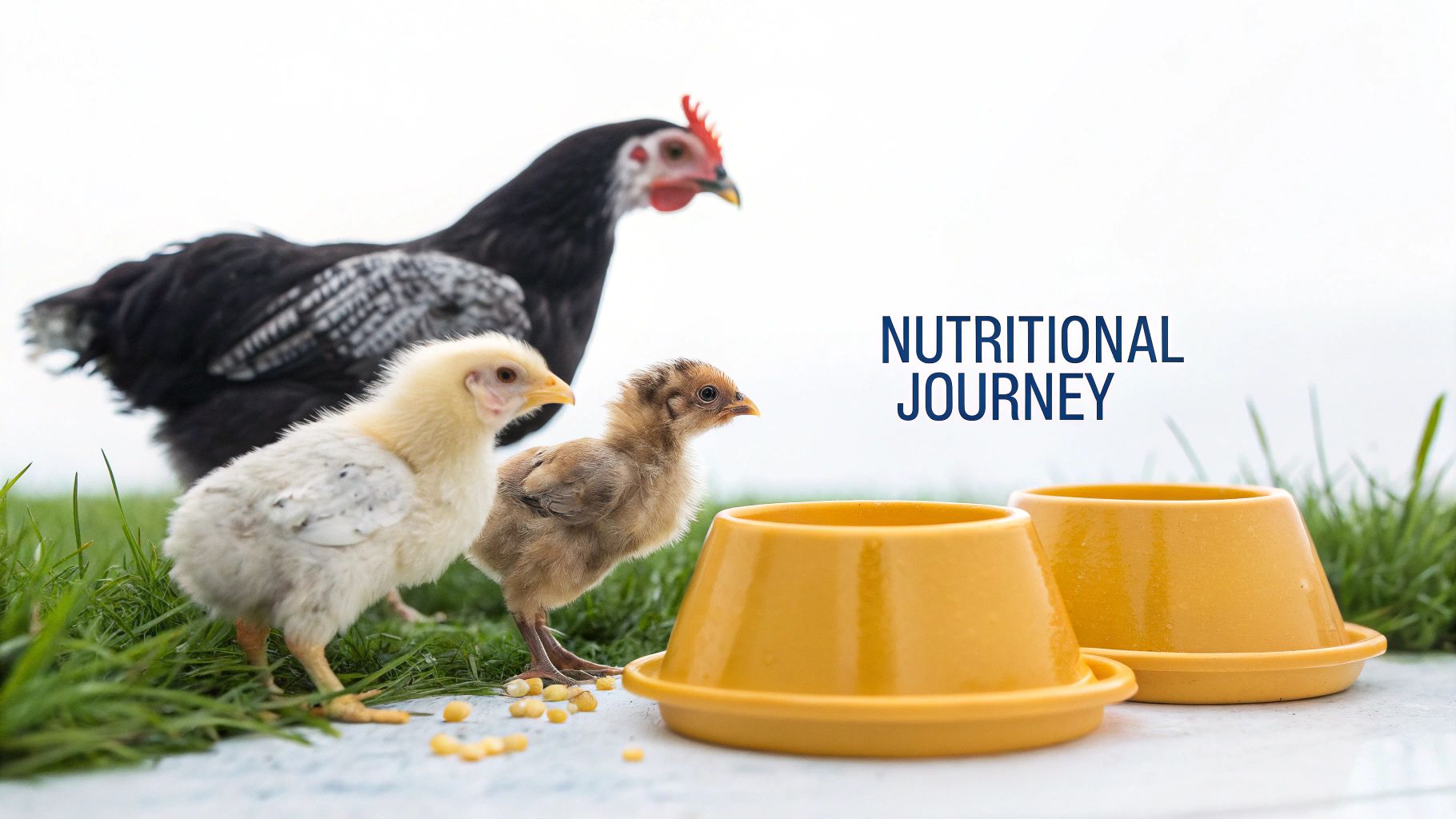
Feeding chickens isn't a "set it and forget it" kind of deal. A chick's needs are wildly different from a fully grown, egg-laying hen's. Getting this right from day one sets them up for a long, healthy life.
The whole journey is a progression. It kicks off with a diet packed with protein to fuel that explosive growth from a tiny fluffball into a feathered-out bird. Later, the focus shifts to maintaining that growth and eventually to providing the high calcium levels needed for strong eggshells. Nailing this timeline helps you avoid common health problems and ensures you get the best from your flock, whether they're for eggs or just for fun.
The Core Feed Categories
When you walk into the feed store, you'll see bags labeled with these three main types. Knowing what they're for is the first step to feeling confident about what you're buying.
- Starter Feed: This is baby food for chicks, typically from hatch day up to 6 weeks old. It’s loaded with protein, usually between 18-24%, to give them everything they need for that initial growth spurt and feather development.
- Grower Feed: Once your chicks start looking more like awkward teenagers (around 6-16 weeks), it's time to switch to grower. The protein is a bit lower, around 16-18%, which encourages a more controlled, steady growth rate so their bodies can mature properly before they start laying.
- Layer Feed: At about 16 weeks, or whenever your hens start laying their first eggs, they graduate to layer feed. It has a similar protein level to grower but comes with a huge boost in calcium. This is absolutely critical for forming strong, solid eggshells day after day.
To make it even simpler, here’s a quick-glance table breaking down the basics of each feed type.
Quick Guide to Poultry Feed by Life Stage
This chart summarizes the main feed types, what they do, and when to use them. It's a handy reference to keep you on track as your flock grows up.
| Life Stage | Feed Type | Primary Purpose | Typical Protein % |
|---|---|---|---|
| 0-6 Weeks | Starter | Rapid growth and early development | 18-24% |
| 6-16 Weeks | Grower | Steady maturation and bone development | 16-18% |
| 16+ Weeks | Layer | Egg production and shell strength | 16-18% |
Matching the feed to your birds' age is the foundation of good flock management. Once you've got this down, you can start exploring different feed forms and supplements to really dial in their diet.
Why Complete Feeds Are the Gold Standard
When you first dive into poultry care, the different feed options can feel a little overwhelming. But honestly, the simplest and most effective choice is almost always a complete feed. It’s the gold standard for a reason.
Think of it as a scientifically balanced, all-in-one meal designed for your flock. This isn't just a random mix of grains; it's a formula that takes all the guesswork out of their nutrition, ensuring they get precisely what they need, no matter their age.
Animal nutritionists carefully craft these feeds so every single bite—whether it's a pellet, crumble, or mash—contains a perfectly balanced blend of protein, energy-rich grains like corn, and all the essential vitamins and minerals. This is huge, because it stops chickens from picking out only their favorite bits, which is a common problem with scratch grains and can lead to serious nutritional gaps.
Using a complete feed means you’re covered. It's the foundation of a healthy diet, trusted by backyard keepers and large-scale farmers alike because it just plain works.
The Science in Every Bag
The real genius behind a complete feed is how it’s tailored for different stages of a chicken's life. A brand new chick has completely different needs than a hardworking laying hen, and the feed reflects that.
- For Chicks: Starter feeds are packed with high protein (18-24%) to fuel that explosive growth, support feather development, and build a robust immune system right from the start.
- For Laying Hens: Layer feeds, on the other hand, have much higher calcium levels. This is critical for forming strong eggshells day after day without drawing calcium from the hen's own bones.
This precision engineering promotes steady, healthy growth in young birds and keeps adult hens in peak condition for consistent egg production.
A complete feed is like a perfectly composed meal from a top chef. Every ingredient is measured and included for a specific reason, ensuring each bite contributes to the bird's total well-being. There's no room left for nutritional deficiencies.
Market Trust and Reliability
The proof is in the numbers. Across all the poultry feed types available, complete feeds dominate, capturing a massive 61.0% of the global market share. It's not a fad; it's the industry standard.
Unlike concentrates or premixes that you have to mix yourself, these ready-to-serve formulas eliminate the risk of human error and guarantee balanced nutrition every time. If you want to dig deeper, you can explore the role of complete feeds in industry analysis.
This widespread trust speaks volumes. When you choose a quality complete feed, you're not just buying a bag of food. You're investing in a proven nutritional roadmap that supports your flock from their first day to their last, giving you peace of mind and them a long, healthy life.
Matching Feed to Every Life Stage
Think about how a baby's nutritional needs differ from a teenager's, and how a teenager's diet is different from an adult's. It's the exact same principle with your flock. Giving them the right food at the right time is absolutely fundamental to their health, growth, and how productive they'll be.
The journey starts with a protein-packed diet to kickstart their growth, then eases into a formula for steady development, and finally, shifts to a specialized feed for either laying eggs or producing meat. Nailing this progression is the secret to a happy, healthy flock.
Modern poultry feed is a science. This timeline gives you a peek into how these complete feeds go from a concept in a lab to the food that grows your birds.
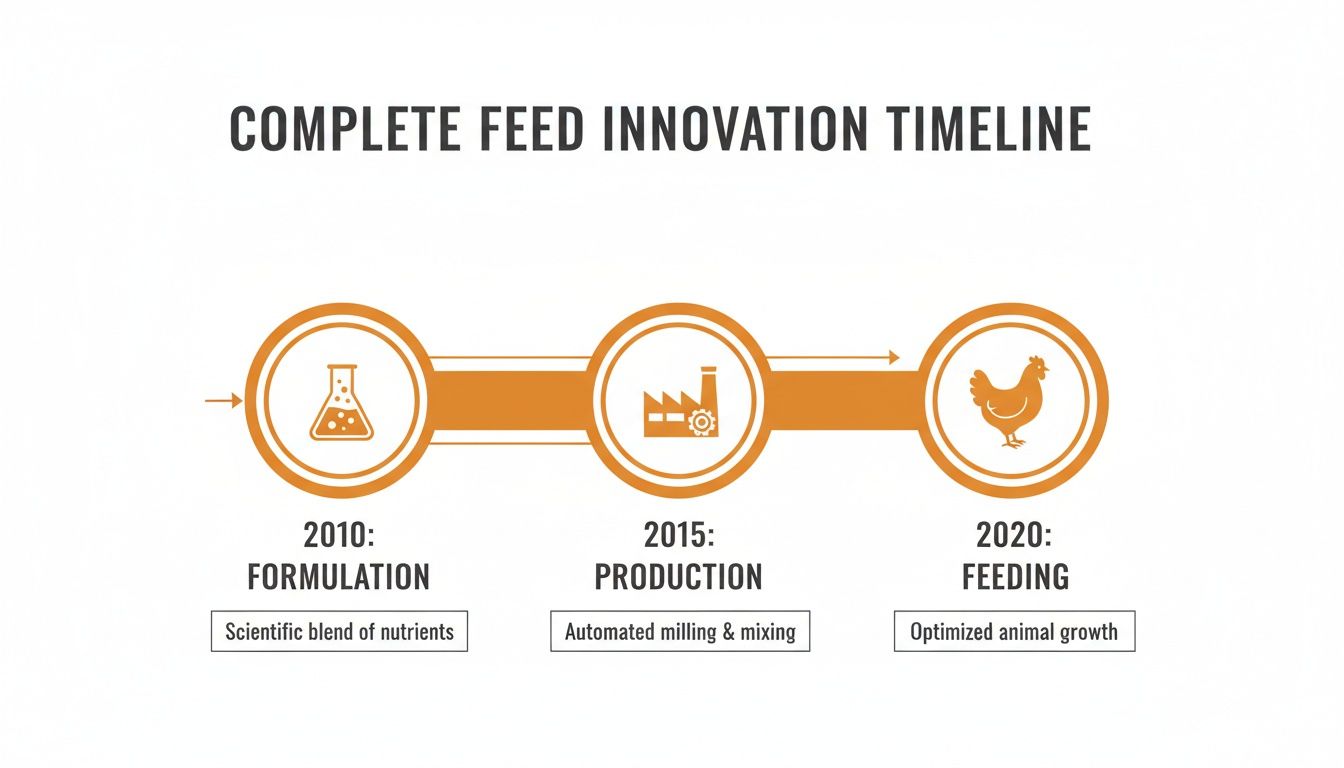
It’s a thoughtful, multi-step process designed to deliver perfectly balanced nutrition in every single bite.
Starter Feed: The First Critical Weeks
For the first 0 to 6 weeks, newly hatched chicks are incredibly fragile and growing at an astonishing rate. They need Starter Feed. Think of it as their version of infant formula—it’s loaded with the highest protein content they’ll ever get, usually between 18% and 24%.
This protein is the fuel for everything: building strong bones, developing muscles, and growing those first fluffy feathers. Starter feed typically comes in a fine mash or tiny crumbles, which are perfect for their tiny beaks. You'll often find medicated versions, which are a great help in protecting vulnerable chicks from coccidiosis, a common and potentially deadly intestinal parasite.
Grower Feed: The Awkward Teen Phase
Around the 6-week mark, it’s time to make the switch to Grower Feed. This is the diet for their "teenage" stage, which lasts until they're about 16 to 20 weeks old. You’ll notice the protein level drops a bit, down to around 16% to 18%.
This isn't a mistake; it's by design. The lower protein content encourages a slower, more controlled growth spurt. This prevents them from getting too heavy too fast, which can lead to leg problems and other health issues later on. Grower feed is all about building a solid frame and getting pullets ready for the demanding job of laying eggs.
Layer Feed: Fueling the Egg Factory
Once your hens hit about 16 weeks old, or as soon as you spot that very first egg, it's go-time for Layer Feed. The protein stays in that same 16% to 18% range, but the big change is a massive boost in calcium and other key minerals.
Why the extra calcium? It's all for the eggshells. Without enough of it in their diet, hens will start pulling calcium from their own bones to form shells, which is a recipe for weak, brittle bones and poor-quality eggs. Getting this right is so important that we've put together a whole guide on what to feed laying hens to maximize their health and output.
Layer feed is an absolute must for any hen laying eggs. It's the only formula with the 2.5% to 3.5% calcium needed to produce strong, healthy eggs day after day without sacrificing their own skeletal health.
Finisher Feed: For Meat Birds
If you’re raising chickens for meat (broilers), their diet takes a different turn. For the last few weeks before processing, they move onto a Finisher Feed. This is a high-energy, high-protein formula designed for one thing: maximizing weight gain efficiently to produce tender meat.
This feed is highly specialized for a very specific purpose. It should never be fed to laying hens or any birds you plan on keeping as long-term members of your flock.
Choosing Between Mash, Crumbles, and Pellets
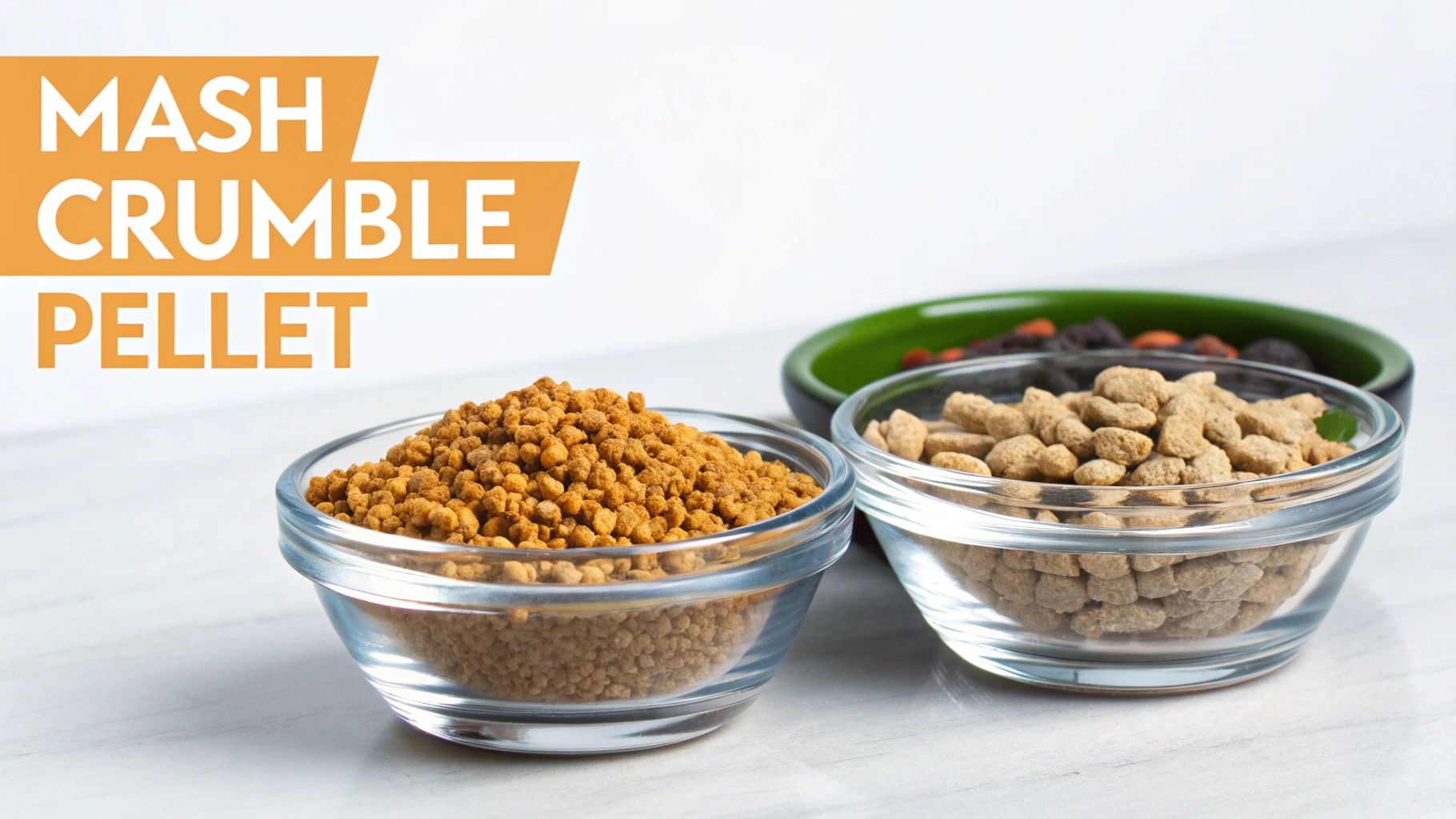
Aside from what's in the feed, how it's presented—its physical texture—makes a huge difference in how your flock eats. The same balanced recipe can be milled into a fine powder (mash), broken into small chunks (crumbles), or pressed into a solid piece (pellets).
Picking the right form is all about matching the feed to the bird's age and size. It’s a simple way to minimize waste and make sure everyone in the flock, from the biggest hen to the smallest chick, can eat easily and get the nutrition they need.
You can think of it like this: mash is the baby food, crumbles are for the toddlers, and pellets are the solid meals for grown-ups. This natural progression helps your flock transition smoothly from one life stage to the next.
Mash: The Ideal Starter
Mash is the original, old-school form of poultry feed. It’s simply all the ingredients ground up into a fine, flour-like consistency. For newly hatched chicks, this loose texture is perfect. Their tiny beaks can easily pick it up and swallow, making it the go-to choice for starter feeds.
That powdery texture ensures even the smallest, most fragile chick can get the high-protein kickstart it needs for that initial, explosive growth spurt. If you want to dive deeper, we have a complete guide on mash feed for chickens.
Crumbles: A Perfect Transition
Crumbles are the logical next step up from mash. They are essentially pellets that have been cracked and broken into smaller, bite-sized, irregular pieces. This makes them the perfect bridge food for growing pullets.
The big advantage of crumbles is that they help stop picky eating. With a loose mash, a fussy bird might try to pick out its favorite bits (usually the corn) and leave the rest. But with crumbles, every single piece contains the complete nutritional package, guaranteeing a balanced bite every time.
Pellets: The Waste-Free Standard
Once your birds are fully grown, pellets are usually the way to go. To make them, the mash is steamed and forced through a die to create dense, uniform cylinders. This process not only locks in nutrients but also creates a solid, easy-to-handle feed that dramatically cuts down on waste.
Chickens are masters of the "scratch and fling." They love to kick their feed around, and with a loose mash, a lot of it ends up wasted on the coop floor. Pellets put a stop to that.
Because each pellet is a complete, compact meal, it ensures every hen gets a balanced diet. That consistency is exactly what you need for strong eggshells and a healthy, productive flock.
Comparing Poultry Feed Forms
Choosing the right feed form can feel tricky, but it really comes down to the age and needs of your birds. This table breaks down the key differences to help you decide.
| Feed Form | Best For | Pros | Cons |
|---|---|---|---|
| Mash | Newly hatched chicks and young birds. | Easy for tiny beaks to eat; encourages natural foraging behavior. | Can be messy and wasteful; picky eaters may not get a balanced diet. |
| Crumbles | Growing birds (pullets and cockerels). | Ensures balanced nutrition in every bite; less waste than mash. | Can still be a bit dusty; not as compact as pellets. |
| Pellets | Adult, fully-grown birds (layers & meat). | Drastically reduces waste; guarantees complete nutrition in every bite. | Can be too large or hard for young birds to eat. |
Ultimately, the goal is to provide a complete feed in a form that’s easy for your flock to eat with minimal waste. By starting with mash, moving to crumbles, and finishing with pellets, you set your birds up for success at every stage of their lives.
The Key Ingredients That Power Your Flock
When you peek inside a bag of complete chicken feed, you’re not just seeing ground-up grains. You're looking at a carefully crafted recipe designed to fuel every single aspect of your flock’s health. If you understand what's in there and why, you'll see exactly why different feeds are so critical at each stage of a chicken's life. Think of it like a perfectly balanced meal, where every ingredient has a job to do.
First and foremost, any good feed has to provide energy. Just like we rely on carbs to get through the day, the grains in chicken feed give your birds the fuel they need for everything—from scratching in the dirt and foraging for bugs to the demanding process of laying an egg. This energy is the engine that keeps the whole system running.
The Power Trio of Nutrition
While a feed bag contains dozens of ingredients, three core categories do most of the heavy lifting. In any high-quality feed, these are balanced with precision to meet the specific demands of a bird's age and purpose, whether that's rapid growth, consistent egg-laying, or just healthy maintenance.
- Energy Sources: These are the carbohydrates that provide the get-up-and-go for daily activities. Corn is the undisputed king here, loved for its high energy density and how easily chickens can digest it. Wheat and barley are also common players.
- Protein Sources: Protein is absolutely essential for building everything—muscle, feathers, and all other body tissues. Soybean meal is a go-to source because it offers a complete amino acid profile, which is crucial for healthy development and consistent egg production.
- Vitamins and Minerals: These are the micronutrients that keep all the internal systems running smoothly. Calcium is the most famous, especially for laying hens, as it's the key to strong eggshells. Other essentials include phosphorus, vitamin D, and a host of B vitamins.
Energy Grains: The Fuel for the Flock
There's a reason corn is a global staple in poultry nutrition. It makes up a massive 58% share of the feed industry because its high energy content is simply unmatched for promoting efficient growth. The energy from corn directly supports a bird’s ability to turn its food into body mass or eggs, which is a major measure of a flock's productivity. You can find more insights about the poultry feed market on futuremarketinsights.com.
Just like an athlete carbo-loads before a big race, a chicken depends on the energy from grains like corn to power through its day. Without that fundamental fuel, the protein and minerals in its diet can't be used effectively for growth or laying eggs.
Protein and Calcium: The Building Blocks
If energy keeps the lights on, protein builds the house. It's responsible for everything from feather quality to muscle development. This is exactly why starter feeds are packed with so much protein—they’re literally building a healthy chick from the ground up. You can learn more about how certain supplements, like dried black soldier fly larvae, can provide a fantastic protein boost.
Calcium, on the other hand, is the specialist ingredient for laying hens. It's a stunning fact, but a laying hen needs 20 times more calcium than a non-laying bird. That’s why layer feeds are heavily fortified with it. This ensures hens can form strong, perfect eggshells day after day without having to steal calcium from their own bones, which can lead to serious health issues. This kind of targeted nutrition is precisely what makes commercial feeds so effective.
Using Supplements and Treats Wisely
Think of your flock's complete feed as the main course of every meal—it's the non-negotiable foundation of their health. Supplements and treats, on the other hand, are the side dishes and dessert. They have a place, but you have to use them smartly.
Giving your flock too many snacks, no matter how healthy, can throw their whole diet out of whack. It's like letting a kid fill up on candy before dinner; they'll miss out on the real nutrition they need.
A fantastic guideline to follow is the 90/10 rule. At least 90% of what your chickens eat each day should be their complete feed. The other 10% can be reserved for all the fun stuff like treats and supplements. This keeps their nutrition on track while letting them enjoy a little variety.
Essential "Extras" for a Thriving Flock
Some supplements aren't just for fun—they're crucial for preventing common health problems, especially for your laying hens.
-
Grit: This is non-negotiable. Chickens don't have teeth, so they rely on their gizzard, a muscular part of the stomach, to grind up food. Grit is the collection of tiny stones that does the grinding. Without it, they can't properly digest anything other than their commercial feed.
-
Oyster Shells: Laying hens need a massive amount of calcium for strong eggshells. Offering crushed oyster shell in a separate dish lets them take exactly what they need, when they need it. It’s a slow-release source that’s perfect for the job, and it prevents roosters or younger hens from getting too much calcium.
-
Black Soldier Fly Larvae (BSFL): This is where nutrition and fun meet. BSFL, like our Pure Grubs, are packed with protein and, most importantly, are naturally high in calcium. They're an amazing boost during the fall molt when your flock is regrowing feathers, and they make for a healthy, exciting treat any time of year.
Here's a pro tip: always offer supplements like oyster shell and grit in separate containers, not mixed into the main feed. This lets each bird self-regulate. A hen gearing up to lay an egg knows she needs more calcium and will seek it out, while another might not. It's the best way to let their instincts guide their health.
The Science Inside Modern Feeds
Beyond what you add yourself, today’s poultry feed types are marvels of nutritional science. They’re often fine-tuned with specific additives that make a huge difference in your flock’s health.
Amino acids, for instance, are a perfect example. You can think of them as the fundamental building blocks for everything from muscle to feathers. Feeds based on corn and soy are often a bit low in certain crucial amino acids like lysine and methionine. By adding precise amounts of these, feed manufacturers ensure chickens have exactly what they need for optimal growth and immune function.
This kind of nutritional precision helps your birds get more out of every bite, which actually improves feed efficiency and can even reduce the environmental footprint of poultry farming by cutting down on waste. Understanding what’s in the bag helps you appreciate the science that helps you raise a happy, healthy flock.
Common Questions About Poultry Feed
As you get more into raising chickens, you'll inevitably run into some specific questions about what's in their feeder. Getting these answers right is one of the keys to keeping a healthy, happy flock. Let's tackle some of the most frequent ones.
When Should I Switch Chicks to Grower Feed?
That fuzzy chick stage flies by, and before you know it, it's time to change their diet. The sweet spot for switching from starter to grower feed is typically around 6 to 8 weeks of age.
The key here is to go slow. A sudden change can really upset their little digestive systems. I always recommend a gradual transition over about a week: start by mixing a little grower feed (say, 25%) in with their starter feed, and then slowly increase the ratio every couple of days until they're fully on the new stuff.
Can Roosters Eat Layer Feed?
This is a big one for anyone with a mixed flock, and the short answer is no, it's not a good idea. Layer feed is packed with extra calcium, which is fantastic for hens laying eggs, but it's way too much for a rooster's system. Over time, that excess calcium can lead to serious kidney problems for your roos.
The best solution for a mixed-gender flock is to use a good all-flock or grower feed as the main ration. Then, you can offer supplemental calcium, like crushed oyster shells, in a separate dish. This way, the hens can take exactly what they need for strong eggshells, and the roosters can leave it alone.
How Should I Store Poultry Feed?
You can buy the best feed in the world, but it won't do much good if it goes bad. Proper storage is absolutely essential to keep it fresh and nutritious.
Always keep your feed in a cool, dry place and out of direct sunlight, which can degrade the vitamins. A sealed, rodent-proof container is a must—a metal trash can with a tight lid works perfectly. This keeps pests out and freshness in. Be sure to check the manufacturing date on the bag and try to use it within 3-4 months to ensure your flock is getting the best nutrition possible.
For a healthy, high-calcium treat your flock will go crazy for, explore Pure Grubs USA-grown Black Soldier Fly Larvae. Learn more at puregrubs.com.