

What to Feed Chickens Naturally: what to feed chickens naturally, practical tips
Let’s get right down to it. When we talk about feeding chickens a "natural" diet, we're really talking about a well-rounded menu built from four key sources: a quality commercial feed, safe kitchen scraps, foraged goodies, and high-protein treats. The absolute bedrock of your flock's health is a complete commercial feed—this guarantees they're getting the essential nutrients they can't miss. From that solid base, you can layer in wholesome, natural additions that tap into their ancestral instincts.
The Blueprint For A Natural Chicken Diet
Figuring out what to feed chickens naturally can seem complicated at first, but it’s actually pretty straightforward. Think of it like building a healthy meal plan for yourself. You'd start with a foundation of balanced meals, then add in healthy snacks and fresh produce for variety and an extra nutritional punch. It's the exact same principle for your flock.
The whole point is to create a feeding system that bolsters their health, encourages their natural behaviors, and helps them produce those delicious, nutrient-dense eggs we all love. This mindset shifts feeding time from a simple chore to a genuine act of enrichment for your birds.
Core Components Of A Wholesome Diet
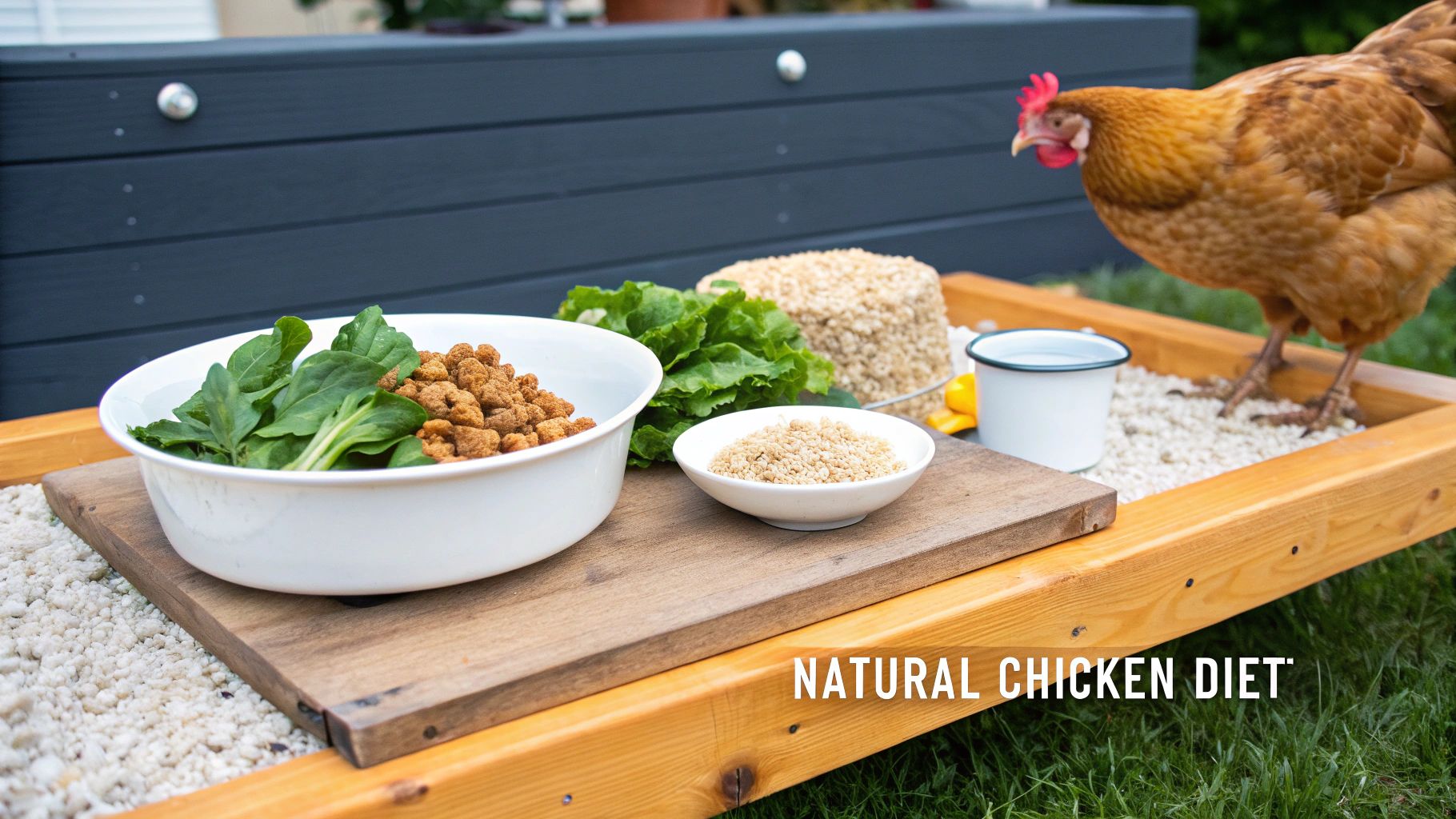
A truly effective natural diet isn't about tossing out the commercial feed. In fact, it's the opposite. The best approach uses a high-quality feed as a reliable nutritional safety net and then layers on other beneficial foods. This balanced strategy ensures your chickens get everything they need while enjoying a varied, stimulating diet.
Here's a quick look at the main food groups that make up a healthy, natural diet for your chickens.
| Food Group | Primary Role in Diet | Examples |
|---|---|---|
| Commercial Feed | The nutritional foundation; provides a complete and balanced mix of protein, vitamins, and minerals. | Layer pellets or crumbles, grower feed for younger birds. |
| Safe Kitchen Scraps | A source of extra vitamins, minerals, and enrichment. Reduces food waste. | Leafy greens, vegetable peels, cooked rice, oats. |
| Foraged Foods | Encourages natural behaviors; provides access to fresh greens, insects, worms, and seeds. | Dandelions, clover, grass, beetles, earthworms. |
| High-Protein Treats | A concentrated boost of protein and calcium for feather growth and strong eggshells. | Black Soldier Fly Larvae (BSFL), mealworms, scrambled eggs. |
This table gives you a simple framework to follow, making it easier to see how all the pieces fit together to create a complete and nourishing diet for your flock.
A common mistake new chicken keepers make is getting a little too generous with treats and scraps. It’s easy to do! But this can dilute the nutritional value of their main feed. A great rule of thumb is the 90/10 rule: make sure about 90% of their diet is their complete feed, with the remaining 10% coming from all the other fun stuff.
You can even incorporate foods straight from your own backyard. It’s a fantastic way to provide fresh, organic options while knowing exactly where their food comes from. To learn more, check out our guide on what to grow to feed chickens. This blueprint is flexible enough to adapt to your setup while ensuring your flock's foundational needs are always met.
Understanding Your Flock's Nutritional Needs
Before we can even talk about what to feed your chickens, we have to understand why. Think of it this way: you wouldn't put diesel in a regular car. The same logic applies to your flock. Getting their diet right starts with knowing the three cornerstones of their health, and once you get a feel for them, feeding naturally becomes second nature.
These three essentials are protein, calcium, and energy. It’s not about memorizing complicated formulas, but more about developing an intuition for what your birds need at different stages of their lives. When you know what each component does, you can look at your flock and know exactly how to support them.
The Building Blocks of a Healthy Hen
First up, protein. This is literally the building material for your chicken's body. Everything from muscle and tissue to those beautiful, glossy feathers is made of protein. A chicken is constantly rebuilding and repairing itself, and protein provides all the raw materials to get the job done.
You’ll notice this most in young, growing birds. A chick's starter feed is packed with 20-22% protein to fuel that explosive growth from a fluffball into a full-grown pullet. Once they're adults, laying hens do just fine with a bit less, around 16-18%, which is the perfect amount to maintain their own bodies while also producing those delicious, protein-packed eggs.
Did you know a chicken's feathers are about 85% protein? That's why during a molt—when they drop old feathers and grow a new set—their need for protein goes through the roof. This is the perfect time to give them a boost with high-protein natural treats.
The Scaffolding for Strong Bones and Eggs
If protein is the building material, think of calcium as the framework that holds everything up. It’s crucial for a strong skeleton, but where it really shines is in egg production. A single eggshell is made of about 95% calcium carbonate. That's a huge amount for a hen to produce day after day.
If a hen doesn't get enough calcium from her diet, her body will start pulling it from her own bones to make those shells. Over time, this can leave her weak and brittle. This is exactly why you'll often see a small dish of crushed oyster shell offered "free choice" in a chicken coop—hens instinctively know when they need a little extra and will peck at it as needed. Thin, soft, or completely shell-less eggs are a dead giveaway that your flock needs more calcium, fast.
Another great way to supplement is with high-calcium treats. USA-grown Black Soldier Fly Larvae (BSFL) are a fantastic natural option here. For instance, Pure Grubs offer up to 85% more calcium than mealworms, which goes directly toward building stronger eggshells. Strong shells are a big deal; breakage can account for 5-10% of all egg losses in commercial flocks. On the homestead level, keepers report 20-30% better feather growth when supplementing with high-protein insects. With U.S. chicken production reaching 52 billion pounds in 2022, smart feeding is more important than ever. You can learn more about the poultry feed market on IMARC Group.
The Fuel for Daily Chicken Activities
Finally, we have energy. This is the gas in their tank. Sourced mostly from carbohydrates and fats in grains like corn, oats, and wheat, energy is what powers all of their daily chicken business—scratching in the dirt, dust bathing, foraging for bugs, and simply staying alive.
A flock's energy needs change with the seasons and how active they are.
- In winter: Chickens burn a lot more calories just to stay warm. This is when energy-dense treats like cracked corn are a welcome addition to their diet.
- In summer: Their energy needs might dip a little, but they still need a steady supply to keep up with laying and foraging.
Grasping these three pillars—protein for building, calcium for structure, and energy for fuel—is what separates a chicken keeper from a true chicken tender. It allows you to observe your flock and make smart, intuitive choices that give them exactly what they need to thrive.
A Guide to Safe and Wholesome Natural Foods
One of the best parts of keeping chickens is getting to supplement their diet beyond their standard feed. It's a fantastic way to enrich their lives, boost their nutrition, and let them behave like, well, chickens! Thinking about what to feed your flock naturally means learning which foods are a green light and which ones you need to steer clear of.
Think of yourself as the flock's personal chef. Just as you wouldn't want to eat the same meal every day, your birds will be healthier and happier with some variety. This guide breaks down the safe and wholesome options to help you feed them with confidence.
First, it’s important to remember that a chicken's needs change dramatically as it grows.
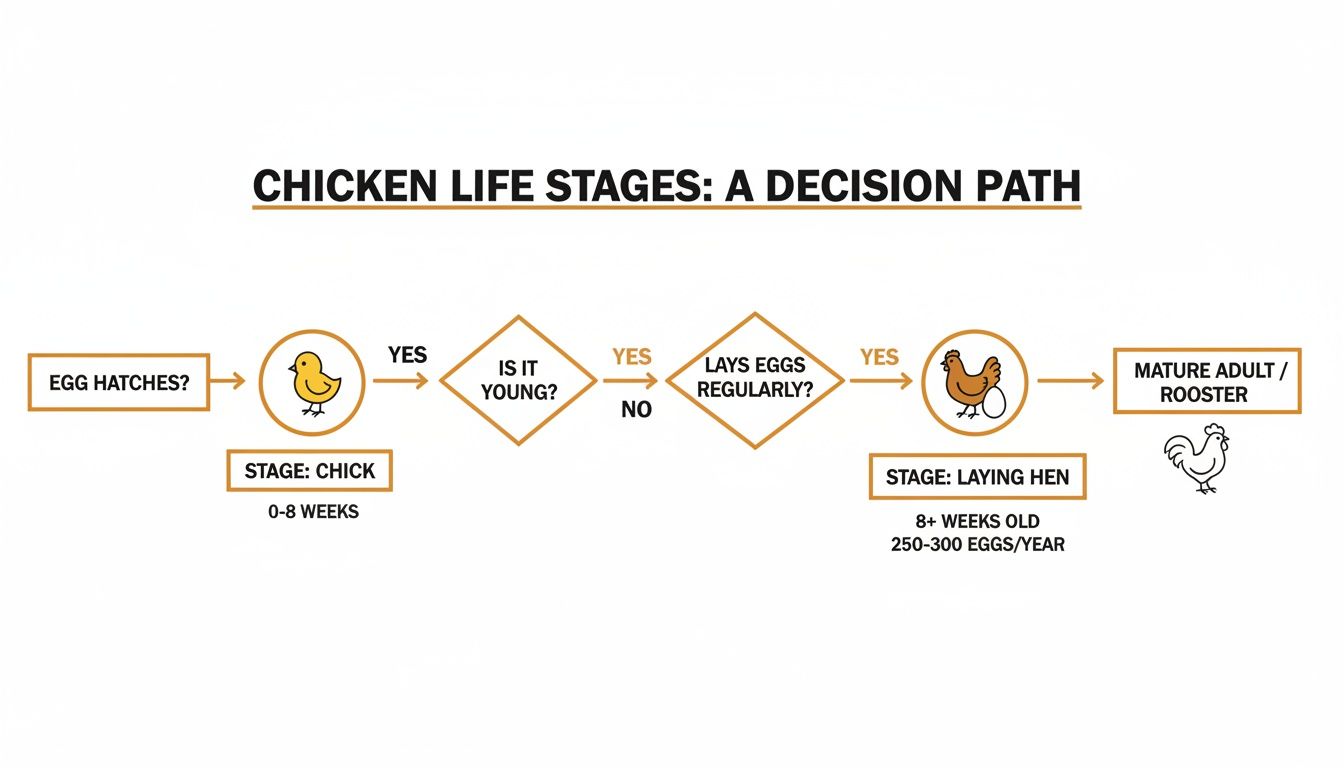
This flowchart gives you a great visual of how they go from needing a high-protein starter feed for growth to a calcium-heavy layer feed for strong eggshells once they mature.
Grains and Seeds for Energy
Grains are the ultimate fuel source for your chickens, especially in winter when they burn extra calories just to stay warm. Tossing some grains into their run also satisfies that deep-seated instinct to scratch and peck, keeping them busy for hours.
- Whole Grains: Oats, wheat, and barley are all excellent. You can offer them whole or cracked to encourage that natural foraging behavior.
- Corn: A classic for a reason! Cracked corn is an energy powerhouse, but because it's so high in carbs, it's best saved as a special treat, especially on cold days.
- Seeds: Black oil sunflower seeds are a flock favorite, packed with healthy fats and protein. Flax seeds are another fantastic choice, adding a dose of omega-3 fatty acids that can even make their way into the eggs.
Leafy Greens and Vegetables
Think of fresh greens and veggies as a vitamin-packed salad bar for your flock. They deliver the essential vitamins and minerals needed for a strong immune system and those beautifully rich, orange egg yolks.
Ever wonder what makes an egg yolk a deep, vibrant orange? It's all about a hen's diet. The color comes from natural pigments called carotenoids, found in abundance in leafy greens, weeds like dandelions, and even marigold petals. A richly colored yolk is a great sign of a well-rounded, nutritious diet.
Most greens that you'd eat are great for them, too. Kale, Swiss chard, and lettuce are fantastic. They’ll also happily devour kitchen scraps like carrot peels, zucchini ends, and leftover cooked squash.
Fruits as Occasional Treats
Fruits are basically candy to a chicken—they absolutely love them, but they’re high in sugar, so moderation is key. They're a wonderful source of hydration on hot summer days and are loaded with antioxidants.
A few great options include:
- Berries (strawberries, blueberries, and raspberries are a huge hit)
- Melons (watermelon is especially great for hydration)
- Apples (just make sure to remove the core and seeds first)
- Bananas (they'll even eat the peel!)
Whenever you introduce a new food, start small to make sure it doesn't upset their digestion. If you want a longer list of ideas, check out this great guide on good snacks for chickens.
Foraged Foods: Insects and Worms
Nothing beats what chickens find on their own. Letting your flock roam and forage gives them access to the most natural diet possible: a protein-rich buffet of insects, worms, seeds, and fresh greens. This isn't just about food; it's essential for their mental and physical health.
Chickens are born omnivores with a powerful instinct to hunt for bugs. They will go wild for:
- Earthworms
- Crickets and grasshoppers
- Beetles and grubs
- Slugs
This "live" protein is nature's perfect supplement, full of the essential amino acids they need for healthy feather growth and overall vitality. If your flock doesn’t have much space to forage, you can still give them this benefit with high-quality dried insect treats. They deliver that same protein punch in a safe, easy-to-feed form.
Why Black Soldier Fly Larvae Are a Game-Changer for Your Flock
When you're trying to feed your chickens a natural diet, it’s easy to get the basics right—grains, greens, and kitchen scraps. But if you want to see your flock truly thrive, the secret often lies in the treats. This is where Black Soldier Fly Larvae (BSFL) come in, and frankly, they blow most other options out of the water.
Let's not forget that our modern chickens are descendants of junglefowl. These birds spent their days scratching in the dirt, hunting for insects. That instinct is still deeply ingrained in your flock today. Tossing them a handful of BSFL doesn't just give them a snack; it lets them tap into that ancient, satisfying behavior. It’s enrichment and nutrition all in one.
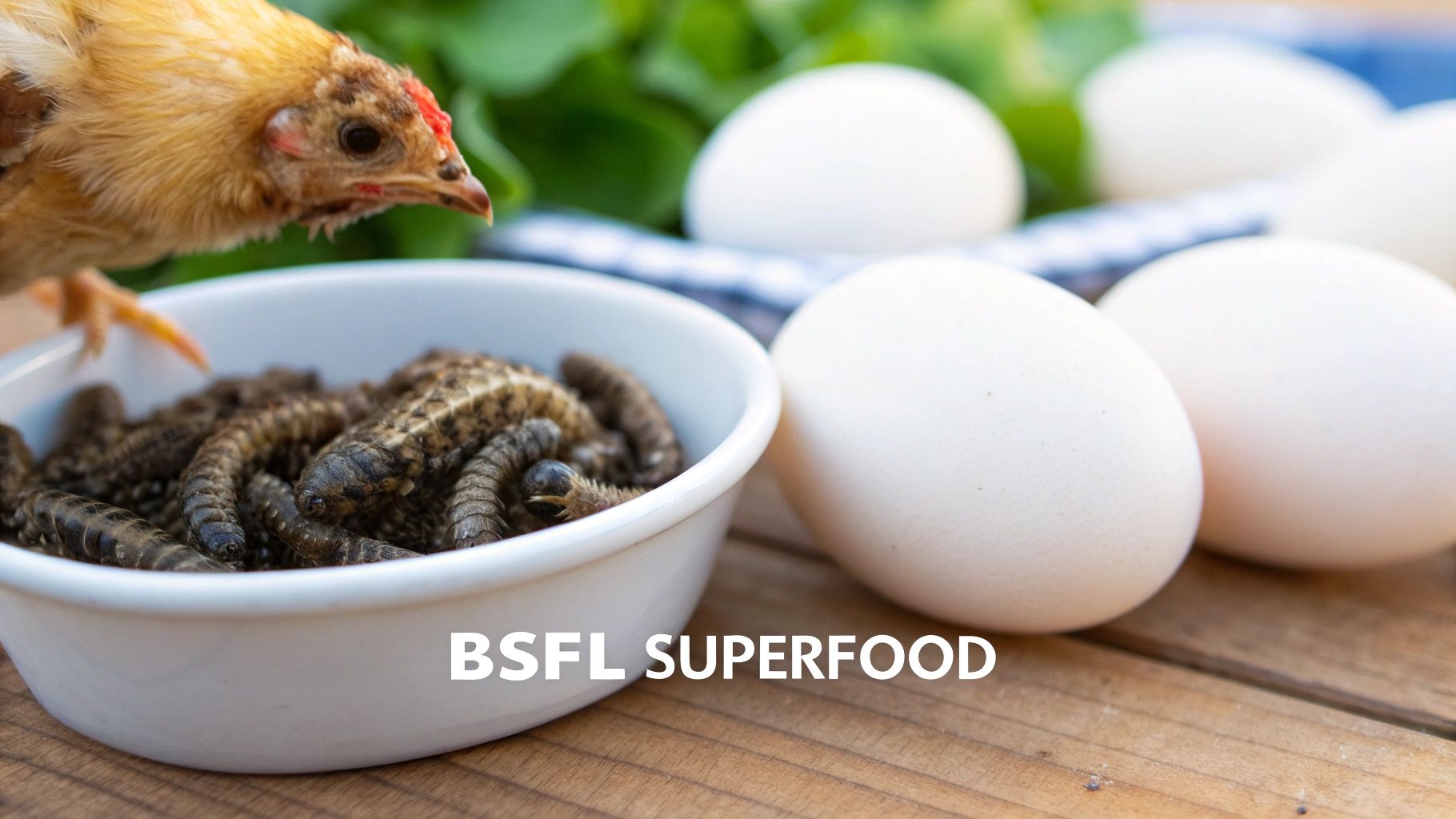
You can see it right here—even a tiny chick knows exactly what to do with these nutrient-packed grubs. It’s pure instinct.
The Unbeatable Calcium Advantage
While the protein in BSFL is fantastic for feather growth and overall health, their real superpower is calcium. This is the single biggest reason to choose them over the ever-popular mealworms.
Think about what a laying hen does every single day. She has to create a perfectly hard eggshell, and that requires a massive amount of calcium. If she doesn't get enough from her diet, her body will start pulling that calcium straight from her bones, which can lead to serious health problems down the road. That's why we so often supplement with oyster shells.
BSFL provides that critical mineral in a way chickens can easily absorb.
Black Soldier Fly Larvae can contain up to 50 times more calcium than mealworms. That’s not a typo. This huge difference translates directly into stronger eggshells, meaning fewer thin, cracked, or broken eggs in your nesting box.
By adding BSFL to their diet, you’re not just giving them a treat; you're actively supporting their skeletal health and ensuring they can lay top-quality eggs for years to come.
Choosing a Safe and Trustworthy Source
Not all bugs are created equal. As BSFL have grown in popularity, the market has become flooded with cheap, imported options that can have questionable origins. When you’re focused on a natural diet, where the food comes from is just as important as what it is. This is especially true when you're feeding laying hens, since you don't want contaminants ending up in the eggs your family eats.
This is why sticking with a reputable, USA-grown source is so critical. Brands like Pure Grubs give you a level of confidence and safety you just can't get with mystery imports.
- USA-Grown and Processed: The whole process happens right here in the United States, giving you a short, transparent supply chain.
- FDA and AAFCO Compliant: They're produced in facilities that meet strict safety standards for animal feed.
- Rigorously Tested: Every single batch is checked for nasty stuff like lead, arsenic, mercury, and cadmium, so you know you're giving your flock a clean, safe product.
Choosing a trusted brand means you’re providing a genuinely wholesome supplement. You can dive deeper into the science behind dried Black Soldier Fly Larvae if you want to learn more.
A Smart Investment in Flock Health
Bringing high-calcium BSFL into your flock's routine is a small change that delivers a huge payoff. In fact, research shows this simple switch can improve eggshell strength by a staggering 85% compared to mealworms. That makes a real dent in the roughly 8% of eggs that get cracked annually. With U.S. poultry sales hitting $70.2 billion, the health of every bird and the quality of every egg is something keepers at all levels are focused on.
Ultimately, feeding your chickens high-quality BSFL is an investment in their health, feather quality, and egg production. It's a simple, natural way to round out their diet and help them thrive from the inside out.
Building a Practical Natural Feeding Routine
Alright, you know all the healthy foods chickens can eat. Now for the real trick: how do you pull it all together into a daily routine that actually works? The goal here isn't some complicated, rigid schedule that stresses you out. It's about finding a simple, flexible rhythm that keeps your flock thriving.
Think of it like this: your foundation is solid, but the fun stuff on top can change. This is where the 90/10 rule comes in, and it's your best friend for natural feeding.
The 90/10 Rule: The Secret to a Balanced Flock
Aim for 90% of your chickens' diet to come from their complete, balanced commercial feed. The other 10% is where you can have fun with healthy treats, kitchen scraps, and foraged goodies. This simple guideline ensures they never miss out on essential nutrients.
The Foundation: Free-Choice Feed
The easiest and most reliable way to handle that core 90% is to offer a high-quality layer feed free-choice. This just means you keep a feeder full and available to them all day long. Chickens are surprisingly good at self-regulating, and this approach ensures that even the most timid hen gets her fill without being pushed away by a bossier flock mate.
When their main meal is always there, you don't have to worry. You can then make the fun stuff—like greens and grubs—a special event in the afternoon. It stops them from gorging on snacks first thing in the morning and ignoring the nutrient-packed feed they really need.
A pro-tip I learned the hard way: always put your feeder in a sheltered spot, like inside the coop or under a covered part of the run. This keeps the feed dry and fresh, which is critical for preventing mold and spoilage.
Structuring Your Daily and Weekly Treats
With the main course taken care of, you can start planning the fun 10%. I've found the best time to offer treats is in the afternoon. By then, your flock has spent hours eating their proper feed, so a little something extra won't throw their nutrition out of whack.
Here’s a sample schedule to give you an idea. Don't treat it as gospel—it's just a starting point to show you how easy it is to rotate different foods.
Sample Weekly Feeding Schedule
| Day | Afternoon Treat (Following the 10% Rule) |
|---|---|
| Monday | A handful of leafy greens (kale, chard) and vegetable peels. |
| Tuesday | A sprinkle of high-calcium Pure Grubs scattered to encourage foraging. |
| Wednesday | Leftover cooked oatmeal or rice mixed with a few herbs from the garden. |
| Thursday | A small amount of seasonal fruit, like watermelon chunks or berries. |
| Friday | Another serving of Pure Grubs to boost protein and calcium before the weekend. |
| Saturday | A "forager's mix" of scratch grains and sunflower seeds tossed in their run. |
| Sunday | Leftover salad greens or other chicken-safe scraps from your weekend meals. |
Again, this is just a template. If you happen to have extra veggie scraps on a Tuesday, go for it! The real key is variety and moderation.
Adapting Your Routine to the Seasons
A truly great feeding plan isn’t static; it flexes with the seasons. Your flock’s needs change throughout the year, and a few small tweaks can make a massive difference in their health and happiness.
-
Winter Adjustments: When the temperature drops, chickens burn a ton of calories just staying warm. This is the time to bring in more energy-dense foods. A late-afternoon snack of cracked corn acts like a slow-burning log on a fire, helping them generate heat through the long, cold night. I also like to add an extra sprinkle of protein-rich grubs to help them cope with the stress of winter.
-
Summer Adjustments: In the dead of summer, it’s all about hydration. Water-rich treats are a lifesaver. Think chilled watermelon, cool cucumber slices, and other juicy fruits. A fun trick is to freeze berries or chopped greens in an ice cube tray—it creates a refreshing "peck block" that keeps them both hydrated and entertained.
By thinking through your routine and making these simple seasonal shifts, you build a system that truly supports your flock year-round. It takes the guesswork out of natural feeding and turns it into a simple, rewarding part of your day.
Common Questions About Natural Chicken Feeding
Stepping into the world of natural chicken feeding is a fantastic journey, but it’s bound to come with a few questions. That’s perfectly normal. Every seasoned chicken keeper has been there, wondering if they’re getting it right and trying to solve the little puzzles that pop up.
Think of this section as a chat with an experienced friend, here to give you clear, straightforward answers to the most common head-scratchers. Let's tackle these questions together so you can feel confident you're giving your flock the very best.
Can Chickens Live on Kitchen Scraps and Foraging Alone?
This is easily one of the most common questions, and it’s a crucial one. While letting your flock live entirely off the land and your leftovers sounds like the ultimate natural approach, it's a risky strategy that I wouldn't recommend.
Chickens absolutely love the variety and excitement that comes from foraging and pecking at kitchen scraps. It keeps them happy and busy. But these foods alone just don't pack a complete nutritional punch.
Imagine trying to thrive on just salads and whatever snacks you happen to find. You might get by for a bit, but you'd eventually feel the effects of missing key nutrients. It's exactly the same for your flock.
A high-quality commercial layer feed should always be the foundation of their diet, making up about 90% of their total intake. This is their nutritional safety net, guaranteeing they get the right balance of protein, vitamins, and minerals they need for strong bodies and consistent egg-laying.
Scraps and foraged goodies are the perfect supplement—the "fun food"—but they can't replace that solid, balanced base.
How Do I Know If My Chickens Are Getting Enough Calcium?
Your hens will give you a very clear, unmistakable signal if their calcium is running low: just look at their eggs. Eggshell quality is the single best indicator you have. If you start seeing shells that are thin, soft, or even rubbery, you've got a calcium problem.
The fix is pretty simple. First, make sure their main food is a "layer" feed, which is specifically formulated with extra calcium for this very reason. Second, always offer a separate, small dish of crushed oyster shells. Hens have an incredible instinct and will take what they need, when they need it.
For an even bigger boost, especially when they're laying heavily or going through a molt, supplementing with a high-calcium treat is a brilliant move. This multi-pronged approach ensures your girls can produce beautiful, strong eggs without having to pull calcium from their own bones.
Expert Tip: For a powerful calcium boost, consider a high-quality Black Soldier Fly Larvae treat. For example, Pure Grubs offer a significantly higher calcium content than mealworms, directly contributing to the formation of stronger, more resilient eggshells and supporting the hen's overall skeletal health.
Is It Safe to Feed Chickens Insects From My Yard?
Yes, but with a big asterisk. Chickens are born insect hunters, and letting them patrol your yard for tasty bugs is a fantastic source of protein and enrichment. It’s what they were born to do!
However, the safety of those yard snacks is entirely dependent on the safety of your yard itself.
If you treat your lawn or garden with any pesticides, herbicides, or chemical fertilizers, then foraging is off the table. Those chemicals can be toxic to chickens and can even find their way into the eggs you eat.
For a completely worry-free way to satisfy their natural craving for bugs, it's always best to offer a controlled, guaranteed-safe source. A treat like USA-grown, heavy-metal-tested BSFL gives you all the benefits of insect protein without any of the risk.
How Many Pure Grubs Should I Feed My Chickens Daily?
This brings us back to the golden rule of chicken treats: the 90/10 rule. It’s a simple concept that keeps your flock’s nutrition on track. About 90% of their diet should come from their complete feed, while all treats combined should make up no more than the other 10%.
So, when it comes to Pure Grubs, a great guideline is to offer about 1-2 tablespoons per chicken per day. That’s the sweet spot—enough to deliver a meaningful boost of protein and calcium without throwing their main diet out of whack.
You can also make treat time more interesting by switching up how you offer them:
- Scatter Them: Tossing the grubs around their run gets them scratching and searching, just like they would in the wild.
- Hand-Feed Them: There’s no better way to build a bond with your flock than offering a tasty treat right from your hand.
- Mix Them In: On a chilly morning, try stirring them into some warm oatmeal for a cozy, energy-packed meal.
Following this simple guideline lets you give them a healthy, delicious supplement they'll go crazy for, all while keeping their diet perfectly balanced.
Ready to give your flock the ultimate natural treat? Pure Grubs offers USA-grown Black Soldier Fly Larvae packed with the essential calcium and protein your chickens need for stronger eggs and vibrant health. Provide a safe, clean, and delicious supplement they'll adore.