

The Ultimate Guide to Good Snacks for Chickens
We all love spoiling our chickens, but the best treats are the ones that actually do them some good. Think of snacks as a way to add extra nutritional value without messing up their main diet. Things like leafy greens, protein-packed insects, and some fruits are fantastic choices, but only in moderation.
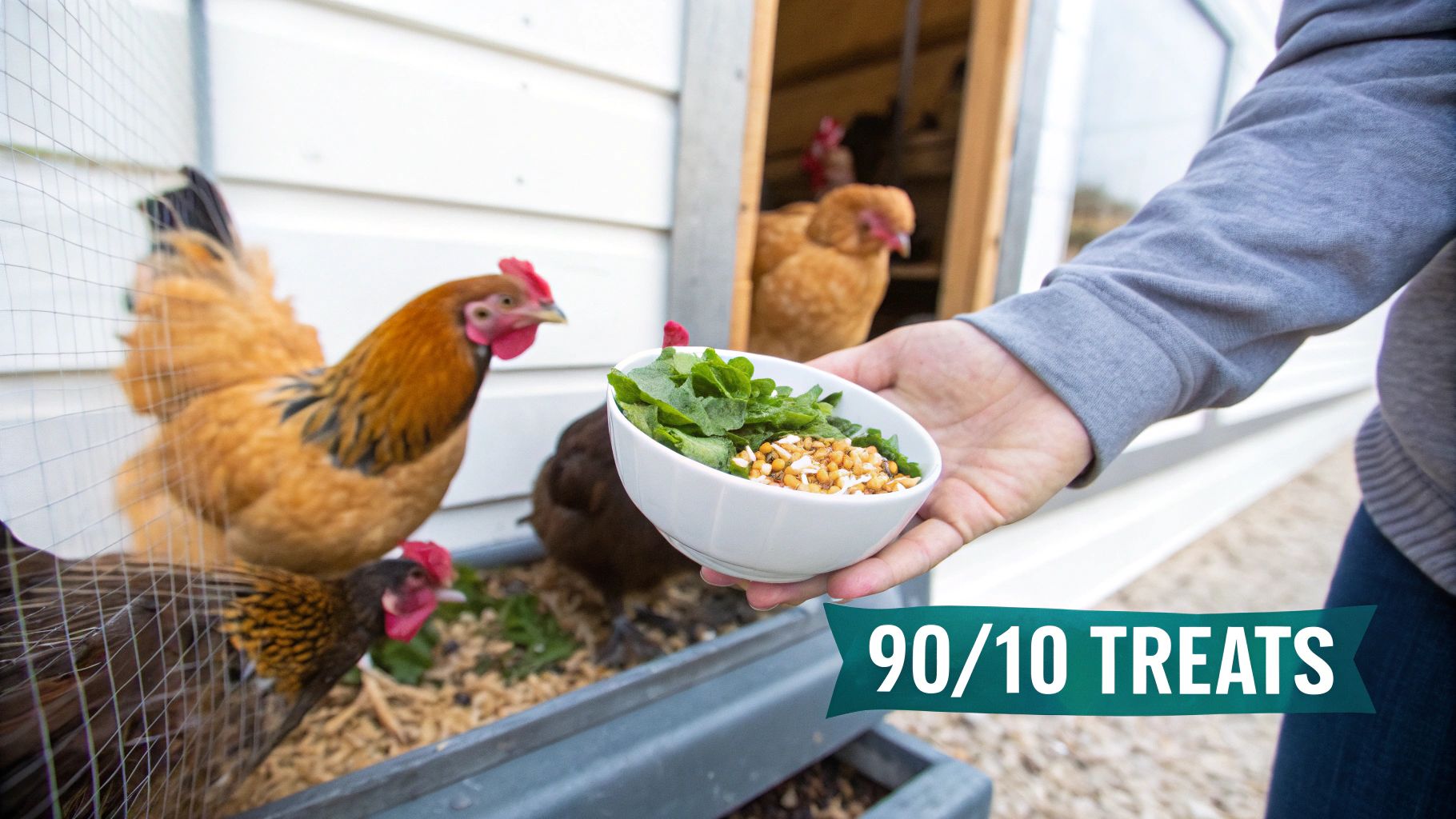
The most important rule to remember is the 90/10 Rule: 90% of what your chickens eat should be their balanced, complete layer feed. The other 10% is where the fun snacks come in. Sticking to this ensures they get all the essential nutrients they need to stay healthy, while still enjoying a little variety.
What Makes a Good Snack for Chickens
It’s so tempting to share your leftovers with your flock, but not all human snacks are good for chickens. There's a big difference between a snack that's just "safe" for them to eat and one that's genuinely "good" for them. A truly good snack does more than just make your birds happy—it actively supports their health and encourages their natural instincts.
Think of snacks as supplements, not meal replacements. They’re also a fantastic excuse to hang out with your flock, get a good look at them up close to check their health, and give them something interesting to do. Tossing a handful of healthy treats into their run gets them scratching, pecking, and foraging, which are all instinctive behaviors that keep them active and engaged. For a deeper dive into what their core diet should look like, check out our guide on healthy food for chickens.
Beyond Just a Treat: The Purpose of a Snack
The best snacks serve a real purpose. When your flock is going through a tough molt, a protein-heavy snack can make a world of difference in helping them regrow their feathers. On a scorching summer day, hydrating treats like watermelon can help prevent heat stress.
Understanding this turns you from just a chicken owner into a truly great chicken keeper. It's no surprise that as more people get into raising their own backyard flocks, the focus on high-quality care has grown. This trend is part of a bigger picture; the global poultry meat market hit a staggering USD 160.62 billion in 2024, all driven by our demand for quality protein. You can discover more insights about this growing market on Renub Research.
The 90/10 Rule is your most important guide. Over-treating, even with healthy options, can dilute the precise nutritional balance of their main feed, leading to potential health issues like obesity or nutrient deficiencies.
To make things easier, I've put together a quick guide to the best types of snacks you can offer your flock.
Quick Guide to Healthy Chicken Snack Categories
This table breaks down the best snack categories, what they offer your chickens, and how often you should be handing them out.
| Snack Category | Primary Benefits | Examples | Feeding Frequency |
|---|---|---|---|
| Leafy Greens & Veggies | Vitamins, minerals, hydration, and fiber | Kale, spinach, pumpkin, cucumbers | 3-4 times per week |
| Fruits | Natural sugars for energy, vitamins, hydration | Berries, melon, apples (no seeds) | 1-2 times per week |
| Grains & Seeds | Energy, healthy fats, encourages foraging | Oats, cracked corn, sunflower seeds | 2-3 times per week |
| High-Protein Sources | Supports egg laying, molting, and muscle health | BSFL (Pure Grubs), scrambled eggs | 2-3 times per week |
Use this as a starting point to add healthy, enriching variety to your chickens' diet without overdoing it. A happy flock is a healthy flock
The Best Fruits and Vegetables for Your Flock
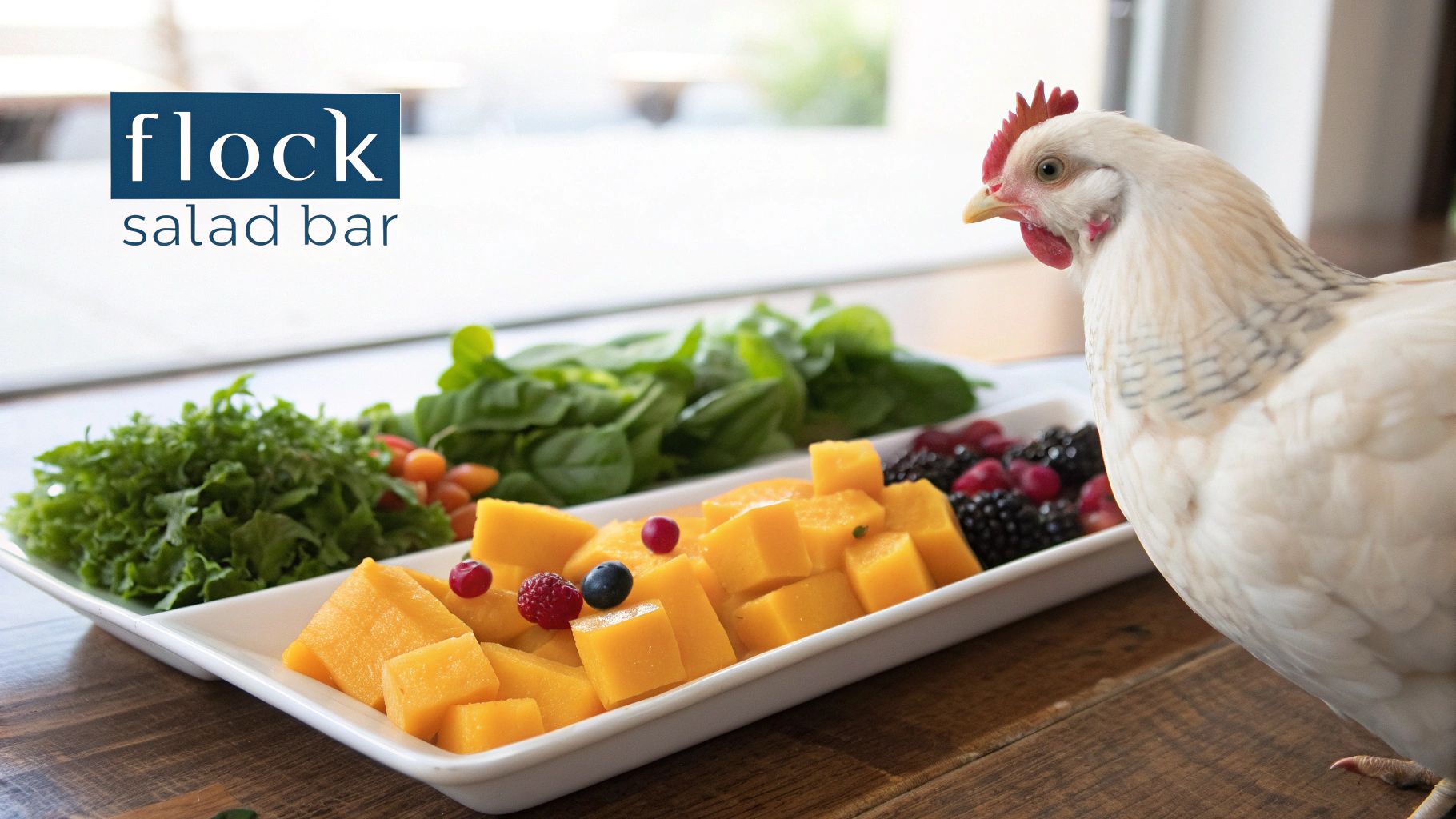
Think of treat time for your flock like a trip to a five-star salad bar. Just like people, chickens get a huge health boost from fresh produce. Offering a variety of fruits and vegetables is a fantastic way to give them essential vitamins, minerals, and extra hydration. Plus, it keeps them busy and happy.
Giving your flock these natural goodies isn't just about supplementing their diet; it's also a great way to encourage their instinct to forage and peck. The trick is to remember that moderation and a little bit of prep work are your best friends here. Let's dig into some of the best options you can grab right from your own kitchen or garden.
Top Vegetable Picks
Veggies should be a staple in your flock's treat routine. They're packed with nutrients without all the sugar you find in fruit, making them a fantastic, healthy addition to their diet. You'll find that many common garden vegetables are absolute favorites with chickens.
Here are a few flock-approved picks:
- Leafy Greens: Things like kale, spinach, and Swiss chard are loaded with vitamins A, C, and K, not to mention calcium. You can chop them up and mix them into a mash, or my personal favorite: hang a whole bundle in the run. It becomes a fun, edible piñata that keeps them entertained for ages.
- Pumpkin and Squash: These are true nutritional powerhouses, full of vitamins, antioxidants, and fiber. Even the seeds are beneficial, acting as a natural dewormer. Just slice one in half—raw or cooked—and let them go to town.
- Cucumbers and Zucchini: With a water content of over 95%, these are your secret weapon for scorching summer days. A few chopped-up pieces can make a real difference in keeping your flock cool and hydrated when the temperatures climb.
- Broccoli and Cauliflower: These cruciferous veggies are great for fiber and vitamins. You can serve them raw or lightly steamed. Just be sure to break them into smaller, bite-sized florets so they’re easy to manage.
A quick pro-tip: Always chop tougher vegetables into small, manageable pieces to prevent any risk of choking. This is especially important for fibrous items like broccoli stems. A minute of prep work makes snack time completely safe and enjoyable.
And remember, whenever you introduce a new food, start slow to see how their systems handle it. Variety is the spice of life, even for chickens, so rotating through different veggies will give them a broad range of nutrients and keep things interesting.
Favorite Fruity Treats
Fruits are an absolute delicacy for chickens, but because of their high natural sugar content, they should be treated like dessert. Think of them as a special, once-in-a-while treat, maybe a couple of times a week at most.
When served correctly, fruits are a wonderful source of quick energy and vitamins.
- Berries: Blueberries, strawberries, and raspberries are a huge hit. They're packed with antioxidants and are small enough for chickens to eat whole without any prep. Tossing a handful into the run is a great way to get them scratching and foraging.
- Melons: On a hot day, nothing beats watermelon, cantaloupe, or honeydew. The high water content is fantastic for hydration. I often give my flock the leftover rind to peck at—it provides a cooling snack and keeps them busy for hours.
- Apples: A fantastic source of vitamins, but there's one critical rule: always remove the seeds. Apple seeds contain trace amounts of cyanide, which can be harmful. Just core the apple, chop it into small pieces, and you’re good to go.
Healthy Grains and Seeds Chickens Love
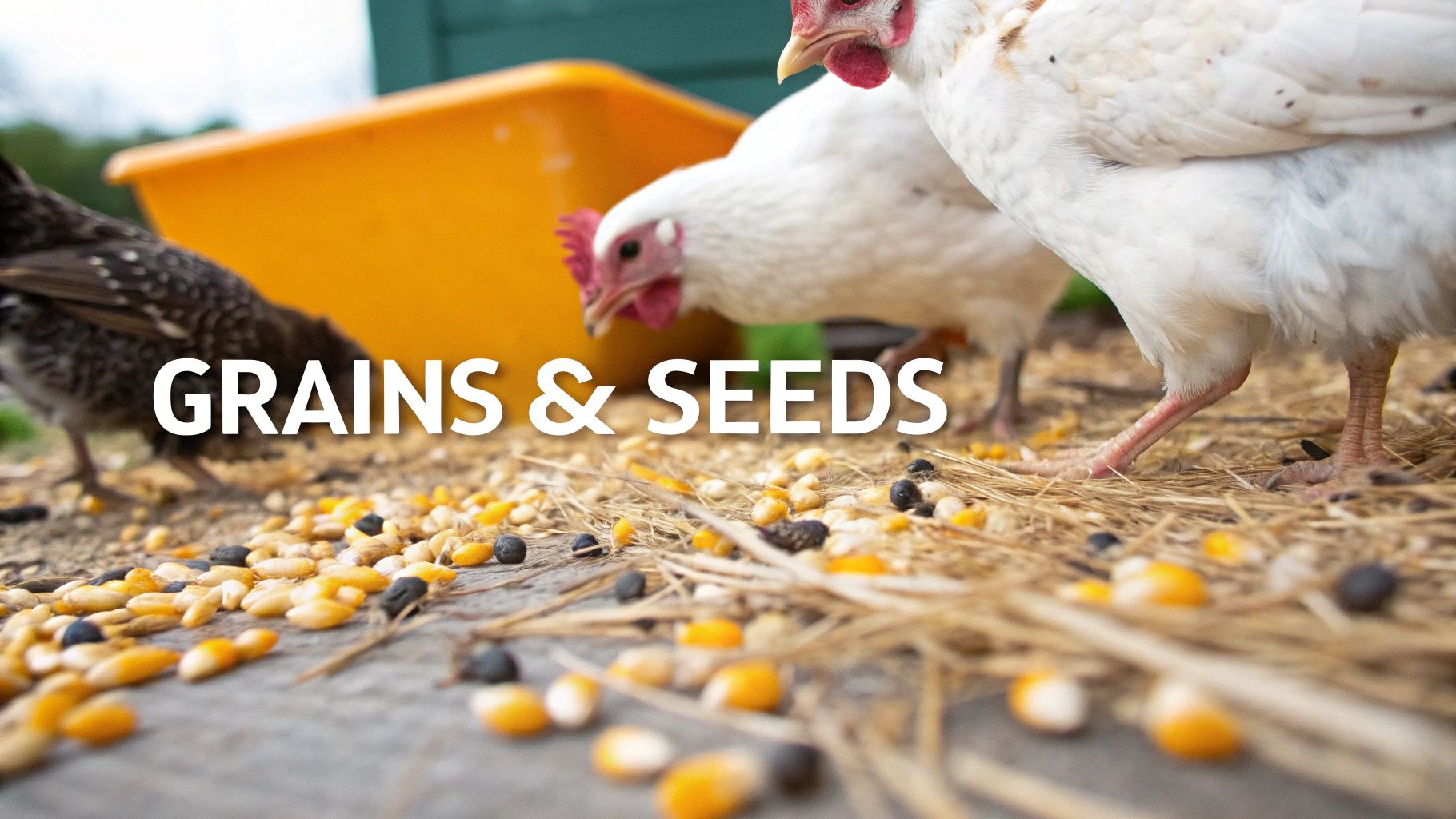
While fruits and veggies are great for vitamins and hydration, think of grains and seeds as the energy powerhouses for your flock. Tossing a handful into the run does more than just give them a calorie boost—it kicks their natural scratching and foraging instincts into high gear. It's a treat and an activity all in one.
These are the snacks that really shine during the cold winter months. A little extra fuel helps your birds generate the body heat they need to stay warm. The key, of course, is moderation. You don't want them filling up on high-carb grains instead of their balanced daily feed.
Top Grain and Seed Choices
When picking grains and seeds, go for options that offer more than just empty calories. These are some of the best good snacks for chickens because they pack a real nutritional punch.
Here are a few flock-favorites you can't go wrong with:
- Cooked Oats: Nothing makes my flock happier on a frosty morning than a pan of warm, plain oatmeal. Oats are a good source of fiber and magnesium. Just be sure to serve them cooked and unsweetened, as raw oats can be tough on their digestion.
- Cracked Corn: This is the classic winter treat for good reason. Corn is pure energy, helping your chickens stay warm through cold nights. Scattering a small amount in the late afternoon gives their metabolism something to work on overnight.
- Sunflower Seeds: Black oil sunflower seeds are the way to go. They're loaded with healthy fats and protein, which are fantastic for feather health, especially during the annual molt. Their shells are also thinner and easier for most birds to crack.
- Flax Seeds: If you want to give your flock a dose of omega-3 fatty acids, flax seeds are a perfect choice. These healthy fats lead to beautiful, glossy feathers and can even enrich the eggs your hens lay.
Always remember that these are just treats. Grains and seeds should never take the place of a high-quality, complete layer feed. That main feed is carefully formulated to provide the essential protein and calcium your flock needs for daily health and steady egg laying.
By adding these energy-dense snacks into your routine, you can support natural behaviors, give a much-needed boost in winter, and bring some exciting variety to their diet. It’s all about balance.
High-Protein Snacks for Strong Feathers and Eggs
While veggies give your chickens vitamins and grains provide energy, protein is the real workhorse nutrient. Think of it as the core building block for pretty much everything your flock does—from growing strong, glossy feathers to laying those beautiful, nutritious eggs every morning.
This becomes especially important during certain times of the year. When your chickens go through their annual molt, they are replacing thousands of feathers. Since feathers are made of over 85% protein, this process is incredibly taxing on their bodies. Giving them a protein boost during this time is one of the best things you can do to help them get through it quickly and comfortably.
Why Protein Is So Important
Without enough protein, you'll start to see problems pop up. Egg production might drop off, their feathers can look dull and ragged, and they can even become more susceptible to getting sick. This is why high-quality protein snacks aren't just a "treat" in the fun sense—they're a key part of keeping your flock healthy and thriving.
Some protein-packed snacks are simply better than others. Let's look at a few of the most popular options chicken keepers love.
- Scrambled Eggs: It sounds a little weird, I know, but feeding cooked eggs back to your chickens is a fantastic protein boost. Just be sure they’re fully cooked and don't have any salt or seasoning.
- Mealworms: A classic favorite. Chickens absolutely adore mealworms, and their high protein and fat content make them a great choice for training or just for fun.
- Black Soldier Fly Larvae (BSFL): These have quickly become the gold standard for insect treats, and for good reason. Their nutritional profile is simply a step above the rest.
The Superior Choice: Black Soldier Fly Larvae
While all of these are good options, Black Soldier Fly Larvae (BSFL) like Pure Grubs really pull ahead of the pack. They're loaded with protein—up to 40%—but their biggest advantage is something else entirely: calcium. BSFL contain up to 85 times more calcium than mealworms.
This is a game-changer for laying hens. All that extra calcium goes directly into making stronger eggshells, which means fewer broken or soft-shelled eggs. It also supports the hen's own skeletal health, which is a huge deal over her lifetime.
To help you see the difference, here’s a quick comparison:
Protein Snack Comparison: BSFL vs. Other Treats
| Nutrient | Black Soldier Fly Larvae (BSFL) | Mealworms | Scrambled Eggs |
|---|---|---|---|
| Protein | Up to 40% | Approx. 50% | Approx. 13% |
| Fat | Approx. 35% | Approx. 25% | Approx. 11% |
| Calcium | Very High (up to 85x more than mealworms) | Very Low | Moderate |
| Calcium:Phosphorus Ratio | Excellent | Poor | Good |
As you can see, while mealworms have a bit more protein, their poor calcium content is a major drawback. BSFL deliver that perfect combination of high protein and exceptional calcium that laying hens need.
Plus, when you choose USA-grown BSFL like Pure Grubs, you’re getting a product with much higher safety and quality standards. You can feel good knowing your flock is eating a clean, sustainably sourced snack, free from the worries that can come with imported treats.
Giving your flock the right protein snack is a simple adjustment that makes a massive difference. It supports them through tough times like molting and helps ensure you get a steady supply of perfect, strong-shelled eggs. For a deeper dive, you can learn about other high-protein foods for chickens in our guide.
Foods to Strictly Avoid Feeding Your Chickens
While it's a blast to share kitchen scraps with your flock, knowing what not to feed them is probably the most important part of being a responsible chicken keeper. Some everyday human foods are downright toxic to chickens and can lead to serious illness or even worse. A healthy flock starts with a safe diet.
It's a common myth that chickens can eat just about anything. The truth is, their digestive systems are a world apart from ours, and many of our favorite snacks can cause them serious harm. Making smart, safe choices about the treats you offer is non-negotiable for their well-being.
Top Toxic Foods for Chickens
Some foods are an absolute no-go. The chemical compounds in them can wreak havoc on a chicken's body, causing everything from digestive upset to neurological problems.
Here are some of the biggest offenders to keep far away from your coop:
- Avocado Pits and Skins: These parts of the avocado contain a toxin called persin. It’s incredibly dangerous for birds and can lead to respiratory failure and heart problems.
- Raw or Undercooked Beans: Don't ever toss raw beans into the run. Uncooked beans, particularly kidney beans, contain phytohaemagglutinin, a potent natural insecticide that can be fatal to chickens even in tiny amounts. If you're sharing beans, make sure they are thoroughly cooked, no exceptions.
- Chocolate and Caffeine: Your morning coffee grounds and chocolate bar wrappers have no place in the coop. Both contain theobromine and caffeine, which are stimulants that can cause severe cardiac issues in your flock.
- Green Potato Peels and Sprouts: Any green parts on a potato or its peel contain a toxin called solanine. This can cause both digestive and neurological damage. A plain, cooked potato is fine, but if it's green, it's garbage.
It's a simple rule of thumb: If you're questioning whether a food is safe, it's always best to err on the side of caution and skip it. A moment of hesitation can prevent a serious health problem for your flock.
Other Harmful Items to Avoid
Beyond the straight-up poisons, plenty of other foods can cause health issues over time. These items might not cause an immediate emergency, but they're terrible for your chickens' long-term health. Think of things that are overly salty, sugary, or heavily processed.
For a bit of perspective, the global snack food market was projected to hit USD 248.77 billion by 2025, and a big part of that growth is the human trend toward healthier options. You can read the full research about snack market trends and see how this focus on healthy choices is just as important for our animals.
This chart compares the protein value of a few popular healthy snacks.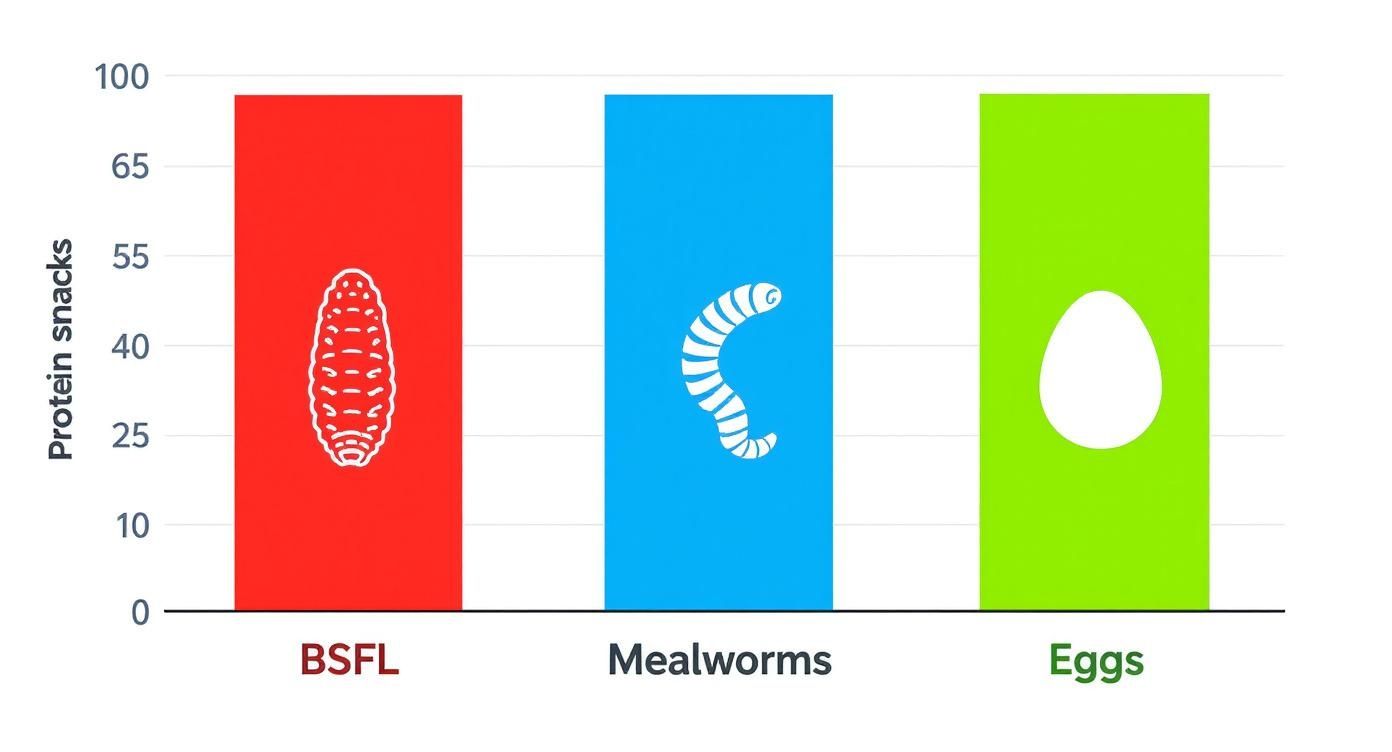
As you can see, things like BSFL, mealworms, and even eggs are all fantastic sources of protein.
Finally, and this should go without saying, never feed your chickens anything that's moldy or spoiled. The bacteria and mycotoxins in rotting food can make your entire flock incredibly sick. For a more exhaustive resource, check out our complete list of foods harmful to chickens.
Your Top Questions About Chicken Snacks
When you're raising chickens, you'll find that questions about treats come up all the time. We've gone over the good, the bad, and the ugly, but let's dive into some of the nitty-gritty details that every chicken keeper wonders about.
Think of this as your quick-reference guide for those "what if" moments. Getting these little things right is what turns a good treat into a great one, keeping your flock happy and healthy.
How Often Should My Chickens Get Snacks?
The golden rule here is the 90/10 rule. It’s simple: at least 90% of your flock’s diet should come from their complete layer feed. Treats and snacks should only make up the remaining 10%. For most of us, this looks like a small handful of goodies per chicken, maybe a few times a week.
Of course, life with chickens isn't always so formulaic. When your birds are going through a heavy molt, bumping up the high-protein treats can make a real difference in their feather regrowth. On a freezing winter evening, a little bit of cracked corn can give them the energy they need to stay warm through the night. The key is to watch your flock and adjust to their needs.
Can I Give Snacks to Baby Chicks?
It's tempting to spoil those adorable little fluffballs, but you'll want to hold off on treats until they're at least 4 to 6 weeks old. A high-quality chick starter feed is perfectly balanced to give them everything they need for healthy development. Their digestive systems are incredibly delicate at this stage, and introducing snacks too early can throw everything out of whack.
Once they're old enough, think small and soft. A tiny bit of scrambled egg or some finely minced leafy greens are great first tastes. Just remember to introduce new things one at a time and in very small amounts to see how they handle it.
What Are the Best Snacks for Chickens in Winter?
Winter is all about energy. As the temperature plummets, your chickens are burning way more calories just to keep their internal furnace running. With bugs and greens buried under snow, the right snacks can give them the extra fuel they need.
Some fantastic cold-weather options include:
- Cracked Corn: It’s a classic for a reason. This carbohydrate-heavy treat offers a quick burst of energy and is digested slowly, helping to generate warmth overnight.
- Suet Cakes: You can easily make your own with poultry-safe fats (like coconut oil or lard) mixed with seeds and grains. It’s a high-calorie treat that helps them maintain a healthy layer of fat.
- Warm Oatmeal: Nothing says comfort on a frosty morning like a warm bowl of plain, cooked oatmeal. It’s a welcome, energy-dense meal that they’ll absolutely love.
Don't forget about water! Chickens can get dehydrated just as easily in the cold. Always make sure they have access to fresh, unfrozen water, especially when you're giving them dry winter treats.
Is It Okay to Feed Chickens Our Kitchen Scraps?
Absolutely, but you need to be smart about it. Many of your kitchen leftovers can be wonderful good snacks for chickens. Things like veggie peels, the leafy tops of carrots, or leftover plain cooked pasta are a great way to cut down on food waste while enriching your flock’s diet.
The key is knowing what to avoid. Never toss them anything that’s super salty, sugary, or drenched in oils and sauces. And, as we've mentioned before, always steer clear of toxic foods like avocado pits and skin, raw beans, or green potato peels. A good rule of thumb: if a scrap is old enough to have mold, it's not safe for your flock.
Ready to give your flock the ultimate high-calcium, high-protein snack? Pure Grubs offers premium, USA-grown Black Soldier Fly Larvae that support stronger eggshells and vibrant feather growth. Treat your chickens to the best by visiting the Pure Grubs website.