

A Guide to Healthy Food for Chickens
When it comes to feeding your flock, the single best thing you can give them is a high-quality commercial feed that’s right for their age. While kitchen scraps and garden goodies are fantastic treats, that formulated feed is the true cornerstone of their health. It’s scientifically designed to provide the exact mix of protein, vitamins, and minerals they need for strong growth and, of course, lots of eggs.
Decoding Your Flock's Nutritional Blueprint
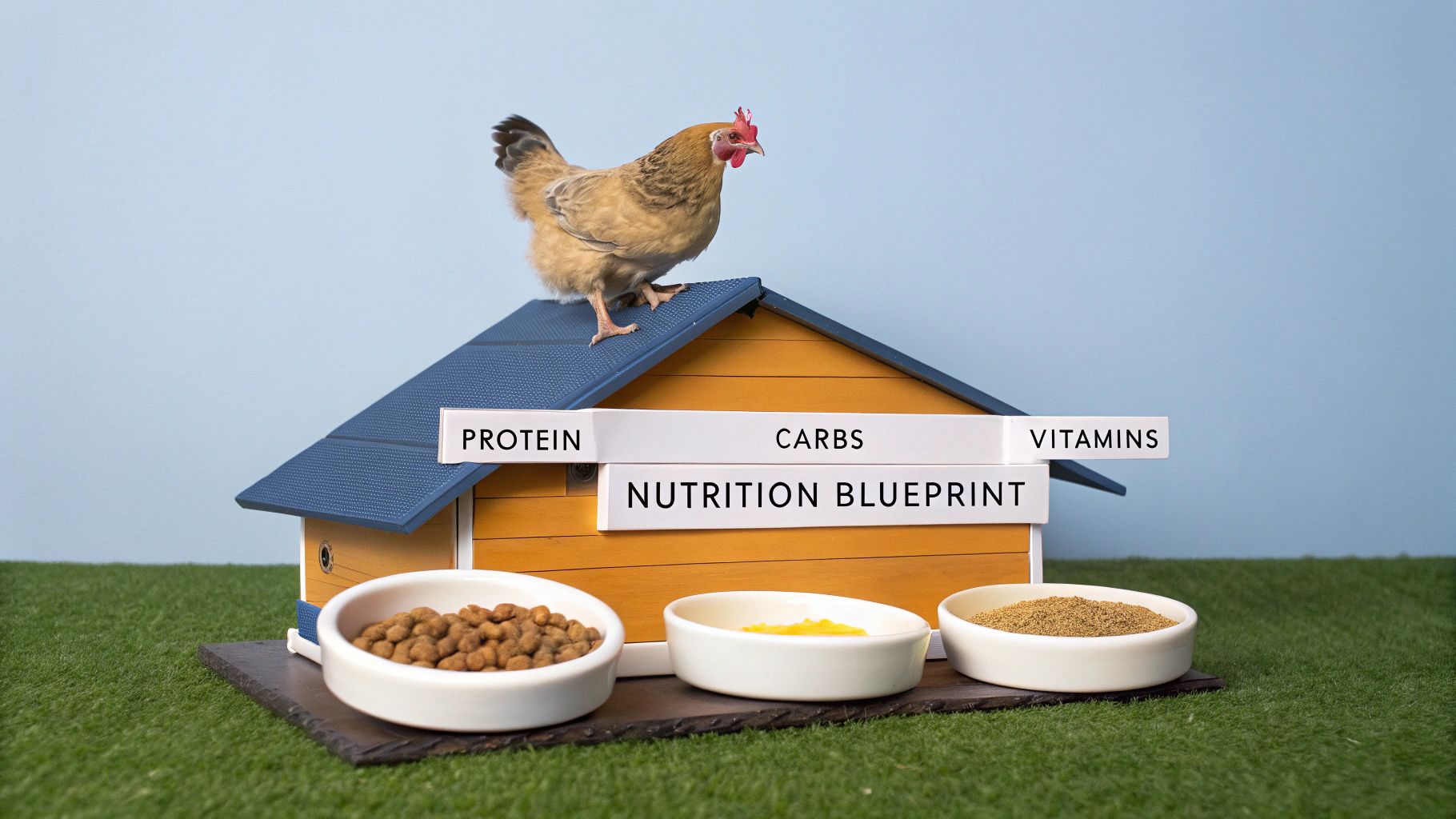
Think of a chicken's diet like the materials for a construction project. You can't build a sturdy house with the wrong supplies, and a chicken can't build a healthy body without the right nutrients. It’s not just about keeping the feeder full; it’s about understanding the "why" behind what they eat.
Protein is the bricks and mortar of their body. It’s absolutely essential for building everything from muscle and organs to every single feather. If protein is low, you'll see it in stunted growth, poor feathering, and a drop in egg production.
Carbohydrates are the fuel that powers the whole operation. They give chickens the energy for all their daily activities—scratching in the dirt, foraging for bugs, and just keeping their body temperature up. Fats are the reserve fuel tank, a concentrated energy source that's especially critical during cold snaps or stressful times.
Finally, vitamins and minerals are the specialized tools and hardware. You might only need small amounts, but their jobs are non-negotiable. Calcium, for example, is the concrete needed for strong bones and, most importantly, for forming hard, perfect eggshells. Without it, the whole structure gets fragile.
To give you a clearer picture, here’s a quick breakdown of what these nutritional building blocks do.
Essential Nutrients for Chickens at a Glance
| Nutrient | Primary Role in Chicken Health | Common Sources |
|---|---|---|
| Protein | Builds muscle, feathers, and tissues; vital for egg production. | Soybean meal, fish meal, seeds, insects. |
| Carbohydrates | Main energy source for daily activity and warmth. | Corn, wheat, barley, oats. |
| Fats | Concentrated energy, aids vitamin absorption, provides fatty acids. | Vegetable oils, seeds. |
| Calcium | Critical for strong bones and hard eggshells. | Oyster shell, limestone, bone meal. |
| Phosphorus | Works with calcium for bone formation and metabolic health. | Dicalcium phosphate, grains. |
| Vitamins & Minerals | Support immune function, metabolism, and overall health. | Commercial feed premixes, greens, sunlight (Vitamin D). |
As you can see, each nutrient has a specific, crucial job to do for the health and productivity of your flock.
Why Every Nutrient Matters
Everything in a chicken's diet works together. A shortage in one area can cause a domino effect that impacts the whole flock. For instance, a hen could be eating plenty of calcium, but if she's deficient in Vitamin D3, her body can't absorb it properly. The result? Weak, rubbery eggshells.
This is why feeding for the right life stage is so important.
- Chicks: Need a high-protein starter feed (20-24% protein) to fuel their explosive growth and get their first feathers in.
- Growing Pullets: As they mature, they switch to a grower feed with less protein (16-18%) to ensure they develop at a steady pace and don't start laying too early.
- Laying Hens: Once they're laying, they need a layer feed with moderate protein (around 16%) but a big boost in calcium to produce strong eggs day after day without stealing it from their own bones.
A well-formulated diet is the single most important factor in preventing common health issues. It directly influences everything from immune response and feather quality to egg production and shell integrity, making it the ultimate tool for proactive flock management.
The Science of Modern Chicken Feed
Getting this nutritional science right isn't just a concern for backyard keepers; it's a massive global focus. The poultry feed market has expanded right alongside urbanization and the growing demand for high-quality protein. Today's commercial feeds are meticulously engineered with a precise blend of amino acids, proteins, and micronutrients for peak chicken health. Governments often back feed innovation, knowing that healthy feed leads to a healthy food supply. You can even explore more data on the poultry feed market and its growth.
When you understand this nutritional blueprint, you're empowered to make the best choices for your flock. Knowing why each nutrient is there helps you pick the right feed, offer the right supplements, and spot potential health problems before they start. It's the key to ensuring your birds don't just survive, but truly thrive.
How to Choose the Right Commercial Chicken Feed
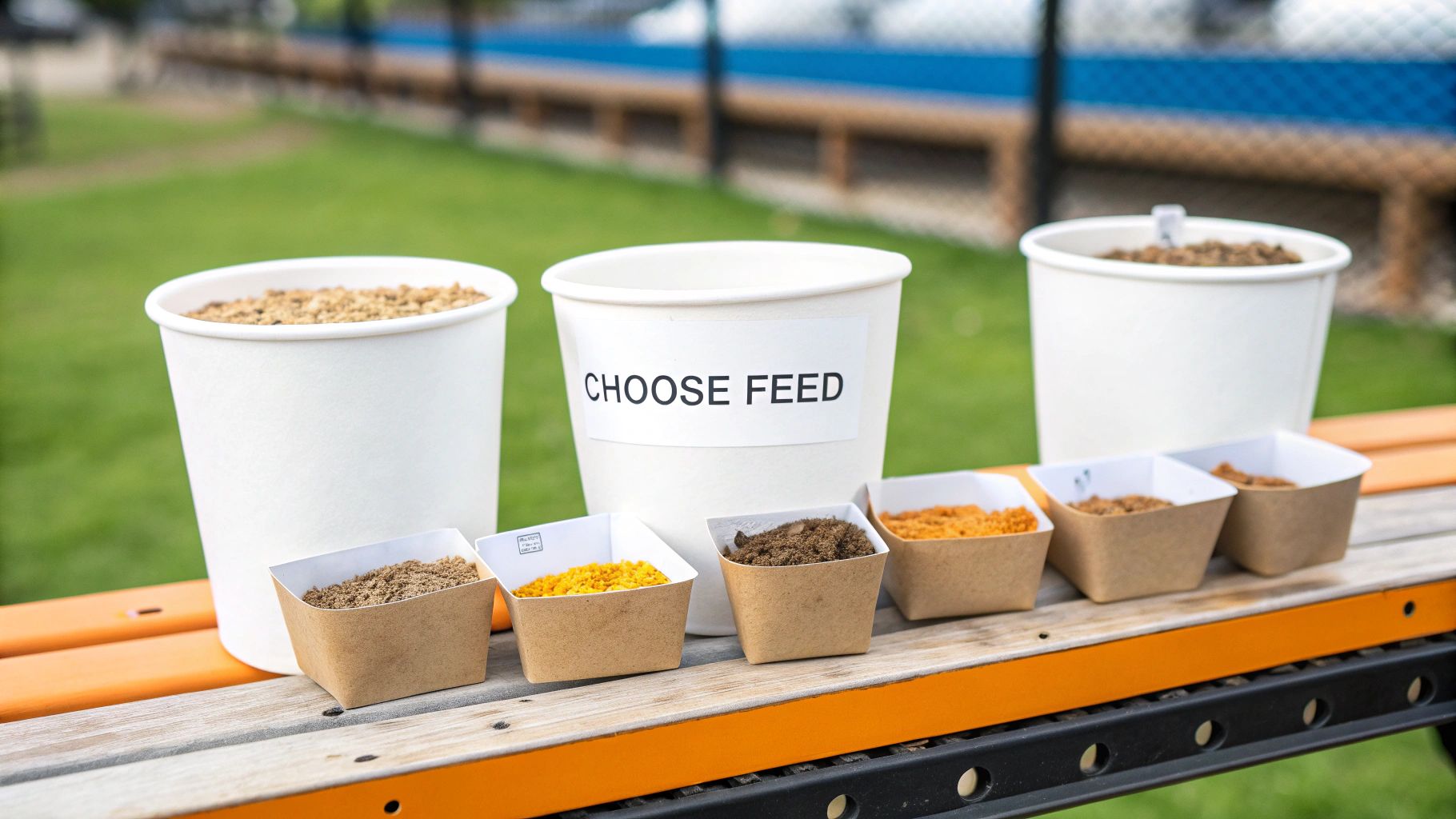
If you've ever felt a bit lost standing in the feed store aisle, you're not alone. Staring at rows of bags labeled "starter," "grower," and "layer" can be daunting, especially when they all come in mash, crumbles, and pellets. But figuring this out is one of the most important things you can do for your flock.
Think of it like raising a human child. You start with formula, move on to soft foods, and eventually graduate to solid meals. Each stage has unique nutritional demands. Commercial chicken feed works the same way; each formula is a complete, balanced meal designed for a specific chapter in a chicken's life.
Getting this right is the foundation of a healthy flock. The right feed ensures your birds have the precise blend of protein, calcium, and other nutrients they need to grow strong and become productive layers.
Matching Feed to Flock Age
The most critical factor in choosing a feed is your chicken's age. The protein and calcium levels in each type of feed are carefully calibrated for a particular stage of development, and using the wrong one can cause real health problems.
- Chick Starter: For the first 6-8 weeks, this is all your chicks will eat. It's packed with 20-24% protein to fuel their explosive growth, helping them build strong bones and develop their first full set of feathers.
- Grower Feed: After leaving the brooder, your "teenage" birds transition to grower feed. The protein drops slightly to 16-18%, which encourages steady growth without rushing them into laying eggs before their bodies are ready. You'll use this until they are about 16-18 weeks old.
- Layer Feed: As soon as you see that first egg, it's time to switch to layer feed. While the protein stays moderate at around 16%, the calcium content skyrockets. This boost is absolutely essential for forming strong, durable eggshells day in and day out.
It's crucial not to mix these up. Giving high-calcium layer feed to a young chick can lead to kidney damage, while a laying hen on starter feed simply won't get enough calcium for healthy egg production. To get a more detailed look, you can learn about the different kinds of poultry feeds available.
Choosing the right feed is proactive healthcare. It's the most direct and effective way to prevent common nutritional deficiencies, support a robust immune system, and ensure consistent, high-quality egg production throughout a hen's life.
Understanding Feed Texture
Once you've figured out the right formula, you'll notice it comes in a few different textures. The main choices are mash, crumbles, and pellets. While the nutritional content is identical across the forms, the texture you choose can make a big difference in how your flock eats and how much feed gets wasted.
Mash is a finely ground, loose feed with a consistency almost like sand. It's the go-to for baby chicks because it's incredibly easy for their tiny beaks to peck and digest. The major drawback? It's messy, and a lot can get kicked around and wasted.
Crumbles are the next step up. Think of it as mash that's been lightly pressed and broken into small, irregular bits. It’s a fantastic transitional feed for growing pullets and is less dusty and wasteful than mash.
Pellets are the most popular and efficient option for adult chickens. The feed is compressed into small, dense nuggets, which prevents picky eaters from sorting through for their favorite bits. This ensures every bite is balanced and dramatically cuts down on wasted feed.
Safe Treats and Supplements for a Thriving Flock
Think of a high-quality commercial feed as the solid foundation of your flock's diet—it’s their complete, balanced meal for every single day. But just like us, chickens appreciate a bit of variety. Offering safe treats and supplements is like adding a fresh salad or a nutrient-packed smoothie to their routine. It's not just fun; it enriches their diet, gives them something interesting to do, and is a fantastic way to build a bond with your birds.
The golden rule here is the 90/10 rule. A complete commercial feed should always make up at least 90% of what your chickens eat. That leaves the other 10% for healthy treats, garden greens, and other supplements. If you stray too far from this balance, you risk diluting their core nutrition, which can lead to health problems down the road.
This simple guideline ensures they get all the crucial protein and calcium from their main feed while still enjoying the perks of a varied menu. Remember, you're supplementing their diet, not replacing it.
What Makes a Good Chicken Treat
A good treat does more than just get your chickens excited—it should actually contribute to their well-being. The best options are whole, unprocessed foods that offer extra vitamins, minerals, and protein. These aren't "junk food" for chickens; they're valuable additions that can support everything from vibrant feathers to a healthy gut.
For instance, leafy greens are packed with essential vitamins, and certain fruits provide a nice boost of antioxidants. Protein-rich snacks are especially helpful when your flock is molting, as growing new feathers requires a huge amount of protein. These are the kinds of extras that truly elevate their diet.
To put poultry nutrition into perspective, global feed production recently climbed by 1.2% to hit about 1.396 billion metric tons. Poultry feed is a massive slice of that pie, with broiler feed at roughly 385 million metric tons and layer feed at 173 million metric tons. These numbers show just how much science and industry are focused on chicken health. You can discover more insights about global feed production on alltech.com.
Safe Kitchen and Garden Goodies
You don't have to look far for healthy treats—your kitchen and garden are probably full of them. Many of the scraps you might toss in the compost bin are actually fantastic, nutrient-dense snacks for your flock. It's a win-win: you reduce food waste and give your chickens something natural and exciting to eat.
Here are a few safe and beneficial options to get you started:
- Leafy Greens: Kale, Swiss chard, and lettuce are flock favorites loaded with vitamins A, C, and K. Just offer spinach in moderation.
- Vegetables: Things like cooked sweet potatoes, cucumbers, squash, and carrots are wonderful sources of vitamins and fiber. Be sure to cook or shred harder veggies to make them easier for your chickens to eat.
- Fruits: Berries, melons, and apples (just remove the seeds!) offer natural sugars for a quick energy boost and plenty of antioxidants. Offer these sparingly due to the sugar content.
- Grains and Seeds: Cooked rice, oats, and unsalted sunflower seeds provide healthy fats and carbs for energy. A classic scratch grain mix is also great for encouraging their natural instinct to forage.
Remember: Moderation is everything. A handful of treats scattered in the afternoon is the perfect way to engage your flock without messing up their main diet. It turns snack time into a healthy, stimulating activity.
For an even deeper dive into what you can offer, you might be interested in our complete guide covering a wide variety of safe snacks for chickens.
The Hidden Benefits of Foraging and Pasture
Letting your flock roam free is one of the best things you can do for them. It goes way beyond just fresh air and exercise; you're tapping into their natural instincts and giving them a diet that's more varied, exciting, and robust. This simple change unlocks a world of nutrition you just can't get from a bag of feed alone.
Think of your pasture as a living, breathing salad bar and protein buffet for your chickens. Every single day offers something new to discover, from tasty bugs to tender greens that perfectly round out their regular feed. This variety doesn't just keep them physically fit—it keeps them mentally engaged, which helps stop bad habits like feather-pecking that often crop up in bored, confined flocks.
When you encourage this natural behavior, you're not just raising happier chickens. You're actively improving their health, boosting the quality of their eggs, and even trimming down your feed costs.
Nature's Nutritional Powerhouses
Chickens aren't just pecking around aimlessly when they forage. They're skilled hunters and gatherers, hardwired to find exactly what their bodies need. A healthy, diverse pasture is basically a treasure chest of high-quality, natural food that complements their daily grain.
The sheer variety they find is incredible, and it all comes with powerful benefits:
- Protein-Packed Bugs: Chickens are omnivores, and nothing gets them more excited than a good bug hunt. Grasshoppers, beetles, worms, and slugs are all fantastic sources of animal protein, which is absolutely critical for healthy feather growth and strong muscles.
- Mineral-Rich Greens: Tender grasses, clover, dandelions, and chickweed are loaded with vitamins A, E, and K, not to mention essential minerals like iron and calcium.
- Seeds and Grains: You'll see them scratching around for fallen seeds from all sorts of plants. These provide extra carbohydrates and healthy fats to keep their energy levels up all day.
This all-natural diet is the real secret behind those gorgeous, deep orange egg yolks everyone raves about. The carotenoids found in fresh greens and insects go straight into the eggs, creating a yolk that’s not only brighter but packed with more nutrients.
Foraging reconnects chickens with their ancestral instincts. It’s an activity that naturally lowers stress, builds a more resilient immune system, and leads to healthier birds and better eggs. It's proof that sometimes, the best supplements come straight from the ground.
Creating a Safe Foraging Haven
While the rewards are huge, letting your flock roam free does require a bit of smart planning. You need to create an environment that's both safe from threats and full of good things to eat. Your top priority is a secure perimeter that keeps predators out and your chickens safely inside.
First, take a good look at your space. A solid fence is non-negotiable. It needs to be high enough that they can't easily fly over it and strong enough to keep out common predators like raccoons, hawks, or the neighbor's dog. Make it a habit to walk the fence line regularly and patch up any weak spots or gaps.
Once the boundary is secure, you need to make sure the pasture itself is a source of nourishment, not danger.
- Ditch the Chemicals: Never, ever use chemical pesticides, herbicides, or fertilizers where your chickens forage. They can easily ingest these toxins, which can make them sick or, worse, contaminate their eggs.
- Know Your Weeds: Get to know which common plants are poisonous to chickens. Things like azaleas, daffodils, foxglove, and even rhubarb leaves are toxic and need to be removed from their foraging area.
- Offer Shelter and Water: Make sure there are shady spots for your flock to cool off in the heat and easy access to fresh, clean water. A few shrubs or a small tree work perfectly, providing cover from both the sun and aerial predators.
Taking these simple steps turns your backyard into a true sanctuary. It becomes a place where your chickens can safely do what comes naturally, transforming the chore of feeding into a dynamic, rewarding process for everyone.
Why Black Soldier Fly Larvae Are a Superfood
If you've been looking for that one thing to take your flock's nutrition to the next level, you can stop searching. Beyond the usual feed and kitchen scraps, a true game-changer has emerged for chicken keepers: Black Soldier Fly Larvae, or BSFL.
Think of these tiny powerhouses less like a simple treat and more like a potent supplement. They fill critical nutritional gaps and genuinely earn their title as a superfood for your flock.
What really sets BSFL apart is their incredible nutrient density. They are absolutely loaded with protein, typically ranging from 40-50%. That protein is the essential building block for everything from strong muscles to the vibrant, glossy feathers you love to see. This boost is especially crucial during stressful periods like the annual molt, when a chicken's protein needs go through the roof to regrow its entire plumage.
But the real magic? It's their extraordinary calcium content. This is where they leave other popular insect treats in the dust.
A Superior Calcium Source for Stronger Eggs
Laying hens are calcium-making machines. Every single day, they have an immense demand for it to form a strong, protective shell around each egg. If their diet comes up short, their bodies don't just stop producing; they start pulling calcium directly from their own bones. This leads to weakened skeletons and, you guessed it, thin, brittle eggshells.
This is where BSFL prove their worth. Mealworms, another popular treat, actually have a poor calcium-to-phosphorus ratio that can get in the way of calcium absorption. BSFL, on the other hand, are naturally packed with this vital mineral.
Black Soldier Fly Larvae can contain up to 85 times more calcium than mealworms. This makes them one of the most effective natural supplements you can give to ensure your hens lay consistently strong eggs without depleting their own bodies.
By offering BSFL, you're giving your hens a highly bioavailable source of calcium that directly supports both egg production and their long-term skeletal health. It's a simple, proactive way to keep your laying flock in peak condition. You can get a full rundown on the benefits of adding dried Black Soldier Fly Larvae to your feeding routine.
This infographic gives a great visual of why foraging for natural food sources like insects is so important for chickens.
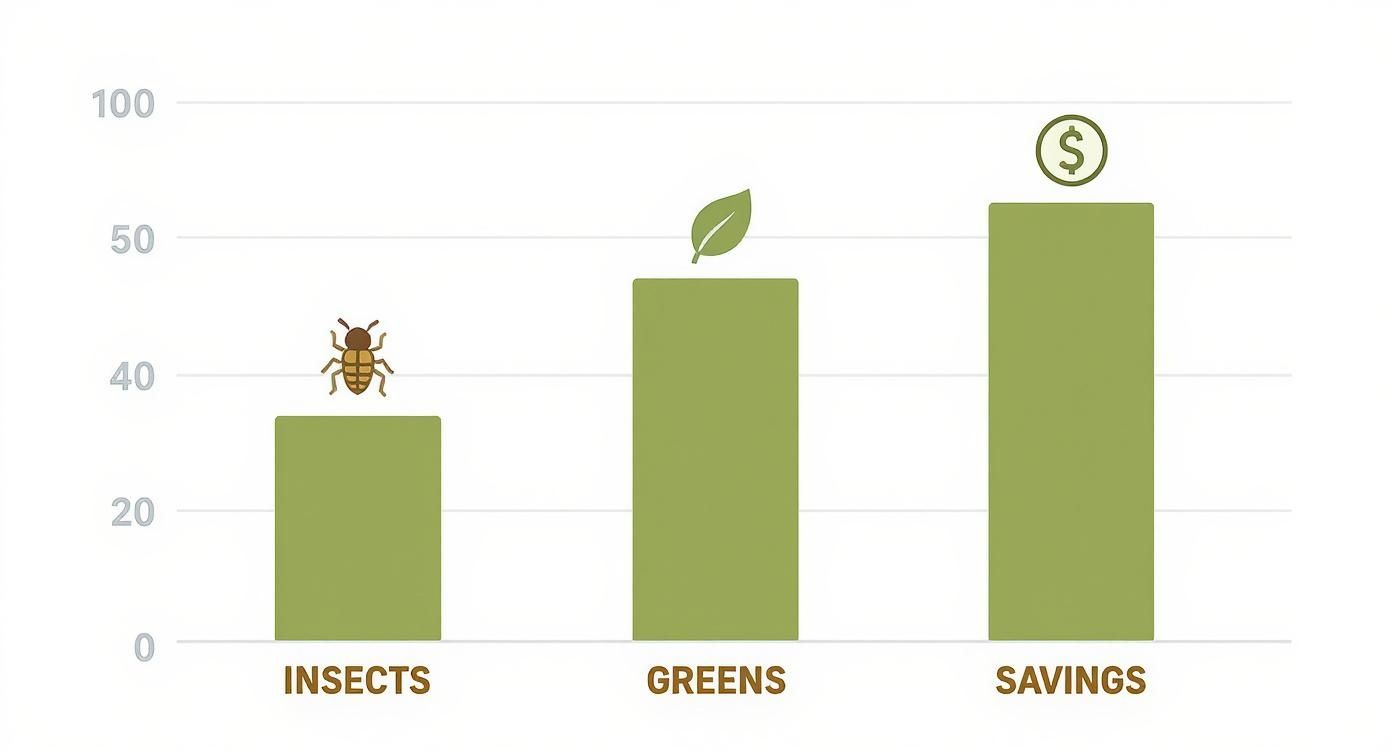
As you can see, insects provide a vital source of protein that perfectly rounds out a balanced diet, showing exactly why a high-quality insect supplement like BSFL is so beneficial.
Let’s take a closer look at how Black Soldier Fly Larvae stack up against their main competitor, mealworms. The numbers speak for themselves.
Nutritional Showdown: BSFL vs. Mealworms
| Nutrient | Black Soldier Fly Larvae (BSFL) | Mealworms |
|---|---|---|
| Protein | 40-50% | ~20% |
| Fat | 25-30% | ~15% |
| Calcium | High (Excellent Ca:P Ratio) | Low (Poor Ca:P Ratio) |
| Phosphorus | Balanced | High |
It’s pretty clear from this comparison that BSFL offer a much more complete and beneficial nutritional package, especially when it comes to the all-important calcium that laying hens need.
Sustainable Nutrition from Upcycled Waste
The story of Black Soldier Fly Larvae gets even better. Their benefits extend far beyond your flock—they are also champions of sustainability.
These remarkable insects have the unique ability to consume pre-consumer food waste, efficiently converting what would be thrown away into high-quality protein and healthy fats. This process, known as upcycling, is a brilliant solution to a huge environmental problem.
- Reduces Landfill Waste: BSFL divert organic material from landfills, where it would otherwise rot and release harmful methane gas.
- Creates a Closed-Loop System: They transform something once considered "waste" into a valuable, nutrient-rich food source for our animals.
- Lowers Environmental Footprint: Farming BSFL requires significantly less land and water compared to traditional protein sources like soy or fishmeal.
When you choose BSFL, you aren't just giving your chickens a healthy food; you're actively supporting a more sustainable, eco-friendly food system. It's a choice that feels good and does good.
Your Top Chicken Nutrition Questions, Answered
Once you've got the basics down, you'll find that keeping chickens comes with its own set of day-to-day questions. Even seasoned flock-keepers run into little quirks and challenges. This is where we get into the nitty-gritty, tackling some of the most common questions that pop up.
Think of this as your go-to troubleshooting guide. We'll cover everything from how much to fill the feeder to the mystery of a soft-shelled egg, giving you the confidence to keep your flock happy, healthy, and productive.
How Much Should I Feed My Chickens Every Day?
This is probably the number one question on every new chicken owner's mind. A good rule of thumb for an average, full-sized laying hen is about 1/4 pound of feed per day, which works out to roughly 1/2 cup. But remember, this is just a starting point.
In reality, a chicken's appetite can swing quite a bit depending on a few key things:
- Breed Matters: Big, fluffy birds like Orpingtons will naturally eat more than petite little bantams.
- The Season: When a cold snap hits, chickens ramp up their metabolism to stay warm, which means they’ll be eating a lot more.
- Foraging Fun: If your flock gets to roam around and snack on bugs and greens all day, they’ll eat less from the feeder than birds kept in a run.
The best approach? Let your chickens decide. Keep their feeder full of a quality ration and make sure fresh, clean water is always available. They're surprisingly good at self-regulating. For growing chicks and pullets, free-feeding isn't just a suggestion—it's essential for their healthy development.
Can My Chickens Just Live Off Our Kitchen Scraps?
It’s tempting to think you can slash your feed bill by giving your flock leftovers, but feeding them a diet of only kitchen scraps is a definite no-go. It might seem resourceful, but it's a recipe for nutritional disaster.
Scraps just don't have the balanced protein, calcium, vitamins, and minerals that a hen needs to stay healthy and lay eggs consistently. A high-quality commercial feed is the cornerstone of their diet. Think of scraps and other goodies as treats—fun supplements that should make up no more than 10-15% of their daily food.
What’s Causing Thin Eggshells, and How Do I Fix It?
If you start finding eggs that are thin, soft, or even rubbery, the culprit is almost always a lack of calcium. A hen’s body is an incredible egg-making machine, but pushing out a perfectly formed egg nearly every day takes a massive amount of calcium.
Even though a good layer feed is fortified with calcium, some hens—especially your superstar layers or older birds—just need an extra boost.
The fix is surprisingly simple. Get some crushed oyster shell and offer it in a separate dish, completely free-choice. Don't mix it into their feed. This way, each hen can take exactly what her body tells her she needs without forcing extra calcium on the rest of the flock.
This one small change can make a world of difference, often strengthening those shells almost overnight. It’s a crucial part of providing the best food for your chickens.
Is Fermenting Chicken Feed Really a Good Idea?
Absolutely! Fermenting your flock's feed is a fantastic way to boost their health. The process cultivates beneficial bacteria, or probiotics, that work wonders for their digestive system. It’s like giving your chickens their own version of kombucha or yogurt.
Fermentation essentially pre-digests the feed, which unlocks more of the nutrients locked inside and makes them much easier for the chicken's body to absorb. More bang for your buck, nutritionally speaking! This can lead to healthier birds, stronger immune systems, and you might even find you go through feed a little more slowly.
Getting started is easy. Just put their regular feed in a container, cover it with non-chlorinated water, and loosely place a lid on top. Let it sit for two or three days until it has a pleasant, tangy smell, then serve the soupy mash to your very happy chickens.
Ready to give your flock the ultimate nutritional boost? Pure Grubs offers premium, USA-grown Black Soldier Fly Larvae packed with the protein and calcium your chickens need for vibrant health and strong eggs. Elevate their diet with a treat that's as healthy as it is delicious.