

What do pond fish eat: Essential Feeding Guide for Koi and Goldfish
When you first start wondering what do pond fish eat, it's easy to assume they just nibble on whatever's in the pond. And they do! But there's a bit more to it. Most common pond fish are omnivores, which means they enjoy a varied diet of what nature offers—algae, insects, tiny aquatic critters—and the quality food you provide.
It's a beautiful partnership, really. The pond gives them a natural buffet, and you supplement it to ensure they get everything they need to be healthy and vibrant.
The Essential Diet for Thriving Pond Fish
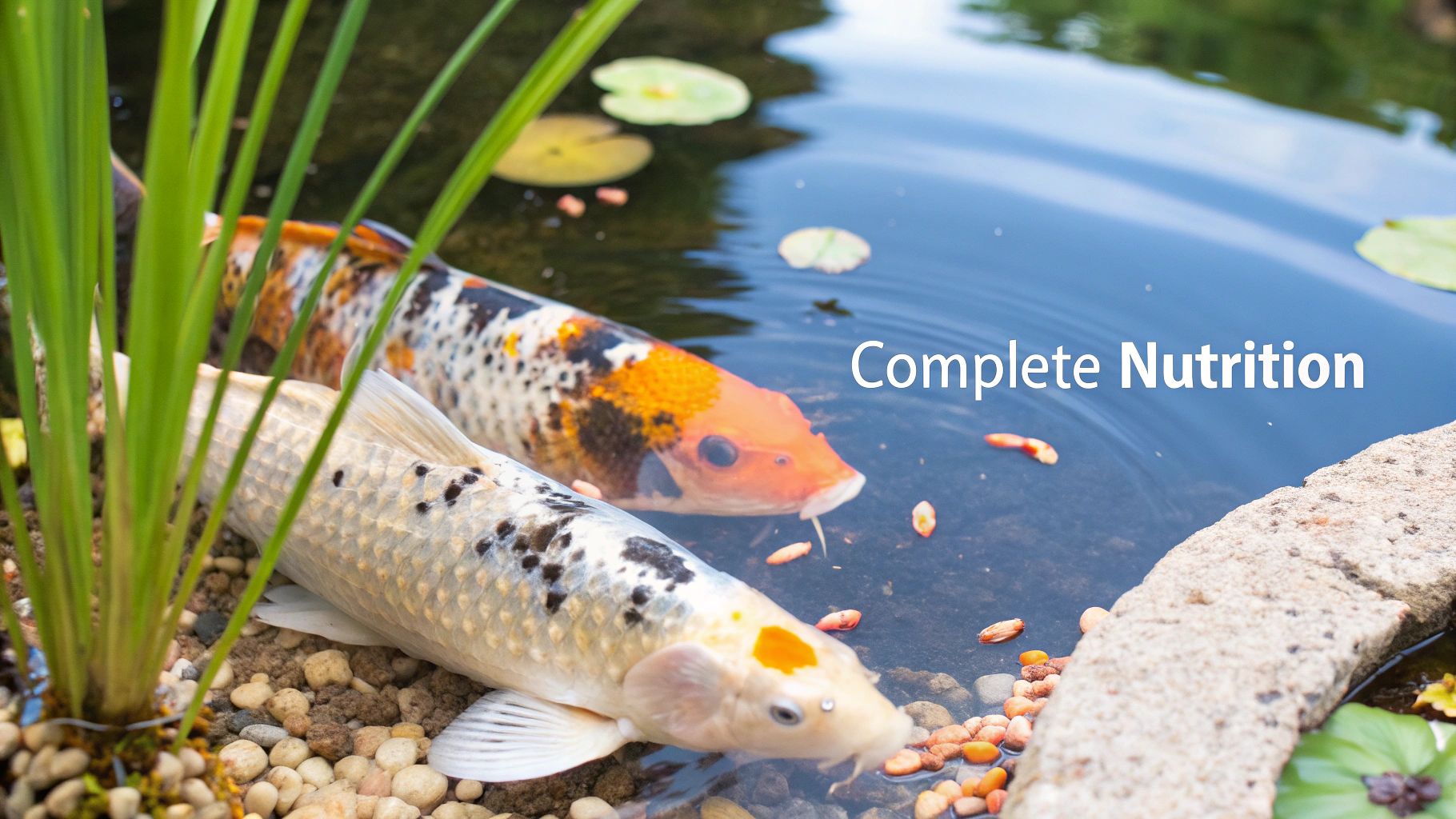
For your fish to truly thrive, they need more than just a full belly. Think of their diet as the foundation for a healthy, active, and colorful life. This foundation is built on three key pillars: protein, fats, and a host of essential vitamins and minerals.
Let's break it down. Protein is like the construction crew for a fish's body. It provides the building blocks for muscle, repairs tissue, and fuels growth. Young, growing fish, in particular, need a steady supply of protein, or their development can be seriously hampered.
Fats are the energy source that keeps the whole operation running. This is the fuel for everything they do—swimming around, foraging for snacks, and even preparing for a long winter nap. Good fats also help them absorb certain vitamins and keep their internal organs working smoothly.
Building a Strong Foundation with Micronutrients
While protein and fats are the big players, you can't forget the micronutrients. These are the vitamins and minerals that, while needed in smaller amounts, have a huge impact on a fish's overall health.
- Vitamin C: This is an immune system superstar. It helps your fish ward off common illnesses and bounce back from stress or a scraped fin.
- Calcium: Just like for us, calcium is critical for building strong bones and scales. A lack of it can lead to a weak skeletal structure and even deformities.
- Phosphorus: This mineral works hand-in-hand with calcium. It's vital for energy transfer within their cells and is a major player in their growth and metabolism.
Getting this balance right is the first real step toward becoming a proactive pond keeper. A well-fed fish isn't just a bigger fish; it's a stronger one, better prepared to handle anything from a sudden cold snap to common diseases.
To make it even clearer, here’s a quick look at the essential nutrients, what they do, and where your fish naturally find them in the pond environment.
Pond Fish Nutrition at a Glance
This table breaks down the essential nutrients your pond fish need, their function, and where they find them naturally in the pond.
| Nutrient | Primary Function | Common Natural Sources |
|---|---|---|
| Protein | Growth and tissue repair | Insects, worms, smaller fish |
| Fats | Energy and vitamin absorption | Algae, insect larvae, zooplankton |
| Vitamins | Immune support and cell function | Aquatic plants, insects, algae |
| Minerals | Bone and scale development | Water column, aquatic plants |
Once you understand these basic nutritional needs, you can shift from simply feeding your fish to truly nourishing them. That's the secret to a pond filled with fish that don't just survive but absolutely flourish, showing off their best colors and living long, healthy lives.
What's on the Menu? A Look Inside Your Pond's Natural Pantry
Think of your pond as a living, breathing kitchen, one that's constantly restocking itself for your fish. Long before you show up with a container of pellets, your fish are already busy foraging from a surprisingly rich and varied natural buffet. Knowing what's on this hidden menu is the first step to understanding what your pond fish really eat.
This natural pantry is packed with life, a lot of it too small to see. At the very bottom of the food web, you'll find algae and phytoplankton—tiny, plant-like organisms that are a constant source of food, especially for young fry. Herbivorous fish will also spend their days grazing on submerged aquatic plants, which provide much-needed fiber and nutrients.
A step up from the plants are the zooplankton, which are basically microscopic animals that feed on the phytoplankton. For newly hatched fish, these tiny creatures are an essential first meal, and they remain a protein-rich snack for bigger fish like bluegill. If your pond is teeming with zooplankton, that's a fantastic sign of a healthy, productive ecosystem.
The All-You-Can-Eat Insect Bar
For most pond fish, insects are the main course. The surface of the water, the murky depths, and everything in between is home to a smorgasbord of invertebrates that deliver the protein your fish need to thrive.
- Underwater Critters: Ever wonder what those dragonfly and mayfly nymphs are doing before they take flight? They're crawling around the bottom of your pond, and your fish are hunting them down among the rocks and plants. They're a favorite snack for almost every fish out there.
- Mosquito Patrol: A good fish population is the best mosquito control you could ask for. Fish are constantly on the lookout, slurping up mosquito larvae from the surface before they ever have a chance to hatch.
- Bottom-Dwelling Morsels: The muck at the bottom of the pond is full of life. It’s crawling with different worms, snails, and even tiny freshwater shrimp. Bottom feeders like carp and some catfish are experts at sifting through the sediment to uncover these tasty treats.
When you start to see all these natural food sources, it becomes clear how a pond supports its inhabitants. A well-balanced ecosystem means your fish are less dependent on you for food and get to act on their natural foraging instincts, which makes for happier, healthier, and more active fish.
A pond isn't just a container for water; it's a living food web. The more diverse the life within it—from algae and insects to frogs and snails—the richer the natural diet for your fish. Encouraging that biodiversity is one of the best things you can do for them.
Why This Matters on a Global Scale
Understanding pond diets isn't just a hobbyist concern—it's tied to a massive shift in how the world produces food. As global demand for seafood and other aquatic foods continues to climb, so does the need for sustainable, high-protein feeds to support aquaculture. Back in 2019, worldwide aquatic food consumption hit a staggering 158 million tonnes, and pond-based farming in high-consuming regions played a huge part.
The very species we keep in our backyard ponds, like perch and bass, need diets with 40-50% protein to grow properly. This huge demand has kicked off a wave of innovation in alternative feeds, especially insect-based products, which offer a clean, sustainable, and nutrient-packed solution. You can dive deeper into these global consumption trends in the FAO's official report on aquaculture.
How Different Pond Fish Find Their Food
It's fascinating to watch how different fish go about finding their next meal. Each species has its own unique strategy.
Surface Feeders Fish like goldfish and bluegill spend most of their time near the top. Their bodies are perfectly designed to spot and snatch insects that land on the water or larvae hanging just beneath the surface. It’s why they get so excited when they see you coming with floating pellets or treats.
Mid-Water Hunters Bass are the classic ambush predators of the pond world. You’ll often find them lurking near cover—a submerged log, a patch of lily pads—just waiting for a smaller fish, a tadpole, or a big insect to swim by. Their diet shows you exactly what pond fish eat when they're at the top of the local food chain.
Bottom Sifters Koi and common carp are the experts of the pond floor. They use their sensitive whisker-like barbels to feel around in the mud and silt, detecting worms, crustaceans, and insect larvae that other fish would miss. In doing so, they also help clean up debris from the bottom.
A Feeding Guide for Popular Pond Species
Think all pond fish can eat from the same menu? Think again. Just like a lion and a gazelle have vastly different diets, the various inhabitants of your pond have their own unique nutritional needs. If you want to move beyond just keeping your fish alive and help them truly thrive, you need a tailored feeding strategy.
A generic "pond fish food" is a one-size-fits-all solution that rarely fits anyone perfectly. Koi, for example, have specific dietary requirements to keep their colors popping, which a common goldfish simply doesn't need. On the flip side, a predatory bass won't get much out of the high-fiber foods that keep a goldfish's digestive system happy.
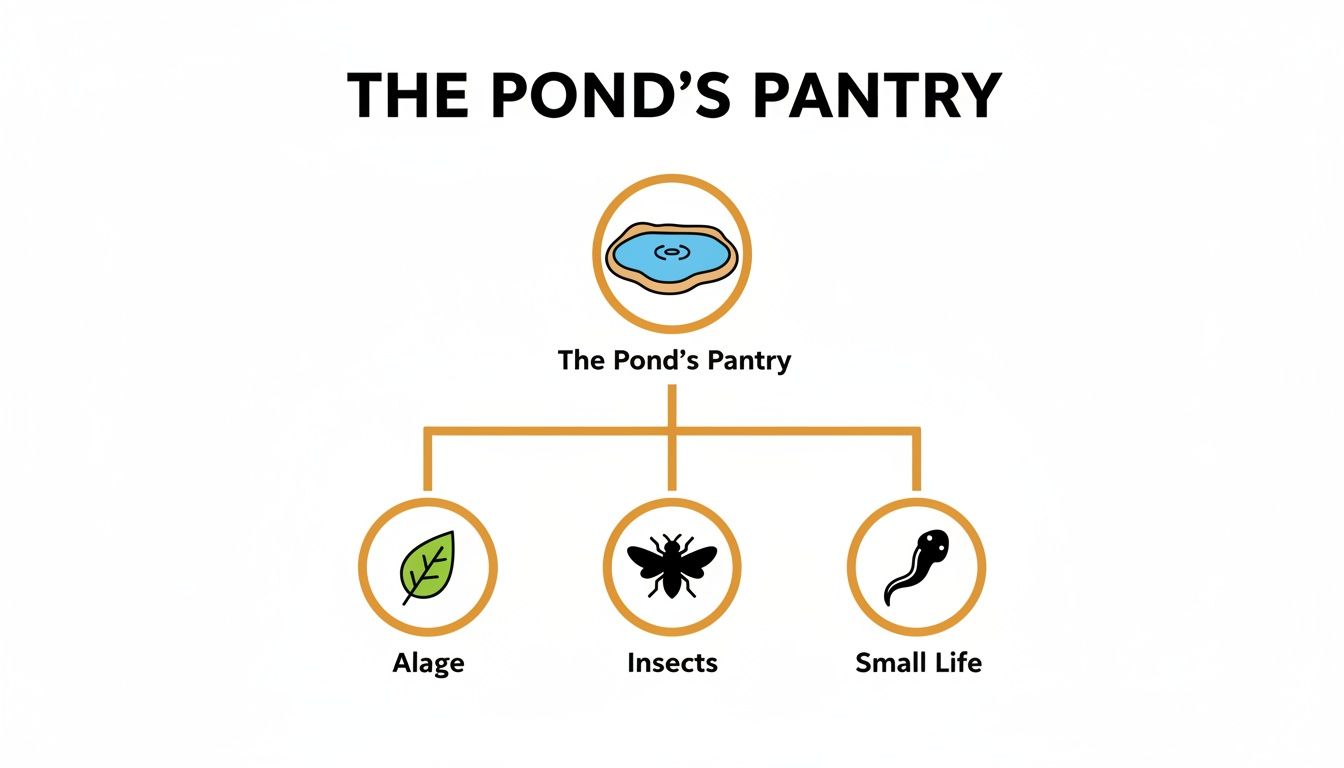
The image above gives you a peek into a pond's natural pantry. It's teeming with life—algae, insects, and other tiny critters—that forms the foundation of the aquatic food web. While the pond provides this basic buffet, each species has evolved to zero in on specific items from the menu.
Let's break down the dietary blueprints for the fish you're most likely to have.
The Graceful Koi: A Diet for Color and Longevity
Koi are often called "living jewels," and what you feed them plays a huge part in keeping those colors brilliant. As omnivores, their dietary needs change quite a bit with the seasons and, more importantly, the water temperature.
- Color-Enhancing Foods: Look for high-quality koi pellets that contain ingredients like spirulina and krill. These are loaded with carotenoids, which are natural pigments that pump up the intensity of the reds, oranges, and yellows in their scales.
- Seasonal Adjustments: When the water is warm (above 60°F), koi are active and growing, so they need a high-protein diet—think 35-40%. But as the water cools, their metabolism grinds to a halt. That's when you should switch to an easily digestible wheat-germ-based food.
For a deeper dive, we have a whole guide dedicated to the dietary needs of Koi fish.
The Classic Goldfish: A Focus on Digestion
Goldfish, a close cousin of carp, are enthusiastic eaters with a surprisingly simple digestive system that lacks a true stomach. This little quirk makes them susceptible to bloating and swim bladder problems if they eat the wrong things.
Their ideal diet is lower in protein than what you'd give a koi (around 30%) and higher in carbs and fiber. Things like peas and leafy greens are great because they keep everything moving smoothly through their system. You'll also see them constantly sifting through the bottom, looking for algae and tiny invertebrates to snack on.
A key takeaway for goldfish care is consistency. Because of their simple digestive tract, feeding small, easily digestible meals once a day is far better than offering one large, protein-heavy meal that can cause internal stress.
The Mighty Bluegill: The Insectivore's Delight
If you want to see a true predator in action, just watch a bluegill. These guys are part of the sunfish family and are hardcore insectivores with a serious appetite for protein. They might nibble on pellets, but their natural diet is all about insects, larvae, worms, and even the occasional tiny fish.
To keep your bluegill healthy and growing, you need a diet rich in protein, ideally over 40%. You can supplement their diet with high-protein treats like dried Black Soldier Fly Larvae, which mimics what they'd hunt naturally and provides essential amino acids. In a well-established pond, they're also fantastic pest control, gobbling up mosquito larvae like there's no tomorrow.
The Ambush Predator: Largemouth Bass
In most backyard ponds, the largemouth bass is the king of the food chain. Their diet is simple: if it moves and can fit in their mouth, they'll try to eat it. Young bass start small with insects and zooplankton, but as they get bigger, they move on to more substantial prey.
- Primary Diet: Their main courses include smaller fish (like bluegill and minnows), frogs, tadpoles, and even big insects like dragonflies.
- Supplemental Feeding: In a managed pond, bass will benefit from a high-protein pellet made for carnivorous fish. Still, nothing beats a healthy, self-sustaining population of forage fish for them to hunt.
This need for high-quality protein isn't just a backyard pond phenomenon; it's a driving force in global aquaculture. As fish farming has scaled up to meet demand, finding sustainable, high-protein feeds has become critical. Today, insects like Black Soldier Fly Larvae are a game-changer, providing 35-40% protein and healthy fats for commercially farmed species like koi and trout.
By understanding what each of your fish species naturally craves, you can provide the right fuel to help every single one of them live a long, healthy, and vibrant life.
Choosing the Best Commercial Fish Food
Walking down the fish food aisle can feel a bit like navigating a maze. Every bag seems to promise brighter colors, faster growth, and healthier fish. But how do you know what’s marketing fluff and what’s actually good for your pond inhabitants?
While a pond's natural ecosystem provides a lot of what your fish eat, a high-quality commercial food is the cornerstone of a complete, balanced diet. It fills in the nutritional gaps. Making the right choice is all about learning to look past the flashy packaging and understand what's really inside the bag.
The first choice you'll likely make is between floating and sinking pellets. This one is pretty simple—it all comes down to how your specific fish like to eat.
- Floating Pellets: These are perfect for surface feeders like koi, goldfish, and bluegill. They have the added bonus of bringing your fish right to the surface, which turns feeding time into a great opportunity to check on their health and just enjoy them. Plus, it's easy to see how much they're eating, which helps prevent overfeeding.
- Sinking Pellets: If you have bottom-dwellers like carp or certain types of catfish, these are for you. The pellets drop straight to the bottom, letting these fish forage in a way that feels natural to them, without having to fight the more aggressive fish up top.
For most backyard ponds that have a mix of fish, a quality floating pellet is usually the go-to. It makes sure the majority of your fish get a meal and keeps uneaten food from sinking and mucking up your water.
Decoding the Ingredient List
Here’s where a little detective work pays off. The secret to finding great fish food is always in the first few ingredients on the label. Just like with our own food, they're listed by weight, so whatever comes first is what you're getting the most of.
You want to see a high-quality protein source right at the top. Look for specific, named ingredients like fish meal, shrimp meal, or even insect meal (like Black Soldier Fly Larvae). These are fantastic, easily digestible proteins for pond fish. Be a bit skeptical of vague terms like "fish derivatives" or if you see fillers like corn or wheat flour listed as the main event. Those just don't pack the same nutritional punch.
A premium fish food is truly an investment in your fish's long-term health. Think of the protein source as the main course, not a cheap appetizer. For most omnivorous pond fish during their active season, a food with 30-40% protein is a great target.
Understanding Specialty Formulas
You wouldn't wear a winter coat in July, and your fish's diet shouldn't be the same year-round either. Specialty formulas are designed to match their changing metabolism as the seasons shift.
-
Cold Weather Food: Once the water dips below 60°F (15°C), your fish's digestion slows way down. This is the time to switch to a wheat-germ-based formula. It’s incredibly easy for them to process, which helps avoid digestive trouble when their systems are sluggish.
-
Growth Formula: In the spring and summer, young, growing fish are basically eating machines. A high-protein growth formula, often with 40% protein or more, gives them the fuel they need for healthy development.
-
Color-Enhancing Formula: If you want your koi's colors to really pop, these are a fantastic tool. They're packed with ingredients like spirulina, krill, or shrimp, which are full of natural pigments called carotenoids. These compounds are what intensify the brilliant reds, oranges, and yellows in their scales.
By learning to read the label and matching the food to the season, you move beyond just "feeding your fish." You're actively managing their health and vitality, ensuring they don't just survive, but truly thrive all year long.
Using Natural Treats to Enhance Your Fish's Diet
Think of high-quality pellets as the foundation of your fish's diet—the healthy, balanced meal they need every day. But adding natural treats is like tossing a fresh garden salad onto their plate. It’s a simple way to break up the routine, boost their nutrition, and make feeding time more of an interactive event.
Giving your fish healthy, natural snacks also taps into their wild instincts. It mimics the foraging they’d do in a natural stream or lake, encouraging them to hunt and graze. You’ll see the difference in their behavior; they become more active, engaged, and their colors often seem to pop even more.
The Superior Snack: Black Soldier Fly Larvae
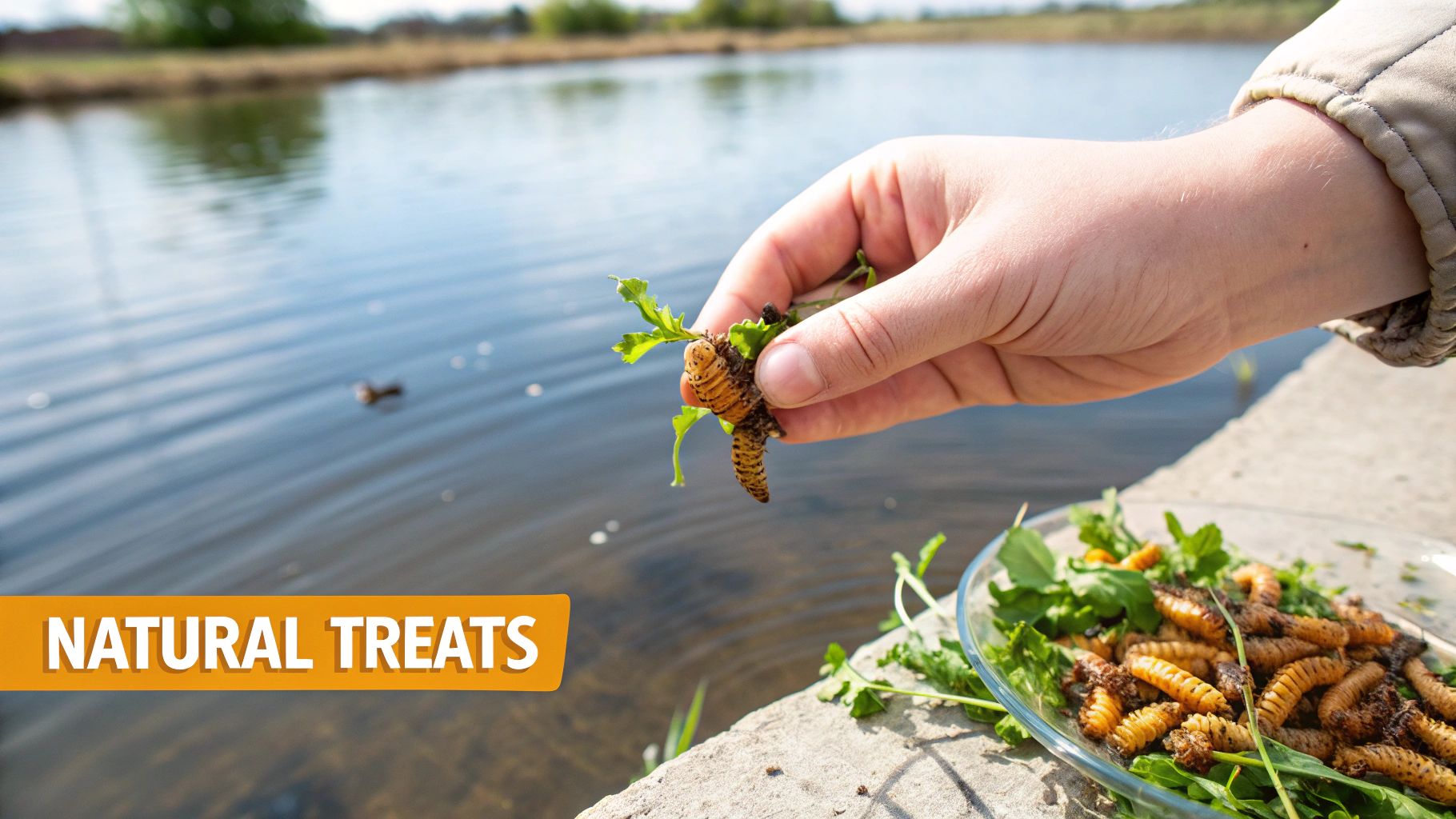
When you start looking at treats, one option stands head and shoulders above the rest: Black Soldier Fly Larvae (BSFL). These aren't just any old bug; they are a nutritional powerhouse, almost perfectly designed for pond fish. Their real claim to fame is their incredible calcium content.
Dried BSFL pack way more calcium than other common insect treats like mealworms. That calcium is absolutely critical for building strong bones and tough, resilient scales. This makes them a fantastic supplement for young, growing fish, but it also helps adult fish maintain a healthy skeletal system for life. We dive deep into the science behind this in our guide to Black Soldier Fly Larvae for animal feed.
What really sets BSFL apart is that they deliver a perfect trio of protein, fat, and that all-important calcium. It’s a complete nutritional package that supports everything from muscle growth to a healthy immune system, essentially making them a superfood for your pond.
This isn't just a secret among backyard pond keepers, either. BSFL are a cornerstone of modern aquaculture. The global industry, which hit a record 162.5 million tonnes in 2021, relies heavily on pond-based systems—over 89.8% of total output! For fish like carp and catfish, insects like BSFL are a key part of their diet, providing up to 42% protein and 85% more calcium than mealworms. For those of us in the U.S., using USA-grown Pure Grubs gives you peace of mind, as they're an FDA-compliant choice tested to be free of heavy metals. You can read more about these stats on global aquaculture production at FAO.org.
Other Safe and Healthy Pond Treats
While BSFL are a top-tier choice, variety is just as important for fish as it is for us. You can find some fantastic, healthy snacks right in your own kitchen or garden. Mixing things up ensures your fish get a broader spectrum of vitamins and minerals.
Here are a few tried-and-true favorites that most pond fish go crazy for:
- Leafy Greens: Try clipping a piece of romaine lettuce or spinach to the side of the pond. It’s an excellent source of vitamins and fiber, especially for omnivores like koi and goldfish.
- Fruit Slices: On a hot day, small bits of watermelon, orange slices, or cantaloupe are a refreshing treat. They’re packed with vitamins and help with hydration.
- Shelled Peas: A real classic. Cooked, shelled peas are loaded with fiber and can help with digestion, which is particularly beneficial for goldfish that sometimes struggle with swim bladder problems.
- Earthworms: If you have a pesticide-free garden, a few earthworms are a natural, protein-rich snack that will trigger a feeding frenzy.
The key is to remember that treats are just that—treats. They should only account for about 10-20% of your fish's total food intake. A few times a week is plenty. This way, you enrich their diet and their lives without throwing their core nutrition out of balance.
Mastering Your Feeding Schedule and Technique
Figuring out what to feed your pond fish is just the first step. The real art lies in knowing how and when to feed them to keep them healthy for the long haul. Honestly, the single biggest mistake I see new pond owners make is overfeeding. It comes from a good place, but it can quickly wreck your water quality and cause major health problems for your fish.
Think of it this way: any food that doesn't get eaten is basically pollution. It sinks, starts to rot, and releases ammonia—a substance that’s toxic to fish. This is what turns your water cloudy and feeds those frustrating algae blooms, creating a nasty, stressful environment. A smart feeding technique stops this problem before it even begins.
The easiest way to get your portion sizes right is to use the five-minute rule. It’s incredibly simple but works every time. Just toss a small amount of food into the pond and watch your fish. They should go after it enthusiastically and gobble it all up within about five minutes. If there’s still food floating around after that time, you've given them too much.
Adjusting Your Routine With the Seasons
A fish’s metabolism is completely tied to the temperature of the water. They're not like us. As the water gets colder, their bodies slow way down, and their need for food plummets. You absolutely have to adjust your feeding schedule to match the seasons if you want a healthy pond.
-
Summer (Above 65°F / 18°C): This is when your fish are most active. They're growing and their appetites are huge. Feed them a high-protein food once a day, always sticking to the five-minute rule.
-
Fall (50-65°F / 10-18°C): As the water cools, their metabolism starts to slow down. It's time to cut back feeding to every other day and switch to something easier to digest, like a wheat-germ-based food.
-
Winter (Below 50°F / 10°C): This is the magic number. Once the water temperature consistently drops below 50°F, you must stop feeding completely. Their digestive systems practically shut down, and any food you give them will just sit and rot in their gut, which can be fatal.
Mastering this seasonal rhythm is one of the most important skills a pond keeper can develop. It respects the natural biological cycle of your fish, preventing dangerous health issues and ensuring they emerge strong and healthy in the spring.
This same principle of adaptive feeding applies to indoor tanks, too. Even though aquarium temperatures are much more stable, knowing the specific nutritional needs of your fish is vital. You can learn more about that in our guide to the best food for aquarium fish.
By creating a routine that accounts for both portion control and the changing seasons, you go from just being someone who owns fish to being a true caretaker. This thoughtful approach protects your water, supports your fish's health, and helps you cultivate a balanced, beautiful pond all year long.
Answering Your Pond Feeding Questions
Even with the best intentions, you're bound to have questions as you go. Feeding pond fish isn't just about tossing in some flakes; it's about responding to your pond's unique environment and the needs of its inhabitants. Let's walk through some of the most common questions that pop up for pond owners.
How Often Should I Be Feeding My Fish?
During the warmer months of spring and summer, feeding your fish once a day is usually the sweet spot. The key is to only give them what they can gobble up in about five minutes. This is a crucial rule of thumb—overfeeding is probably the single most common mistake, and uneaten food quickly turns into a sludge that ruins your water quality.
When the air gets crisp in the fall, you'll want to scale back to feeding every other day. And once that water temperature consistently drops below 50°F (10°C), it's time to stop completely. Their metabolism slows down so much that they can't digest food properly, and feeding them can actually do more harm than good.
Can My Pond Fish Get By Without Me Feeding Them?
It's possible, but only in very specific circumstances. If you have a large, well-established pond with very few fish, they might be able to sustain themselves on the natural buffet of insects, algae, and larvae.
That said, this scenario is the exception, not the rule. Most backyard ponds have more fish than the natural environment can support. In these cases, supplemental feeding is absolutely vital for their health, growth, vibrant colors, and strong immune systems.
What Human Foods Can I Give My Fish?
While a quality commercial food should be their mainstay, it's fun to offer a treat now and then. A few human foods are perfectly safe in moderation.
- Shelled Peas: After a quick boil to soften them, shelled peas are fantastic for a fish's digestive system.
- Leafy Greens: Tearing up a bit of romaine lettuce or spinach can give them a nice vitamin boost.
- Fruit Slices: Believe it or not, small pieces of watermelon or orange can be a welcome treat.
The big no-nos? Anything processed. Stay far away from bread, crackers, or any food high in salt and fat. A fish's digestive system just isn't built for that stuff, and it will wreak havoc on your water.
Adding high-quality, natural treats is a fantastic way to boost your fish's health and make feeding time more exciting. For a treat that’s packed with protein and calcium, you can't go wrong with Pure Grubs. Our USA-grown Black Soldier Fly Larvae are a safe, nutritious choice that will help your pond community thrive. Explore Pure Grubs today!