

Guide: what do koi fish eat and how to feed them
Wondering what to feed your koi to keep them healthy, vibrant, and growing? It’s a common question, and getting it right is the cornerstone of successful koi keeping.
Koi are omnivores, which simply means they eat a mix of both plant and animal matter. A healthy koi’s diet isn't just one thing—it’s a thoughtful combination of high-quality commercial food, natural goodies they find in the pond, and the occasional healthy treat. Get this balance right, and you'll be rewarded with brilliantly colored fish that live long, healthy lives.
The Complete Diet for a Healthy Koi
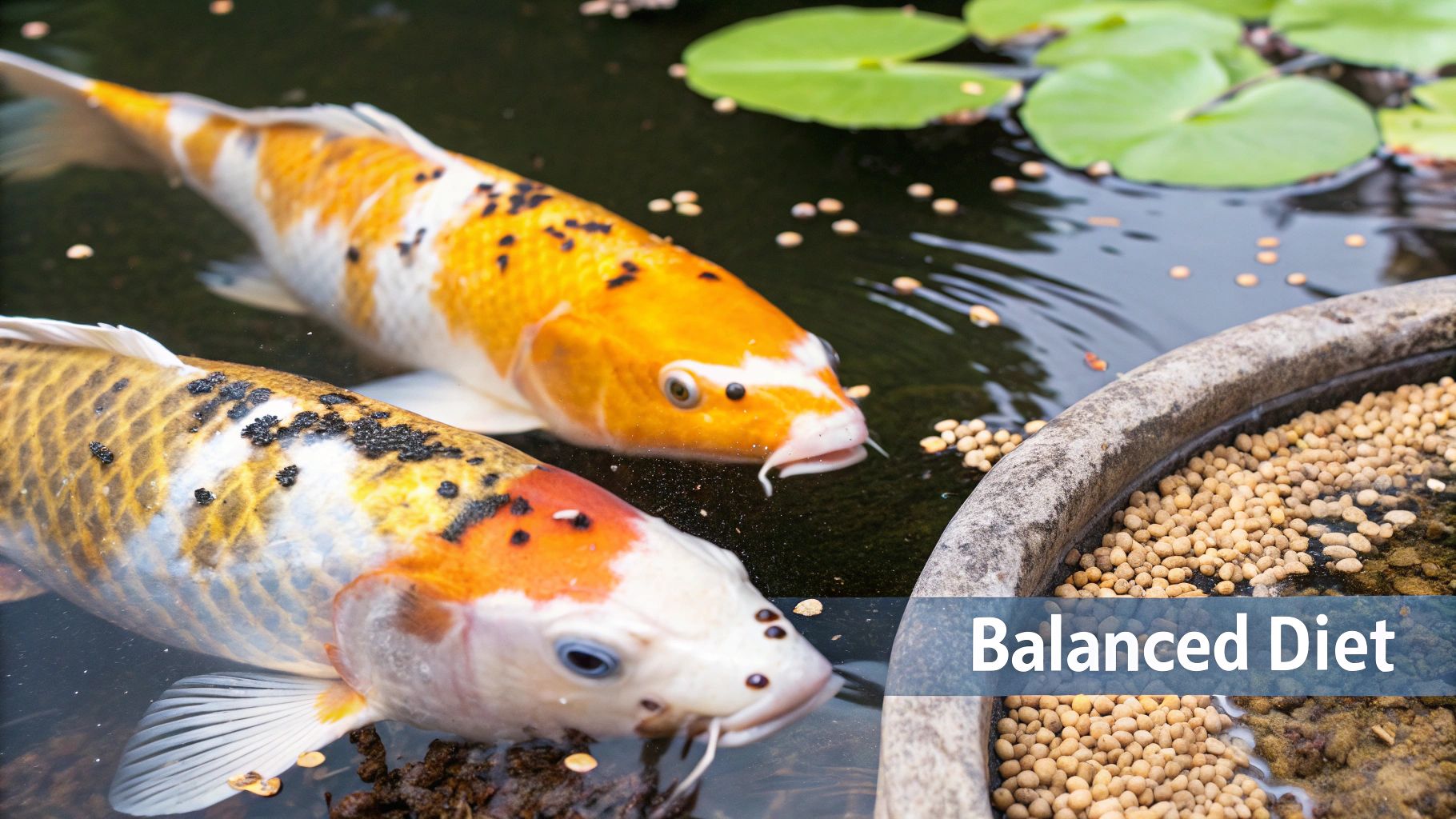
If you take away just one thing, let it be this: understanding what koi eat is the single most important part of raising beautiful, thriving fish. Think of their diet as the foundation of your entire pond's ecosystem. Just like us, koi need a varied and complete diet to fuel their growth, keep their energy up, and support a strong immune system.
A truly well-rounded diet for koi stands on three pillars:
- High-Quality Pellets: This should be their daily staple. A good pellet is scientifically formulated to provide the ideal balance of protein, fats, and essential vitamins.
- Natural Forage: Koi are born grazers. They will constantly explore their pond, nibbling on algae, hunting for insects, and munching on bits of plant matter. This is a crucial part of their natural behavior.
- Healthy Treats: Occasional snacks add excitement and supplemental nutrients. Think fruits, veggies, and protein-packed insect larvae to round out their diet.
The focus on proper nutrition isn't just a niche concern anymore. In fact, the global koi food market was valued at around $1.2 billion and is expected to grow to $2.1 billion by 2033. This surge shows just how much pond owners are prioritizing specialized diets for their fish.
Koi Fish Diet At a Glance
To make it even simpler, here’s a quick breakdown of the main food groups for your koi. Think of this as a handy cheat sheet before we get into the finer details.
| Food Category | Examples | Role in Diet |
|---|---|---|
| Commercial Pellets | Floating pellets, wheat germ formulas, color-enhancing blends | Provides the primary source of balanced, foundational nutrition for daily feeding. |
| Natural Pond Foods | Algae, aquatic insects, worms, larvae, plant roots | Supplements the main diet with essential micronutrients and encourages natural foraging behavior. |
| Supplemental Treats | Orange slices, peas, lettuce, dried BSFL | Offers variety, enrichment, and targeted nutrients like vitamins and extra protein. |
A balanced approach that pulls from all these categories is the secret sauce. It’s a concept that applies broadly, much like the dietary needs we cover in our general guide on what pet fish eat. By providing variety, you’re not just feeding your fish—you’re enriching their lives.
What Koi Forage For in the Wild
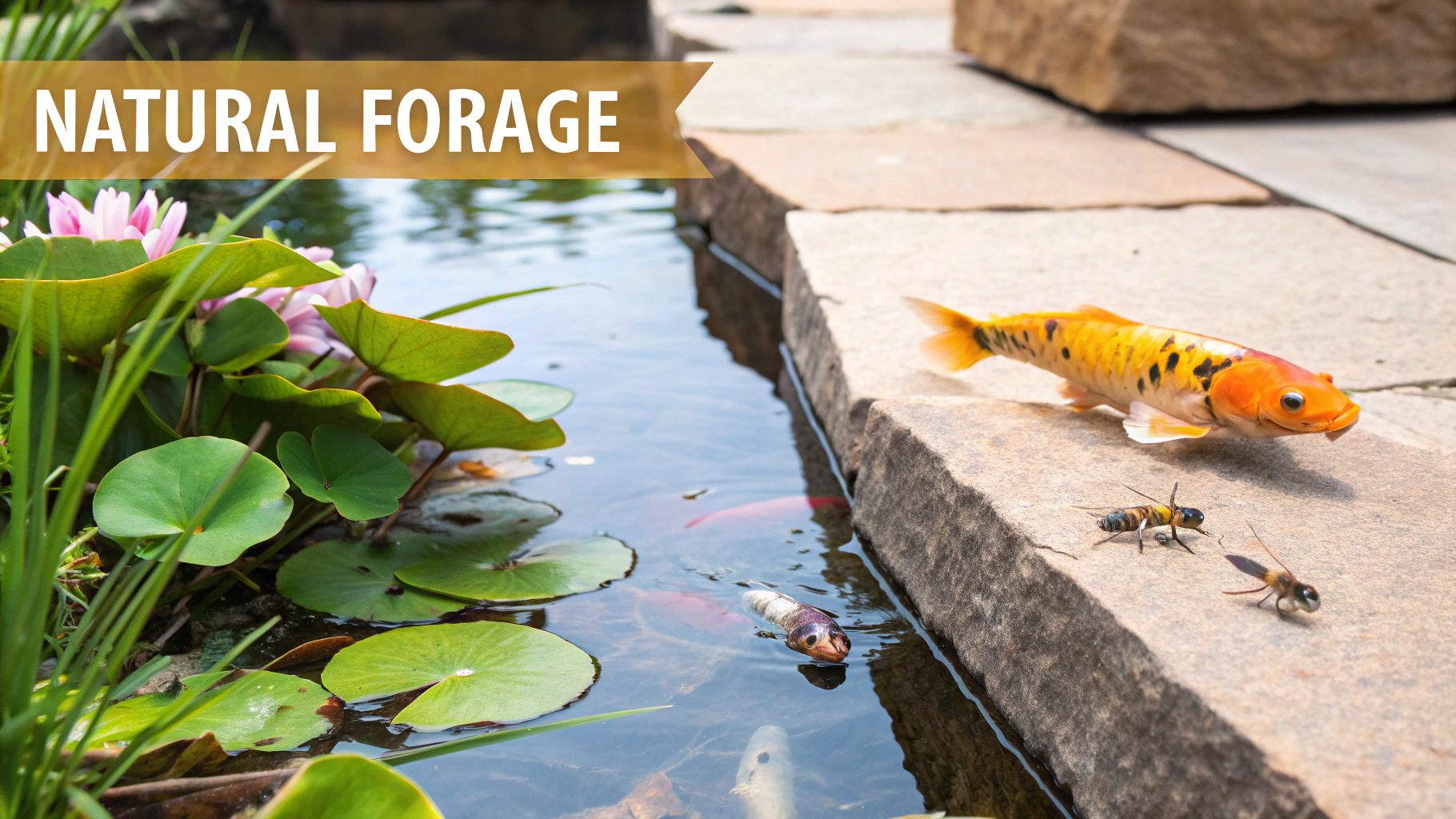
If you really want to understand what your koi need to eat, you have to think beyond the bag of pellets. Take a look at the world from their perspective. In nature, koi are born foragers—they’re the tireless grazers of the pond, always on the hunt for their next meal.
This constant searching isn't just about hunger; it’s a core part of their being. A wild koi's diet is incredibly varied, which is a testament to their omnivorous instincts. They aren’t picky, and they’ll happily sample just about anything that crosses their path.
The Pond's Natural Pantry
A healthy, well-established pond is basically a self-stocking buffet for your fish. When you work to create that kind of natural ecosystem, you're not just making a pretty water feature. You're encouraging your koi's natural behaviors and giving them vital micronutrients that processed foods often lack.
So, what’s on their natural menu?
- Aquatic Plants and Algae: Koi spend a good part of their day nibbling. They graze on the soft algae that grows on rocks and liners, and they'll also munch on the tender roots and shoots of plants like water lilies and hyacinths.
- Insects and Larvae: The pond is a smorgasbord of bugs. Koi are opportunistic hunters, gulping down mosquito larvae, dragonfly nymphs, and any other insect unlucky enough to fall into the water.
- Worms and Crustaceans: You'll often see koi nudging the bottom of the pond, stirring up the substrate. They're digging for tasty morsels like worms, snails, and tiny freshwater shrimp.
This is exactly why you don't need to feed koi in a mature ecosystem pond as often as you might think. They are masters at finding their own snacks, supplementing their diet with everything from insects to plant matter.
This natural diet does more than just keep them full. The act of foraging itself provides essential mental and physical stimulation, keeping them active and engaged.
Bringing the Wild to Your Backyard
The good news is that mimicking this food web in your own pond is easier than it sounds, and the benefits are huge. A properly planted pond isn't just for looks; it becomes a living pantry that enriches your koi's life every single day. The variety they find—protein from bugs, vitamins from plants—helps build stronger immune systems and supports better digestion.
Ultimately, understanding a koi’s instinct to forage is key. The best approach combines a high-quality pellet with the opportunity for them to graze naturally. This creates the perfect nutritional balance for vibrant, healthy, and happy fish—just as nature intended.
How to Choose the Best Commercial Koi Food
For most of us pond owners, high-quality pellets are the backbone of a healthy koi diet. They're the daily bread that provides all the essential nutrition your fish need to thrive. But let's be honest, walking down the fish food aisle can feel pretty overwhelming. With all the different brands and formulas out there, how do you know you're grabbing the right bag?
Think of it like reading a nutrition label for your own food. You want to see high-quality, recognizable ingredients right at the top of the list. The goal is simple: find a pellet that gives your koi everything they need for energy, growth, and stunning color, without a bunch of unnecessary fillers.
Decoding the Koi Food Label
The first step to picking a great food is learning to read the label. You don't need a degree in biology to figure it out; just focus on a few key things that directly impact your fish's health and vibrancy.
Here’s what you should be looking for:
- Protein Content: This is arguably the most important number on the bag, as it fuels growth and builds muscle. You want to see protein sources like fish meal or shrimp meal listed high up. A good target for young, growing koi or for feeding during the warm summer months is a protein percentage around 35-40%.
- Fat Content: Fats are pure energy for your fish. A moderate amount, somewhere in the 5-10% range, keeps your koi active and supports healthy organ function. Fish oil is a fantastic source.
- Vitamins and Minerals: Any decent koi food will be fortified with essential vitamins. Vitamin C is a big one for boosting their immune system, and Vitamin E is great for their overall health.
- Carotenoids: These are the secret sauce for brilliant color. Carotenoids are natural pigments that make your koi’s reds, oranges, and yellows really pop. Look for ingredients like spirulina, marigold extract, and krill.
It’s no surprise that protein has become such a big deal in koi diets. The global demand for protein-rich aquaculture products has skyrocketed, and in the ornamental koi world, this segment makes up a whopping 60% market share by volume. That just goes to show how seriously we keepers take our fish's nutrition. You can see more data on the koi market over at ResearchAndMarkets.com.
Matching Food Type to Your Koi's Needs
Not all koi food is created equal, and one type definitely doesn't fit all situations. Different formulas are designed to achieve specific goals, whether it’s bulking up a young fish or preparing for a show. The basic idea of matching nutrition to your fish’s needs is very similar to what we cover in our guide to the best food for aquarium fish.
Pro Tip: Always, always check the expiration date on the bag. Over time, the fats in koi food can turn rancid and the vitamins lose their punch, leaving you with pellets that offer very little nutritional value.
To make things easier, let's break down the main types of commercial koi food you'll find on the shelf.
Comparing Types of Commercial Koi Food
Choosing the right formula often comes down to the season and your specific goals for your koi. This table should help you figure out what you need and when you need it.
| Food Type | Primary Purpose | Key Ingredients | Best Time to Use |
|---|---|---|---|
| Staple Food | Provides balanced, everyday nutrition for maintenance. | Balanced protein (30-35%), vitamins, minerals. | Daily feeding during moderate temperatures (spring and fall). |
| Growth Formula | Promotes rapid growth and body development in young koi. | High protein (40%+), higher fat content. | For young koi (tosai) or during peak summer growing season. |
| Color Enhancer | Intensifies the reds, yellows, and oranges in koi skin. | Spirulina, krill, marigold extract, shrimp meal. | A few weeks before a koi show or during summer for vibrancy. |
| Wheat-Germ Formula | Offers easy digestion when metabolisms are slow. | Wheat germ as the primary ingredient, lower protein. | In cooler water during early spring and late fall. |
Most keepers find that having a couple of different types of food on hand—like a staple food for most of the year and a wheat-germ formula for the cooler months—is the perfect strategy for keeping their koi healthy and happy all year round.
Matching Your Feeding Schedule to the Seasons
One of the biggest lessons you learn as a koi keeper is that your fish's appetite is ruled by the thermometer. Koi are ectothermic—cold-blooded—which means their internal body temperature simply matches the water around them. This has a massive impact on everything, from how much they swim around to how well they can digest a meal.
I like to think of their metabolism as a furnace. In the heat of summer, that furnace is roaring hot, burning through fuel (food) to support rapid growth and high energy. But in the dead of winter, it’s just a tiny pilot light, barely burning anything at all. Feeding them the wrong food at the wrong time is like trying to burn a wet log on that pilot light. It just won't work and can cause a lot of problems.
This is exactly why you can't just feed your koi the same way all year. Adjusting what you offer—and how often—is absolutely critical to keeping them healthy.
Feeding by the Thermometer
The only truly reliable way to know what to do is to keep an eye on your pond's water temperature. When the water gets too cold, a koi’s digestive system slows to a crawl. Tossing in a high-protein meal then is a recipe for disaster, as the undigested food can make them seriously ill.
Here’s a simple, temperature-based guide that I and many other keepers follow:
- Above 70°F (21°C): This is go-time! It's the peak growing season. Feed them a high-protein growth formula anywhere from two to four times a day. Their metabolism is firing on all cylinders, and they can efficiently convert those nutrients into size and strength.
- 60-70°F (15-21°C): As things start to cool down, it's time to switch to a more balanced, everyday staple pellet. You can still feed once or twice daily, but pay close attention. Make sure they're eating everything you offer within about five minutes.
- 50-60°F (10-15°C): Now it's time to get serious about digestion. Switch to a low-protein, wheat-germ-based food, which is much easier for their slowing systems to handle. Feed only once a day, and try to do it on sunny afternoons when the water has warmed up a bit.
- Below 50°F (10°C): Stop feeding completely. Their digestive system has basically shut down for the winter. Any food they take in will just sit and rot in their gut, which can be fatal. It might feel wrong, but it’s the kindest thing you can do.
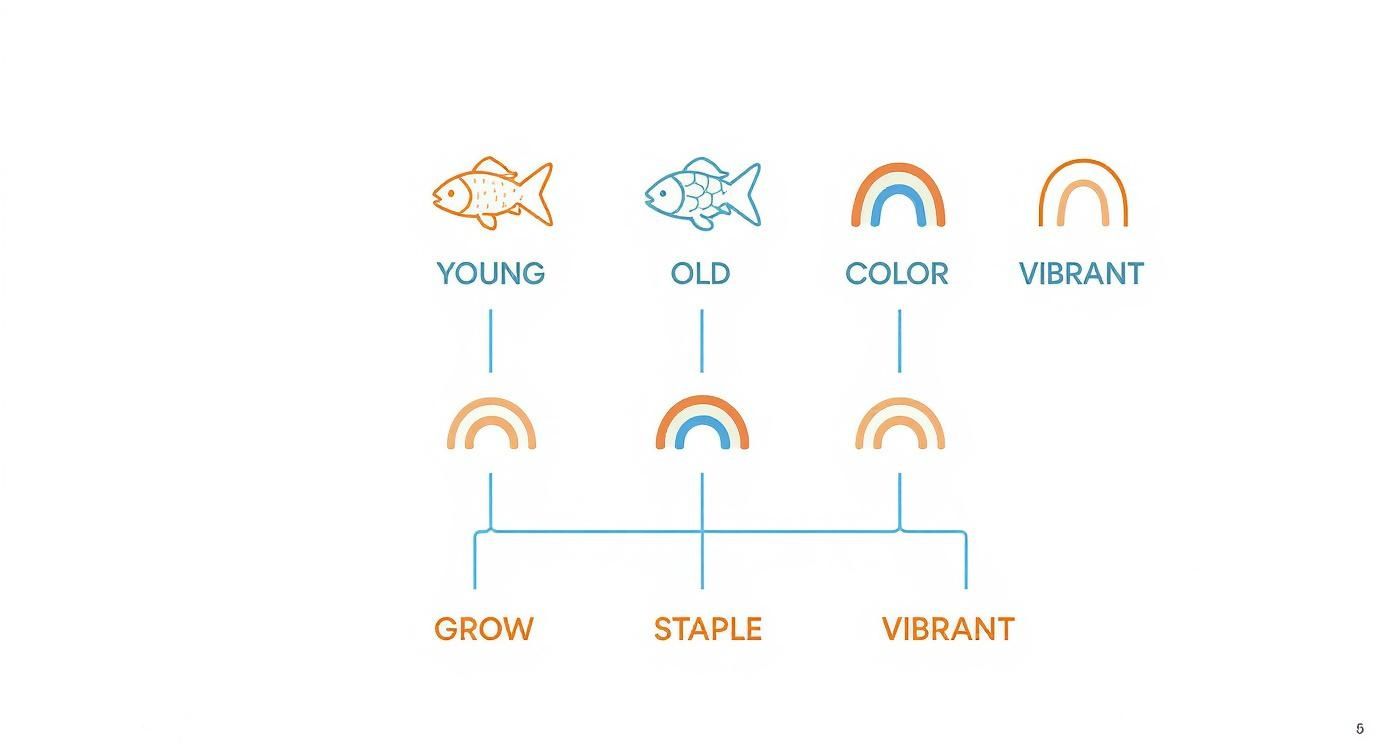
This simple diagram helps connect the dots. Whether your goal is maximum growth, vibrant color, or just steady health, your food choice has to match the season and the specific needs of your fish at that moment.
Why Wheat Germ Is a Cool-Weather Hero
You’ll hear koi experts talk about wheat germ all the time for cool-water feeding, and for good reason. It’s a carbohydrate that’s incredibly easy for a sluggish, cold-water metabolism to break down. It gives them the energy they need without the heavy lifting required to digest complex proteins.
By switching to a wheat-germ formula in the spring and fall, you provide your koi with the necessary energy to navigate these transitional periods without overloading their sensitive digestive systems.
This kind of seasonal awareness is really what separates the good koi keepers from the great ones. It's about understanding not just what koi eat in general, but what they truly need at specific times of the year to thrive.
Safe and Healthy Treats Your Koi Will Love
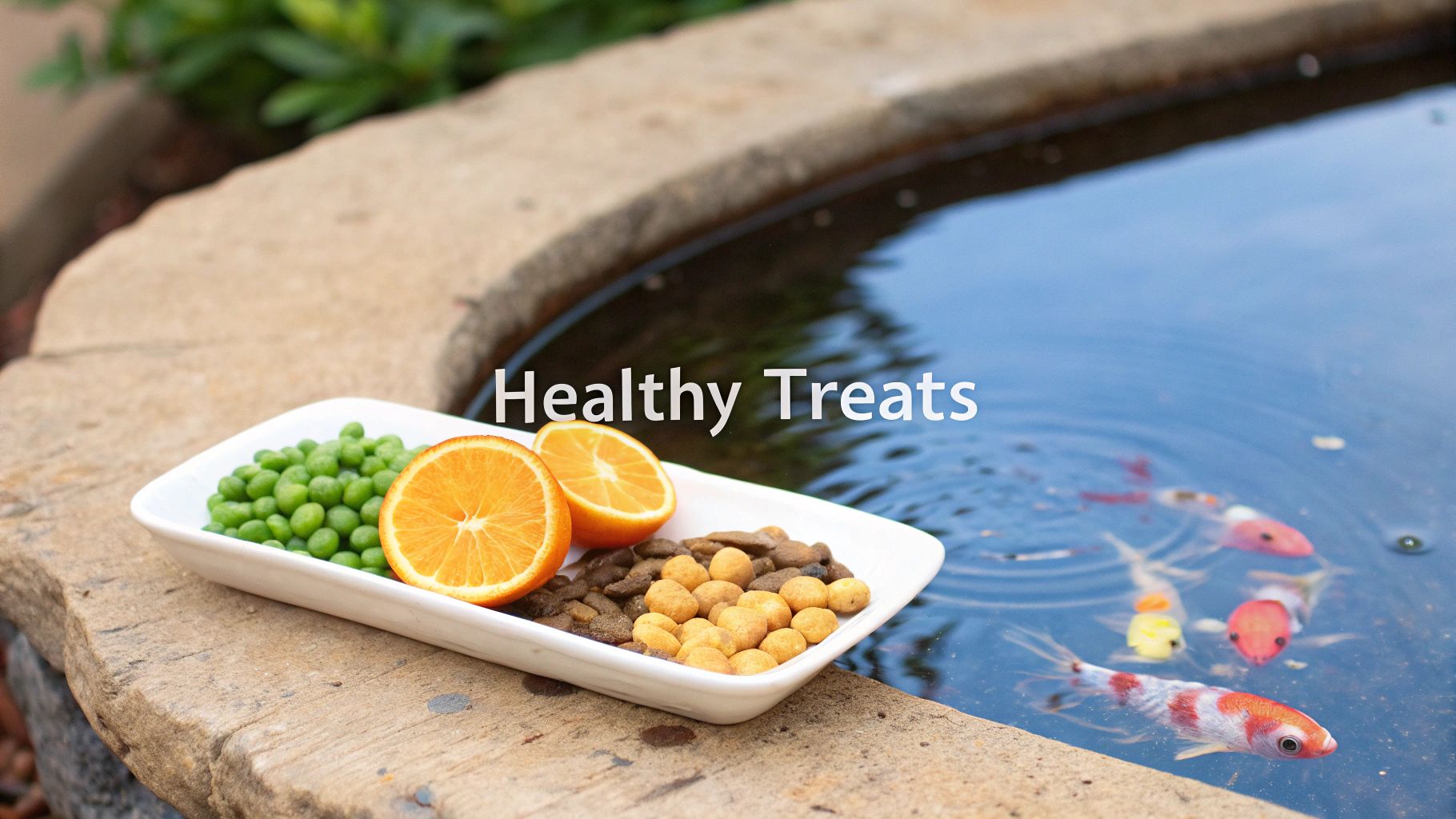
While a high-quality pellet should always be the cornerstone of your koi's diet, offering some occasional treats is a wonderful way to bond with your fish and add a little variety to their meals. Think of it like a healthy dessert—it’s a supplement, not a replacement for their main course.
Giving them different snacks introduces new vitamins and minerals, much like the diverse bits and pieces they’d forage for in the wild.
The golden rule is moderation. Treats should only make up about 5-10% of their total food intake. Sticking to this prevents digestive problems and keeps your pond water clean. Offer small, bite-sized pieces they can gobble up quickly. This turns feeding time into a really fun, interactive experience for both of you.
Great Treat Options From Your Kitchen
You’d be surprised how many koi-friendly snacks you can find right in your own kitchen. Many common fruits and vegetables are packed with nutrients and are easy for koi to digest, as long as they're prepared properly.
- Fruits: Koi have a bit of a sweet tooth! They go crazy for small pieces of watermelon, peeled orange slices, or grapefruit. These are loaded with Vitamin C, which is a fantastic boost for their immune system.
- Vegetables: Shelled peas are a classic favorite and actually help with their digestion. You can also try offering little bits of steamed broccoli, spinach, or even lettuce.
- Protein Boosts: For a real protein kick, koi absolutely love earthworms, shrimp, and especially dried Black Soldier Fly Larvae (BSFL).
Black Soldier Fly Larvae are a powerhouse treat. They're not just high in protein; they're also packed with calcium, which is crucial for strong bone development and healthy, vibrant scales.
Why Dried BSFL Are a Superior Koi Treat
When you're thinking about treats, especially during the summer growth season, protein-rich options are a huge plus. This is where dried Black Soldier Fly Larvae, like Pure Grubs, really shine. They're a fantastic, sustainable choice that’s naturally full of essential amino acids and healthy fats that fuel your koi’s energy and growth.
Koi keepers are increasingly looking for top-tier nutrition, and the market reflects that. The global koi food market was valued at $1.42 billion and is projected to hit $2.1 billion by 2033. This growth is all about owners wanting the very best for their fish's health and vitality. You can find more market insights over at Dataintelo.com.
Adding BSFL to the mix gives your koi a clean, nutrient-dense snack that taps into their natural instinct to hunt for insects. To learn more about what makes them such a great choice, check out our guide on using Black Soldier Fly Larvae for animal feed. By choosing smart treats, you can spoil your fish while actively supporting their long-term well-being.
Even the most seasoned koi keepers can fall into bad habits. Figuring out what your koi eat is just the start—knowing how not to feed them is arguably even more crucial for their health and the balance of your pond. A few simple tweaks can sidestep some major problems down the road.
The single biggest mistake we all make? Overfeeding. It's so easy to do. Your fish come right up to the surface, looking like they're starving, and it’s tempting to keep tossing in food. But koi don't have true stomachs, so they don't get that "full" signal like we do. They'll just keep on eating.
The Problem with Too Much Food
When you give your koi more food than they can eat in a few minutes, you're setting off a chain reaction that hurts your pond's ecosystem. All that leftover food sinks and starts to rot, releasing a spike of ammonia into the water. This is basically fertilizer for algae blooms and puts a huge burden on your filter, potentially turning the water toxic.
It’s not great for the fish, either. Overfed koi can become obese and develop health problems that can seriously shorten their lives. Honestly, a slightly hungry koi is a much healthier koi.
A great rule to live by: only give them what they can completely clean up in about three to five minutes. In the warmer months, do this just once or twice a day. If you see pellets still floating around after five minutes, you’ve fed them too much.
Other Traps to Watch Out For
It's not just about how much you feed, but also what and when. Being aware of these common slip-ups will make you a much better, more confident koi keeper.
- Forgetting to Check the Temperature: This one is a big deal. Tossing in high-protein food when the water drops below 60°F (15°C) is asking for trouble. Their metabolism has slowed way down, and they just can't digest all those nutrients properly, which can lead to serious blockages and illness.
- Using Old, Stale Food: Koi food doesn't last forever. Over time, essential vitamins break down and the fats in the pellets can go rancid. Always give the expiration date a quick glance and store your food in a cool, dry place inside an airtight container. Freshness matters.
- Giving Them the Wrong Kind of "Treats": It might be tempting to share your lunch, but please avoid giving koi high-carb human foods like bread, crackers, or rice. They get almost no nutritional value from them, have a hard time digesting them, and it messes up your water quality in a hurry. Stick to things that are actually good for them, like certain fruits, veggies, or a high-quality protein snack.
Common Questions About Feeding Koi
Even with a good handle on the basics, real-world questions always pop up. Let's tackle some of the most common things koi keepers wonder about, so you can feel confident in your feeding routine.
How Long Can Koi Go Without Food?
This is a surprisingly common worry, especially for new owners. Healthy, adult koi are tough. In a pinch, they can go for two or even three weeks without a meal, particularly when the water is cool and their metabolism is crawling along.
But just because they can, doesn't mean they should. Think of it as survival mode, not a healthy lifestyle. Consistent, quality nutrition is what keeps them growing, their colors popping, and their immune systems strong. Of course, this doesn't apply to their natural winter fast. When water temperatures dip below 50°F (10°C), they can go for months without eating, which is a perfectly normal part of their yearly cycle.
Can Koi Eat Bread or Other Human Foods?
It's tempting to toss a piece of bread or a cracker into the pond, but please don't. These kinds of processed human foods are, frankly, junk food for your koi. They offer next to no real nutritional value and can wreak havoc on a fish's digestive system.
Worse yet, these starchy foods dissolve into a mushy mess almost instantly, fouling your pond water and creating a breeding ground for problems. The best rule of thumb is to stick with foods made for them—quality koi pellets and safe, natural treats like certain fruits, veggies, and insects.
Here's a simple way to think about it: A proper koi diet comes from a specially formulated bag or from a garden, not from your kitchen pantry. Processed human foods introduce health and water quality risks that just aren't worth it.
What Are the Signs of Overfeeding?
Overfeeding is probably the most common mistake koi keepers make, but your pond will give you clear signals if you're overdoing it. The biggest giveaway is poor water quality. If your pond water suddenly looks cloudy or develops a foamy film on the surface, it's likely from excess waste and uneaten food breaking down.
You might also see a sudden algae bloom, as the excess nutrients feed the green stuff. Your fish themselves can give you clues—lethargic or bloated koi are often overfed koi. A great way to check yourself is to watch them eat. If there's still food floating around 5 minutes after you've scattered it, you've offered too much.
A varied, high-quality diet is one of the greatest gifts you can give your koi for a long, vibrant life. To add a protein-packed, natural treat they’ll go crazy for, consider Pure Grubs. Our dried Black Soldier Fly Larvae are a safe, highly nutritious supplement that supports fantastic growth and brilliant color. Explore the benefits of Pure Grubs today.