

Best food for aquarium fish: Essential feeding tips
When it comes to feeding your fish, there's no single "best" food. The goal is a high-quality, species-appropriate diet that delivers a complete balance of protein, fats, and all the essential nutrients they need. For most community tanks, a premium flake or pellet food is a great starting point, but variety is the real secret to unlocking vibrant health, brilliant colors, and a long, happy life for your aquatic pets.
What Do Your Fish Actually Need to Eat?
Before you can pick out the perfect food, you have to understand what your fish's bodies are designed to run on. Think about it like our own diet—we couldn't stay healthy eating just one thing, and neither can they. Fish need a balanced mix of nutritional building blocks to grow, stay active, and fend off sickness.
It's a bit like keeping a car in good shape. You need the right fuel, oil, and coolant for it to run properly. In the same way, a fish needs a specific blend of macronutrients (protein and fat) and micronutrients (vitamins and minerals). Each one plays a unique and critical role, and getting the balance right is the first major step toward becoming a truly skilled fishkeeper.
Protein: The Body's Building Blocks
Protein is, without a doubt, the most important part of a fish's diet. It’s the raw material for building literally everything—from muscle and scales to fins and internal organs. When a fish gets a small injury, like a torn fin from a tank-mate, its body relies on protein to make the repairs. Without enough good-quality protein, growth slows to a crawl and healing takes much longer than it should.
But here's the catch: not all protein is the same. The source is everything. A Betta, for instance, is a carnivore that evolved to hunt insects, so it needs animal-based proteins from sources like insects or crustaceans to thrive. A herbivorous Pleco, on the other hand, has a digestive system built to break down plant-based proteins from algae and spirulina.
A Pro Tip: Always read the ingredient list on your fish food. The first one or two ingredients should be a high-quality protein source like whole fish, shrimp, or insect larvae—not vague "fish meal" or cheap fillers like wheat and soy.
Fats: The Fuel for Life
If protein builds the body, then fats provide the energy to run it. Fats are a super-concentrated fuel source that fish burn for swimming, exploring, and all their other daily activities. They're especially important for zippy swimmers like Danios or for fish getting ready to breed, which takes a massive amount of energy.
Fats also have another crucial job: they help with nutrient absorption. Some of the most important vitamins are "fat-soluble," which means the fish's body can only absorb and use them if fats are present in the meal. A diet that's too lean can accidentally cause nutritional deficiencies, even if the food claims to be vitamin-fortified.
Vitamins and Minerals: The Health Boosters
Think of vitamins and minerals as the essential supplements that keep a fish's entire system running in top condition. They're only needed in tiny amounts, but their impact on overall health is huge.
- Vitamin C is a powerhouse for the immune system and helps with healing, making it easier for fish to fight off common diseases.
- Vitamin A is key for good vision and maintaining a healthy slime coat—a fish's primary shield against parasites.
- Calcium and Phosphorus are critical for building a strong skeleton and tough scales, much like calcium is for our own bones.
When these micronutrients are missing, you start to see problems like dull colors, sluggish behavior, and a weak immune system. This leaves your fish wide open to stress and illness. The easiest way to cover all your bases is simply to offer a varied diet.
A Guide to Common Fish Food Types
Walking down the fish food aisle can feel like a pop quiz you didn't study for. With so many shapes, sizes, and formulas staring back at you, it’s easy to get overwhelmed. Don't worry—picking the right food is much simpler once you understand what each type is actually for.
The real key is matching the food's format to your fish's natural feeding habits. Think of it this way: you wouldn't serve a steak to someone who only eats soup. In the same way, a bottom-dwelling Corydora won't get much from a floating pellet meant for a surface-feeding Betta. Getting to know the different food types helps you provide the best possible meal for everyone in your tank.
This table breaks down the most common food formats to help you make a confident choice.
Comparison of Common Fish Food Formats
| Food Type | Best For | Pros | Cons |
|---|---|---|---|
| Flakes | Community tanks with small to medium-sized fish that feed at various water levels (e.g., Tetras, Guppies). | Spreads across the surface, sinks slowly, feeding multiple fish at once. Readily available and affordable. | Loses nutrients quickly in water, can create a lot of waste and cloud the tank if overfed. |
| Pellets | A wide range of fish, from surface-feeders (Bettas) to bottom-dwellers (Corydoras), depending on the pellet type. | Nutrient-dense, less messy than flakes, available in floating, slow-sinking, and sinking varieties. | Can be too large for very small fish; fish may need time to get used to them. |
| Wafers | Herbivorous and omnivorous bottom-dwellers like Plecos, Otocinclus, and shrimp. | Sinks quickly and softens slowly, allowing for natural grazing behavior over a longer period. | Not suitable for mid or top-water fish; can break down and cause waste if uneaten. |
| Crisps | Community tanks, as a cleaner alternative to flakes. | More nutrient-dense and less messy than flakes; they float longer before sinking slowly. | Generally more expensive than traditional flakes; less variety in formulas. |
| Freeze-Dried | Carnivores and omnivores as a high-protein treat (e.g., Bettas, Cichlids). | Excellent source of protein, mimics natural prey, long shelf life, and parasite-free. | Lacks a complete nutritional profile and should be used as a supplement, not a staple. |
Choosing between these options really comes down to who lives in your tank. A community of Tetras might thrive on high-quality flakes, while a tank with a prized Betta and some Corydoras would do better with a mix of floating and sinking pellets.
Flakes: The Classic Choice
Flake foods are what most people picture when they think of fish food, and they're often the first choice for new hobbyists. They’re lightweight, spread out across the surface, and then slowly drift down. This dispersal pattern makes them great for community tanks with small- to medium-sized fish like Tetras, Guppies, and Rasboras that feed at all levels of the water column.
The downside? Flakes have a high surface area and can lose their water-soluble vitamins (like Vitamin C) almost immediately after hitting the water. They also break down easily, creating waste that can cloud your aquarium if you feed too much. The trick is to only offer what your fish can gobble up in about 30 seconds.
Pellets: Nutrient-Dense Powerhouses
Think of pellets as tiny, compressed nuggets of nutrition. They’re much denser than flakes, which means they hold their nutrients together longer and create significantly less mess in the tank. This makes them a fantastic staple food for a huge variety of fish.
The real beauty of pellets is their versatility. You can find them in different formulas designed for specific feeding styles:
- Floating Pellets: These are perfect for surface feeders like Bettas and Gouramis, whose upturned mouths are built for snatching food from the top.
- Slow-Sinking Pellets: Ideal for mid-water swimmers like Angelfish and Discus, giving them plenty of time to catch the food as it gently drifts down.
- Sinking Pellets: These drop right to the bottom, ensuring that bottom-dwellers like Corydoras and Loaches get a proper meal without having to compete with the faster fish up top.
This infographic gives a simple breakdown of how a proper diet supports the well-being of your fish.
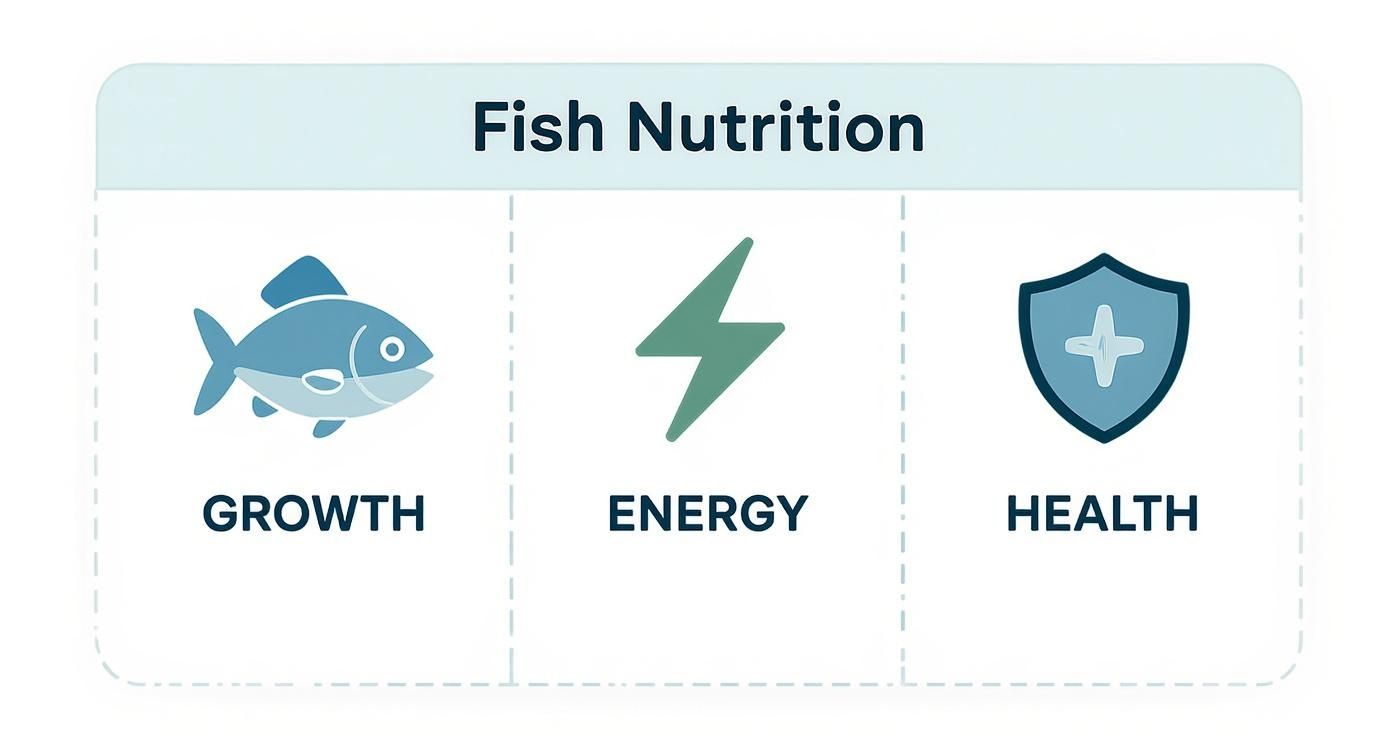
As you can see, a balanced diet is the engine that drives everything—from growth and energy to building a strong immune system that can fight off illness.
Wafers and Crisps for Specialized Feeders
Wafers and crisps are more specialized formats designed with particular fish in mind.
Algae Wafers are hard, dense discs packed with plant matter like spirulina and kelp. They sink straight to the bottom and soften gradually, allowing herbivorous bottom-dwellers like Plecos and Otocinclus catfish to graze on them for hours. This perfectly mimics their natural foraging behavior.
Crisps are a more modern take on fish food. They look like thin, baked discs and offer a nice middle ground between flakes and pellets. They tend to float longer than flakes before sinking and are more nutrient-dense, making them a cleaner and more efficient option for many community tanks.
Reading the Label is Your Superpower
No matter the food's shape, the ingredient list tells the real story. The best foods will always list a specific, high-quality protein source first, like "whole salmon," "black soldier fly larvae," or "shrimp." Be wary of foods that start with vague terms like "fish meal" or are loaded with fillers like wheat flour or soy—these offer very little nutritional value.
Freeze-Dried and Dried Foods
Freeze-dried foods are whole organisms—like bloodworms, daphnia, or mysis shrimp—that have had all their moisture vacuumed out. This process does an excellent job of preserving the original nutritional content while making the food shelf-stable and completely free of any nasty parasites.
These foods make for an incredible supplemental treat to boost protein and add exciting variety to your fish's diet. Carnivores and omnivores, in particular, go absolutely wild for them because they closely mimic the natural prey they'd hunt in the wild.
For instance, dried insects are a fantastic option. If you want to see this in action, you can learn more about the benefits of dried black soldier fly larvae for aquatic pets. They float well, are packed with protein, and trigger a natural feeding response that’s a joy to watch.
Creating the Perfect Diet for Your Fish Community
A community aquarium is a lot like a bustling little neighborhood, with residents from all walks of life. And just like people, different fish have their own unique dietary needs. Getting the feeding plan right isn't just about managing fish personalities; it's about building a menu that keeps everyone happy and healthy.
The single best way to approach this is to think about your fish the way nature does: are they an herbivore, carnivore, or omnivore? When you cater to their natural diet, you get a more peaceful tank. Food competition drops, stress goes down, and what could be a chaotic free-for-all becomes a calm, enriching part of your day.
Feeding Your Plant-Eaters
Herbivorous fish are the grazers of the aquatic world. They spend their days nibbling on algae and plant matter, and their long digestive systems are built specifically to break down tough cellulose. If these fish don't get enough plant-based fiber, they can run into serious trouble, like digestive blockages.
You'll find plenty of popular herbivores in the hobby, like many types of Plecos, Otocinclus catfish, and Mollies. Keeping them in top shape means building their diet around high-quality, plant-based foods.
- Algae Wafers: These dense, sinking discs are the perfect staple food. They soften up slowly, letting bottom-dwellers graze naturally over time, just like they would in the wild. Look for brands where spirulina or kelp is a main ingredient.
- Blanched Vegetables: Throwing in some fresh greens is a fantastic way to add variety. Zucchini, spinach, and shelled peas (just blanch them in hot water to soften) are excellent choices that most herbivores will go crazy for.
Catering to the Carnivores
Carnivores are the hunters in your tank. They have shorter digestive tracts designed to quickly process high-protein meals from animal sources. Trying to feed them a plant-heavy diet is like asking a lion to live on salad—it just doesn't have the essential amino acids they need to thrive.
Some of the most popular carnivores include Bettas, most South American Cichlids, and many pufferfish. Their diet has to be packed with protein to fuel their energy and growth.
A common mistake is thinking any old flake food will do for a carnivore like a Betta. Sure, they might eat it, but a diet that’s low in animal protein will eventually lead to poor health and faded colors.
To properly nourish your carnivores, you need to focus on protein. A high-quality pellet made for carnivorous species is a great starting point. Then, a few times a week, mix things up with freeze-dried or frozen foods like bloodworms, brine shrimp, and daphnia. This adds fantastic nutritional variety and mental stimulation. For those looking for a sustainable, nutrient-dense treat, it helps to know where to buy black soldier fly larvae as a high-protein supplement.
Balancing the Omnivore Diet
Omnivores are the jacks-of-all-trades. They happily eat a mix of both plant and animal foods, which includes a huge number of beloved community fish like Tetras, Guppies, Barbs, and Corydoras catfish. While their flexibility makes them pretty easy to feed, they still need a balanced approach to stay in peak condition.
For omnivores, variety is everything. Just feeding one type of food, even a good one, can create nutritional gaps over time. The goal is to mimic the diverse buffet they'd find in their natural habitat.
A great feeding strategy for your omnivorous crew looks something like this:
- A Staple Food: Start with a premium-quality flake or slow-sinking pellet as the foundation of their diet. This ensures they get a balanced core of nutrients every day.
- Vegetable Matter: A couple of times a week, drop in some algae wafers or blanched veggies. This provides crucial fiber that keeps their digestive systems running smoothly.
- Protein Boosts: Once or twice a week, offer a high-protein treat like freeze-dried insects or frozen brine shrimp. This rounds out their nutrition and brings out their natural foraging instincts.
Live, Frozen, and Supplemental Foods: The Key to Peak Health
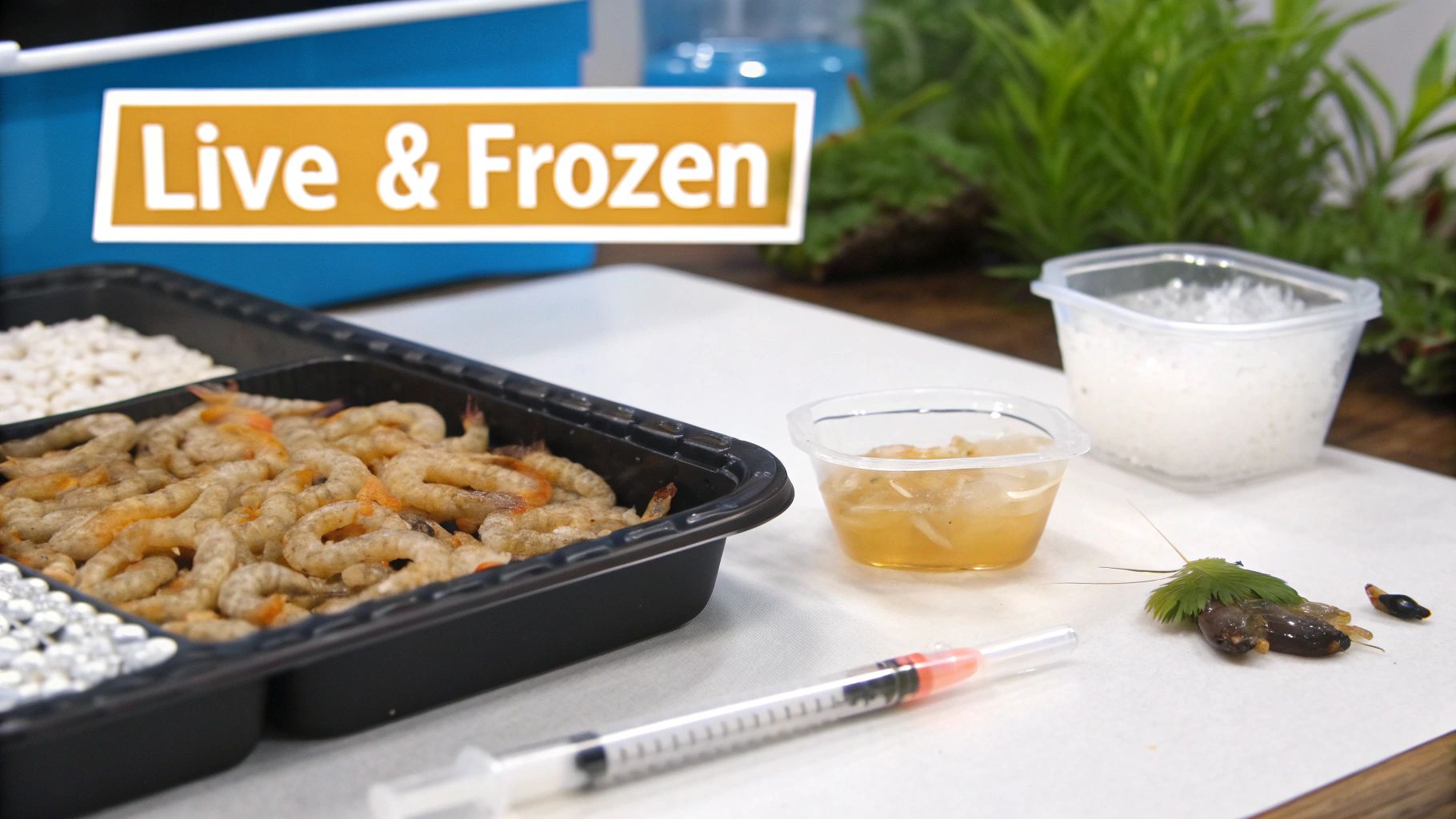
To really see your fish thrive, we need to think beyond the daily sprinkle of flakes or pellets. While a high-quality staple food is the foundation of their diet, it's the supplemental foods that truly unlock peak health, make their colors pop, and can even kickstart natural breeding behaviors.
Think of it this way: you eat balanced meals, but you also add fresh fruit, vegetables, and other snacks to round out your nutrition. For fish, supplemental foods like live, frozen, and insect-based treats do the exact same thing. They offer a powerful nutritional punch that standard dry foods just can't match.
Adding this kind of variety into their diet stimulates natural hunting instincts and delivers whole-food nutrients in their most bioavailable form. Tossing in these special meals just a few times a week is one of the best things you can do to provide the best possible food for your aquarium fish.
The Excitement of Live and Frozen Foods
Live and frozen foods are the closest you can get to what your fish would actually eat in the wild. They are incredibly effective for tempting picky eaters and getting fish into breeding condition. The frantic wiggle of live food triggers a deep-seated hunting response that provides fantastic mental enrichment.
Frozen foods offer most of the same perks but with far more convenience and a lower risk of introducing nasty diseases. They are flash-frozen right after harvesting to lock in all that nutritional goodness, making them a safe and practical way to boost the protein and fat content of your fish's diet.
Some of the most popular and beneficial options you'll find are:
- Brine Shrimp: A classic for a reason. Available live or frozen, they're a fantastic source of protein and fats that almost any fish will eagerly accept.
- Bloodworms: These are actually the larvae of midge flies, not worms, and they are an absolutely irresistible, protein-packed treat for most carnivores and omnivores.
- Daphnia: Often called "water fleas," these tiny crustaceans are perfect for smaller fish and have the added benefit of helping to clear up green water.
- Mysis Shrimp: A bit larger than brine shrimp, they're a superb food for conditioning bigger fish and are loaded with essential fatty acids.
Safety First When Handling Frozen Foods
A common mistake I see is people dropping a frozen cube directly into the tank. This can cause a sudden, shocking drop in temperature and leads to the food thawing unevenly. Instead, just thaw the cube in a small cup with a little tank water first. Then, pour the contents in for a much safer and more enjoyable mealtime.
The Rise of Insect-Based Supplements
Let's face it: for many of the most popular fish we keep, insects are a huge part of what they'd eat back in their natural habitat. This simple fact has led to some fantastic, high-quality insect-based supplements that offer a sustainable and nutritionally complete option.
These feeds tap into an ancient food source, providing a protein profile that many fish are biologically hardwired to thrive on. Black soldier fly larvae (BSFL), for instance, are an excellent choice. They're packed with protein, healthy fats, and boast a naturally high level of calcium—crucial for strong bones and overall development. This makes them a superior choice compared to many other feeder insects. You can take a deeper dive into how black soldier fly larvae are used for animal feed to see their full range of benefits.
Insect-based supplements perfectly mimic the natural foraging that fish like Bettas, Gouramis, and many Cichlids would do all day. They provide not just great nutrition, but also the kind of enrichment that comes from eating a food their instincts recognize. It's an essential piece of a truly well-rounded feeding plan.
Getting Feeding Schedules and Portions Right
Choosing the right food is a great start, but it's only one piece of the puzzle. The real art of fishkeeping lies in knowing how much and how often to feed. I’ve seen more aquarium problems stem from overfeeding than from almost any other mistake. It's an easy trap to fall into; we love our fish and want them to be full and happy, but kindness can kill. Too much food quickly fouls the water and puts your fish under serious stress.
What happens to all that leftover food? It sinks, rots, and decays. This process pumps toxic ammonia into the water, which can injure or even kill your fish. That’s why figuring out portion control isn't just a "nice-to-have" skill—it's essential for keeping a clean, stable, and healthy tank.
The Two-Minute Rule: Your Golden Guideline
If you remember one thing about portioning, make it the two-minute rule. It's incredibly simple and effective: give your fish only as much food as they can devour in about two minutes. If you still see flakes or pellets drifting down to the gravel after that time, you've offered too much.
Think of it as a live test of your fishes' appetite. Watching them for those two minutes will teach you exactly what they need. You’ll prevent waste, keep your water crystal clear, and make sure your fish get all the nutrients they need without turning their home into a toxic mess.
Pro Tip: When in doubt, it's always safer to underfeed a little than to overfeed. A slightly hungry fish is an active, healthy fish. An overfed fish is swimming in a slowly poisoning environment.
How Often Should You Feed?
There’s no single answer here. Different fish have completely different digestive systems and energy levels, so a universal schedule just won't cut it. You have to tailor the frequency to the inhabitants of your tank.
Here are a few solid starting points:
- Active Community Fish: Think of your Tetras, Guppies, and Danios. These little guys are always on the move and have fast metabolisms to match. They do best with one or two small meals per day, sticking to the two-minute rule for each feeding.
- Larger Predatory Fish: Carnivores like Oscars or many Cichlids are built for bigger, less frequent meals. Their digestive tracts are slower. Feeding them a good-sized meal every other day is often much healthier for them than daily snacks.
- Herbivores and Grazers: Fish like Plecos, Mollies, and Otos are designed to nibble constantly. A daily sinking wafer or algae tablet is a great foundation, but they really thrive when they can graze on things like driftwood or a piece of blanched zucchini throughout the day.
Why You Should Try a "Fasting Day"
Here’s a trick that might sound a little strange at first: try skipping feeding entirely one day a week. This "fasting day" is actually fantastic for your fish. It gives their digestive systems a much-needed break to fully process everything they've eaten.
A short fast helps prevent common problems like bloating and constipation, particularly for fish that are prone to gut issues. It also has a great side effect—it encourages your fish to get to work, scavenging for any little morsels of food you might have missed. It’s a simple, free way to keep them healthier in the long run.
Solving Common Fish Feeding Problems
Even with the best intentions, every fishkeeper hits a snag with feeding now and then. Maybe a new fish is snubbing every food you offer, or you've got one greedy cichlid who devours everything before the slower fish even notice it's dinnertime. These are classic aquarium hurdles, but learning how to navigate them is what really levels up your skills.
The trick is to catch these problems early. When you know what to look for and how to react, you can quickly turn a potential disaster into a minor course correction, keeping your fish happy and your tank thriving.
How to Spot and Fix Overfeeding
Let's be honest: overfeeding is probably the single most common mistake in the hobby, and it's the fastest way to ruin your water quality. The classic sign is leftover food sitting on the substrate or drifting around the tank long after the feeding frenzy is over. This decaying food pumps toxic ammonia into the water, and that's bad news for everyone.
Keep an eye out for these other tell-tale signs:
- Cloudy Water: This is often a bacterial bloom, feasting on all those extra nutrients from rotting food.
- Rapid Algae Growth: Algae absolutely loves the phosphates and nitrates that decaying leftovers release.
- Bloated Fish: Your fish might look puffy or have long, stringy waste trailing behind them.
If you see these signs, it's time to act. Immediately cut back on how much you're feeding. Stick to that two-minute rule we talked about and maybe even give them a fasting day once a week. If the water's already cloudy, a partial water change will help remove the excess gunk and get things back on track.
Here's a great rule of thumb: A fish's stomach is about the same size as its eye. Picturing that tiny portion is a fantastic visual cue to stop you from dumping in too much food.
Encouraging Picky Eaters
It can be seriously stressful when a fish just won't eat. This is especially common with new arrivals or wild-caught fish who aren't used to commercial flakes and pellets. The key here is patience and tapping into their natural instincts.
A great first step is to soak their food in a garlic supplement. The strong smell is a well-known appetite stimulant for a huge range of species. If that doesn't tempt them, bring out the good stuff—frozen bloodworms or live brine shrimp. The sight and movement of live food can kickstart a hunting response in even the most stubborn fish.
Once they start eating reliably, you can begin mixing their favorite treat with a tiny bit of the staple food you want them to eat, gradually adjusting the ratio over time.
Managing Competition in a Community Tank
In a bustling community tank, it’s easy for the shy or slow-moving fish to get pushed out of the way by their more boisterous tankmates. You need a game plan to make sure everyone gets their fair share.
A simple but effective tactic is to feed at opposite ends of the tank at the same time. Drop some flakes for the fast-moving fish on one side, and while they're distracted, sneak some sinking pellets in for your bottom-dwellers on the other side. This splits their focus and gives the little guys a fighting chance to eat in peace.
Got Questions About Fish Food? We've Got Answers.
Even after you've done your research, some specific questions always seem to come up. It's totally normal! Let's tackle some of the most common things aquarists wonder about when it comes to feeding their fish.
How Long Can a Fish Go Without Eating?
Believe it or not, most healthy adult aquarium fish can go for 3 to 7 days without a meal. How long really depends on the species, their metabolism, and even the water temperature.
So, if you're heading out for a long weekend, your fish will likely be fine. For any longer trips, though, it's best not to push it. An automatic fish feeder is a fantastic and reliable solution to keep everyone fed on schedule while you're away.
Flakes vs. Pellets: Which One Is Better?
There's no single "best" option here—it all comes down to the fish in your tank.
Flakes are great for community tanks with a lot of small fish that feed at the surface. They spread out nicely and sink slowly, giving everyone a chance to grab a bite.
Pellets are more concentrated, meaning less mess and more nutrition per piece. They come in both floating and sinking varieties, which makes them perfect for targeting specific fish, whether it's a mid-water swimmer like a Gourami or a bottom-dweller like a Cory Catfish. A mix of both is often a great strategy!
Pro Tip: One of the classic signs you're overfeeding is constantly cloudy water or algae that just won't quit. When uneaten food decays, it releases a flood of nutrients into the water, creating the perfect breeding ground for algae and bacterial blooms that can crash your whole ecosystem.
What Are the Telltale Signs of Overfeeding?
You can spot overfeeding by looking at your fish and your tank. You’ll see uneaten food rotting on the gravel, which often leads to murky water and a funky smell. Your filter will also get gunked up way faster than usual.
As for the fish, they might look bloated or have long, stringy poop trailing behind them. The fix is simple: cut back on the portion sizes immediately. It also helps to introduce a "fasting day" once a week to give their digestive systems a break.
Can I Feed My Fish People Food?
That's a hard no for most human foods. Things like bread, crackers, or other processed snacks are terrible for fish. They offer zero real nutrition, can cause fatal digestive blockages, and will foul your tank water in a hurry.
However, some fresh veggies are a fantastic treat for many herbivores and omnivores! Try offering blanched, skinned peas, thin slices of zucchini, or a bit of spinach. Many fish go absolutely crazy for these healthy, natural snacks.
Looking for a natural, protein-packed treat that mimics what fish eat in the wild? Supplementing their main diet with a quality insect-based food is a great way to go. Pure Grubs are USA-grown Black Soldier Fly Larvae loaded with protein and calcium—an excellent choice for boosting your fish's health and bringing out their best colors.
You can learn more about Pure Grubs on their website.