

What Do Pet Fish Eat? A Beginner's Feeding Guide
When you get right down to it, the single most important key to a healthy pet fish is what you feed it. And no, it's not a one-size-fits-all situation. Most fish foods on the shelf are made for one of three dietary types: herbivores (plant-eaters), carnivores (meat-eaters), or omnivores (who eat a bit of both). Figuring out which group your fish belongs to is always the first step.
Understanding Your Fish's Natural Diet
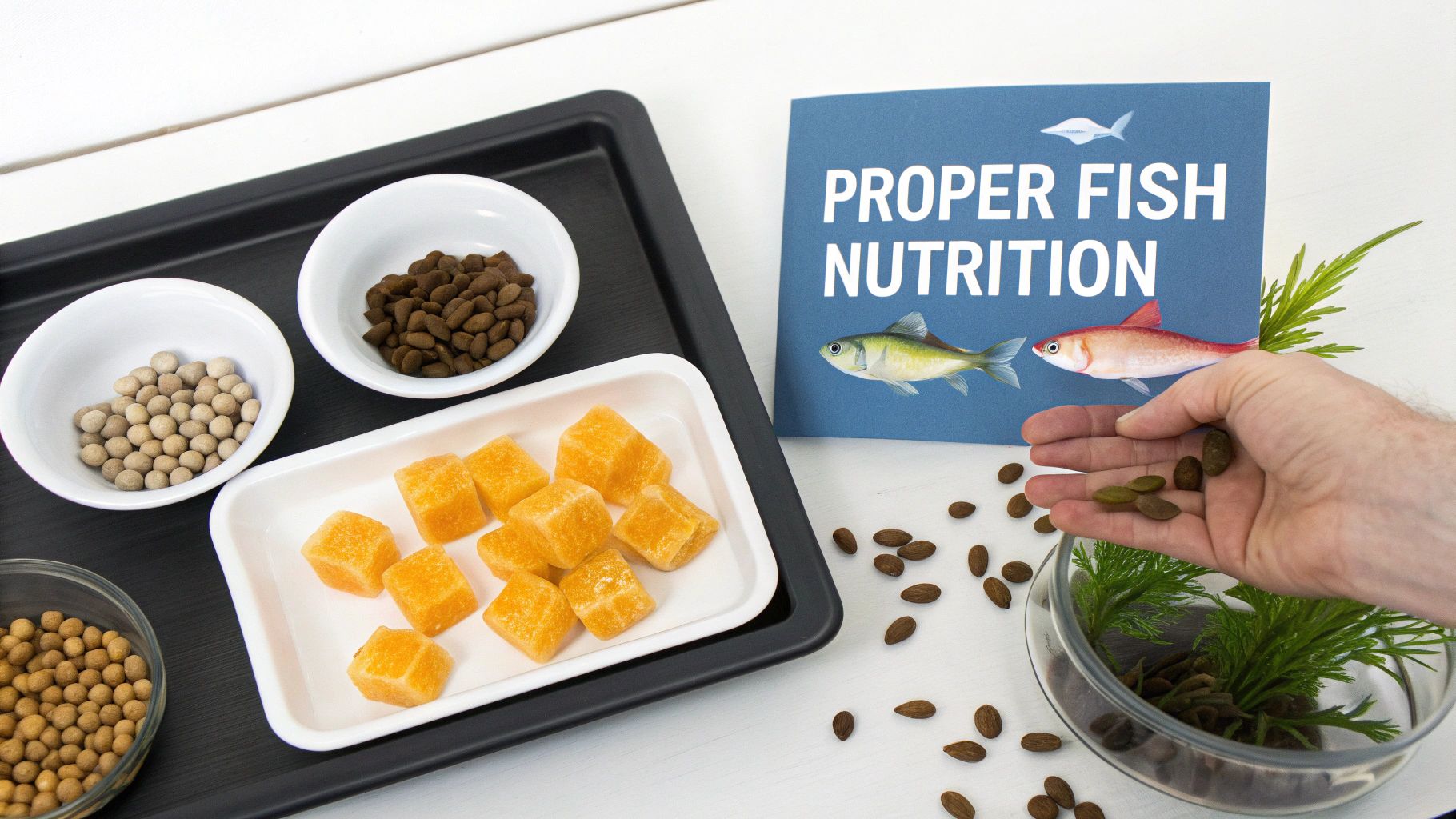
So you've jumped into the wonderful world of fishkeeping. That's great! But the secret to having vibrant, healthy fish isn't just about a sparkling clean tank. It’s about giving them a diet that closely mimics what they’d find in their natural habitat.
Think of it this way: you wouldn't feed a lion a salad, would you? The same logic applies to your aquarium. A carnivorous betta craves different nutrients than a plant-grazing pleco. Getting this species-specific diet right is the foundation for their health, color, and long life.
The Booming Fish Food Market
The global market for aquarium fish feed was valued at a staggering USD 117.15 billion and is expected to climb to USD 288.21 billion by 2033. That boom tells you one thing: people care deeply about feeding their fish well.
This explosion in the market means you have more choices than ever before, from basic flakes to specialized pellets and even high-protein treats. Many experienced keepers are looking beyond traditional foods and exploring nutrient-packed options like Black Soldier Fly Larvae for animal feed, which perfectly replicate the natural insect diet of many species.
To help you get started, it's best to sort fish into their basic dietary groups.
The table below is a handy reference for categorizing some of the most common aquarium pets by what they eat.
Quick Guide to Fish Dietary Types
| Dietary Type | Primary Diet | Common Pet Fish Examples |
|---|---|---|
| Herbivore | Plants & Algae | Plecostomus, Otocinclus Catfish, Silver Dollars, Mollies |
| Carnivore | Meat & Insects | Bettas, Cichlids (many species), Arowanas, Pufferfish |
| Omnivore | Plants & Meat | Goldfish, Guppies, Tetras, Barbs, Angelfish |
Seeing where your fish fits helps you narrow down the huge selection of foods at the pet store and make the right choice from day one.
Key Takeaway: Matching the food to your fish's natural diet—herbivore, carnivore, or omnivore—is the bedrock of good fishkeeping. Getting this right prevents a ton of common health problems and helps your fish truly thrive.
Decoding the Fish Food Menu
Strolling down the fish food aisle can feel like you're staring at a wall of endless, confusing options. It doesn't have to be that complicated. Let's break down what's available so you can craft the perfect menu for your underwater friends.
Think of flakes and pellets as the trusty, everyday meal for your fish—their version of a balanced dinner plate. These prepared foods are scientifically formulated to cover all the nutritional bases. Pellets often have a slight edge, as they tend to sink a bit slower and don't fall apart as quickly as flakes, which helps keep your water clearer and ensures your fish get all the nutrients.
Beyond the Daily Flake
While flakes and pellets are a fantastic foundation, imagine eating the same thing every single day. A varied diet is the key to a truly thriving, vibrant fish. This is where you bring in high-value foods that not only pack a nutritional punch but also make feeding time the highlight of their day.
Frozen and live foods are the gourmet entrées of the fish world. Things like brine shrimp, daphnia, and bloodworms are bursting with protein and do an amazing job of kicking your fish's natural hunting instincts into gear. It’s exciting to watch! Tossing these in once or twice a week is a superb way to round out their diet and provide some much-needed enrichment.
A varied diet does more than just provide balanced nutrition; it actively enriches your fish's life by encouraging natural foraging and hunting behaviors, leading to a more active and vibrant aquarium.
High-Protein Foods Without the Fuss
Want the protein punch of live food without having to store it? Freeze-dried foods are your answer. Krill, tubifex worms, and various insects are fantastic choices that keep most of their nutritional value in a super convenient, shelf-stable form.
High-quality insect-based foods are a particularly smart addition because, in the wild, countless fish species are avid insect-eaters. For instance, you can learn more about the benefits of feeding your fish dried Black Soldier Fly Larvae, which are a sustainable, protein-packed option that fish absolutely go for. It’s an incredibly simple way to boost their diet with nutrients they're naturally wired to eat.
Finally, don't overlook their veggies! For any herbivore or omnivore in your tank, vegetables are a must-have. A little bit of blanched zucchini, some shelled peas, or a piece of spinach provides essential fiber and vitamins that might be missing from their main diet. Working these into the rotation supports healthy digestion and lets them graze just like they would in nature. Mixing and matching these different food types is how you go from just feeding your fish to truly nourishing them.
What to Feed Your Specific Type of Fish
Giving your fish the right food is about so much more than just keeping them from being hungry; it's about providing nutrition that's tailored to their species. Think about it: a lion and a giraffe have completely different needs in the wild. It’s the same in your aquarium. A carnivorous betta requires a totally different menu than an omnivorous goldfish. Nailing down what your particular fish should be eating is the surest way to see vibrant colors, active swimming, and a long, healthy life.
This is precisely why the fish food industry has become so specialized. The entire fish feed market, which includes both aquaculture and our pets, is projected to hit USD 24.8 billion and is expected to climb all the way to USD 67.8 billion by 2035. That's a massive number, and it reflects a huge push toward creating top-notch, specialized diets for all kinds of aquatic life.
This simple diagram helps visualize the two main buckets of fish food: daily staples and occasional treats.
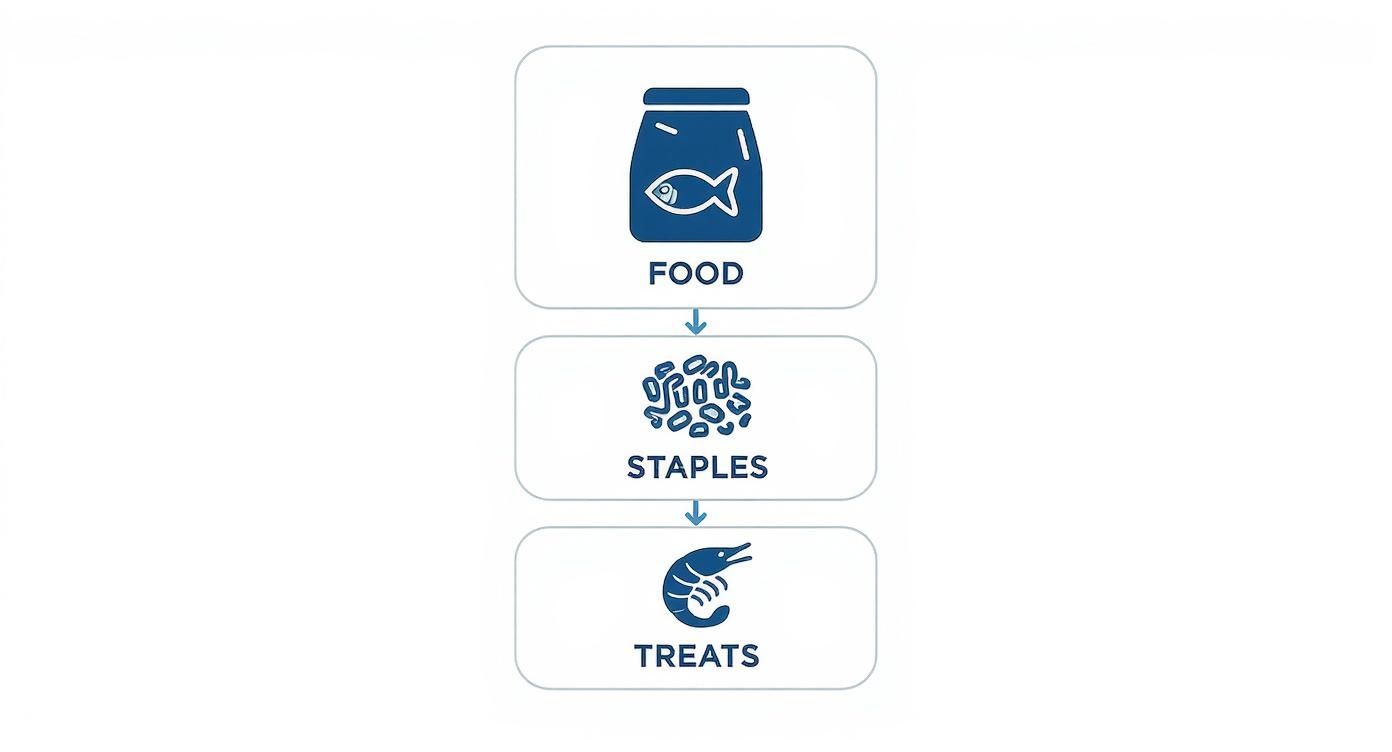
The big takeaway here is that a healthy diet starts with a solid foundation of high-quality staple food. You then round it out with nutritious treats every now and then to give them the variety they'd find in nature.
To make this easier, let's break down the dietary needs of some of the most popular fish you'll find in home aquariums.
Feeding Guide for Common Pet Fish
| Fish Species | Natural Diet | Recommended Staple Food | Healthy Treat Options |
|---|---|---|---|
| Goldfish | Omnivore (plants, insects, crustaceans) | High-quality goldfish pellets or flakes (lower protein, ~30%) | Blanched peas, zucchini, spinach, daphnia |
| Betta Fish | Carnivore (insects, larvae) | Betta-specific pellets with insect or fish meal as the first ingredient | Bloodworms, brine shrimp, Black Soldier Fly Larvae |
| Tetras & Guppies | Omnivore (algae, plant matter, invertebrates) | Micro-pellets or tropical flakes | Freeze-dried insects, baby brine shrimp, daphnia |
| Cichlids | Varies (herbivore, carnivore, or omnivore) | Species-specific pellets (e.g., algae wafers or high-protein sticks) | Research specific species; can range from vegetables to feeder fish |
This table is a great starting point, but let's dive into a little more detail for each of these popular fish.
Goldfish: A Classic Omnivore
Goldfish are true opportunists. In the wild, they’d be grazing on plants, munching on insects, and nibbling at small crustaceans. A very common mistake new owners make is feeding them a diet that's packed with too much protein and not nearly enough plant-based material.
- Staple Food: Stick to a high-quality pellet or flake made specifically for goldfish. These formulas are designed with lower protein levels (usually around 30%) and more carbohydrates than typical tropical fish food.
- Healthy Treats: To keep their digestion running smoothly, offer them blanched veggies like shelled peas, zucchini, or spinach a few times a week. They’ll love it.
Betta Fish: A Proud Carnivore
Bettas, or Siamese Fighting Fish, are pure carnivores. Their upturned mouths are perfectly designed for snatching insects from the water's surface. Out in their native rice paddies, their diet would be almost entirely insect larvae and small bugs.
There's a persistent myth that bettas can live in a vase and just nibble on plant roots. This is completely false and will lead to a sick, malnourished fish.
Important: Never try to feed a betta a plant-based diet. Their digestive tracts are short and built for protein, not for breaking down fibrous vegetable matter. It can cause serious bloating and other health issues.
Their daily food needs to be protein-rich. Look for betta-specific pellets where the very first ingredient is something like insects or fish meal. For a treat, they go wild for frozen or freeze-dried bloodworms, brine shrimp, and daphnia. Insect-based treats are fantastic because they so closely mimic what bettas naturally eat; you can even find excellent guides on where to buy Black Soldier Fly Larvae for a sustainable and nutritious option.
Tetras and Guppies: Community Omnivores
These little guys are the life of many community tanks. They’re active omnivores that, in their natural habitats, would be eating a bit of everything—algae, bits of plants, and any tiny invertebrates they can find. A balanced diet is what keeps their colors so brilliantly bright and their energy levels high.
- Staple Food: A high-quality micro-pellet or a standard tropical flake food works perfectly for them.
- Healthy Treats: To round out their diet and give them a protein boost, supplement with finely crushed freeze-dried insects, baby brine shrimp, or daphnia.
Cichlids: A Diverse and Complex Group
Cichlids are not a "one-size-fits-all" kind of fish. This is a huge, diverse family, and their diets can be herbivorous, carnivorous, or omnivorous, depending entirely on the species. For instance, many African Cichlids from Lake Malawi are herbivores that spend their days grazing on algae. On the other hand, big South American Cichlids like Oscars are aggressive carnivores.
You absolutely must research your specific cichlid species to understand what it needs. Giving a carnivorous food to an herbivorous cichlid can lead to a fatal condition known as "Malawi bloat." Getting this right is critical.
How Much and How Often Should You Feed Your Fish?
It's probably the most common mistake in fishkeeping, and it always comes from a good place: overfeeding. We want to show our fish we care, but giving them too much food can do more harm than good, both to the fish and the tank's water quality. The best thing you can do for a healthy aquarium is to nail down a simple, consistent feeding routine.
Here’s a great little trick: a fish's stomach is only about the size of its eye. Thinking about that tiny detail really puts portion sizes into perspective. When you dump in a huge pinch of flakes, it's like asking a person to eat an entire Thanksgiving dinner in one go. Not only is it overwhelming for the fish, but all that extra food has to go somewhere.
The Two-Minute Rule
An easy, tried-and-true guideline is what I call the two-minute rule. The idea is simple: only give your fish an amount of food they can completely devour in about two minutes. If you still see flakes or pellets drifting around after that time, you've offered too much. Just make a mental note and scale it back for the next feeding.
Following this rule prevents uneaten food from sinking to the bottom and causing chaos. Once it settles, that food starts to rot, releasing ammonia and nitrites directly into the water. These toxins are incredibly stressful for fish and can be lethal, turning a well-intentioned meal into a serious hazard.
A clean tank is a healthy tank. Leftover food is the number one cause of water quality issues like ammonia spikes and cloudy water, creating a toxic environment for your fish.
Establishing a Feeding Schedule
Most fish do much better with small meals once or twice a day rather than one huge feast. This actually mimics how they'd eat in the wild, constantly grazing and foraging for little bits of food. For many common species, a small pinch in the morning and another in the evening is the perfect setup.
Of course, you’ll want to tweak this schedule based on the age and lifestyle of your fish.
- Fry (Baby Fish): These little guys are growing fast and have super high metabolisms. They need small, frequent meals, often three to four times a day, to keep them fueled up.
- Adult Fish: Once they're fully grown, most healthy adults are perfectly happy with a once or twice-daily feeding schedule.
- Nocturnal Fish: Don't forget your nighttime crew! Bottom-dwellers like Corydoras catfish and plecos are most active after dark. To make sure they get their share, drop in some sinking pellets right after you turn off the lights.
One last piece of advice: don't fall for the begging. Many fish learn to associate you with food and will swim to the glass looking hungry whenever you walk by. It’s cute, but it doesn't mean they actually need another meal. Sticking to a disciplined schedule is one of the kindest things you can do for them.
How to Spot a Well-Fed Fish
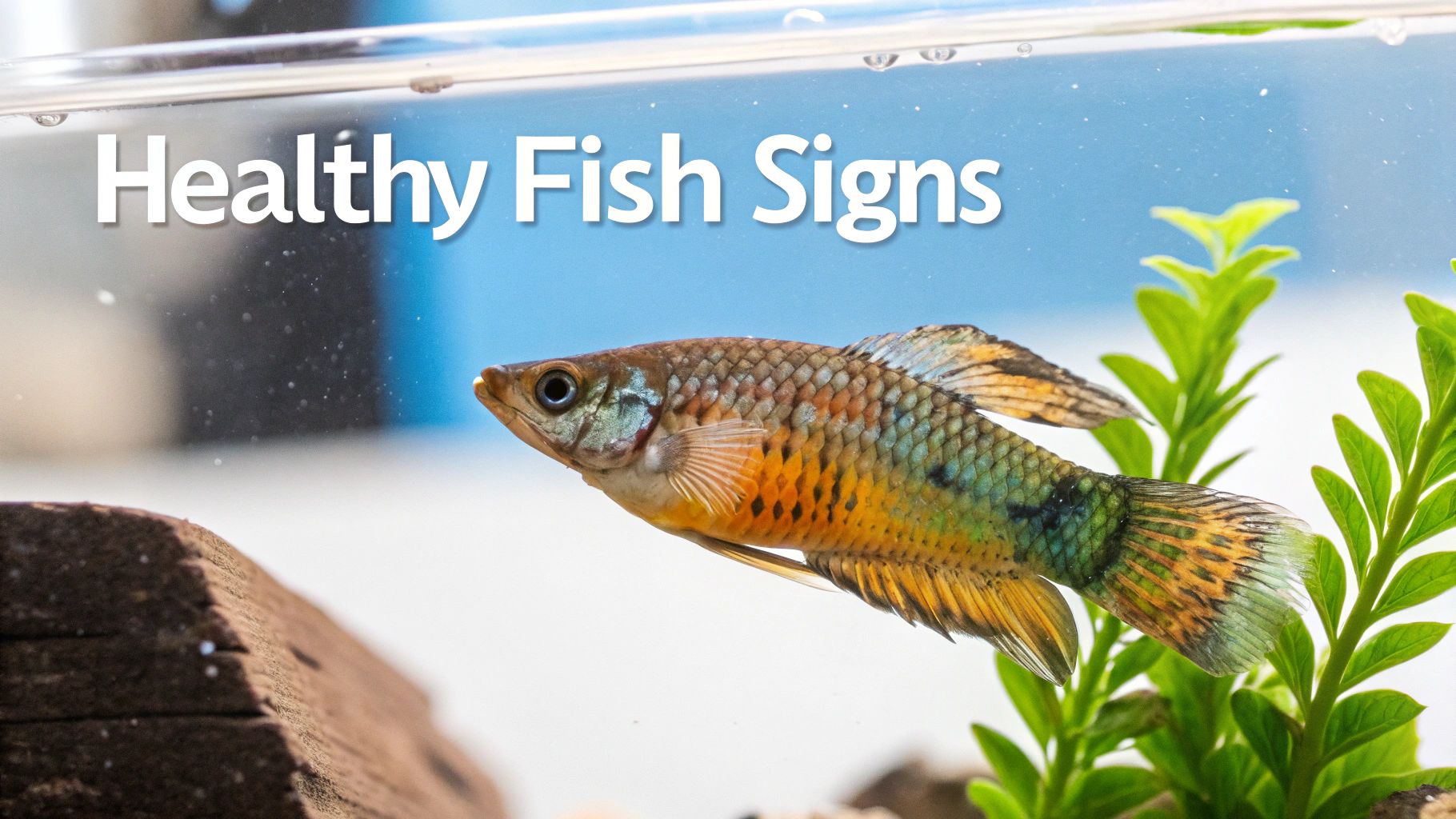
Your fish can't exactly tell you if their diet is missing something, but their bodies tell a very clear story. Learning to read these visual cues is one of the most vital skills in fishkeeping. Think of yourself as a health detective for your tank; spotting the signs of good or poor nutrition early can stop serious problems dead in their tracks.
A well-fed fish is a thing of beauty, and its appearance is the single best report card for how you're doing with its diet.
The Hallmarks of a Healthy Fish
When a fish is getting everything it needs from its food, it shows. You really don't have to be a seasoned expert to see the difference between a fish that's just surviving and one that's truly thriving.
Here's what to look for in a properly nourished fish:
- Vibrant Colors: Their scales should be bright, almost electric, not dull or washed out. Good nutrition, especially from foods rich in carotenoids like shrimp and algae, is what makes those colors pop.
- Active Swimming: A healthy fish is a busy fish. They should be exploring their environment with confidence, not just hiding in a corner or hovering listlessly near the gravel.
- Smooth Body Shape: Look for a full but streamlined body. A gently rounded belly is perfect—it shouldn't look sunken in or, on the flip side, unnaturally bloated. This tells you they're getting just the right amount of food.
Warning Signs of Poor Nutrition
Just as good health is easy to see, so are the red flags of a poor diet. These signs are your signal to rethink what your pet fish eat and make some changes before a small issue becomes a full-blown health crisis.
Catching these problems early is key. It's interesting to note that the pet fish feed industry is tied to a much bigger aquatic food system. The global seafood market, for example, is valued at USD 156.85 billion and is expected to keep growing. This massive scale just goes to show how critical quality control and nutritional science are for all aquatic food, including the flakes and pellets we give our pets. You can discover more insights about the global seafood market on Precedence Research.
Pro Tip: Watch your fish closely at feeding time. A healthy fish is an eager eater. If they suddenly lose interest in food, that's often one of the very first signs that something is wrong.
Keep an eye out for these specific warning signs:
- Faded or Dull Colors: This is usually the first clue of a nutrient deficiency.
- Lethargy or Hiding: A fish that suddenly becomes a recluse is often feeling unwell.
- Bloating: A swollen belly can point to serious digestive trouble, frequently caused by low-quality or improper food.
- Sunken Stomach: A hollow or caved-in belly is a crystal-clear sign of underfeeding or even internal parasites.
- Stringy or Discolored Waste: Healthy fish produce solid waste. If you see long, stringy, white feces, it often points to internal issues connected to their diet.
Got Questions About Feeding Your Fish? We've Got Answers.
Every fishkeeper, from the seasoned pro to the brand-new hobbyist, has questions about feeding. It's just part of the learning curve. Let's tackle some of the most common ones that come up so you can feel confident you're doing the right thing for your fish.
Can I Give My Fish Bread or Other Human Food?
It’s a thought most of us have had: "Can I just share a tiny crumb of this with my fish?" The short answer is a hard no. Fish have digestive systems finely tuned to what they’d find in nature, and our food just isn't on the menu.
Processed foods like bread are packed with things their bodies can't handle, like complex carbs, gluten, and preservatives. This can lead to painful bloating, internal blockages, and other serious health problems. On top of that, any uneaten food rots quickly, fouling the water and causing ammonia spikes that can be deadly.
The Golden Rule: If they wouldn't find it in their natural habitat—a river, lake, or reef—it doesn't belong in their tank. Stick to this simple idea, and you'll steer clear of some of the most common feeding mistakes.
Oops, I Overfed My Fish! What Should I Do?
Don't panic—it happens to the best of us. The trick is to act fast before the uneaten food starts messing with your water quality. Your first move is to get as much of it out as you can, right away. A small fish net or a gravel vacuum is perfect for scooping out the excess.
Even if you get all the visible bits, some particles have already started to break down. To play it safe, plan on doing a small water change, maybe 20-25%, within the next day. This will help dilute any ammonia that’s been released and keep the tank stable. Keep a close eye on your water parameters for the next couple of days, just in case.
How Long Can Fish Go Without Eating?
This is the big question for anyone planning a vacation. You’ll be happy to know that most healthy, adult fish can go for several days, even up to a week, without any issues. In the wild, food isn't a guarantee every single day, so they’re built to handle these short fasts.
For trips lasting more than a few days, you've got some great options:
- Automatic Fish Feeders: These are brilliant. You just set them up to drop a specific amount of food into the tank on a schedule.
- Feeder Blocks: Also called vacation feeders, these are slow-release blocks that dissolve over a few days, providing a steady snack.
- A Fish Sitter: Asking a friend to pop in is a classic for a reason. The key here is to pre-portion the food into daily amounts in a pill organizer or small bags to prevent well-intentioned overfeeding.
Flakes vs. Pellets: Which One is Better?
This isn't about one being universally "better" than the other; it’s about what’s right for your fish. The choice between flakes and pellets really comes down to who lives in your tank and how they like to eat.
Flakes are perfect for fish that feed at the surface, like your guppies and bettas, because they float for a while. The downside is they can dissolve pretty quickly and sometimes make the water a little cloudy if you're not careful.
Pellets, on the other hand, are more concentrated and come in all sorts of sizes and sinking rates. You can get floating ones for surface feeders, slow-sinking ones for mid-water swimmers like tetras, and fast-sinking wafers for bottom-dwellers like corydoras. This variety makes it easy to get food to everyone.
Ultimately, pay attention to where your fish hang out during mealtime and choose the food that gets to them most effectively.
Looking for a treat that taps into their natural instincts? Consider Pure Grubs. Our USA-grown Black Soldier Fly Larvae are a high-protein, calcium-rich snack that fish go crazy for. It's a fantastic way to boost their color and vitality, just like they'd get in the wild. Discover the benefits of Pure Grubs today.