

Discover what do chickens naturally eat for healthier flocks
If you've ever watched a chicken roam freely, you'll know they're not just passively pecking at the ground. They're on a mission. Chickens are true omnivores, and their natural diet is a smorgasbord of everything the environment has to offer: protein-packed insects, nutrient-dense plants, seeds for energy, and even tiny rocks to help with digestion. It's a world away from just a scoop of feed from a bag.
What Do Chickens Really Eat in the Wild?
To get a clear picture of a chicken's natural menu, imagine them in their original habitat—the edges of forests and jungle clearings. They aren't just waiting around for their next meal; they're active, instinctive foragers. Their entire day is a cycle of scratching, pecking, and exploring to piece together a meal that gives them everything they need to thrive.
This foraging drive isn't just a quaint behavior—it's a deep-seated survival instinct. The variety they find in the wild is what fuels everything from glossy, healthy feathers to strong eggshells and a resilient immune system. Before the days of commercial feed, this was how chickens sustained themselves. In fact, old-school farming wisdom and historical records show that chickens with free access to pasture often got 30-40% of their nutrition from insects and other creepy crawlies. You can find some fascinating insights into this natural dietary balance and how it shapes their health.
The Core Components of a Forager's Diet
A chicken’s instincts guide them to four key food groups, each serving a critical purpose for their health and well-being.
- Protein Powerhouses: This is where insects, worms, slugs, and other invertebrates come in. Protein is the absolute cornerstone for muscle growth, feather production, and the energy needed to get through the day.
- Greens and Plants: Chickens eagerly snack on a wide variety of greens, weeds, tender grasses, and even flower petals. This plant matter delivers essential vitamins, minerals, and fiber that keep their digestive systems running smoothly.
- Seeds and Grains: Any wild seeds or fallen grains they discover are a fantastic source of carbohydrates. Think of it as their fuel to keep them scratching and exploring all day long.
- Grit for Grinding: Chickens don't have teeth, so they intentionally swallow small stones, sand, and pebbles. This grit goes into their gizzard and acts like a millstone, grinding down tough seeds and insect exoskeletons.
This simple infographic provides a great visual summary of what a chicken's foraging plate looks like.
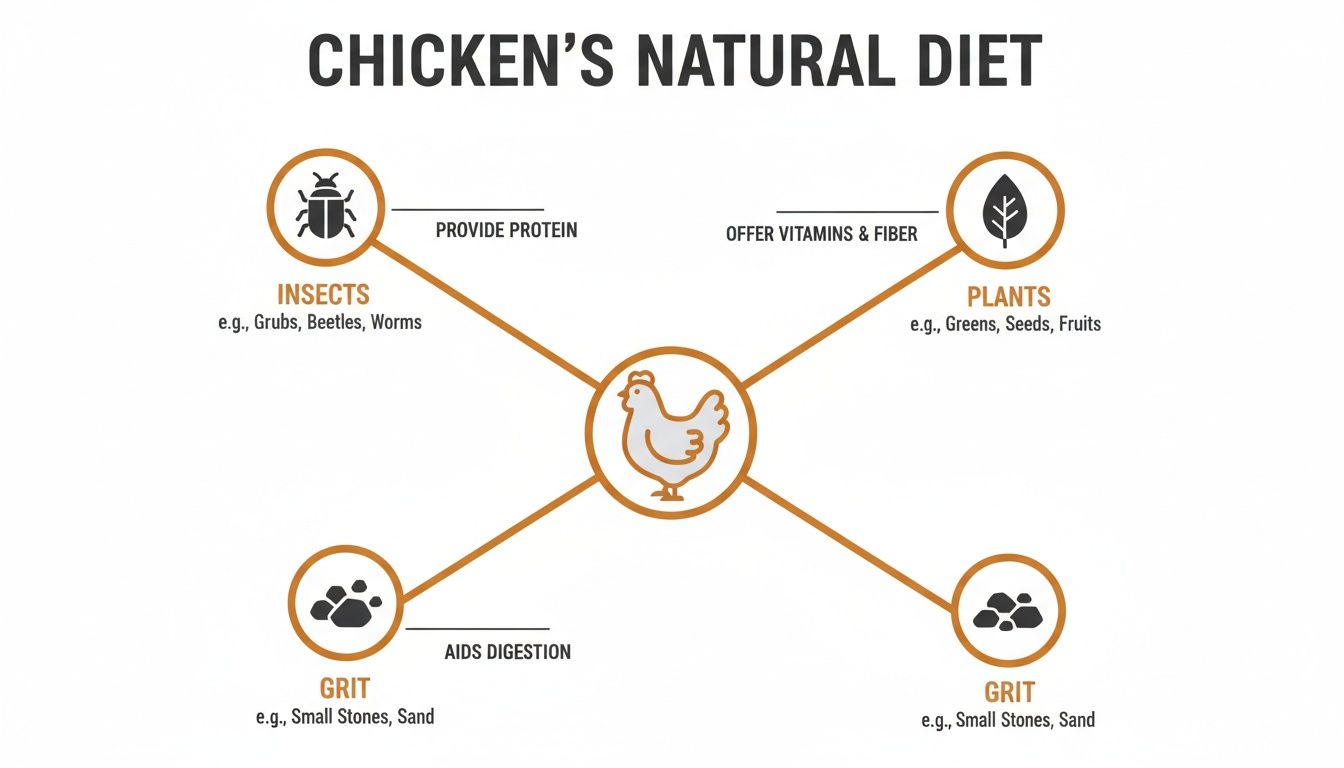
As you can see, a truly healthy diet is all about balance and variety. It’s why just one type of food will never be enough to help a chicken reach its full potential.
To make it even clearer, here’s a quick breakdown of what a chicken is looking for when it forages.
A Chicken's Natural Foraging Menu at a Glance
| Food Category | Examples | Primary Nutritional Role |
|---|---|---|
| Insects & Invertebrates | Grubs, worms, beetles, grasshoppers, slugs | Protein for growth, feathers, and egg laying |
| Plants & Greens | Clover, weeds, grass, leaves, flower petals | Vitamins, minerals, and fiber for immunity and digestion |
| Seeds & Grains | Wild seeds, fallen grains from other animals | Carbohydrates for energy and daily activity |
| Grit & Minerals | Small stones, sand, pebbles, crushed shells | Digestion aid (acts as "teeth" in the gizzard) |
This table really highlights how each component plays a unique and vital role in a chicken's overall health and happiness.
The Protein Powerhouse of Insects and Bugs
Ever watch a chicken scratching and pecking at the ground? It might look random, but it's far from it. She's on a mission, hunting for the one thing her body is hardwired to find: protein. For a chicken, insects and other invertebrates are the ultimate five-star meal.
This constant search for bugs is pure instinct, etched into their DNA. It’s a natural drive that ensures they get the essential amino acids they need for literally everything—building strong muscles, growing glossy feathers, and, of course, laying a steady supply of nutritious eggs. Take away that protein, and a chicken's health suffers.
What a chicken finds in the yard directly fuels its vitality. A juicy earthworm pulled from damp soil, a crunchy grasshopper snatched from a blade of grass, a beetle dug up from under a leaf—each one is a perfect, nutrient-packed bite.
Why Bugs Are a Top Priority
A chicken’s life is surprisingly demanding. A hen laying an egg almost daily is a major metabolic workout, and growing chicks need a constant stream of protein to develop from fluffballs into healthy adults. This is why they forage so relentlessly; they're always working to meet these high biological demands.
For those of us with backyard flocks, mimicking this part of their diet is one of the best things we can do for their health. Good-quality commercial feed is a great foundation, but adding high-protein insects helps bridge the gap between a standard domestic diet and what they’d eat in the wild.
Think about this: as of 2020, there were over 33 billion chickens alive on the planet. Foraging and insect-based supplements help meet a critical need that grain-based feeds alone can't always fill. Understanding their natural diet is key to raising them humanely and sustainably. You can read more about global chicken populations on thehumaneleague.org.
It helps us realize that offering bugs isn't just giving them a "treat." It’s fulfilling a deep-seated biological need.
The Best Bugs for Your Flock
When it comes to a creepy-crawly buffet, chickens are not picky eaters. Their natural menu includes a huge variety of invertebrates, and each one brings something valuable to the table.
- Earthworms and Slugs: Soft, juicy, and easy to swallow. These are usually the first prize they snatch up after a good rain.
- Grasshoppers and Crickets: A satisfying crunch packed with protein. They’re a flock favorite, especially in the warmer months.
- Beetles and Grubs: Chickens find these by digging in loose soil or flipping over old logs. Grubs, in particular, are little powerhouses of fat and protein.
- Spiders and Ants: They might be small, but they’re eagerly snapped up and contribute to a diverse protein intake throughout the day.
Of course, letting your flock free-range is the ideal scenario, but it isn’t always possible, especially if you have limited space. That’s where a good supplement can make all the difference. Dried Black Soldier Fly Larvae (BSFL), for instance, are a clean, safe, and concentrated source of the exact protein and calcium your chickens are programmed to find.
They're a reliable way to make sure your flock gets the amino acids they need for amazing health, feather quality, and egg production. For a closer look, check out our guide on the benefits of Black Soldier Fly Grubs.
A Forager's Buffet of Greens, Grains, and Seeds
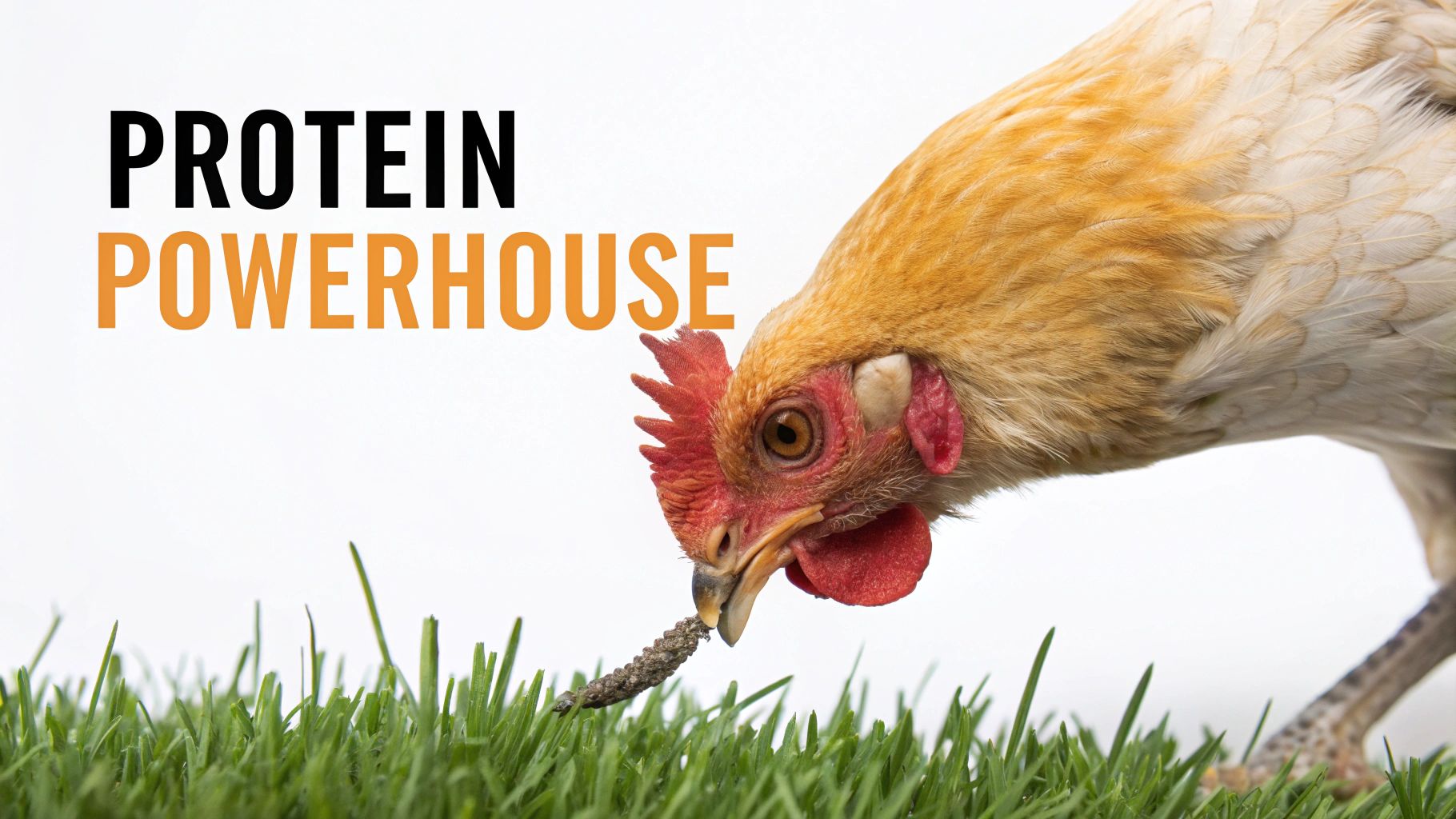
While bugs provide a serious protein punch, the plant-based side of a chicken's diet is just as vital for keeping them in top shape. You can think of your backyard as a living, breathing salad bar, stocked with all the tender greens, broadleaf weeds, and nutrient-packed seeds a foraging chicken could want.
This isn't just mindless pecking, either. Chickens are surprisingly smart about what they eat, instinctively seeking out specific plants to get the vitamins and minerals they need. This botanical buffet provides essential fiber for good digestion and a spectrum of micronutrients that can sometimes be missing from commercial feed. It’s a perfect partnership between what you provide in their feeder and what they find on their own.
The Garden Greens Chickens Crave
When it comes to leafy greens, chickens definitely play favorites. These common yard plants are more than just tasty snacks; they're loaded with vitamins A, K, and B-complex, which are crucial for a strong immune system and good energy levels.
- Clover: A true flock favorite, clover is a great source of both protein and calcium. Its tender leaves make it an easy and delicious bite for chickens of all ages.
- Dandelions: From the sunny yellow flower right down to the root, every part of a dandelion is a nutritious treat for your birds.
- Chickweed: This low-growing weed is often one of the first greens to pop up in the spring, and chickens will gobble it up for its nutrient-rich leaves.
It's this varied, natural diet that ultimately creates healthy, robust birds. With chicken consumption continuing to rise—projections show Americans will eat a record 104 pounds per person in 2025—it’s more important than ever to focus on what the birds themselves are eating. The greens and seeds they find while foraging lay the foundation for their well-being and the quality of their eggs and meat. You can find more great insights into sustainable chicken nutrition from the World Wildlife Fund.
Seeds and Grains for All-Day Energy
So, beyond the greens, what do chickens naturally eat for fuel? The answer is seeds and grains. Wild grass seeds, seeds dropped from other plants, and any leftover grains they can find are carbohydrate gold. This is what powers a chicken through a long, busy day of scratching, exploring, and just being a chicken.
A chicken's foraging instinct is a beautiful thing to watch. They aren't just eating; they are actively building a complete diet, balancing protein from bugs with vitamins from greens and energy from seeds.
This natural drive for variety is exactly why a flock thrives when it has access to a diverse environment. Once you understand this, you start to see that their diet isn't just about the feed you buy. It’s a dynamic collaboration between your carefully formulated rations and the rich, natural pantry waiting right outside the coop door.
Grit and Calcium for Digestion and Eggshell Strength
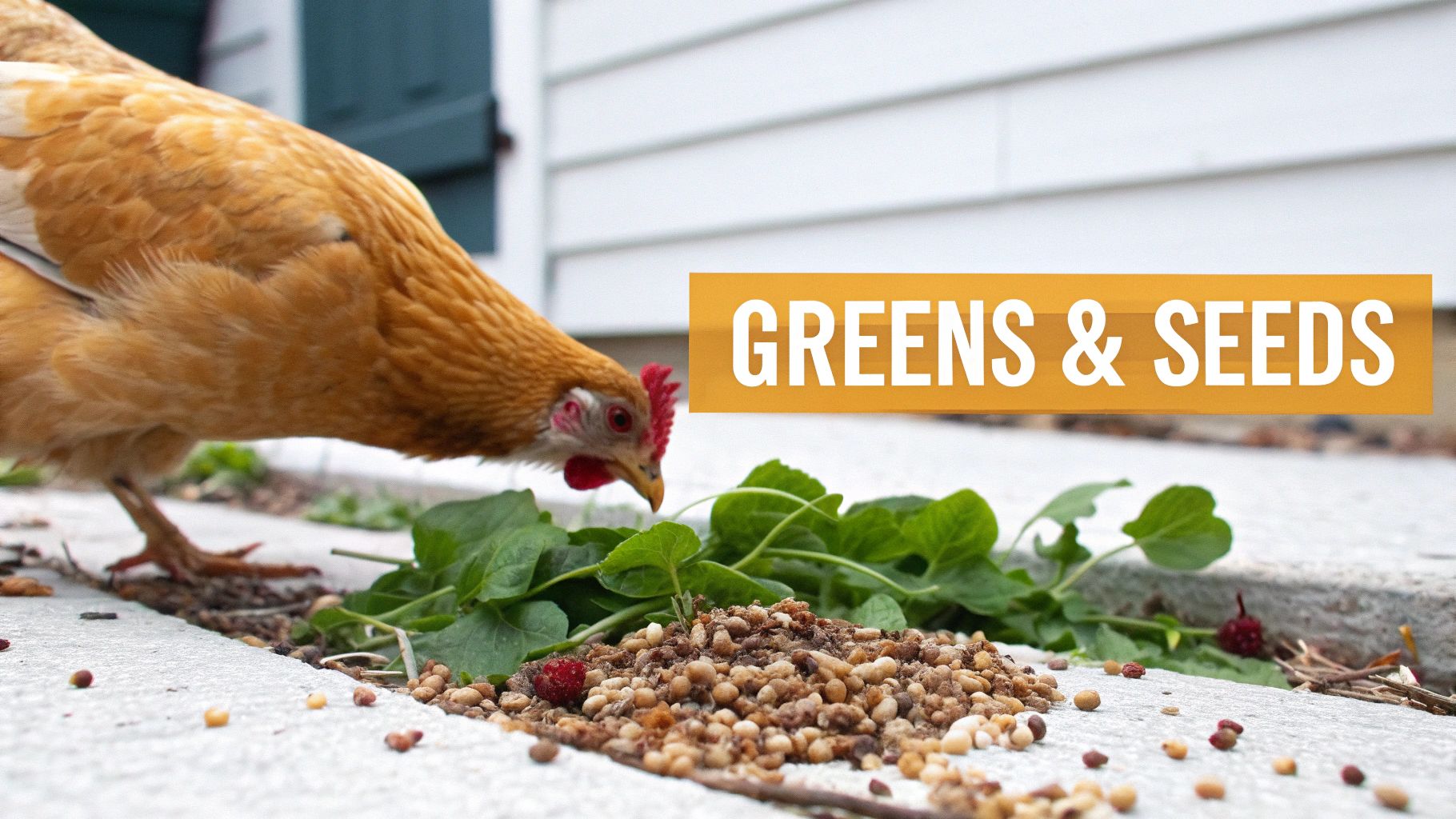
Beyond the obvious snacks like bugs and tasty weeds, chickens instinctively seek out two other crucial things that aren’t really "food" at all: grit and calcium. They might not sound glamorous, but these two elements perform distinct and absolutely vital jobs. Understanding them is key to a flock's health, especially their digestion and egg-laying.
Picture trying to chew up tough seeds and crunchy bug exoskeletons without any teeth. That’s a chicken’s daily reality! To get around this, they instinctively swallow small, hard objects like tiny pebbles, sand, and coarse dirt. This stuff is what we call insoluble grit.
This collection of tiny rocks makes its way to a muscular organ called the gizzard, which basically acts as the chicken's internal stone mill. As the gizzard flexes and contracts, the grit grinds the tough food into a digestible pulp, allowing the chicken to actually absorb the nutrients. Without grit, a foraging chicken simply can't break down its natural dinner.
The Critical Role of Calcium for Laying Hens
Now, separate from the grinding grit, chickens also need what's known as soluble grit. This is just a fancy term for a calcium source, like crushed oyster shells or even their own eggshells. Unlike the pebbles that hang out in the gizzard, this stuff is meant to dissolve and be absorbed into the body. And for a laying hen, the demand for calcium is massive.
A single eggshell is almost pure calcium, and a good hen lays an egg nearly every day. If she can't find enough calcium in her diet, her body has a backup plan: it will pull the calcium directly from her own bones. Over time, this leads to weak, brittle bones and poor health.
A strong eggshell is made of about 94% calcium carbonate. That means a laying hen has to find and process a huge amount of calcium relative to her body size, day in and day out, just to produce that perfect egg.
This is why you'll see experienced chicken keepers always offering a separate source of calcium. It’s non-negotiable for a laying flock, ensuring they can create strong eggs without sacrificing their own skeletal health.
Balancing Grit, Calcium, and Nutrition
Once you get the difference between these two types of "grit," the complete picture of a chicken's needs really comes into focus. While a bird free-ranging in a perfect environment might find enough of both, most backyard flocks need a little help from us to stay in top shape.
Here’s a simple way to remember their jobs:
- Insoluble Grit (e.g., granite, sand): These are the chicken's "teeth." They stay in the gizzard to physically grind food. They're essential for digestion but provide zero nutrition.
- Soluble Grit (e.g., oyster shell): This is a calcium supplement. It dissolves to provide the minerals needed for strong eggshells and bones but offers no grinding power.
Interestingly, some modern, natural supplements are real powerhouses. Black Soldier Fly Larvae, for example, pack a two-for-one punch by delivering high-quality protein and a healthy dose of easily absorbed calcium. To really boost your flock's production and health, it’s worth learning more about the best calcium-rich foods for chickens and how to incorporate them.
How a Chicken's Diet Changes Through Life
A chicken's dietary needs aren't set in stone. They shift dramatically with the seasons and as the bird ages, and understanding these changes is key to raising a healthy flock. Think of their diet as a living calendar, constantly adapting to what nature provides and what their bodies demand.
In the bug-rich months of spring and summer, a chicken’s diet gets a massive protein boost. The ground is teeming with worms, beetles, and grasshoppers, creating a natural buffet that fuels growth and egg production. But as the weather cools and insects become scarce in fall and winter, their focus shifts. They’ll spend more time scratching for fallen seeds, dried berries, and whatever greens they can find to get the energy they need to stay warm.
Feeding Through Different Life Stages
Just as the seasons change the menu, so does a chicken’s age. Each stage of life has its own unique nutritional blueprint, and a one-size-fits-all approach just won’t cut it.
These distinct dietary needs are crucial for a bird's development and productivity:
- Growing Chicks (0-18 weeks): This is a period of explosive growth, demanding a high-protein diet. Chicks need a specialized "starter" or "grower" feed with around 18-20% protein to build strong bones, muscles, and feathers.
- Laying Hens (18+ weeks): Once a hen starts laying, her body needs an incredible amount of calcium to form strong eggshells day after day. Her diet must include a balanced layer feed and a constant, separate source of calcium, like crushed oyster shells.
- Molting Adults (Annually): Molting—the yearly process of losing old feathers and growing new ones—is unbelievably taxing. Feathers are over 85% protein, so birds need a serious protein bump during this time to regrow a healthy, protective coat.
A hen’s body will always prioritize its own survival. If she isn’t getting enough calcium from her diet, her system will pull it directly from her bones, leading to weakness and poor health over time.
Adapting Your Feeding Strategy
Once you recognize these life stages, you can tailor your flock's diet for peak health. For instance, offering high-protein treats like Black Soldier Fly Larvae is a game-changer for growing chicks and molting hens. Likewise, keeping a separate dish of calcium available at all times is non-negotiable for your layers.
By aligning your feeding strategy with their natural, changing needs, you empower your chickens to thrive year-round. This proactive approach is really the cornerstone of responsible and successful flock management, from their first peep to their golden years.
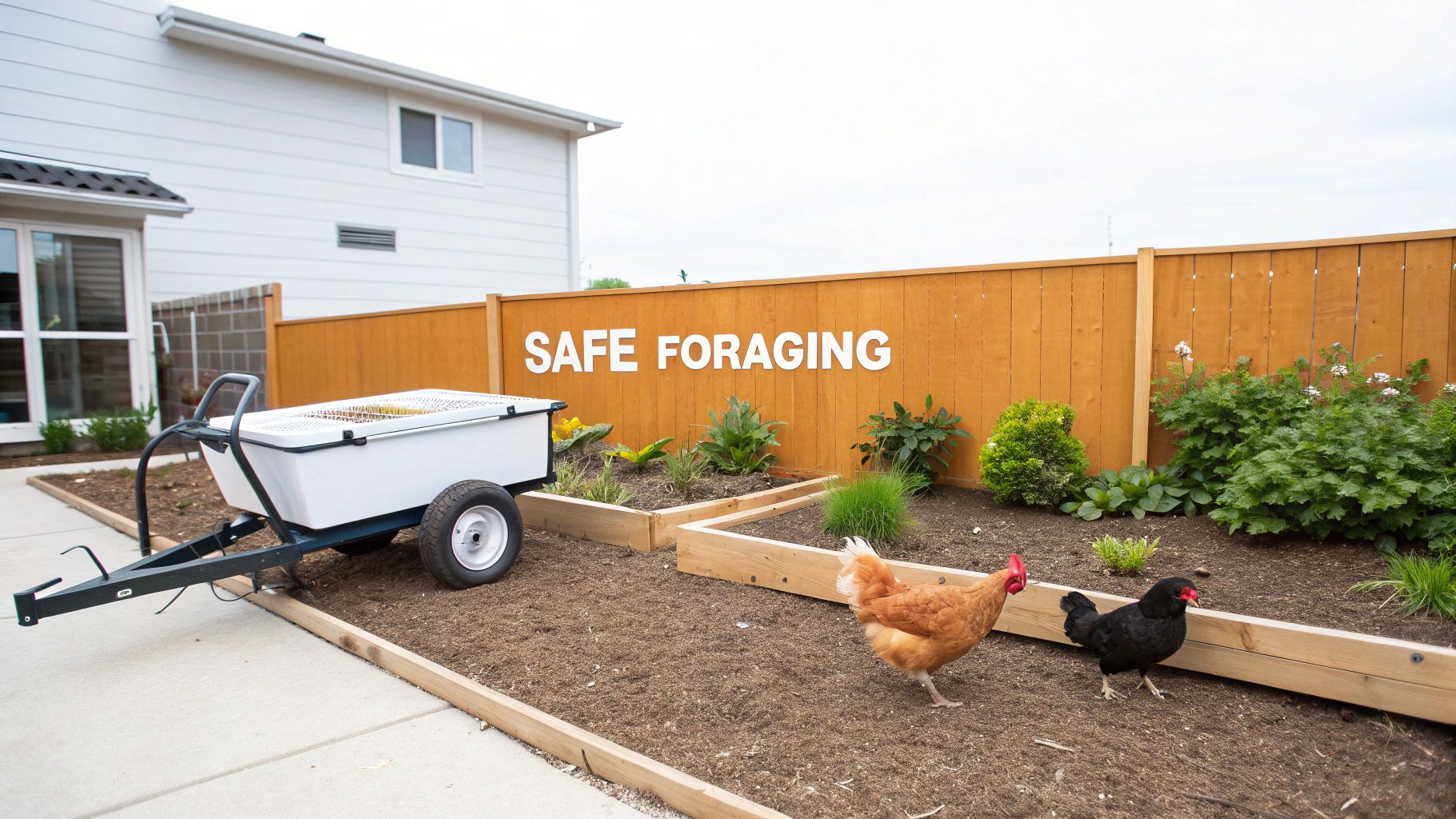
Creating a Safe Foraging Environment at Home
It's one thing to know what chickens eat in the wild, but how do we bring that into our own backyards? It's actually more straightforward than you might think. The first step is to start seeing your yard through your flock's eyes—a giant, open-air buffet that needs to be both delicious and, most importantly, safe.
If you take away only one thing, let it be this: completely avoid pesticides, herbicides, and chemical fertilizers anywhere your chickens can roam. Chickens will absolutely absorb these chemicals from the bugs and plants they gobble up, which can lead to some truly serious health problems down the road. An organic, chemical-free yard is the bedrock of safe foraging.
A clever way to manage this is with a "chicken tractor," which is just a fancy name for a movable coop. These are fantastic because you can rotate your flock to fresh patches of ground every few days. This keeps them supplied with new greens and bugs to discover, prevents any one spot from getting completely stripped bare, and mimics how they'd naturally move through a landscape.
Cultivating a Chicken-Friendly Garden
Why stop at just a safe lawn? You can take things to the next level by planting a garden specifically for your flock. A dedicated "chicken-friendly" patch full of safe, nutrient-dense plants is an amazing way to enrich their diet and give them something exciting to do.
A well-managed foraging area does more than just feed your chickens—it's crucial for their mental health. All that scratching, pecking, and exploring keeps them busy and happy, which helps prevent stress-related habits like feather picking.
If you're looking for ideas, our guide on how to plant a chicken garden is packed with great, chicken-approved options.
Of course, knowing what not to offer is just as critical. Many kitchen scraps make fantastic treats, but a few common foods are surprisingly toxic to chickens.
Safe Kitchen Scraps:
- Cooked rice and pasta
- Leafy greens and vegetable peels
- Berries, melons, and apples (just be sure to remove the seeds!)
Foods to Always Avoid:
- Avocado pits and skin
- Raw potato peels
- Onions and garlic
- Chocolate or sugary snacks
- Dried or undercooked beans
By curating their environment and being mindful of the treats you share, you're giving your flock the freedom to eat and live as naturally as possible.
Frequently Asked Questions About a Natural Chicken Diet
Once you start thinking about a natural diet for your flock, a lot of practical questions pop up. It’s totally normal! Let's walk through some of the most common things fellow chicken keepers ask.
Can Chickens Live on Foraging Alone?
This is a great question, but the short answer is almost always no. While foraging is what chickens were born to do, getting 100% of their nutrition from the average backyard just isn't realistic.
Today’s chicken breeds, especially the ones that are amazing egg layers, have been bred to need the complete, balanced nutrition that a good commercial feed provides. Think of their feed as the main course—it has all the essentials they need to thrive. Foraging is the fantastic, healthy salad on the side that adds variety, enrichment, and a boost of fresh nutrients.
Which Insect Treats Are Best?
When you’re looking at insect treats, the two biggest names you'll see are mealworms and Black Soldier Fly Larvae (BSFL). Chickens will gobble up both, but from a nutritional standpoint, they're worlds apart.
Mealworms are fine for a bit of protein, but they're also high in fat and pretty low in calcium. BSFL, on the other hand, are a true superfood for chickens. They’re packed with protein and contain up to 85% more calcium than mealworms. For your laying hens, that extra calcium is a game-changer, going straight to building strong, healthy eggshells.
Choosing the right supplement is about working with a chicken's natural instincts. By offering a treat that is both high in protein and rich in calcium, you are efficiently meeting two of their most critical dietary needs in one go.
How Do I Add Supplements Without Unbalancing Their Diet?
The golden rule is moderation. Any treats or supplements—even healthy ones—should never make up more than 10% of your flock’s daily diet. This keeps their main, balanced feed as the star of the show.
A simple trick is to offer treats in the late afternoon. That way, your chickens have already filled up on their essential feed for the day. It’s like making sure they eat their dinner before they get dessert!
For a safe, high-calcium, and protein-rich treat that perfectly complements what chickens naturally eat, trust Pure Grubs. Our USA-grown Black Soldier Fly Larvae support stronger eggshells and healthier feathers. Learn more and give your flock the best at https://puregrubs.com.