

Types of Feeds for Chickens: A Practical Guide to Healthy, Productive Flocks
Navigating the chicken feed aisle can feel like deciphering a secret code. You're faced with a wall of bags, each one plastered with different names, numbers, and promises. It’s enough to make any new chicken keeper’s head spin.
But here’s the good news: it's much simpler than it looks.
The most important thing to remember is that a chicken's dietary needs change dramatically as it grows. You wouldn't feed a newborn baby the same thing as a teenager, and the same logic applies to your flock. Getting this right is the cornerstone of raising healthy, productive birds.
Starter, Grower, and Layer: Feeding for Every Life Stage
Think of these three main feed types as the nutritional roadmap for a chicken's entire life. Each one is specially formulated to provide exactly what a bird needs at a specific stage of development.
- Starter Feed (0-8 weeks): This is baby bird formula. It’s packed with the highest protein content, typically 20-24%, to fuel the incredible, explosive growth that happens in the first couple of months.
- Grower Feed (9-18 weeks): This is the awkward teenage phase diet. As your pullets (young hens) mature, their rapid growth slows down. Grower feed dials back the protein to 16-18% to support steady, healthy development without pushing them to start laying eggs too early.
- Layer Feed (18+ weeks): Once your hens start laying, it's time for their adult food. Layer feed maintains that 16-18% protein level but adds a crucial ingredient: a major boost of calcium. This is absolutely essential for producing eggs with strong, solid shells day after day.
To make it even easier to see the differences, here's a quick breakdown of the primary feed types.
Chicken Feed at a Glance: Life Stage Nutrition
This table provides a simple overview of the main feed types, helping you match the right nutrition to your flock's age and purpose.
| Feed Type | Chicken Age | Primary Purpose | Typical Protein % |
|---|---|---|---|
| Starter | 0-8 Weeks | Rapid growth and feather development | 20-24% |
| Grower | 9-18 Weeks | Steady maturation, bone & frame development | 16-18% |
| Layer | 18+ Weeks | Egg production and adult maintenance | 16-18% (high calcium) |
Switching feeds at the right time ensures your chickens get the precise nutrients they need to thrive, from fuzzy little chicks to reliable egg-laying hens.
Matching Feed to Your Flock's Life Stage
Choosing the right chicken feed is a lot like planning meals for a growing family. You wouldn't feed a newborn the same thing as a teenager, right? Chickens are no different. What they eat at each stage of their life is the absolute bedrock of their health and happiness.
This chart gives you a bird's-eye view of how chicken feed is broken down, first by life stage, then by form.
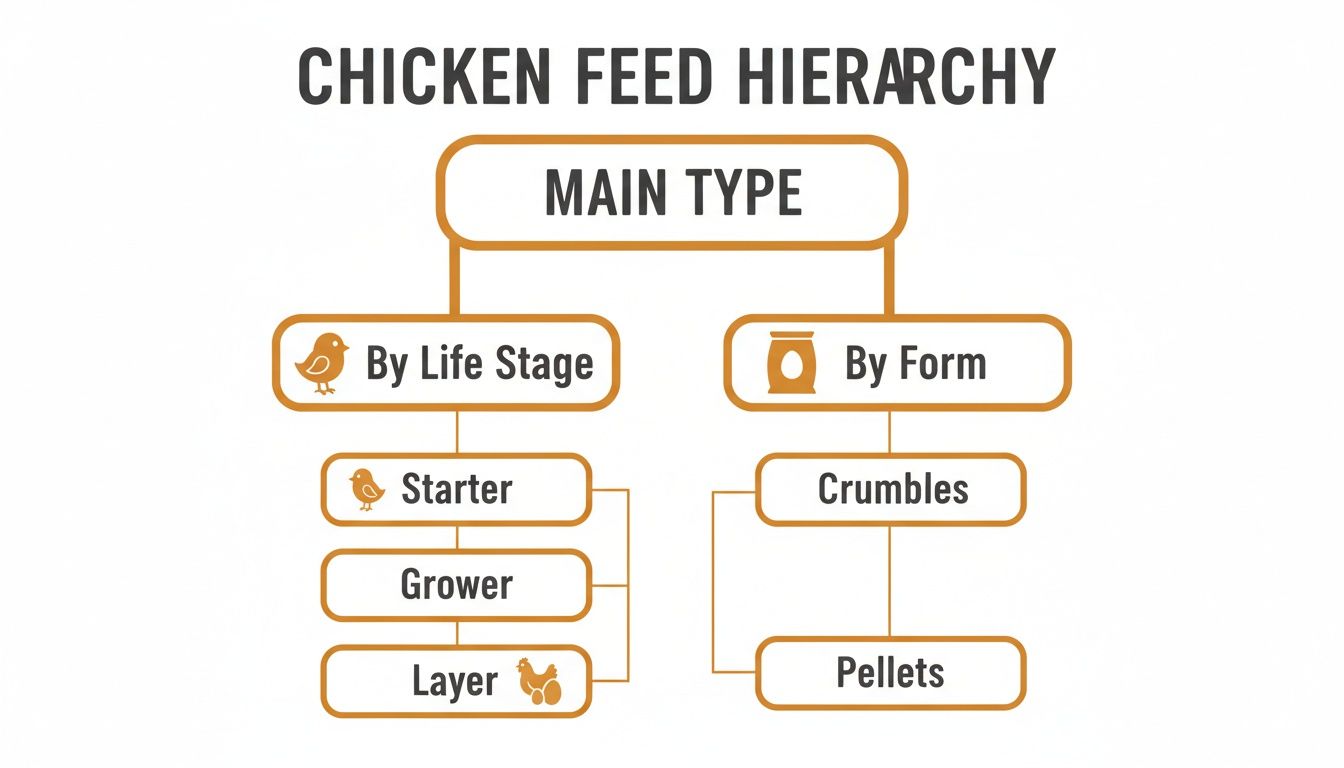
As you can see, the most important way to categorize feed is by the chicken's age. Getting this right is so fundamental that it supports a massive global industry—the poultry feed market was valued at around USD 217.91 billion in 2024! It's all about delivering precisely what they need, when they need it.
Chick Starter Feed: The High-Energy Beginning
From the day they hatch until they're about eight weeks old, chicks are basically growth machines. They are developing at an incredible rate, and their food has to fuel that explosion. That's what chick starter feed is for.
This special formula is absolutely loaded with protein, usually somewhere between 20-24%. All that protein provides the essential building blocks for tiny muscles, organs, and those first fluffy feathers. Think of it as high-octane fuel for their journey from a peeping ball of fluff to a sturdy young bird.
Grower Feed: The Bridge to Adulthood
Once your chicks hit that gawky teenage phase (from about 8 to 18 weeks), their needs change. Their frantic growth starts to level out, and the focus shifts to building a strong frame and maturing properly.
Enter grower feed. This feed dials back the protein a bit, typically to 16-18%. It gives them everything they need to keep growing strong without pushing them to start laying eggs before their bodies are fully prepared. It’s the perfect "in-between" diet for a healthy transition into adulthood.
Layer Feed: Fueling the Egg Factory
At around 18 weeks, or whenever you spot that very first glorious egg, it’s time for the big switch to layer feed. The protein level usually stays in that familiar 16-18% range, but this formula adds a game-changing ingredient: a whole lot more calcium.
A good layer feed will contain 3.5% to 5% calcium. This isn't just a random number—it's the precise amount needed to form strong eggshells day in and day out, without robbing the hen's own bones of this vital mineral.
Making the move to a high-calcium layer feed is non-negotiable for a productive hen. It keeps her healthy and ensures those eggs have tough, perfect shells. To really dig into what makes a great diet for your egg-layers, take a look at our complete guide on what to feed laying hens.
Finally, if you're raising birds for meat, you'll use a finisher feed for the last couple of weeks. This is a high-energy diet designed to help them bulk up and reach their target weight efficiently.
Choosing the Right Feed Form
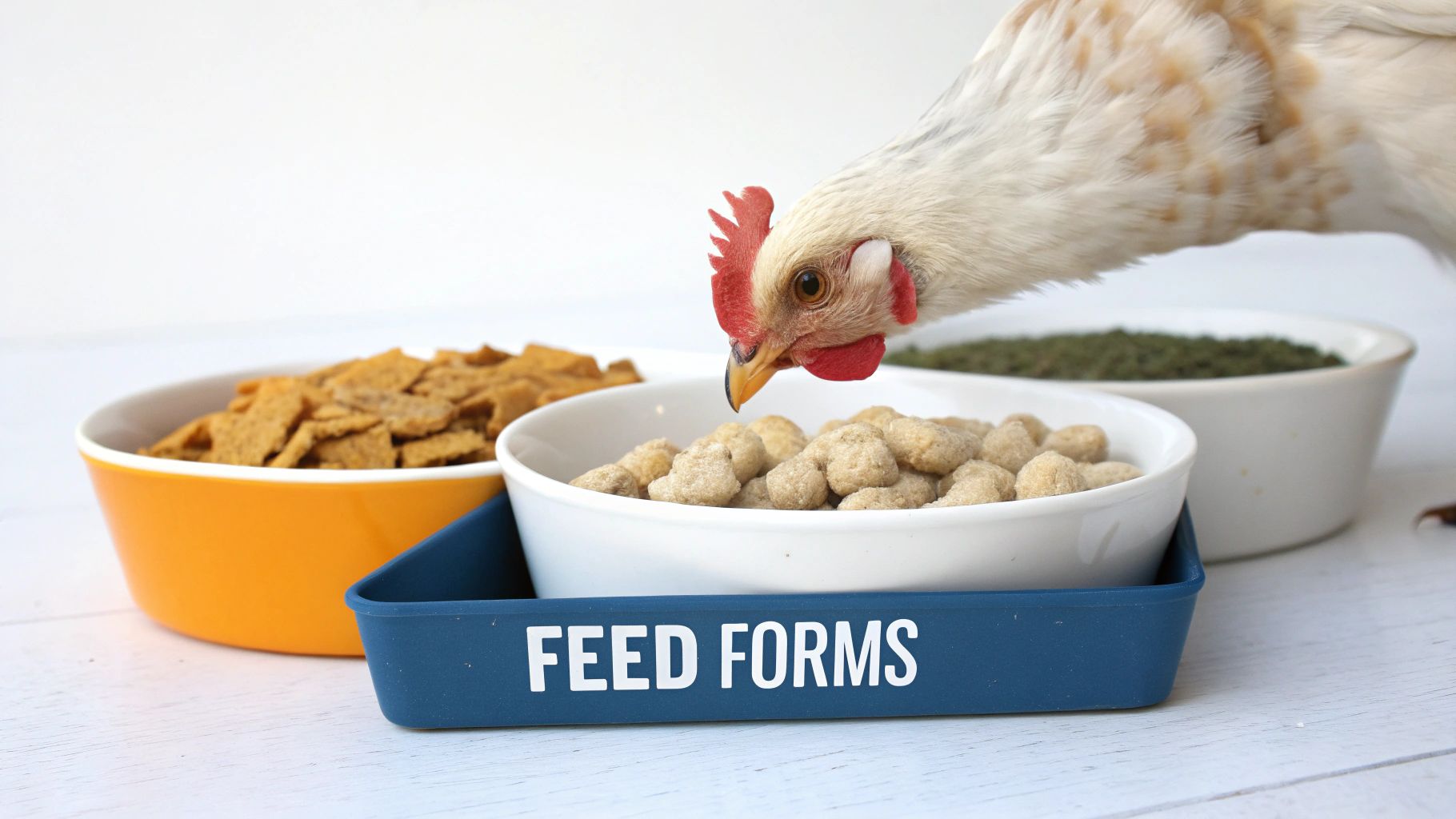
Once you've picked the right nutritional formula for your flock's age, your next decision is about texture. Chicken feed generally comes in three main forms: mash, crumble, and pellets.
Think of it like this: mash is a loose, flour-like mix, crumbles are like granola, and pellets are those familiar, uniform nuggets. Each texture has its place, and the right choice can make a huge difference in your flock’s health, cut down on waste, and even stop picky eating in its tracks.
Mash: The First Food for Chicks
Mash is a finely ground, unprocessed feed that looks a bit like flour. Its soft, powdery consistency is exactly what newly hatched chicks need. Their beaks are tiny and delicate, so they can easily peck at and swallow this gentle mixture without any problems. It’s the perfect starter food.
But mash isn't without its quirks. It can be incredibly messy, and chickens are notorious for flinging it around to pick out their favorite bits. This "selective feeding" means they might not get a balanced diet, and you'll end up with a lot of wasted feed on the coop floor. To learn more, take a look at our complete guide on mash feed for chickens.
Crumbles: A Versatile Intermediate Step
Crumbles are basically just pellets that have been broken up into smaller, granola-like pieces. This texture is a fantastic middle ground, making it an ideal transitional feed for adolescent pullets who are too big for mash but not quite ready for full-sized pellets.
The smaller, irregular chunks are easy for growing birds to manage, yet they’re large enough to prevent the picky sorting that happens with mash. Every bite is more nutritionally complete.
Pellets: The Clean and Efficient Choice
Pellets are created by compressing mash under high heat and pressure into dense, uniform morsels. This process locks all the nutrients together, guaranteeing that every single bite delivers the complete, balanced formula. It completely eliminates selective feeding.
This makes pellets the cleanest and most efficient option. Birds can scoop them up easily, and very little goes to waste. It's no surprise that complete feeds like pellets and crumbles hold a dominant 61.0% market share, a fact backed by current market research data. They just make sense.
Key Takeaway: The feed's form directly impacts how your chickens eat and how much feed gets wasted. Mash is essential for chicks, but moving to crumbles and then pellets as they grow ensures every bird gets a balanced diet with minimal mess.
Comparing Feed Forms: Mash vs. Crumble vs. Pellets
To make the choice even clearer, let's break down the pros and cons of each feed form side-by-side. This table should help you quickly decide what’s best for your flock at their current stage.
| Feature | Mash | Crumble | Pellets |
|---|---|---|---|
| Best For | Newly hatched chicks (0-8 weeks) | Juvenile birds (pullets/cockerels) | Adult, full-grown chickens |
| Texture | Fine, flour-like powder | Small, irregular granola-like pieces | Hard, compressed, uniform nuggets |
| Waste Level | High (easy to spill and sort) | Moderate | Low (clean and easy to eat) |
| Picky Eating | Encourages selective feeding | Discourages selective feeding | Prevents selective feeding |
| Pros | Easiest for tiny chicks to eat. | Good transition feed, less waste. | No waste, balanced nutrition in every bite. |
| Cons | Very messy, leads to waste. | Can still be messy, not ideal for adults. | Can be too large for young birds. |
Ultimately, many chicken keepers find themselves using all three forms at different times. Starting with mash, graduating to crumbles, and finally settling on pellets is a proven path that supports your flock’s health from hatch day to their golden years.
Medicated vs. Non-Medicated Feed: What's the Difference?
When you're standing in the feed store aisle looking at bags of chick starter, you’ll see two main options: medicated and non-medicated. That word "medicated" can sound a little scary, but it's not what you might think. It’s simply a preventative tool to get your tiny, vulnerable flock through their first few weeks.
This isn’t about treating sick birds. In fact, medicated feed does not contain antibiotics. What it does have is a very small, carefully measured dose of a coccidiostat, usually a drug called amprolium.
So, what does it do? It helps protect your chicks from coccidiosis, a nasty intestinal disease caused by microscopic parasites called coccidia. These parasites flourish in the warm, humid environment of a brooder, and an outbreak can be devastating for young birds. The coccidiostat in the feed doesn't kill the parasites outright; instead, it slows them down just enough for the chicks to develop their own natural immunity without getting overwhelmed by the infection.
When to Go with Medicated Feed
Choosing medicated starter is a smart move in a few very common situations. You should definitely grab the medicated bag if:
- Your chicks were not vaccinated for coccidiosis. This is the number one reason. The feed provides the protection the vaccine would have.
- You're raising chicks in a brooder without a mother hen. Momma hens help their babies build immunity naturally, but brooder-raised chicks don't have that advantage.
- You simply don't know their vaccination status. When in doubt, it's far better to be safe and offer the medicated feed than to risk a deadly outbreak.
When You Should Stick to Non-Medicated Feed
On the flip side, there are times when medicated feed is the wrong choice. Always opt for a non-medicated starter if:
- Your chicks have already been vaccinated for coccidiosis. This is critical. The vaccine works by introducing a tiny, controlled dose of live coccidia. The coccidiostat in medicated feed would cancel out the vaccine, making it completely ineffective.
- A mother hen is raising the chicks. She'll gradually expose them to the environment, allowing them to build up a robust immunity on their own timeline.
- You're raising a mixed flock with ducklings or goslings. Waterfowl aren't affected by the same type of coccidia, so they don't need the medication.
Crucial Safety Tip: Never, ever give medicated feed to adult laying hens. It's formulated for young, growing birds, and there hasn't been enough research to declare it safe for eggs intended for human consumption. It's best to switch off of it long before your pullets are ready to lay.
The Role of Supplements, Treats, and Scratch
While a complete feed is the non-negotiable foundation of your flock's diet, the world of "extras" can get confusing. I find it helps to think of these additions in three distinct buckets: supplements that solve a problem, treats that add a little fun, and scratch grains that are pure entertainment. Getting this balance right is the secret to a happy, healthy flock.
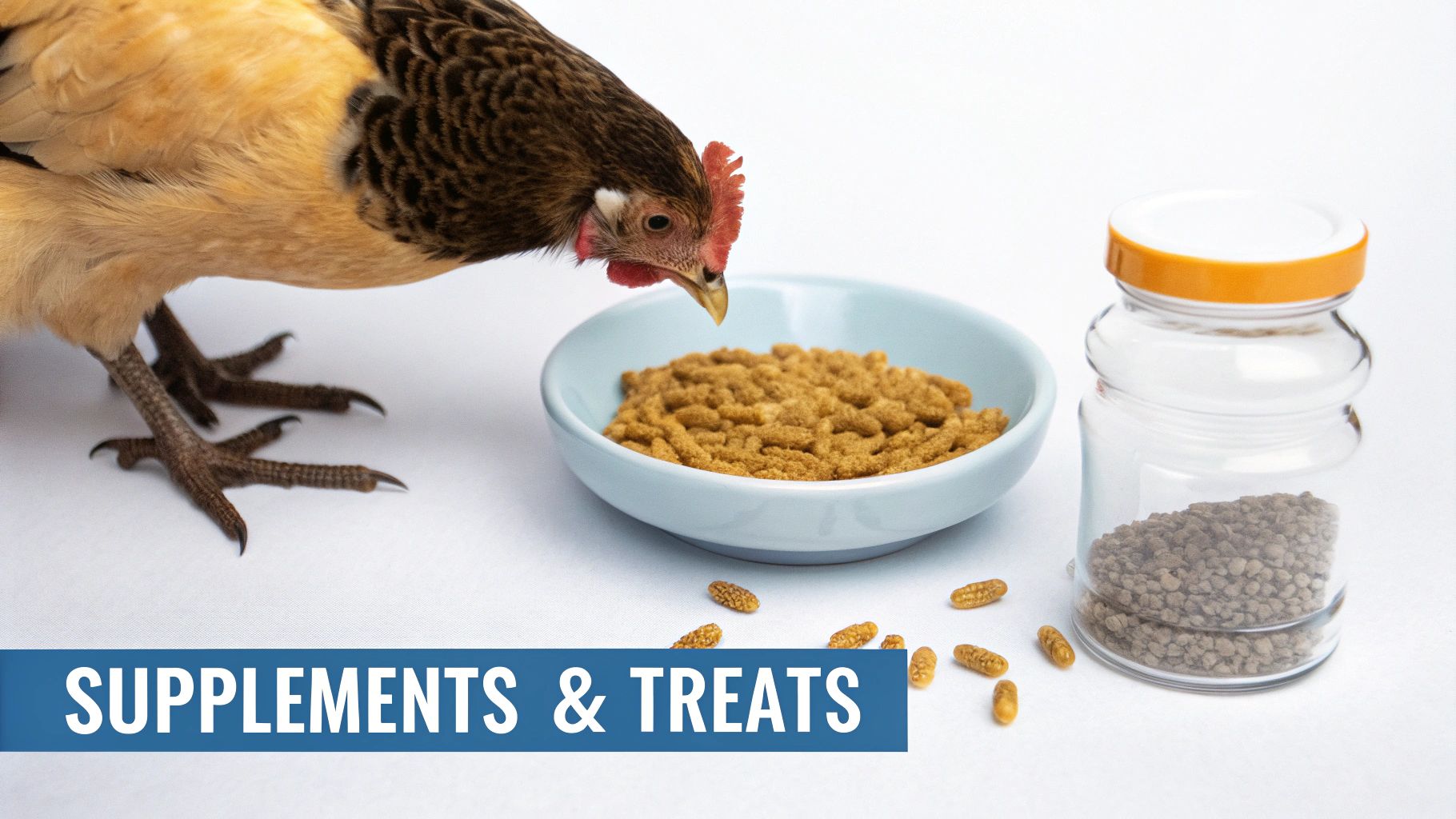
This balance is a big deal on a global scale, too. The Asia Pacific region, for example, dominates the world's poultry feed market, holding over a 30.5% share. This massive industry depends on both high-quality complete feeds and effective supplements to keep up with the demand for healthy poultry. You can dig deeper into these global poultry feed market trends on maximizemarketresearch.com.
Scratch Grains: The Chicken Candy
Scratch grains are usually a simple mix of cracked corn and other whole grains. Chickens go absolutely bonkers for it, and tossing some on the ground is a fantastic way to bust boredom and get them doing what they do best: scratching and foraging.
But let's be clear: scratch is chicken candy. It's full of carbs but lacks the protein, vitamins, and minerals they need to thrive. It should never, ever replace their main feed.
The 90/10 Rule: Think of your flock's diet like this: at least 90% of what they eat should be their complete, age-appropriate feed. Everything else—scratch, kitchen scraps, and other treats—should make up no more than 10% of their total intake.
Giving them too much scratch can lead to all sorts of problems, like nutritional gaps, obesity, and even a drop in egg production. I like to use it sparingly, maybe as a little bribe in the late afternoon to lure everyone back into the coop for the night.
Functional Supplements That Boost Health
Unlike treats, supplements are all about function. They're targeted additions meant to fill specific nutritional needs. They deliver a concentrated dose of vitamins, minerals, or protein when your flock needs it most, like during a stressful molt or in the middle of a heatwave.
A few common supplements you’ll see are:
- Crushed Oyster Shell: This is a must for laying hens. Offered in a separate dish (free-choice), it gives them the extra calcium they need for strong eggshells without messing up the balanced nutrition of their main feed.
- Probiotics and Electrolytes: These are lifesavers, especially in the summer. You can add them to your flock's water to support gut health and keep them properly hydrated when temperatures soar.
- Herbal Blends: Many chicken keepers, myself included, use mixes with ingredients like oregano and garlic to give the flock's immune systems a natural boost.
BSFL: The Ultimate Treat and Supplement
Every now and then, you find something that perfectly bridges the gap between a fun treat and a powerhouse supplement. Black Soldier Fly Larvae (BSFL), like our Pure Grubs, are the perfect example. Your chickens will chase you for them, but their nutritional profile is what makes them a truly incredible addition to their diet.
BSFL are loaded with protein—we're talking over 40%—which is absolutely essential for growing strong, healthy feathers during a molt. But here's the real game-changer: they have up to 85x more calcium than mealworms. This calcium is also highly bioavailable, meaning a hen's body can easily absorb and use it to build consistently strong eggshells.
This unique combination of high protein and accessible calcium makes them one of the best treats for chickens you can find, delivering both pure joy and a serious nutritional punch.
Got Chicken Feed Questions? We've Got Answers.
Figuring out the difference between starter and layer feed is one thing, but knowing what to do when you're standing in front of your coop is another. This is where the real learning happens. From switching feeds without upsetting tiny tummies to figuring out why your eggshells are suddenly paper-thin, practical questions pop up all the time.
Think of this section as a chat over the fence with a seasoned chicken keeper. We're here to give you straightforward answers to the most common questions we hear, so you can feel confident you're doing the best for your flock.
How Do I Safely Switch My Chickens' Feed?
Switching a chicken's food cold turkey is a recipe for digestive upset. The key is to do it slowly, giving their system time to adjust. A gradual transition over 7 to 10 days is the gold standard, especially when you're moving from a lower-calcium grower feed to a high-calcium layer ration.
Here’s a simple schedule that works every time:
- Days 1-3: Mix 75% of the old feed with 25% of the new stuff.
- Days 4-6: Move to an even 50/50 split.
- Days 7-9: Tip the scales to 25% old feed and 75% new feed.
- Day 10: You’re all set! Go ahead and serve 100% of the new feed.
Just keep an eye on your flock during the switch. Pay attention to their droppings and overall energy levels—they'll let you know if the transition is going smoothly.
Can My Hens Just Eat Scratch Grains?
Absolutely not. It's best to think of scratch grains as chicken candy. They're a fun, exciting treat, but they're the equivalent of junk food and offer almost no real nutrition. Scratch is mostly just cracked corn and other grains, which are high in carbs but seriously lacking in the protein, vitamins, and minerals (like calcium!) that a laying hen needs.
A good rule of thumb for a healthy diet is the 90/10 rule.
Your flock’s diet should be at least 90% complete layer feed. The other 10% can be fun stuff—treats, scratch grains, kitchen scraps, or high-protein goodies.
If you give them too much scratch, they'll fill up on the "candy" and ignore their balanced feed. This can quickly lead to weight gain, nutritional gaps, and a big drop in egg production. Use scratch strategically—a little sprinkle in the afternoon to encourage foraging or to bribe them back into the coop at night is perfect.
Should I Give Medicated Feed to Vaccinated Chicks?
This is a big one: Never give medicated feed to chicks that have been vaccinated for coccidiosis. The two are designed to work against each other, and you'll end up canceling out the protection you paid for.
Here’s why. The coccidiosis vaccine works by introducing a tiny, controlled amount of live coccidia into the chick's system. This allows their immune system to build up natural, lifelong immunity.
Medicated starter feed, however, contains a drug called amprolium, which is a coccidiostat. Its entire job is to stop the coccidia parasite from reproducing. If you feed it to a vaccinated chick, the amprolium will kill off the live dose in the vaccine before the chick’s immune system has a chance to learn from it. The vaccine becomes useless, and your chick is left unprotected.
Always use non-medicated starter for vaccinated birds. If you're not sure about your chicks' vaccination status, just ask the hatchery or breeder you got them from.
Why Are My Hens' Eggshells Suddenly Weak?
Thin, soft, or easily cracked eggshells almost always point to one thing: a calcium deficiency. It takes a ton of calcium to form a strong eggshell—about 2 grams per egg! If a hen isn't getting enough from her diet, her body will start pulling that calcium directly from her own bones, which can cause serious long-term health problems.
If you start seeing weak shells, here’s your action plan:
- Check the Feed Bag: First, make sure you're actually using a high-quality layer feed. It should specifically state that it contains 3.5% to 5% calcium.
- Offer Free-Choice Calcium: Set out a separate small dish of crushed oyster shell or limestone. This is critical because it lets each hen take exactly as much extra calcium as her body needs, right when she needs it, without messing up the nutrient balance of their main feed.
- Add a High-Impact Supplement: To get things back on track quickly, introduce a high-calcium treat. Dried Black Soldier Fly Larvae are fantastic for this because their calcium is highly bioavailable, meaning it's easy for a hen’s body to absorb and use right away.
By tackling the calcium gap head-on, you'll see stronger eggshells in no time and protect your hens' skeletal health for the long run.
For a treat that doubles as a powerful, USA-grown supplement, Pure Grubs offers the perfect solution. Our Black Soldier Fly Larvae are packed with over 40% protein for brilliant feathers and contain up to 85x more calcium than mealworms, giving your hens exactly what they need for consistently strong eggshells. Give your flock the best by visiting https://puregrubs.com.