

The Best Treats for Chickens Flock Owners Swear By
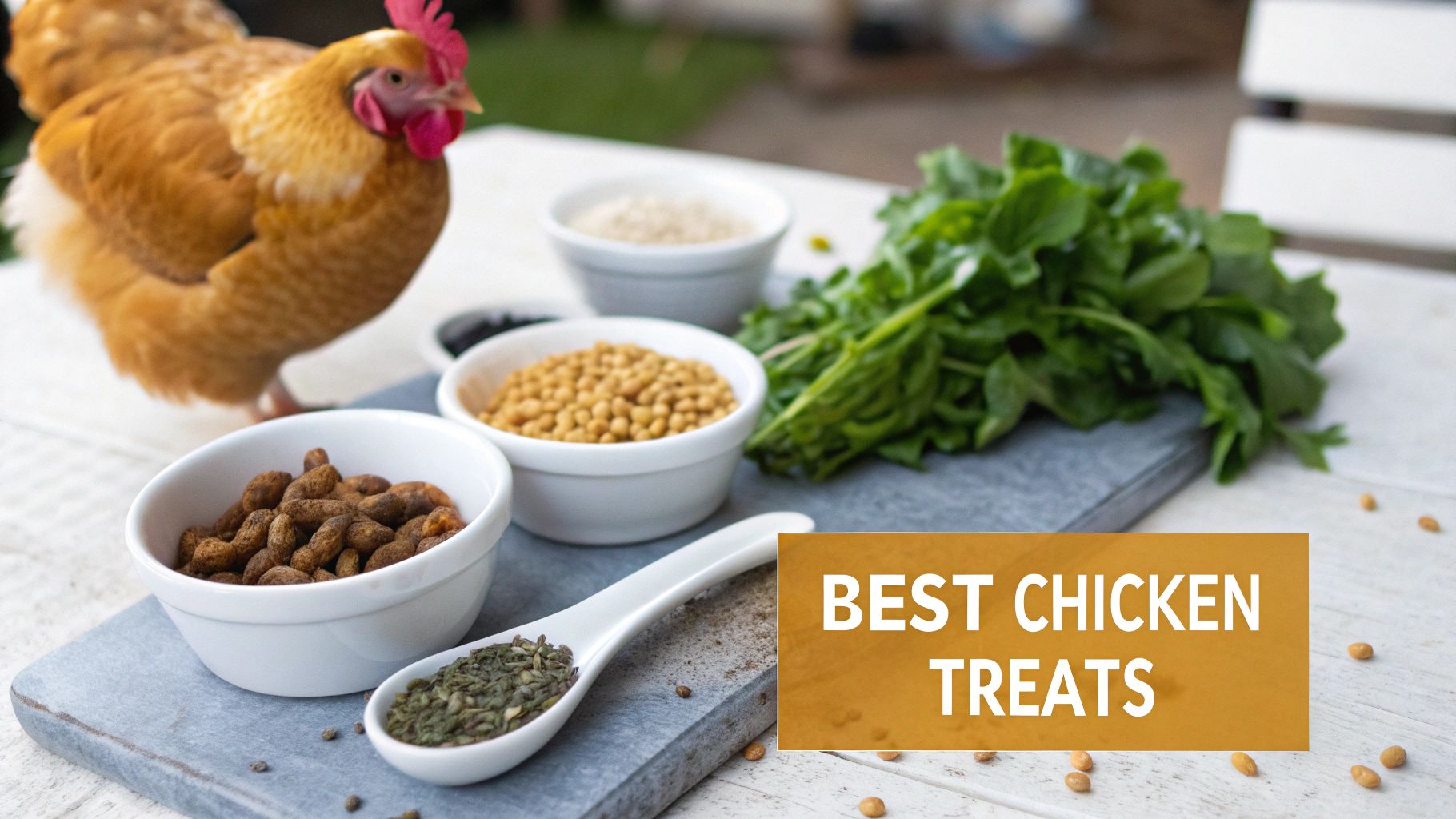
When you're on the hunt for the best treats for chickens, the goal should always be to find something that offers real nutrition, not just empty calories. Think of treats as a powerful supplement to their main diet.
Protein-packed insects like Black Soldier Fly Larvae (BSFL) and fresh, nutritious greens are always a great choice. They're fantastic for supporting healthy feather growth, boosting egg production, and encouraging the natural scratching and pecking instincts your flock loves.
What Are the Best Treats for Your Chickens
It’s easy to think of treats as "junk food," but for your flock, they should be anything but. The best chicken treats are purposeful supplements that fill nutritional gaps and give your birds a little something extra to get excited about.
They are especially important during stressful times. When your chickens are molting, their protein needs skyrocket. During a cold snap, they need extra energy to stay warm. The right treats can make all the difference, leading to stronger eggshells, brilliant feathers, and a healthier, happier flock.
Choosing the right snacks really comes down to understanding what they do. Some are all about protein for building strong muscles and feathers, while others provide a quick energy boost or essential vitamins. If you want to dive deeper into all the different options, our guide on healthy snacks for chickens is a great place to explore.
A Hierarchy of Chicken Nutrition
To see where treats fit in, it helps to look at the big picture of your flock's diet. Think of it like a pyramid. A high-quality complete feed is the solid foundation, and everything else is built on top of it.
This infographic lays it all out, showing how treats, protein, and other supplements work together with their main feed to create a balanced diet.
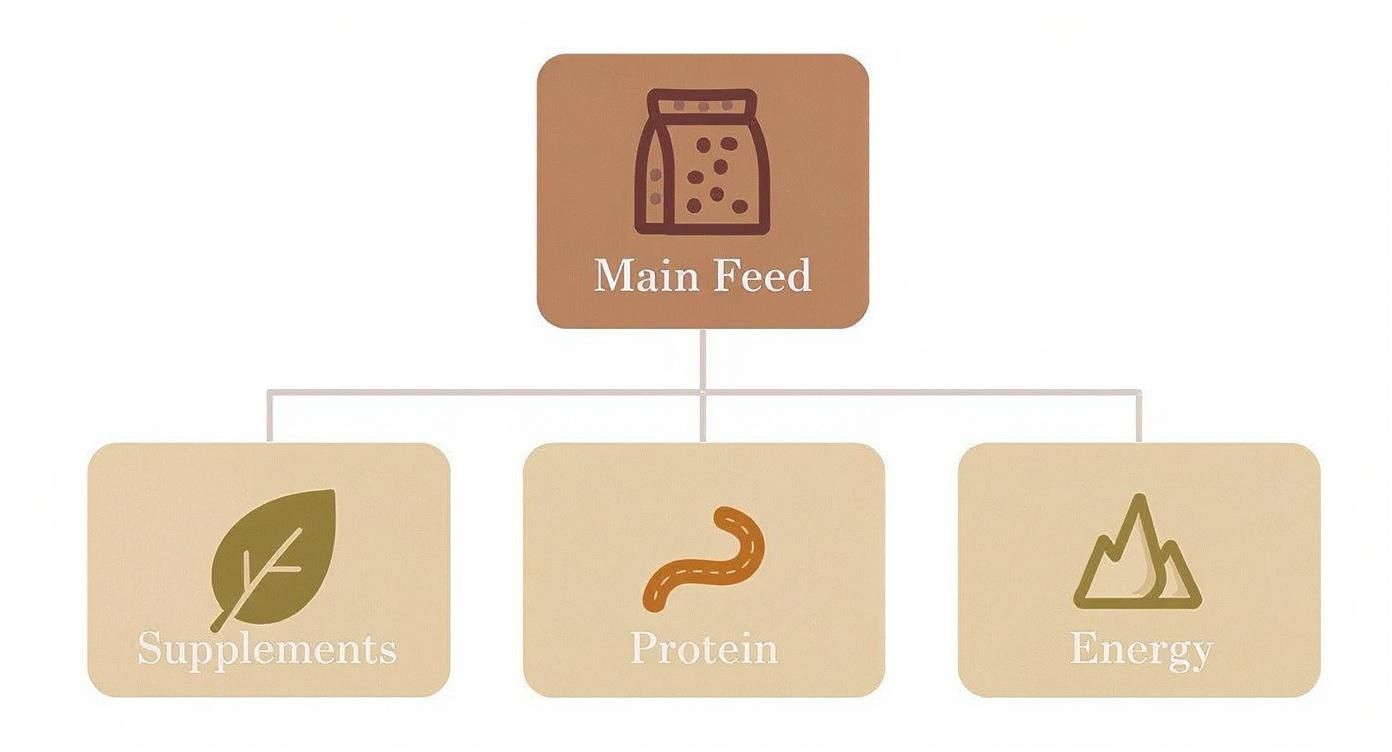
As you can see, that commercial feed is the cornerstone. Treats are the fun, functional extras that serve a specific purpose.
To make things even simpler, here's a quick-reference guide to help you choose the best options at a glance.
Top Chicken Treats Quick Reference Guide
This table breaks down the best types of treats by what they offer, along with some great examples and how often you should share them with your flock.
| Treat Category | Primary Benefit | Examples | Feeding Frequency |
|---|---|---|---|
| Protein Boosters | Feather Growth & Egg Production | BSFL, Mealworms, Scrambled Eggs | 3-4 times per week |
| Nutrient-Dense Greens | Vitamins & Yolk Color | Kale, Swiss Chard, Herbs | 4-5 times per week |
| Energy Sources | Foraging & Cold Weather Fuel | Scratch Grains, Sunflower Seeds | 2-3 times per week (in moderation) |
| Calcium Support | Strong Eggshells | Crushed Oyster Shells, Eggshells | Free choice in a separate dish |
This guide is a great starting point for treating your chickens in a way that truly benefits their health and well-being.
Why Protein-Packed Insects Are a Flock Favorite
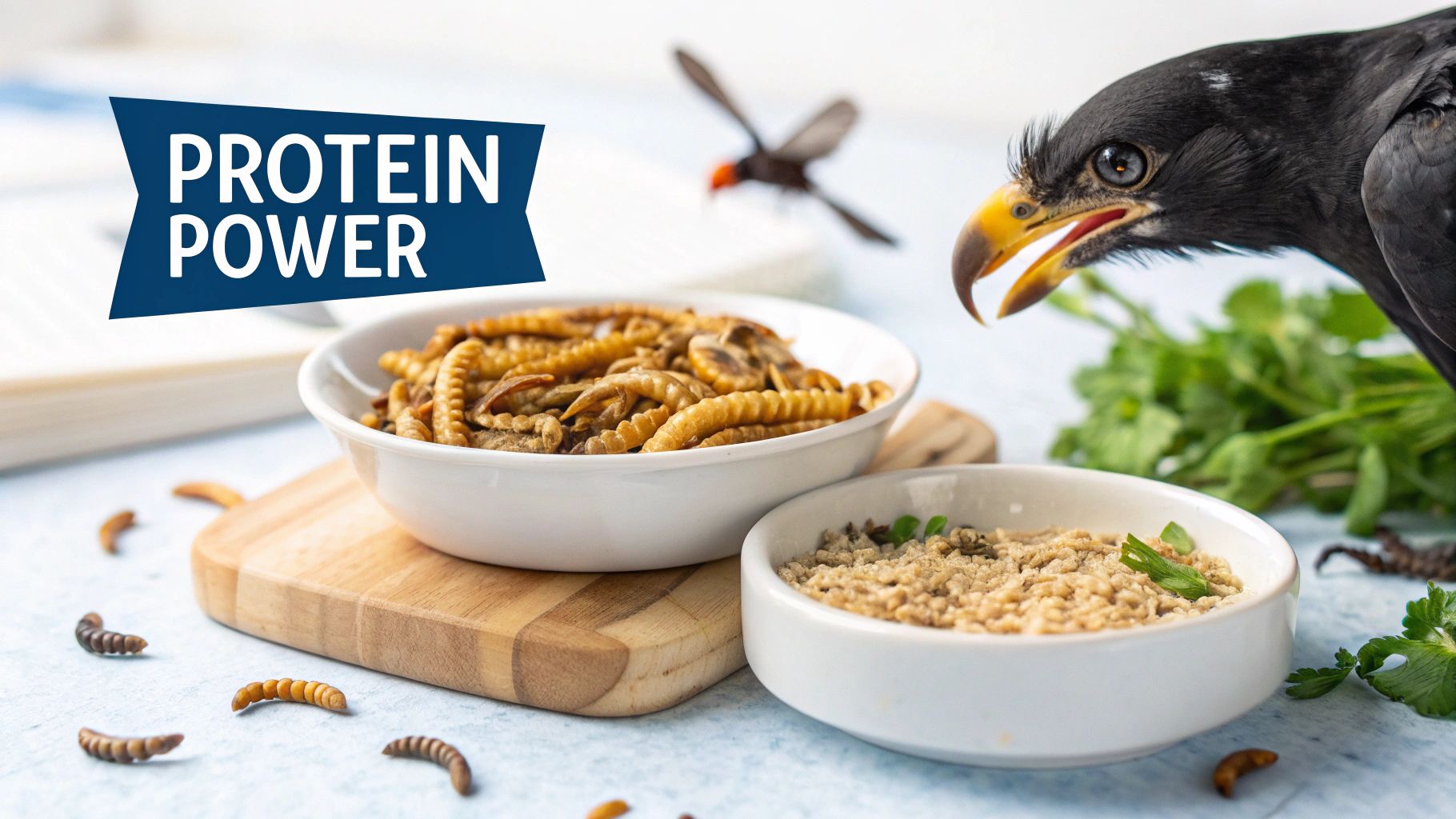
Think of it this way: what if you could give your flock a tiny, nutrient-packed power bar designed by nature just for them? That’s pretty much what you’re doing when you offer protein-rich insects. They’re a top contender for the best treats for chickens for a reason—they're more than just a snack. They are a powerhouse of essential nutrients that builds a flock’s health from the inside out.
When you toss a handful of grubs into the run, you're tapping into something primal. Chickens are born foragers, hardwired to scratch and peck for bugs. Giving them insects like mealworms or Black Soldier Fly Larvae (BSFL) satisfies that instinct, providing mental stimulation that helps keep boredom—and the bad habits that come with it—at bay.
This simple act leads to healthier, more vibrant birds. You can often see the difference in their feather quality. Feathers are made of over 85% protein, so a protein boost helps chickens sail through their demanding annual molt and regrow a lush, warm coat for the winter.
Unpacking the Nutritional Benefits
The nutritional profile of insects is incredibly well-suited to a chicken's needs. Unlike treats full of empty calories, insects deliver a concentrated dose of high-quality protein and healthy fats. It's a supported practice for boosting flock health.
Take mealworms, for example. They contain roughly 50-54% protein by dry weight. Considering a chicken’s regular feed usually provides about 16-20% protein for good health and steady egg-laying, mealworms are a fantastic supplement. Research confirms that adding insect treats can significantly boost protein intake without throwing their main diet out of whack. Find out more about the outlook for the global poultry industry on provisioneronline.com.
This high protein content directly fuels egg production, helping your hens lay strong-shelled, delicious eggs more consistently. But protein isn't the whole story.
Black Soldier Fly Larvae, for instance, come naturally loaded with calcium—a game-changing mineral for laying hens. BSFL can have up to 85 times more calcium than mealworms. This directly contributes to stronger eggshells and supports a hen's long-term skeletal health.
BSFL: The Superior Insect Treat
While mealworms are a classic, Black Soldier Fly Larvae (BSFL) are often the superior choice for chicken keepers who are serious about nutrition. Their incredible calcium-to-phosphorus ratio is exactly what a laying hen needs.
Here’s a quick rundown of why BSFL, like Pure Grubs, are a premium choice:
- Superior Calcium Levels: A must-have for preventing thin, soft-shelled eggs and keeping bones strong.
- Sustainable and Safe: They are grown in controlled environments on pre-consumer waste, which makes them an eco-friendly and clean source of nutrition.
- Complete Amino Acid Profile: They provide all the essential building blocks for strong feather growth and muscle development.
Adding high-quality BSFL to your flock's diet is one of the smartest things you can do to ensure they get the protein and calcium they need to truly thrive. For a deeper dive, check out our complete guide to the benefits of dried grubs for chickens. Choosing these nutrient-dense insects helps you raise a flock that isn't just happy, but fundamentally healthier.
Nutritious Greens and Garden Scraps for Your Flock
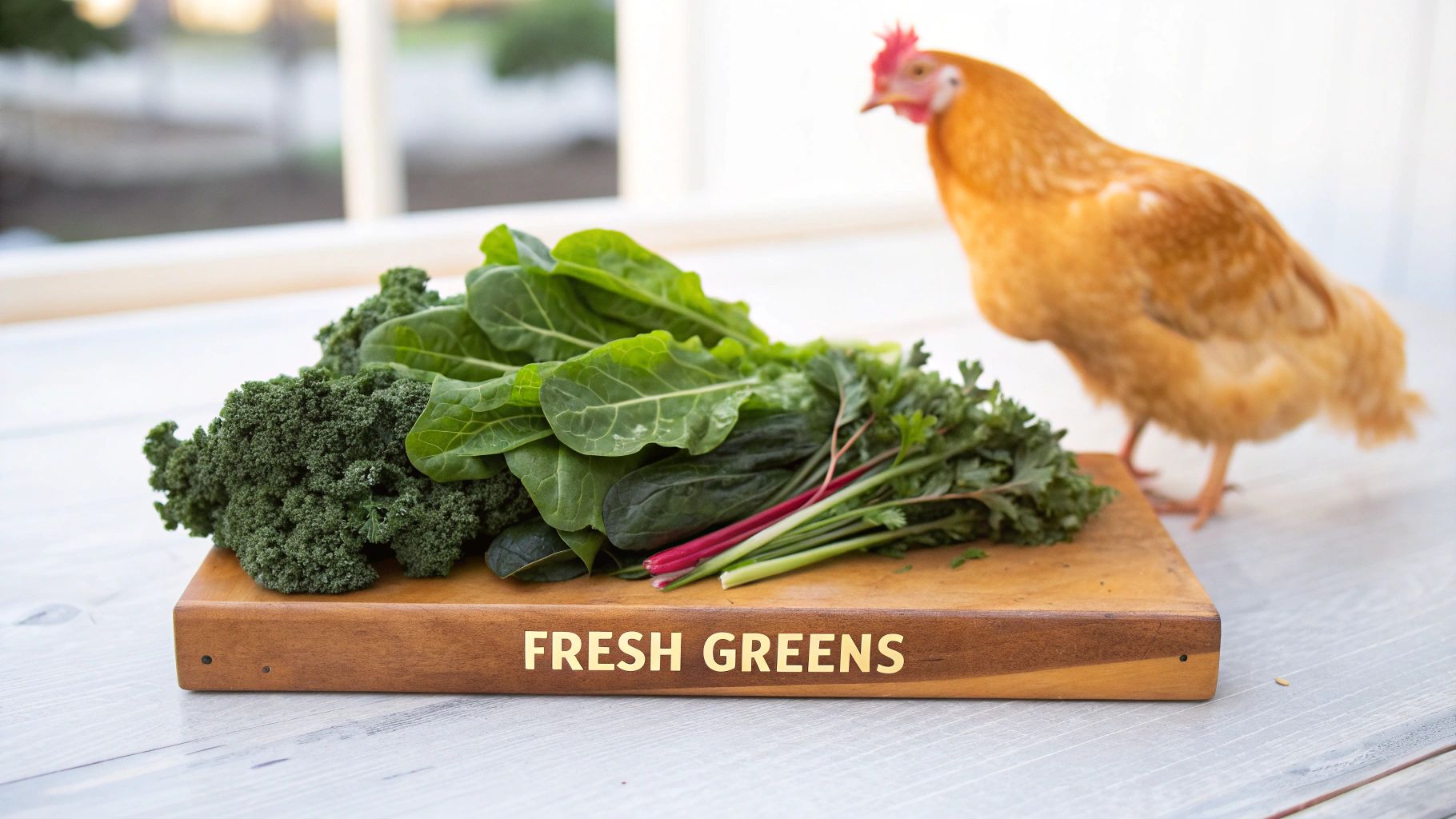
While protein-packed bugs are fantastic, don't overlook your flock's personal salad bar. Offering fresh produce from your garden or kitchen is a brilliant way to round out their diet. It provides a natural source of vitamins, minerals, and much-needed hydration, turning what might have been food waste into one of the best treats you can give your chickens.
Have you ever wondered what makes an egg yolk a stunning, deep orange? That vibrant color often comes from xanthophylls, which are natural pigments found in leafy greens. Treats like kale, swiss chard, and even common weeds like dandelion greens are packed with these compounds. The result? More beautiful and nutritious eggs.
This practice isn't just great for your birds; it’s a win for your wallet and the environment, too. Safely sharing leftovers is a fantastic way to cut down on food waste while giving your flock a dietary boost they’ll go wild for.
From Garden to Gullet Safely
The secret to successfully treating your chickens with produce is simply knowing what’s safe and what’s not. Many common kitchen scraps are wonderful for them, but a few are surprisingly toxic and must be avoided.
It’s well-known that fruits and veggies are great snacks, offering up vitamins, fiber, and water. Leafy greens like kale, spinach, and lettuce are praised by poultry keepers everywhere for delivering nutrients like vitamins A and C, calcium, and antioxidants. Kale, for example, is loaded with vitamin K, which is critical for helping their bodies use calcium and contributes to much stronger eggshells. If you're interested in the bigger picture, you can find more on the global poultry industry at meatpoultry.com.
To share your garden’s bounty with confidence, you just need to learn the difference between a flock-friendly snack and a dangerous food.
Think of it like this: not every plant in the forest is edible for humans, and the same principle applies to your flock. Items like avocado, raw potato peels, and onions contain compounds that can cause serious harm. Always err on the side of caution.
Once you know the rules, you can turn your kitchen scraps into a powerful nutritional supplement for your chickens.
Safe vs. Unsafe Garden and Kitchen Scraps
Trying to remember which foods are safe for your flock can feel like a lot at first. To make it easy, I've put together a quick guide to help you decide what to toss into the run and what should go straight to the compost bin instead.
This table gives you a straightforward comparison of common kitchen and garden scraps, explaining exactly why some are flock favorites and others are strictly off-limits. Use this as your go-to reference before sharing anything new with your birds.
| Safe Treats (In Moderation) | Why It's Good | Unsafe/Toxic Foods | Why It's Bad |
|---|---|---|---|
| Leafy Greens (Kale, Chard) | Rich in vitamins A, K, and antioxidants for vibrant yolks. | Avocado (Skin & Pit) | Contains persin, a toxin that is harmful to chickens. |
| Cooked Rice & Pasta | Provides a simple carbohydrate boost for energy. | Raw Potato Peels | Contains solanine, which can be toxic, especially if green. |
| Berries (Blueberries, Strawberries) | Packed with antioxidants and vitamins for immune support. | Onions & Garlic | Can cause anemia and respiratory issues in large amounts. |
| Melon (Watermelon, Cantaloupe) | Offers excellent hydration, especially on hot days. | Uncooked Beans | Contain a toxic compound called phytohaemagglutinin. |
| Herbs (Parsley, Mint, Oregano) | Can support respiratory health and act as natural insect repellents. | Chocolate & Caffeine | Highly toxic and can be fatal to birds. |
By keeping this simple guide handy, you'll be able to treat your chickens confidently and safely every time.
Using Grains and Seeds for Energy and Enrichment
Think of grains and seeds as the ultimate energy food for your flock, kind of like what carbs are for a marathon runner. When you toss out a handful of scratch grains or sunflower seeds, it’s more than just a quick snack. You’re giving them an activity that taps right into their natural instinct to forage.
This is a huge benefit during those long, cold winter months when the ground is frozen and there’s nothing much to peck at. Watching your chickens eagerly scratch and search is proof that you're encouraging a healthy, natural behavior. It keeps them busy, active, and mentally engaged, which is a great way to head off boredom-related problems like feather picking.
But here's the catch: with energy-dense treats like these, moderation is everything. They're a definite flock favorite, but overdoing it can quickly lead to some serious health issues.
Balancing Energy with Nutrition
Grains have been a go-to treat for chickens across the globe forever, mostly because they're packed with energy and easy to find. Corn, for example, is a staple in most scratch mixes and provides a quick energy hit with about 86% carbohydrates and 9% protein.
A traditional scratch blend of cracked corn, wheat, and barley is fantastic for getting your birds to forage, but it's far from a complete meal. The expert consensus is crystal clear: treats should never make up more than 10% of a chicken's total daily food intake. Going over this limit can throw their entire diet out of whack. You can dive deeper into the trends of global poultry nutrition and markets on spglobal.com.
It helps to think of grains as candy for your chickens. A small amount is a fun, energy-boosting treat, but too much will ruin their appetite for the good stuff—their balanced, nutrient-rich feed.
A flock that fills up on grains and seeds can easily become obese. Worse, they'll miss out on essential nutrients like protein and calcium, which can tank egg production and hurt their overall health. That 10% rule isn't just a suggestion; it's a must for a healthy flock.
Top Grains and Seeds to Offer
When you're picking out these kinds of treats, just remember two words: variety and moderation. A good mix of different grains and seeds will give your chickens a much broader range of benefits.
Here are some of the best choices you can offer:
- Scratch Grains: You can't go wrong with a classic mix of cracked corn, oats, and barley. It’s perfect for scattering around the run to get them scratching and helps them generate body heat.
- Sunflower Seeds: Black oil sunflower seeds are a superb option. They’re high in healthy fats, have a good amount of protein (around 20%), and are loaded with vitamin E, which is great for feather health.
- Flax Seeds: These little powerhouses are full of omega-3 fatty acids. Not only is this good for your hens, but it can also boost the nutritional value of their eggs. Plus, the extra fiber is great for their digestion.
- Pumpkin Seeds: Often mentioned for their potential to act as a natural dewormer, pumpkin seeds are also a fantastic source of nutrients like zinc and magnesium.
By offering these options sparingly, you can give your flock a great energy boost and some fun enrichment without messing up the balanced nutrition they get from their main feed.
A Practical Guide to Feeding Treats Safely
Knowing the best treats for your chickens is a great start, but how you offer them is just as important for keeping your flock happy and healthy. It helps to think of treats as a special dessert, not the main course. A few simple guidelines are all it takes to make sure these snacks are a healthy bonus, not a health risk.
The golden rule here is the 90/10 rule. This is a really important principle: treats should never make up more than 10% of your flock’s daily food intake. The other 90% absolutely must come from their complete, balanced chicken feed. Sticking to this ratio prevents nutritional imbalances, keeps obesity at bay, and helps maintain steady egg production. It’s all about making sure they fill up on the essentials first.
Timing and Hygiene Matter
Believe it or not, when you give treats is almost as important as what you give. The best time is in the afternoon, well after your chickens have spent the morning eating their regular feed. This way, they won't spoil their appetite for the good stuff they actually need to thrive.
Cleanliness is also a huge factor in preventing illness. Never just toss treats onto soiled bedding or muddy ground where they can pick up nasty bacteria. Instead, use a dedicated treat dispenser, scatter them on a clean patch of grass, or put them in a shallow dish. It’s a simple step that keeps your flock’s snacks both tasty and safe.
Remember, treats are a supplement, not a replacement. A chicken that fills up on snacks first is like a child eating candy before dinner—they miss out on the vital nutrition needed for strong bones, healthy feathers, and consistent egg-laying.
Smart Treating Habits
Building a healthy treating routine is pretty straightforward. By just being mindful of quantity, timing, and cleanliness, you can give your flock the snacks they love without a second thought. For anyone looking for a high-quality, protein-packed option, figuring out where to buy Black Soldier Fly Larvae from a trusted supplier is a fantastic way to provide a safe and nutritious supplement.
Here are a few practical tips to keep in mind:
- Watch the Flock: Pay attention to your chickens. If you notice they're starting to leave their main feed untouched, you’re probably overdoing it with the treats.
- Encourage Foraging: Scatter treats like Pure Grubs around their run. This encourages their natural scratching and pecking behaviors, which is great mental stimulation for them.
- Always Provide Water: Make sure fresh, clean water is always available, especially when you’re offering dry treats like grains or insects.
- Introduce New Treats Slowly: When you want to try a new snack, just offer a tiny amount at first to see how your flock takes to it.
Following these simple practices ensures that treat time remains a joyful and beneficial part of your flock's life.
Got Questions About Chicken Treats? We've Got Answers.
Even the most seasoned chicken keeper runs into questions now and then. When it comes to treats, it's easy to wonder if you're doing it right. This little Q&A is here to clear up some of the most common head-scratchers we hear from flock raisers.
Think of this as your go-to guide for those "can I...?" or "how much...?" moments that pop up in the coop. Let's make sure every snack you give your birds is a good one.
How Often Can I Give My Chickens Treats?
The golden rule here is the 90/10 rule. It’s simple: treats should never be more than 10% of your flock's daily food intake. For most backyard flocks, that works out to a small handful of goodies per bird, per day.
I always recommend giving treats in the afternoon. This way, you know your chickens have already filled up on their main feed, which has all the balanced nutrition they need to stay healthy. A few too many treats might seem harmless, but it can lead to health issues down the road, so keeping them as a special, limited snack is the way to go.
Can My Baby Chicks Have Treats?
When it comes to the little ones, you’ll need a bit of patience. It's best to hold off on any treats until your chicks are at least 4 to 5 weeks old. Their tiny digestive systems are still getting up and running, and their number one priority is a high-quality starter feed.
Once they hit that one-month mark, you can start introducing a few things, but keep it small and soft. Think tiny, easy-to-digest morsels.
- A little bit of scrambled egg
- Finely chopped lettuce or other soft greens
- A few crumbles of oatmeal
Steer clear of hard grains, big insects, or tough kitchen scraps until they're a bit older and can handle more complex foods.
What Are the Best Treats for Chickens During Molting?
Molting is incredibly demanding on a chicken's body. They are literally re-growing all of their feathers, which are made of more than 85% protein. So, during this time, protein is king.
Think of it like this: protein is the raw material for building new feathers. Giving your flock a protein boost helps them get through the molt faster, with less stress, and results in a beautiful, healthy new coat.
Some of the best high-protein treats to offer during the fall molt include:
- Black Soldier Fly Larvae (BSFL): My top pick. They're packed with protein and calcium.
- Mealworms: Another protein-rich insect that chickens go absolutely crazy for.
- Scrambled Eggs: An easy and excellent source of complete protein you probably already have on hand.
- Black Oil Sunflower Seeds: These provide a good mix of protein and healthy fats, which are great for feather quality.
Are There Healthy Human Foods That Are Actually Bad for Chickens?
Yes, absolutely. This is a big one. While it's great to share healthy scraps from the kitchen, some of our favorite foods are toxic to chickens. You can't assume that what's good for you is also good for them.
When in doubt, always look it up first. A few of the most dangerous no-gos include:
| Unsafe Food | Why You Should Avoid It |
|---|---|
| Avocado (especially skin & pit) | Contains a toxin called persin, which can be fatal. |
| Uncooked Beans | Contain a compound called phytohaemagglutinin that is highly toxic. |
| Onions & Garlic (in large amounts) | Can cause anemia and breathing problems over time. |
| Chocolate or Caffeine | Highly toxic and can cause severe heart problems. |
| Moldy or Salty Foods | Can lead to salt poisoning, botulism, or other serious illnesses. |
Your best bet is to stick to a list of known safe foods. It’s the easiest way to keep your flock safe, healthy, and happy.
Ready to give your flock the ultimate protein-packed, calcium-rich snack? Pure Grubs offers premium, USA-grown Black Soldier Fly Larvae that support stronger eggshells and vibrant feather growth. Give your chickens the safe, nutritious treats they deserve. Shop Pure Grubs today.