

A Practical Guide to the Types of Chicken Feeds
Walk into any feed store, and the wall of options can be a bit much. You’ll see bags of crumbles, pellets, and mashes all labeled with confusing terms like "starter," "grower," and "layer." It’s easy to get lost, but the logic behind it is simpler than you might think.
The easiest way to think about chicken feed is to compare it to our own diets—what a baby needs to thrive is worlds apart from what a marathon runner eats for peak performance.
Your Flock's Foundational Nutrition Blueprint
Just like a person, a chicken's nutritional needs change dramatically as it grows. A newly hatched chick has completely different dietary requirements than a full-grown, egg-laying hen. This is the simple, guiding principle behind all those different bags of feed.
Each formula is a carefully balanced nutritional blueprint. It's designed to deliver the precise amount of protein, calcium, vitamins, and minerals a chicken needs for a specific phase of its life. Getting this wrong can cause real problems, from stunted growth and poor feathering to weak eggshells and other health issues.
This focus on precise nutrition has built a massive global industry. The poultry feed market, valued at around USD 216.82 billion in 2025, is expected to soar to USD 332.40 billion by 2035. That's a huge number, and it underscores just how vital the right feed is for everyone, from large-scale farms to backyard enthusiasts who just want a healthy, happy flock. If you're curious, you can explore more data on this expanding market to see the global trends in action.
Understanding the Nutritional Roadmap
So, let's map out a chicken's dietary journey. It starts with a tiny chick that needs a high-protein starter feed to fuel its explosive growth in those first few weeks.
As that chick grows into a "teenage" pullet, it transitions to a grower feed. This formula has a bit less protein, which is intentional—it helps the bird build a strong frame and reach maturity without the pressure of laying eggs too soon.
Finally, once she’s ready to start laying, a hen graduates to a layer feed. This is her long-term diet, and its standout feature is a big boost in calcium, which is essential for producing strong, healthy eggshells day after day.
What is a "Complete Feed"?
You'll see this term on most bags. It simply means the feed is formulated to be the sole source of nutrition for your flock (other than fresh water, of course). While treats are fun, this foundational feed provides everything a chicken needs to grow well, stay healthy, and be productive.
Quick Guide to Chicken Feed Types by Life Stage
To make it even easier, here's a quick-reference table that breaks down the most common feed types. Think of this as your cheat sheet for matching the right feed to your flock's age and purpose.
| Feed Type | Primary Purpose | Protein Content | Typical Age Range |
|---|---|---|---|
| Starter Feed | Supports rapid growth and feather development in chicks. | 20-24% | 0-8 Weeks |
| Grower Feed | Promotes steady, healthy growth in adolescent pullets. | 16-18% | 8-18 Weeks |
| Layer Feed | Provides high calcium for strong eggshells in laying hens. | 16-18% | 18+ Weeks |
| Finisher Feed | Encourages healthy weight gain in meat birds before processing. | 18-20% | Final 2-3 Weeks |
Keep this guide handy, and you'll always be able to confidently choose the right bag from that wall of options at the feed store.
Matching Feed to Every Growth Stage
A chicken's nutritional needs change dramatically from the moment it hatches to the day it lays its first egg. Giving your flock the right food at the right time is probably the single most important thing you can do for their health and productivity. It’s just like feeding a family—you wouldn't give a steak dinner to a newborn, right? The same logic applies to your birds.
This whole feeding progression is designed to hit specific biological milestones. Each type of feed is a carefully balanced mix of protein, vitamins, and minerals that fuels everything from strong bone development and feather growth to getting a hen’s body ready for a lifetime of laying eggs.
Let's break down this journey, one feed bag at a time.
The All-Important First Weeks: Starter Feed
For the first six to eight weeks of their lives, chicks are in the middle of an incredible growth spurt. To keep up, they need a diet absolutely packed with protein, and that’s where starter feed comes in.
Think of starter feed as baby formula for chicks. It has the highest protein content of any feed, usually between 20% and 24%. This protein is the critical building block for developing strong bones, healthy organs, and their first real coat of feathers. Skimping on this step can lead to stunted growth and a flock that’s more vulnerable to health problems down the road.
This timeline gives you a great visual for when to switch between these key feeds.
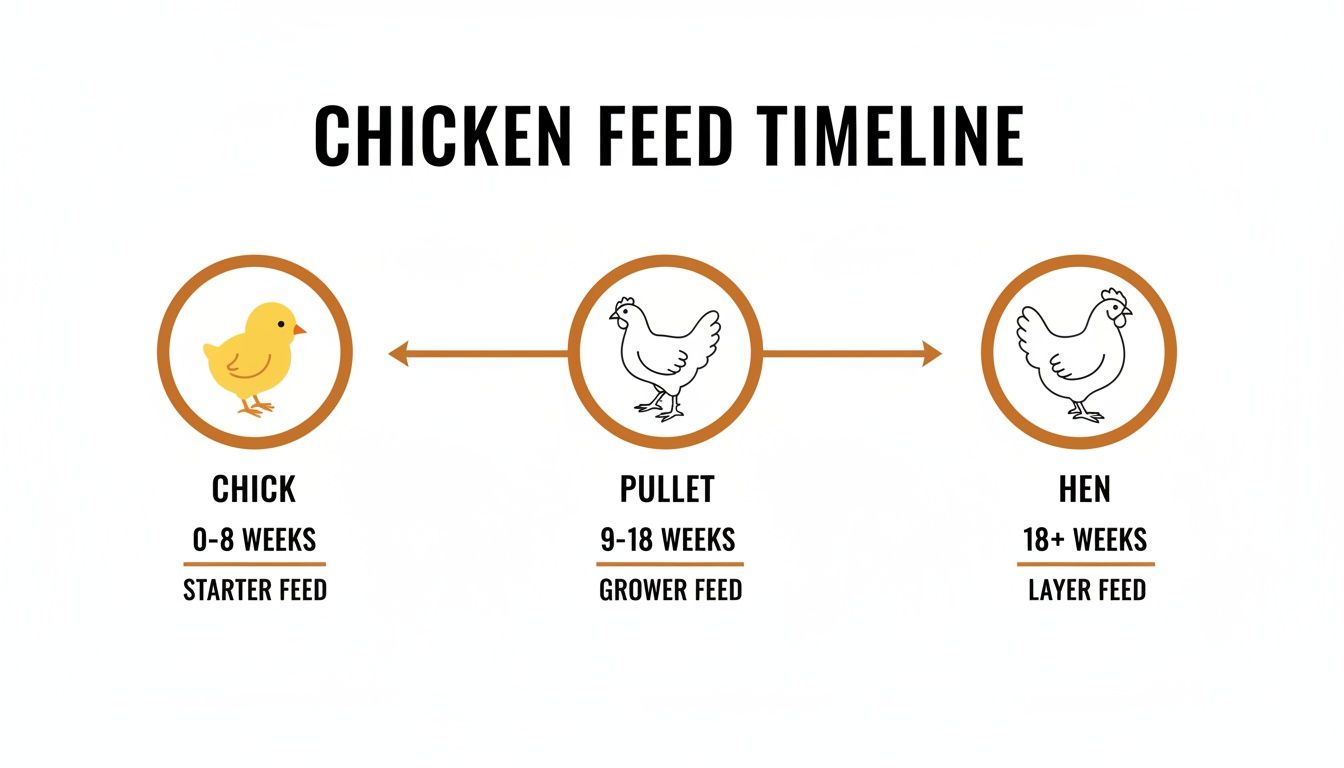
As you can see, every stage has a feed specifically formulated to meet its unique nutritional demands.
Fueling the Awkward Teenage Phase: Grower Feed
Once your chicks have graduated from the brooder and traded their fuzz for feathers, they hit their "teenage" phase. Around eight weeks old, it’s time to switch them from starter to grower feed. This is a crucial step in managing their development.
Grower feed has a bit less protein, typically landing between 16% and 18%. That drop is intentional. The goal here is to support steady, controlled growth, not the explosive development they experienced as tiny chicks.
So, Why Not Just Keep Them on Starter Feed?
It's a common question. Keeping young pullets on high-protein starter feed can make them grow too fast and start laying before their bodies are fully ready. This can lead to serious health problems like egg binding. Grower feed ensures they build a strong frame first, setting them up for a long, healthy, and productive laying life.
This formula gives a growing pullet everything she needs to mature without the extra calcium found in layer feeds, which can actually harm their developing kidneys at this age.
Specialized Diets for Meat Birds: Finisher Feed
While most backyard chicken keepers raising hens for eggs will stick to starter and grower, those raising meat birds (broilers) have a different end goal. For these chickens, a finisher feed is used in the last few weeks before processing.
Finisher feed is all about encouraging healthy weight gain and helping the birds reach their target size efficiently. This focus on meat production is a massive part of the global poultry industry. In fact, broiler feed makes up 38.60% of the poultry feed market share, a direct reflection of the huge demand for chicken as a protein source. You can discover more insights about the poultry feed market to see the scale of these trends.
Figuring out these transitions might seem a little overwhelming at first, but it quickly becomes second nature. For a more detailed look at feeding schedules and best practices, take a look at our comprehensive chicken feeding guide for all life stages. Getting the feed right for your flock's age is truly the foundation of good chicken keeping.
Layer Feed, Medicated Options, and What They Mean for Your Flock
Once your pullets start to mature and look less like gawky teenagers and more like actual hens, their dietary needs take another major turn. The grower feed that built their strong bodies has done its job, but now they're gearing up for the marathon of egg-laying. Their diet needs to change to fuel this demanding new role.
This is where layer feed comes in. It's the meal ticket your flock will rely on for most of their adult lives. Think of it like an athlete switching from a general high-protein diet to a specialized one designed for peak performance. The focus shifts from just growing to sustaining the daily biological miracle of producing an egg, all without draining the hen's own reserves.
Fueling the Egg-Making Machine
The absolute star of the show in any good layer feed is calcium. Lots of it. While grower feed is low in calcium to protect a young pullet's developing kidneys, layer feed is loaded with it—we're talking 3.5% to 4.5%.
This huge jump is deliberate and essential. An eggshell is basically pure calcium carbonate. To create that strong, protective shell every single day, a hen has to pull a massive amount of calcium from her diet.
Why You Can't Skimp on Calcium
If a hen’s feed is low in calcium, her body will do whatever it takes to make that eggshell. It’ll start pulling calcium directly from her bones, leading to a condition much like osteoporosis. This results in weak, brittle bones and poor-quality eggs. A high-calcium layer feed is non-negotiable for both strong shells and your hen's long-term health.
A quality layer feed gives her everything she needs to produce beautiful, sturdy eggs while keeping her own skeleton strong. To get a more in-depth look at this crucial diet, check out what to feed laying hens in our detailed guide.
Medicated Feed: What's the Real Story?
You've probably seen bags of chick starter labeled "medicated feed." The name can sound a little intimidating, but it's not a cure for a sick bird—it's a preventative measure. It’s designed to give young, vulnerable chicks a fighting chance against a nasty intestinal parasite called Coccidia.
Most medicated feeds contain a coccidiostat, usually Amprolium. It’s important to know this is not an antibiotic. Amprolium cleverly works by blocking the Coccidia parasite from absorbing thiamine (Vitamin B1), a nutrient it needs to survive and multiply inside the chick's gut.
This gives the chick's own immune system time to build natural defenses against coccidiosis without being completely overwhelmed by a severe infection.
-
When to Use It: Medicated starter is a great idea for chicks that haven't been vaccinated for coccidiosis, particularly if they're in an environment where they might be exposed to the parasite (which is most places!).
-
When to Skip It: If you bought vaccinated chicks from a hatchery, don't use medicated feed. It will actually interfere with the vaccine and make it ineffective. Adult birds also don't need it, as they've typically already built up a natural immunity.
The choice is all about your specific flock's needs. For most new chicks, it’s a simple, proactive step that helps them develop a strong immune system right from the start.
Choosing the Right Feed Form
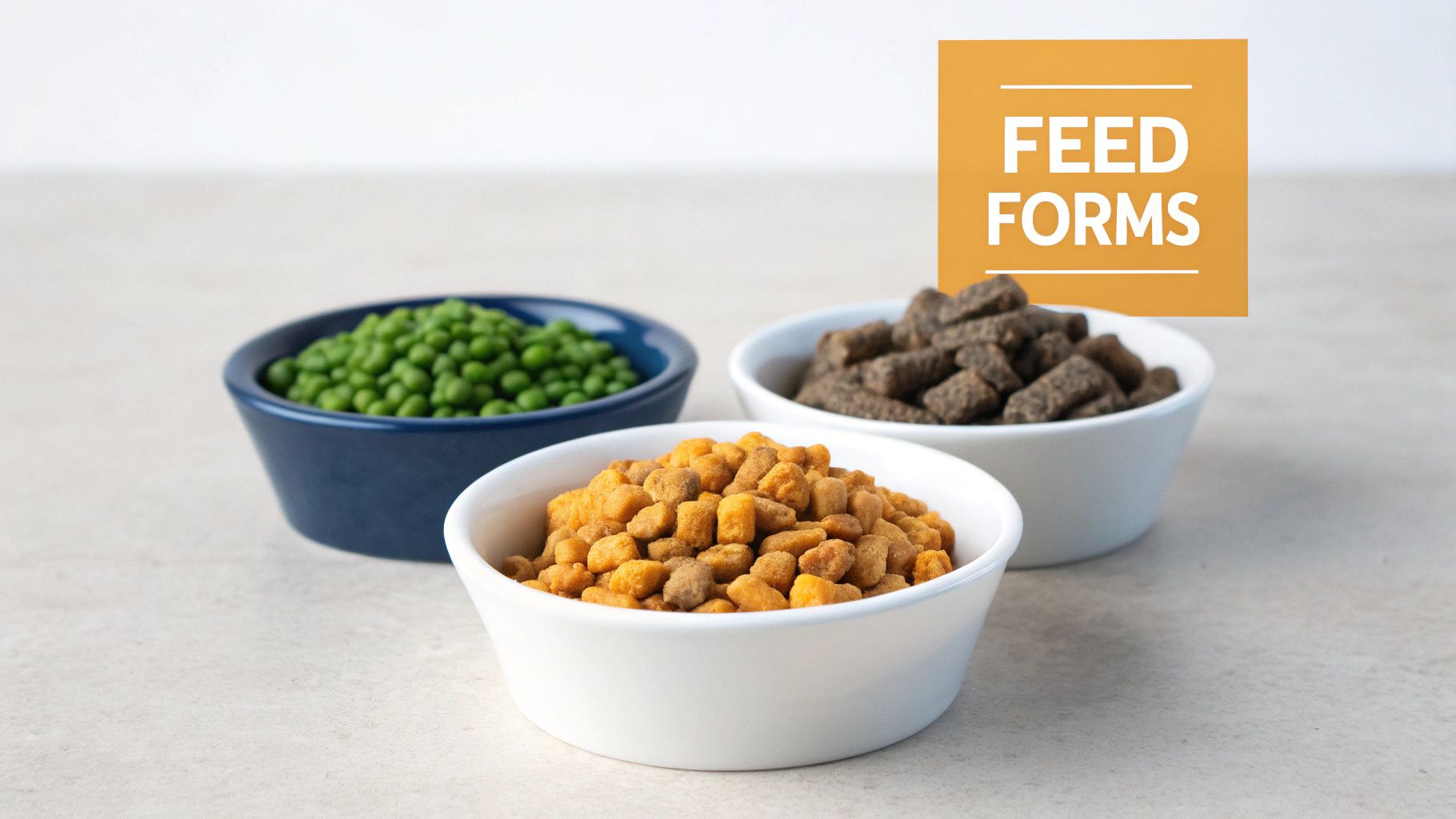
While the nutritional label on a bag of feed is critical, the physical form of that feed—its texture—is just as important for your flock's success. Think of it like trying to feed a toddler a giant, uncut steak; it’s just not practical. The same logic applies to chickens.
Different feed forms are designed for specific ages and behaviors. Getting it right makes feeding time easier, reduces waste, and ensures every bird, from a day-old chick to a full-grown hen, can eat comfortably. The three main textures you’ll find on the shelf are mash, crumbles, and pellets. At their core, they’re all made from the same ingredients, just processed differently to suit different needs.
Mash: The Foundational Form
Mash is the most basic form of chicken feed you can get. It’s a finely ground, unprocessed mix that has the loose texture of coarse flour or potting soil. Because it’s so fine, it's the universal choice for newly hatched chicks.
Baby chicks have tiny beaks and simply can't handle bigger pieces of food. Mash is perfect for them—it’s easy to peck at and digest, making sure they get all the crucial nutrients from their starter feed without a struggle.
But that fine texture has a downside. Chickens are notorious for "billing out," which is a fancy way of saying they use their beaks to sort through their food and fling out whatever they don't want. With mash, this behavior leads to a ton of wasted feed scattered on the coop floor. It can also get pretty messy, especially if it gets wet.
Crumbles: The Versatile Intermediate
Once chicks start getting a little bigger, they usually graduate to crumbles. To make crumbles, manufacturers take the mash, press it into a pellet, and then break that pellet back down into smaller, bite-sized pieces.
This creates a texture that’s absolutely perfect for growing pullets and adolescent birds. The pieces are small enough for them to handle easily but big enough to stop them from selectively sifting and wasting food like they do with mash. A lot of chicken keepers I know swear by crumbles as the ideal "all-purpose" feed, especially if they have a mixed-age flock where one size needs to fit all.
Crumbles really are a great middle ground, giving you the benefits of a solid food source that’s still easy for a wide range of bird sizes to manage.
Pellets: The Low-Waste Champion
Finally, we have pellets. These are made by grinding, heating, and compressing mash into uniform, little cylinders. This process locks all the nutrition into a single, tidy package.
For adult birds, pellets are usually the most efficient choice. Chickens can’t sift through them, so they eat the whole pellet and get the full spectrum of vitamins and minerals in every single bite. This dramatically cuts down on waste and helps ensure even your pickiest eaters get a balanced diet.
The biggest win with pelleted feed is consistency. Since every pellet contains the exact same formulation, it stops picky birds from just eating their favorite grains and leaving essential nutrients behind. This leads to less wasted feed and better overall flock nutrition.
Pellets are also less messy and work wonderfully in all sorts of feeders. While you might have a hen or two turn her beak up at them initially, they almost always come around quickly.
Comparing Chicken Feed Forms: Mash vs. Crumbles vs. Pellets
Choosing the right texture really comes down to the age of your flock and how much waste you're willing to tolerate. This table breaks it all down to help you decide.
| Feed Form | Best For | Pros | Cons |
|---|---|---|---|
| Mash | Baby chicks (0-8 weeks) and birds with beak issues. | Easiest for tiny chicks to eat; no additional processing. | Very messy; high potential for wasted feed due to sifting. |
| Crumbles | Growing pullets and mixed-age flocks. | Reduces waste compared to mash; easy for most birds to eat. | Can still be somewhat messy; not as waste-proof as pellets. |
| Pellets | Adult laying hens and full-grown birds. | Minimizes feed waste; ensures complete nutrition in every bite. | Can be too large for young birds; some chickens are picky initially. |
Beyond these three, some folks also get into fermented feed. This involves soaking feed (usually pellets or whole grains) in water for a few days to encourage beneficial bacteria to grow. This can make nutrients more available and boost gut health, but it definitely requires more daily effort.
Ultimately, choosing the right feed form is a simple adjustment that pays big dividends in your flock's health, the cleanliness of your coop, and even your feed bill.
The Real Role of Treats and Supplements
Think of your flock's complete feed as the balanced, everyday meal that keeps everything running smoothly. Treats and supplements, on the other hand, are the special additions that can provide targeted nutrition, encourage natural behaviors, and—let's be honest—are a fantastic way to bond with your birds.
But there’s a big difference between a junk-food snack and a truly valuable supplement. The goal is to choose extras that add real nutritional value, not just empty calories that dilute their main diet.
Beyond Scratch Grains
One of the most common "treats" you'll find is scratch grains, which is usually just a mix of cracked corn and other grains. Chickens go wild for it, and it's fun to watch them scratch around, but it’s basically chicken candy. It's high in carbs but offers very little protein or other essential nutrients.
Tossing out too much scratch can actually do more harm than good by throwing their balanced diet out of whack. A great guideline to follow is the 90/10 rule: their complete feed should make up at least 90% of their daily intake, with all treats combined making up no more than 10%.
The Superior Supplement: Black Soldier Fly Larvae
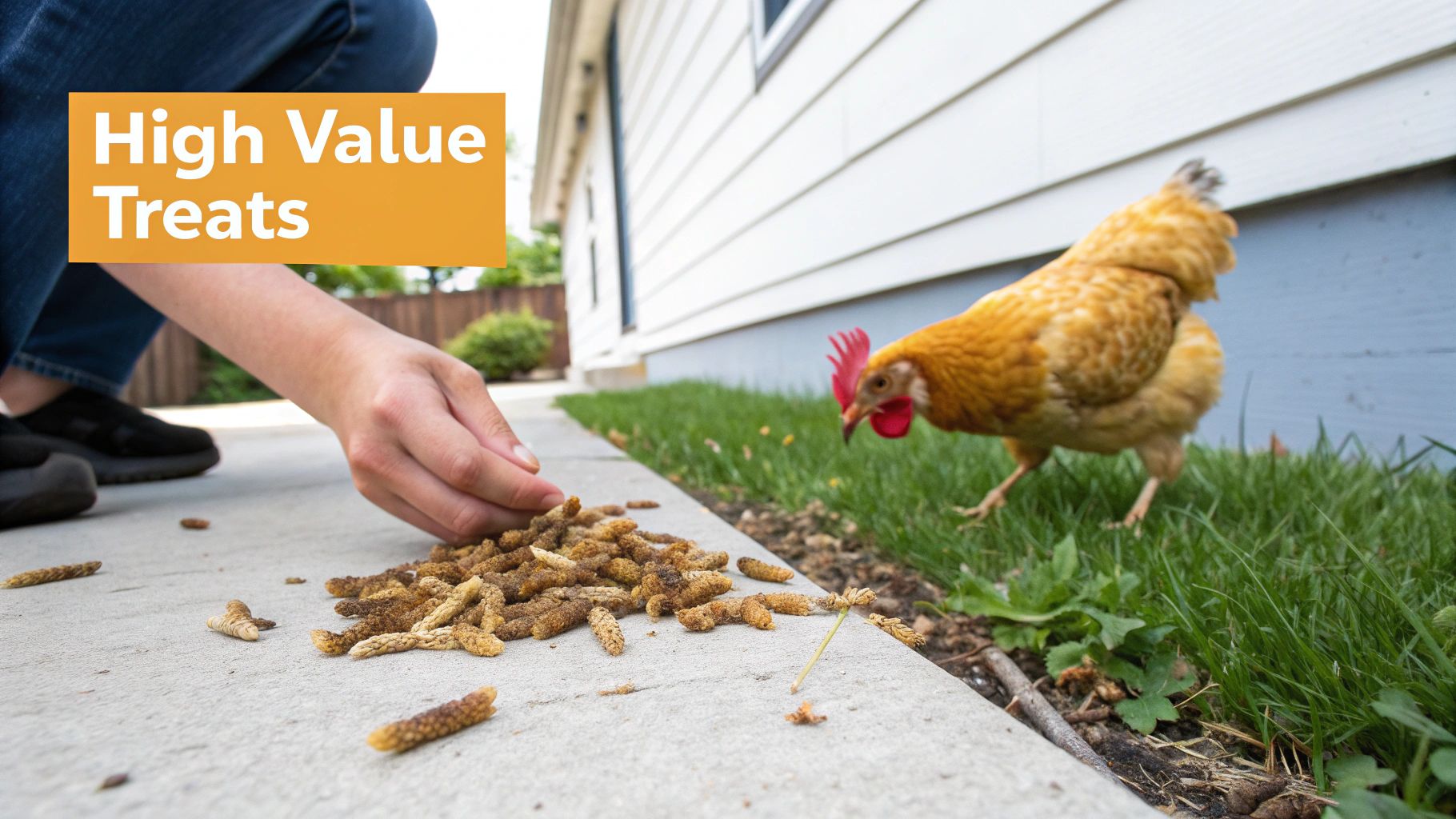
This is where a high-value supplement like Black Soldier Fly Larvae (BSFL), such as our Pure Grubs, really shines. Unlike scratch, BSFL are a nutritional powerhouse packed with everything a chicken needs to thrive, especially during stressful times like molting or heavy laying.
They provide a huge protein boost for feather regrowth and, most importantly, are incredibly rich in calcium—a mineral that is absolutely critical for laying hens.
BSFL are a nutritional standout, containing up to 85% more calcium than mealworms. This isn't just any calcium; it's highly absorbable, so a hen's body can put it to work immediately to build strong eggshells and maintain her own bone health.
This makes BSFL far more than a simple treat. They are a functional supplement that helps you raise healthier, more productive hens with consistently strong eggshells. If you're looking for more ideas, we've put together a list of the best treats for chickens in our complete guide.
Practical Ways to Use BSFL
Working BSFL into your flock's routine is easy and offers benefits beyond just nutrition. They’re a fantastic tool for training and enrichment.
Here are a few ways I like to use them:
- As a Training Reward: Shake the bag and use a special call right before you toss them out. Your chickens will learn to come running when they hear it, which is incredibly handy when you need to get them back in the coop.
- For Boredom Busting: Scatter a handful of grubs around the run or in their clean bedding. This gets them scratching and foraging just like they would in the wild, keeping them active and entertained.
- During Molting Season: When your birds are regrowing feathers, their protein demand goes through the roof. A daily scoop of BSFL gives them the amino acids they need to grow back their plumage quickly and beautifully.
- For Stronger Eggshells: Seeing thin or weak shells? A daily BSFL supplement provides that extra calcium boost to help your hens start laying stronger eggs, often in just a few days.
When you offer a high-quality supplement like Pure Grubs, you’re not just giving your flock a snack. You’re making a direct investment in their health, happiness, and productivity.
Your Top Chicken Feed Questions, Answered
Once you get the basics down, the real learning begins. Keeping chickens is full of little "what if" moments and practical questions that pop up when you're managing your flock day-to-day. Getting these details right is what separates a good chicken keeper from a great one.
Think of this as your go-to reference for those common head-scratchers. We’ll cover everything from timing feed transitions to navigating the needs of a mixed flock, clearing up any confusion and helping you care for your birds with confidence.
When Do I Switch from Grower to Layer Feed?
This is one of the most important milestones in a hen's life, and getting the timing right is crucial. You'll want to switch from grower feed to a complete layer feed right around 18 to 20 weeks of age. The other big clue? The very first egg.
If you switch too early, you can cause real problems. Layer feed is packed with calcium (3.5-4.5%) to support eggshell production, but that high concentration can seriously strain the kidneys of a young pullet whose body isn't ready for it. Wait too long, though, and you’ll see the consequences in the nesting box—think thin, fragile eggshells. Worse, your hen might start pulling calcium from her own bones, which puts her long-term health at risk.
A Pro Tip for a Smooth Switch
Never change feeds cold turkey. A sudden dietary shift can wreak havoc on a chicken's digestive system. Instead, make the transition gradually over 7 to 10 days. Start by mixing a little of the new feed into the old, and slowly increase the ratio each day until you've fully switched over.
Can My Rooster Eat Layer Feed?
If you have a mixed flock with a rooster or two, this question is bound to come up. The short answer is yes, it’s generally okay for a rooster to share the layer feed with his hens, but it’s not his ideal diet.
The main issue is all that extra calcium. Since roosters don't lay eggs, they simply don't need the huge amounts of calcium that a laying hen requires. A healthy roo can typically process the excess without any trouble, but it offers him no nutritional benefit and could, in rare cases, put a little extra stress on his kidneys over the long haul.
For most backyard chicken keepers, the simplicity of using one feed for the whole flock wins out. But if you're concerned, you can always set up a separate feeder for him with an "all-flock" or "flock raiser" feed, which has a more balanced calcium level. Just make sure your hens have free-choice access to supplemental calcium, like crushed oyster shells in a separate dish, so they can get exactly what they need.
Is Organic or Non-GMO Feed Actually Better?
Choosing between organic and non-GMO chicken feed is really a matter of personal philosophy and budget. Both can provide fantastic, complete nutrition for your birds. The important thing is to understand what those labels really mean.
- Certified Organic Feed: This is the gold standard. It guarantees the feed was made without synthetic pesticides, herbicides, or fertilizers. Crucially, all the ingredients must also be non-genetically modified.
- Non-GMO Feed: This label confirms that the main ingredients—usually corn and soy—haven't been genetically modified. However, the crops could have been grown using conventional farming methods, including standard pesticides and herbicides.
At the end of the day, your flock will do great on any high-quality complete feed. The decision really boils down to your own priorities for the eggs you and your family eat.
How Should I Store Chicken Feed to Keep It Fresh?
Proper storage is non-negotiable. It protects your feed investment and, more importantly, your flock’s health. Feed that's stored incorrectly loses nutrients fast and can become a breeding ground for mold, mildew, and pests.
Your best bet is a sealed, rodent-proof container. A classic galvanized metal trash can with a tight lid works perfectly, as do heavy-duty plastic bins.
Here are a few simple rules to live by:
- Keep It Cool & Dry: Find a spot in a shed, garage, or enclosed coop area that’s shielded from direct sunlight and moisture.
- Buy Fresh, Use Fresh: Try not to buy more feed than your flock can get through in a month or two. The vitamins in feed degrade over time, making it less nutritious.
- Always Do a Quick Check: Before you scoop out their daily meal, give the feed a quick look and a sniff. If it smells musty, looks clumpy, or has any signs of mold, throw it out immediately. Spoiled feed can make your entire flock sick.
By making smart choices about your flock's diet, you're paving the way for them to live long, healthy, and productive lives. A high-quality feed is their foundation, and a premium supplement is what helps them truly shine. Pure Grubs are USA-grown Black Soldier Fly Larvae that deliver the vital protein and highly absorbable calcium your hens need for stronger eggshells and brilliant health.
Explore the benefits of Pure Grubs and give your flock a treat that truly nourishes.