

A Practical Chicken Feeding Guide for a Thriving Flock
You've come to the right place. If you're looking for the definitive guide on feeding your flock, this is it. Let's be honest—the single most important thing you can do for your chickens' health, happiness, and egg-laying consistency is to provide them with a fantastic, well-balanced diet.
Nailing their nutrition, especially by tailoring it to their age, is the secret sauce to raising a flock that truly thrives.
What Your Chickens Really Need to Eat
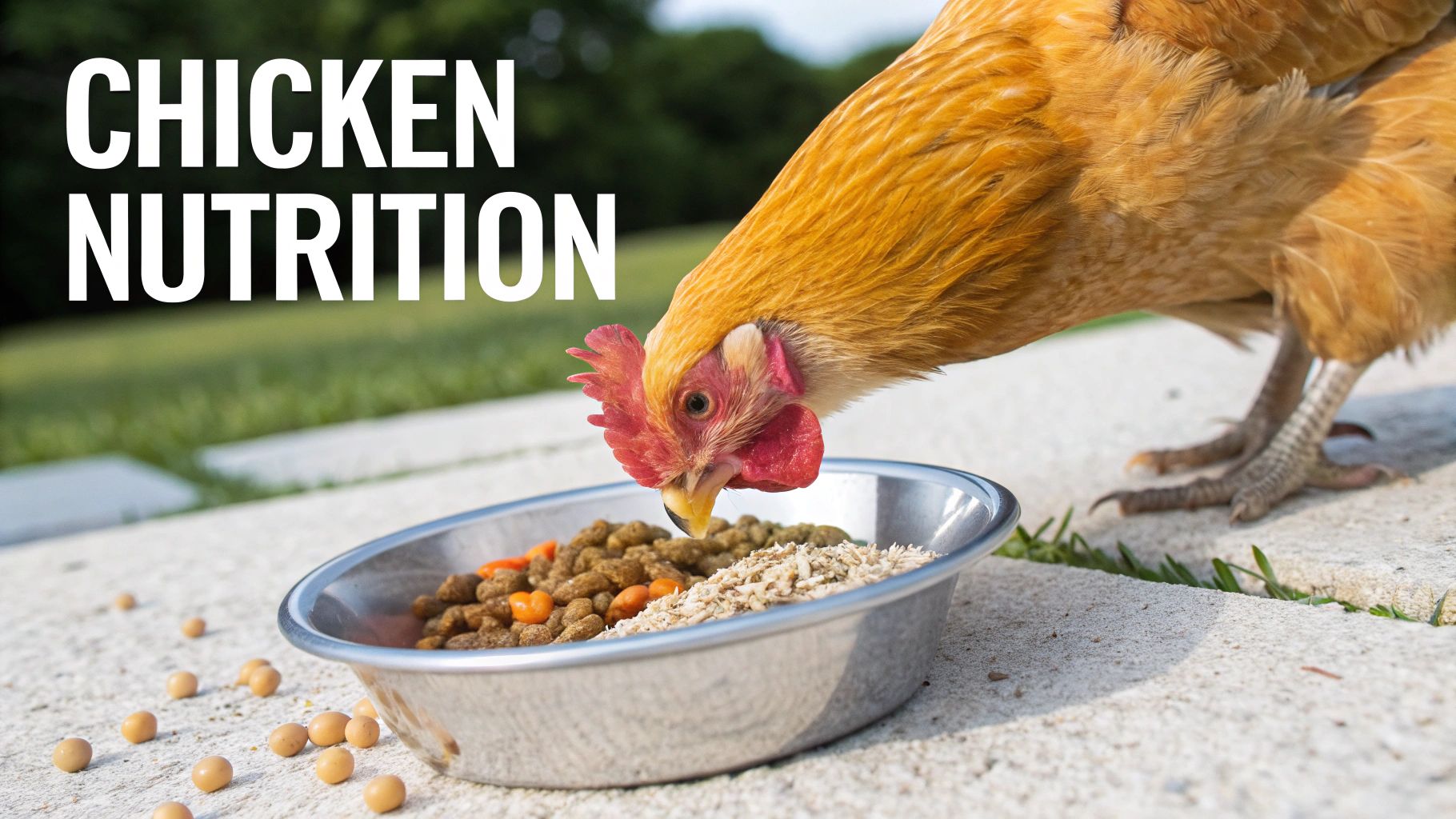
Forget the generic advice you’ve seen elsewhere. This guide is all about practical, real-world strategies you can use in your own backyard. Think of your chicken's diet like building a house. You need the right amount of lumber, concrete, and fasteners. If you skimp on one, the whole structure suffers. It’s the exact same with chicken nutrition.
We're going to start by breaking down what's actually in those commercial feed bags and what the different nutritional components do for your birds. Once you get these fundamentals down, you'll be set for success, from chick to laying hen.
The Core Building Blocks of a Healthy Diet
A high-quality, complete chicken feed is more than just a random mix of grains; it's a carefully balanced recipe of macro and micronutrients. The big three you’ll always see on the label are protein, calcium, and energy (calories). Getting a handle on what each one does is the first step to becoming a chicken-feeding pro.
-
Protein for Growth: This is essential for building everything—muscle, feathers, and of course, eggs. Chicks are growing machines, so they need a diet high in protein, typically around 20-22%. For your laying hens, a steady 16-18% is the magic number to keep those eggs coming.
-
Calcium for Strong Eggs: Calcium is the all-star nutrient for laying hens, and it's almost entirely dedicated to one job: making strong, solid eggshells. If a hen is deficient, you'll know it pretty quickly from the thin, soft, or even non-existent shells on her eggs.
-
Energy for Daily Life: Chickens get their fuel primarily from fats and carbohydrates. This energy powers all their chickeny activities, from scratching in the dirt and foraging for bugs to simply keeping themselves warm on a chilly night.
A great diet is the best form of preventative medicine there is. When you meet your flock's nutritional needs from day one, you're actively heading off countless health problems down the road.
Consider this your starting point—a roadmap to feeling confident about the feed you choose. For a more detailed look at the different ingredients, feel free to check out our article on what makes the best food for chickens. Now, let's build on these basics and dive into what your flock needs at every stage of their life.
Feeding Your Chickens From Hatch to Hen
One of the biggest lessons in raising chickens is that their nutritional needs change dramatically as they grow. You wouldn't feed a newborn baby the same thing as a teenager, and the same principle applies to your flock. A tiny chick simply can't handle the same feed as a full-grown hen busy laying eggs every day.
Think of it as a nutritional roadmap for their entire life. Following this roadmap ensures your birds get exactly what they need, right when they need it most. Getting this part right is the secret to preventing a ton of common health problems and setting your flock up for a long, productive, and happy life.
The First Sprint: Chicks (0-8 Weeks)
From the moment they hatch, baby chicks are on a mission to grow. It’s an incredible transformation—in just a few weeks, they'll multiply their body weight many times over, all while building bone, muscle, and a strong immune system. To fuel this explosive growth, they need a diet absolutely packed with protein.
This is where starter feed is non-negotiable. It’s a high-protein formula, typically containing 20-24% protein, designed to be their only source of food. You'll usually find it in a "crumble" form, which is just tiny, easy-to-manage bits perfect for their small beaks.
For these first eight weeks, hold off on any treats or scratch grains. It might be tempting, but giving them extras can dilute the carefully balanced nutrients in their starter feed and slow down their development. Their complete feed has everything they need to thrive.
This specialized diet is the bedrock of raising strong, healthy birds. It's a principle that scales from a small backyard coop to massive commercial operations. In fact, the global poultry industry's success is built on these precise nutritional strategies. The United States leads the world in chicken meat production with a 21% market share, producing around 21.34 million metric tons in the 2024-2025 period—a feat made possible by specialized feed for every life stage. You can see more on these global poultry trends at Accio.com.
The Awkward Teen Phase: Pullets (8-20 Weeks)
Once your chicks have shed their baby fluff and start looking like miniature versions of adult chickens, they've entered the "pullet" or "grower" stage. They aren't laying yet. Their main job during this phase is to build a strong skeletal frame and let their reproductive systems mature for the egg-laying marathon ahead.
Around 8 weeks old, it’s time to switch them from starter to grower feed. This feed dials back the protein to about 16-18% and has much less calcium than a layer feed. The goal here is to encourage slow, steady growth rather than a rapid sprint.
- Why is this so important? Keeping them on high-protein starter feed can make them grow too fast, which can lead to leg problems and other health issues down the road.
- Why not just jump to layer feed? The high calcium content in layer feed is a big no-no for young birds. It can cause permanent kidney damage before they ever lay a single egg.
This entire phase is about building a solid foundation. For a closer look at what goes into different commercial feeds, check out our guide on the main types of feeds for poultry.
Peak Production: Laying Hens (20+ Weeks)
Sometime around 18-20 weeks, you'll find that first magical egg. That's your signal! It's time to make the final and most important dietary switch to layer feed. This will be the cornerstone of your hens' diet, formulated specifically to support the daily grind of egg production.
Layer feed keeps the protein steady at around 16-18% but seriously ramps up the calcium to 3.5-5%. This boost is absolutely critical. To form a hard, perfect eggshell every single day, a hen pulls a massive amount of calcium from her diet. If she can't get enough from her feed, her body will start stealing it from her own bones, leading to brittle bones, poor health, and weak shells.
To make it easy to remember, here's a quick cheat sheet for what your chickens need at each stage of life.
Chicken Feed Requirements by Age
| Life Stage (Age) | Feed Type | Required Protein % | Key Nutritional Goal |
|---|---|---|---|
| Chicks (0-8 weeks) | Starter Crumble | 20-24% | Rapid growth and muscle development |
| Pullets (8-20 weeks) | Grower Feed | 16-18% | Strong skeletal frame development |
| Laying Hens (20+ wks) | Layer Feed | 16-18% | Strong eggshells and sustained production |
| Seniors / Roosters | Flock Raiser | 15-16% | Maintenance and overall health |
This simple chart is your guide to ensuring every bird gets the right fuel at the right time.
Roosters and Senior Chickens
Of course, not every bird in your flock is a young, laying hen. Roosters and older hens who have retired from laying have different needs. Specifically, they don't need all that extra calcium. In fact, feeding them high-calcium layer feed long-term can be hard on their kidneys.
If you have a mixed flock with roosters or senior citizens, you've got two great options:
- Feed a "flock raiser" diet to everyone. This is a maintenance feed with lower calcium that's suitable for all adult birds.
- Offer calcium on the side. This is my preferred method. Feed the whole flock a lower-calcium grower or flock raiser feed, and then place a separate dish of crushed oyster shell out for them.
With the second option, your laying hens will instinctively take exactly what they need, while the roosters and older girls will simply leave it alone. It's the easiest way to keep everyone in the flock healthy and happy.
Getting Daily Rations and Portions Right
Figuring out the right type of feed is a huge step, but the "how much" question is just as critical for a healthy, happy flock. Getting the daily portions right is really the secret to preventing common health issues and keeping those delicious eggs coming.
You've probably heard the old rule of thumb: an average adult laying hen eats about 1/4 pound (or roughly 1/2 cup) of feed per day. But here's the thing—chickens aren't little robots. That number is just a starting point, a baseline to work from, not a hard-and-fast rule. A whole host of factors can shift that number up or down.
Factors That Influence Daily Feed Intake
Your flock’s appetite isn't set in stone; it ebbs and flows with the seasons, their size, and even their lifestyle. If you learn to read these cues, you can dial in their rations for peak health.
- Breed Size: This one's pretty straightforward. A tiny Bantam will peck away at far less feed than a big, heavy-bodied Orpington or Brahma. You'll need to adjust that baseline portion accordingly.
- Seasonal Changes: Winter is a huge energy-suck for chickens. They burn a ton of extra calories just staying warm, so you'll see them eating a lot more. On the flip side, their appetites often dip during the sweltering heat of summer.
- Foraging Access: Chickens with the freedom to roam and forage for bugs, seeds, and tasty greens will naturally supplement their own diet. On days they're out exploring, they'll eat less of the commercial feed you provide.
This infographic lays out the typical dietary journey for a chicken, from a tiny fluffball into a mature, egg-laying hen.
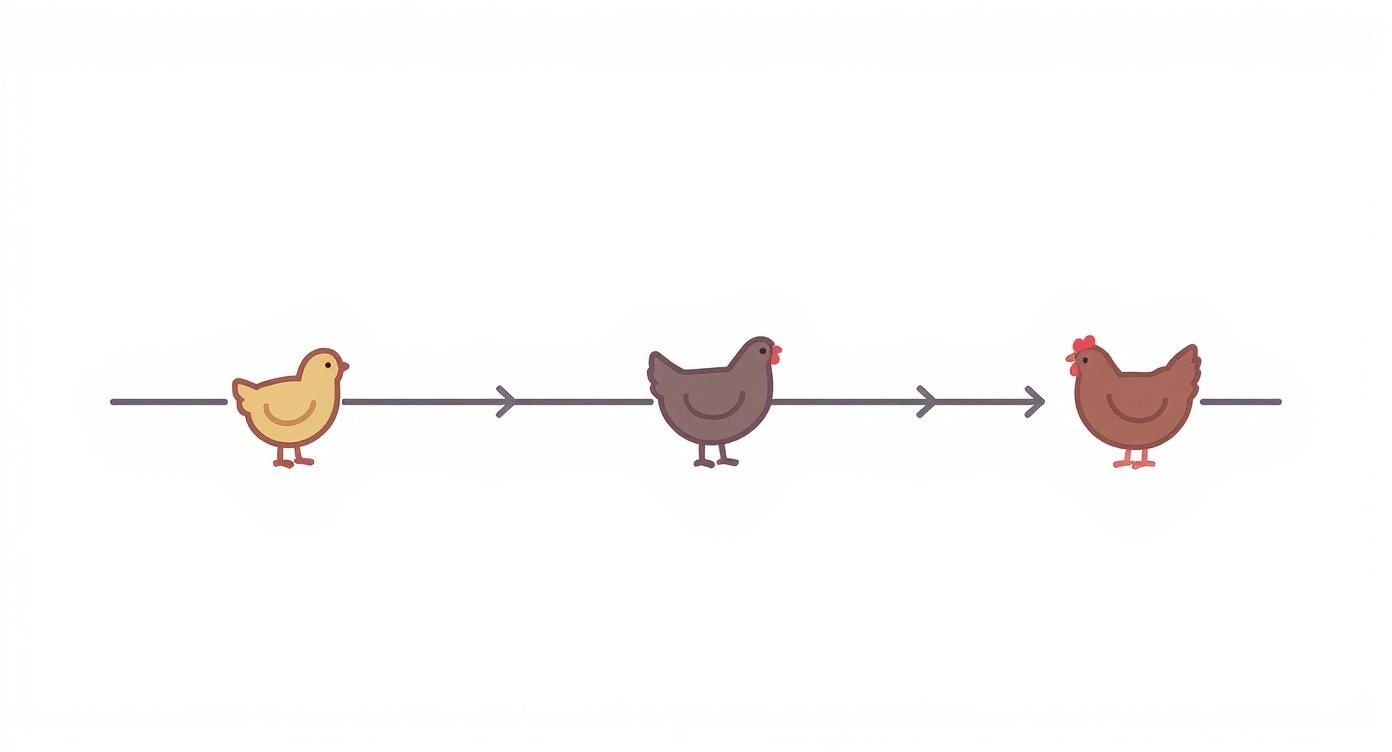
As you can see, matching their feed to their age is absolutely vital. Each stage has unique nutritional requirements for healthy growth.
Choosing Your Feeding Method
Once you've got a good idea of how much your flock needs, you have to decide how you're going to give it to them. There are really two main ways to go, and the best fit depends on your daily schedule and the unique personality of your flock.
Free-Choice Feeding: This is exactly what it sounds like. You use a large-capacity feeder and keep it topped up, letting your chickens eat whenever they feel hungry. It’s easily the most common and convenient method, ensuring food is always available and cutting down on squabbles at the feeder.
Scheduled Meal Times: This approach means you provide a set amount of feed once or twice a day. It gives you precise control over how much they're eating, but it can sometimes lead to the more dominant, pushy birds gobbling up more than their fair share.
For most of us with backyard flocks, a free-choice feeder is the simplest and most reliable way to go. It lets each chicken regulate its own intake based on what its body needs that particular day. Just keep an eye on your birds' physical condition. Obesity can sometimes become a problem in less active flocks, and an overweight hen will often stop laying eggs altogether.
Underfeeding is just as bad, leading to stress, poor feathering, and a sudden drop in egg production. Making sure they have enough protein is especially crucial during taxing times like the annual molt. If you want to learn more about why protein is so important, take a look at our guide on high-protein foods for chickens. Ultimately, it's all about finding that perfect balance.
Using Treats and Supplements Wisely
Let's be honest, one of the best parts of having chickens is watching them scramble for a handful of goodies you toss their way. It’s fun for us and a great bit of excitement for them. But we have to be smart about it. Think of their main feed as the perfectly balanced meal they need to stay healthy and productive—everything else is just a side dish.
A really simple guideline I always share with new chicken keepers is the 90/10 Rule. It’s easy to remember: at least 90% of what your flock eats every day should be their complete feed. The other 10% is your wiggle room for fun treats and helpful supplements. Sticking to this prevents them from filling up on "junk food" and missing out on the essential nutrition they truly need.
This isn’t just backyard wisdom; it’s a principle that underpins the entire poultry world. In fact, the global poultry market is projected to hit $499.92 billion by 2029, and that growth is built on efficient feeding strategies that keep birds healthy. When you apply the 90/10 rule, you're using the same core logic. You can see more on the economic impact of poultry nutrition from The Business Research Company.
Choosing Healthy and Enriching Treats
Not all treats are created equal. The best ones offer a bit of extra nutrition and, just as importantly, encourage natural chicken behaviors like scratching and foraging. A little variety keeps things interesting and can provide a nice boost of extra vitamins.
Here are a few flock favorites that are both healthy and fun:
- Leafy Greens: Kale, spinach, and chard are vitamin powerhouses. Try hanging a whole head of cabbage in their run—it's a fantastic, long-lasting toy that keeps them busy.
- Garden Scraps: Got leftover lettuce, veggie peels, or berries? Your chickens will love them. On a hot day, a slice of cucumber, pumpkin, or melon is a welcome, hydrating snack.
- Cooked Grains: A small scoop of cooked rice, oatmeal, or quinoa makes for a wonderful warm treat on a cold day.
- Safe Fruits: Apples (just make sure to remove the core and seeds), bananas, and berries are great, but offer them in moderation because of the sugar.
Knowing what not to feed is just as critical. Some everyday foods are actually toxic to chickens and need to be kept far away from the coop.
Foods to Absolutely Avoid
- Avocado skin and pits
- Raw potato peels (especially if they're green)
- Onions and garlic (in anything more than tiny amounts)
- Citrus fruits
- Dried or undercooked beans
- Anything salty, sugary, moldy, or spoiled
The Non-Negotiable Supplements for Every Flock
Beyond the fun stuff, a couple of supplements are absolutely essential for a healthy flock, especially for your laying hens. These aren't just occasional snacks; they fill critical gaps in your birds' diet.
Grit: This is the big one. If your chickens eat anything besides their commercial feed—treats, grass, bugs—they need grit. Chickens don't have teeth, so they use these tiny stones in their gizzard to grind up their food. Without it, they can't digest properly.
Oyster Shell: Even though layer feed has calcium, you should always offer crushed oyster shell in a separate dish, "free-choice." This lets each hen decide how much she needs. She'll take more when she's getting ready to lay an egg and ignore it when she doesn't, ensuring strong shells without overdoing it.
Turning Treats into a Health Booster
The best treats do double duty—they're exciting for the flock and they serve a nutritional purpose. This is where high-protein, high-calcium options really shine, especially during stressful times like the fall molt or the peak of laying season.
This is exactly why so many chicken keepers have fallen in love with Dried Black Soldier Fly Larvae (BSFL), like our Pure Grubs. Chickens go absolutely bonkers for them, but they’re also packing a serious nutritional punch.
- Protein for Feather Growth: When chickens molt, they need a massive amount of protein to regrow a full set of feathers. A daily BSFL supplement can help them get through that demanding process faster and in better condition.
- Calcium for Stronger Eggs: Pure Grubs have up to 85% more calcium than mealworms. This makes them a far superior choice for laying hens, helping to build strong eggshells and support bone health, all without throwing their main diet out of whack.
By choosing smart, multi-purpose treats like USA-grown BSFL, you're not just giving them a snack. You're giving them a strategic tool to boost their health and support them through their natural cycles. You’re giving them exactly what they need to thrive.
Proper Feed Storage and Feeder Hygiene
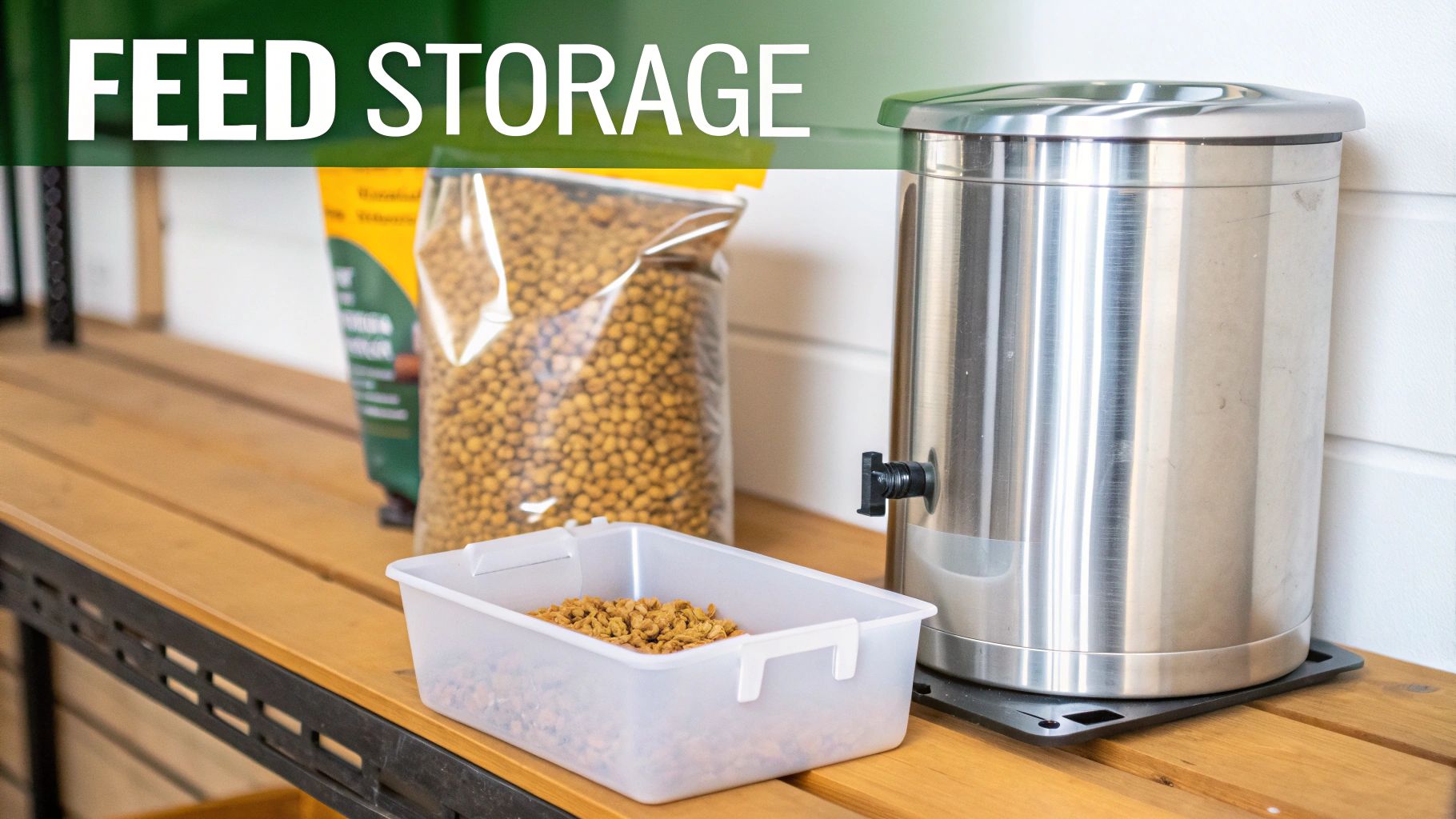
You can buy the best feed in the world, but if you don’t store it right, you might as well be throwing your money away. Worse, you could be putting your flock's health at risk. Keeping feed fresh and safe from pests and moisture is just as critical as picking the right formula to begin with.
Think about what happens to a bag of cereal left open in your pantry. It goes stale, attracts bugs, and gets funky. It's the same deal with chicken feed, only the stakes are much higher. Spoilage doesn't just mean a loss of nutrients; it can lead to dangerous mold growth that can make your birds seriously ill.
Mastering Feed Storage Best Practices
First things first: that paper bag your feed comes in? It’s for getting the feed from the store to your home, and that’s about it. Your top priority should be moving that feed into a secure, airtight container the moment you get it home. This is your best defense against the big three threats: pests, moisture, and sunlight.
When it comes to containers, rodent-proof metal is the gold standard. I can't tell you how many times I've seen mice and rats chew right through a plastic bin like it was nothing, leaving behind droppings and spreading disease. A simple galvanized metal trash can with a lid that fits snugly is an investment that pays for itself.
Once you have your container, store it in a cool, dry spot. It's also a good idea to get it up off the floor using a couple of bricks or a small pallet. This simple trick keeps moisture from the ground from wicking up into the container and allows for some air circulation, which is key to preventing mold. And don't forget to check the "best by" date on the bag—feed loses its punch over time, especially those all-important vitamins.
Storing feed correctly is a non-negotiable part of biosecurity. Contaminated feed is a primary vector for diseases like salmonella and coccidiosis. Clean storage and clean feeders are your best defense against a flock-wide health crisis.
Why Feeder and Waterer Hygiene Matters
The health of your flock is directly linked to how clean you keep their dining area. Dirty feeders and waterers quickly become breeding grounds for nasty bacteria and mold, which can spread like wildfire through your coop. A simple, consistent cleaning routine is one of the most powerful preventative measures you can take.
You don't need a complicated system. Just get into the habit of giving everything a good scrub once a week. Consistency is what really counts here.
Simple Weekly Cleaning Checklist
- Empty and Scrub: Dump out any leftover feed or water. Give the feeders and waterers a thorough scrub, inside and out, with hot, soapy water to get rid of any caked-on gunk and biofilm.
- Rinse Thoroughly: This is important! Make sure every last bit of soap is rinsed away, as it can be harmful if your chickens ingest it.
- Sanitize If Needed: If you're dealing with illness or just want a deeper clean, a solution of one part bleach to ten parts water or even a simple vinegar solution works great. Just be sure to rinse thoroughly again afterward.
- Dry Completely: Let everything air dry completely, preferably in the sun. Sunlight is a fantastic natural sanitizer and ensures no moisture is left behind for mold to take hold.
By setting aside just a few minutes each week for storage and cleaning, you’re creating a much safer, healthier environment where your flock can truly thrive.
Troubleshooting Common Feeding Problems
Even with the best planning, things can sometimes go sideways in the coop. When you spot a change in your flock’s health or behavior, their diet is one of the very first places you should look. So many common chicken problems trace right back to a nutritional shortfall or imbalance.
Learning to read the signs your chickens are giving you is a skill every flock owner needs. A sudden drop in egg production, weird changes in eggshell quality, or nasty behaviors like feather-picking are often your flock’s way of waving a red flag that something is missing from their dinner plate. This part of our guide is all about helping you play detective to figure out what's wrong.
Diagnosing Issues Through Observation
The good news is that most feeding-related problems show up with clear, visible symptoms. Your job is to connect those symptoms to the likely dietary cause and then make the right fix to get your birds back on track.
A classic example? A hen who suddenly starts laying thin, rubbery, or even shell-less eggs. This is an almost surefire signal of a calcium deficiency. While a good layer feed has calcium mixed in, some high-producing hens just burn through it faster and need a little extra. The fix is usually as simple as putting out a free-choice dish of supplemental oyster shell.
Key Takeaway: Your chickens' physical health, behavior, and egg quality are direct reflections of their nutrition. Paying close attention to these clues allows you to catch and correct dietary issues before they turn into serious problems.
Another issue you might see, especially with young chicks, is pasty butt. This happens when droppings get stuck to their vent, blocking it up, which can unfortunately be fatal. While stress and brooder temperature are common culprits, it can also be linked to their diet. Making sure they have constant access to fresh water and are eating a high-quality starter crumble can make all the difference.
Common Feeding Problems and Solutions
Sometimes, it feels like you need a diagnostic manual to figure out what’s going on with your flock. Chickens are surprisingly good at showing us when something’s amiss with their diet, but it’s up to us to interpret the signs.
The table below is designed to be your quick-reference guide. See a problem, look for the likely cause, and find a straightforward solution to try.
| Symptom / Problem | Potential Dietary Cause | Recommended Solution |
|---|---|---|
| Thin, Soft, or Shell-less Eggs | Calcium deficiency. A hen's body pulls calcium from her own bones if her diet doesn't provide enough. | Provide a separate, free-choice feeder of crushed oyster shell or limestone. This lets each hen take exactly what she needs. |
| Sudden Drop in Egg Laying | Protein deficiency is a common cause (if not molting, broody, or age-related). | Confirm your layer feed has 16-18% protein. Supplement with high-protein treats like Pure Grubs BSFL to give them a boost. |
| Feather Picking or Cannibalism | Often a sign of protein or methionine deficiency, but can also be caused by boredom or overcrowding. | Increase protein intake. Offer high-protein treats and ensure your feed is adequate. Also, provide flock enrichment like a cabbage pinata or scratch grains. |
| Pale Yolks & Combs | Lack of xanthophylls, the natural pigments found in greens and yellow corn. | Allow more access to fresh pasture or supplement with dark leafy greens (kale, spinach). Some commercial feeds include marigold extract for color. |
| Lethargy & Poor Growth | A general lack of calories or a deficiency in key vitamins and minerals. | Ensure birds are on the correct age-appropriate feed. Check that less dominant birds aren't being kept from the feeder. Consider upgrading to a higher-quality feed. |
| Flock Rejects Their Feed | The feed may be stale, moldy, or contaminated. | Check the "milled on" date. Store feed in a sealed, pest-proof container in a cool, dry place. Only buy what your flock can consume in a month or two. |
Keep in mind that this table covers the most frequent issues tied directly to nutrition. If a problem persists after you’ve adjusted their diet, or if a bird seems seriously ill, it's always best to consult with a veterinarian.
Your Top Chicken Feeding Questions, Answered
When you're diving into the world of chicken feeding, a few questions always seem to pop up. Let's tackle some of the most common ones I hear from fellow flock raisers, so you can handle these situations like a seasoned pro.
Can I Give My Chickens Kitchen Scraps?
You bet! But you've got to be smart about it. Healthy leftovers like leafy greens, vegetable peels, berries, and even cooked grains can be a fantastic, enriching treat for your birds. They love the variety.
The key is knowing what to avoid. A few things are big no-nos: avocado pits and skins, raw potato peels, onions, and most citrus fruits are toxic. You also want to steer clear of anything super salty, sugary, or food that's gone bad. Just stick to the 90/10 rule—treats and scraps should only be about 10% of their daily food intake. Any more than that and you risk throwing their nutrition out of whack, which can impact their health and egg-laying.
How Can I Tell If My Chickens Are Getting Overweight?
The best way is a simple, hands-on check. Gently pick up one of your hens and feel for her keel bone, which is that prominent bone running right down the middle of her chest. On a healthy, well-conditioned bird, you should be able to feel the bone easily, but it should be flanked by a nice, plump muscle on either side.
If a chicken feels surprisingly heavy for her size, or if you feel a lot of squishy fat around her abdomen and vent, she's likely overweight. You might also notice she's laying fewer eggs or just seems a bit sluggish. Checking them over every now and then helps you catch weight issues before they become a real problem.
Do I Still Need Oyster Shell If My Feed Has Calcium?
Absolutely. I always recommend offering it. Even though a good quality layer feed has calcium mixed in, every hen is an individual. Her specific needs can change based on her age, breed, and just how productive she is that week. Some hens are just absolute egg-laying machines and need an extra boost that the feed alone can't provide.
The beauty of offering crushed oyster shell in a separate dish is that it lets each hen decide for herself. She'll instinctively take exactly what her body needs, right when it needs it. This is, without a doubt, the best way to ensure strong eggshells and protect the long-term bone health of your entire flock.
What's the Difference Between Grit and Oyster Shell?
This is a fantastic question, and it's easy to get them mixed up. They look similar but do two completely different and equally critical jobs in a chicken's body.
Think of it this way:
- Grit is all about digestion. It's basically tiny, hard rocks (like granite) that chickens store in their gizzard. Since they don't have teeth, they use this grit to grind down tough grains, seeds, and anything else they forage for.
- Oyster shell is all about eggshells. It's a source of calcium that dissolves and gets absorbed directly into the hen's bloodstream, providing the raw material to build strong, solid shells.
Any chicken that eats more than just commercial crumbles needs access to grit. And every single laying hen will benefit from having a separate dish of oyster shell available.
Looking for a treat that helps with both eggshell strength and protein? Check out Pure Grubs! Our USA-grown Black Soldier Fly Larvae are a safe, high-calcium snack that your flock will go absolutely wild for. You can see the difference for yourself at PureGrubs.com.