

Types of Chicken Feed: A Complete Guide for Every Life Stage
Picking the right food for your chickens is hands-down the most important thing you can do for their health. It’s a lot like feeding people—babies, teenagers, and adults all have different nutritional needs. For chickens, that means a special high-protein starter feed when they’re tiny chicks and a calcium-heavy layer feed once they start laying eggs.
Getting this right is what helps them thrive at every stage of their lives.
The Foundation of a Healthy Flock
When you first walk down the feed aisle, all the bags can look a bit overwhelming. But it all boils down to one simple idea: match the feed to your flock's age and what you're asking them to do. Think of it as a nutritional roadmap for a chicken's life. A baby chick is in full-on construction mode, building bones, muscle, and feathers from scratch, so it needs a diet absolutely packed with protein. A grown-up hen, however, has different priorities—she needs to maintain her own health while also creating a strong, calcium-rich egg almost every single day.
Nailing this isn't just about helping them grow well; it's about heading off serious health problems before they start. Giving the wrong feed at the wrong time can cause all sorts of issues, from weak bones and ragged feathers to even kidney damage. The good news? Commercial feeds are scientifically formulated to take all the guesswork out of it for you.
Why Feed Formulation Matters
The science behind poultry nutrition is surprisingly advanced, driven by the huge global demand for chicken. The poultry feed market is massive—valued at around USD 216.82 billion in 2025 and expected to grow to USD 332.40 billion by 2035. You can dig into more of the numbers on this over at Precedence Research. That kind of scale is built on getting the nutrition just right for healthy flocks all over the world.
For a backyard chicken keeper, tapping into this science is a huge advantage. Every bag of feed is more than just grain; it's a carefully balanced recipe containing:
- Proteins: The absolute building blocks for muscle, organs, and feathers.
- Carbohydrates: The fuel that keeps your flock clucking, scratching, and exploring.
- Fats: A dense energy source that also helps them absorb key vitamins.
- Vitamins and Minerals: Tiny but mighty nutrients that control everything from immune health to strong eggshells.
A good feeding plan gives a bird everything it needs, right when it needs it. It’s the best preventative medicine you can give your flock, bar none.
At the end of the day, choosing the right feed is the most direct investment you can make in your flock's happiness and well-being. It guarantees they have the proper fuel to grow strong, stay healthy, and, for your hens, give you plenty of delicious, high-quality eggs. Once you understand the "why" behind each type of feed, you'll be able to make smart choices that set your chickens up for a long, productive life.
Understanding the Three Core Feed Types
Walking down the feed aisle can feel overwhelming, but it gets a lot simpler once you understand the three core formulas that match a chicken's life cycle. Think of it as a nutritional roadmap, guiding your flock from their first day as fluffy chicks to their prime egg-laying years. Each formula is what we call a "complete feed," meaning it's got everything your birds need to thrive without you having to add a bunch of extra stuff.
These commercial feeds are truly the foundation of a healthy flock. In fact, complete feed makes up about 61% of the entire global poultry feed market, with corn being the main ingredient at a whopping 43% share. If you're curious, you can dig into more poultry feed market trends to see how these recipes come together.
This diagram shows you exactly how these feeds line up with a chicken's life stage. It’s all about getting them the right nutrition at the right time.
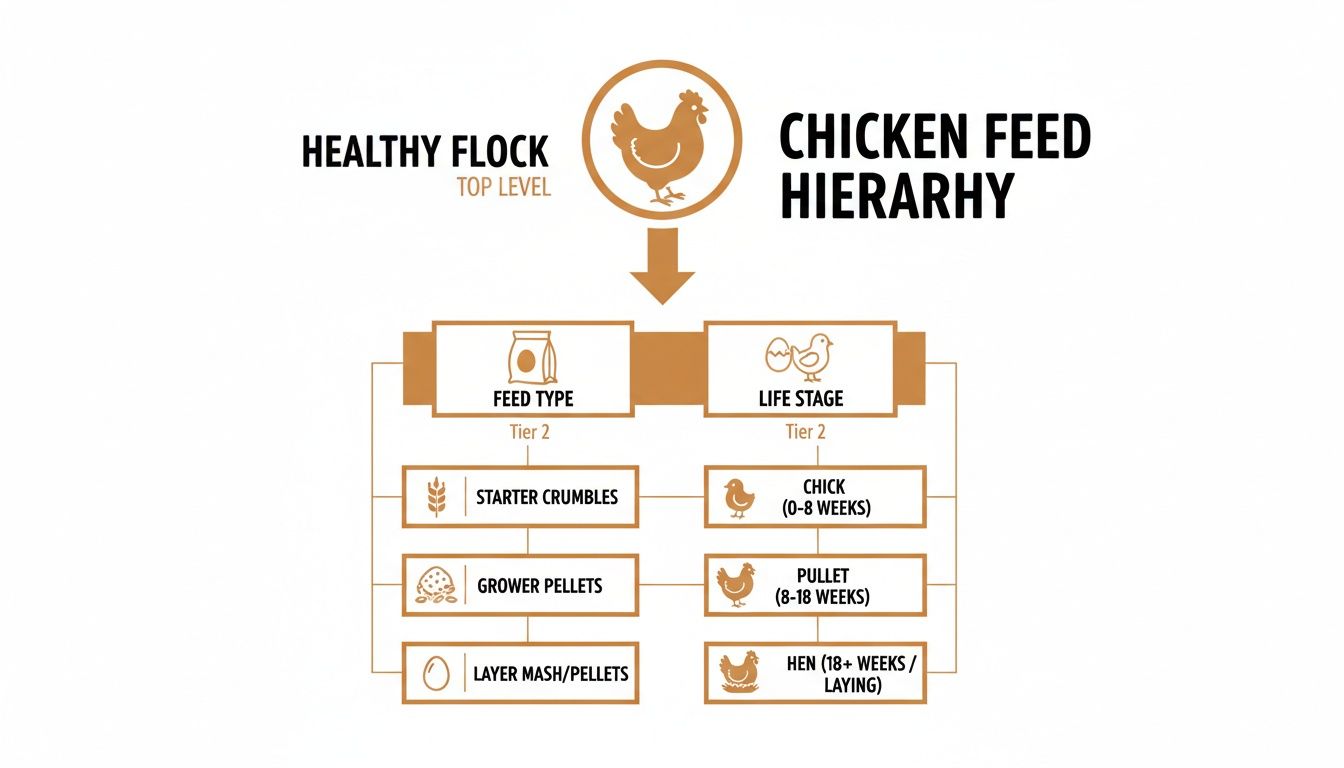
As you can see, a healthy flock starts with matching the feed to the bird's age. This ensures their bodies get precisely what they need, when they need it most.
Starter Feed: Fueling Explosive Growth
From the moment they hatch until they're about six or eight weeks old, chicks are in a period of absolutely incredible growth. A tiny, downy fluffball transforms into a fully-feathered mini-chicken in just a few short weeks. To power that amazing transformation, they need Starter Feed.
This stuff is a high-protein powerhouse, usually packing between 20-24% protein. This is the most protein they'll get in their entire lives, and for good reason.
All that protein is the essential building block for:
- Muscle Development: Growing strong legs, wings, and breast meat.
- Feather Production: Creating that first set of feathers is a huge nutritional drain.
- Organ and Skeletal Growth: Building the internal framework that will support them for life.
Think of starter feed as rocket fuel for baby chicks. It gives them the powerful start they need to build strong, healthy bodies. Skimping on it can lead to stunted growth and a weaker immune system down the road.
Grower Feed: The Bridge to Adulthood
Once your chicks have feathered out and moved from the brooder to the coop, usually around six to eight weeks old, they hit their "teenage" phase. Their growth rate slows from that initial frantic pace to a more steady, controlled development. This is where Grower Feed enters the picture.
This feed is a transitional diet, perfectly bridging the gap between the high-protein starter phase and the calcium-heavy layer formula. The protein content is dialed back a bit, typically landing between 16-18%.
That lower protein level is deliberate. It supports continued healthy growth without pushing the young birds (now called pullets) to mature too quickly. Pushing them too hard with high protein at this stage can put a lot of strain on their developing kidneys.
Think of Grower Feed as the perfect teenage diet. It provides all the energy and nutrients for healthy development without overloading their system, getting them ready for the demands of adulthood and egg-laying.
Your pullets will stay on grower feed until they are about 18 to 20 weeks old, or right before you expect that very first egg. It's a critical time for them to build a strong frame and reach a healthy weight before production kicks in.
Layer Feed: The Egg-Laying Essential
The final, and longest, chapter in a hen's dietary story begins when she's ready to start laying, which is usually around 18 to 20 weeks of age. This is the moment to switch her over to Layer Feed, the formula she'll likely eat for the rest of her productive life. The goal of this feed shifts from supporting growth to supporting maintenance and production.
Layer feed has a slightly lower protein content, around 16-17%, which is just right for maintaining an adult hen's body. The most important feature, though, is the huge boost in calcium—we're talking 3.5% to 5%.
This high calcium content is absolutely non-negotiable for a laying hen. Creating a strong eggshell every single day is an incredibly demanding biological process. If a hen doesn't get enough calcium in her feed, her body will start pulling it from her own bones to get the job done.
This can lead to some serious health problems, including:
- Weak, brittle bones that are easily fractured.
- Thin, soft-shelled, or even shell-less eggs.
- A higher risk of becoming egg-bound, which can be a life-threatening emergency.
By providing plenty of calcium, layer feed ensures your hens can produce strong, healthy eggs day after day without sacrificing their own skeletal health. It's what keeps them healthy, happy, and productive.
Choosing The Right Feed Texture
When you're staring at a wall of feed bags, it's easy to get overwhelmed. Beyond just the nutritional formula, the actual form of the feed matters—a lot. Think of it this way: you wouldn't hand a newborn a T-bone steak. The same logic applies to your flock. The texture of their food—whether it’s a fine mash, a broken-up crumble, or a solid pellet—is designed for specific ages and needs.
Getting the texture right is about more than just preference. It directly impacts how much your chickens eat, how much feed gets wasted on the coop floor, and ultimately, how much nutrition they absorb. It’s a small detail that makes a surprisingly big difference.
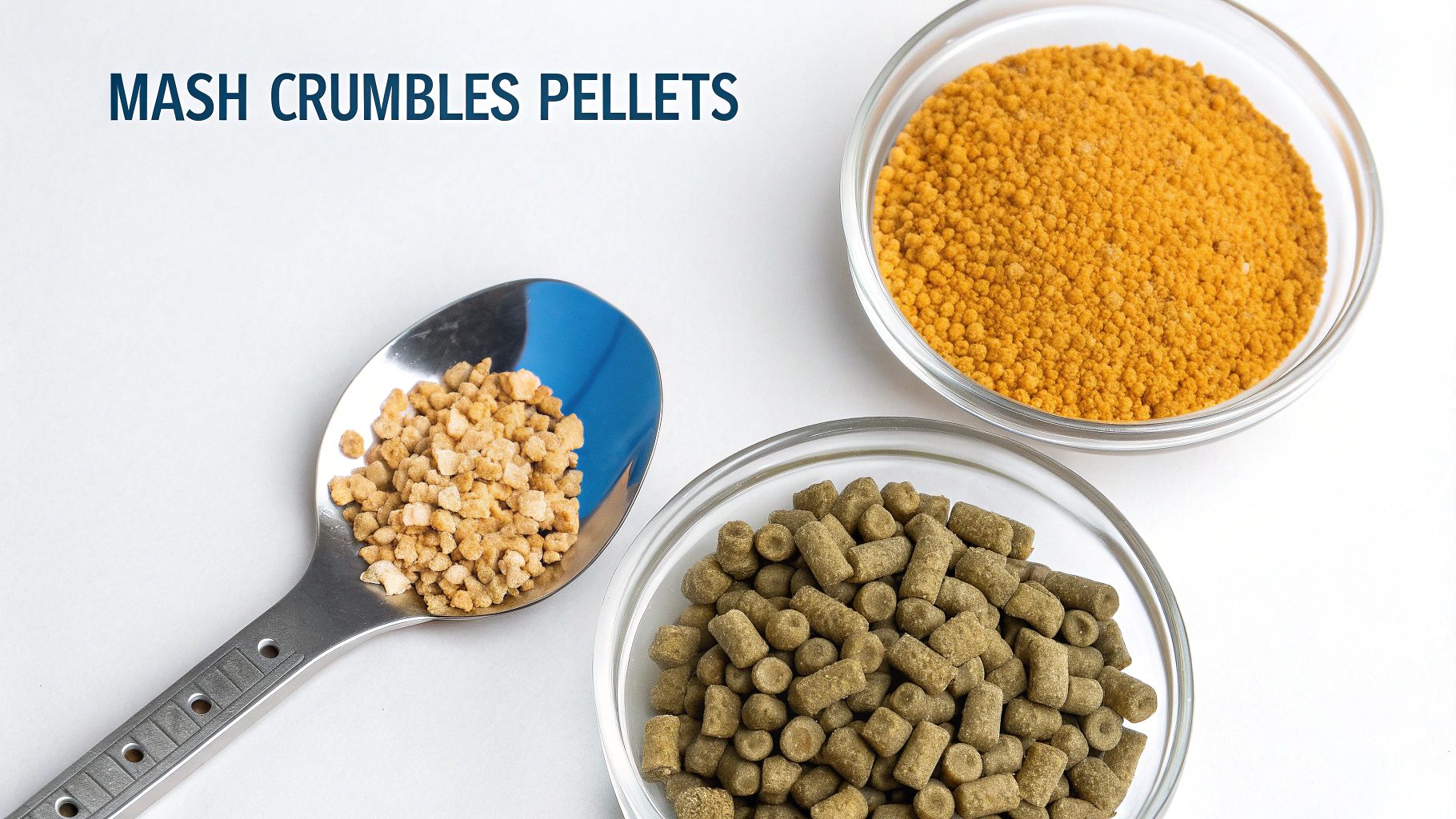
Let's walk through the three main forms so you can choose the right one for your birds with confidence.
Mash: The First Food For Chicks
Mash is the finest grind you can get. With a consistency like coarse flour, it's the unprocessed, original form of chicken feed. There’s a very good reason it's the standard for brand-new chicks: their tiny beaks can easily scoop it up.
Baby chicks simply can't handle anything large or hard. The powdery texture of mash ensures they can eat without any struggle, making it the perfect starter food for their first few weeks of life.
But it’s not without its downsides. Mash is messy. Chickens are experts at flinging it everywhere, which means a lot of waste. It can also clump and cake if it gets damp, creating a potential for mold. Despite the mess, it’s the safest and most effective choice for getting baby chicks off to a strong start. If you want to dive deeper, you can learn all about the pros and cons of using mash feed for chickens in our detailed guide.
Crumbles: The Versatile Go-Between
Once your chicks hit that awkward teenage phase (as pullets and cockerels), they're ready for something more substantial. That's where crumbles come in. Essentially, crumbles are just pellets that have been broken down into smaller, easier-to-manage pieces.
This texture is the perfect middle ground.
- No More Picky Eaters: Unlike mash, where a clever chicken might try to pick out certain grains, each crumble is a complete nutritional package.
- Perfectly Sized: The smaller pieces are ideal for growing birds that have outgrown mash but aren't quite ready for a full-sized pellet.
- Less Waste, More Food: Crumbles are far less dusty than mash, which means more food ends up in your birds and less on the ground.
Many flock owners switch to a crumble for their grower feed, typically around 6-8 weeks of age. Some even stick with crumbles for their adult hens, especially for smaller bantam breeds that might find large pellets a bit of a challenge.
Pellets: The Tidy Standard For Adults
By the time your chickens are fully grown, pellets are the most efficient and mess-free option. Pellets are made by taking mash and using heat and pressure to form it into solid, uniform nuggets. This process locks all the nutrition into every single bite.
Pellets are the ultimate no-waste solution. By binding all the ingredients together, they completely eliminate the possibility of selective feeding, ensuring every hen gets a perfectly balanced diet.
This is by far the cleanest and easiest format to handle. There’s minimal dust, and the consistent size makes measuring out rations a breeze. Because they are hard and compressed, pellets hold up great in feeders and are less likely to spoil. For most backyard flocks, pellets are the go-to for layer feed, delivering consistent nutrition with minimal fuss.
Comparing Feed Textures: Mash vs. Crumbles vs. Pellets
Choosing the right feed texture can feel like a big decision, but it’s really about matching the form to your flock's age and needs. This table breaks down the key differences to help you see at-a-glance which one is the best fit for your birds at every stage.
| Feed Form | Best For (Age) | Pros | Cons |
|---|---|---|---|
| Mash | Chicks (0-8 weeks) | Easiest for tiny beaks to eat. Unprocessed and natural form. | Very messy and wasteful. Can become moldy if it gets wet. Allows for selective feeding. |
| Crumbles | Pullets/Cockerels (8-18 weeks), Bantams | Less waste than mash. Prevents selective feeding. Easy transition from mash to pellets. | Can still be a bit dusty. More processed than mash. |
| Pellets | Adult Hens (18+ weeks) | Minimal waste and mess. Ensures complete nutrition in every bite. Easy to store and measure. | Can be too large for chicks or smaller bantam breeds. The most processed form. |
Ultimately, there’s no single "best" texture—it’s all about what’s right for your flock right now. Starting with mash, moving to crumbles, and finally graduating to pellets is a time-tested path that supports your chickens' health and makes your job as a chicken keeper much easier.
A Look at Specialty Feed Options
Once you've got the basics of starter, grower, and layer feed down, you'll discover a whole world of specialty options. You won't need these for every flock, but they can be a lifesaver for solving specific problems or simply aligning with your personal philosophy on raising animals.
Think of these feeds as tools in your chicken-keeping toolbox. Got a specific health concern? Following organic practices in your garden? Wondering if a bird has a sensitivity? Answering these kinds of questions will point you toward whether a specialty diet is the right move for your flock.
Medicated Feed: A Shield for Your Chicks
One of the first specialty feeds you’ll likely run into is Medicated Starter Feed. It looks and feels just like the regular stuff, but it comes with a built-in defense system: a small, controlled dose of a medication called amprolium. It’s important to know this isn't an antibiotic; it's a coccidiostat.
Coccidiosis is a nasty intestinal disease caused by protozoa, and it can be deadly for young, vulnerable chicks. Amprolium works by blocking these parasites from getting the thiamine they need to multiply. It doesn't wipe them out completely, but it keeps their numbers so low that a chick's immune system has a fighting chance to build its own natural resistance over time.
So, when should you use it? The answer hinges entirely on one thing: vaccination.
- Use Medicated Feed if: Your chicks were not vaccinated for coccidiosis at the hatchery. The feed becomes their main line of defense.
- Do Not Use Medicated Feed if: Your chicks were vaccinated. The vaccine actually introduces a tiny, controlled amount of the parasite to trigger immunity, and the amprolium in the feed will cancel it out, making the shot useless.
When in doubt, always ask your hatchery or supplier. This is a preventative measure for those critical first few weeks, not a lifelong diet.
USDA Organic Feed: Sticking to Your Principles
If you're committed to natural and sustainable practices in your home and garden, USDA Certified Organic Feed is the way to go. This isn’t just a fancy marketing term—it’s a federally regulated standard that guarantees the feed meets some very strict guidelines.
An organic feed ensures every single ingredient was grown and processed according to these rules. Here’s what that label really means:
- No GMOs: All the key ingredients, like corn and soy, come from non-genetically modified seeds.
- No Synthetic Pesticides or Herbicides: The crops weren't sprayed with synthetic chemicals.
- No Animal Byproducts: The formula is completely vegetarian.
Choosing organic feed is a way to extend a natural-keeping philosophy directly to your flock's diet. It ensures that what your chickens eat is as clean and unprocessed as the vegetables you might grow in your own garden.
Yes, it often comes with a higher price tag, but for many flock owners, the peace of mind that comes from avoiding synthetic chemicals and supporting sustainable farming is well worth it.
Other Niche Formulas to Consider
As more people get into backyard chickens, the demand for tailored nutrition has exploded. You can now find a variety of feeds designed to tackle specific dietary issues or enhance gut health using more natural approaches.
For instance, you might see soy-free and corn-free options. Some keepers believe these common ingredients can cause low-grade inflammation or digestive upset in sensitive birds. These alternative feeds simply use other grains like wheat, oats, or peas to provide complete nutrition.
Another trend gaining traction is fermented feed. This is more of a DIY approach where you soak your flock's regular feed in water for a couple of days. This encourages the growth of beneficial bacteria—much like making sourdough bread—which can make nutrients more available and boost overall gut health. It's a fantastic, low-cost way to give your standard feed a nutritional upgrade.
And speaking of upgrades, providing healthy, nutrient-packed treats is another great way to support your flock. You can learn more about the benefits of using grubs for chickens as a high-protein, high-calcium supplement to their daily diet.
The Smart Way to Use Treats and Supplements
Let's be honest, one of the best parts of having chickens is watching them scramble for a handful of treats. It's how we bond with our flock and add a little excitement to their day. But it's also where many new chicken keepers go wrong—it’s just so easy to spoil them!
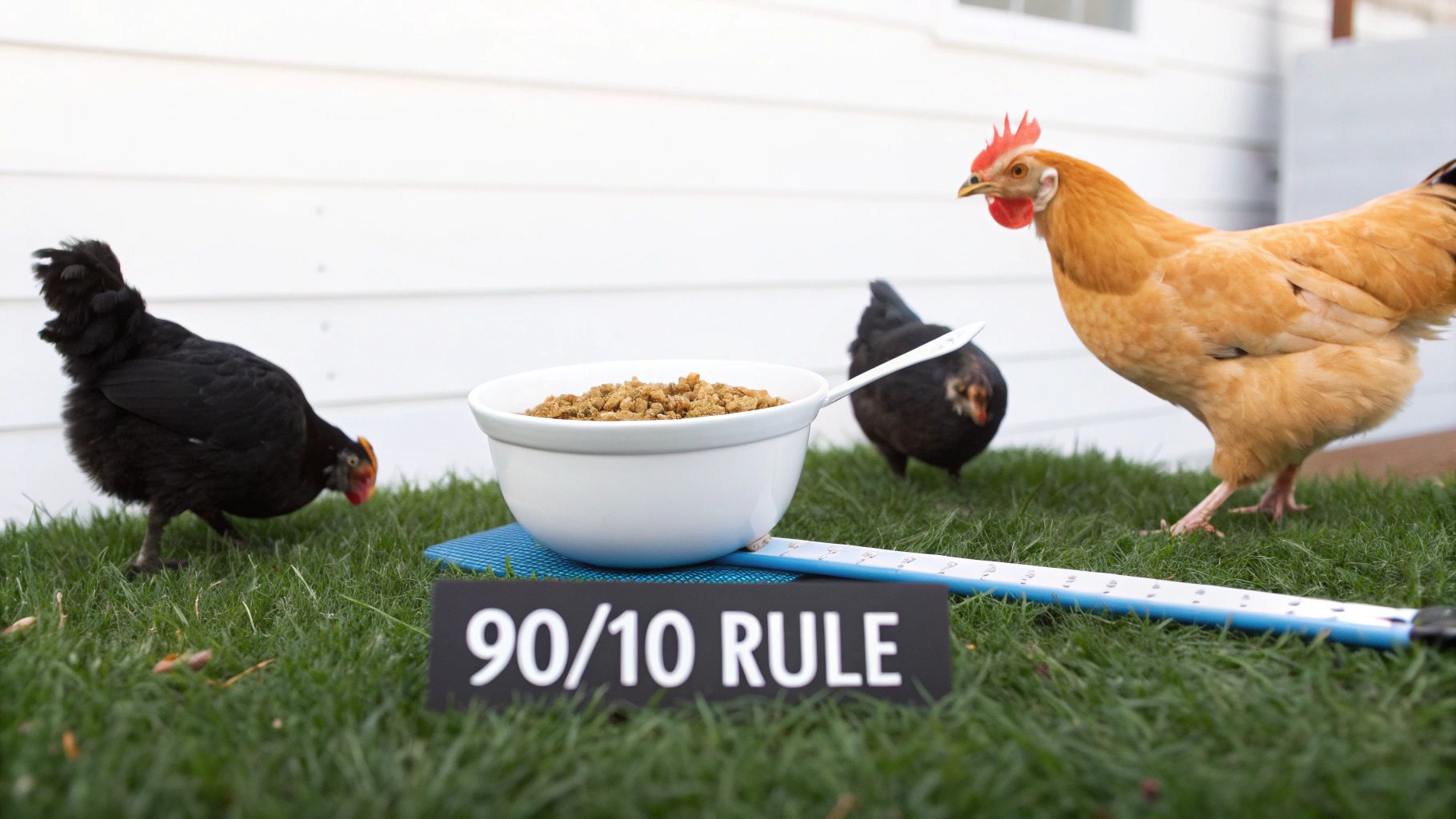
This is where a simple guideline, the 90/10 Rule, becomes your best friend. It’s the foundation of a healthy flock: at least 90% of what your chickens eat every day must be their complete, balanced feed. The final 10% is where the fun stuff, like treats, comes in.
Following this rule is non-negotiable. A good quality complete feed is carefully formulated to give your chickens everything they need to thrive. Treats, even the healthy-sounding ones, can throw that delicate balance out of whack. Think of it this way: if you let your kids fill up on candy before dinner, they’re going to miss out on the protein and veggies they need to grow. It’s the same for your flock.
Knowing Your Treat Types
Not all treats are created equal. They really fall into two main camps: treats for fun and treats with a purpose. Knowing the difference is key to a healthy flock.
Some treats are mostly for enrichment—they keep your chickens busy and let them act like chickens.
- Scratch Grains: This is the classic chicken treat, usually a mix of cracked corn, oats, and other grains. Tossing some on the ground gets your birds scratching and foraging, which is fantastic for keeping them active. But make no mistake, it’s basically chicken candy. It’s high in carbs but pretty low on protein and other vital nutrients.
- Kitchen Scraps: Things like leafy greens, watermelon, berries, and cooked rice can be great treats. The key is to avoid anything moldy, salty, or on the toxic foods list—never give them things like avocado pits, raw potato peels, or onions.
These are fun in moderation and make your flock happy. But they don't add much nutritional value beyond a quick energy boost. Overdo it with these, and you’ll quickly unbalance their diet.
Why Functional Treats are a Smarter Choice
This is where we get strategic. Functional treats are snacks that do more than just entertain; they actually boost your flock’s health by providing a concentrated dose of important nutrients. The undisputed champion in this category is Black Soldier Fly Larvae (BSFL).
For a long time, mealworms were the go-to insect treat because everyone knew they were high in protein. The problem? Mealworms are seriously lacking in calcium. For laying hens, who pour massive amounts of calcium into producing strong eggshells every day, this is a huge nutritional gap.
Black Soldier Fly Larvae, on the other hand, are a complete nutritional powerhouse. They pack up to 85% more calcium than mealworms, making them the perfect supplement for building strong eggshells and supporting skeletal health.
When you make BSFL your main treat, you’re turning treat time into health time. Instead of just giving them "junk food," you're actively shoring up their calcium levels, which is one of the most critical minerals for a laying hen. This is especially vital during peak laying season or when they’re molting and their bodies are under enormous stress. If you want to nerd out on just how important this mineral is, you can dig deeper in our guide to the best calcium supplements for chickens.
How to Work Treats into Your Routine
It’s easy to add treats to your flock's day without messing up their nutrition. Just stick to the 90/10 rule and focus on functional snacks.
Here’s a simple game plan:
- Feed First: Make sure your chickens have access to their complete layer feed all day long. This is their main meal and the foundation of their health.
- Focus on Functional Treats: Make BSFL your everyday treat. A small handful per bird, maybe in the late afternoon, is perfect. It gives them that protein and calcium kick without interfering with their real food.
- Save Other Treats for Fun: Use scratch grains and kitchen scraps more like a special-occasion dessert. A little scratch scattered an hour before bedtime can be a great way to lure them back into the coop. Plus, on a cold night, the extra carbs can give them a tiny bit more fuel to stay warm.
By being smart about it, you can absolutely spoil your flock without risking their health. Choosing nutrient-packed treats like BSFL lets you give them the fun they love while actively supporting their egg-laying and overall well-being. It’s the best way to show your chickens you care.
Your Top Chicken Feed Questions Answered
When you're raising chickens, a lot of questions pop up along the way. It's one thing to read the back of a feed bag, but it's another thing entirely to know what to do when you're standing in the feed store or watching your flock. This section tackles the most common head-scratchers we hear from chicken keepers.
We'll clear up the confusion around everything from switching feeds to the real purpose of treats. The goal is to help you feel confident that you're making the best choices for your birds' health and happiness.
Can My Laying Hens Eat Starter or Grower Feed?
You'll want to avoid this whenever possible. Starter feed is loaded with protein, which is great for a fast-growing chick but puts a serious strain on an adult hen's kidneys over time. A few accidental mouthfuls won't hurt, but it should never be their main meal.
The bigger issue is what's missing: calcium. Starter and grower feeds don't have the high calcium levels—around 3.5% to 5%—that a laying hen absolutely must have. To form strong eggshells, a hen who isn't getting enough calcium from her diet will start pulling it from her own bones.
This can lead to some pretty serious problems down the road:
- Osteoporosis: Her bones can become brittle and weak, just like in humans.
- Bad Eggs: You'll start seeing thin, soft, or even completely shell-less eggs.
- Egg Binding: This is a dangerous, often fatal, condition where a hen can't pass an egg.
Always stick with a quality layer feed. It’s formulated to give your hens the minerals they need to lay great eggs without wrecking their own bodies in the process.
When Should I Switch from One Feed to Another?
Getting the timing right on feed transitions is all about age, and it's a huge factor in your flock's long-term health. The trick is to go slow to avoid upsetting their digestive systems.
A gradual switch over 7-10 days is the way to go. Just start by mixing a little of the new feed in with the old (think 25% new, 75% old) and slowly increase the ratio until they're fully on the new stuff.
The most critical switch is from grower to layer feed. If you do it too early, the high calcium can harm a young pullet's kidneys. But if you wait too long, she’ll start draining her own mineral reserves to produce those first few precious eggs.
Here are the key milestones to watch for:
- Starter to Grower: Make this switch when your chicks are around 6-8 weeks old.
- Grower to Layer: Transition at 18-20 weeks of age, or as soon as you spot that very first egg.
What’s the Difference Between Complete Feed and Scratch?
This is easily one of the most common points of confusion for new chicken keepers, but it's simple once you get it. A complete feed is exactly what it sounds like—a scientifically formulated diet that contains every single protein, vitamin, and mineral a chicken needs for its current stage of life.
Scratch grains, on the other hand, are just a treat. This mix of cracked corn, wheat, and other grains is high in carbs and low in protein. It’s fantastic for encouraging their natural instinct to scratch and forage around the coop, but it's not a meal.
Think of it this way: complete feed is their healthy, balanced dinner. Scratch grains are dessert. And just like with dessert, it should only make up about 10% of their total daily diet, at most.
Do My Chickens Really Need Insect Treats?
Honestly, if you're providing a high-quality complete feed, your flock can get by just fine without them. But insect treats offer some fantastic benefits that go way beyond basic nutrition. They're a boredom buster, they provide fantastic enrichment, and they get your chickens doing what they love to do—forage!
Even better, the right kind of insect treat can fill important nutritional gaps. For example, Black Soldier Fly Larvae (BSFL) are packed with calcium, giving a real, direct boost to eggshell quality. They act like a little nutritional insurance policy, especially when your hens are laying heavily or going through a tough molt. Choosing a high-calcium treat like BSFL is a much smarter and healthier option than low-calcium alternatives like mealworms. It turns treat time into a health boost.
For a treat that builds strong eggshells and keeps your flock thriving, Pure Grubs offers premium, USA-grown Black Soldier Fly Larvae bursting with natural calcium. Learn more and give your flock a healthy boost at https://puregrubs.com.