

How to Keep Raccoons Away From Bird Feeders: Humane, Effective Tips
Finding your bird feeder on the ground, empty, surrounded by a mess of muddy paw prints? It’s a scene most bird lovers know all too well. This isn't just a random act of vandalism by a hungry animal. It's a calculated strike from one of nature's most intelligent and relentless opportunists.
To win this battle, you first have to understand the enemy. Let's break down why your feeder has become a five-star restaurant for local raccoons.
A Buffet for the Clever and Hungry
Raccoons are guided by two powerful instincts: an incredible sense of smell and a memory that would put most of us to shame. To them, a bird feeder isn't just a snack; it's a high-calorie buffet broadcasting its location with the rich scent of seeds, nuts, and suet.
For an omnivore that's always looking for an easy meal, a bird feeder is pure gold. It’s packed with energy, it’s reliable, and, most of the time, it’s not very well-defended.
The Intelligence of a Masked Bandit
Never, ever underestimate a raccoon's problem-solving skills. They have an almost primate-like dexterity in their front paws. I've seen them manipulate complex latches, untie simple knots, and completely dismantle feeders that looked foolproof.
They are also world-class climbers. A standard pole is no obstacle. Neither is a nearby tree, a fence, or even the siding on your house.
The real trick to outsmarting a raccoon isn't just blocking one path to your feeder. It's about thinking several steps ahead and blocking every possible route a tiny, furry engineer might devise. This is a game of strategy, not brute force.
Once a raccoon locks onto your feeder as a reliable food source, it will be back. Night after night, it will test your defenses, searching for any weakness you've overlooked. This is why half-measures almost always fail.
More Than Just a Nuisance
A raccoon raiding your feeder is more than an annoyance that costs you money in birdseed. Their presence can create serious risks for the very birds you're trying to support. Raccoons can carry parasites and diseases, and their droppings can contaminate the ground and the feeder itself.
This isn't just a local problem. The raccoon's incredible adaptability has turned it into an invasive species in other parts of the world. In Japan, feral raccoons (descended from pets released in the 1970s) cause millions in damage to crops and even ancient temples. In Europe, populations that escaped a German fur farm in 1945 now exhibit the same attic-invading habits we see here. You can find more fascinating details on their global spread from the University of Wisconsin Extension.
When you let a raccoon have free access to your feeder, you're creating a shared dining space where diseases can spread like wildfire among bird populations.
Ultimately, a feeder that's open to raccoons can become a breeding ground for avian diseases like salmonella or avian pox. Knowing what do wild birds eat is only half the battle; providing that food safely is what truly matters. Our goal is to create a safe haven for birds, not just an all-you-can-eat buffet for every animal in the neighborhood.
Building a Raccoon-Proof Bird Feeder Station
While things like smart feeding times and yard cleanup are great lines of defense, the quickest and most effective way to stop a raccoon is to physically block it. This is about building a feeding station that is just too much trouble for them to raid. Think of it less like a simple stand and more like a fortress, designed specifically to outsmart a raccoon's natural climbing and jumping skills.
Your first move is all about location, location, location. Raccoons are surprisingly athletic and can leap much farther than you'd think. To counter this, your feeder pole absolutely must be at least 10 feet away from any potential launchpad. That means tree branches, fences, deck railings, sheds, or even the side of your house. This isn't just a suggestion; it's the golden rule for success.
Choosing the Right Pole and Baffle System
Once you've picked your spot, the heart of your fortress is the pole and baffle combo. There's a reason this is the go-to solution for experienced birders. A flimsy shepherd's hook or a wooden 4x4 post might look nice, but a raccoon will treat it like a personal ladder.
To build a truly raccoon-resistant setup, you'll need:
- A Sturdy Metal Pole: Go for a smooth, galvanized steel or copper pole that's at least one inch in diameter. Raccoons find it incredibly difficult to get a solid grip on these slick, narrow surfaces.
- A Real Raccoon Baffle: This is key. Don't try to get by with a small squirrel baffle. You need a baffle built specifically to stop raccoons—they are much larger, wider, and tougher.
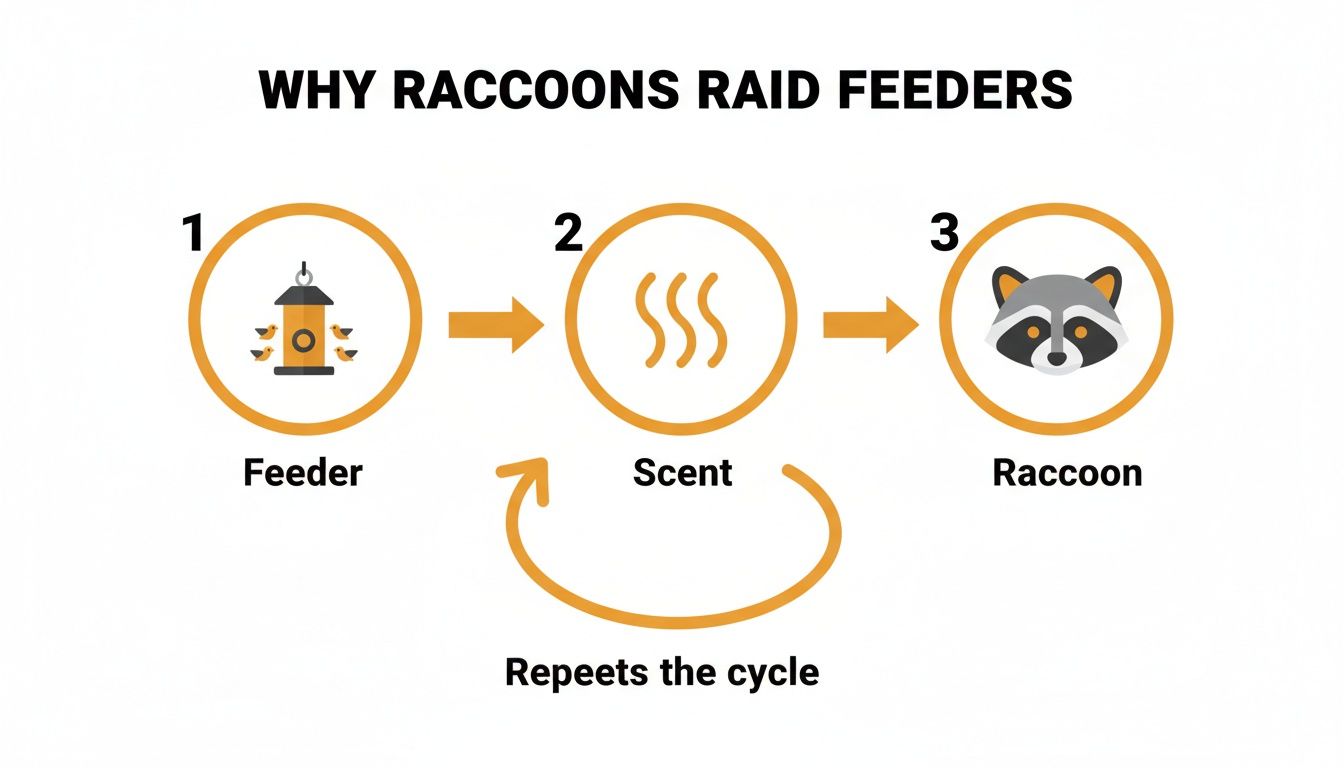
It's all about breaking the cycle of attraction. A raccoon smells the high-calorie seeds, investigates, and finds an easy meal. Physical barriers stop that cycle cold.
Installing Your Baffle for Maximum Impact
Just having a baffle isn’t enough—how you install it makes all the difference. A poorly placed baffle is a minor inconvenience at best. A fascinating three-year study on feeder protection found that properly baffled feeders were incredibly effective. More than that, the study highlighted a serious health risk: unprotected feeders can become hotspots for disease. At peak times, 8.3% of birds at these unprotected sites showed signs of illnesses like avian pox. You can read more about these wildlife and bird health findings on abcwildlife.com.
To make sure your baffle actually works, follow these two critical rules:
- Get the Height Right: The very top of your baffle needs to be at least four feet off the ground. This stops a raccoon from just standing up and hopping over it.
- Mind the Gap: The bottom of your bird feeder must hang higher than the top of the baffle. This prevents a clever raccoon from clinging to the pole and simply reaching up and around the baffle to get the goods.
Pro Tip: Before you fill a brand-new feeder, give the pole a firm shake. If it wobbles a lot, a heavy raccoon (which can easily top 20 pounds) could potentially knock the whole thing over. Make sure the pole is sunk deep into the ground or use a stabilizer for extra support.
Comparing Raccoon Proofing Methods
Choosing the right physical deterrent can feel overwhelming, but breaking it down by effectiveness, cost, and effort can help. The pole-and-baffle system is a classic for a reason, but weight-activated feeders also offer a high-tech solution.
| Method | Effectiveness | Approximate Cost | Maintenance Level |
|---|---|---|---|
| Pole and Baffle System | Very High (with proper installation) | $50 - $120 | Low (check for stability) |
| Weight-Activated Feeder | High (for perching raids) | $60 - $150 | Moderate (check mechanism) |
| Hanging from a Wire | Low to Moderate | $10 - $30 | High (requires perfect placement) |
Ultimately, combining a proper pole with a dedicated raccoon baffle offers the most reliable, set-it-and-forget-it protection against these persistent climbers.
Considering Raccoon-Resistant Feeders
For an added layer of security, look at the feeder itself. While nothing is truly 100% "raccoon-proof," some designs are brilliantly engineered to thwart them.
Weight-activated feeders are a fantastic option. These feeders use a spring-loaded perch or platform. When a heavy animal like a raccoon lands on it, their weight pushes the perch down, which closes access to the feeding ports. Birds are far too light to trigger the mechanism, so they can eat in peace while the bandits are shut out.
The principles for defeating raccoons often overlap with those for their smaller, equally persistent cousins. For more ideas on placement and deterrents, you might find our guide on how to keep squirrels away useful.
Adjust Your Feeding Schedule and Keep Things Clean
Even with the best pole and baffle system, you can still find yourself outsmarted. I've learned over the years that some of the most effective strategies against raccoons have less to do with hardware and more to do with simple daily habits. What and when you put out food can make all the difference.
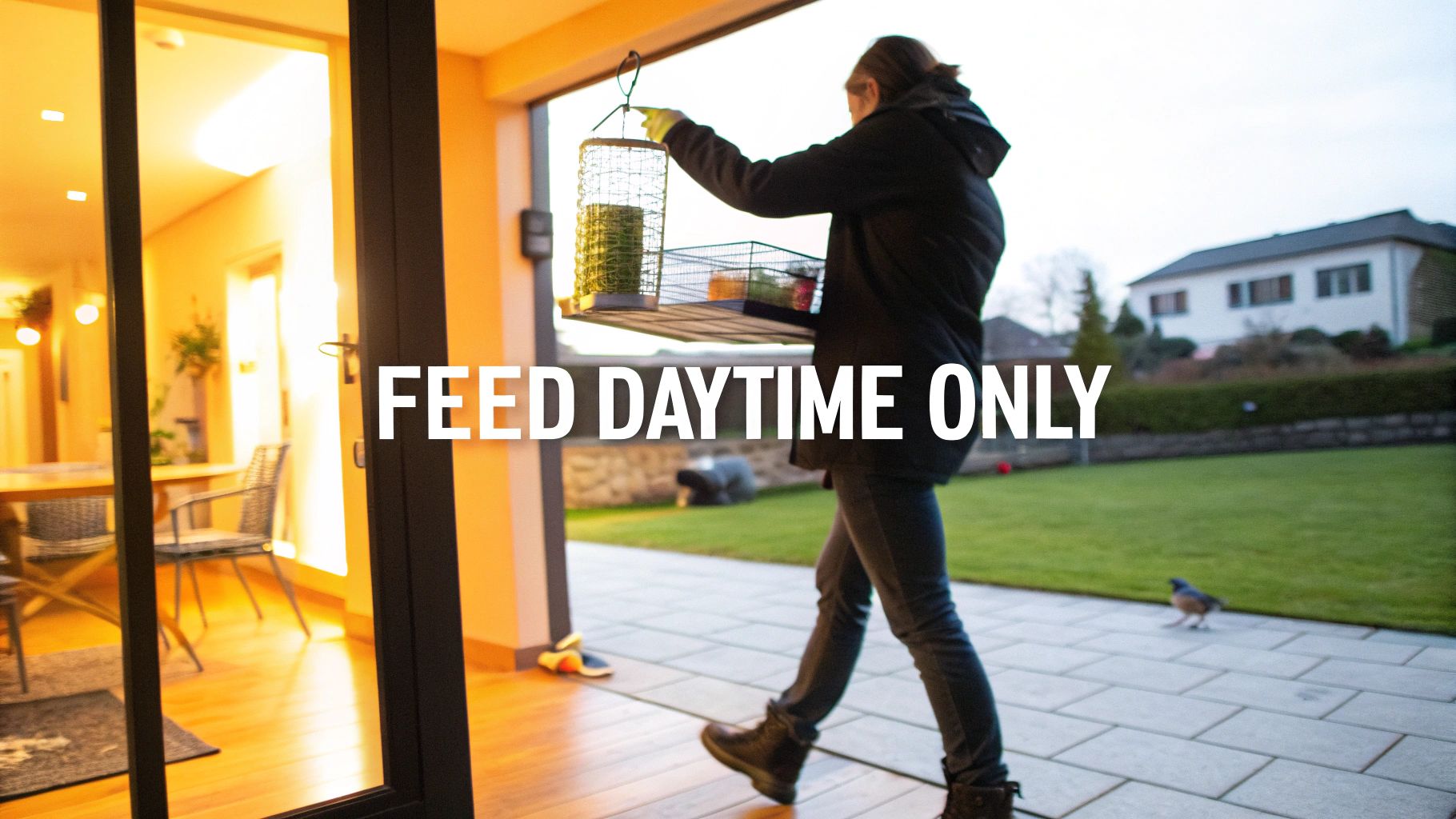
Remember, raccoons are nocturnal and have an incredible sense of smell. A feeder left full overnight is like a glowing neon sign for them. The simplest way to flip that sign off is to take away the food.
It's All in the Timing
The single most foolproof method? Bring your feeders inside every night. I know it sounds like a pain, but if you can make it part of your routine—like locking the doors or turning off the lights—it completely solves the problem. After a few nights of finding an empty pole, the raccoons will cross your yard off their list of reliable buffets.
If taking feeders in every single night just isn't realistic for you, try the "daylight portion" trick. Only put out enough seed in the morning to last the day. It takes a little practice to gauge how much your birds will eat, but you'll soon get the hang of it. The goal is an empty feeder by sundown, leaving nothing for the midnight marauders.
Why a Clean Feeder is Your Best Defense
Beyond timing, good hygiene is a secret weapon. A messy feeding area, with spilled seed and droppings scattered on the ground, sends out a powerful scent signal that screams "easy meal" to any raccoon in the neighborhood. A tidy station is far less likely to get their attention.
More importantly, keeping feeders clean is crucial for the health of your birds. Messy, contaminated feeders can be a hotspot for disease. One multi-year study found that birds at unprotected feeders were much more likely to show signs of illness, with 8.3% displaying symptoms at peak times. Raccoons can easily spread these contaminants around. You can learn more about how shared feeders impact bird health from this research.
My Two Cents: A dirty feeder isn't just a raccoon magnet; it's a genuine health hazard for the birds you're trying to help. Regular cleaning is non-negotiable if you want to protect your local flock from common illnesses like avian pox or conjunctivitis.
Getting into a regular cleaning routine is easy. Every week or two, just follow these simple steps:
- Take it apart. Get into all the little nooks and crannies where old seed can get stuck.
- Give it a good scrub. Use a stiff brush with hot, soapy water to get rid of all the grime.
- Disinfect it. Let the parts soak for about 10 minutes in a solution of one part bleach to nine parts water. If you prefer, a 50/50 mix of white vinegar and water works well, too.
- Rinse and dry completely. This last step is key. Rinse every piece thoroughly and let it air dry completely before you even think about refilling it. This prevents mold and mildew from growing.
Make Smarter Food Choices
The food you offer can also change who comes to dinner. High-value treats that your birds love are often eaten so fast there’s nothing left over. For instance, Black Soldier Fly Larvae (BSFL) are like candy to bluebirds, wrens, and chickadees.
They usually gobble them up long before sunset, leaving an empty tray for any would-be scavengers. Thinking strategically about what to put in bird feeders can dramatically cut down on unwanted nighttime visitors. When you combine a smart feeding schedule with great hygiene, you create a haven for birds and a real dud for raccoons.
Making Your Backyard Less Raccoon Friendly
If you want to win the war over your bird feeder, you have to think beyond the feeder itself. The real long-term strategy involves taking a hard look at your entire yard from a raccoon's perspective. If your property is a nightly all-you-can-eat buffet with cozy hiding spots, that feeder is just the main course, and you’re fighting a seriously uphill battle.
Your first and most powerful move is to transform your yard from a raccoon paradise into a place they’d rather just pass through. By getting rid of the very things that draw them in, your bird feeder suddenly becomes a much less convenient and appealing target. Think of it as property-wide wildlife management.
Remove All Unintentional Food Sources
Raccoons are led by their stomachs, and their sense of smell is incredible. Sure, the bird seed is the grand prize, but all the other "appetizers" scattered around your yard are what encourage them to stick around and start exploring. Your mission is to cut off this free lunch.
Start with the obvious: your trash and compost. To a raccoon, a standard garbage can is just an unlocked pantry. They're pros at tipping them over or prying off loose lids. You absolutely must use cans with locking lids or secure them with heavy-duty bungee cords. If you can, keep them in a garage or shed until collection day.
From there, look for these other common raccoon magnets:
- Pet Food: This is a big one. Never, ever leave pet food or water bowls outside overnight. It's a reliable, high-protein meal that practically screams "free food here!"
- Fallen Fruit: Got fruit trees or berry bushes? Be meticulous about cleaning up any fruit that drops to the ground.
- Grills: That leftover grease and caked-on food scraps smell amazing to a nocturnal scavenger. Clean your barbecue thoroughly after you use it.
When you remove these easy meals, you’re sending a clear message: the restaurant is closed.
Secure Potential Denning Sites
A raccoon that finds a reliable food source might just decide your yard is a great place to move in. They’re always on the lookout for dark, quiet, and protected spaces to build a den. It’s time to inspect your property for these potential raccoon condos and block them off.
The usual suspects are the voids under decks, porches, and sheds. These spots offer perfect cover from the elements and predators. The best way to secure them is with heavy-gauge wire mesh or hardware cloth. Don't just tack it to the side; you need to dig a trench at least six inches deep and bend the mesh outward in an "L" shape. This stops them from simply digging underneath it.
Before you seal up any potential den, you must be absolutely certain no animals are trapped inside. Check carefully for activity. A good approach is to block all but one entry point, wait a couple of days for the resident to leave for the night, and then seal that final opening.
And don't forget to look up. An uncapped chimney is a wide-open invitation for a raccoon to set up shop in your attic. A professional chimney cap is a must-have—it keeps wildlife out and protects your flue from rain and debris.
Employ Humane Sensory Deterrents
Sometimes, a little shock value is all it takes to make a raccoon rethink its nightly patrol route. Sensory deterrents use light, sound, or water to startle an animal, creating an unpleasant memory associated with your yard. While they aren't a foolproof solution on their own, they work wonders as part of a layered defense.
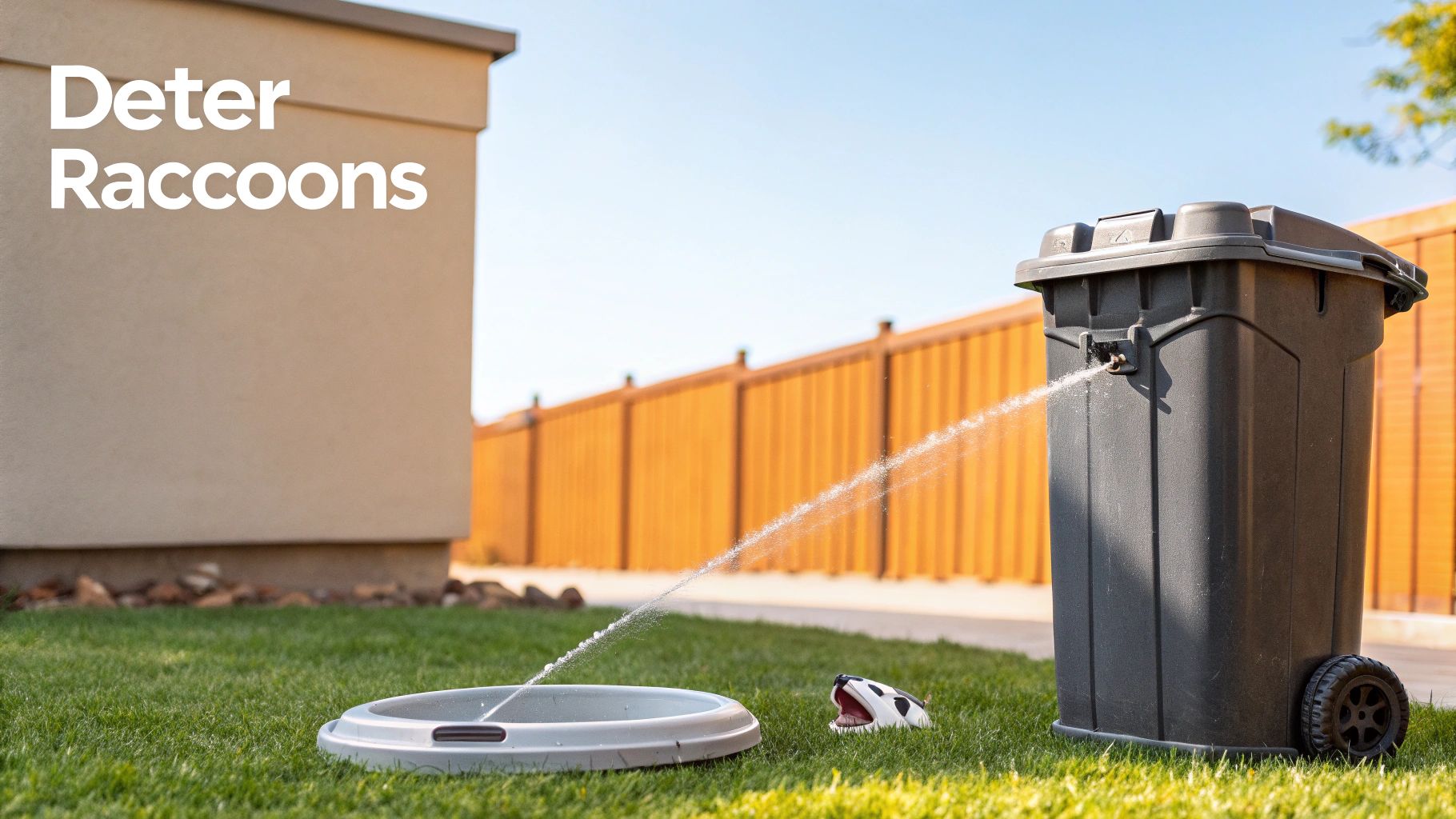
Motion-activated sprinklers are my personal favorite—and they can be pretty hilarious to watch. When a raccoon trips the sensor, it gets a sudden, sharp blast of water. Raccoons really don't like being sprayed unexpectedly, and a few encounters are often enough to convince them to find a new path.
You can also try motion-activated lights or ultrasonic devices. That sudden flood of bright light can easily spook a creature that relies on the cover of darkness. By making your yard less comfortable and predictable, you encourage these clever critters to find an easier, more peaceful place to forage.
Advanced Troubleshooting for Persistent Raccoons
So you've done everything right. You've got a well-placed pole, a high-quality baffle, and a tidy yard. And yet, some raccoons seem to treat your defenses as a personal invitation to an all-you-can-eat buffet. These are the master problem-solvers, the ones that force you to think less like a bird watcher and more like a raccoon engineer.
When your first line of defense fails, it isn't time to give up. It's time to get creative.
Escalating Your Physical Barriers
Sometimes, a single baffle just won't cut it for a particularly large or athletic raccoon. If you've got a furry acrobat that manages to stretch, climb, or somehow hoist itself over your baffle, you have a few powerful options.
The first move is the double-baffle system. Adding a second baffle—either another stovepipe style or a tilting disc—above your primary one creates a much more complex challenge. The key is to leave about a foot of space between them. This forces the raccoon to navigate two separate and unstable barriers, a task that often proves to be its final defeat.
It’s also worth taking a hard look at the pole itself. Even a sturdy metal pole can be compromised if it's too close to another object. I once watched a raccoon use an ornamental garden flag pole, placed just a few feet away, as a brace to shimmy right around a baffle I thought was foolproof.
Here are some next-level adjustments to try:
- Go Taller: Increasing your pole's height makes it nearly impossible for a raccoon to get enough momentum to launch itself over the baffle. Aim for a pole that stands 8-10 feet tall after installation.
- Upgrade Your Pole System: If you’re using a standard sectional pole from a big-box store, consider switching to a single-piece, heavy-gauge steel pole. These have no seams or joints that a raccoon can use for a sneaky foothold.
- Stack Your Baffles: This is my favorite trick for the most stubborn critters. Place a large cone baffle below a stovepipe baffle. This combination counters both climbing and jumping strategies, creating a formidable two-part defense system.
Identifying Hidden Attractants in Your Yard
If a raccoon is still hanging around your property even after the feeder is secure, it means there's another reward keeping it there. The bird feeder might have been the initial draw, but now something else is holding its attention. It's time to do a "night patrol" of your own yard and think like a raccoon.
A small garden pond or even a birdbath can be a huge draw, offering a reliable source of drinking water. Raccoons are fastidious and will often wash their food (and paws), so any accessible water source is a major bonus for them. That pet water bowl on the deck? It’s an open invitation. Bring it indoors every single night, without fail.
It's easy to focus on food, but water is just as powerful an attractant. A raccoon that has a safe place to drink is far more likely to stick around and investigate every nook and cranny for a potential meal.
Think about other subtle food sources, too. Is your grill perfectly clean? That little grease trap is a gourmet raccoon treat. Is your compost bin just a loose pile instead of a sealed tumbler? You might be unintentionally creating a secondary buffet.
Recognizing When to Call for Professional Help
There are times when the problem grows beyond DIY solutions. Knowing when to call a humane wildlife control professional is crucial—both for your safety and for a successful resolution. The goal here is to manage a nuisance, not confront a potentially dangerous animal.
You should seek professional help if you notice any of these signs:
- Unusual Boldness: A raccoon that approaches you, is active during the day, or seems disoriented and unafraid could be sick. Never, ever approach an animal behaving this way.
- Property Damage: If the raccoon has started tearing at your siding, soffits, or roof shingles, it's likely trying to find a nesting spot in your home. This can lead to expensive repairs.
- Denning on Site: Discovering that a raccoon is living under your deck, in your shed, or—worst of all—in your attic means the problem has moved way beyond the bird feeder. They can cause significant structural damage and create serious health hazards.
A professional can safely and legally remove the animal and help you secure your home to prevent future residents from moving in. Think of it as an investment in your peace of mind.
Raccoon-Proofing Myths and FAQs
Once you start setting up your defenses, you'll inevitably run into some common questions and a bit of "backyard folklore" about deterring raccoons. These animals are smart, so troubleshooting is part of the process. Let's tackle some of the most frequent questions to help you separate fact from fiction and avoid methods that are either ineffective or downright dangerous.
Does Spicy Bird Seed Really Work?
You've probably seen this tip pop up everywhere: mix cayenne pepper into your bird seed. The idea is that birds don't taste capsaicin (the stuff that makes peppers hot), but mammals do, sending them scrambling. It sounds like a perfect, simple fix, but in my experience, it's unreliable at best.
A mildly curious raccoon might be turned off by the first taste, but a hungry and determined one will often just power through the spice. Beyond that, the method has some real drawbacks:
- It's a lot of work. You have to reapply the pepper after every single rainstorm or even a heavy morning dew. It washes away easily.
- It can cause harm. The fine powder can get into a raccoon's eyes, causing significant pain and irritation. It's not the humane solution many believe it to be.
- It doesn't stop damage. A spicy surprise won't stop a raccoon from simply knocking over your entire feeder out of frustration, breaking it in the process.
Honestly, you're much better off investing your time and energy into physical barriers like baffles. They offer a far more permanent and humane solution.
Should I Grease the Pole?
This is another old-school tip you hear a lot, but please, do not ever grease your bird feeder pole. Spreading petroleum jelly, oil, or any kind of grease on a pole is incredibly dangerous for the very birds you're trying to help.
Sure, it makes the pole too slick for a raccoon to climb, but think about what happens when a bird lands on it. The grease gets on their feathers, and that's a disaster. It mats them down, stripping away their natural waterproofing and insulation. A bird with greasy feathers can't fly properly or stay warm, which is often a death sentence.
A well-placed stovepipe or cone baffle does the exact same job—it stops climbers in their tracks—but it does it safely. There's simply no reason to use a messy, harmful method like grease.
What Kind of Poles Can Raccoons Climb?
Just about anything they can get their paws around. Raccoons are master climbers, and they'll have no trouble scaling a standard wooden 4x4 post, a textured metal pole, or even a skinny shepherd's hook. Their sharp claws and nimble paws can find purchase on almost any surface.
Their kryptonite, however, is a smooth, slick surface that's too wide to hug. This is why the gold standard for a raccoon-proof setup is a smooth metal pole (like galvanized steel) that's at least 1 inch in diameter. Paired with a properly installed, wobbly baffle, this combination becomes nearly impossible for them to defeat. The slick pole prevents a good grip, and the baffle blocks them if they even get that far.
At Pure Grubs, we believe feeding birds should be a joy, not a constant battle. Offering high-value treats like our USA-grown Black Soldier Fly Larvae during the day ensures birds get premium nutrition, leaving less behind for nighttime raiders. Explore our natural, high-calcium grubs at https://puregrubs.com and give your birds a safer, healthier treat.