

How to Keep Squirrels Away From Coops and Bird Feeders
A lot of people think squirrels are just harmless, fluffy-tailed acrobats. But if you raise chickens or love feeding wild birds, you know the truth: they're persistent, surprisingly destructive, and a real nuisance. Their cute antics often mask a serious capacity for causing damage that goes way beyond just nabbing a few seeds.
To really get a handle on the problem, you first have to understand why they're such a menace. They aren't just minor annoyances; they're a genuine threat to your property, your animals' health, and even your wallet.
This isn't just about losing a little chicken feed. The damage adds up fast. Think about it on a larger scale: in California alone, ground squirrels are blamed for causing between $30 million and $50 million in damage to farms and infrastructure every single year. One study even found that a population of just 200 ground squirrels can eat as much forage as a 1,000-pound steer. You can read more about their agricultural impact on FarmProgress.com to see how these small animals create such massive problems.
More Than Just Feed Thieves
Stolen chicken feed and empty bird feeders are frustrating, for sure. But the real cost of a squirrel invasion goes much deeper. Their constant, powerful need to gnaw can lead to some serious structural headaches.
If you keep chickens, this gnawing is a direct threat to your flock's safety.
- Structural Damage: Squirrels can chew right through soft wood, plastic, and flimsy wire to get to a food source. This can weaken your chicken coop's structure, creating new ways for them—and far more dangerous predators—to get inside.
- Flock Stress: Imagine constant, frantic squirrel activity in and around your coop. It's incredibly stressful for chickens. A stressed-out hen might stop laying eggs and becomes more vulnerable to getting sick.
- Contamination Risk: Squirrels are not the cleanest animals. They can carry parasites and diseases that can easily spread to your flock through contaminated feed or the droppings they leave behind.
Key Takeaway: A squirrel's presence is never just a minor inconvenience. They are constantly probing for weaknesses. Once they find a reliable food source like your chicken coop or bird feeder, they will exploit it relentlessly, and the damage will only get worse over time.
For bird lovers, the problem is just as maddening. Squirrels don't just share feeders; they completely take them over. They'll guard the food source, aggressively chasing away the songbirds you actually want to see. Their weight and wild acrobatics can also break expensive feeders, snapping perches and wrecking baffles.
Ultimately, a feeder overrun by squirrels has failed its one job: feeding the birds.
Building a Squirrel-Proof Chicken Coop
Your chicken coop should be a safe haven for your flock, but to a squirrel, it's an all-you-can-eat buffet with a chewable exterior. To truly protect your birds and their feed, you have to think like a squirrel and turn that coop into a fortress. That means sealing every potential entry point with the right materials.
Many of us learn the hard way that standard chicken wire is not a barrier against squirrels; it’s merely a suggestion. They can easily chew through its thin gauge or simply squeeze through the wide hexagonal gaps. The real foundation of a secure coop is 1/2-inch hardware cloth. This sturdy, galvanized mesh is the gold standard—its openings are too small for rodents to get through, and the wire is strong enough to stand up to their powerful teeth.
Reinforcing Every Weak Point
Take a walk around your coop and put on your "pest goggles." You need to look for any and every vulnerability, especially in the spots where different materials meet, as these often create the tiny gaps squirrels love to exploit.
- Vents and Windows: These are absolutely essential for airflow, but they're also wide-open doors for pests. Cover every single one of these openings on the outside with a securely fastened piece of hardware cloth. I recommend using screws and washers for a tight fit that can't be pried loose.
- Gaps and Cracks: Check along the roofline, under the eaves, and where the walls meet the floor. A squirrel only needs a tiny opening to start chewing its way in. Patch these spots permanently with more hardware cloth or some metal flashing.
- Wooden Doors and Frames: Wood warps and gets chewed over time, creating gaps where there were none before. Reinforce the edges of your doors and windows with metal flashing to create a chew-proof barrier.
Your coop is more than just a box; it's a critical part of raising healthy, happy birds. For a deeper dive into coop design and flock management, check out our complete guide on how to raise backyard chickens.
This infographic breaks down the main threats squirrels pose to your entire backyard setup.
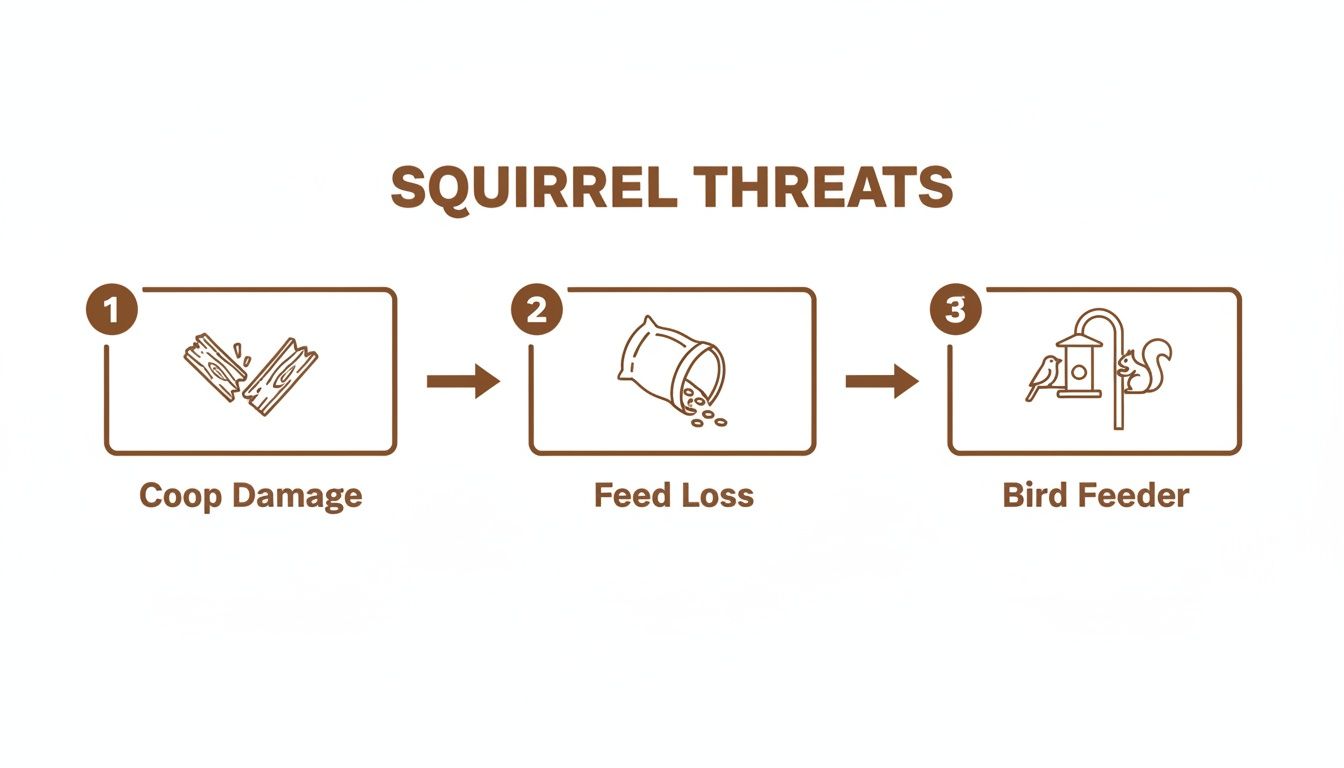
As you can see, squirrels create a chain reaction of problems, from direct coop damage and stolen feed to completely overwhelming your bird feeders.
Securing Your Feed Supply
Even a fortress-like coop will be a target if the food inside is easy to access. Squirrels have an incredible sense of smell and will go to extraordinary lengths for a high-calorie meal like chicken feed or those tasty BSFL treats your flock loves.
Storing feed in plastic bins or the bags they came in is just asking for trouble. A determined squirrel can chew through a plastic container in minutes, contaminating your feed and guaranteeing they'll be back for more.
The only truly reliable solution is a galvanized metal trash can with a tight-fitting lid. The metal is impossible to chew through, and a secure lid seals in the tempting aromas. This single, simple upgrade protects your investment in feed and removes one of the biggest squirrel magnets from your coop area.
This might seem like overkill, but don't underestimate their capacity for destruction. Forestry studies have documented squirrels stripping bark from up to 96% of trees in certain areas, proving their ability to cause widespread structural harm when motivated. A combination of physical exclusion and secure storage is always your best defense.
Outsmarting Squirrels at Your Bird Feeder
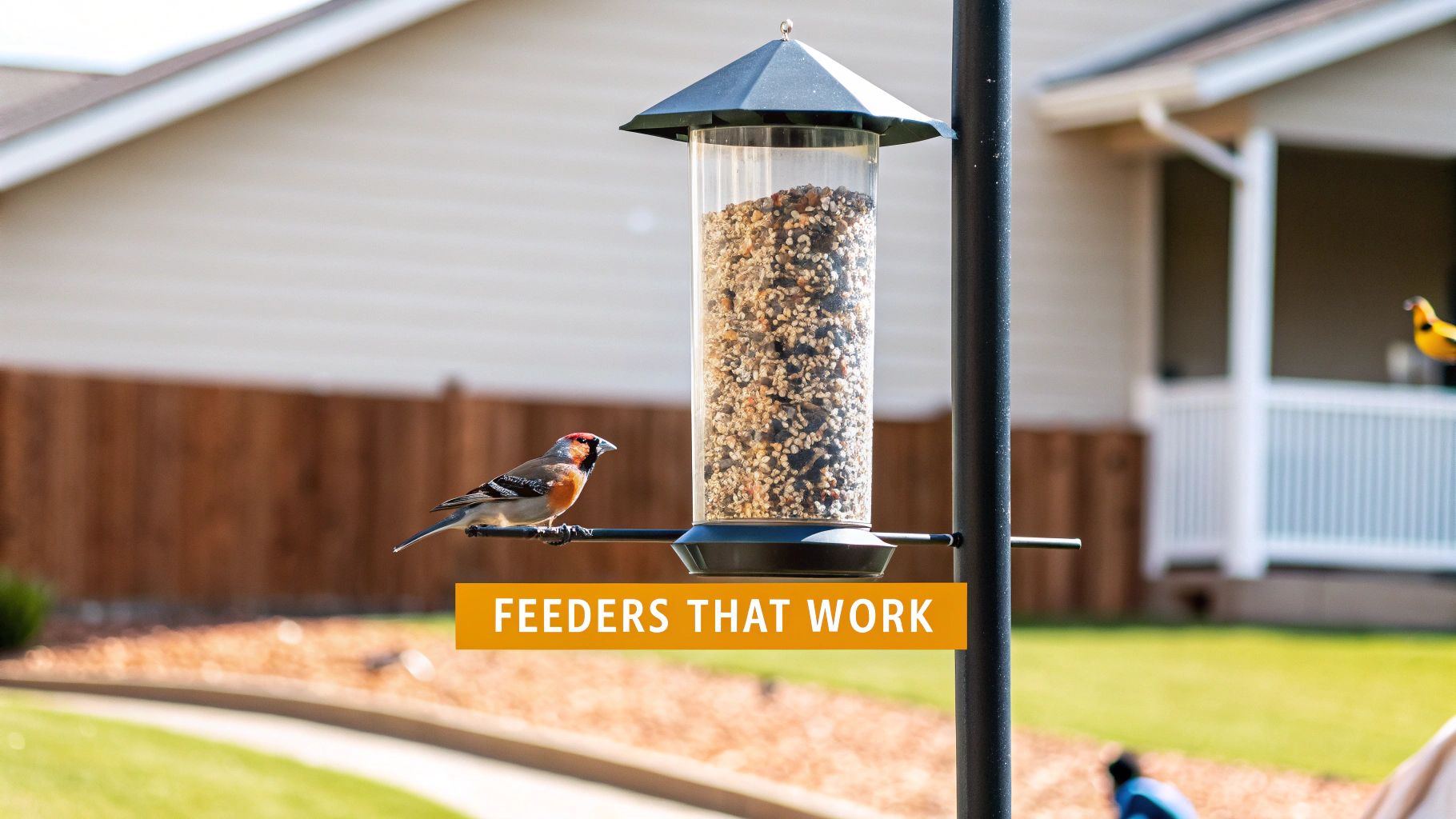
The battle for the bird feeder is a classic backyard drama. If you think squirrels are a pain around the chicken coop, just wait until you see the Olympic-level acrobatics they'll perform for a free meal of birdseed. Winning this war of wits takes more than just hanging a feeder and hoping for the best; it requires a bit of strategy.
The biggest mistake I see people make is underestimating a squirrel’s sheer athleticism. These creatures are master jumpers and climbers. That's why where you place your feeder is your first—and most important—line of defense.
The Unbeatable 10-5 Rule
To truly squirrel-proof your setup, you need to create a gap they simply can’t bridge. This is where the 10-5 rule comes in. It’s a simple but incredibly effective guideline for positioning your feeder pole.
- 10 Feet Away: Your feeder needs to be at least 10 feet from any launch point. That means trees, fences, sheds, your house—anything a squirrel could use as a diving board. A motivated squirrel can easily clear a 7-8 foot horizontal jump, so that 10-foot buffer is crucial.
- 5 Feet High: The feeder itself (or the baffle protecting it) must be a minimum of 5 feet off the ground. Squirrels are impressive, but they can't jump that high from a dead stop. This prevents them from simply springing up from below.
You have to follow both parts of this rule religiously. A feeder 10 feet from a tree but only three feet high is useless. So is a 5-foot pole right next to a deck railing. It has to be both.
Investing in the Right Defenses
With your feeder in the perfect spot, it’s time to fortify the pole. A baffle is your best friend here. This cone or tube-shaped barrier attaches to the pole below the feeder, creating a slippery, wobbly surface that even the most determined squirrel can't get a grip on.
For a baffle to do its job, it needs to be wide enough (at least 15-18 inches in diameter) and mounted on a sturdy, fixed pole. Don't put it on a flimsy shepherd's hook that a squirrel can just shake silly.
You can also get feeders designed from the ground up to thwart these furry bandits. Weight-activated feeders are ingenious; their perches shut the seed ports when a heavy squirrel lands, but they stay wide open for lightweight songbirds. Caged feeders are another great option, using a wire mesh outer cage that lets small birds in while blocking squirrels and bigger bully birds like grackles.
Pro Tip: Pay attention to what your feeder is made of. Metal and tough polycarbonate feeders will stand up to a squirrel's chewing, while feeders made of wood or thin plastic can be destroyed in a single afternoon.
Finally, think about making the food itself the deterrent. Squirrels and other mammals absolutely hate capsaicin—the stuff that makes chili peppers hot. Birds, on the other hand, can't taste it at all. Switching to a birdseed mix treated with capsaicin is a fantastic, humane way to send squirrels packing.
Another trick is to offer safflower seed. Most squirrels turn their noses up at it, but birds like cardinals, chickadees, and finches think it's delicious. Simply knowing what to put in bird feeders can make your feeding station a bird-only paradise.
Making Your Yard a No-Go Zone for Squirrels
While squirrel-proofing your coop and feeders is a great first step, it’s really only half the battle. If your yard is basically a five-star squirrel resort, they're going to be relentless in testing your defenses. The best long-term strategy is to make your entire property less appealing, encouraging them to find easier pickings elsewhere.
This whole process is called habitat modification, and it's all about removing the easy food and shelter that attracted them in the first place. Try to see your yard from a squirrel's perspective. Are there overhanging tree branches creating a perfect highway to your coop? Are there piles of fallen nuts or fruit just lying on the ground, offering a free buffet?
Cut Off the All-You-Can-Eat Buffet
The single biggest magnet for squirrels is an easy meal. If you get rid of these temptations, you'll dramatically reduce the pressure they put on your coop and feeders.
- Lock Down Your Trash: Use garbage cans with lids that lock or fit very tightly. Often, a simple bungee cord is enough to frustrate them into giving up.
- Tidy Up Fallen Food: If you have fruit or nut trees, get in the habit of raking up whatever drops. The same goes for the birdseed that inevitably ends up on the ground under your feeders.
- Secure the Compost: An open compost pile is a squirrel's dream. Switch to an enclosed tumbler or wrap your existing pile in hardware cloth to keep pests from digging in.
When you start removing these easy food sources, you're making squirrels work a lot harder for their meals. Suddenly, your yard isn't such a rewarding place to hang out. But it's important to be realistic. A Canadian agricultural survey found that just trimming vegetation had low satisfaction rates for deterring ground squirrels, which shows how quickly they can adapt. For those of us with chickens, this really drives home the need for multiple strategies. You can get more insights on rodent management at grainews.ca.
Reroute Their Commute
Squirrels are incredible acrobats, and they love traveling above ground on trees, fences, and power lines. These are their personal expressways for zipping around your yard.
Your job is to create some gaps in these highways. Trim back any tree branches that come within eight to ten feet of your chicken coop, bird feeders, or house. This one landscaping task removes the launching pads they use to bypass all your defenses on the ground.
It might sound like a big chore, but think of it as preventative maintenance. One afternoon with a pair of loppers can save you months of frustration and the cost of repairing chewed-up coop vents or busted bird feeders.
Making your yard less attractive to squirrels doesn’t mean you have to give up on a beautiful garden or stop feeding the birds. In fact, creating a less squirrel-friendly space often helps you attract the kind of wildlife you actually want to see. For more on that, check out our guide on how to attract wild birds you’ll love watching.
Using Natural Repellents That Actually Work
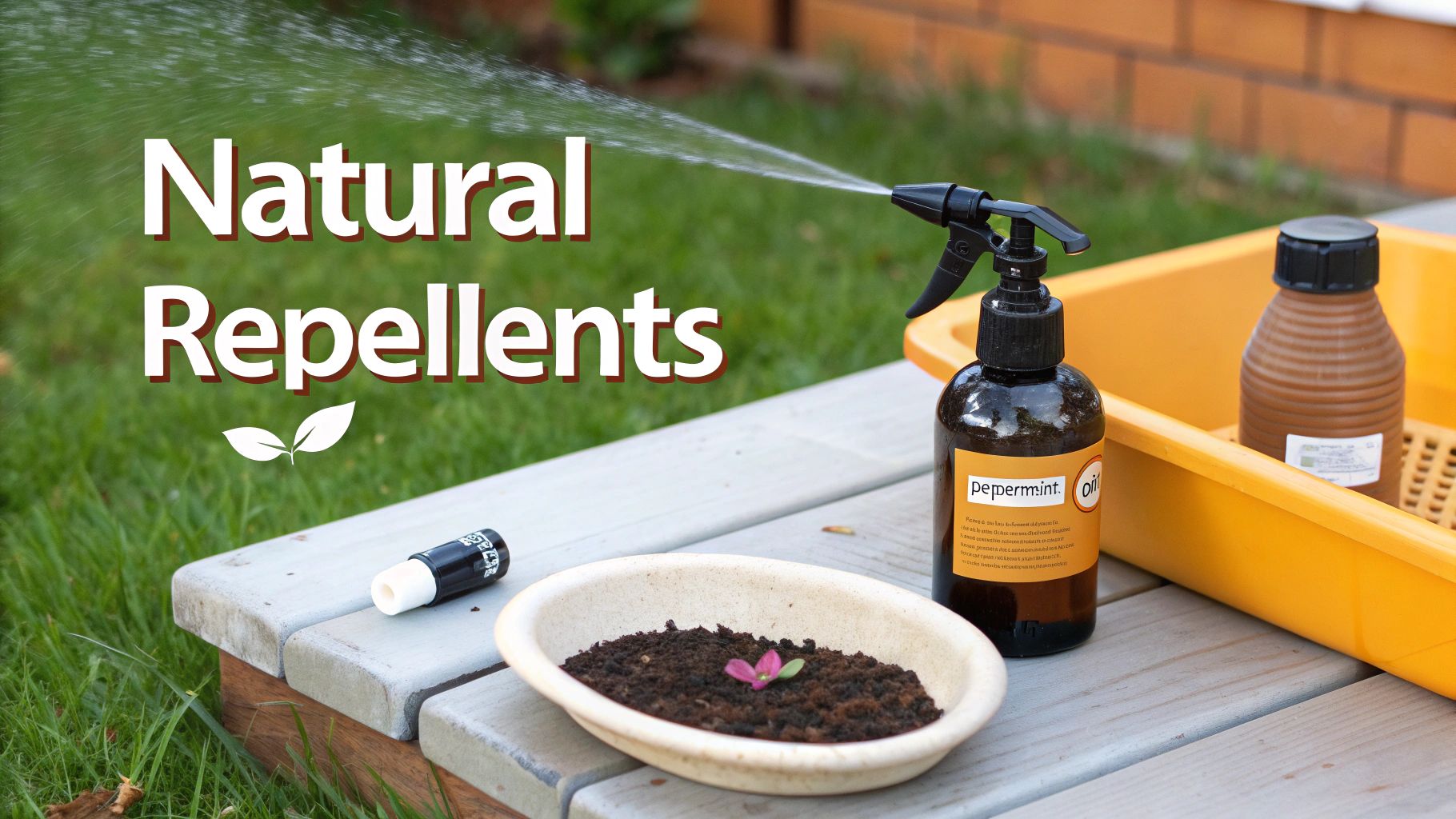
Once you’ve shored up the physical defenses, it’s time to add another layer to your strategy: using a squirrel’s powerful sense of smell against them. Natural repellents can be surprisingly effective, but you have to know which ones actually get the job done.
The idea is simple. You're creating an environment that squirrels find so irritating they'd rather just move on. They use their noses to find food and sense danger, so overwhelming them with strong, offensive odors can be a great way to protect specific spots, like the perimeter of your chicken run or the base of a bird feeder.
Scents That Send Squirrels Packing
Here’s the thing about scent-based repellents: consistency is everything. You can’t spray something once and call it a day. Squirrels are persistent little acrobats, and you have to be just as persistent in making your yard an unpleasant place for them to be. Plan on reapplying these after it rains or at least every few days to keep the smells potent.
Here are a few of my go-to options that have proven effective:
- Peppermint Oil: A few drops of pure peppermint oil on some cotton balls tucked into corners of the coop or around a feeder pole works wonders. Rodents hate the intense minty smell.
- Used Coffee Grounds: Don't throw out your morning coffee grounds! Sprinkling them around the base of plants or feeders serves two purposes. Squirrels can't stand the bitter aroma, and your soil gets a nice little nitrogen boost.
- Cayenne Pepper or Crushed Red Pepper: The magic ingredient here is capsaicin, the compound that makes peppers hot. It’s a major irritant to mammals, but birds can't taste it at all. A light dusting on the ground or even mixed directly into birdseed can stop a squirrel cold.
A Quick Reality Check: These natural repellents aren't a silver bullet. They work best when you combine them with the physical barriers and habitat changes we talked about earlier. Think of it as creating multiple lines of defense.
Startle Tactics for Skittish Squirrels
Beyond just offending their sense of smell, you can also play on a squirrel’s natural flight instinct. The goal here is to make your yard feel unpredictable and unsafe, encouraging them to forage in a calmer, less surprising location.
Motion-activated sprinklers are a fantastic, humane tool for this. When a squirrel trips the sensor, it gets a sudden, harmless blast of water. It’s a pretty effective way to create a negative association with that area. The key is to move the sprinkler around every week or so. If you leave it in one spot, the squirrels will just map out its range and avoid it.
Predator decoys, like a fake owl or hawk, can also work—for a little while. Squirrels are naturally terrified of raptors. But they're also incredibly smart. If that plastic owl sits on the same fence post for three weeks without moving a feather, they'll figure out it's a fraud. To keep up the illusion, you have to move the decoy to a new, visible spot every couple of days.
Common Questions About Keeping Squirrels Away
Even when you've done everything right, squirrels have a way of making you wonder what you missed. Their sheer persistence raises a lot of practical questions once you start putting up defenses. Let's tackle some of the most common head-scratchers that chicken keepers and bird lovers run into.
Are There Any Plants That Naturally Repel Squirrels?
Absolutely. While no plant is a magical force field, adding some with strong scents to your landscape can make the area around your coop or feeders much less appealing to squirrels. Think of it as another layer in your defensive strategy.
A few good options with powerful aromas that squirrels hate include:
- Mint: The strong smell of mint is a classic rodent repellent. The only catch? It spreads like wildfire, so it's best to plant it in a pot or contained bed to keep it from taking over.
- Daffodils: These classic spring flowers aren't just pretty—they're also toxic to squirrels, who are smart enough to learn to avoid them.
- Alliums: Anything in the onion family, from garlic to chives to those beautiful ornamental alliums, gives off a pungent scent that squirrels find offensive.
Just one important note: before planting anything new around your flock, do a quick search to make sure it's not toxic to chickens. Mint is fine in small amounts, but it's always better to be safe than sorry.
My Squirrels Get Past My Baffle—What Am I Doing Wrong?
This is one of the most frustrating problems out there. You bought the baffle, you installed it, and you're still watching squirrels feast on your birdseed. Nine times out of ten, the problem isn't the baffle itself, but where you've placed it.
You have to think like a squirrel—they are furry little acrobats. The biggest mistake people make is underestimating just how far they can jump. Your feeder pole needs to be at least 10 feet away from any potential launching pad. That includes trees, fences, the roof of your house, a deck railing, you name it.
Next, check the height. The bottom of the baffle should be at least 4-5 feet off the ground. If it's too low, they'll just leap right over it. Finally, make sure the feeder itself doesn't hang too low below the baffle, giving them a target to grab onto from above.
A well-placed baffle is a beautiful thing. When it's high enough off the ground and far enough from any launch points, it creates a wobbly, slippery obstacle that a squirrel's athleticism simply can't beat.
Is It Okay to Trap and Relocate Squirrels?
This is a really tricky question, and it steps into a legal and ethical gray area. It might feel like a kind, humane solution, but trapping and moving wildlife is often illegal for homeowners in many areas. These laws are in place for good reasons, like preventing the spread of animal diseases and stopping people from just dumping their "problem" in someone else's neighborhood.
From a purely ethical perspective, relocation is often a death sentence. When you drop a squirrel in a strange place, it has no idea where to find food, water, or shelter. It’s also walking into the established territory of other squirrels, which usually doesn't end well for the newcomer. It's far more effective and truly humane to focus your energy on exclusion and deterrents instead.
Will My Dog or Cat Keep Squirrels Away?
They can certainly help! The sight, sound, and scent of a predator patrolling the yard definitely makes squirrels more nervous. A dog or cat creates an environment of risk, which can be enough to convince a squirrel to find an easier, safer place to forage.
That said, don't count on your pets to be a complete solution. A smart, determined squirrel will quickly learn your dog's nap schedule or figure out when the cat is inside. Think of your pets as an active, living part of your defense system, but not a substitute for a secure coop or a properly baffled feeder.
Keeping your flock and wild birds safe also means giving them clean, healthy nutrition. Pure Grubs offers premium, USA-grown dried BSFL that are naturally high in calcium for strong eggshells and packed with the protein birds need for healthy feathers. Our grubs are rigorously tested for safety, so you can be confident you're providing the very best. Shop now at PureGrubs.com and see what a difference quality treats can make.