

How to Attract Wild Birds to Your Yard
Thinking about turning your yard into a bird magnet? It’s simpler than you might think. It all boils down to understanding what they truly need to feel safe and stick around. Forget about complicated setups; the secret is focusing on four simple pillars: reliable food, fresh water, safe shelter, and places to nest.
Let's walk through how to create a backyard where birds don't just visit—they decide to move in.
How to Attract Wild Birds: A Simple Framework
Creating a bird-friendly backyard is one of the most rewarding things you can do. You're not just checking off a to-do list; you're setting the stage for a vibrant, living ecosystem to unfold right outside your window. The real goal is to provide a complete habitat that meets all of a bird's fundamental needs. This encourages them to do more than just stop by for a snack—it invites them to establish a territory and maybe even raise a family.
It really comes down to mastering four key areas:
- Reliable Food: A consistent, high-quality food source is the fastest way to get on their radar.
- Fresh Water: A clean spot to drink and bathe is often harder for birds to find than food, making it a huge draw.
- Safe Shelter: Birds need places to hide from predators and escape bad weather. Think dense shrubs and mature trees.
- Nesting Places: Offering secure spots to raise young—from birdhouses to natural vegetation—is the ultimate welcome mat.
Here's a quick look at how these four essentials work together to create a thriving bird habitat.
The Four Pillars of a Bird-Friendly Yard
| Essential Element | Why It Matters to Birds | Quick-Start Tip |
|---|---|---|
| Reliable Food | Provides the energy needed for daily activities like foraging, mating, and migration. | Start with a high-quality suet or a seed mix in a simple feeder. Add a treat like Pure Grubs to attract a wider variety. |
| Fresh Water | Crucial for drinking and preening. Bathing helps birds keep their feathers in top condition for flight and insulation. | A simple bird bath is perfect. Keep it shallow (1-2 inches) and change the water every other day to keep it clean. |
| Safe Shelter | Offers protection from predators like hawks and cats, as well as shelter from wind, rain, and extreme temperatures. | Plant a few native shrubs or a small evergreen tree. Even a brush pile in a back corner provides excellent cover. |
| Nesting Places | Gives birds a secure location to build nests, lay eggs, and raise their young, ensuring the next generation. | Install a species-specific birdhouse or let a section of your yard grow a bit wild to provide natural nesting materials. |
By providing these four elements, you're not just feeding birds; you're creating a complete, self-sustaining environment they can depend on.
Beyond Feeders: The Importance of Habitat
Bird feeders are a fantastic starting point, but they're only one piece of the puzzle. The most successful bird-friendly yards are the ones that mimic the natural environments where birds have evolved to thrive.
This means looking beyond the feeder and thinking about the whole picture. It’s about integrating native plants, creating layers of vegetation (from ground cover to tall trees), and understanding that a slightly "messy" yard is a healthy one. Leaf litter, seed heads, and small brush piles are far more valuable to wildlife than a perfectly manicured lawn. By building a small ecosystem, you provide the insects, seeds, and berries that birds are naturally adapted to eat.
A well-structured landscape with native vegetation is crucial to attract a sustainable and diverse bird population. It’s not just about feeding them; it’s about restoring a small piece of the world they belong in.
This holistic approach isn't just a nice idea—it's a critical conservation strategy. With natural habitats shrinking, our backyards are becoming incredibly important refuges. Research from BirdLife International shows that habitat restoration is key to reversing population declines for many species.
In fact, restoration efforts, even on a small scale, can increase local breeding bird densities by over 25% by simply reestablishing natural food webs. You can learn more about how these efforts fight extinctions and discover what the data reveals.
Mastering Your Bird Feeding Strategy
If there's one thing that will bring birds to your yard, it's food. A reliable, year-round buffet is the most powerful invitation you can offer. But creating a bustling avian cafe is about more than just tossing out some seed. It’s about understanding what local birds crave and serving it up in a way that makes them feel safe and welcome.
The easiest place to start? Black-oil sunflower seed. Think of it as the universal crowd-pleaser. Its high oil content is a fantastic energy source, and the thin shell is no problem for smaller birds like finches and chickadees. If you want to attract a different crew, especially in the winter, hang up some suet cakes. This high-fat block is a magnet for woodpeckers, nuthatches, and wrens when insects are hard to come by.
Choosing the Right Feeder for Your Birds
The feeder you use is just as important as the food you put inside it. Different birds have different dining preferences, and choosing the right "restaurant" style can make all the difference.
- Tube Feeders: These are perfect for keeping things exclusive to smaller birds. Finches, chickadees, and titmice can easily perch and eat, while larger, more boisterous birds are often left out. It gives the little guys a fighting chance.
- Hopper Feeders: These often look like little houses, and they do a great job of protecting a large supply of seed from rain and snow. They're a solid all-rounder, attracting everything from cardinals and jays to grosbeaks.
- Platform or Tray Feeders: An open-concept feeder, this style is ideal for ground-feeding species like doves, juncos, and sparrows who prefer not to perch. Just know they require more frequent cleaning since they're exposed to the elements.
This simple infographic breaks down the core elements for attracting birds—it’s not just about food, but also about providing water and a safe place to rest.
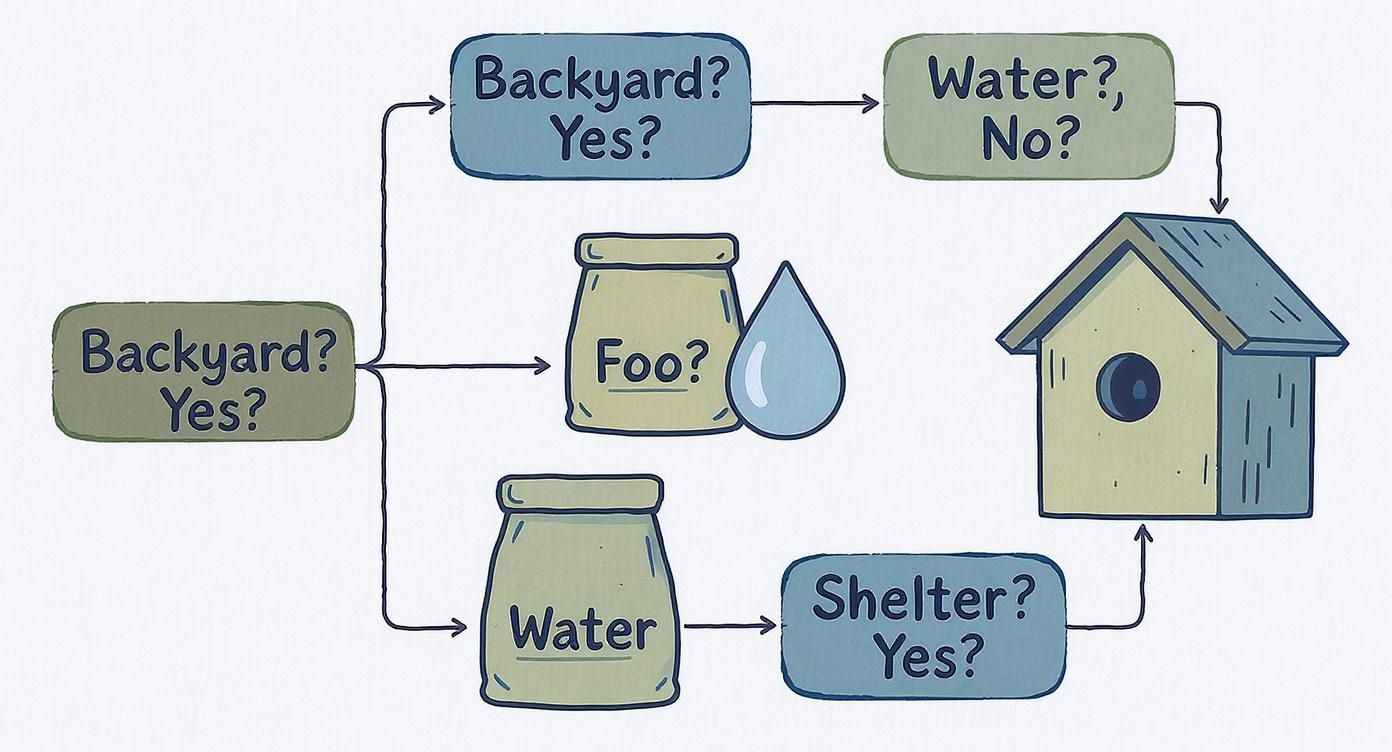
As you can see, the real magic happens when you combine food, water, and shelter. That's how you build a truly diverse and thriving backyard ecosystem.
To make the choice even clearer, think about which birds you'd love to see and work backward. Here’s a quick guide to pairing the right feeder with the right food to get the visitors you want.
Pairing Feeders and Food to Attract Your Target Birds
| Feeder Type | Ideal Food | Likely Visitors |
|---|---|---|
| Hopper/House Feeder | Black-oil sunflower seeds, safflower, mixed seeds | Cardinals, Finches, Jays, Chickadees, Grosbeaks |
| Tube Feeder | Nyjer (thistle) seed, small sunflower chips | Goldfinches, Pine Siskins, Chickadees, Redpolls |
| Platform/Tray Feeder | Cracked corn, millet, peanuts, Pure Grubs | Doves, Juncos, Sparrows, Robins, Bluebirds |
| Suet Cage Feeder | Suet cakes, seed blocks | Woodpeckers, Nuthatches, Wrens, Chickadees |
Matching your setup to your desired species is a fun and effective way to curate your backyard bird-watching experience.
Smart Feeder Placement for Safety and Viewing
Where you hang your feeder matters. A lot. Birds are on high alert when they're eating, so they need to feel secure.
The sweet spot is about 10-12 feet from any dense cover like shrubs or trees. This gives them a nearby spot to dive into if a hawk appears, but it's far enough to stop squirrels from launching a sneak attack from a nearby branch.
And don't forget about your own enjoyment! Position feeders where you have a clear line of sight from a favorite window. There's nothing better than watching the morning rush hour with your coffee. The Cornell Lab of Ornithology has found that a well-stocked, varied feeder can draw over 50 different bird species to a single yard over the course of a year.
Pro-Tip: Every few months, move your feeders to a new spot. This simple trick prevents a messy buildup of discarded hulls and droppings, which can breed mold and disease. A clean feeding station is a healthy feeding station.
The Power of High-Protein Treats
While seeds and suet are the foundation of a good feeding strategy, adding a high-protein supplement can turn your yard into a five-star resort, especially during nesting season.
Think about it: parent birds are working around the clock to find enough insects for their ravenous chicks. Baby birds need massive amounts of protein to grow strong, and nectar or seeds alone won't cut it.
This is where a treat like Pure Grubs Black Soldier Fly Larvae can be a game-changer. Packed with protein and calcium, these grubs offer a concentrated energy boost that supports hardworking parents and their young. Offering them on a platform feeder is a fantastic way to attract insect-eaters like bluebirds, robins, and wrens. To learn more about bird diets, check out what wild birds eat in our detailed guide.
Why a Water Source Is Your Secret Weapon
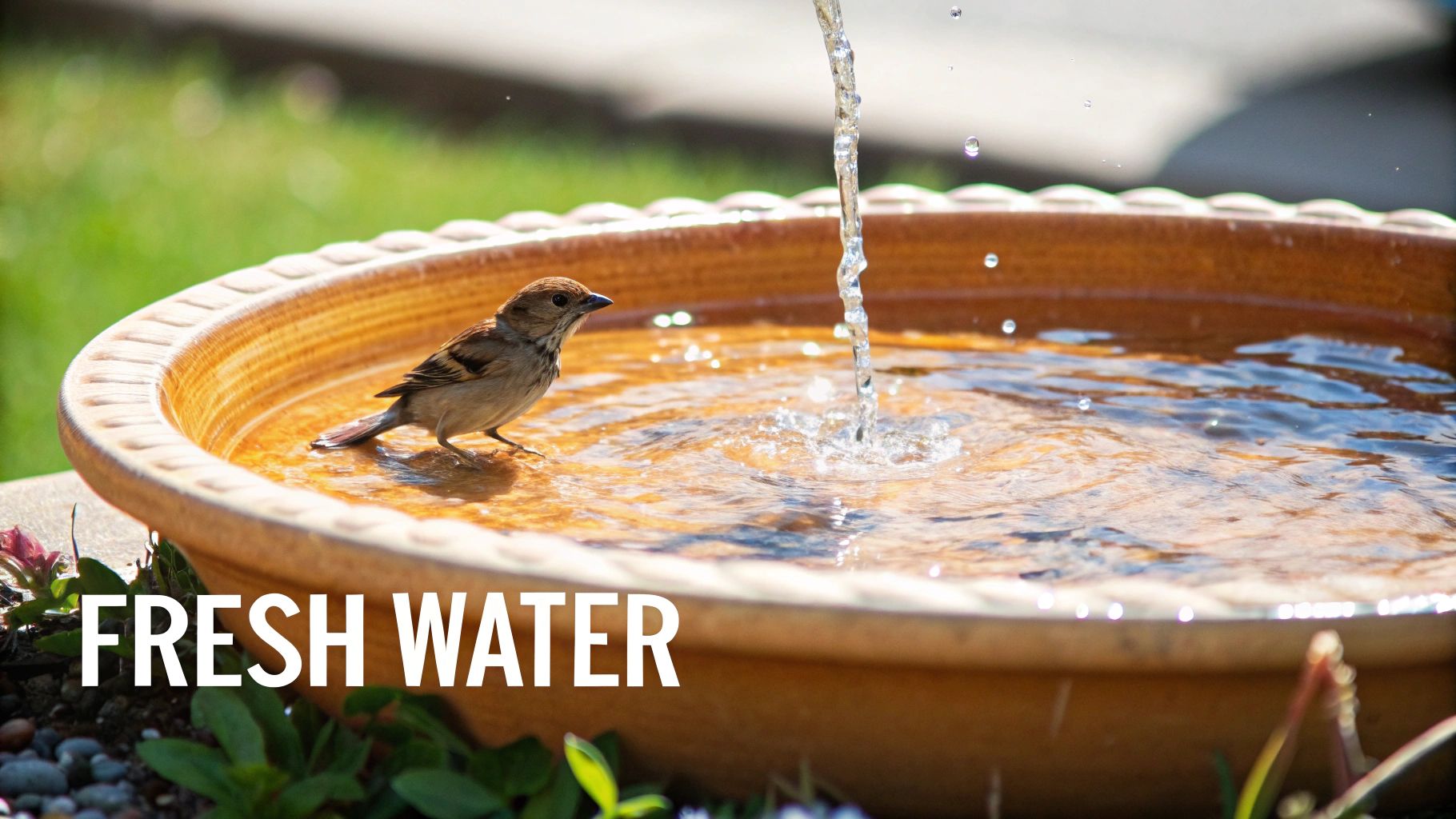
Sure, a well-stocked feeder is a great start. But if you want to know the single best way to attract the widest variety of birds, it's something people often forget: clean, reliable water. It's a simple fact. All birds need to drink and bathe, not just the ones that eat seeds. This makes a bird bath your ultimate secret weapon.
You'll be amazed at who shows up. Many birds that couldn't care less about your feeders—think robins on the hunt for worms or warblers searching for insects—will make a special trip for a dependable drink or a quick splash. Water is absolutely vital for keeping their feathers in top shape for flight and warmth. By adding this one simple feature, you've suddenly made your yard a five-star destination for a much broader range of local birds.
Creating the Perfect Bird Spa
When you're setting up a bird bath, you have to think like a bird. Those deep, slick ceramic bowls might look nice to us, but they're a hazard. Birds can easily slip and drown.
The perfect bird bath is shallow, only about one to two inches deep at the center, with sides that slope gently. This gives them a secure place to stand. If you already have a bath that's too deep, don't worry. Just toss in a layer of pebbles or a few flat rocks to create safe, shallow spots for them to wade.
Where you put it matters just as much. Place the bath in a somewhat open spot, maybe 10-15 feet away from thick bushes where a neighborhood cat could be lurking. This gives visiting birds a clear view of any approaching danger, letting them relax and enjoy their spa day.
The sound of moving or dripping water is like a dinner bell for birds. It signals a fresh, clean source and they can hear it from surprisingly far away, drawing in passersby who might have otherwise flown right over.
The Irresistible Lure of Moving Water
Want to take your water feature from good to great? Add some movement. A still pool of water is fine, but the sight and sound of moving water is something birds just can't resist. You don't need a massive waterfall; a few simple additions can make all the difference.
Consider these easy and effective upgrades:
- A Dripper or "Water Wiggler": These are small, often battery-powered gadgets that create little ripples on the surface. The way the light catches the movement is a powerful visual cue for birds.
- A Solar-Powered Fountain: These are fantastic. They're affordable, sit right in your existing bath, and create a gentle bubbling or spray using only the power of the sun.
- Misters: Hummingbirds go crazy for these. A fine mist sprayed over leaves lets them "leaf-bathe," which is an incredible behavior to watch on a hot afternoon.
Keeping the water fresh is the most important part. You really have to dump, scrub, and refill your bird bath every couple of days. This prevents nasty algae and stops the spread of disease.
And don't forget winter! A simple bird bath heater or de-icer will keep a small patch of water open, providing a literal lifeline for birds when everything else is frozen solid. Make that year-round commitment, and your yard will quickly earn a reputation as the best watering hole on the block.
Landscaping with Birds in Mind
To create a backyard that birds can't resist, you need to think beyond just feeders and birdbaths. The real secret is to build a living ecosystem. When you landscape with birds in mind, you’re not just decorating your yard; you're creating a complete habitat that provides the food, safety, and shelter they're hardwired to find.
This is how you go from being a casual bird-spotting location to a place they truly call home.
The most powerful thing you can do? Plant native plants. These are the local trees, shrubs, and flowers that have grown alongside your region's birds for thousands of years. They offer the exact seeds, berries, nectar, and—most crucially—insects that local bird populations depend on.
Think of it like this: a non-native ornamental plant might look pretty, but to a bird, it's often like a grocery store with empty shelves. Native plants, however, are a fully stocked pantry, offering a reliable food source year-round.
Create a Layered Landscape
A flat, open lawn is a scary place for a small bird. To make your yard feel like a safe and bountiful forest edge, you need to think in layers. By layering your plantings from the ground up, you create a rich, multi-level environment with places to eat, hide, and nest at every height.
A truly bird-friendly yard structure includes:
- Canopy Layer: Tall trees like oaks, maples, or pines are the watchtowers and high-rise apartments of the bird world. They serve as lookout posts and provide nesting sites for larger birds.
- Understory Layer: Smaller trees and large shrubs are the backbone of the habitat. Think dogwoods, serviceberries, or viburnums, which provide nutrient-packed berries and dense cover from predators.
- Shrub Layer: This is where the real action happens. Densely branched shrubs like elderberry or ninebark are critical for safety. You'll see birds dart into a thicket like this in a flash to escape a hawk.
- Groundcover Layer: Low-growing native plants, bunch grasses, and even a healthy layer of leaf litter create essential foraging spots for ground-feeders like towhees and sparrows.
This layered approach perfectly mimics the structure of natural woodlands and gives birds the confidence they need to settle in.
Embrace a Little Bit of Wildness
Here's one of the best tips for helping your backyard birds—and it costs nothing. In fact, it saves you work: let your yard get just a little bit "messy." A perfectly manicured lawn is basically a desert for wildlife.
For example, don't deadhead all your flowers in the fall. Leaving the seed heads on coneflowers and black-eyed susans creates a natural, self-refilling bird feeder that will attract goldfinches and chickadees all winter long.
Another easy win? Create a small brush pile in a forgotten corner of your yard. To you, it's a pile of sticks. To a wren or a sparrow, it’s a five-star hotel offering instant shelter from a sudden storm or a lurking predator.
A "messy" corner with a brush pile or unraked leaves isn't a sign of neglect; it's a deliberate act of habitat creation. It provides the insects, grubs, and shelter that form the foundation of a healthy backyard ecosystem.
Leaving fallen leaves under your shrubs also creates a prime foraging area. You'll be rewarded by the sight of robins and thrushes enthusiastically tossing leaves aside to find insects and worms.
Insects are a critical food source, especially for feeding nestlings. If you're struggling to find native plants or just want to give your feathered friends an extra protein boost, supplementing their diet is a fantastic option. For those curious, you can learn more about where to buy Black Soldier Fly Larvae as a natural and highly nutritious food supplement.
Ultimately, combining native plants with a little thoughtful neglect is the key to attracting wild birds and building a vibrant habitat that will last for years.
Providing Safe Shelter and Nesting Spots
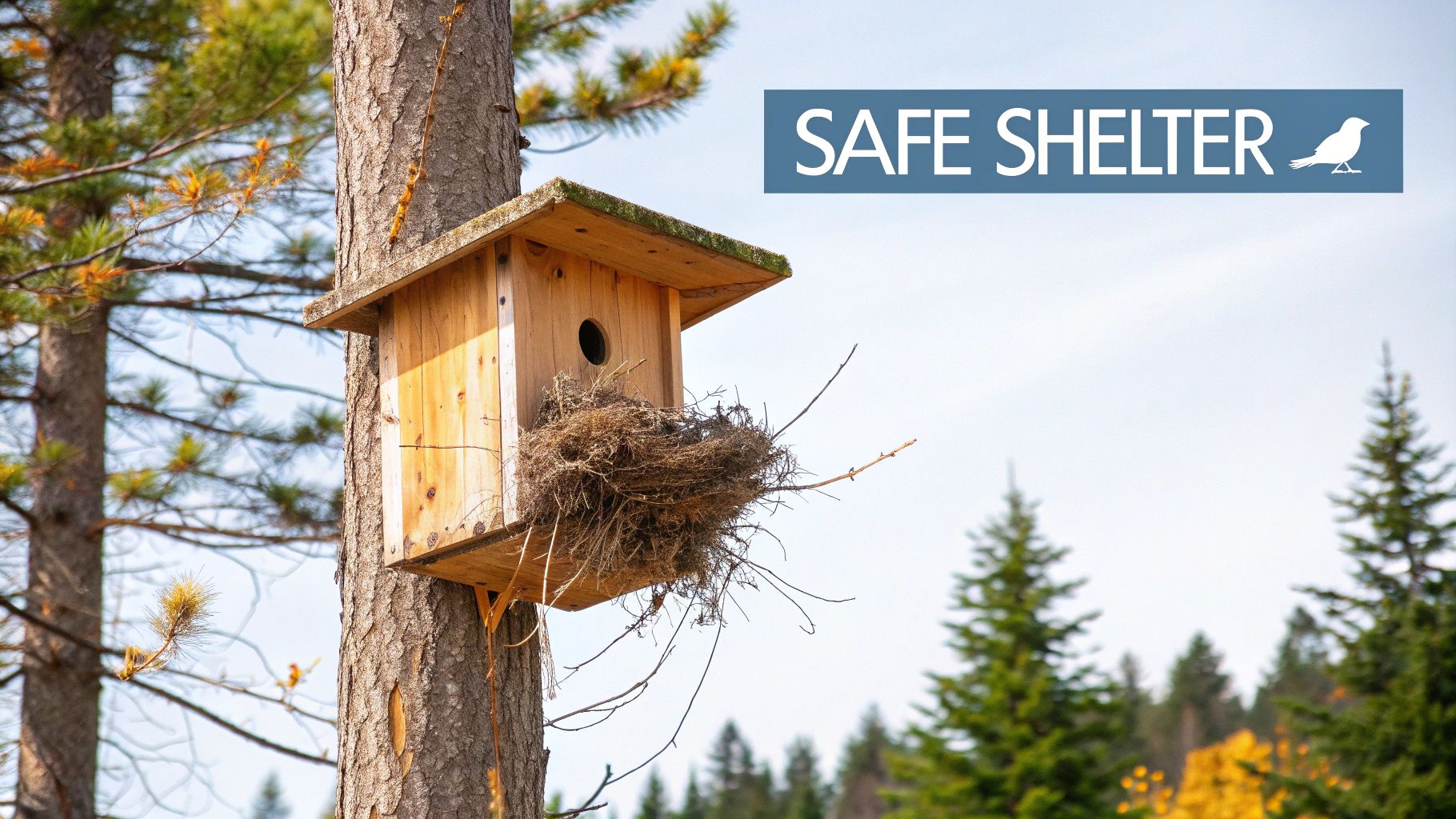
If you want birds to stick around for more than just a quick meal, you need to offer them a safe place to crash. Think of it from their perspective: they're looking for a secure spot to rest, raise a family, and hide from predators or a nasty storm. Providing that security is what turns a simple feeding station into a true, year-round haven.
The best place to start is with your existing landscape. What you plant can make a huge difference. Dense shrubs, thorny bushes, and evergreen trees offer fantastic natural protection. A thick cedar hedge or a sprawling holly bush is basically a fortress for small songbirds, giving them a place to duck into when a hawk circles overhead or to wait out a cold, rainy afternoon.
Choosing the Right Birdhouse
A good birdhouse is like putting up a "For Rent" sign, but it has to be the right kind of house. Birds can be incredibly selective, and the wrong design can be a total deal-breaker—or worse, a death trap.
The single most important feature is the size of the entrance hole. This detail alone dictates which birds can move in.
- Wrens and Chickadees: A tiny 1 1/8-inch opening is just their size.
- Bluebirds and Tree Swallows: They need a bit more room, so look for a 1 1/2-inch entrance.
- Woodpeckers and Screech Owls: These bigger birds require much larger openings, often 2 inches or more.
Matching the hole size to your target species is a simple trick to keep out larger, more aggressive birds that might bully smaller cavity-nesters.
Beyond the entrance, always look for a birdhouse with proper ventilation holes up near the roof and drainage holes in the floor. These aren't optional extras. They keep the inside from turning into an oven on hot summer days and prevent the nest from becoming a soggy mess. And here's a pro tip: avoid any birdhouse with a perch below the entrance hole. It might look cute to us, but it’s just a convenient handle for predators.
Smart Placement for Nesting Success
Where you put the birdhouse matters just as much as its design. For the best results, mount it on a pole or the side of a building, well away from any overhanging branches. This makes it much harder for squirrels and cats to get to it.
As for direction, a good rule of thumb is to face the entrance hole away from the prevailing wind. In many regions, this means pointing it east or south. It’s a small detail that can make a huge difference in shielding the nestlings from driving rain and harsh winds, upping the odds of a successful brood.
A secure nesting spot isn't just a convenience; it's a statement of safety and stability. When a bird chooses your yard to raise its young, you've successfully transitioned from a simple feeding station to a true, functioning habitat.
Finally, don't forget the birds that prefer to build their own nests from scratch. You can give them a helping hand by leaving out some raw materials. A small pile of twigs, pesticide-free grass clippings, or even short strands of yarn can be a huge help. Honestly, watching a robin meticulously weave those materials into its classic cup-shaped nest is one of the most satisfying rewards of this whole endeavor.
Common Questions on Attracting Wild Birds
Even with the best intentions and a yard that seems perfect, questions always come up. It's just part of the fun of learning what works. Let's walk through some of the most common hurdles people face when they're getting started.
So, you've hung a beautiful new feeder, filled it with top-notch seed, and... crickets. The big question on everyone's mind is, "How long will this take?" The honest answer? It varies. Birds are cautious creatures of habit, so it could be a few hours or a few weeks before they trust a new object in their territory.
Want to speed things up? Try making the feeder impossible to miss. A little sprinkle of seed on the ground directly below it or even on the feeder's roof can act like a billboard. Once one curious finch or brave chickadee checks it out, you can bet their friends will follow suit.
Dealing with Unwanted Guests
Ah, the classic backyard dilemma: how to outsmart the squirrels. These furry acrobats are brilliant and persistent, but you can definitely keep them from raiding the buffet.
First, think location, location, location. Try to hang your feeder at least 10 feet away from anything a squirrel could use as a launchpad—think tree branches, deck railings, or the roof of your shed. That buffer zone is your best first defense against their impressive leaping skills.
If placement alone isn't cutting it, it’s time to bring in the right equipment:
- Weight-activated feeders: These are genius. A heavy squirrel lands on the perch, and a little door slides down, blocking access to the seed. Birds are too light to trigger it.
- Baffles: A simple cone or cylinder attached to the pole under your feeder works wonders. It creates a slick, wobbly surface that squirrels just can't get a grip on.
Remember, the goal is to gently deter them, not cause any harm. A combination of smart placement and a good baffle is usually all it takes to reserve your seed for the birds.
Should You Feed Birds All Year?
This one comes up a lot, but ornithologists and experienced birders all agree: feeding birds year-round is a good thing. It doesn't make them "lazy" or stop them from migrating. Think of your feeder as a reliable restaurant they can visit to supplement what they forage for naturally.
During the spring and summer, your feeder is a lifesaver for busy parents trying to feed a nest full of hungry chicks. Many birds seek out high-protein insects during this time, so offering something like dried grubs gives them a massive energy boost. You can learn about the nutritional power of dried grubs for chickens, and that same protein-packed goodness is just as beneficial for wild birds.
Come fall and winter, that same feeder becomes an absolutely critical resource when insects are gone and seeds are buried under snow. A consistent food source helps birds survive frigid nights and brutal weather. So go ahead, keep it full. You’re providing essential support when they need it most.
Ready to offer the ultimate high-protein treat? Pure Grubs offers premium, USA-grown Black Soldier Fly Larvae that wild birds love. Attract bluebirds, robins, and wrens with a nutritious snack they can't resist. Shop Pure Grubs today!