

What to Put in Bird Feeders for Year-Round Visitors
The absolute best things you can put in a bird feeder are foods packed with energy. Think black oil sunflower seeds, nyjer (thistle) seeds, suet, and protein-rich insects. What you choose really comes down to which birds you're hoping to see and the kind of feeder you have. It helps to think of your feeder as a tiny restaurant—different birds have their own favorite meals.
What's on the Menu? A Guide to Bird Feeder Foods
Putting together a backyard buffet that birds can't resist all comes down to one simple idea: match the food to the bird and the feeder. You wouldn't try to serve soup on a flat plate, right? The same logic applies here—tiny nyjer seeds will just spill out of a feeder made for big chunks of cracked corn. Getting this right is the first step to turning a quiet yard into a lively hub for feathered friends.
The idea is to offer a reliable meal that fills in the gaps in a bird's natural diet, especially during lean times like winter or nesting season. A variety of high-quality foods will bring a wider range of species to your window, from the smallest finches to brilliant red cardinals. For more tips on making your yard a go-to spot, check out our guide on how to attract wild birds.
Matching Food to Feeder and Bird
Different feeder designs are built for specific foods and can even help keep squirrels and other pests away.
- Tube feeders are perfect for small seeds that finches and chickadees adore.
- Hopper feeders work great for larger seeds, attracting birds like cardinals and jays.
- Platform feeders offer an open-concept dining space, which is ideal for ground-feeding birds like doves.
The bird feeding hobby is bigger than you might think! The global market is expected to hit USD 2.03 billion by 2035. Tube feeders make up a huge chunk of that—about 40% of the market—since they’re so good for high-energy seeds. But more and more, experienced birders are adding protein-packed treats like dried Black Soldier Fly Larvae (BSFL) to the menu.
To make things simple, here’s a quick reference table to get you started.
Quick Guide to Bird Feeder Foods and Visitors
This table is a great starting point for matching the most popular bird foods with the species they attract and the best feeders for the job.
| Food Type | Attracts These Birds | Best Feeder Type |
|---|---|---|
| Black Oil Sunflower Seeds | Cardinals, Finches, Chickadees, Jays | Hopper, Tube, Platform |
| Nyjer (Thistle) Seed | Goldfinches, Pine Siskins, Redpolls | Finch Tube Feeder |
| Suet Cakes | Woodpeckers, Nuthatches, Wrens | Suet Cage Feeder |
| Cracked Corn | Doves, Jays, Sparrows, Quail | Platform or Ground Feeder |
| Dried BSFL (Insects) | Bluebirds, Robins, Wrens, Chickens | Platform, Dish, or Hopper |
Think of this chart as your foundation. As we dig a little deeper, you'll see how adding high-value supplements beyond the basic seeds can make a huge difference in the health and energy of your local birds.
The Nutritional Powerhouse Your Birds Need
When you think about what to put in your bird feeders, seeds are probably the first thing that comes to mind. But to really help your backyard visitors thrive, you need to look beyond the usual fillers. Think of it like a professional athlete’s diet—they need more than just carbs to perform. Birds are no different; they require high-protein, calcium-rich foods to get through demanding times like nesting, molting, and migration.
This is where a superfood like dried Black Soldier Fly Larvae (BSFL) can make a world of difference. It's not just another treat. It's a powerful supplement that fuels their most challenging activities.
Why Protein and Calcium Are Crucial
Trying to build a strong house with flimsy materials just won't work. The same principle applies to birds. Protein acts as the essential building block for everything from vibrant feathers to strong muscles, while calcium is the foundation for sturdy eggshells and healthy bones.
The surprising thing is that many common bird foods, even popular insect treats like mealworms, are often quite low in calcium. For nesting songbirds and laying hens, this can lead to brittle eggs, putting the entire next generation at risk.
Offering a balanced diet is more than a hobby; it’s a commitment to the well-being of the birds you attract. A nutritionally complete menu helps ensure they have the energy and resources to raise their young successfully and survive harsh seasons.
The bird feeding hobby is booming, with the North American market currently valued at USD 1.09 billion. From dedicated chicken keepers to casual wild bird watchers, everyone is asking the same question: what’s both safe and truly beneficial to feed? High-protein insects like USA-grown Black Soldier Fly Larvae are a fantastic answer, delivering 42% protein and a superior calcium boost for eggshell strength.
The Superior Choice: BSFL Over Mealworms
Both BSFL and mealworms are common insect treats, but when you look at the nutrition label, they are worlds apart. The most critical difference is the calcium content.
To see just how different they are, let’s put them head-to-head.
Nutritional Showdown: BSFL vs. Mealworms
| Nutrient | Pure Grubs BSFL | Typical Dried Mealworms |
|---|---|---|
| Protein | 42% | ~50% |
| Fat | 32% | ~25% |
| Calcium | 1.5% | 0.05% |
| Phosphorus | 0.8% | ~0.9% |
| Calcium:Phosphorus Ratio | 2:1 (Ideal) | 1:18 (Poor) |
As you can see, the difference in calcium is staggering. Dried BSFL can contain up to 85 times more calcium than typical dried mealworms, making them the undisputed champion for avian health.
This isn't just a number on a chart; it has real-world consequences. For a laying hen, it means producing eggs with stronger, less porous shells. For a wild bluebird, it means having the bone density and energy needed to raise a healthy brood. Making the simple switch to BSFL delivers tangible, positive results you can see in your flock’s vitality.
For a deeper dive into their diets, you can learn more about what wild birds eat in our comprehensive guide.
The interest in responsible bird feeding is only getting stronger, as the projected growth of the global bird feeder market shows.

This chart highlights a clear upward trend, reflecting a growing community of enthusiasts who are dedicated to providing the best possible nutrition for their feathered friends.
Customizing Your Feeders for Different Species
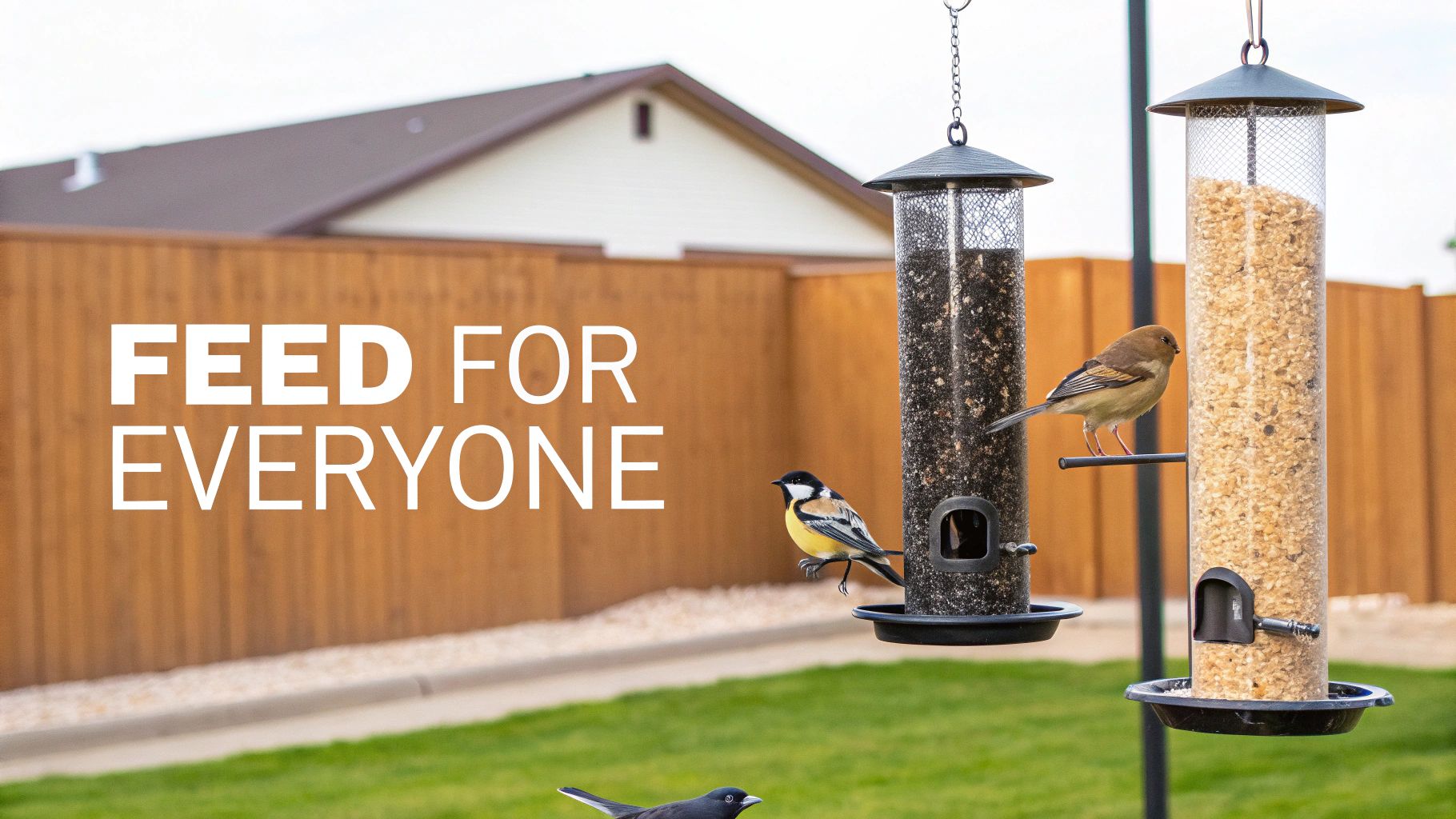
Think of your backyard feeding station as a restaurant with a very diverse menu. A tiny goldfinch isn't looking for the same meal as a hardy backyard hen or a dabbling duck. The real secret to creating a bustling, vibrant bird sanctuary is understanding these different palates and customizing the offerings for every guest.
This means getting past the "one-size-fits-all" bag of birdseed. When you start thinking about exactly what to put in bird feeders for each type of visitor, you not only attract a stunning variety of wild birds but also keep your domestic flocks healthy, happy, and productive.
Serving Your Wild Songbird Visitors
Attracting specific wild birds really comes down to putting out their favorite foods. Cardinals, for instance, have powerful, conical beaks designed to crack open larger, tougher seeds. That’s why you’ll see them flocking to feeders stocked with safflower and black oil sunflower seeds.
Smaller birds like chickadees and finches, on the other hand, need tiny, high-energy seeds they can easily manage. A great strategy is to set up a few specialized "food stations" around your property to draw in a colorful mix of visitors.
- For Cardinals and Jays: A hopper or platform feeder filled with black oil sunflower seeds and safflower seeds is a guaranteed hit.
- For Finches and Siskins: You'll want a tube feeder with small feeding ports to serve up nyjer (thistle) seed.
- For Woodpeckers and Nuthatches: Offer suet cakes in a cage feeder. This high-fat treat is a lifesaver for them, especially during the cold winter months.
- For Bluebirds and Robins: These birds are primarily insect-eaters. A platform feeder with dried Black Soldier Fly Larvae (BSFL) provides an irresistible, protein-packed meal.
A thoughtfully stocked feeding station does more than just bring birds to your window. It supports them through a lot of tough times. The high-fat content in seeds and suet provides critical energy for winter survival, while the protein from insects is essential for nesting, raising young, and fueling long migrations.
What to Feed Your Backyard Chickens
For those of us with a flock of chickens, treats are more than just a fun snack—they're a fantastic tool for boosting health and happiness. Chickens are omnivores and thrive on variety, but it’s crucial that their treats provide real nutritional value, not just empty calories.
The best treats are those that support specific health goals, like stronger eggshells and lustrous feathers. This is where high-calcium options really prove their worth.
- For Stronger Eggshells: A daily sprinkle of dried BSFL can make a huge difference. They have a near-perfect calcium-to-phosphorus ratio that directly contributes to thicker, more durable eggs. You can dig deeper into the unique benefits of black soldier fly larvae for birds in our detailed guide.
- For Entertainment and Health: A hanging cabbage or a handful of leafy greens gives your flock something fun to do and provides a nice vitamin boost.
- Safe Grains: Cooked oats or cracked corn are excellent sources of energy, particularly when the weather turns cold.
Just remember to offer treats in moderation. They should only account for about 10% of your flock’s total diet to make sure they're still getting the balanced nutrition from their main feed.
Best Foods for Ducks and Waterfowl
Ducks have their own set of needs, especially when it comes to how they prefer to eat. They are natural foragers who love to dabble in water, so offering treats that float is a wonderful way to enrich their day and encourage their instincts.
Please, avoid feeding ducks bread. It offers them zero nutritional value and can lead to serious health issues. Instead, stick to wholesome, safe alternatives they'll love.
- Floating Treats: Dried BSFL are perfect for ducks because they float, turning snack time into an engaging and fun activity.
- Safe Veggies: Chopped lettuce, cucumber slices, and corn (fresh or thawed) are all healthy choices.
- Grains and Oats: Uncooked, rolled oats are a definite favorite and provide good, clean energy.
By tailoring the menu at each feeder, you can transform your backyard from a simple pit stop into a five-star dining experience that supports the well-being of every single bird that drops by.
Seasonal Feeding Strategies for Healthy Birds
A bird’s dietary needs are always in flux, changing right along with the seasons. It’s a lot like how we swap heavy stews for light salads when the weather warms up—birds also need different kinds of fuel to thrive throughout the year.
If you can get in sync with this natural rhythm, you'll provide the right support at exactly the right time. What you offer in your feeders in January should be completely different from your spread in June. This simple adjustment can make all the difference in helping your feathered friends survive a blizzard, raise healthy chicks, or complete an exhausting migration.
Winter Fuel for Survival
Once the temperature plummets, a bird's life becomes a constant search for calories. Natural food sources are buried under snow or have disappeared entirely, so their main job is finding enough energy just to stay warm. During this unforgiving season, high-fat and high-energy foods are nothing short of a lifeline.
- Suet Cakes: This brick of rendered fat is a calorie bomb, making it a winter staple for woodpeckers, chickadees, and nuthatches.
- Black Oil Sunflower Seeds: A crowd-pleaser for a reason. Their high oil content delivers a serious energy punch that appeals to a wide variety of birds.
- Dried BSFL: Don’t forget the insects! Treats like dried Black Soldier Fly Larvae are changing the game in sustainable bird feeding, with market demand jumping by 25% each year. Their 14% fat content provides the critical energy birds need to shiver through the cold. That's especially important when you consider that up to 70% of songbirds rely on feeders during their travels. Brands like Pure Grubs offer top-quality, USA-grown BSFL that also contribute to 20% stronger eggshells in both wild birds and backyard hens. You can dig into the full market overview to see these trends for yourself.
Think of your winter feeder as a critical refueling station. Every high-fat morsel you provide helps birds generate the body heat they need to make it through another freezing night.
Spring and Summer Nesting Support
Spring and summer are all about the next generation. It’s an incredibly demanding time filled with nest-building, egg-laying, and feeding a brood of endlessly hungry chicks. This is when the need for protein and calcium goes through the roof.
Protein is the building block for growth and strong feathers, while calcium is absolutely vital for forming healthy eggshells. This is the perfect time to offer insect-based treats. Dried BSFL are an ideal choice because they are naturally high in calcium, giving nesting females a much-needed boost. By providing this support, you help ensure they can lay strong eggs without draining their own bodies of essential minerals.
Autumn Migration Power-Up
As the long summer days shorten, many birds get ready for the grueling journey of migration. They have to pack on fat to fuel flights that can cover thousands of miles. To give them a helping hand, it’s time to switch your feeder menu back to those high-fat, energy-rich foods.
By offering a mix of black oil sunflower seeds, suet, and protein-packed BSFL in the fall, you give migrating birds the perfect fuel blend. It’s the nutritional send-off they need to arrive at their wintering grounds strong and healthy, completing the annual cycle of care.
Common Feeding Mistakes and How to Avoid Them
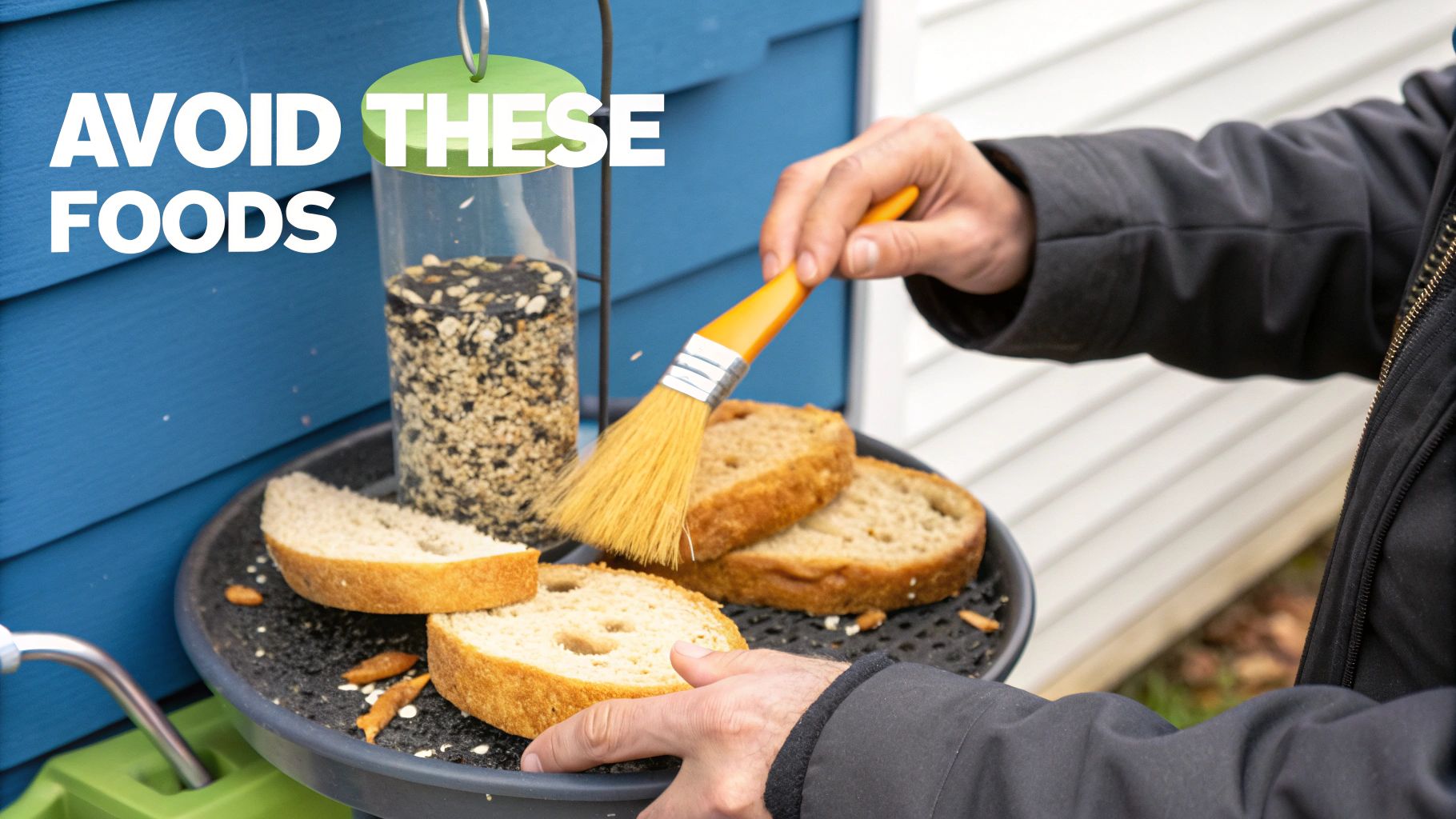
Feeding the birds is a wonderful hobby, but it comes with a real responsibility. It’s just as important to know what not to put in your feeders as what you should. A lot of well-meaning folks accidentally offer foods that can do more harm than good, turning a backyard buffet into a potential hazard.
Let's walk through some of the most common mistakes so you can make sure your feeding station is a truly safe and helpful spot for your feathered friends.
Foods You Should Never Offer
A bird's digestive system is a finely-tuned machine, built to run on natural fuel. When we give them the wrong stuff, it's like putting diesel in a gasoline engine—it just gums up the works and can lead to serious illness.
So, what are the biggest offenders? Here are the items that should never end up in your feeder:
- Bread and Baked Goods: This is a big one. Bread, crackers, and cookies are the ultimate junk food for birds. They fill tiny stomachs with empty calories, leaving no room for the high-fat, high-protein foods birds actually need to survive.
- Salted Nuts or Seeds: Birds can't process much salt. Even a little can cause severe dehydration and kidney failure. Always offer unsalted versions.
- Table Scraps and Leftovers: Processed foods, lunch meats, and anything with seasonings or preservatives can be toxic to birds. Spoiled food is also a no-go, as it can be loaded with harmful bacteria.
- Raw Meat: This is a magnet for bacteria. It spoils incredibly fast and can spread disease to birds and other wildlife that might visit.
Think of your feeding station like a little restaurant. You have a duty to serve your guests safe, clean, and appropriate food. It's our responsibility to make sure the meals we offer are helping, not hurting.
The Critical Role of Feeder Hygiene
Imagine eating off the same dirty plate for weeks. That's what birds face at an uncleaned feeder. When birds gather, droppings and damp, moldy seed create a breeding ground for diseases like salmonella, which can spread like wildfire.
Regular cleaning isn't just a chore; it's a non-negotiable part of feeding birds ethically.
A simple routine is all it takes. At least once every two weeks—or more often if it's busy or rainy—take your feeders down for a good scrub. A solution of one part bleach to nine parts water works perfectly. Rinse them thoroughly, let them dry completely, and then you're ready to refill. This small habit can prevent a devastating disease outbreak.
The Hidden Dangers of Imported Insect Treats
Finally, let's talk about where your treats come from. When it comes to dried insects, not all products are created equal. Many of the cheaper, imported options flooding the market have little to no quality control, and they can be contaminated with nasty stuff like heavy metals.
To keep your birds safe, always choose USA-grown and tested products. It’s the only way to be sure you're offering a clean, nutritious snack.
Brands like Pure Grubs are a great example of doing it right. They provide premium, USA-grown Black Soldier Fly Larvae that come from FDA-compliant facilities. Every single batch is tested for safety, so you know they’re free from contaminants. That commitment to quality makes all the difference for anyone who truly cares about the well-being of their birds.
Your Bird Feeding Questions Answered
Even the most seasoned bird enthusiasts run into questions. When you're responsible for the well-being of your feathered visitors, getting good, clear answers is key. It can be the difference between a frustrating mess and a vibrant, thriving backyard.
Let's walk through some of the most common questions people ask about what to put in their feeders and how to keep things running smoothly. Here are some straightforward answers to help you feed your birds with confidence.
How Often Should I Clean My Bird Feeders?
This is a big one. To keep harmful bacteria and diseases like salmonella from spreading, you absolutely must clean your feeders regularly. A good rule of thumb is at least every two weeks.
However, if you've got a really busy feeder or have seen a lot of rain, bumping that up to a weekly cleaning is a much safer bet.
Just use a simple solution of one part bleach to nine parts water to give everything a good scrub. The most critical step? Rinse it thoroughly and let it air dry completely before refilling. This simple habit prevents mold from taking hold in damp seed.
Think of it this way: you wouldn't eat off a dirty plate for two weeks straight, and neither should the birds. Keeping their "diner" clean is one of our biggest responsibilities, ensuring it's a safe haven, not a source of sickness.
Can I Feed Kitchen Scraps to Birds?
It really depends on which birds you're talking about. For backyard chickens, some scraps are okay in moderation—think leafy greens or a little cooked rice. But you should always steer clear of avocado, raw potato skins, onions, and anything processed.
For wild songbirds, the answer is simpler: just don't do it. Things like bread, crackers, and leftovers offer zero real nutrition and can attract unwanted visitors like mice and rats. And never, ever offer wild birds anything salty, sugary, or spoiled. Stick to high-quality, bird-specific foods.
Why Are Birds Not Coming to My New Feeder?
First off, take a deep breath. Patience is your best friend here. It can easily take a few weeks for local birds to discover a new feeder and decide it's a safe place to eat.
If you've been waiting for a while and still see no action, run through this quick checklist:
- Placement: Is the feeder located in a spot that feels safe? Birds love having shrubs or trees nearby so they have a quick escape route from hawks or other predators.
- Freshness: Take a look at the food. Birds can be surprisingly picky and will turn their beaks up at old, clumped, or moldy seed. Is it still fresh?
- Attraction: Is the menu exciting enough? Sometimes, adding a high-value treat like dried BSFL can be the secret weapon that acts like a magnet, drawing in curious birds much faster than a standard seed mix.
Are Black Soldier Fly Larvae Safe for All Birds?
Yes, absolutely. High-quality, dried Black Soldier Fly Larvae are an incredibly safe and nutritious treat for a huge range of birds. We're talking wild songbirds, backyard chickens, ducks, geese, and even turkeys.
The big draw is their naturally high levels of calcium and protein, which are fantastic for promoting healthy feather growth and strong eggshells. The key is to make sure you're getting them from a reputable, USA-based supplier. This ensures they're free from contaminants like heavy metals, giving you total peace of mind.
At Pure Grubs, our whole mission is to provide the safest, highest-quality treats for your flock. Our USA-grown Black Soldier Fly Larvae are bursting with the calcium and protein your birds need to truly thrive. Give them a treat you can trust and watch your backyard come to life. Discover the difference at https://puregrubs.com.