

How to Attract Cardinals to Feeder
There’s nothing quite like that flash of brilliant red against a snowy landscape. It's an image that sticks with you, and it’s why so many of us are eager to bring these stunning birds into our yards. But attracting cardinals is less about luck and more about getting three simple things right: the right food, a stable feeder, and a safe location.
Why We Love Seeing Cardinals in Our Backyards
Cardinals are more than just pretty faces. Named the official bird of seven U.S. states, they represent a kind of steadfast loyalty, bringing a unique vibrancy to our gardens and backyards.
This guide will show you how to turn your yard into a place they want to be. We'll get into the specifics of what these beautiful birds need—from the seeds they absolutely love to the kind of sheltered, safe spaces they seek out.
The Charm of the Redbird
Cardinals, often called “redbirds,” stick around all year. They don't migrate, which means if you create the right environment, you can enjoy their company through every season. This makes them wonderfully reliable and rewarding guests for anyone who loves watching birds.
And it seems a lot of us do. Bird feeding is a massive pastime, with cardinals being one of the most welcome visitors. A surprising 73% of U.S. households have tried their hand at feeding birds, making it a critical food source for them, especially when winter gets tough. You can dig into more bird feeding trends from the Cornell Lab of Ornithology to see just how popular it is.
This isn't about guesswork; it's a clear, practical roadmap. The goal is to learn how to pick the right feeders, create a secure environment, and turn your backyard from just another patch of grass into a true cardinal sanctuary.
To really succeed, you need to think like a cardinal. They're cautious birds by nature. They want to see dense shrubs, thickets, or trees nearby that offer a quick escape from predators. When you cater to these fundamental needs for food and safety, you create a haven they’ll return to again and again.
Selecting the Right Feeder and Seeds for Cardinals
If you want to see that brilliant flash of red at your feeder, you have to start thinking like a cardinal. What makes a backyard cafe inviting for them? It really boils down to two things: a sturdy place to land and a menu they can’t resist. Their strong, cone-shaped beaks are built for a specific kind of dining experience, and catering to that is the key.
Unlike tiny finches that can dangle from just about anywhere, cardinals are a bit more particular. They’re a medium-sized bird and prefer a solid, stable spot where they can plant their feet and face their food. They just don't feel secure on a feeder that’s swinging in the breeze.
Choose Feeders That Offer Stability
Cardinals will often skip feeders that wobble or force them into awkward positions. Those small, lightweight tube feeders with tiny perches? They’ll usually pass them by. What you want is something solid that gives them the confidence to settle in and eat.
These are the feeder styles that cardinals consistently flock to:
- Hopper Feeders: You might know these as "house feeders." They look like little houses, and the design is perfect for cardinals. The roof keeps a good amount of seed dry, and they almost always have a wide ledge or tray that provides a comfortable perch.
- Platform Feeders: Simple, yet incredibly effective. A platform (or tray) feeder is just an open tray that gives cardinals all the room they need to land, move around, and eat without any trouble. It’s an open invitation.
- Large Tube Feeders with Trays: Have a tube feeder already? You can make it cardinal-friendly. Just add a seed tray to the bottom. This simple addition creates that stable platform they crave and lets them easily reach the seed ports.
Backyard birding has become incredibly popular, and the market reflects that. The global bird feeder market was valued at $1.2 billion in 2024, and with that growth comes a ton of innovation. You can find more details about the bird feeder market's expansion on Datahorizzon Research. For us, it just means finding the perfect cardinal-friendly feeder is easier than ever.
The infographic below really nails down the three pillars of attracting cardinals: the right strategy, the right seeds, and a safe setup.
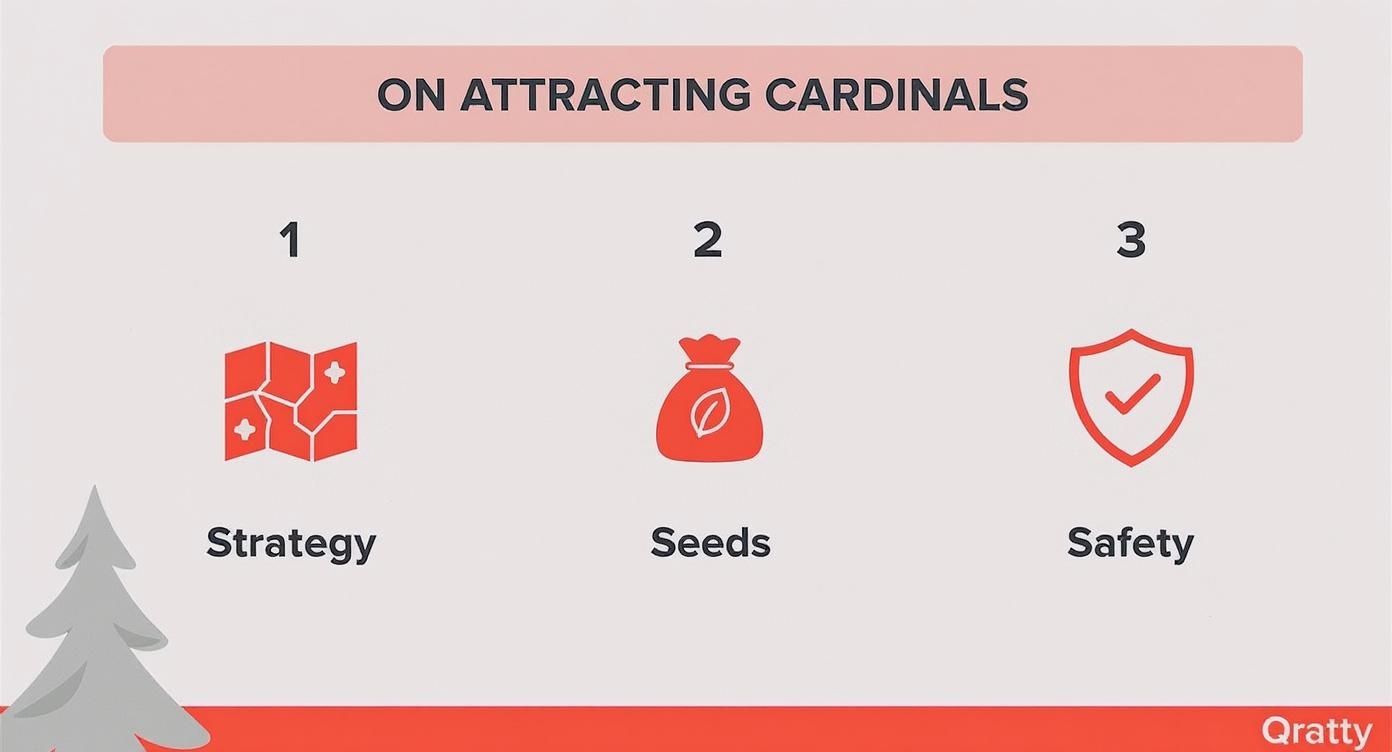
Think of it as a blueprint: combine a stable feeder with high-energy food in a place where they feel secure, and you've got a recipe for success.
Stock Your Feeder with Cardinal Favorites
Once you've got the hardware sorted, it's all about the food. Cardinals have those powerful beaks for a reason—they're designed to crack open tough shells and get to the good stuff inside.
Pro Tip: Try to keep your feeders full, especially first thing in the morning and just before sunset. Cardinals are classic early birds and late diners. If they show up for breakfast and find the feeder empty, they'll likely find a more reliable spot elsewhere.
To make your feeder the most popular spot on the block, stock it with these:
- Black Oil Sunflower Seeds: This is the absolute, hands-down favorite. The shells are thin enough for cardinals to crack open easily, and the kernels are loaded with the fat and protein they need to thrive, especially through a cold winter.
- Safflower Seeds: Many birders call this the "magic seed" for a reason. Cardinals love it, but most squirrels, grackles, and starlings find it bitter and will leave it alone. It's a fantastic way to offer an exclusive dining experience for your target birds.
- Supplemental Protein Treats: When nesting season rolls around in the spring and summer, cardinals are working overtime to raise their young. This is a great time to offer a protein boost. High-protein treats like dried Black Soldier Fly Larvae provide crucial calcium and protein that support healthy chick growth. You can explore a variety of options in our guide to the best bird feeder food.
For a quick overview, this cheat sheet breaks down the best options to get started.
Cardinal Feeder and Food Cheat Sheet
| Item | Type | Why Cardinals Love It | Pro Tip |
|---|---|---|---|
| Black Oil Sunflower | Seed | High fat content and thin, easy-to-crack shells. The #1 choice. | Buy in bulk to ensure your feeder never runs empty, especially in winter. |
| Safflower Seed | Seed | Thick shell is easy for cardinals to open but deters squirrels and grackles. | Mix with sunflower seeds at first to introduce it to hesitant birds. |
| Hopper Feeder | Feeder | Sturdy perching area and a roof that keeps seed dry from rain and snow. | Look for one with a large capacity so you don't have to refill it daily. |
| Platform Feeder | Feeder | Open, spacious design provides easy access and a comfortable dining spot. | Choose a model with drainage holes to prevent seed from getting waterlogged. |
Ultimately, the formula is simple. Pair a stable, accessible feeder with a consistent supply of these high-value foods, and you’ll create a dependable feeding station that cardinals will return to day after day.
Where to Place Your Feeder for Maximum Cardinal Comfort
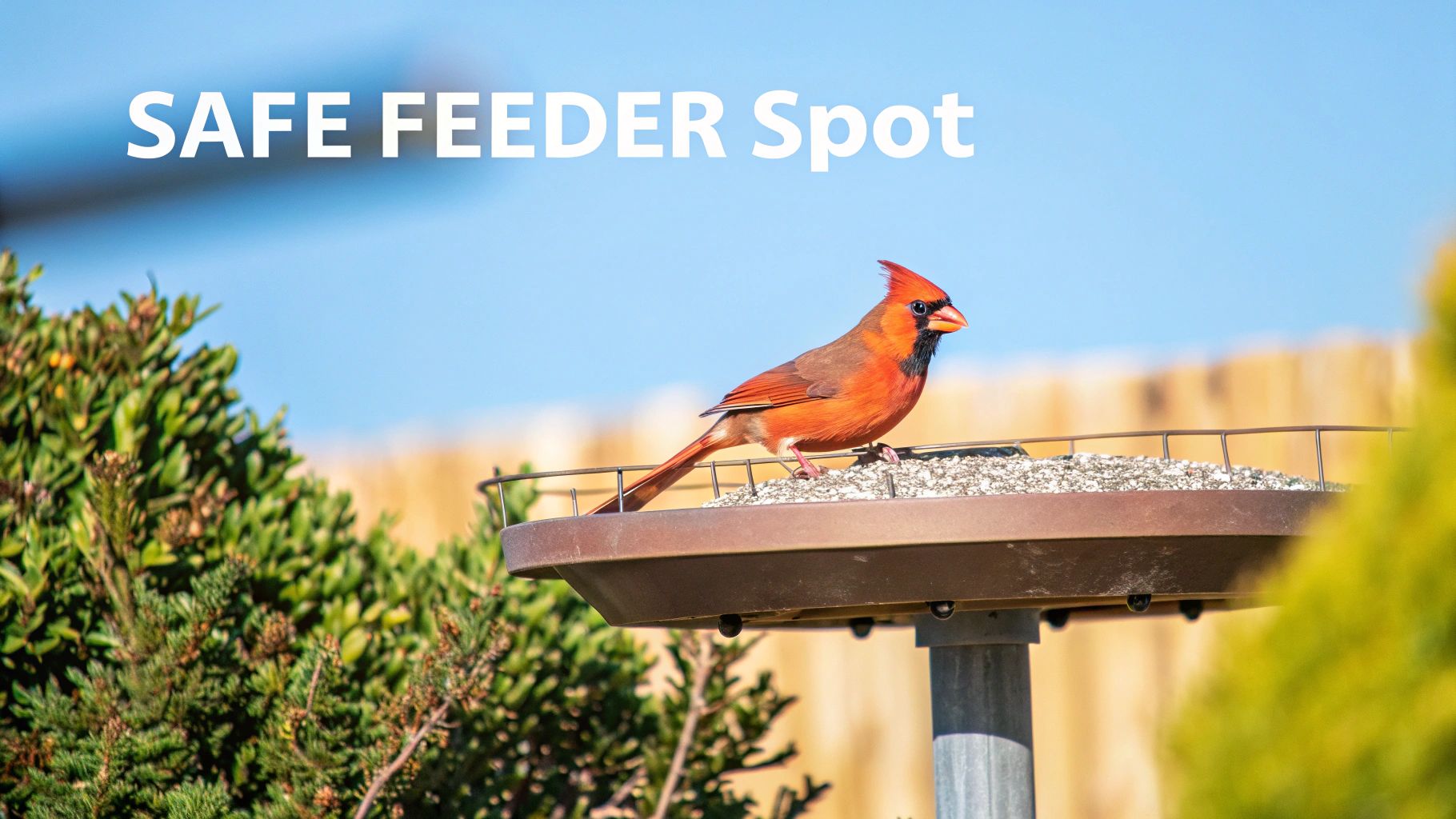
You can have the best feeder filled with the most delicious seeds, but if you hang it in the wrong spot, cardinals simply won't show up. These birds are hardwired for caution, always on the lookout for danger. To get them to visit, you have to place the feeder somewhere they feel safe enough to let their guard down for a meal.
A cardinal's worst nightmare is being caught out in the open, exposed and vulnerable to hawks. But they also won't venture into a feeder that's buried so deep in the bushes they can't see what's coming.
The secret is finding that perfect balance between access and safety.
Finding the Sweet Spot: Cover and Clearance
Try looking at your yard through a cardinal's eyes. They’re thinking one thing: "If a predator shows up, where can I dive for cover?" That nearby shrub, evergreen, or thicket is their emergency exit, and they won't feed far from it.
The ideal location is what birders call an "edge habitat." This means hanging your feeder in a somewhat open area that's still conveniently close to protective cover. Aim for about 10 to 15 feet away from the nearest dense bushes or trees. This distance isn't random; it's a strategic sweet spot.
- Close enough for a quick escape: When a hawk flies over, the cardinal can vanish into the safety of the branches in a flash.
- Far enough for a clear view: It prevents ground predators, like neighborhood cats, from using the foliage as camouflage for a surprise ambush.
Making this one change can be a game-changer. You'll see cardinals watching from the safety of the trees, and once they decide the coast is clear, they’ll feel confident enough to fly down for a snack.
You're not just offering food; you're offering them peace of mind. A cardinal that feels safe is a cardinal that comes back every day, often with its mate and young ones in tow.
Getting the Height Just Right
Beyond where you place it in the yard, how high you hang the feeder also makes a big difference. If it’s too low, cardinals become an easy target for ground-based threats.
For most backyards, a height of 5 to 6 feet off the ground is perfect. This elevation is a win-win for bird safety.
- It keeps ground predators at bay: Most cats and other critters won't bother a feeder hanging at this height.
- It feels natural for cardinals: They're used to foraging in low shrubs and small trees, so this height is high enough to feel secure but still well within their comfort zone.
Take a look around your yard. Do you have a spot near a lilac bush, a thick hedge, or a group of small trees? Pace out about 12 feet from that cover, hang your feeder around shoulder height, and you’ve just rolled out the welcome mat for your local cardinals. Thoughtful placement like this is one of the most powerful things you can do to bring those brilliant red birds to your feeder all year long.
Building a Complete Cardinal-Friendly Habitat

Putting out a feeder filled with sunflower seeds is a great first step, but if you want to turn your yard into a true cardinal sanctuary, it's time to think bigger. The real secret is to stop thinking of your yard as just a feeding station and start seeing it as a complete territory.
When cardinals have everything they need—food, water, shelter, and safe nesting spots—they have no reason to leave. This is how you go from having occasional visitors to hosting a resident pair year-round.
Don't Forget the Water
Water is often the most overlooked piece of the puzzle, yet it's absolutely critical. All birds need it for drinking and bathing, and providing a reliable source can be a bigger draw than any feeder.
A simple bird bath is all it takes. Cardinals prefer shallow basins, so aim for a depth of no more than 2 to 3 inches. This lets them wade in comfortably without feeling overwhelmed. If you want to take it up a notch, add a small dripper or a solar-powered wiggler. The gentle sound and movement of water is like a flashing neon sign, signaling a fresh, clean source that birds can spot from high above.
Pro-Tip: A heated bird bath in the winter will make your yard the neighborhood hotspot. When every other puddle and pond is frozen solid, offering accessible water is a lifeline that saves birds precious energy.
Just like your feeder, place the bird bath near some protective cover—about 10 to 15 feet away from dense shrubs is perfect. This gives them a safe place to retreat and preen their feathers without feeling exposed. For more tips on creating an inviting space, you can learn how to attract wild birds with other habitat improvements.
Plant for Food, Shelter, and Security
Your landscaping choices can make or break your efforts to attract cardinals. They are naturally a bit shy and need dense cover to feel secure. By planting native trees and shrubs, you're not just decorating; you're building a five-star cardinal resort.
The best plants pull double duty, offering both food and shelter.
- Natural Food Sources: Berries are a huge part of a cardinal's natural diet. Did you know the brilliant red of a male cardinal comes from pigments found in the berries they eat? Plant native, fruit-bearing shrubs like dogwood, serviceberry, sumac, and winterberry to supplement your feeders.
- Safe Nesting and Cover: Cardinals build their nests surprisingly low to the ground, usually just 4 to 8 feet up. They actively seek out dense, tangled shrubs and thickets that hide them from predators. Evergreens like spruce and juniper are fantastic for year-round shelter, while thorny bushes and wild grapevines provide the perfect structure for a well-hidden nest.
By creating this layered ecosystem, you give them a reason to stick around long after the feeder runs dry. A single pair might raise a few broods a year, and having plenty of nesting options ensures they see your yard as the perfect place to raise a family.
Troubleshooting Your Cardinal Feeder
Even with the best intentions, you're bound to run into a few snags. Sometimes it’s a four-legged bandit, and other times it’s just the mess. Staying on top of these little issues is what keeps your cardinals coming back, safe and sound.
A clean feeder is non-negotiable. It's the most important thing you can do for the health of your backyard birds. Old, wet seed is a breeding ground for mold and bacteria, which can make birds sick.
Set a simple routine. Once every couple of weeks (or at least once a month), take it down for a deep clean. A quick scrub with a solution of one part bleach to nine parts water does the trick. Just rinse it incredibly well and let it dry completely in the sun before you refill it.
Outsmarting Feeder Thieves
Ah, squirrels. They’re the number one headache for anyone trying to feed birds. Their clever acrobatics can drain a feeder in no time, but you can definitely win this battle.
A good baffle is your best friend. This is just a simple dome or cone that you place above a hanging feeder or below a pole-mounted one. It creates a barrier they just can't get around. For the really determined ones, a weight-activated feeder is worth every penny. The feeding ports slam shut under the weight of a squirrel but stay open for a lightweight cardinal.
Pro Tip: Your seed choice is a powerful deterrent. You can often solve your pest problems simply by changing what's on the menu, making your feeder far less attractive to the troublemakers.
Handling Pushy Birds
Sometimes the problem isn't squirrels but other birds. Grackles, starlings, and even the occasional territorial blue jay can be real bullies, hogging the feeder and scaring off more timid birds like cardinals.
If you see this happening, try this simple fix: switch to 100% safflower seed.
Cardinals absolutely love it. But most of the bully birds—and squirrels, for that matter—find its taste bitter and will quickly decide to find lunch elsewhere. This one change can restore the peace at your feeder almost overnight. By actively managing these common problems, you'll create a reliable, stress-free spot cardinals can count on.
Common Questions About Attracting Cardinals
Even after you've set up the perfect feeder with all their favorite foods, questions always pop up. Let's walk through some of the most common things I hear from other bird watchers who are just getting the hang of bringing cardinals to their yards.
How Long Does It Take for Cardinals to Find a New Feeder?
This is where your patience really comes into play. It can take anywhere from a few days to a few weeks for cardinals to decide a new feeder is safe. They're cautious by nature and will often watch a new setup from a distance before they ever land on it.
To speed things up, make sure the feeder is visible from nearby trees and shrubs. Fill it with a fresh batch of black oil sunflower seeds—that's the ultimate welcome sign. You can even scatter a handful of seeds on the ground below the feeder to catch their eye while they're foraging.
Why Did the Cardinals Suddenly Disappear?
It's always a little jarring when your regulars suddenly vanish, but don't panic. This is usually temporary. The most common culprit is a predator nearby, like a hawk circling overhead or a neighborhood cat on the prowl. The cardinals will simply lay low for a few days until they feel the coast is clear.
Seasonal shifts are another big factor. In late summer and early fall, the woods are full of natural foods like berries and insects, so your feeder becomes less of a priority. Also, double-check that your seed hasn't gotten wet or moldy; they won't touch spoiled food. They almost always come back once natural food sources dwindle. To learn more about how their diets change, you can check out our guide on what wild birds eat throughout the year.
Will Cardinals Use My Feeder in the Summer?
Yes, they definitely will! But you'll notice their behavior changes a bit. Summer is nesting season, and their focus shifts to finding high-protein insects to feed their hungry nestlings.
They’ll still stop by for seeds, just maybe not as often. During the hot months, a clean, fresh bird bath becomes a huge draw. Honestly, providing a reliable water source is one of the best ways to keep them coming back all summer long.
What Direction Should a Cardinal Feeder Face?
There's no single magic direction, but the main goal is to protect the feeder from the worst of the weather. I try to position mine so it’s shielded from the strong winds that whip through my yard. This stops the seed from blowing out and makes it easier for the birds to get a good perch.
It can also help to place it where it gets a bit of morning sun, which helps dry out any dew and keeps the seed fresh. At the end of the day, though, location beats direction. A feeder that's close to protective cover is always the best bet, no matter which way it’s facing.
Ready to provide a high-protein boost that cardinals and other songbirds need, especially during nesting season? Pure Grubs offers premium, USA-grown dried Black Soldier Fly Larvae to support healthy birds and strong families.