

Finding the Best Bird Feeder Food for Your Backyard
So, what's the absolute best bird feeder food out there? The truth is, it really depends on which birds you're hoping to see at your feeder. While black-oil sunflower seeds are a fantastic all-rounder, the real secret to a lively backyard is offering a varied menu that turns your space into a go-to spot for all kinds of feathered friends.
Your Guide to Attracting More Backyard Birds
Picking the right bird food is a bit like being a chef for your local wildlife. Once you understand what different species crave, you can put together a menu that makes your yard the most popular diner in the neighborhood. This is about more than just tossing out some seeds; it's about making smart choices to attract a diverse and colorful flock.
Think of it like this: some of your friends might love a good steakhouse, while others are all about the salad bar. Birds are the same—they have their own preferences. Offering just one type of food is like opening a restaurant that only serves a single dish. You'll get some regulars, but you'll miss out on a much bigger crowd. For a yard buzzing with activity, variety is everything.
Start with the Crowd-Pleasers
If you're just getting started, it's a good idea to focus on the foods that appeal to the widest range of common backyard birds. These are the staples that will get your feeder noticed fast.
- Black-Oil Sunflower Seeds: These are the undisputed champions of the bird feeder world. They're packed with high-energy fat, and their thin shells are a piece of cake for smaller birds like finches and chickadees to crack open.
- High-Energy Suet: This is an absolute must, especially when the weather turns cold. Suet is a cake of rendered fat that gives woodpeckers, nuthatches, and wrens a critical calorie boost to stay warm.
- Quality Seed Mixes: A good mix can be a great way to begin, but be a smart shopper. Look for blends that are heavy on sunflower seeds and millet and go easy on fillers like red milo that many birds just kick to the ground.
This decision tree gives a great visual of how to choose the best food based on what you want to achieve.
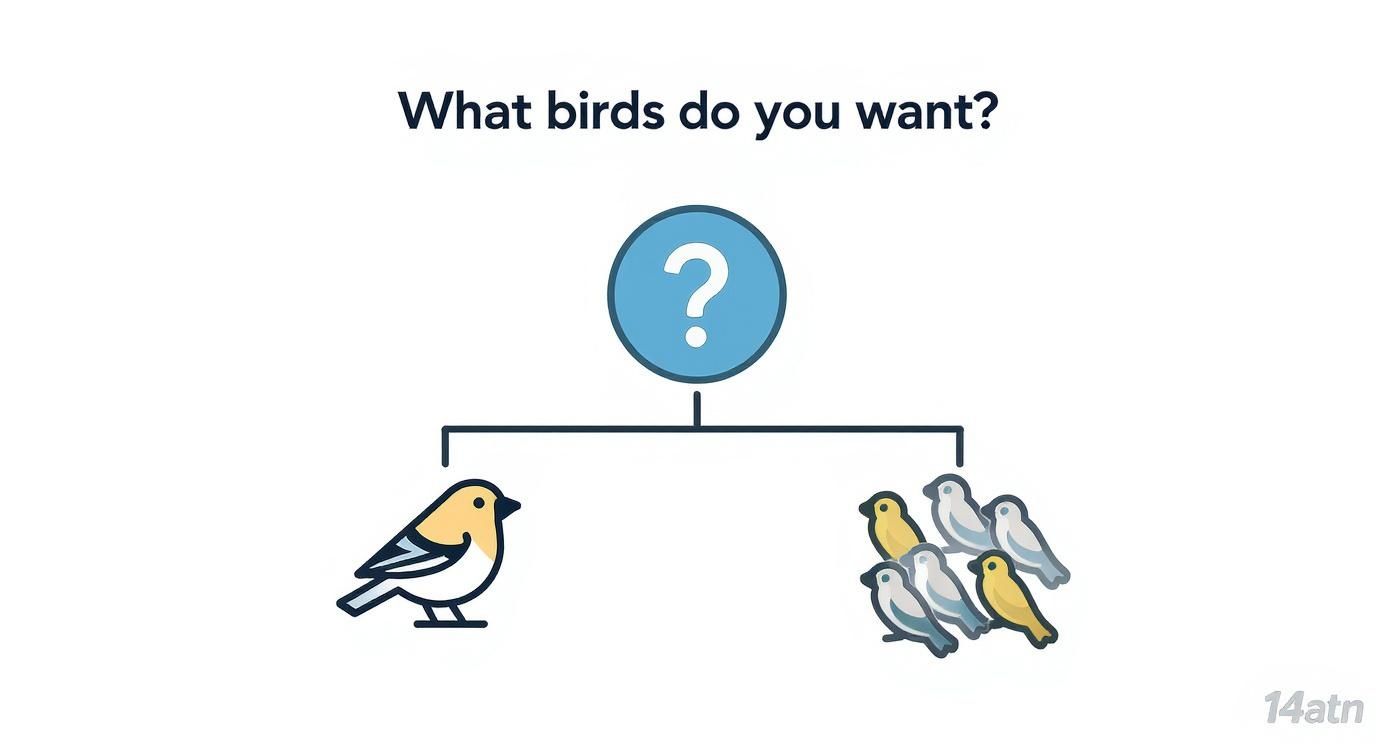
As you can see, a targeted approach—like putting out thistle for finches—is great for attracting specific species. But a broader menu is what really brings in the crowd and creates that exciting, bustling backyard environment.
To help you get started, here’s a quick-reference table matching popular foods with the birds that love them most.
Quick Guide to Popular Bird Foods and the Birds They Attract
| Food Type | Primary Birds Attracted | Best Feeder Type |
|---|---|---|
| Black-Oil Sunflower | Cardinals, Finches, Chickadees, Jays, Titmice | Hopper, Tube, Platform |
| Nyjer (Thistle) | Goldfinches, Pine Siskins, Redpolls | Thistle Feeder (Sock or Tube) |
| Suet Cakes | Woodpeckers, Nuthatches, Wrens, Chickadees | Suet Cage |
| Safflower Seed | Cardinals, Grosbeaks, Doves, Chickadees | Hopper, Platform |
| Cracked Corn | Jays, Doves, Juncos, Sparrows, Quail | Platform, Ground Spreading |
| White Proso Millet | Sparrows, Juncos, Doves, Indigo Buntings | Hopper, Platform, Ground Spreading |
This table can be your cheat sheet for setting up a feeder that becomes an instant hit.
This passion for bird feeding is growing, and it shows. The global wild birds products market was valued at USD 5.699 billion in 2025 and is projected to skyrocket to USD 7.962 billion by 2035. This boom is largely thanks to the popularity of premium seed blends and more specialized feeders. By learning how to attract wild birds to your own yard, you're becoming part of this exciting and rewarding movement.
Decoding the Most Popular Types of Bird Seed
Walk down the bird food aisle, and you'll see dozens of options. While a generic mix might seem like an easy win, it's often packed with filler seeds that most birds just kick to the ground. If you want to attract specific birds and minimize waste, you need to know the "big three."
Think of it like this: you wouldn't serve steak at a vegan restaurant. Offering the right seed is about understanding your guests. You provide them with the best possible energy source, and in return, you get a front-row seat to an incredible variety of bird activity. Let's break down the most popular and effective choices.
The Universal Favorite: Black-Oil Sunflower Seeds
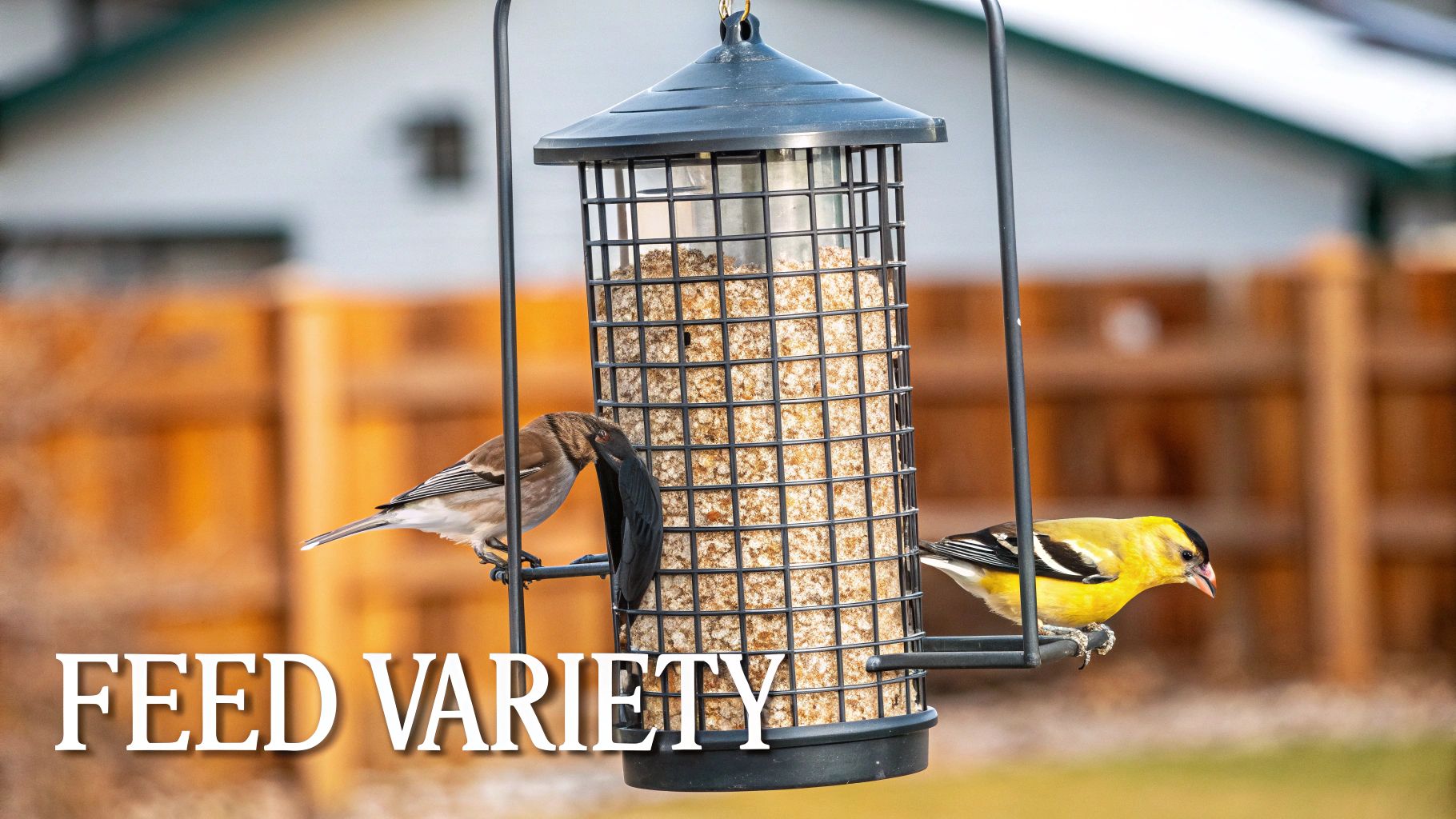
If you could only offer one type of seed, this would be it. Black-oil sunflower is the undisputed crowd-pleaser of the bird world—a high-energy meal that appeals to almost everyone. Its high fat content is a lifesaver for birds, especially during the brutal cold of winter.
So, what’s the secret to its success? The shells are thin, making them easy for small birds like chickadees and finches to crack open. At the same time, bigger birds like cardinals and jays are more than happy to gobble them up. This broad appeal makes it the perfect cornerstone for any backyard feeding station.
Of course, this popularity has a catch: squirrels and chipmunks are obsessed with them. To keep these furry bandits at bay, you’ll almost certainly need a good squirrel-proof feeder.
The Finch Specialist: Nyjer® Seed
Often mistaken for thistle, Nyjer® seed is the gourmet choice for finches. These tiny, oil-rich black seeds are an absolute magnet for American Goldfinches, Pine Siskins, and Common Redpolls. Putting out a feeder with Nyjer is like opening an exclusive club for these dazzling little birds.
Because these seeds are so small, they require a special kind of feeder.
- Tube Feeders: These feeders have tiny feeding ports that only small, agile beaks can use, keeping larger, pushier birds out.
- Mesh Socks: These are basically fine mesh bags that finches can cling to, pulling seeds right through the holes.
This setup naturally deters most other birds. You’ll find that a Nyjer feeder allows you to cater specifically to finches without attracting flocks of less desirable birds.
By selecting a seed that requires a specific feeding style, you can naturally filter which birds visit. Nyjer seed and its specialized feeders are a perfect example of this strategy in action, ensuring your investment primarily benefits smaller finches.
The Ground Feeder's Choice: Millet
While hanging feeders get a lot of attention, many birds prefer to dine on the ground floor. For species like juncos, doves, and many native sparrows, millet is the perfect meal. It’s a small, round seed that’s easy for ground-foraging birds to find and eat. When choosing, always go for white proso millet—most birds prefer it over the red variety.
You can offer millet in a low-to-the-ground platform feeder or even scatter a small handful directly on the ground. A word of caution, though: millet is also a huge favorite of House Sparrows and can attract rodents if you're not careful.
The key is to offer it in small amounts that get cleaned up in a day. This way, you support the ground-feeding species that might otherwise skip your yard entirely, without creating a bigger problem.
Nutritional Showdown: Bird Seed Comparison
Choosing the right seed can feel overwhelming, but breaking it down by nutrition and bird preference makes it much easier. This table compares the heavy hitters to help you decide what's best for your backyard visitors.
| Seed Type | Key Nutrients (Fat, Protein) | Attracts | Potential Downsides |
|---|---|---|---|
| Black-Oil Sunflower | Very High Fat, Moderate Protein | Chickadees, Finches, Cardinals, Nuthatches, Jays, Titmice, Woodpeckers | Highly attractive to squirrels; shells can make a mess. |
| Nyjer® Seed | High Fat, High Protein | American Goldfinches, Pine Siskins, Common Redpolls, House Finches | Requires a special feeder; can be more expensive. |
| White Proso Millet | High Carbohydrates, Lower Fat & Protein | Juncos, Doves, Towhees, Native Sparrows | Very attractive to House Sparrows and Brown-Headed Cowbirds. |
| Safflower Seed | High Fat & Protein | Cardinals, Grosbeaks, Doves, Chickadees | Squirrels and starlings dislike it; fewer species eat it. |
| Cracked Corn | High Carbohydrates, Low Fat | Jays, Doves, Juncos, Quail, Turkeys | Attracts squirrels, raccoons, and less desirable birds. |
As you can see, black-oil sunflower offers the most bang for your buck by attracting the widest variety of birds. However, for a more targeted approach, something like Safflower or Nyjer can help you curate the exact bird-watching experience you want.
Time to Expand Your Menu Beyond Bird Seed
If you really want your backyard to be the most popular spot on the block, you need to offer more than just seeds. Think of it this way: bird seed is a great start, but it's like a simple snack bar. By adding more variety, you're turning that snack bar into a gourmet restaurant, and that's what brings in a wider, more exciting crowd of feathered diners.
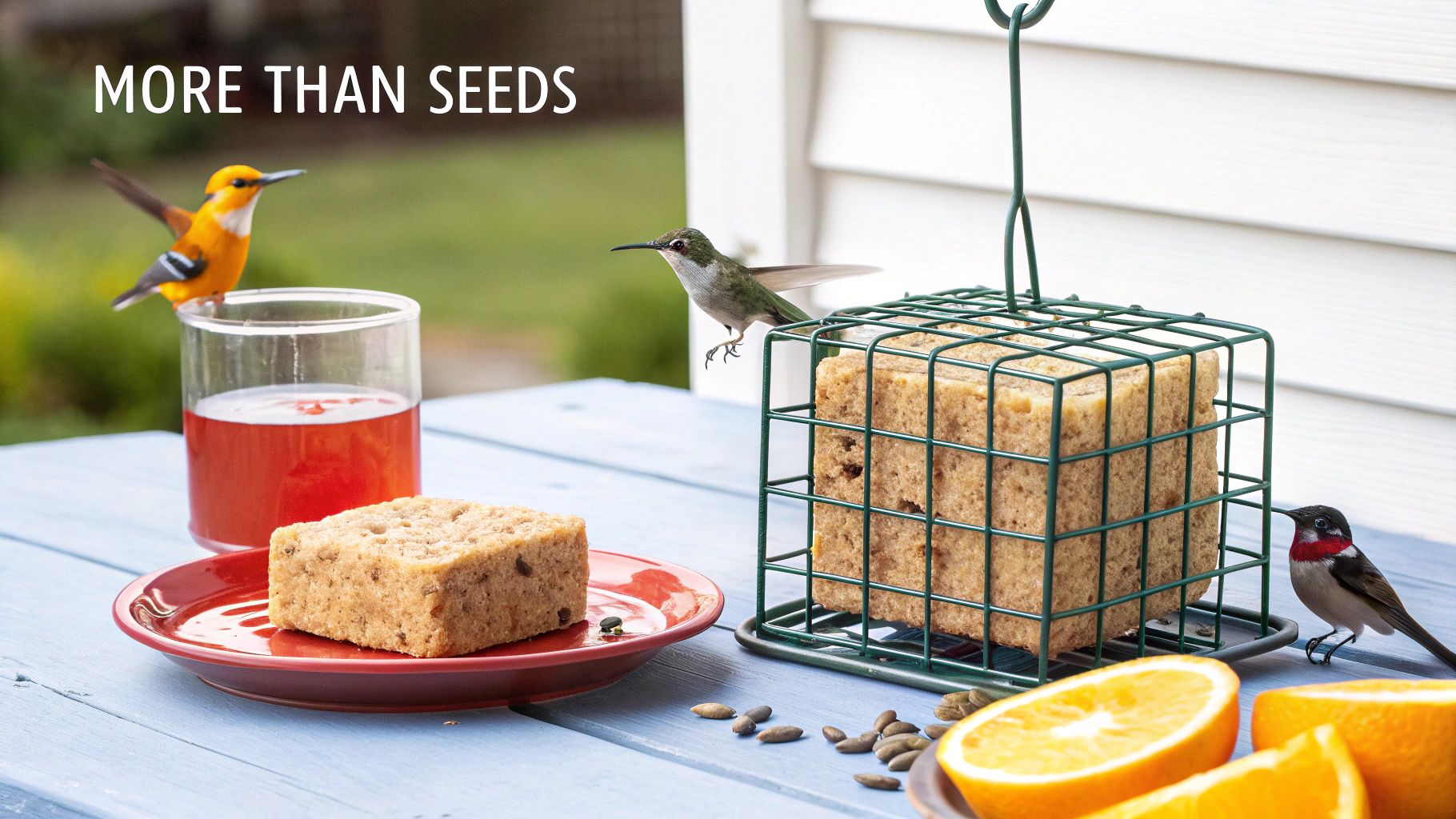
Suet, for example, is the bird equivalent of a high-energy power bar. It’s an absolute lifesaver during the cold months. This rendered fat provides a massive calorie boost that helps birds like woodpeckers, nuthatches, and chickadees stay warm through those long, freezing nights. You can grab it in easy-to-use cakes or blocks that pop right into a suet cage.
Sweet Treats and Protein-Packed Delicacies
Once you've got seeds and suet covered, you can start bringing in the real showstoppers. Some of the most brightly colored birds have a taste for the finer things in life, and if you cater to them, you'll be rewarded with some incredible sights.
-
Nectar for Hummingbirds: There's no better way to attract these tiny, dazzling acrobats. All it takes is a simple mix of one part sugar to four parts water. The key here is cleanliness—you absolutely must clean nectar feeders every few days to keep dangerous mold from growing.
-
Fruit for Orioles: Seeing a brilliant orange oriole is a breathtaking experience. These birds have a serious sweet tooth. Just put an orange half, cut side up, on a platform feeder or a special fruit holder. It's an open invitation they often can't resist.
-
Mealworms for Bluebirds: If you're hoping to attract insect-eaters like the beloved Eastern Bluebird, dried mealworms are a five-star meal. They're packed with protein, which is especially important during nesting season when parent birds are working around the clock to feed their hungry babies.
Offering a variety of foods isn't just about attracting more birds; it's about supporting them through every season and stage of life. From the high-fat energy of suet in winter to the critical protein in mealworms for raising young, a diverse menu is one of the best ways you can help your local wildlife thrive.
Creating a True Birding Haven
When you start layering these different foods with your seed selection, you create a dynamic feeding station that meets a whole range of dietary needs. Each new food you put out acts like a special invitation to a different group of birds.
If you want to get into the nitty-gritty of what certain species prefer, our guide on what do wild birds eat is a great place to start. Understanding their natural habits helps you make smarter choices at the feeder.
Ultimately, adding these items takes your feeder from being just another stopover to a must-visit destination. The goal is to provide the best bird feeder food for every possible guest, turning your backyard into a bustling, colorful, and healthy sanctuary for all kinds of beautiful birds.
Matching the Right Feeder to the Right Food
Choosing the best food for your bird feeder is a fantastic start, but how you present it is what really makes your backyard wildlife hub come alive. Think of the food and the feeder as a lock and key. The right combination unlocks a welcoming space for the birds you hope to attract while keeping pests and freeloaders at bay.
It’s just common sense when you think about it. Imagine scattering tiny, pricey Nyjer seeds on a wide-open platform feeder. A single gust of wind would send them flying, and any big bird could hog the entire tray. Offering food is one thing; giving your target species safe and easy access is the real goal.
This is exactly why backyard birding has exploded in popularity. The global bird feeder market, valued at USD 1.42 billion in 2025, is projected to climb to USD 2.025 billion by 2035. That growth is all thanks to people like us who are learning to create effective, species-specific feeding stations that truly support local wildlife. You can see the full breakdown of the bird feeder market growth on Fact.MR.
Feeder Styles for Specific Foods
Not all birds eat the same way. Some prefer to perch neatly, others are natural acrobats that cling to surfaces, and many are happiest foraging on the ground. The secret to a busy feeder is matching its style to both the food you're offering and the birds you want to see.
Here are some of the most effective pairings to get you started:
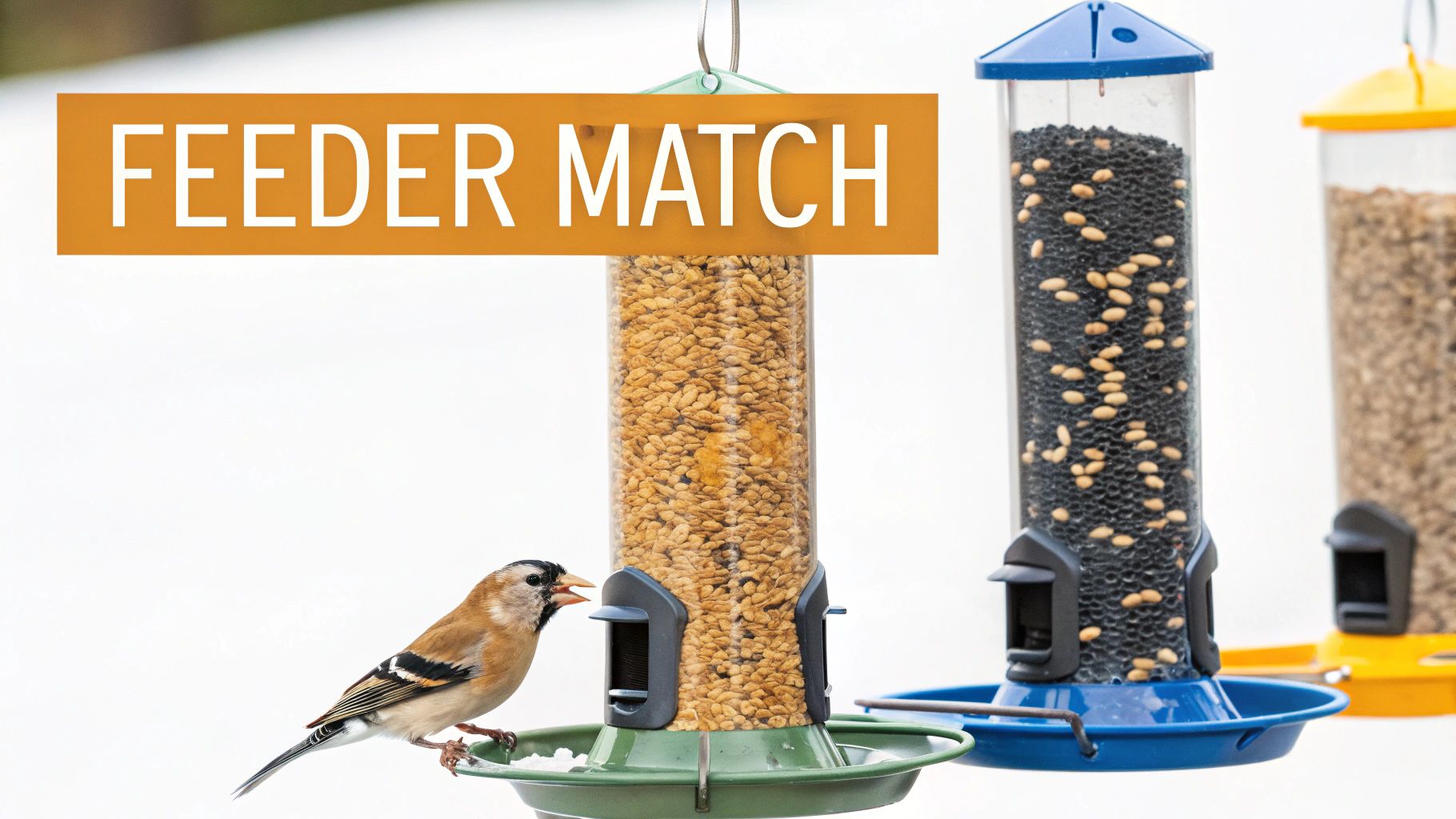
- Tube Feeders for Sunflower Seeds: These are the classics for a reason. Their small perches and feeding ports are perfect for little birds like chickadees and finches to grab one seed at a time. It's a design that naturally rations the food and deters bigger, pushier birds.
- Mesh or Sock Feeders for Nyjer: Goldfinches are incredible acrobats that love to cling and hang upside down while they eat. A mesh sock or a special thistle feeder with tiny slits is the only way to go for Nyjer, letting the finches pull seeds out without spilling a single one.
- Hopper Feeders for Mixed Seeds: Think of these as the all-purpose workhorses of the feeder world. They hold a lot of seed and keep it protected from rain and snow. They work beautifully for safflower seeds and high-quality mixes, bringing in regulars like cardinals and titmice.
- Platform Feeders for Ground-Feeders: A simple tray feeder set low to the ground is like a welcome mat for juncos, doves, and towhees that prefer to eat what they find on the ground. It's also the best way to offer treats like mealworms or fruit. To explore a fantastic insect-based option, check out our guide on where to buy black soldier fly larvae.
Safe and Smart Feeder Placement
Where you hang your feeder is every bit as critical as what you put inside it. A feeder in the wrong spot can be a serious hazard, exposing birds to predators or deadly window collisions.
A great feeding station is both a reliable restaurant and a safe haven. Birds are constantly scanning for danger, and they will return to a spot where they feel secure. Your placement choices directly impact their safety and comfort.
To set up a safe dining area, try to place your feeders about 10 feet away from any dense bushes or tree cover. This gives birds a quick escape route but prevents cats from using the shrubs as a perfect ambush spot.
For window safety, the rule of thumb is to place feeders either very close (within three feet) or very far (more than 30 feet away). This simple step can drastically reduce the risk of tragic collisions.
Adapting Your Bird Food for Every Season
If you really want to be a great host for your backyard birds, you have to think like one. That means anticipating what your guests need before they even arrive. A bird's nutritional needs change dramatically throughout the year, so adapting your menu is the best way to support them. It’s the difference between just putting out food and actively helping your local wildlife thrive.
Think of it this way: a marathon runner loads up on carbs before a race, while someone lifting weights needs protein to rebuild muscle. Birds are no different. Winter is their marathon, an incredible test of endurance. Spring and summer, on the other hand, are all about building strong families.
This thoughtful approach is becoming more common. The North American bird feeder market is still the largest in the world, and it's fueled by a real passion for birdwatching. We're seeing more people move beyond just a single, basic feeder and instead look for options that help specific species at different times of the year. You can learn more about this trend by checking out the dynamic bird feeder market on Market Research Future.
Winter: The High-Energy Season
When the temperature drops and the ground is covered in snow, calories are everything. Birds burn a shocking amount of energy just to stay warm through a long, cold night. High-fat foods aren't a treat during this time; they're a lifeline.
- Suet: This is the ultimate winter fuel. Rendered animal fat provides a concentrated blast of calories that birds like woodpeckers, nuthatches, and chickadees desperately need to survive.
- Peanuts: Whether you offer them in the shell or already shelled, peanuts are loaded with the fat and protein birds need for sustained energy.
- Black-Oil Sunflower Seeds: These are a classic for a reason. Their high oil content is an invaluable resource that helps birds maintain their body temperature on frigid nights.
Spring and Summer: The Protein Push
Once the weather warms up, the focus shifts from pure survival to raising the next generation. Building nests, laying eggs, and feeding a brood of hungry chicks is exhausting work that demands a massive amount of protein. This is when your feeder can become a crucial support station for busy bird parents.
Providing protein-rich foods during nesting season is one of the most impactful ways you can support the next generation of birds. Parent birds are tireless foragers, and a reliable food source helps ensure their young grow up strong and healthy.
Here’s how you can help them stock the pantry:
- Mealworms: A five-star meal for insect-eaters like bluebirds and wrens. Whether live or dried, they are an essential protein source for growing fledglings.
- Insects and Grubs: Foods like dried Black Soldier Fly Larvae (BSFL) are a fantastic, high-protein snack that closely mimics what birds would naturally be hunting for.
- Nectar: Don't forget the hummingbirds! The high-sugar energy in nectar is absolutely vital for their super-fast metabolism during the busy breeding season.
By tailoring the best bird feeder food to the season, you’re providing exactly what your feathered visitors need, right when they need it most.
Common Bird Feeding Mistakes to Avoid
Setting out the best bird feeder food is one of the most rewarding ways to connect with nature right in your backyard. But even with the best intentions, a few common slip-ups can turn your feathered friends’ favorite diner into a place they’d rather avoid. Let's walk through some of these pitfalls so you can create a truly welcoming and healthy feeding station.
One of the biggest mistakes I see people make is grabbing the cheapest bag of seed mix off the shelf. These economy blends are often padded with fillers like red milo, cracked corn, and oats. Most of the songbirds you want to attract will just kick these right out of the feeder and onto the ground. This not only wastes your money but also creates a messy pile below that can attract unwanted guests like rodents.
The fix is simple: opt for quality over quantity. You’ll have much better results—and less mess—by sticking with seeds that have universal appeal, like black-oil sunflower or safflower.
Keeping Your Feeder Clean and Safe
Another easy-to-miss issue is feeder hygiene. Think about it: a dirty feeder is a breeding ground for mold and bacteria, which can be incredibly dangerous for birds. When old, wet seed clumps up, it can spread diseases through the very population you're trying to help.
Luckily, a straightforward cleaning routine is all you need.
- Scrub Weekly: Give your feeders a good cleaning every week or two. A simple solution of one part bleach to nine parts water works great.
- Dry Completely: Before you refill, make sure the feeder is bone dry. This is key to preventing new mold from taking hold.
- Store Food Properly: Keep your bird seed in an airtight container in a cool, dry place. This protects it from moisture, insects, and hungry rodents.
Neglecting feeder cleanliness is like inviting guests to dinner and asking them to eat off dirty plates. A few minutes of maintenance provides a safe dining experience and prevents the spread of avian diseases.
Finally, a lot of folks accidentally roll out the welcome mat for bullies. Scattering millet or cracked corn on the ground might seem like a generous act, but it's an open invitation for more aggressive birds like starlings and House Sparrows to dominate the area.
If you find your feeders are being taken over, stop all ground feeding. Instead, focus on feeders designed for specific birds. A Nyjer feeder will attract finches, and a suet cage that requires birds to cling will deter most House Sparrows, as they aren't great at that kind of acrobatic dining.
Got Questions? We've Got Answers
Even the most seasoned bird enthusiast runs into questions now and then. Let's tackle some of the most common things people ask, so you can feel completely confident about caring for your feathered friends.
How Often Should I Scrub My Feeders?
This is a big one, and it's non-negotiable for keeping birds healthy. For your regular seed feeders, a good, thorough cleaning every one to two weeks is a solid routine to stick to.
Hummingbird feeders are a different story, though. That sugar water can get funky fast, especially in the heat. You'll need to clean those every two to three days in warm weather to stop nasty mold and bacteria from growing, which can be really dangerous for the little guys.
Can I Toss Old Bread Crumbs Out for the Birds?
It's tempting, but it's best to resist. While birds will definitely gobble it up, bread is essentially junk food for them. It fills their tiny stomachs without giving them any of the high-energy fats and proteins they desperately need to thrive.
Think of it like this: feeding a bird bread is like letting a kid fill up on potato chips right before dinner. They're full, but they missed out on all the good stuff. It's always better to stick with a high-quality food designed for them.
What's the Plan When Rain Soaks the Bird Seed?
If you find a feeder full of wet, clumpy seed after a storm, you have to get rid of it right away. Damp seed is a breeding ground for mold, which can be toxic to birds. Don't risk it.
The best move is to empty the feeder out completely, give it a good wash, let it dry thoroughly, and then refill with fresh, dry seed. Taking this extra step is one of the most important things you can do to ensure your backyard birds stay healthy and safe.
Ready to give your birds a high-protein, calcium-packed treat they'll go wild for? Pure Grubs offers USA-grown Black Soldier Fly Larvae—a safer and more nutritious choice than mealworms. Discover the benefits of Pure Grubs today.