

How do you make chickens lay more eggs: A Practical Guide
If you're asking how to get more eggs from your flock, you’ve got to start by looking at what goes into them. The whole game boils down to a few key things: top-notch nutrition, the right amount of light, a calm and safe environment, and keeping your birds healthy. But if I had to pick the single most important factor, it’s always going to be their diet.
Great Nutrition is the Bedrock of Egg Production
The feed bowl is where egg production truly begins. A hen’s body is an amazing little factory, but it can only work with the raw materials you provide. If you skimp on the right nutrients, you'll see it almost immediately—production will dip, or worse, you'll start finding eggs with thin, weak shells. It's a simple case of what you put in is what you get out.
Think of it like building something. Protein acts as the framework, while calcium is the foundation. You can't construct a solid, lasting structure without getting both right, and it’s the exact same principle for forming a perfect eggshell.
The Nutritional Must-Haves for Laying Hens
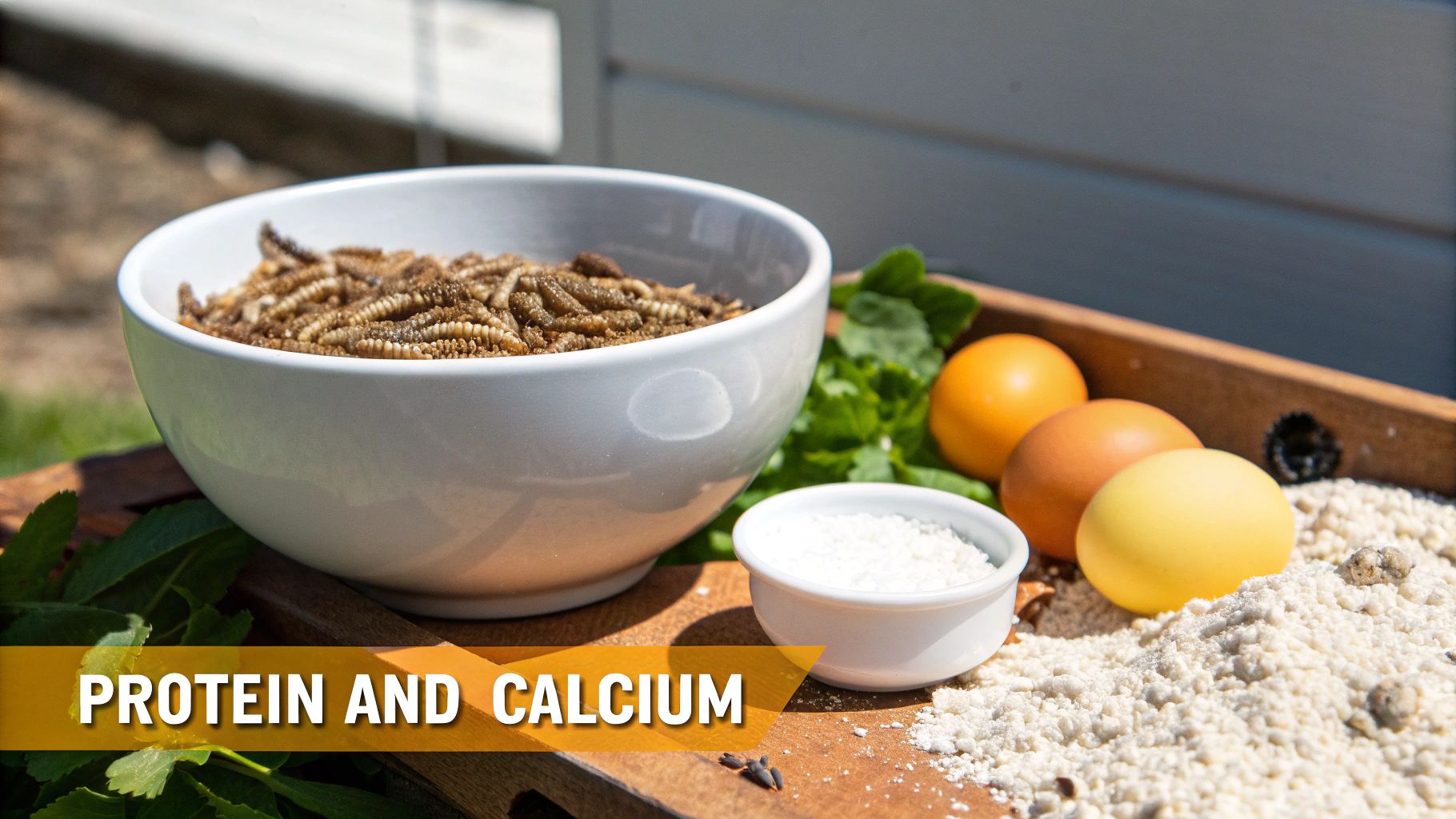
For any laying hen, there are two non-negotiables: protein and calcium. A good quality layer feed should always have between 16-18% protein. This is crucial for everything from keeping their feathers healthy to forming the actual egg white (the albumen).
Just as vital is calcium. It's wild to think about, but a single hen needs around 4-5 grams of calcium every single day to form a strong eggshell. If her feed doesn't provide enough, her body will start pulling that calcium from her own bones, which quickly leads to health issues and a shutdown of the egg factory. This is why you'll almost always see experienced chicken keepers providing a separate dish of crushed oyster shell for the flock to take as they need.
This graphic breaks down the essential nutritional goals for a productive hen and shows how smart supplementation can make a huge difference.
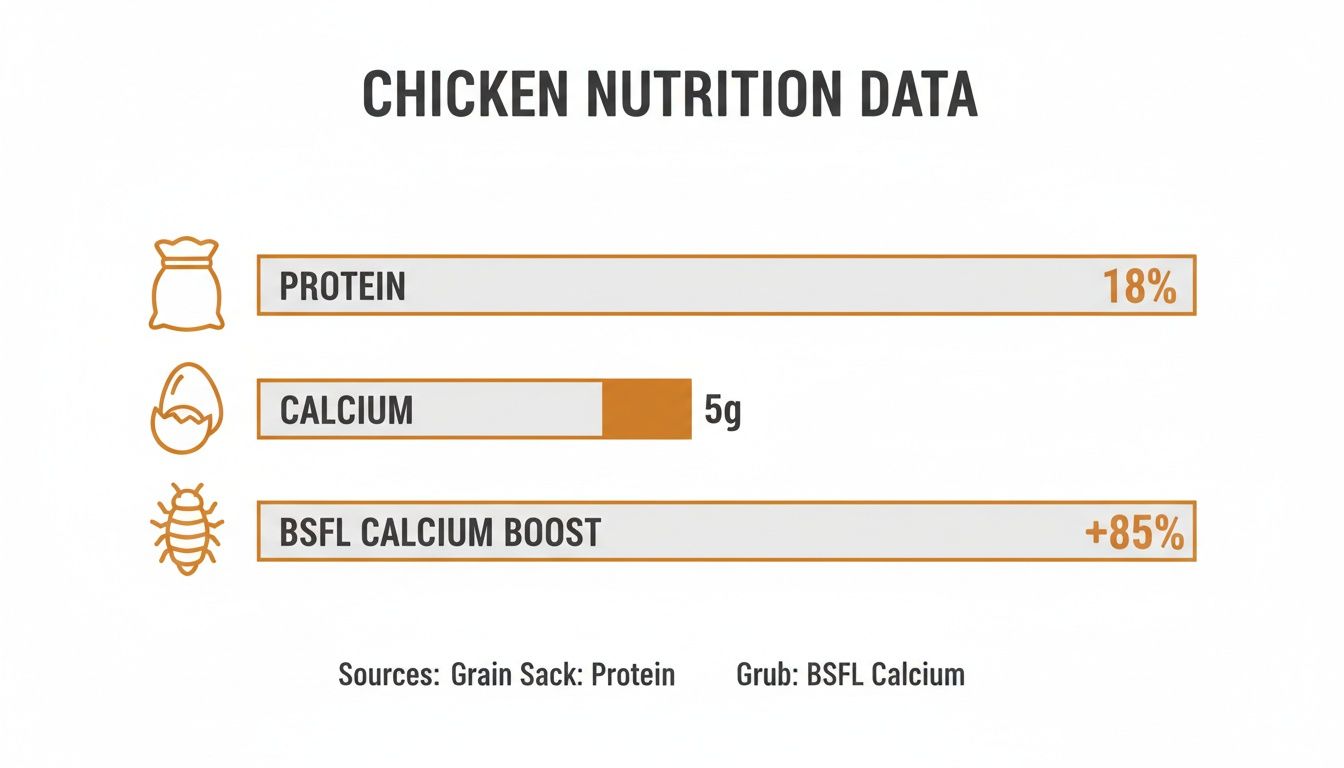
As you can see, a standard layer feed gets you most of the way there, but adding a high-calcium treat like Black Soldier Fly Larvae (BSFL) gives you a massive leg up, especially for eggshell quality.
Why High-Calcium Treats Are a True Game-Changer
While a balanced commercial feed is the main course, the right kind of treats can take a good diet and make it exceptional. This is where Black Soldier Fly Larvae, particularly from a quality source like Pure Grubs, really shine. They are an absolute powerhouse of both protein and, most critically, calcium.
The secret to BSFL lies in their calcium-to-phosphorus ratio. It's almost perfectly balanced for absorption, which means your hens can make better use of the calcium they eat. That translates directly to stronger, more reliable eggshells.
Have you ever found one of those dreaded soft-shelled, rubbery eggs in the nesting box? It’s a dead giveaway of a calcium shortfall. Many people toss out mealworms as a treat, but they are notoriously low in calcium. In fact, Pure Grubs BSFL pack up to 85% more calcium than mealworms, making them a vastly better choice for your laying hens.
This isn't just a number on a bag; it delivers real-world results. In 2024, commercial laying hens in the U.S. averaged a lay rate of 82.5 eggs per 100 hens daily, thanks in large part to perfectly optimized nutrition. For small flock owners, this shows just how critical calcium is. Adding a high-quality BSFL supplement can not only fortify shells but can also help boost lay rates by 5-15%.
Comparing Chicken Treats for Optimal Egg Production
When your goal is more eggs, you have to realize that not all treats are created equal. Some, like scratch grains or a handful of random kitchen scraps, are basically chicken junk food. They're fun, but they don't contribute much nutritionally.
Choosing the right treat can directly impact how many eggs you collect each week. If you want to go deeper on this topic, our guide on what to feed laying hens offers even more detail.
Here’s a quick look at how common treats really stack up when egg production is the priority.
| Nutrient/Feature | Pure Grubs BSFL | Mealworms | Kitchen Scraps (Mixed) | Cracked Corn |
|---|---|---|---|---|
| Primary Benefit | High Calcium & Protein | High Protein | Variety & Foraging Fun | Inexpensive Energy |
| Calcium Level | Very High | Very Low | Inconsistent | Very Low |
| Protein Content | High (~40%) | High (~50%) | Varies Widely | Low (~9%) |
| Impact on Shells | Strengthens Shells | Can Weaken Shells | Unpredictable | No Positive Impact |
| Best For | Supporting Egg Layers | Occasional Protein Boost | Limited Foraging Treats | Winter Energy Only |
Ultimately, choosing a treat like Pure Grubs BSFL gives you a direct, reliable way to improve shell quality and support consistent laying. It turns flock nutrition from a guessing game into a clear strategy for success.
Light: Your Secret Weapon for Year-Round Eggs
Ever wonder why your egg basket is overflowing in June but nearly empty by December? It’s not your imagination. A hen’s entire reproductive system is hardwired to respond to daylight, making it one of the most powerful tools you have for boosting egg production.
A small gland in a hen's brain, the pineal gland, acts like a light sensor. When it detects long days, it sends a powerful "all clear" signal to her body, telling her it's the perfect time to lay eggs and raise chicks. Shorter days signal the opposite: time to conserve energy for winter. This is why natural egg production grinds to a halt as the days shorten.
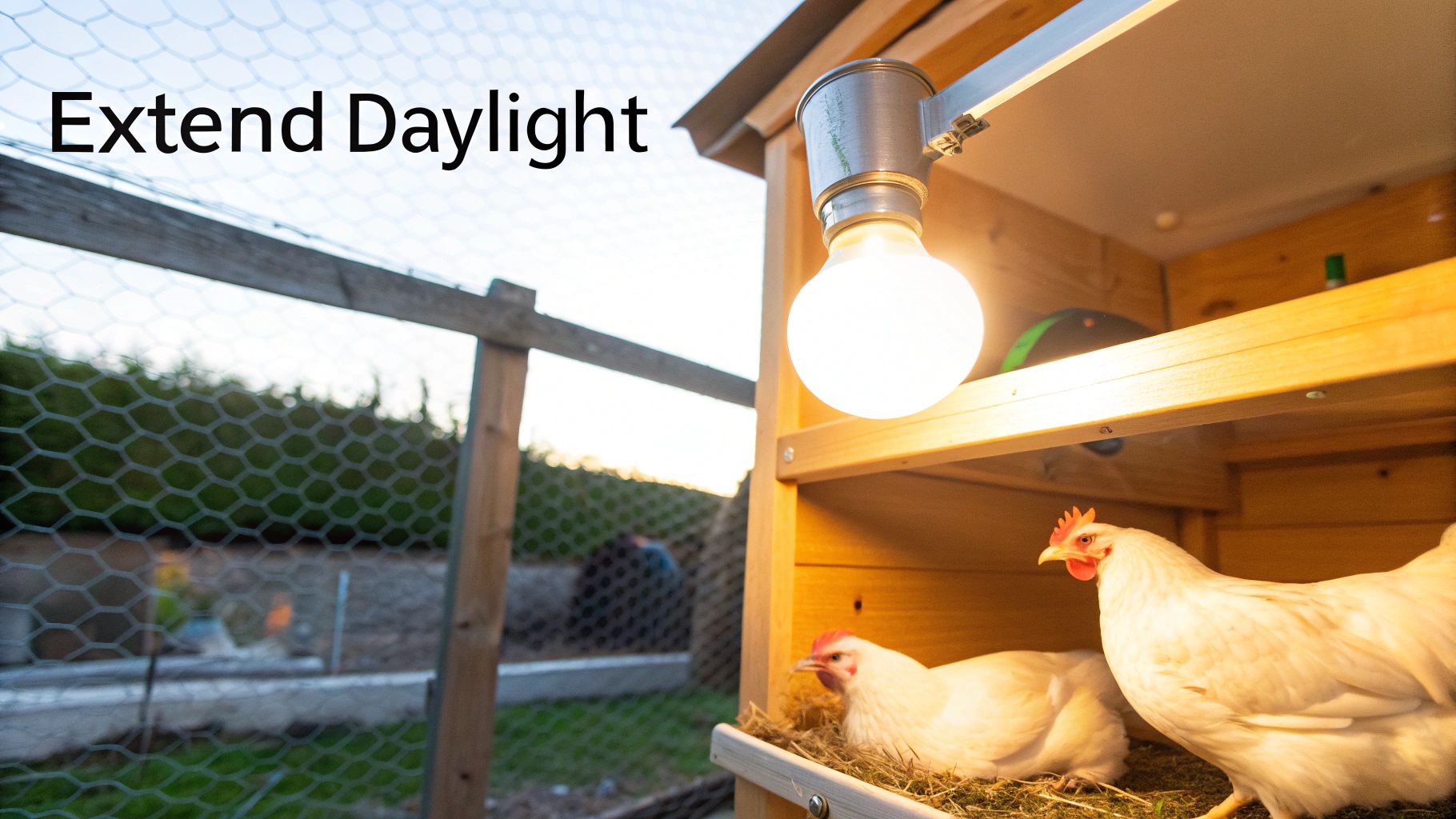
To keep those eggs coming, you need to take control of their day length. The sweet spot is providing 14 to 16 hours of light each day. Anything less, and her system starts shutting down the egg factory for a seasonal break.
This isn't just an old farmer's trick; it's a scientifically proven management technique. Agricultural studies have repeatedly shown that maintaining 14-16 hours of light can increase egg laying by a whopping 20-30%. Even small backyard flocks can hit impressive 85-90% hen-day production rates with a simple timer. It’s this precise light management that allows commercial producers to maintain steady output, a key factor in the global egg market. You can read more about these production trends and their impact.
How to Add Light the Right Way
The good news is you don’t need an expensive or complex system. A single, low-wattage light bulb and a basic outlet timer are all it takes to convince your hens that it's still mid-summer. The idea is to gently extend their "day," not to turn the coop into a brightly lit stadium.
Here’s a simple, practical setup that works:
- Pick the Right Bulb: A standard 9-watt LED bulb is perfect (it’s about the same as an old 40-60 watt incandescent). This gives off enough light to do the job without being harsh or overbearing.
- Get an Automatic Timer: This is the most critical piece of the puzzle. Chickens crave routine, and a timer delivers it flawlessly.
- Add Light in the Morning: This is the pro-tip that makes all the difference. Set your timer to turn the light on a few hours before sunrise. This lets the hens wake up and get their day started on a consistent schedule. When the sun finally comes up, the natural light just blends in. Then, in the evening, they can follow the natural sunset to roost, which is far less stressful than having their world plunged into darkness when a timer clicks off.
Why Morning Light Matters: Adding supplemental light before dawn lets hens wake up gradually and go to roost with the natural sunset. This avoids the stress of an abrupt "lights out," which can panic the flock and cause injuries.
Avoid These Common Lighting Mistakes
When you start adding light, the key is to do it gradually. Don't just flip a switch and jump from nine hours of daylight to fourteen. That kind of sudden change can really stress out your flock.
Instead, ease them into it. Start by adding about 30 minutes of light per week until you reach that 14-16 hour goal. For instance, if you’re currently getting 10 hours of natural light, set your timer to add 30 minutes in the morning. Next week, bump it up to an hour, and so on. It’s a gentle transition that their bodies can easily adapt to.
One last thing to remember: asking a hen to lay through the winter is like asking her to work overtime. It takes a ton of energy and nutrients. You absolutely must support this extra effort with a high-quality feed packed with protein and calcium. High-energy treats, like Pure Grubs, are also a fantastic way to give them the extra fuel they need to stay healthy and productive without burning through their own body reserves. Light and nutrition are a team—you need both to keep the eggs coming.
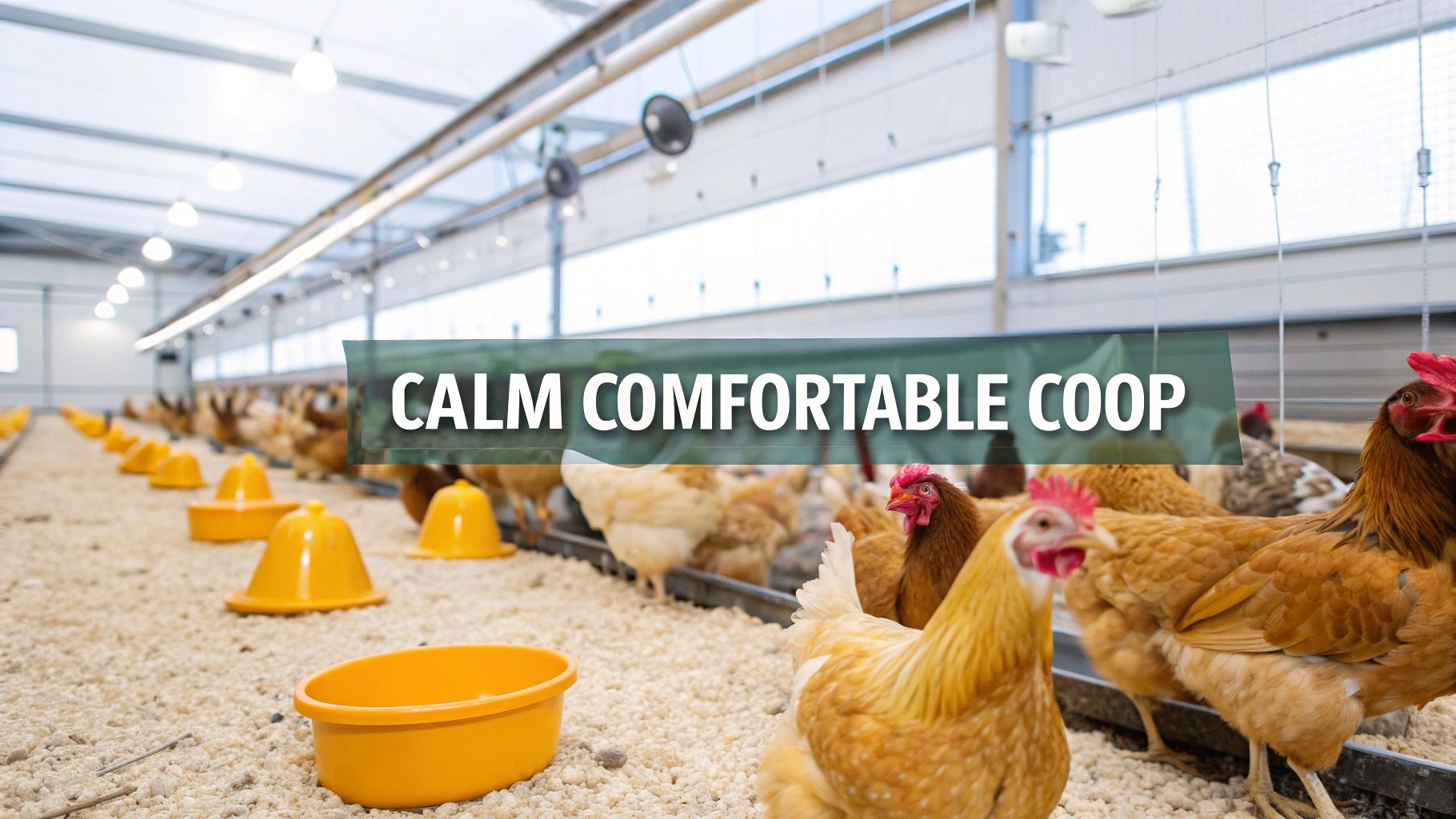
Building a Stress-Free Coop Environment
Think about how you feel after a stressful week at work. You're drained, right? It's the same for a hen. A stressed-out chicken will pour all her energy into survival, not egg-laying. Chronic stress floods her system with cortisol, a hormone that basically shuts down anything non-essential. And for a hen feeling threatened, making an egg is the first thing to get cut from the to-do list.
This is why creating a calm, secure coop is one of the most powerful things you can do to get more eggs, more consistently.
A hen's needs are pretty straightforward. She wants to feel safe from predators, have enough personal space, and know where her next meal is coming from. When these basics are compromised, you'll see the results—or lack of them—in the nesting box. The great news is, you're in control of almost all common flock stressors.
Giving Your Flock Enough Room to Thrive
Overcrowding is probably the single biggest stressor I see in backyard flocks. When chickens are packed in too tight, it forces constant competition for food, water, and the best spots on the roost. This friction easily leads to feather picking, bullying, and a background hum of anxiety that just kills egg production.
The gold standard for space is easy to remember and worth sticking to:
- Inside the Coop: Give them at least 4 square feet per bird for standard-sized breeds.
- In the Outdoor Run: Provide a minimum of 10 square feet per bird so they can stretch their legs, dust bathe, and forage properly.
Honestly, more space is always better. Giving your hens plenty of room to get away from a pushy flock mate reduces social tension and lets everyone breathe a little easier.
A few years back, I had a small flock where two of my most timid hens, a pair of Australorps, just stopped laying completely. It dawned on me that my coop, which was perfect for four birds, had gotten cramped after I added two more. I built a small extension onto the run and put a second feeder at the far end. The change was almost immediate. Within a week, those two hens were back in the nesting box.
Taming the Pecking Order and Reducing Bullying
Every single flock has a pecking order; it's a completely natural part of chicken society. The trouble starts when that social ladder creates real stress, with lower-ranking birds getting relentlessly bullied and kept away from food and water.
One of the easiest and most effective tricks in the book is to simply add a second feeder and waterer. If a dominant hen is guarding one station, the more submissive birds have another place to go. You'd be surprised how much social tension this one change can resolve. While you're at it, make sure you have enough roosting bar space for every chicken to perch comfortably without getting shoved off at night.
Making the Coop a Fortress of Safety
A flock that feels threatened by predators will be on high alert 24/7. That's a terrible state for egg production. Even if a predator never actually gets in, just seeing a hawk circling above or hearing a raccoon rattling the coop walls at night is enough to cause major stress.
Fortifying your coop isn't optional—it's essential for a happy, productive flock. This means covering all windows and ventilation gaps with ½-inch hardware cloth, which is tough enough to stop a determined raccoon or weasel. Make sure your coop door has a secure, predator-proof latch that can’t be easily flipped open by clever paws. A secure environment allows your hens to relax, and a relaxed hen is a laying hen.
Finally, don't forget about enrichment. Simple boredom can be a stressor in itself. Tossing a handful of high-value treats like Pure Grubs into their run encourages their natural instinct to forage. This simple act keeps them busy and entertained, turning a boring afternoon into a productive treasure hunt and reducing the odds of stress-induced habits like feather picking.
Keeping Your Flock Healthy and Laying Strong
A healthy hen is a laying hen. It's that simple. When a chicken gets sick or overrun with parasites, her body immediately shifts gears. All her energy, which once went into producing those beautiful eggs, is diverted to just trying to survive. This is why getting ahead of health problems isn't just good animal husbandry—it's one of the surest ways to keep your nesting boxes full.
The tricky thing with chickens is that they often hide their symptoms. Common issues like mites or a mild case of worms can brew under the surface for a while. By the time you notice something is obviously wrong, the problem has already taken a significant toll on her system and brought egg production to a screeching halt. That’s why making hands-on health checks a regular habit is so powerful.
The Quick Monthly Wellness Check
You don't need a veterinary degree to be a good flock detective. A simple, hands-on check once a month is all it takes to catch most issues before they become big problems. The goal is to get a feel for what’s "normal" for each of your birds, so the slightest change stands out immediately.
When you handle your hens, here’s what you’re looking for:
- Eyes & Nostrils: They should be bright, wide-open, and totally clear. No bubbles, gunk, or swelling.
- Comb & Wattles: For most breeds, a healthy, laying hen has a vibrant, full, and waxy-feeling comb and wattles. A pale, dry, or shrunken comb is often one of the first red flags that something is amiss.
- Feathers: Look for a healthy sheen and tight feathering (unless she’s in the middle of a molt, of course). Part the feathers around her vent and look closely at the base of the shafts. Tiny, fast-moving dark specks are a tell-tale sign of mites.
- Vent: This area should be clean and surrounded by fluffy feathers. Droppings stuck to the feathers can point to digestive trouble.
- Legs & Feet: The scales on their legs should lie smooth and flat. If they look raised, crusty, or flaky, you’re likely dealing with scaly leg mites.
If you spot a bird acting sluggish, hiding from the flock, or just seeming "off," it’s time to investigate further. Getting familiar with the common symptoms of illness in chickens will help you know when to act and what to do.
Smart, Natural Parasite Control
If you're asking how to make your chickens lay more eggs, keeping pests under control is a non-negotiable part of the answer. A hen battling a heavy parasite load simply won't have the resources to lay. The good news is that you can manage most of these pests with some simple, natural strategies.
Your number one defense is a good dust bath. It's how chickens have kept themselves clean for millennia, sloughing off dead skin and suffocating external parasites like lice and mites. Make sure they have a dedicated spot filled with loose, dry soil, sand, or a bit of food-grade diatomaceous earth. They’ll know exactly what to do.
When it comes to internal parasites like worms, your best friend is pasture rotation. Moving your flock to a fresh patch of ground every few weeks breaks the life cycle of worms, whose eggs are passed through droppings. This simple move prevents a heavy parasite load from building up in their environment.
A robust immune system is also a hen's best defense. A high-quality, nutrient-dense diet gives her the tools she needs to fight off threats from the inside out. Supplementing their feed with high-protein treats like Pure Grubs is a fantastic way to bolster their immune systems, especially during stressful times like molting or extreme weather.
Your Monthly Flock Health Checklist
Consistency is everything. Use this quick checklist each month to keep your flock in top form. It only takes a few minutes per bird but can save you a world of trouble and keep those eggs coming.
| Checkpoint | What to Look For | Notes |
|---|---|---|
| Overall Demeanor | Alert, active, and social | Is anyone hiding or lethargic? |
| Eyes & Nostrils | Clear, bright, no discharge | Any sneezing, coughing, or bubbles? |
| Comb & Wattles | Good color, plump | Any paleness, spots, or shrinking? |
| Feather Condition | Smooth and clean | Signs of mites, lice, or feather picking? |
| Vent Area | Clean and dry | Any swelling or messy feathers? |
| Legs & Feet | Smooth scales, no limping | Any signs of scaly leg mites? |
| Body Condition | Good weight, feels solid | Does the keel bone feel sharp or covered? |
Finally, don't forget basic biosecurity. Simple things, like cleaning your shoes before walking into the run and keeping wild birds out of the feeders, go a long way in preventing new diseases from entering your flock. A healthy hen is a happy hen, and a happy hen is the one that fills your egg basket.
Know Your Flock: Breed, Age, and the Annual Molt
Before we dive into boosting production, it’s important to have realistic expectations. Not every hen is an egg-laying champion, and that's perfectly fine. A chicken's breed, her age, and her natural biological cycles are the biggest factors in what you can expect to find in the nesting box.
Some breeds are just wired to lay. A White Leghorn, for example, is a true production powerhouse, often laying over 300 white eggs a year. Compare that to a beautiful heritage bird like an Orpington or Wyandotte. They're fantastic dual-purpose breeds that will give you plenty of lovely brown eggs, but they simply won't keep pace with the Leghorn. Knowing what your specific breed is capable of is the first step.
A Hen’s Laying Prime (and Her Golden Years)
Every hen follows a natural laying curve throughout her life. She'll lay her first precious eggs around 5 to 6 months old, which kicks off her most productive years. For the first two years, she'll be an absolute laying machine.
After that second year, you'll start to see a gradual, completely normal drop in egg numbers. This isn't anything to worry about; it's just a natural part of her aging. A four-year-old hen might only give you a couple of eggs a week, and by the time she’s six, an egg might be a rare treat. It’s important to remember that there are many reasons why chickens stop laying eggs, and age is one of the most common.
Working With the Annual Molt, Not Against It
At least once a year, usually as the days get shorter in the fall, you'll walk out to a coop that looks like a pillow exploded. This is the molt, and it's how hens shed their old, ragged feathers to grow a dense, new set for winter. During this time, egg production grinds to a complete halt.
Molting is incredibly demanding on a hen's body. It takes a massive amount of protein and energy to regrow thousands of feathers. Her system simply can't do that and produce eggs at the same time, so her body wisely puts all its resources into staying warm for the winter.
This break from laying is non-negotiable and crucial for her health. But while you can't prevent the molt, you can definitely help your girls get through it faster and back to laying sooner. The secret? Ramp up the protein.
- Bump Up the Protein: Feathers are roughly 85% protein, so giving your hens a protein-rich diet is the single best thing you can do to support them.
- Feed Smart Treats: This is the perfect time to offer high-quality treats. Something like Pure Grubs provides a concentrated punch of protein and calcium, directly fueling feather growth and helping hens rebuild their nutrient reserves.
- Keep Things Calm: The molt is stressful enough. Avoid adding new birds, moving the coop, or making any other big changes. A calm, predictable environment lets them focus their energy on recovery.
By giving them this nutritional boost, you can often cut the molting period from a couple of months down to just a few weeks. Think of the molt not as a frustrating pause, but as a pit stop. Give your flock the right fuel, and you'll get them back on the egg-laying track in no time.
Answering Your Top Questions About Egg Production
Even when you've done everything right, chickens can throw you a curveball. It’s totally normal to have questions pop up, especially when egg numbers suddenly dip. Let's tackle some of the most common issues I hear from fellow chicken keepers.
"Help! My Hens Suddenly Stopped Laying!"
It's a sinking feeling when you go to the nesting box and find it empty day after day. A sudden halt in laying is almost always a sign that something in their world has changed. Before you panic, think about what's new.
The most common culprits are stress, a gap in their diet, a hidden egg stash somewhere in the yard, or the start of their annual molt. Did a new dog show up next door? Did a hawk pay a visit? Even a loud storm can be enough to put them off laying. Another big one is the simple change of seasons—as the days get shorter in the fall, their bodies naturally slow down.
First, do a quick audit of the basics. Is their high-quality layer feed always available? Is their water clean and fresh? If daylight hours are shrinking, it might be time to think about adding a simple light on a timer in the coop.
"How Many BSFL Treats Are Too Many?"
We all love spoiling our flock, but treats need to be just that—a treat. The golden rule is that goodies, even super-healthy ones like Black Soldier Fly Larvae, shouldn't be more than 10% of what your chickens eat all day. This is crucial because it ensures they're still filling up on their main layer feed, which has the precise balance of vitamins and minerals they need.
For a practical amount, think about one to two tablespoons of BSFL per hen a few times a week. I like to scatter them around the run. It gets them scratching and foraging, which is great for keeping them busy and staving off boredom. Of course, during tough times like a heavy molt or a winter cold snap, offering a daily handful gives them a much-needed protein and calcium boost to get through it.
"Is It Possible to Give My Hens Too Much Calcium?"
You bet. It's definitely possible to overdo it with calcium, but it's usually an issue when you're using powdered supplements and mixing them directly into the feed. This forces them to take in a set amount, which might be more than they need, potentially leading to kidney problems.
The best way to provide calcium is to let the hens decide how much they need. Offer crushed oyster shells or your own baked, crushed eggshells in a separate dish, completely free-choice. Your hens know their bodies better than we do; they'll take exactly what they need, when they need it.
This is also why a naturally high-calcium treat like BSFL is a great choice. The calcium is part of a whole-food package with protein and fats, making it a much safer and more easily absorbed option than a processed powder.
"Do My Hens Need a Rooster to Lay Eggs?"
This is probably the biggest myth in backyard chicken keeping! The short answer is a definite no. Your hens will lay eggs on a regular cycle whether there’s a rooster around or not.
A rooster's one and only job is to fertilize the eggs. That's it. So unless you're planning on hatching chicks, you absolutely do not need a rooster. In fact, for many backyard flocks, keeping an all-hen coop creates a much calmer and quieter environment for everyone.
Ready to give your flock the nutritional advantage they need for strong shells and consistent laying? Pure Grubs offers premium, USA-grown BSFL packed with the calcium and protein your hens crave.
Shop Pure Grubs Today and See the Difference in Your Egg Basket!