

Why Chickens Stop Laying Eggs A Backyard Keeper's Guide
When your daily egg count suddenly plummets, it's easy to jump to conclusions. But more often than not, the culprit is a natural, environmental, or health-related issue. The reasons a chicken stops laying can be anything from shorter days and the annual molt to stress, a poor diet, or even an illness. Figuring out what's going on is always the first step to getting your flock's egg basket full again.
Your Quick Guide to Why Chickens Stop Laying Eggs
A sudden drop in egg production is definitely frustrating, but it's rarely a complete mystery. Think of it this way: a hen's body prioritizes survival and self-maintenance above all else. Laying an egg is a demanding process, and it's one of the first things her system will shut down when something isn't right.
This guide will walk you through the most common culprits, starting with the simple, everyday reasons and moving toward things that might need a bit more attention. We've broken them down into three main categories to help you sleuth out the cause.
Pinpointing the Problem
Before you start worrying about complex issues, a quick scan of the basics can often solve the puzzle. The most common reasons for a laying slump are:
- Natural Cycles: Some things are just part of being a chicken. This includes getting older, going through a molt (when they lose and regrow their feathers), or becoming "broody" and trying to hatch a clutch of eggs.
- Environmental Factors: A hen’s surroundings have a huge impact on her ability to lay. Things like too few daylight hours in the fall and winter, a sudden heatwave, or even the stress from a lurking hawk can shut down production.
- Health and Nutrition: You can't make something from nothing. A diet that's low in key nutrients—especially protein and calcium—will stop egg-laying in its tracks. Parasites or an underlying illness will also force a hen's body to redirect its energy away from making eggs.
Sometimes the answer is as simple as finding a secret nest a hen has started under a bush. Other times, it can signal a much bigger problem. A major disease, for instance, can bring production to a screeching halt across the entire flock. Outbreaks of Highly Pathogenic Avian Influenza (HPAI) are a sobering example, causing the loss of 36.2 million hens in the U.S. in just two months and gutting egg production forecasts. You can find more details on these kinds of poultry industry impacts on Egg-News.com.
Key Takeaway: A drop in eggs is a symptom, not the problem itself. By taking a good look at your flock's age, environment, diet, and overall health, you can usually figure out the root cause and get things back on track.
To help you start your detective work, here's a quick-reference table that summarizes the usual suspects.
Common Causes for a Halt in Egg Production
| Cause Category | Specific Reason | Brief Explanation |
|---|---|---|
| Natural Causes | Age | Production naturally slows down after the first year or two. |
| Molting | Hens need all their energy to grow a new set of feathers. | |
| Broodiness | Maternal hormones tell her body to stop laying and start sitting. | |
| Environmental Issues | Insufficient Light | Hens need 14-16 hours of daylight to stimulate their laying cycle. |
| Stress | A new rooster, predators, or even loud noises can stop production. | |
| Extreme Weather | Sizzling heat or bitter cold forces a hen to focus on survival, not laying. | |
| Health & Nutrition | Poor Diet | Not enough protein, calcium, or fresh water is a top cause. |
| Parasites | Mites, lice, and worms steal vital energy and nutrients. | |
| Illness | An underlying sickness will almost always shut down egg production. |
This table is a great starting point. As you go through the possibilities, you'll be able to narrow down what's happening with your specific flock and decide on the best course of action.
Understanding Your Hen's Natural Egg Laying Cycles
A hen’s body isn’t an egg-making machine; it’s a living, breathing system with its own rhythms and cycles. Sometimes, an empty nesting box isn't a red flag at all—it's just a normal, biological pause. Getting a feel for these unavoidable breaks will help you manage your flock with confidence, knowing when to just let them be and when you might need to step in.
Think of it this way: even the best athletes have an off-season. A hen's most productive years are finite, and this natural decline is one of the most common reasons your egg basket starts to feel a little lighter over time.
The Natural Decline of Age
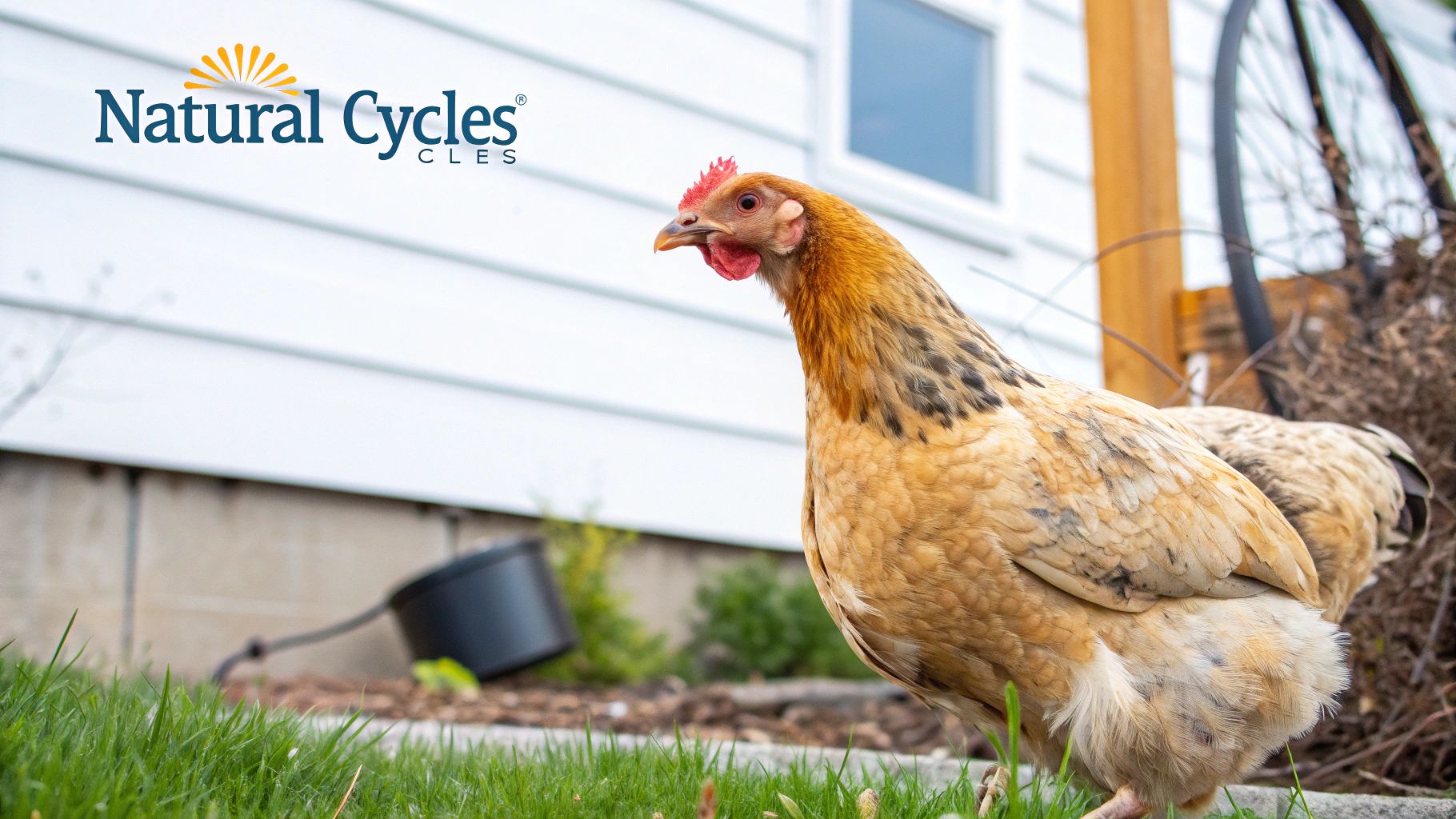
A hen's first year of laying is her rockstar era. She’ll typically start laying somewhere around 18-22 weeks old, and that first year is her most prolific. After that initial explosion of eggs, you can expect her output to drop by about 15-20% each year. It’s a gentle, gradual slowdown, not an abrupt stop.
This is a huge deal in commercial poultry. Peak production for a commercial flock hits around 25-30 weeks of age. But once those hens get to be 72-78 weeks old, their laying rate often dips below 50%, which isn't sustainable for large-scale farms. You can see this detailed in official USDA production reports. For us backyard keepers, it just means an older hen gracefully transitions into more of a beloved pet who still gives you the occasional delicious egg.
Key Takeaway: An older hen laying fewer eggs isn't sick—she's just aging gracefully. A four-year-old hen might only lay a couple of eggs a week compared to the five or six she laid in her prime, and that's completely normal.
The Annual Molt: A Necessary Wardrobe Change
One of the most dramatic—and frankly, alarming—reasons for a total egg shutdown is the annual molt. Think of it as a hen's version of a complete wardrobe overhaul. Once a year, usually in the fall as the days get shorter, she will shed all her old, worn-out feathers and grow a brand-new set for winter.
This process is a massive drain on her system. Feathers are made of over 85% protein, and regrowing a full set demands a huge amount of energy and nutrients. To pull it off, her body makes a strategic call: it shuts down the egg factory and diverts all resources to making new feathers.
During a molt, which can last anywhere from 8 to 16 weeks, expect zero eggs. Your flock might look scruffy, patchy, and just plain miserable. Don't worry; it's all part of the process.
How to Support Your Hens Through Molting:
- Boost Protein: Switch their feed to a higher-protein formula (20-22%). This gives them the building blocks they need to regrow feathers quickly and efficiently.
- Minimize Stress: This is not the time to introduce new birds or rearrange the coop. Keep things calm and predictable.
- Handle with Care: Those new pinfeathers are sensitive and can be painful if you handle them roughly. Be extra gentle.
Once she’s done, your hen will emerge with a beautiful, glossy new coat of feathers. After a short rest, she'll usually get right back to laying.
Broodiness: The Mothering Instinct Kicks In
Ever found one of your hens glued to a nesting box, all puffed up and refusing to budge? If so, you've met a broody hen. Broodiness is a powerful maternal instinct that tells a hen it’s time to stop laying eggs and start hatching them.
When a hen goes broody, her hormones completely shift her body's focus. The reproductive system temporarily shuts down, and her entire mission becomes incubating eggs—even if they aren't fertile.
You can spot a broody hen by her classic behaviors:
- She’ll sit on the nest day and night, only hopping off for a quick bite and a drink.
- She often plucks feathers from her chest to create a "brood patch," which allows her skin to directly transfer warmth to the eggs.
- She might get surprisingly defensive, letting out a low growl or even pecking if you try to reach under her.
This hormonal state lasts for about 21 days, which is the time it takes to hatch a chick. During this period, she won't lay a single egg. While it's a natural process, keep an eye on her. A really determined broody hen can neglect herself, leading to weight loss and dehydration. By understanding these fundamental cycles—age, molting, and broodiness—you can better read your flock's behavior and support them through their well-deserved breaks from laying.
How Your Coop Environment Affects Egg Production
A hen’s ability to lay eggs is tied directly to how safe and comfortable she feels. Her coop and run aren't just a house; they're her entire world. Even small changes can signal to her body that it's not a good time to be vulnerable and lay an egg, causing the internal "egg factory" to shut down.
A stressed-out hen will almost always stop laying. All her energy shifts from making eggs to pure survival—a classic "fight or flight" response. If you can get a handle on the environmental triggers that cause stress, you’ll be well on your way to a steady supply of fresh eggs.
The Power of Light
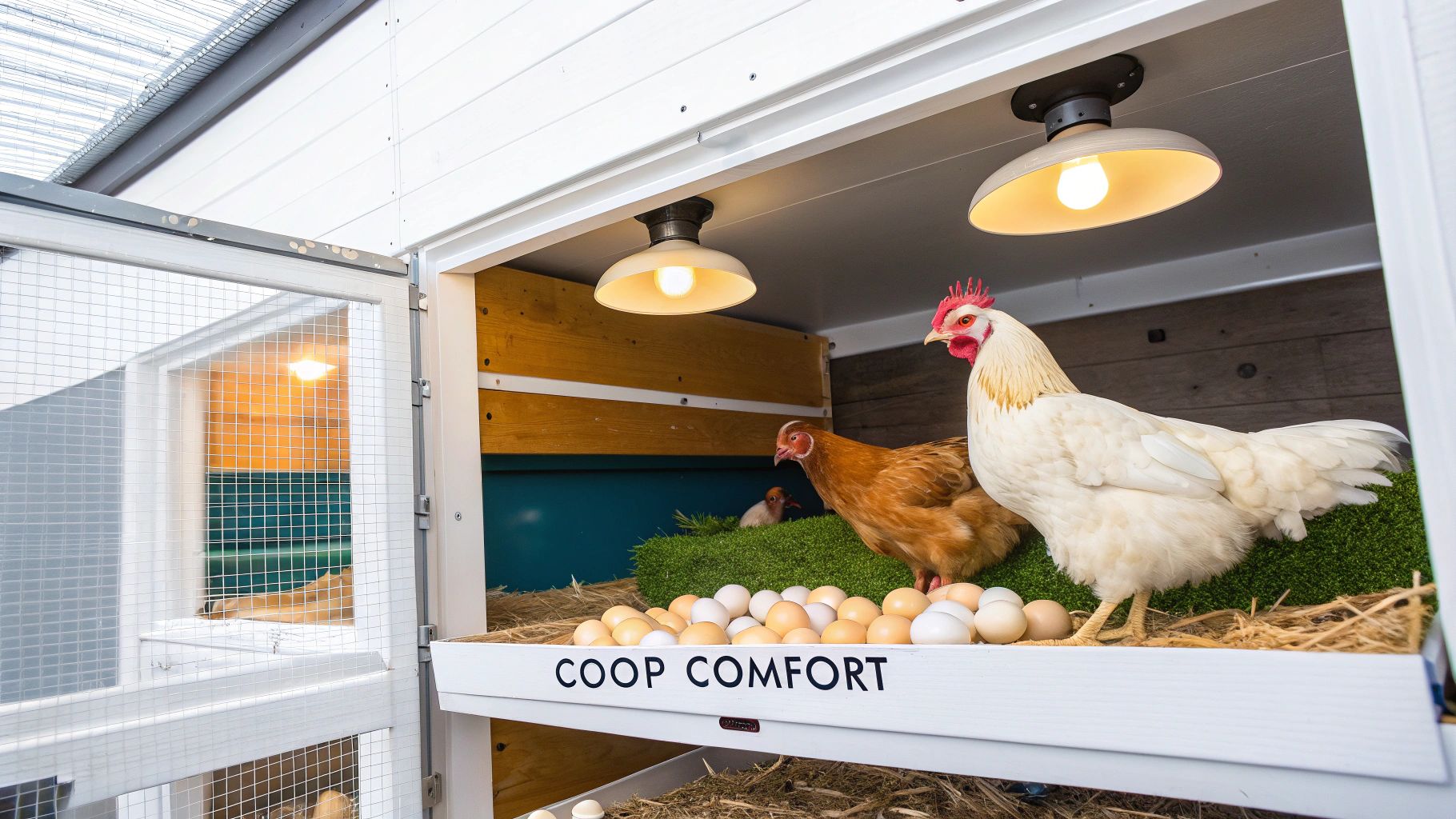
Nothing tells a hen to start laying like the sun. Daylight is the single most important trigger for her reproductive cycle. Her brain registers the length of the day, and when there's enough light, it kicks the egg-laying hormones into gear. This is why chickens are egg-laying machines in the long, bright days of spring and summer.
Most hens need at least 14 hours of daylight to lay well, with 16 hours being the ideal. Once the daylight hours dip below 12 in the fall, their bodies naturally start winding down. It’s a smart survival instinct, preventing them from trying to raise chicks when food is scarce and the weather is harsh.
Pro Tip: Letting your flock take a natural break over the winter is a great idea. It gives their bodies a much-needed rest after a long season of laying and is often the healthiest choice for them in the long run.
However, if you're aiming for eggs year-round, supplemental light is the answer. A simple low-wattage bulb (a standard 40-watt is fine) on a timer can do the trick. The key is consistency. Set the timer to add light in the early morning hours to hit that 14-to-16-hour total. Just be sure to introduce the light gradually as the days get shorter to avoid stressing them out with a sudden change.
Managing Flock Stressors
Chickens are absolute creatures of habit. They notice everything, and what seems like a minor change to us can feel like a major threat to them, shutting down egg production cold.
Common environmental stressors include:
- Overcrowding: Too many birds in a small space is a recipe for disaster. It leads to bullying, competition for resources, and poor air quality. A good rule is to provide at least 4 square feet of coop space and 10 square feet of run space per standard bird.
- Predator Threats: It doesn't take an actual attack to stop egg-laying. Just the shadow of a hawk passing overhead or a raccoon rattling the coop door at night can put the whole flock on high alert for days.
- Introducing New Birds: This is a huge social upheaval. Adding new chickens throws the pecking order into complete chaos, creating a ton of stress for both the new and existing birds. Always integrate new flock members slowly and carefully.
- Loud Noises: Constant construction next door, a neighbor's barking dog, or even a loud party can be enough to put your hens off lay.
Your goal is to create a calm, predictable, and safe environment. Make sure your coop is secure, provide plenty of perches and private nesting boxes, and try to stick to a routine. Collecting eggs efficiently also minimizes disturbance; our guide on designing your coop for easy egg collection has some great, practical tips for this.
Extreme Temperatures and Weather
Chickens have a "comfort zone" just like we do. When it gets too hot or too cold, their bodies have to work overtime just to maintain their core temperature. That leaves zero energy left over for making eggs.
During a blistering summer heatwave, you'll see your hens panting, eating less, and desperately seeking shade. This heat stress is a very common reason for a sudden drop in egg production. You can help by ensuring the coop has fantastic ventilation, offering lots of cool, fresh water (adding ice cubes is a great trick), and making sure they have shady spots in their run.
On the flip side, in the dead of winter, a hen burns a massive amount of calories just staying warm. While they're surprisingly tough birds, that energy expenditure often comes at the cost of eggs. A draft-free (but not airtight!) coop with a thick layer of clean bedding helps them conserve body heat and stay comfortable, which is key to getting them back to laying when spring arrives.
The Critical Link Between Nutrition and Laying
Think of your hen as a tiny, highly efficient egg factory. The quality and quantity of what you put into that factory—the fuel, the raw materials—directly determines the quality and quantity of the product that comes out. When it comes to egg production, nutrition isn't just a contributing factor; it is the absolute foundation.
An improper diet is one of the most common and easily fixed reasons why chickens stop laying eggs.
Just like a car can't run on watered-down gas, a hen can't produce eggs without the right nutritional building blocks. Her body’s first priority is always self-preservation. Making an egg is a resource-heavy process, and if her own health is at risk from a lack of key nutrients, her internal systems will hit the brakes on production almost immediately.
The Two Pillars of a Layer Diet: Protein and Calcium
While a complete layer feed contains a whole spectrum of vitamins and minerals, protein and calcium are the undisputed superstars of egg production. If either of these is out of whack, the entire operation can grind to a halt.
Protein is what an egg is mostly made of—both the white and the yolk are packed with it. A good quality layer feed should contain 16-18% protein. If a hen’s diet drops below that, she simply won't have the raw materials to form an egg. This often happens unintentionally when well-meaning owners dilute the diet with too many low-protein treats like scratch grains or kitchen scraps.
A good rule of thumb is the 90/10 rule: at least 90% of your flock's diet should come from a balanced layer feed, with no more than 10% coming from treats. This ensures they get the core nutrition they need without filling up on junk food.
Calcium is the other non-negotiable. Imagine trying to build a brick wall without any mortar—that's what a hen's body faces when trying to form an eggshell without enough calcium. It takes a huge amount of it, about 2.5 grams for a single shell, which is nearly 10% of her body's total calcium supply!
Without enough calcium, you'll start seeing thin, weak, or even rubbery shells. If the deficiency gets bad enough, her body will stop laying altogether to protect its own skeleton from being leached of calcium.
Choosing the Right Feed for the Right Age
Feeding your flock the correct type of feed for their life stage is absolutely crucial. A chick's needs are vastly different from a laying hen's, and getting it wrong can delay or stop egg production entirely.
- Starter Feed (0-8 weeks): This feed is packed with protein (20-24%) to fuel that incredible, rapid growth. It's kept low in calcium because too much at this fragile age can cause permanent kidney damage.
- Grower Feed (8-18 weeks): As they transition from fluffy chicks to gawky teenagers, the protein drops slightly (18-20%), and calcium stays low while their bodies mature.
- Layer Feed (18+ weeks): Once hens start laying, their needs flip. They require less protein (16-18%) but a significant boost in calcium (3.5-5%) to support daily shell formation.
This progression is designed to meet their specific biological needs at each phase. To learn more about creating the perfect menu, our guide on what to feed laying hens offers a detailed breakdown.
Chicken Feed Comparison by Life Stage
Understanding the nutritional differences in chicken feed is crucial for supporting growth and egg production at every stage. The right balance of protein and calcium changes dramatically as your birds mature, and this table breaks down what you need and when.
| Feed Type | Primary Purpose | Typical Protein % | Typical Calcium % |
|---|---|---|---|
| Chick Starter | Rapid growth and development | 20-24% | ~1.0% |
| Pullet Grower | Healthy maturation, not laying | 18-20% | ~1.0% |
| Layer Feed | Sustained egg production | 16-18% | 3.5-5.0% |
Switching feeds at the right time ensures your flock has the exact tools they need for the job, whether it's growing strong bones or laying beautiful, sturdy eggs.
The Role of Treats and Supplements
While a quality layer feed should be the core of their diet, certain treats and supplements can be incredibly helpful. The key is simply to choose wisely.
Beneficial Supplements:
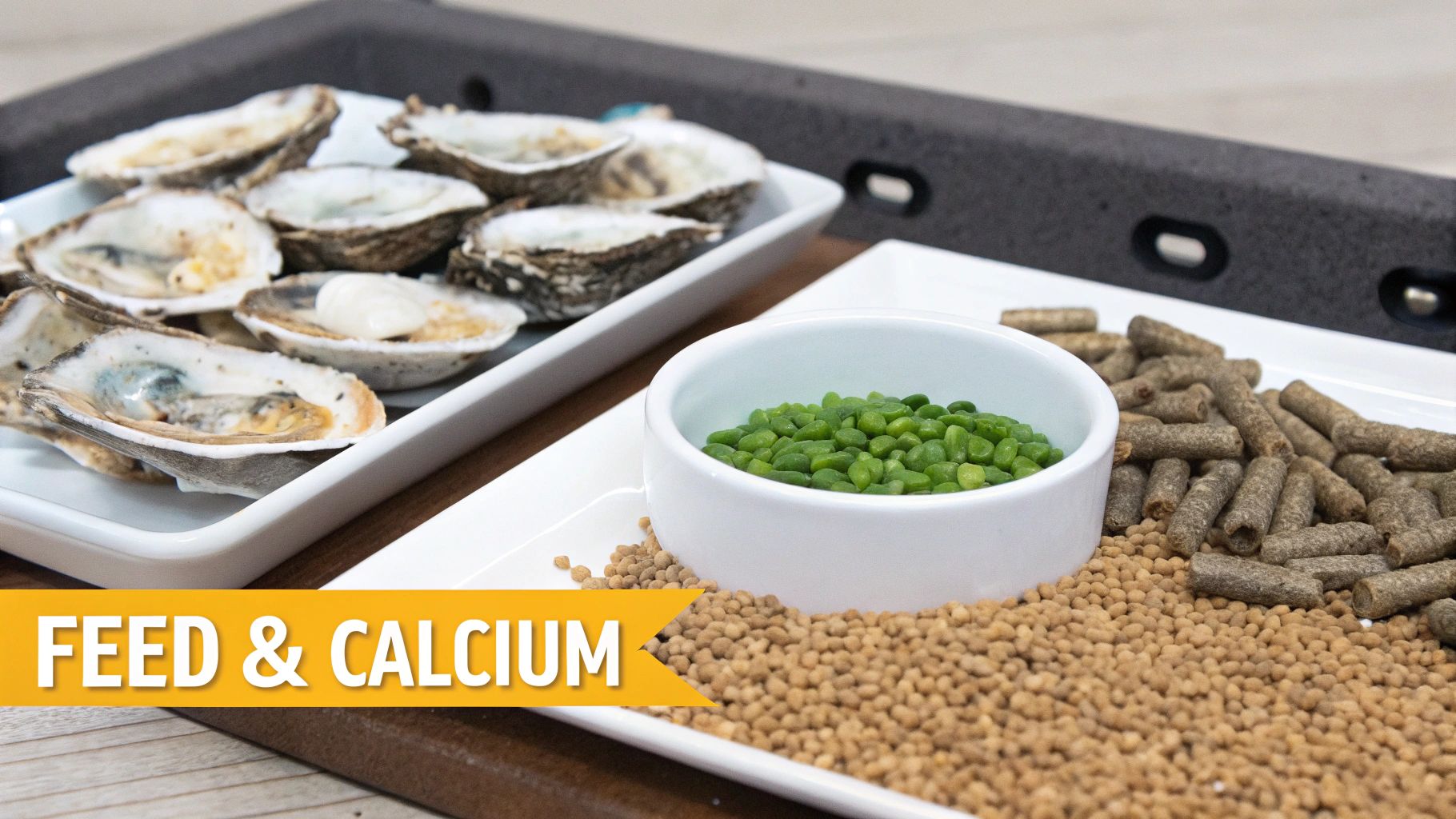
- Oyster Shells: One of the best things you can do is offer a separate, free-choice source of calcium like crushed oyster shells. This allows each hen to self-regulate, taking only what she needs for that day's egg without overwhelming her system.
- High-Protein Treats: Healthy, protein-rich snacks like black soldier fly larvae are fantastic for supporting feather regrowth during a molt or just giving your flock a nutritious boost.
Treats to Limit or Avoid:
- Scratch Grains: Chickens go wild for them, but scratch grains are basically candy—low in protein and high in carbs. Too much can lead to pudgy birds and a drop in laying.
- Certain Kitchen Scraps: Be careful what you toss in from the kitchen. Never feed your flock anything salty, sugary, spoiled, or moldy. Uncooked beans, avocado pits and skins, and green potato peels are all toxic to chickens.
Ultimately, a sudden stop in laying is often a direct message from your hen: something is missing from her diet. By ensuring she has constant access to a high-quality layer feed, fresh water, and supplemental calcium, you provide the essential fuel her egg factory needs to keep running smoothly.
Identifying Health Issues That Stop Egg Laying
When an entire flock suddenly stops laying, it's often a red flag signaling a bigger problem. A healthy hen is a productive hen, so an empty nesting box is frequently the first clue that something is wrong. Her body, in an incredible act of self-preservation, will halt the energy-draining process of egg production to divert all resources toward fighting off an illness or parasite.
Learning to be a sharp observer of your flock is one of the most important skills you can have. By catching the subtle, early signs of distress, you can often step in before a small issue blows up into a flock-wide disaster. This is the key to figuring out why your hens stopped laying and getting them back on their feet.
The Unseen Threat of Parasites
Parasites are a common, but often overlooked, reason for a drop in egg production. These unwelcome guests literally drain a hen of the vital nutrients and energy she needs, leaving nothing in the tank for making eggs. They typically fall into two main camps: external and internal.
External parasites, like mites and lice, are tiny pests that live on a chicken's skin and feathers, feeding on their blood. A bad infestation can quickly lead to anemia, which you can often spot by a pale comb and wattles. You can check for them by parting the feathers around her vent and under her wings—they’ll look like tiny moving specks or little clumps of eggs stuck to the base of the feather shafts.
Internal parasites, such as various types of worms, take up residence in a chicken's digestive tract. They steal nutrients right from the food your hen eats, which can cause weight loss, lethargy, and strange-looking droppings. A heavy worm load will almost certainly bring egg-laying to a stop.
Health Detective Tip: Get in the habit of checking your flock's droppings. Healthy chicken poop varies, but be on the lookout for anything that seems way off, like watery diarrhea, blood, or visible worms. These are clear signs that something isn't right internally.
Common Illnesses That Halt Egg Production
While parasites can slowly wear a hen down, a sudden illness can bring egg-laying to a screeching halt, sometimes overnight. A sick chicken will often try to hide her symptoms—it's a survival instinct—so you need to be watching for small changes in her behavior and appearance.
Here are a few common health problems to keep an eye out for:
- Respiratory Infections: Listen for sneezing and coughing, and look for watery eyes or little bubbles in the corner of an eye. A hen that's struggling just to breathe doesn't have the energy to lay.
- Digestive Issues: Conditions like coccidiosis can cause serious intestinal damage, leading to bloody droppings and a rapid decline in health.
- Egg-Bound Hen: This is a life-threatening emergency where an egg gets stuck in the oviduct. She might look like she's straining, walk like a penguin, and go in and out of the nest box without laying. She needs your help, and fast.
For a more detailed checklist, our guide covering the common symptoms of illness in chickens can help you become a more confident health detective for your flock.
Your First Steps When You Suspect Sickness
If you notice a hen that seems under the weather, the first and most important step is to isolate her immediately. This simple action protects the rest of your flock from anything contagious and lets you observe the sick bird closely without her getting picked on by the others.
Once she's separated, put her in a calm, warm, and secure space with easy access to fresh food and water. Keep a close eye on her symptoms. Sometimes, a little supportive care is all that's needed. However, if she seems to be in real distress, isn't eating or drinking, or her condition gets worse, it's time to call a veterinarian with poultry experience. Quick, decisive action is your best tool for keeping your flock healthy, happy, and laying.
Your Actionable Troubleshooting Checklist
When your hens suddenly stop laying, it’s easy to feel a bit overwhelmed. There are so many potential causes, where do you even begin?
I've put together this simple checklist to help you troubleshoot the problem like a seasoned pro. We'll start with the most common (and easiest to fix) issues first, working our way through a logical process to pinpoint exactly what’s going on in your coop. Think of it as your roadmap back to a full nesting box.
Step 1: Start With the Obvious
Before you jump to conclusions about a serious health problem, let's cover the simple stuff. Chickens can be surprisingly sneaky, and often the answer is right under our noses.
- Check for a Hidden Nest: First things first, play detective. Chickens are masters of finding a quiet, secret spot to lay their eggs if their nesting boxes are messy, crowded, or just not to their liking. Poke around under bushes, in tall grass, behind the woodpile—anywhere a hen might feel safe and secluded.
- Consider the Season: Take a look at the calendar. If it's fall or winter, shorter days are the most likely culprit. The decrease in natural light is a powerful signal for a hen's body to take a well-deserved break from laying.
- Look for a Molt: Is your coop looking a bit like a pillow fight exploded? If you see feathers everywhere, you've likely found your answer. Hens stop laying during their annual molt because all their protein and energy is being diverted into growing a new set of feathers for the winter.
Step 2: Evaluate Their Daily Essentials
If your hens aren't hiding eggs and aren't molting, the next place to look is their daily care. Small changes in their diet or environment can have a big impact on egg production.
- Inspect Food and Water: Is their feeder full of fresh layer pellets? A hen can't make eggs out of thin air. More importantly, check their water. Dehydration, even for just a few hours on a hot day, can shut down the egg factory for days.
- Review Their Diet: Are you following the 90/10 rule? Treats should make up no more than 10% of their diet. Too many low-protein goodies like scratch grains or kitchen scraps can dilute the carefully balanced nutrition in their layer feed, leaving them without the resources to form eggs.
- Assess for Stress: Chickens are creatures of habit, and any disruption can throw them off. Has a hawk been circling overhead? Did you recently introduce new birds to the flock? Look for signs of bullying, overcrowding, or anything else that could be making your girls nervous.
Step 3: Perform a Gentle Health Check
Okay, so the environment seems fine and their diet is on point. Now it's time for a hands-on check of the birds themselves. A quick, gentle inspection can tell you a lot about what's going on internally.
This decision tree gives you a great visual guide for what to look for when you have a hen in your hands.
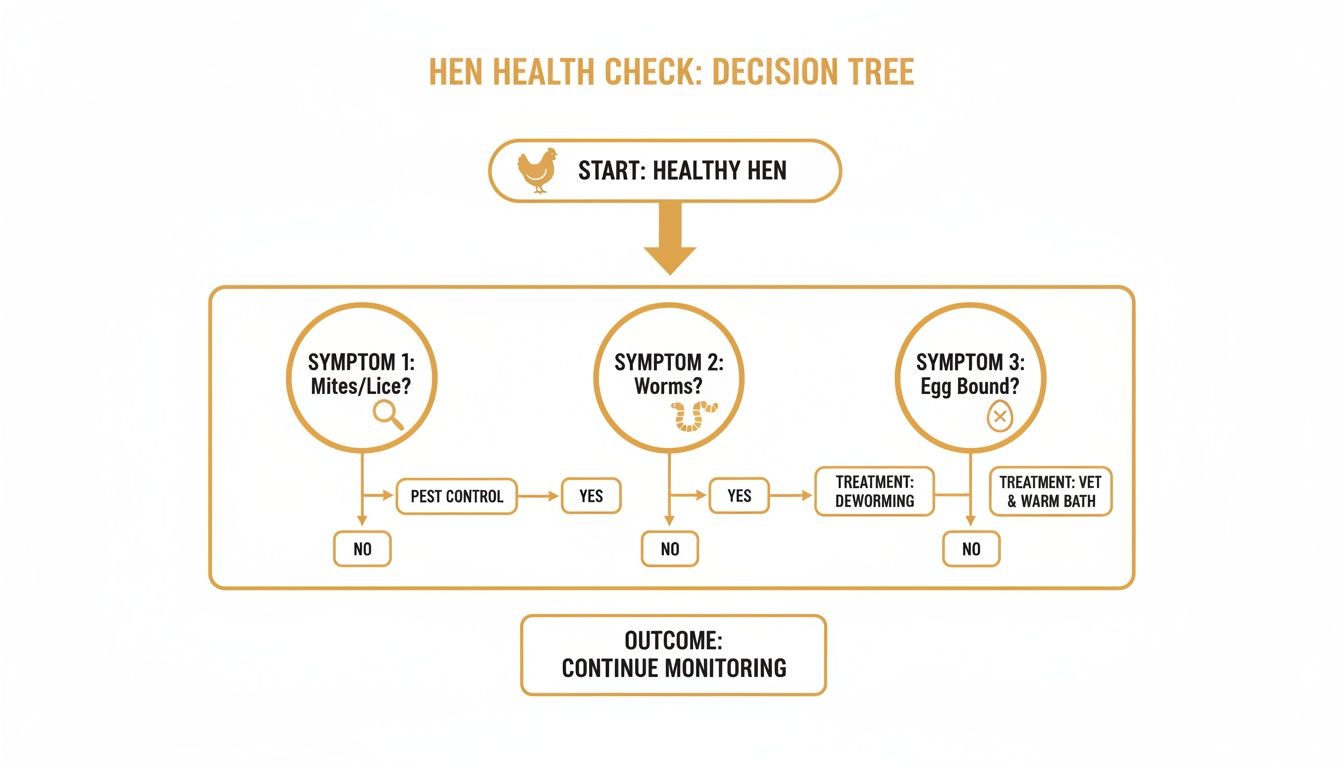
As the chart shows, things like lethargy, pale combs, or messy vents are all clues. Gently part the feathers around her vent and under her wings to check for tiny moving specks—mites or lice. Pay attention to her posture, her breathing, and the quality of her droppings. These observations will help you quickly narrow down the possibilities, from a simple case of parasites to a more serious issue like being egg-bound.
Common Questions About Egg Laying
Even after you've run through all the possibilities, a few questions always seem to pop up. Let's tackle some of the most common ones I hear from fellow chicken keepers when their egg baskets start feeling a little light.
How Long Does It Take for a Hen to Start Laying Again After a Scare?
This really depends on the hen and what spooked her. For a minor fright—say, a car backfiring or a dog barking a little too close to the run—she might just skip a day, maybe two, before getting back on track.
But for a major stressor, like a close call with a hawk or the chaos of moving to a completely new coop, you'll need more patience. It can easily take one to two weeks for her system to settle down and for her to feel secure enough to start laying again.
Will My Hens Stop Laying Eggs for Good When They Get Old?
Yes, they will. It's a completely natural part of a hen's life. Think of it as her well-earned retirement. A hen is an egg-laying powerhouse for her first couple of years, but after that, you'll notice a gradual drop-off in production.
Most hens will slow down significantly and eventually stop laying altogether by the time they're five to seven years old. Some resilient heritage breeds might surprise you with an occasional egg well into their golden years, but they won't be consistent.
A Little Perspective: When an older hen stops laying, it doesn't mean she's sick or broken. It’s just biology. Her body is simply shifting its resources away from reproduction as she ages.
What Are the Best High-Calcium Treats to Help My Hens Lay?
While their main layer feed should be the foundation of their diet, a few specific treats can give them a great calcium boost. The absolute best thing you can do is offer crushed oyster shells in a separate dish, so they can take what they need, when they need it.
Another fantastic option is dried black soldier fly larvae. They're not just a treat chickens go crazy for; they're also naturally packed with both calcium and protein, which is perfect for building strong eggshells. These kinds of treats support egg production without watering down the balanced nutrition they get from their regular feed.
If you're looking for a safe, USA-grown treat that delivers that calcium and protein punch for stronger eggshells and healthy feathers, give Pure Grubs a try. Our black soldier fly larvae offer the kind of natural nutrition that helps a flock thrive. You can learn more and grab a bag for your girls at PureGrubs.com.