

Symptoms of Illness in Chickens Every Owner Should Know
The absolute best way to spot a sick chicken early is to know your flock inside and out. It really comes down to knowing what "normal" looks like for your birds. The most common red flags are things like lethargy, a bird hiding from the others, messy or ruffled feathers, a pale comb, or weird-looking droppings. Catching these little changes from their everyday routine is your best shot at stopping a problem before it gets serious.
Your Guide to Spotting a Sick Chicken Early

The real secret to a healthy flock isn't buried in some vet textbook; it’s all about consistent, daily observation. You're the flock's manager, and you get to know their unique rhythm.
You know exactly which hen bolts for the feeder first, which one has a favorite dust-bathing spot, and the happy little clucks they make when they’re content. This deep, personal knowledge is your single most powerful tool for spotting trouble.
Once you’ve got that baseline down, any little thing that’s out of place will stick out like a sore thumb. Think of it like the familiar sounds of your own home—you instantly notice a weird noise or an unusual silence. It’s the exact same principle with your chickens.
The First Clues Are Often Behavioral
Long before you see any physical signs of sickness, a chicken’s behavior will often change. These subtle shifts are your first and best warning signs, giving you a crucial head start.
Keep your eyes peeled for these early red flags:
- Social Isolation: A chicken that suddenly starts keeping to itself is a classic sign something's wrong. They do this instinctively to seem less vulnerable to predators or to avoid spreading germs.
- Pecking Order Shake-Up: If your top hen suddenly acts timid, or a bird at the bottom of the ladder is getting picked on more than usual, it can be a sign of weakness.
- Loss of Interest: Is a hen ignoring her favorite scratch grains? Has she stopped foraging with the rest of the flock? A lack of interest in food or activities is a major warning.
To help you get into the habit, a quick daily scan can make all the difference. This simple table breaks down what to look for each day.
Daily Health Check Quick Reference
| Symptom Category | Key Signs to Watch For |
|---|---|
| General Behavior | Hiding from the flock, lethargy, no interest in treats or foraging. |
| Physical Appearance | Ruffled or messy feathers, pale comb/wattles, squinty or dull eyes. |
| Movement | Limping, stumbling, reluctance to move, holding a wing strangely. |
| Breathing | Gaping (open-mouth breathing), wheezing, sneezing, or coughing sounds. |
| Droppings | Runny, bloody, or unusually colored poop (e.g., bright green, yellow). |
Making this quick check part of your daily routine will make spotting abnormalities second nature.
Being proactive starts with simply paying attention. When you catch these behavioral hints early, you stop being reactive to big problems and start preventing them from ever escalating. It's the most important skill for anyone who wants to successfully raise backyard chickens.
Building your confidence just comes down to these daily check-ins. You don’t need a veterinary degree to see that a bird just seems "off." Always trust your gut. This guide is here to help you connect what you're seeing with specific symptoms so you can take action quickly and confidently.
Looking for the Physical Signs of a Sick Chicken
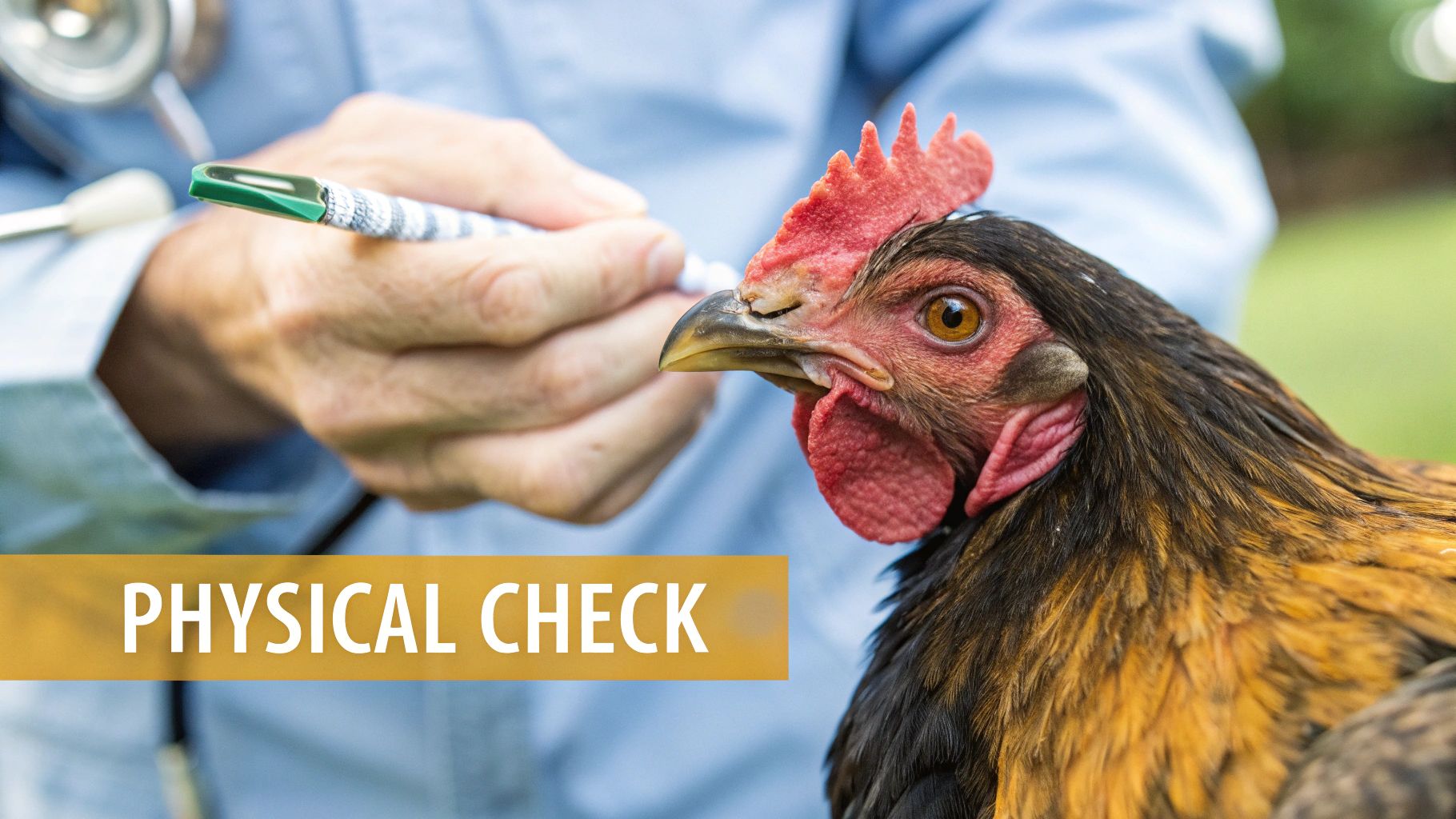
While a chicken's behavior often gives you the first heads-up that something's wrong, a physical check is your next critical move. Think of it like a gentle, head-to-toe wellness exam for your bird. When you know what to look for, you can gather the specific clues needed to figure out what’s happening and just how serious it might be.
The best way to do this is systematically. I always start at the head and work my way down, taking mental notes of anything that looks off compared to a healthy bird. This method ensures you don’t overlook the subtle but crucial signs.
Head and Face Examination
A chicken's head is like a health dashboard, giving you instant visual feedback on its internal condition. A healthy, happy chicken has a bright, alert look, with clear eyes and a vibrant red comb and wattles.
This is the perfect place to start your inspection. Pay close attention to these areas:
- Comb and Wattles: In most breeds, these should be a rich, cherry red and feel soft and pliable. A pale, shrunken comb can be a sign of anemia, often caused by parasites like mites or worms. If you see a purple or bluish tint—a condition called cyanosis—it signals poor blood circulation or a severe respiratory problem that needs immediate attention.
- Eyes and Nostrils: A healthy bird’s eyes are bright, wide open, and completely clear. Be on the lookout for any discharge, bubbling, or swelling around them. The nostrils, or nares, should be just as clean and dry. Any mucus, crustiness, or audible sneezing is a dead giveaway for a respiratory infection.
Think of a chicken's comb as a visible blood pressure gauge. When it changes from its normal bright red, it's a direct sign that something is off internally—it could be stress, a parasite load, or a more serious circulatory or respiratory issue.
Feathers and Body Condition
A chicken’s plumage is much more than just insulation; it’s a direct reflection of its overall health. A bird in good shape will have smooth, well-kept feathers with a nice natural sheen.
When you handle your bird, check for two key things: feather quality and overall physical condition. Ruffled, broken, or constantly dirty feathers are a big red flag. A bird that doesn't feel well will stop preening, and its appearance will quickly become scruffy and unkempt.
Pay special attention to the feathers around the vent (the all-in-one opening for droppings and eggs). If you see caked-on or soiled feathers, a condition often called "pasty butt," it’s a clear sign of diarrhea or digestive trouble. While you're back there, gently part the feathers under the wings and around the vent to look for tiny moving specks—those could be mites or lice.
Legs, Feet, and Mobility
A chicken’s ability to walk, run, and scratch around is fundamental to its well-being. Any problem with its legs or feet can quickly prevent it from getting to food and water or escaping a flock bully.
First, just watch how your chicken moves. Is its gait normal, or can you see a noticeable limp? A reluctance to put weight on one foot is an obvious sign of an injury or infection.
Then, get in for a closer look at the legs and feet for these common issues:
- Scaly Leg Mites: Look for raised, crusty, or strangely thick scales on the shanks and toes. This is the classic sign of scaly leg mites, tiny parasites that burrow under the scales and cause a lot of irritation.
- Bumblefoot: Gently check the bottom of the footpad for any swelling, redness, or a distinct black scab. This is a staph infection known as bumblefoot, which often starts from a small cut and can become a serious, painful abscess if left untreated.
- Joint Swelling: Feel the joints in the legs. Any unusual heat or puffiness could point to an infection or a joint disorder.
What Your Chicken’s Droppings Are Telling You
It’s not the most glamorous part of chicken keeping, but checking your flock’s droppings is one of the most effective ways to monitor their internal health. A normal, healthy dropping has three distinct parts: a solid brown or greenish portion (the feces), a white "cap" (urates), and a small amount of clear liquid (urine).
While droppings can change a bit based on diet, hydration, or even stress, certain changes are clear symptoms of illness in chickens.
Here’s a quick guide to what different droppings might mean:
| Dropping Appearance | Possible Cause |
|---|---|
| Bloody Droppings | A primary symptom of coccidiosis, a serious parasitic disease. |
| Bright Green Droppings | Can indicate the bird isn't eating or may have an internal infection. |
| Watery or Runny | Suggests diarrhea, which could be from stress, heat, or illness. |
| Yellow and Foamy | Often associated with internal worms or other intestinal problems. |
By getting familiar with these physical signs, you build a powerful mental checklist. It helps you move beyond just knowing a chicken is sick to understanding how it's sick—which is always the first step toward taking the right action.
2. Spotting Trouble in How Your Chickens Act
Sometimes, the first sign that a chicken is sick has nothing to do with how it looks, but everything to do with how it acts. Chickens are creatures of habit and intensely social, so a sudden change in their normal routine is a massive red flag. If you learn to read their behavior, you can often catch an illness days before the more obvious physical symptoms show up.
Think of your flock as a bustling little community. Each bird knows its place in the pecking order and has a daily routine. When one chicken starts acting "off," it's like a gear grinding in a machine—the whole dynamic changes, and if you're watching closely, you'll notice.
The Flock's Social Barometer
A healthy flock is a busy one. They'll be out and about, scratching for bugs, dust bathing together, and chattering away with soft clucks. So, when one bird suddenly pulls away from all that activity, it's like a warning light on your car's dashboard.
Isolation is probably the most serious behavioral sign you can see. It's pure instinct. In the wild, a sick bird is a walking invitation for a predator, putting the entire flock at risk. By hiding away, a sick chicken is trying to protect itself and the group. If you see a hen tucked away in a corner of the coop, avoiding the feeder, or roosting by herself during the day, you need to investigate right away.
A chicken that separates itself from the flock isn't just being antisocial—it's sending a powerful distress signal. This instinct to hide when vulnerable is a clear indication that the bird feels unwell and is trying to cope with an underlying health issue.
These core behavioral changes—isolation, lethargy, and not eating—almost always appear together, painting a clear picture of a bird in trouble.
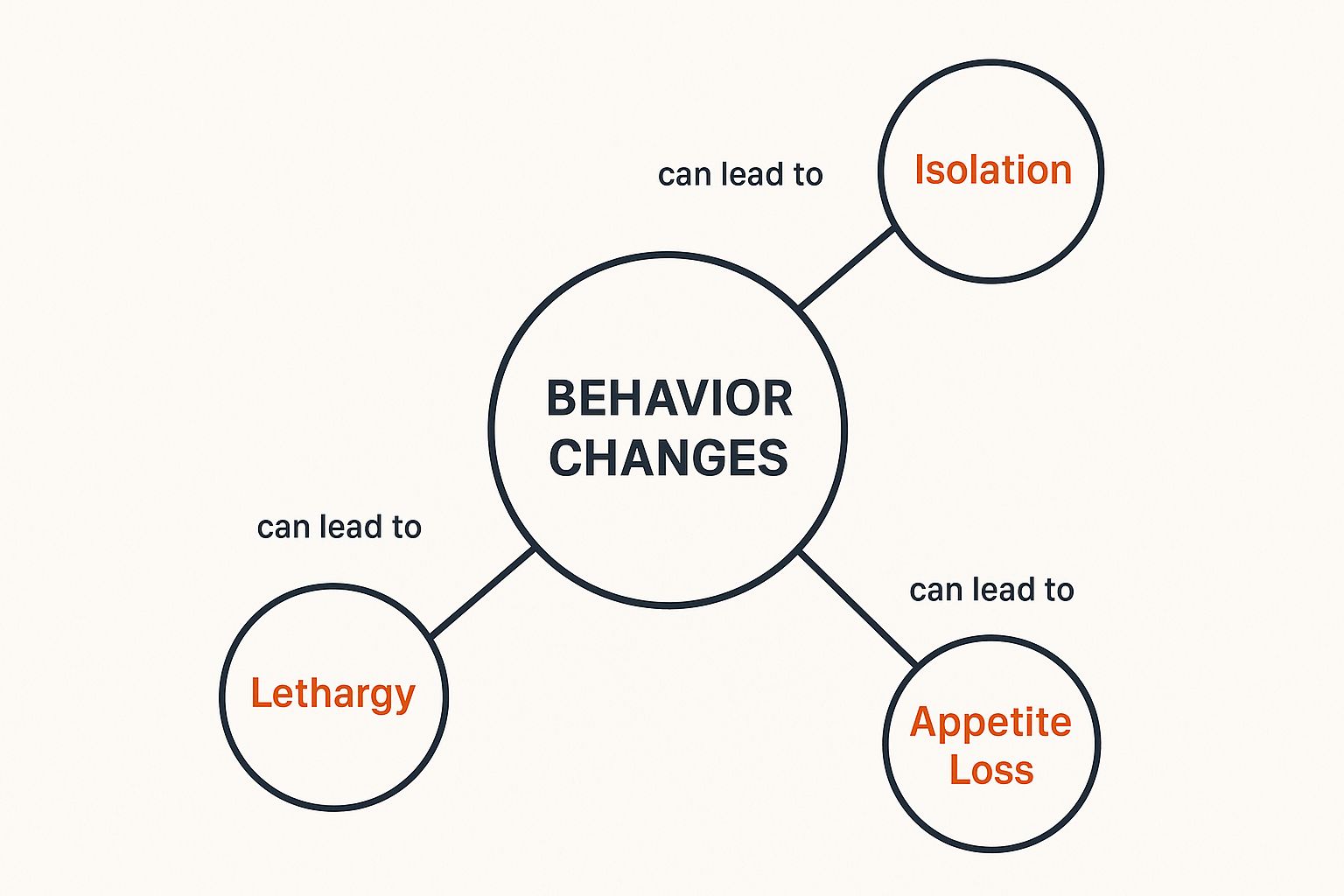
As you can see, these three signs are deeply connected. A sick bird feels tired, so it isolates itself. And because it feels bad, it stops eating. One symptom almost always leads to the others.
Lethargy and Not Eating
A healthy chicken is a tiny tornado of activity—always scratching, pecking, and exploring. So, lethargy, or a sudden lack of energy, is a big deal. A lethargic chicken might just stand in one spot, often hunched over with fluffed-up feathers, showing zero interest in anything going on around it.
This listlessness almost always goes hand-in-hand with a loss of appetite. Chickens are motivated by their stomachs. When a bird turns its beak up at its favorite scratch grains or doesn't come running for treats, something is definitely wrong. This one-two punch of lethargy and not eating is a classic sign of nearly every chicken ailment, from a simple upset stomach to a serious infection.
Watching your flock's eating and drinking habits is one of the best things you can do. In fact, poultry health studies often show that a drop in feed and water consumption is one of the very first signs of diseases like Avian Influenza, sometimes showing up 24 to 48 hours before any other major symptoms appear.
Changes in Their "Voice" and Egg Laying
The sounds your flock makes can also tell you a lot. You get to know the happy, contented clucking they make while foraging and the proud "egg song" a hen belts out after laying. When those normal sounds change, listen up.
A sick chicken might get very quiet, or its clucks might sound weak and pained. Instead of the usual cheerful chatter, you might hear little more than a distressed peep, or even complete silence from a normally noisy bird.
Finally, the nest box is like a daily health report for your laying hens. A sudden change in egg production is a classic sign of stress or illness. Keep an eye out for these things:
- A Sudden Stop: A reliable layer that suddenly stops laying altogether could have an internal problem.
- Irregular Laying: If your daily layer starts laying only every few days, it can signal that something is off.
- Poor Quality Eggs: Finding soft-shelled, misshapen, or even shell-less eggs means a hen's system is under serious stress.
By tuning into these behavioral clues, you go from being a chicken keeper to a true flock manager. You're learning their language, which allows you to step in early and keep your whole flock healthy and happy.
Recognizing Respiratory and Digestive Distress
Once you've spotted the physical and behavioral red flags, the real detective work begins. The next step is connecting those clues to the specific body system that's under attack. Think of it this way: a single cough is just a cough. But when you see a cough combined with goopy eyes and a runny nose, you've suddenly got a much clearer story unfolding.
This is how you go from just listing symptoms of illness in chickens to actually understanding what they mean. By focusing on the two most common trouble spots—the respiratory and digestive systems—we can start to zero in on the ailments that most often plague backyard flocks.
Decoding Respiratory Symptoms
A chicken's respiratory system is notoriously delicate. Any sign of trouble here is a big deal because these illnesses can rip through a flock with breathtaking speed. The sounds your birds make are usually the first thing you'll notice.
Get quiet and listen for these tell-tale signs:
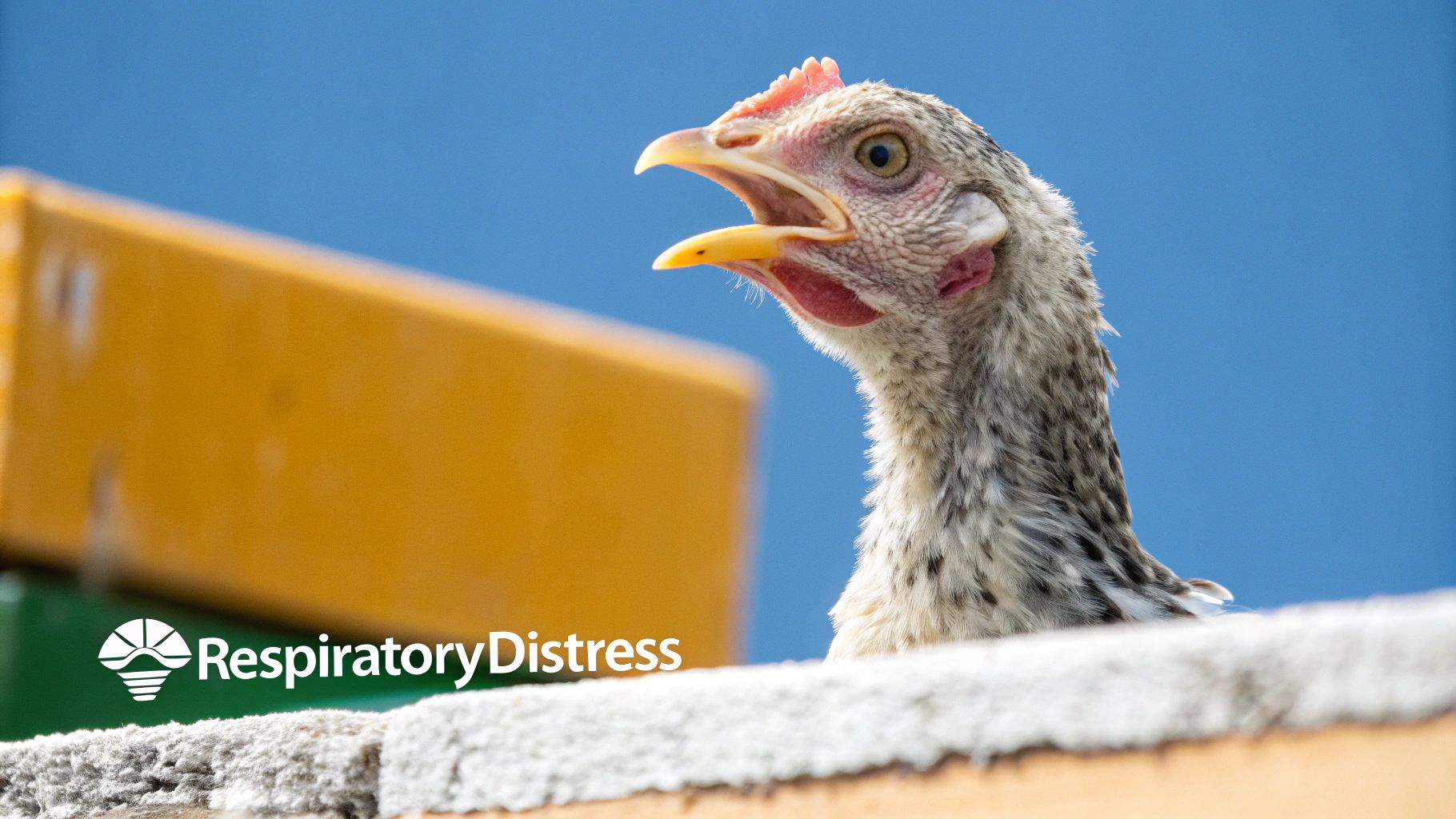
- Coughing, Sneezing, and Gaping: A chicken's cough or sneeze isn't too different from our own. Gaping, however—that open-mouthed breathing—is a five-alarm fire. It means the bird is in serious distress and can't get enough air.
- Wheezing or Rattling: If you hear a wet, gurgly sound from the chest, often called a "rattle," that's a classic sign of fluid building up in the airways.
- Discharge: Be on the lookout for any mucus—clear, bubbly, or thick—coming from the nostrils or eyes. Puffy sinuses or swollen areas around the eyes are also dead giveaways.
When you see these symptoms pop up together, they often point toward common diseases like Infectious Bronchitis or Mycoplasmosis. It is absolutely critical to isolate any bird showing these signs immediately to protect the rest of the flock.
When multiple birds in your flock suddenly start gasping and coughing, the situation becomes much more urgent. That kind of rapid spread is the hallmark of a highly contagious disease, and you need to act fast to prevent a total flock catastrophe.
One of the biggest modern worries with these symptoms is Avian Influenza. This viral disease has been a massive concern lately, with widespread H5N1 outbreaks hitting wild birds and poultry across the globe. A recent U.S. outbreak, for example, led to the loss of over 20 million egg-laying hens, which threw the nation's egg industry into chaos. While the CDC notes that the risk to humans is low, it’s a situation health organizations are watching like a hawk.
Understanding Digestive System Distress
A chicken's gut health is the engine that powers its entire body. When things go wrong here, it can quickly spiral into dehydration, malnutrition, and weakness. The most obvious clues will come from their appetite, the condition of their crop, and, of course, their droppings.
The crop is that little pouch at the base of a chicken’s neck where food gets stored and softened before digestion. A healthy crop feels full after a meal but should be completely empty by morning. If it feels hard and solid (an impacted crop) or mushy and stinks (a sour crop), you're looking at a blockage or a nasty yeast infection.
Unexplained weight loss is another huge clue that something is wrong on the inside. If a bird seems to be eating normally but feels light and bony when you pick her up, it often means internal parasites like worms are stealing all her vital nutrients.
Key Digestive Warning Signs
Keep a close eye out for these specific signs that something is wrong internally. These symptoms often appear together and can help you and your vet narrow down the cause.
- Diarrhea: Look for droppings that are consistently watery or have an unusual color. This can be caused by anything from simple stress to a serious bacterial infection.
- Bloody Droppings: Seeing bright red blood in the poop is the number one symptom of coccidiosis, a dangerous intestinal parasite that can kill, especially in young birds.
- Pasty Butt: This is when soiled, matted feathers clog up the vent. It's a clear sign of persistent diarrhea and a major digestive problem.
- Loss of Appetite: A chicken that suddenly refuses to eat could have a crop issue or simply be feeling too sick from an internal infection to have an appetite.
A balanced diet is your first line of defense against many of these digestive issues. Giving them healthy treats in moderation also goes a long way in supporting their overall health. For some great ideas, check out our guide on the best snacks for chickens. Good nutrition builds a strong foundation, making your flock far more resilient. By learning to read the signals of both respiratory and digestive distress, you can give your vet a much clearer picture, which leads to a faster diagnosis and more effective treatment.
Identifying Common Parasites and Infections
Beyond general signs of sickness, some of the biggest threats to your flock come from specific invaders like parasites and bacteria. These uninvited guests work in different ways—some attack from the outside, while others cause chaos from within. Learning to spot the distinct signs of each is the key to treating the right problem and stopping it from turning into a flock-wide disaster.
Think of parasites as tiny thieves. External ones, like mites and lice, steal your chicken's comfort and well-being. Internal parasites, like worms, steal vital nutrients right out of their system. Each leaves its own calling card.
Spotting External Pests
External parasites are often the easiest to catch, but only if you know what you’re looking for. These pests live on a chicken's skin and feathers, causing constant irritation and stress that can really take a toll. A bird suffering from an infestation will often give itself away with its behavior long before you see a single bug.
You might notice a hen that just can’t seem to settle down. She's constantly preening, picking at her feathers, or seems unusually antsy. That frantic grooming isn't just for show; it's a desperate attempt to get relief from thousands of tiny pests crawling on her skin.
When you do a physical check, here are the tell-tale signs:
- Visible Specks: Gently part the feathers around the vent and under the wings—these are warm, protected areas where pests love to hide. Look for tiny, moving dark specks (mites) or clumps of pale eggs glued to the feather shafts (lice).
- Feather Loss: All that pecking and scratching leads to damage. You'll often see bald patches, especially around the vent, back, and neck.
- Red, Irritated Skin: The constant biting from mites leaves the skin looking raw, red, and inflamed. In really bad cases, you might even find scabs.
Uncovering Internal Parasites
Internal parasites, mainly worms, are much sneakier. Since they live inside the digestive tract, the symptoms of illness in chickens they cause are often gradual. You might not notice anything is wrong until the infestation gets severe.
A chicken with a heavy worm load might still be eating with gusto, but you'll notice she's slowly losing weight or just failing to thrive. The worms are simply stealing the nutrients from her food before her body can absorb them. A pale comb and wattles are also classic signs, pointing to anemia caused by the parasites.
Think of internal parasites as a hidden tax on your chicken's health. The bird keeps eating, but the worms take their cut first, leaving her with diminishing returns and slowly draining her of energy and vitality.
Understanding Bacterial Infections
Unlike parasites, bacterial infections are internal diseases that can make a chicken gravely ill, and fast. These infections can rip through a flock, spreading via contaminated droppings, water, or feed. The signs are usually systemic, meaning they affect the bird's entire body.
A chicken fighting off a bacterial infection will look profoundly sick. You’ll see signs like extreme lethargy, ruffled or puffed-up feathers, and a complete loss of appetite. Diarrhea is also common as the infection wreaks havoc on the digestive system.
Fowl Typhoid and Pullorum disease are two serious examples caused by the Salmonella Gallinarum bacterium. These can cause sudden death, especially in younger birds, and they bring on those classic signs of severe illness—huddling, weakness, and a distinct white, pasty diarrhea. This bacterium is a major threat to poultry worldwide. A global analysis found its overall prevalence to be around 8.54% between 1945 and 2021, which shows just how stubborn this pathogen is. You can learn more about the study's findings on nature.com.
By telling the difference between the frantic preening from mites, the slow wasting away from worms, and the sudden, acute sickness from a bacterial infection, you can take the right steps to help the sick bird and, just as importantly, protect the rest of your flock.
How to Create a Healthy Coop and Prevent Illness
When it comes to dealing with the symptoms of illness in chickens, the best medicine is always prevention. It's far easier to stop a problem before it starts than to treat it once it takes hold, and that begins with creating a healthy, resilient environment for your flock.
This means thinking of your coop as more than just a shelter—it's their fortress against disease. The foundation of this fortress rests on keeping things clean, dry, and spacious. Damp bedding is a hotbed for nasty bacteria and ammonia fumes that can wreak havoc on a chicken's sensitive respiratory system. Giving them enough room, at least 4 square feet per bird inside, keeps stress levels down and prevents the rapid spread of germs.
Your First Line of Defense: Nutrition and Biosecurity
A chicken's immune system is built from the inside out, which is why a balanced diet is non-negotiable. High-quality feed gives your flock the vitamins and minerals they need to fend off whatever comes their way. For a deep dive into crafting the perfect menu, check out our guide on what to feed laying hens. Combine that with constant access to fresh, clean water, and you've laid the groundwork for a robustly healthy flock.
The other key piece of the puzzle is biosecurity. It sounds like a complicated scientific term, but it's really just about putting a protective bubble around your chickens. These are simple, common-sense habits that can make all the difference.
- Quarantine New Birds: Never, ever mix new chickens with your flock right away. Keep them separated for at least 30 days to watch for any hidden signs of illness that could otherwise sweep through your coop.
- Keep Wild Birds Out: Wild birds, especially waterfowl, can carry diseases like Avian Flu. Use netting over your run to keep them from contaminating your flock's food, water, and living area.
- Use Dedicated Gear: Keep a specific pair of boots or shoes and a set of tools just for the coop. This simple step stops you from accidentally tracking in pathogens from the outside world on your feet.
Biosecurity isn’t about creating a sterile lab; it's about making smart, consistent choices that minimize risk. Each small step you take adds another layer of protection, making your flock far more resilient to the inevitable health challenges they'll face.
Taking a proactive approach is more important than ever. Disease in backyard flocks is a serious issue worldwide. In fact, a major review of over 300 studies found that more than 70% of research only focused on major, reportable diseases, which shows how many common illnesses fly under the radar. You can read more about this global health monitoring on PubMed. By putting prevention first, you stop putting out fires and start building an environment where your flock can truly thrive.
Your Top Questions About Sick Chickens, Answered
Even the most experienced chicken keeper runs into health problems now and then. When you suspect a bird is sick, a million questions can race through your mind. Let's tackle some of the most common and urgent ones.
How Can I Tell if a Hen Is Egg Bound?
An egg-bound hen is a true emergency, and the signs are pretty distinct once you know what to look for. She'll look like she's in distress, straining to lay but producing nothing. A classic giveaway is a stiff, upright "penguin walk."
You'll likely see her going in and out of the nest box over and over again, looking miserable and refusing to eat. In some cases, you might even be able to gently feel a hard, stuck egg in her lower abdomen. While a warm bath can sometimes help, this is a serious condition that often needs a vet's help, fast.
What’s the Very First Thing I Should Do With a Sick Chicken?
Before you do anything else, isolate the bird. This is the single most important step you can take to protect the rest of your flock from whatever she might have.
Get a separate "hospital" space ready—a large dog crate in the garage or a quiet corner of the barn works perfectly. Make sure it's warm, clean, and draft-free, with its own food and water within easy reach. This not only prevents the spread of disease but also gives the sick chicken a peaceful place to rest and allows you to observe her symptoms of illness in chickens without the flock bothering her.
Isolate first, diagnose second. This simple rule prevents one sick bird from becoming a flock-wide crisis. It's the cornerstone of responsible flock management.
Can I Catch a Sickness From My Chickens?
Yes, it's possible. Diseases that can pass between animals and people are called zoonotic diseases. The most common culprits with chickens are bacteria like Salmonella and Campylobacter, which can spread if you don't practice good hygiene.
While much rarer, Avian Influenza is another serious concern. Your best defense is simple but effective: always wash your hands thoroughly with soap and water after handling your birds, cleaning the coop, or touching anything in their environment. This is especially critical when you're dealing with a sick bird.
A healthy diet is the foundation of a strong immune system. Support your flock’s health with high-quality, high-calcium treats from Pure Grubs. Our USA-grown grubs provide the essential nutrients to help your chickens stay resilient and healthy. Learn more at https://puregrubs.com.