

Why Have My Hens Stopped Laying Eggs A Complete Troubleshooting Guide
It's a frustrating moment for any backyard chicken keeper. You head out to the coop, basket in hand, expecting to find a clutch of fresh eggs, but instead… nothing. When your hens stopped laying eggs, the most common reasons are often tied to natural cycles like molting, age, or broodiness, or environmental shifts like shorter days or stress.
The good news? Most of the time, this is just a temporary pause, and with a little detective work, you can usually get your flock back on track.
Why Is the Nesting Box Suddenly Empty?
That sinking feeling of finding an empty nesting box is something we've all experienced. It’s easy to jump to the worst conclusion, but more often than not, there’s a perfectly logical explanation.
Before you start to worry, remember that laying an egg is an incredibly demanding process for a hen. Her body is a finely tuned machine that will always prioritize survival. If she's facing any kind of challenge—be it nutritional, environmental, or psychological—egg laying is one of the first things her body will put on hold to conserve precious energy.
The Hen's Energy Budget
Think of a hen's daily energy as a bank account. Everything she does, from scratching for bugs to staying warm on a chilly night, is a withdrawal. Laying an egg is a major expense. If her "account balance" is running low, she'll cut back on non-essential spending, and egg production is at the top of that list.
So, what causes this "budget cut"? It usually comes down to a handful of common culprits:
- Natural Cycles: Things like molting (when they regrow their feathers), getting older, or going broody (that powerful instinct to sit on and hatch eggs) are all normal parts of a hen's life that halt egg production.
- Environmental Cues: The shorter days of fall and winter are a huge signal for a hen's body to take a break. Extreme temperatures, both hot and cold, also force her to use energy for staying cool or keeping warm instead of making eggs.
- Stress: Chickens are creatures of habit. A predator scare, introducing new birds to the flock, or even persistent loud noises can create a stress response that shuts down their reproductive system.
- Dietary Deficiencies: This is a big one. A lack of quality protein, key vitamins, or even access to fresh, clean water can stop the egg factory in its tracks. Calcium is especially critical.
A single eggshell requires about 4 grams of calcium to form. If a hen isn't getting enough from her diet, her body will stop laying eggs to protect its own calcium reserves and bone health.
By looking at each of these potential causes, you can pinpoint exactly why your hens stopped laying eggs and figure out the right fix. The goal isn't just about getting the eggs back, but about making sure your flock is healthy, happy, and well-cared for. A few simple adjustments are often all it takes to get your daily chicken coop egg collection routine back to normal.
Your Flock Health Diagnostic Checklist
When your hens suddenly stop laying, it's time to put on your detective hat. Before you can even think about a fix, you have to gather clues. The good news is that a systematic check of your birds, their home, and their dinner plate almost always points to the culprit.
This flowchart is a great visual starting point. It helps break down the main reasons—natural cycles, stress, or health issues—that can put the brakes on egg production.
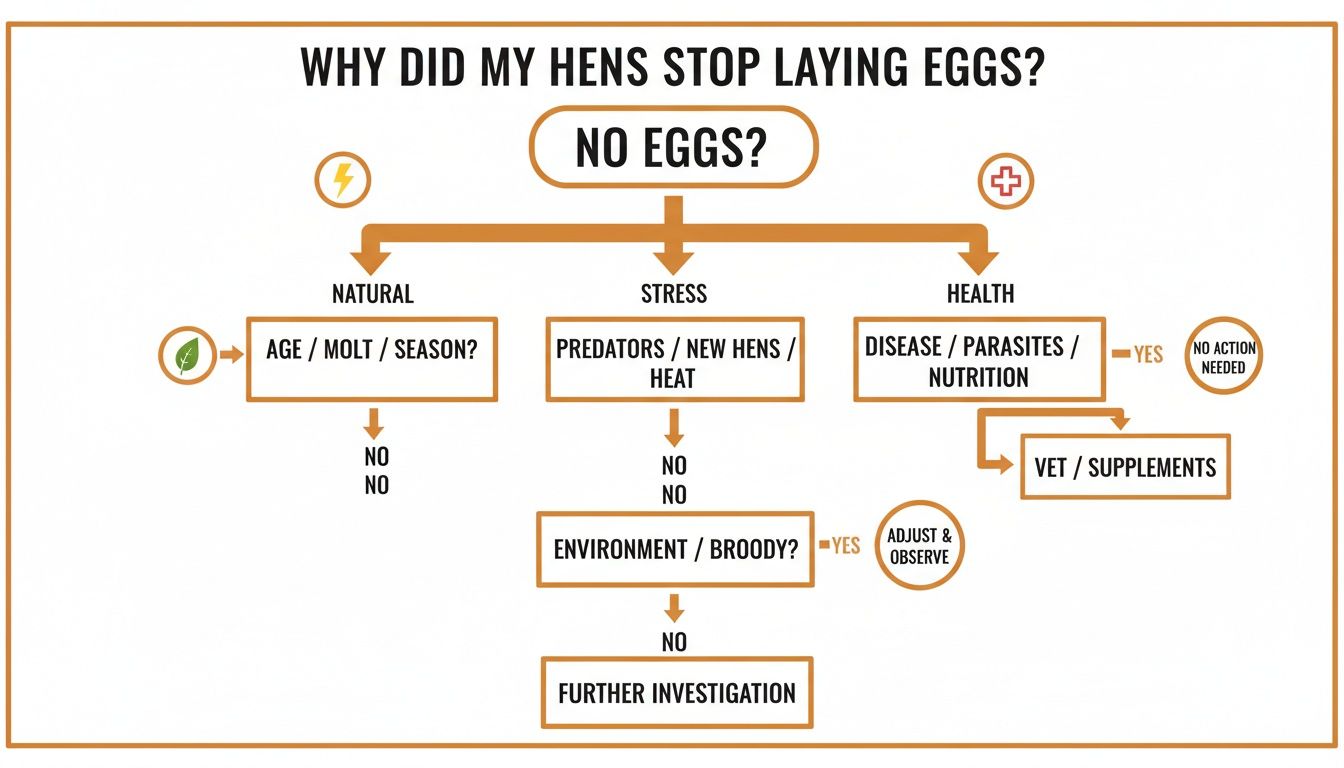
As you can see, the path forward starts with figuring out if this is a normal part of a chicken's life or if something else is wrong. Let's walk through this process together, inspecting each key area of your flock's world.
To help you quickly connect the dots, this table lines up common symptoms with their most likely causes.
Quick Guide To Egg Production Problems
| Category | Potential Cause | Key Symptoms To Look For |
|---|---|---|
| Physical Health | Parasites (Mites/Lice) | Feather loss, red/irritated skin, excessive preening, tiny specks on skin. |
| Physical Health | Internal Worms | Weight loss despite eating, pale comb/wattles, lethargy, unusual droppings. |
| Physical Health | Illness/Disease | Sneezing, coughing, discharge from eyes/nostrils, lethargy, isolation from flock. |
| Environment | Stress (Predators) | Hiding, panicked behavior, feathers scattered in the run, digging around the coop. |
| Environment | Overcrowding | Feather pecking, bullying, hens avoiding the coop. |
| Nutrition | Poor Diet/Treats | Weight loss or obesity, weak eggshells (if any eggs are laid), reduced energy. |
| Natural Cycles | Molting | Obvious feather loss, bald patches, new "pinfeathers" emerging. |
| Natural Cycles | Broodiness | Hen stays in the nest box, fluffs up, gets aggressive when approached. |
This isn't an exhaustive list, but it's a fantastic place to start narrowing down the possibilities.
The Hands-On Hen Wellness Check
Your first stop should always be the hens themselves. A quick but thorough physical check can tell you a huge amount about their condition and often reveals the exact problem.
The best time to do this is in the evening when they're calm and on their roosts. Gently pick up each hen, one by one. I find that talking to them in a low, soothing voice makes the whole experience less stressful for everyone.
As you hold her, here's what you're looking for:
- Weight and Body Condition: Does she feel surprisingly light? A sharp, prominent keel bone (the one running down her breast) is a clear sign of weight loss. This could be from illness, getting bullied away from the feeder, or internal parasites.
- Vent Area: Take a peek under her tail. The vent area should be clean and fluffy. If you see pasted-on droppings, discharge, or irritation, you could be looking at digestive trouble or worms.
- Feather Condition: Are there bald spots that don't look like a full-body molt? This often points to external parasites like mites or lice, which are incredibly irritating and drain a hen's energy. Look closely at the base of the feathers, especially around the vent, for tiny moving specks.
- Eyes and Nostrils: Her eyes should be bright, clear, and wide open. Her nostrils should be clean, with no gunk or discharge. Any swelling, cloudiness, or bubbly liquid is a red flag for a respiratory infection.
Expert Tip: A healthy, laying hen usually has a wide, moist, and pale-colored vent. A hen that's off-lay will have a vent that's tight, dry, and more yellow. It's one of the quickest physical clues you can check.
Your Coop and Environment Audit
Once you've checked the birds, it's time to inspect their home. A stressful or dirty environment is a top reason why hens stopped laying eggs. Even little things can add up, putting a constant strain on their systems.
Walk into your coop and run and try to see it with fresh eyes. Get critical about cleanliness, space, and safety. A pristine coop isn't just for looks—it's your first line of defense against disease.
Here are the key things to assess:
- Cleanliness: How's the bedding? If you can smell ammonia, it's a problem. High ammonia levels cause respiratory distress and stress, which is a surefire way to halt egg production. Bedding needs to be deep, dry, and refreshed regularly.
- Overcrowding: Chickens get stressed without personal space. The standard rule is a minimum of 4 square feet per bird inside the coop and 10 square feet in the run. If they're packed in too tight, bullying and stress are inevitable.
- Ventilation: Good airflow is non-negotiable. It whisks away moisture and ammonia without creating a chilly draft. Check for vents high up on the coop walls to let stale air out. Without it, you risk frostbite in winter and heatstroke in summer.
- Predator Security: Look for signs of digging around the run's perimeter. Is the hardware cloth on all windows and vents secure? The constant fear of a predator lurking nearby, even if it never gets in, is more than enough to shut down the egg factory.
Sometimes, the early signs of sickness are subtle. If you've gone through these checks and still feel like something is off, our guide covering common symptoms of illness in chickens can give you a more detailed breakdown of what to watch for.
Feed and Water Analysis
Finally, let's look at the menu. Nutrition is the fuel for making eggs, and any hiccup in that supply chain will bring production to a screeching halt. And don't forget water—an egg is about 75% water, so constant access to clean water is critical.
Start with the equipment. Are the feeders and waterers clean? Moldy feed or contaminated water can introduce nasty bacteria. Make sure they're placed where hens can't easily poop in them.
Next, look at what you're actually feeding them. A quality layer feed with 16-18% protein must make up at least 90% of their diet. It's easy to overdo it with treats and kitchen scraps, but that dilutes their core nutrition. This can lead to deficiencies in protein and calcium, two things a hen absolutely cannot make an egg without.
Uncovering The Common Causes For A Laying Slowdown
When you suddenly find fewer eggs in the nesting boxes, it’s rarely a single, dramatic event. More often, it's a quiet shutdown triggered by one of several common culprits. Getting to the bottom of why your hens stopped laying eggs is a process of elimination, and it starts with understanding what makes a chicken tick.
Let's walk through the most frequent reasons your hens might take a break, from perfectly natural cycles to hidden stressors in their environment.
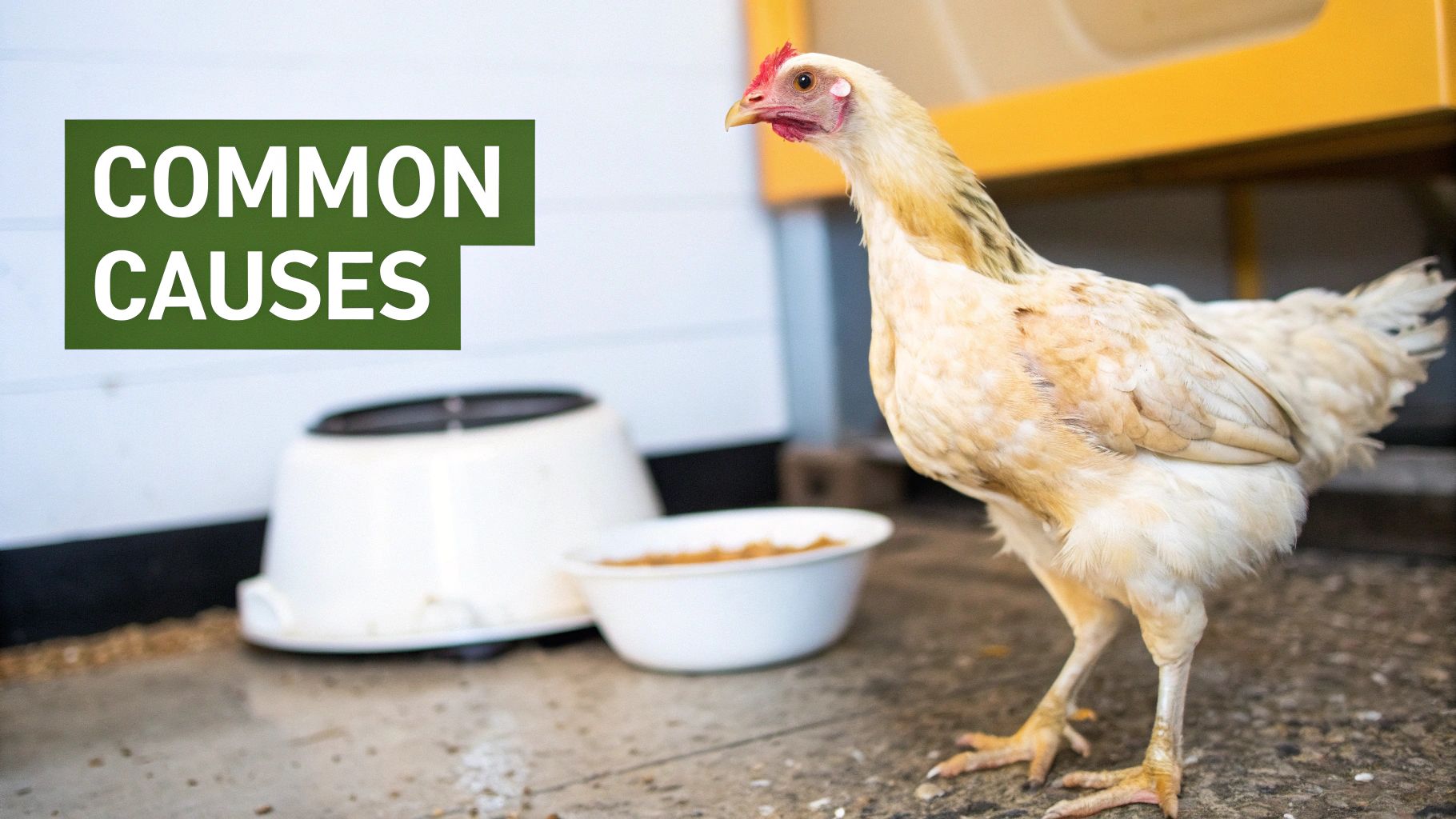
Ultimately, each of these factors forces a hen to redirect her energy. Egg production is a luxury, and when faced with a more pressing need—whether it’s survival, self-preservation, or raising a new generation—the egg factory is the first thing to close.
The Inevitable March Of Time
Just like us, hens have their prime. A hen will lay her heart out in her first year, but after that, you should expect a natural decline of about 15-20% each year.
A three-year-old hen simply won't lay like she did as a pullet, and that's perfectly okay. Production breeds like Leghorns might slow down significantly after just two or three years, while heritage breeds often keep laying reasonably well for five years or more. This isn't a problem you need to fix; it’s just a normal part of her life cycle.
The Annual Molt: A Feather-Focused Pause
One of the most obvious reasons for a sudden halt in egg-laying is the annual molt. This is when a hen sheds her old, beat-up feathers and grows a shiny new set for the winter.
This process is a massive energy drain. Feathers are over 85% protein, so growing thousands of new ones takes a huge toll on her nutritional reserves. A hen simply cannot do both—grow a new coat and lay eggs—at the same time.
You'll know it's happening when your coop looks like a pillow fight broke out. This usually kicks off in late summer or early fall and can last anywhere from 8 to 16 weeks. Expect the egg basket to be nearly empty during this time.
Insight from Experience: I've found that my best layers often molt hard and fast, looking absolutely pathetic for a few weeks before getting back to business. A slower, less dramatic molt can sometimes point to a less productive hen. If you're seeing major feather loss outside this normal fall timeline, you might want to look into other reasons why chickens' feathers might be falling out.
Broodiness: The Maternal Instinct Kicks In
Sometimes, a hen’s powerful motherly instinct just takes over. She’ll decide it's time to hatch some eggs—even if they aren't fertile. We call this "going broody," and a broody hen will stop laying completely.
She'll plant herself in a nesting box, puff up her feathers, and let out a guttural growl if you get too close. She'll barely leave to eat or drink, completely devoted to her imaginary clutch. This hormonal state is serious business and can last for weeks if you don't intervene, causing her to lose a lot of weight and condition.
The Influence Of Light
Daylight is the primary "on" switch for a hen's reproductive system. To keep laying consistently, a hen needs at least 14 hours of light each day, with 16 hours being the sweet spot.
As the days get shorter in the fall and winter, her body gets the natural signal to take a break. It’s an evolutionary safety net to avoid hatching chicks when food is scarce and the weather is harsh. Unless you provide supplemental light in the coop, expect production to drop off or stop entirely during the darker months.
Nutrition Gaps And Deficiencies
An empty nest box is often a direct result of a poor diet. Laying an egg is a demanding biological process, and if a hen doesn't have the right fuel, she can't do the work.
The most common nutritional issues I see are:
- Not Enough Protein: A good layer feed should have 16-18% protein. This is crucial for forming the egg and maintaining her own body. Too many low-protein treats like scratch grains or kitchen scraps can throw this balance off.
- Calcium Shortage: This is a huge one. A single eggshell uses up a massive amount of calcium. If a hen isn't getting enough in her diet, her body will steal it from her own bones, which is incredibly dangerous. Her system will shut down egg-laying to protect itself.
- Dehydration: An egg is about 75% water. If the waterer runs dry for even a few hours on a hot day, it can bring production to a screeching halt.
A high-quality, complete layer feed should always make up at least 90% of your flock’s diet. Treats are fun, but they must be given in moderation. Adding calcium-rich supplements like Black Soldier Fly Larvae is an excellent way to boost nutrition without diluting their core diet.
Parasites And Hidden Illnesses
Sometimes the problem is a bit more sinister. An underlying health issue can be quietly draining a hen's energy, and the first sign is often a drop in egg production.
- External Parasites: Mites and lice are nasty little blood-suckers that hide on a hen's skin and feathers. A bad infestation leads to anemia, stress, and constant irritation, forcing her to use all her energy just to survive.
- Internal Parasites: Worms in the gut steal nutrients before the hen can absorb them. This leads to weight loss and deficiencies that make laying impossible.
- Subtle Sickness: A low-grade respiratory infection or other illness might not have obvious symptoms at first, but it will still be enough of a strain on her system to shut down the egg factory.
Environmental Stressors
Chickens thrive on routine and feel safest in a predictable environment. Any disruption can cause a stress response that stops them from laying.
Common stressors to watch out for include:
- Extreme Temperatures: When it gets too hot or too cold, a hen’s body shifts its focus to thermoregulation—either trying to stay cool or keep warm. There's no energy left for making eggs.
- Predator Threats: A hawk circling overhead, a loose dog in the yard, or a raccoon testing the coop door at night can stress a flock out for days.
- Flock Dynamics: Adding new birds, overcrowding, or a relentless bully hen can create a constant state of social anxiety.
- Loud Noises and Changes: Things we might not even notice, like nearby construction or even just moving the feeder to a new spot, can be enough to disrupt their sense of security and put them off lay.
Practical Fixes to Get Your Hens Laying Again
Alright, so you’ve done the detective work and have a pretty good idea of what’s causing your egg slump. Now it's time to roll up our sleeves and take action. Getting your flock back on track usually just takes a few smart tweaks to their diet, coop, and daily routine.
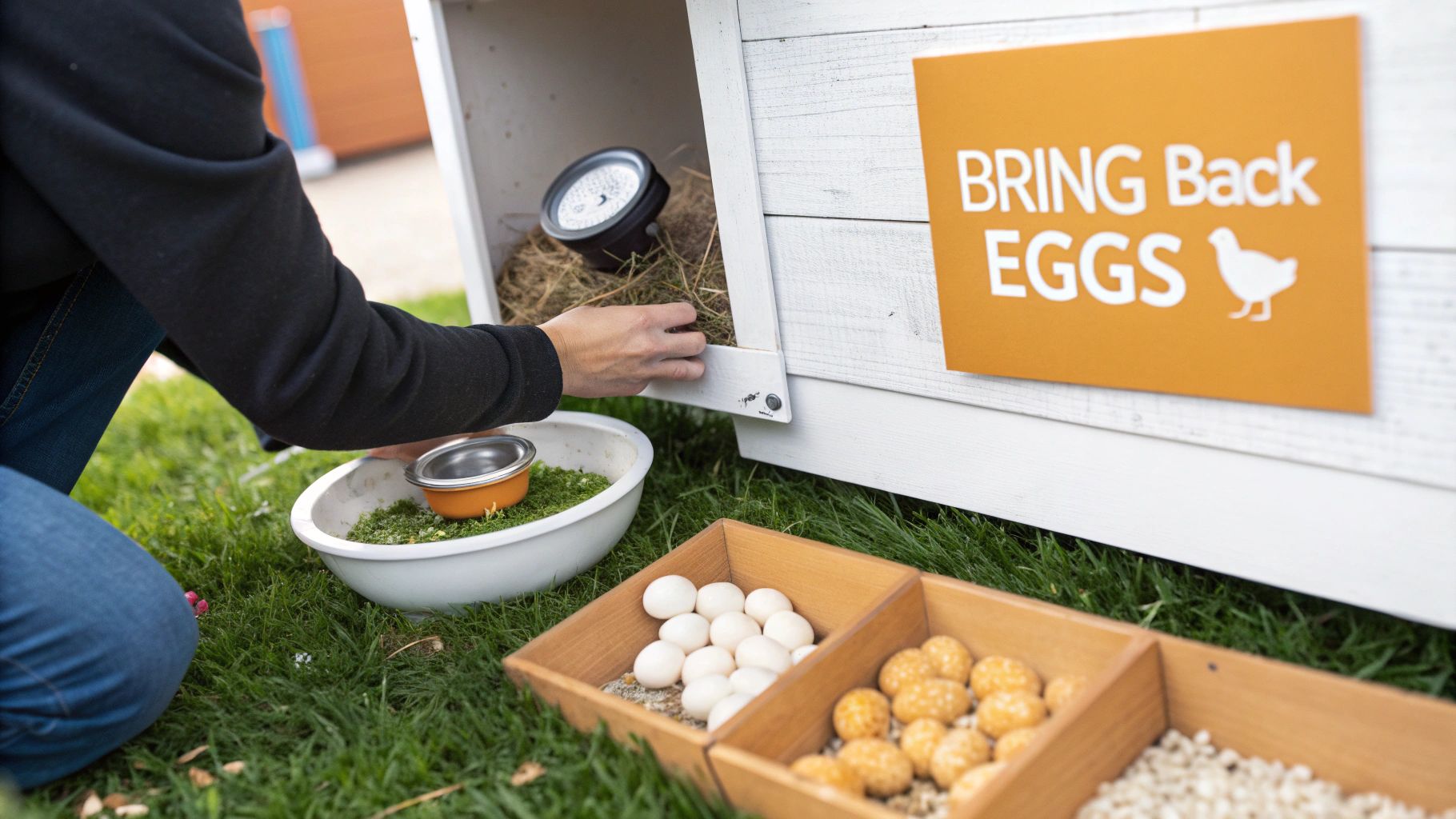
The good news is that most of these solutions are simple. It’s more about being consistent than putting in a ton of effort. The key is to match the fix to the problem you've identified, whether that's a feed issue, a natural cycle, or a hidden stressor.
Supercharge Their Diet for Egg Production
What you put in the feed bowl is the most direct way to encourage a return to laying. Seriously, an egg is a major nutritional investment for a hen, so the moment there’s a deficit, her body shuts down the production line.
The absolute foundation is a high-quality layer feed with 16-18% protein. This should make up at least 90% of what they eat every day. If they’re recovering from something tough like an illness, stress, or a hard molt, they'll need an extra boost.
Here are a few powerful nutritional tweaks:
- Up the Protein: Temporarily add some high-protein goodies to their diet. Dried Black Soldier Fly Larvae (BSFL) are fantastic for this—they're loaded with protein and the amino acids hens need for growing new feathers and getting back to forming eggs.
- Offer Free-Choice Calcium: Don't assume the layer feed has enough. Always have a separate dish of crushed oyster shells or even crushed, dried eggshells available. This lets each hen take exactly what she needs without pulling calcium from her own bones.
- Choose Nutrient-Dense Treats: Ditch the low-value scratch grains for a bit and offer treats that pack a punch. BSFL are a great example here, too, because they have up to 85% more calcium than mealworms, which directly helps build strong eggshells.
Hot Weather Tip: On a sweltering day, try floating some BSFL in a shallow dish of cool water. It gets them to drink more and gives them that critical protein and calcium boost—tackling two problems at once.
Fine-Tune the Coop Environment
A calm, predictable, and safe home sends a clear signal to a hen's body: "It's all good, you have extra resources to lay eggs." You'd be amazed at how much small coop improvements can lower stress and bring back production.
If you think predators are lurking, it’s time for a security audit. Reinforce weak spots in your wire, make sure your locks are solid, and clear out any overgrown brush near the run where a predator could hide.
Feeling crowded? Social stress is a real production killer. Make sure you have at least 4 square feet of coop space per bird and add extra feeders and waterers to stop bullies from hogging all the resources.
Working With Natural Cycles and Broodiness
You can't stop a hen from molting, but you can definitely help her get through it faster. During this feather-making marathon, the best thing you can do is crank up the protein. It gives her the building blocks to regrow her plumage quickly and get back to business.
A broody hen, on the other hand, requires a bit more persistence. Your job is to gently snap her out of that maternal trance.
- Remove Her from the Nest: Multiple times a day, pick her up out of the nesting box and put her outside with the flock near the food and water.
- Block the Box: When it's time to roost for the night, block access to the nesting boxes. This forces her to roost up on the bars with everyone else.
- Cool Her Down: A broody hen's body temperature runs high. A "broody breaker"—a simple wire-bottomed cage—can work wonders. The air circulating underneath her cools her belly and makes it an uncomfortable place to "sit."
The longer a hen stays broody, the more body condition she loses, so it’s best to step in within the first day or two.
Using Supplemental Lighting the Right Way
If your egg count plummets every fall and winter, supplemental lighting is a tried-and-true fix. A hen’s pituitary gland needs 14-16 hours of light each day to get the hormonal signal to lay.
It's as easy as putting a low-wattage bulb on a timer inside the coop. The trick is to add the extra light in the morning, not the evening. This wakes them up a bit earlier but lets them go to roost naturally as the sun sets, which is much less jarring to their internal clocks.
Just look at the commercial egg industry for perspective. Their flocks average 301 eggs per hen annually, with a daily lay rate of 82.5 eggs per 100 layers. This is partly achieved through perfectly managed nutrition and lighting. Of course, disease can still wipe out production, showing how vital health is. As a backyard keeper, you can mimic these positive conditions on a small scale with a simple timer and a quality diet to keep those eggs coming. You can learn more about commercial production stats from groups like the United Egg Producers.
Proactive Care For A Consistently Productive Flock
The best way to deal with an egg-laying slump is to stop it before it even starts. Honestly, shifting from panicked fixes to steady, proactive care is the real secret to a flock that lays consistently. A few simple, solid routines are a lot less work than trying to figure out what's gone wrong after the fact.
It all boils down to paying attention to the small stuff that keeps your hens healthy, happy, and secure. Your best tool, by far, is simple observation. Catching a small problem early—like a clogged water nipple or one hen starting to bully another—can prevent a total shutdown in the nest box.
Get To Know Your Flock's "Normal"
Every flock has its own unique rhythm, its own personality. The very first step in proactive care is learning what's normal for your birds. Just hang out with them for a few minutes each day.
Who’s the boss hen? Who's a bit more timid? What do they sound like when they're contentedly scratching around versus when a hawk flies over? Once you know their individual quirks and the flock's dynamics, any little thing that’s out of place will jump right out at you.
A healthy flock is a busy flock. When you see your hens actively scratching, foraging, and taking enthusiastic dust baths, that's a great sign. A flock that's suddenly quiet, lethargic, or huddled up in a corner during the day is one of the first clues that something's off.
This daily check-in doesn't have to be a chore. You can learn a lot just by watching them while you top off their feeder or change their water.
Tweak Your Care With The Seasons
Your chicken-keeping strategy can't be set in stone; it has to bend with the seasons. As the weather shifts, so do your flock's needs.
- Winter Prep: As the days get shorter, make sure their coop is free of drafts but still has good ventilation. Trapped moisture is a bigger enemy than the cold itself. I also like to bump up their protein a bit to help them generate body heat.
- Summer Care: This is all about shade and cool, fresh water. We put out extra waterers in shady spots and offer frozen treats like watermelon to help them beat the heat. Heat stress is a huge reason why hens stopped laying eggs, especially in warmer climates.
Biosecurity is your other key to prevention. It sounds complicated, but it just means taking simple steps to keep diseases out. Things like washing your hands, and even better, having a dedicated pair of "coop boots," can make a world of difference.
It's also smart to do what you can to keep wild birds away from your flock's food and water. This is critical with threats like highly pathogenic avian influenza (HPAI), which can wipe out a flock. To put it in perspective, major HPAI outbreaks in the U.S. commercial industry caused the egg-laying flock to drop to 300.8 million hens by September 2025, which cut projected egg production by 4.4% from the year before. You can read more about these poultry industry statistics on egg-news.com.
The Simple Power Of A Routine
At the end of the day, chickens are creatures of habit. They thrive on predictability. A consistent daily schedule for feeding, fresh water, and letting them out to forage goes a long way in reducing their stress. And a low-stress hen is a productive hen.
By building these simple, proactive steps into your daily and weekly rhythm, you create a stable environment where your flock can flourish. It changes chicken keeping from a reactive game of whack-a-mole into a much more rewarding and predictable partnership. When it comes to keeping those egg baskets full, an ounce of prevention is truly worth a pound of cure.
Answering Your Top Egg-Laying Questions
Even after you've run through the checklist, a few specific questions always seem to pop up when the nesting boxes go empty. Let's tackle some of the most common ones I hear from other flock owners.
How Long Will My Hens Stop Laying When They Molt?
When a hen is in a full-blown molt, the egg factory shuts down completely. You can generally expect this feather-making marathon to last anywhere from 8 to 16 weeks.
Honestly, the exact timing really comes down to the individual bird. I've found that my best layers tend to molt hard and fast—they'll look like a mess for a month or so and then bounce right back. Others, usually the less productive hens, can drag it out for what feels like an eternity.
Feathers are over 85% protein. The single best thing you can do to help them through it is to up their protein intake. A high-protein feed or supplements can dramatically speed up their recovery and get them back to laying sooner.
Can Certain Treats Stop My Hens From Laying?
You bet they can. Handing out treats is one of the joys of keeping chickens, but it's also one of the quickest ways to throw a wrench in egg production. A hen's diet should be at least 90% of a complete, balanced layer feed.
If you give them too many goodies—especially low-protein fillers like scratch grains, bread, or lettuce—they’ll fill up on the junk food. This effectively waters down their overall nutrition, leaving them short on the critical protein and calcium they need to form an egg. It's just like a kid who spoils their dinner with candy; their belly is full, but they aren't getting what their body actually needs.
Will My Old Hens Ever Lay Again?
They will, but it's important to adjust your expectations. A hen hits her egg-laying prime in her first year. After that, you can expect her output to drop by about 15-20% each year.
So, an older hen who takes a break for winter or a molt will almost certainly start laying again. She just won't be the egg-a-day machine she was as a pullet. A five-year-old hen might grace you with a few eggs a week, and a seven-year-old might only lay a couple per month. This isn't a sign of a problem; it's just a normal, natural part of the aging process.
Is It Okay If My Hens Don't Lay Eggs In Winter?
Not only is it okay, it’s completely natural and healthy for them. A hen’s entire reproductive cycle is wired to day length. Her body needs a solid 14 hours of light per day to kickstart the hormones that get the egg-laying process going.
When the days get shorter in the fall, it’s a biological cue for her body to take a well-deserved rest and conserve energy. Unless you decide to add supplemental light to your coop, you should expect most of your flock to stop laying or slow down significantly over the winter. This downtime is good for them and allows their bodies to recover after a long, productive season.
Proper nutrition is the cornerstone of a healthy, productive flock. Pure Grubs offers premium, USA-grown Black Soldier Fly Larvae, which are naturally packed with the protein and calcium your hens need for strong shells and overall vitality. When you want to support your flock's natural cycles and encourage a quick return to laying, they are a fantastic, healthy treat. Find out more at https://puregrubs.com.