

Why are my chickens feathers falling out: Causes and fixes
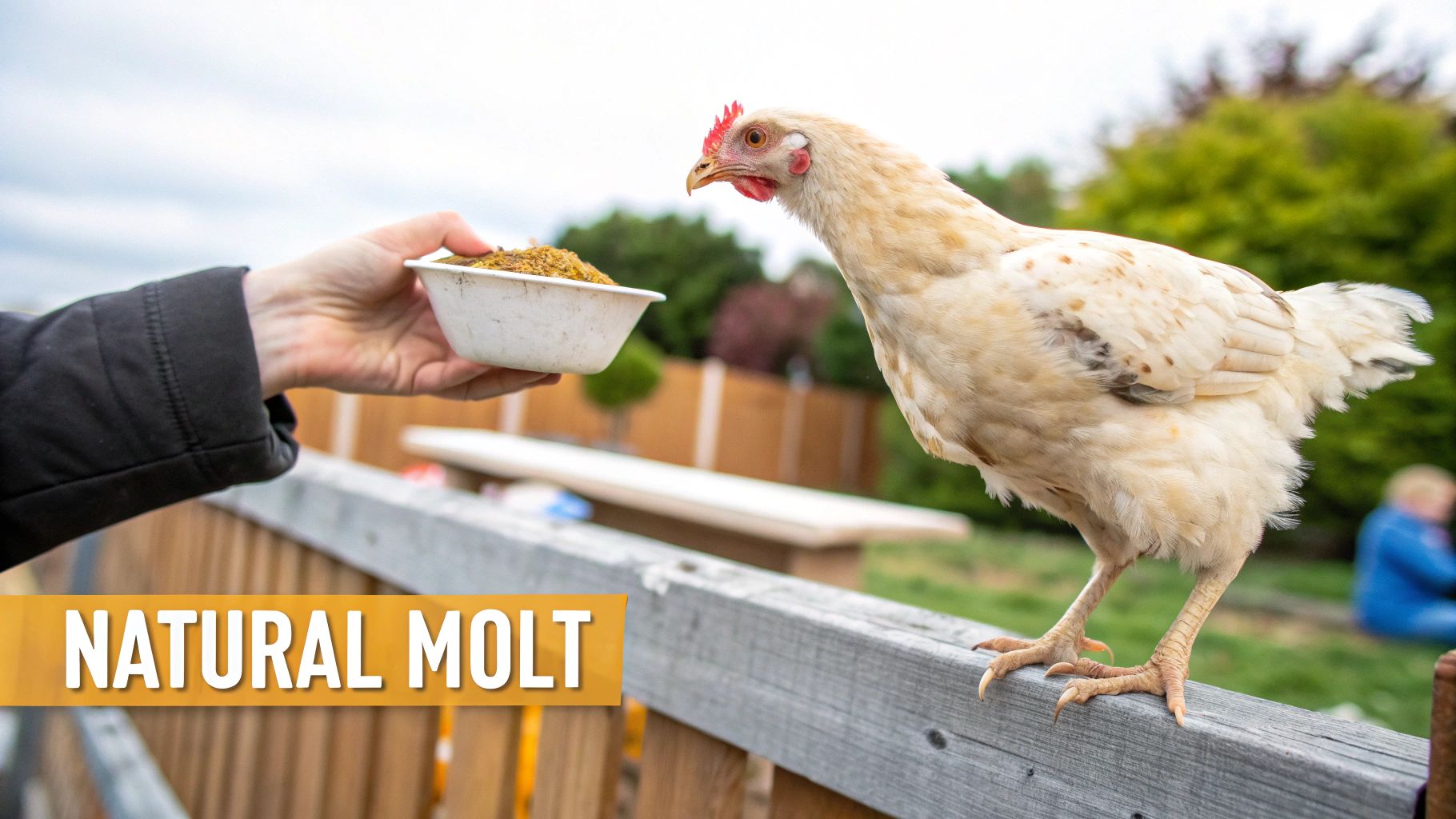
When you first notice bald patches on your chickens, it's easy to worry. But more often than not, there's a simple explanation. The big three reasons for feather loss are usually a natural annual process called molting, pesky external parasites like mites or lice, or pecking from flock mates.
Sometimes, issues like nutritional gaps or stress can also play a role. Figuring out whether you're seeing a normal, healthy cycle or a sign of trouble is the first step to getting your flock back in top form.
Your Quick Guide To Chicken Feather Loss
Feather loss is something every chicken keeper deals with eventually. Molting is by far the most common cause, and it’s perfectly normal. Think of it as their annual wardrobe refresh. Chickens shed their old, worn-out feathers to grow a new, healthy set, usually in the fall. This whole process can take six to eight weeks, and it's a vital part of their natural cycle.
But if it's not molting season, you'll need to play detective. Other causes demand a closer look and quick action.
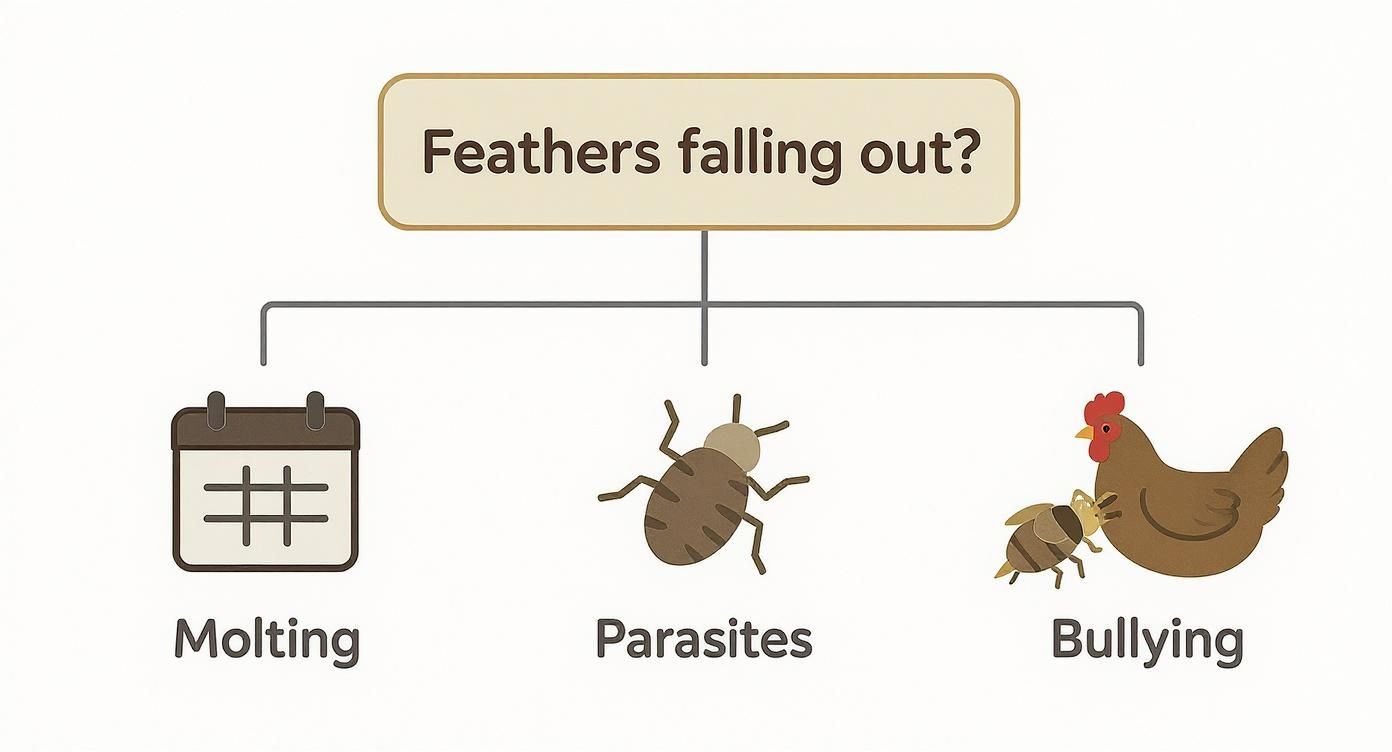
The visual guide above is a great starting point for telling the difference between molting, parasites, and pecking based on the patterns you see. We'll dive into each of these possibilities so you know exactly what to look for and what to do next.
Feather Loss Symptom Checker
To get to the bottom of things, a side-by-side comparison of symptoms can make all the difference. Use this quick reference guide to identify the potential cause of feather loss based on common symptoms and patterns.
This table will help you match what you're seeing in your coop with the most likely culprit. Remember to look beyond just the missing feathers—pay close attention to your chicken’s skin condition, their energy levels, and how they're interacting with the rest of the flock.
| Potential Cause | Common Feather Loss Pattern | Other Signs to Look For |
|---|---|---|
| Molting | Symmetrical loss, starting at the head and neck | Pin feathers growing in, reduced egg laying |
| Parasites | Around the vent, under wings, and on the back | Excessive preening, irritated skin, visible pests |
| Bullying | Back, tail, and top of the head | Peck marks, broken skin, social isolation |
| Nutrition | Brittle, broken feathers all over the body | Poor egg quality, lethargy, dull plumage |
Using this chart as your starting point, you can begin to narrow down the possibilities and take the right steps to help your feathered friends.
Understanding The Natural Molting Process
If you've ever walked out to the coop and wondered, "why is my chicken losing its feathers?" take a deep breath. The answer might be a lot less worrying than you think. Often, it's just a completely natural, healthy process called molting.
Think of it like a tree dropping its leaves in the fall. Your chicken is simply shedding her old, worn-out feathers to make way for a shiny new set. This is her way of getting a fresh, warm coat just in time for winter.
This feather overhaul is a massive undertaking for a chicken's body. Feathers are made of about 85% protein, and growing thousands of new ones takes a ton of energy. That's why most hens stop laying eggs during their molt—all that protein and calcium is being rerouted from egg production to feather-making.
The Typical Molting Timeline
A chicken’s first big molt usually happens around 18 months of age. After that, you can expect it to become an annual affair, typically kicking off as the days get shorter in late summer or fall. While every bird is a little different, this seasonal timing is a pretty good clue that you're dealing with a normal molt.
The whole thing isn’t a free-for-all, either. A molt almost always follows a predictable pattern, starting at the head and working its way down.
- Head and Neck: Feathers here are the first to go. Your bird might look a bit silly and "pinheaded" for a while.
- Back and Breast: The feather loss then moves down the body, often leaving bare patches on her back and chest.
- Wings and Tail: Finally, the big, important flight and tail feathers are the last to be shed and replaced.
This entire process can take anywhere from 6 to 12 weeks. Some chickens are "hard molters" and seem to drop all their feathers overnight, looking quite naked for a bit. Others take their time, losing feathers so gradually you might barely notice.
Key Takeaway: Molting isn't a sign of sickness; it's a sign of a healthy chicken getting ready for the next season. The messy look and the break in egg-laying are all normal parts of this demanding cycle.
How to Support Your Flock Through a Molt
When your chickens are molting, they're feeling pretty vulnerable. Their skin is exposed, and the new pinfeathers coming in are very tender and sensitive. It's best to keep handling to a minimum to avoid causing them any pain.
This is also the perfect time to give their diet a serious boost. You'll want to ramp up their protein intake to at least 20% to provide the fuel they need for new feather growth. High-protein treats are a fantastic way to do this. A little extra nutritional support will help them get through the molt faster and more comfortably, ensuring they come out the other side with a beautiful, thick coat of feathers ready for the cold.
Is It Mites, Lice, or Other Pests?
So, it's not a molt. If your chickens are looking ragged and are scratching like crazy, it's time to put on your detective hat. When you see bald patches paired with red, angry-looking skin and a bird that just seems miserable, you're likely dealing with tiny, unwanted squatters. Parasites like mites and lice are a top reason for feather loss, and they can make your chickens' lives truly uncomfortable.
Unlike the fairly uniform, predictable feather drop of a molt, parasite problems often show up as patchy, random bald spots. You'll probably notice the worst of it around the vent, under the wings, and down their backs—all the warm, cozy spots these critters love to call home. Your chickens will look utterly distressed, constantly trying to preen and scratch an itch they just can't reach.
How to Perform a Health Check
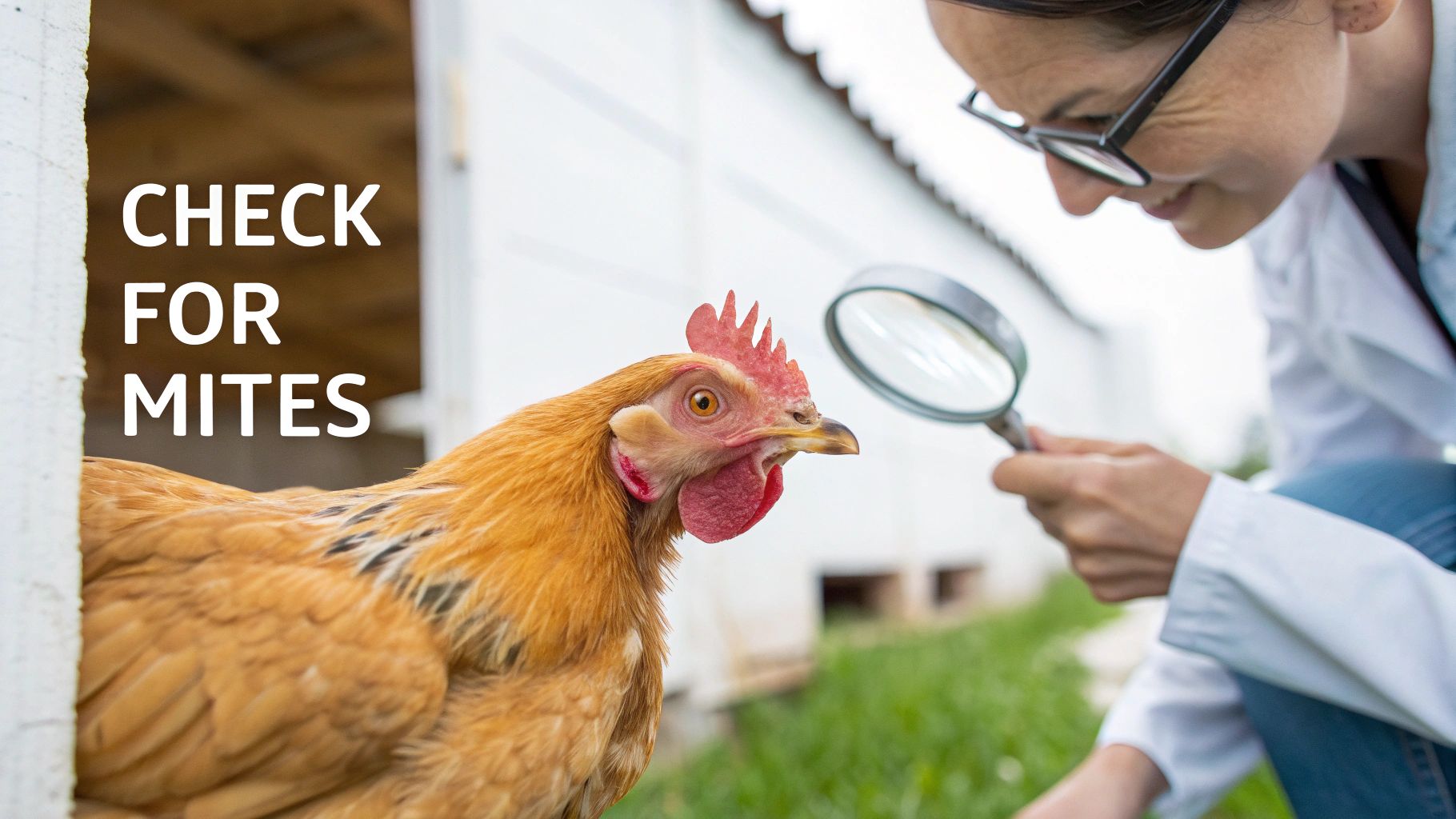
To be sure, you’ll need to get hands-on. The best time to check is at night when the flock is roosting and much calmer. Grab a good flashlight, pick up a chicken, and gently part the feathers to get a clear look at the skin, especially around the base of the feather shafts.
Here’s what you might find:
- Northern Fowl Mites: These guys are tiny, dark specks that almost look like someone sprinkled pepper on your chicken. They live their whole lives on the bird, and you'll see them scurrying around. They often make the feathers around the vent look greasy and dirty.
- Red Roost Mites: These are the vampires of the chicken world. They're sneaky, hiding in coop cracks during the day and coming out at night to feed on your sleeping birds. You might not see them on the chicken, but you'll find their calling card: a fine, grayish-white "ash" (which is actually their droppings) in the corners and crevices of roosts.
- Lice: Chicken lice are bigger than mites, usually yellowish, and they move fast when you expose them to light. The dead giveaway for lice is their egg clusters. Look for white, crusty gunk stuck firmly to the base of the feathers.
A serious parasite infestation does more than just cause itching; it can completely tank a chicken's immune system, opening the door for other diseases. Getting on top of it quickly is essential for flock health. You can find more great tips on how to keep chickens healthy and fighting fit.
Your Action Plan for Treatment
Found some creepy crawlies? It’s time to act fast. You need a two-pronged attack to get rid of them on your birds and in the coop, otherwise, they’ll just come right back.
- Treat Your Flock: Get a poultry-safe dust or spray designed specifically for mites and lice. Be sure to follow the directions to the letter, really working the product down to the skin, especially under the wings and all around the vent.
- Deep Clean the Coop: This is absolutely critical. Strip everything out—all the bedding, nesting material, everything. Scrape down the roosts, walls, and floor until they are completely clean of any gunk.
- Sanitize Their Home: After you've scrubbed it clean, treat the entire coop. You can use a poultry-safe insecticide or a natural option like diatomaceous earth. Be meticulous and get into every single crack, joint, and crevice. That’s exactly where mites hide out during the day.
By treating your birds and doing a full coop reset, you can break the life cycle of these pests. Only then can your flock finally get some relief and start the work of growing back their beautiful feathers.
Solving Feather Pecking And Flock Bullying
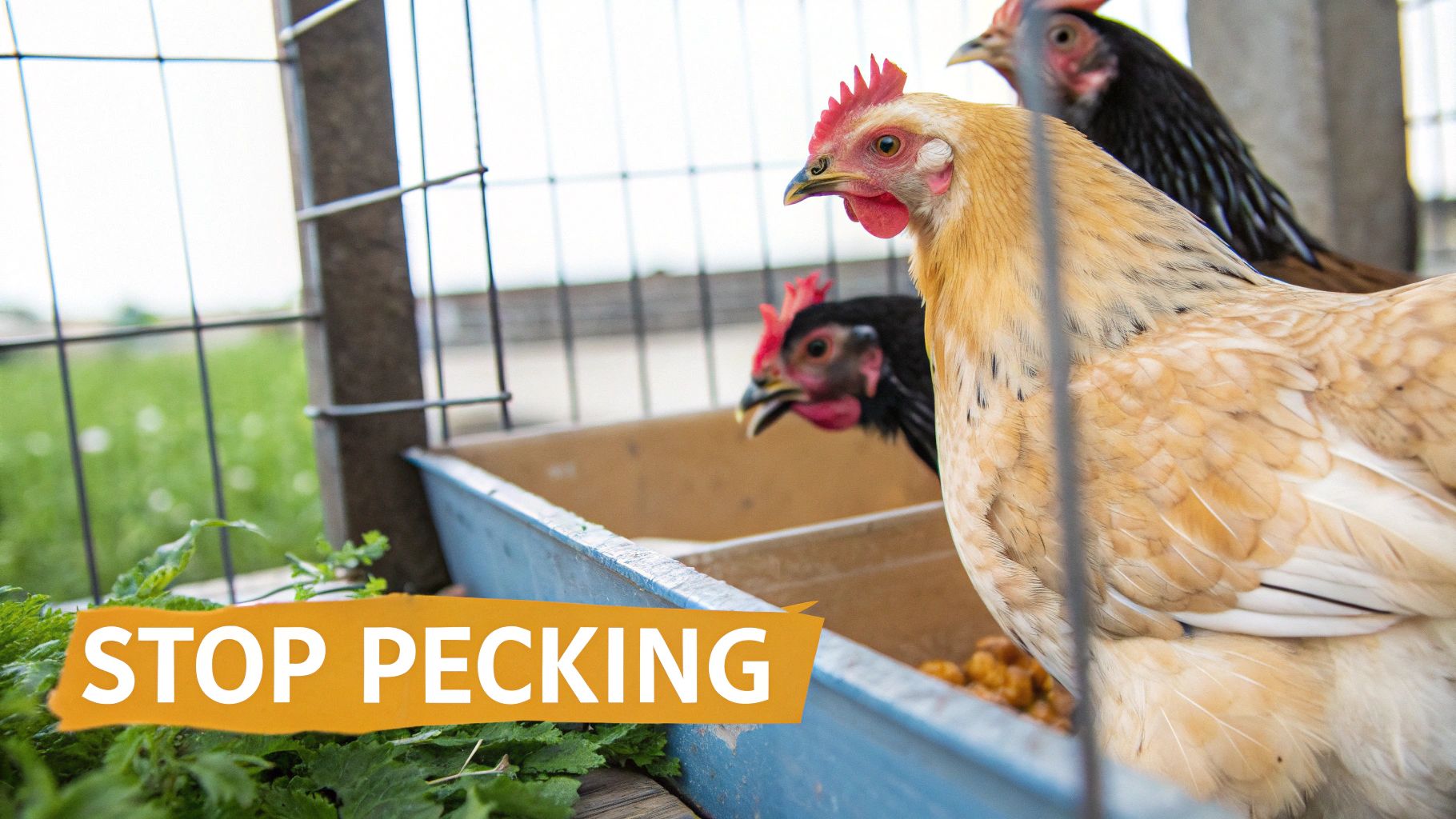
If you've ruled out molting and parasites, the answer to "why are my chickens losing feathers?" might be coming from inside the coop. Chickens have a natural social ladder called the pecking order, and while it's a normal part of flock life, it can sometimes tip over into straight-up bullying.
A healthy pecking order is one thing, but it can quickly escalate. The biggest triggers usually boil down to their environment and access to resources. Think of it like kids bickering over the last toy in the box—when space, food, or water is tight, tensions rise. Boredom is another huge factor. A chicken with nothing better to do might just start picking on a flockmate for entertainment.
Identifying The Signs Of Bullying
The bald patches from feather pecking look very different from the even, symmetrical loss of a molt or the vent-focused irritation from mites. Bullying leaves a clear calling card: targeted bald spots on the back, tail, and sometimes the back of the head of the birds at the bottom of the pecking order. These are the easiest spots for a dominant chicken to get a good pluck.
The damage can be anything from a few missing feathers to raw, bloody skin, which is an open invitation for infection. You’ll also notice behavioral clues. A bullied chicken often acts timid and withdrawn, hiding from the flock and avoiding the feeders.
Restoring Peace To The Coop
Once you've fingered feather pecking as the culprit, you need to step in. Your goal is to get to the root of the problem, which usually means making a few simple but powerful adjustments to the flock's home and daily life.
Here are a few practical steps you can take right away:
- Increase Space: Overcrowding is a top stressor. Make sure your chickens have plenty of elbow room in both the coop and their run.
- Add More Resources: Don't just have one feeder and one waterer. Set up multiple stations so a bully can't hoard the goods and timid birds can eat and drink without fear.
- Provide Enrichment: Give them something better to do! Hanging a head of cabbage, adding more perches, or scattering some high-value treats like Pure Grubs gives them a positive way to channel their pecking instincts.
Excessive feather loss is a serious welfare issue, with some studies showing that up to 26% of flocks exhibit significant feather damage from pecking. This behavior causes pain and increases a bird's susceptibility to injury. You can discover more insights about this research and its impact on flock health.
For the really tough cases, you might need to temporarily separate the main aggressor or the targeted victim. A little "time out" can be surprisingly effective at resetting the social dynamic. Putting the bully in a separate cage (but still within sight of the flock) for a few days can sometimes knock them down a peg or two when they're reintroduced. By making their environment more engaging and ensuring everyone has what they need, you can put a stop to feather pecking before it gets out of control.
Investigating Nutritional Deficiencies
If you’ve already checked for molting, pests, and pecking, it's time to take a hard look at your flock’s diet. What your chickens eat quite literally builds them from the inside out, and when something is missing, their feathers are often the first to show it. Poor nutrition is a surprisingly common reason for feathers to look brittle, broken, or to fall out altogether.
Think about it: feathers are made of almost 85% protein, primarily a tough protein called keratin. Growing a whole new set of these things is a massive undertaking for a chicken's body. The scale is pretty mind-boggling—the poultry industry in the European Union alone produced an average of 484,419 tonnes of feathers each year between 2010 and 2020. That’s a staggering amount and really drives home just how much nutritional energy goes into a chicken's plumage. You can see the poultry industry data for yourself to grasp the full picture.
When a chicken’s diet is low on protein, its body simply doesn't have the raw materials to produce strong, healthy feathers. This is especially true during a molt, when their protein requirements go through the roof. The result? Weak, ragged feathers that snap easily, leading to bald patches and a scruffy, unkempt look.
It's Not Just About Protein
While protein is the main event, a whole host of other vitamins and minerals are just as important for feather health. Without this supporting cast, even a diet high in protein won't get the job done.
Here are the key players for healthy feather growth:
- Amino Acids: Methionine and lysine are the absolute non-negotiables. They are the fundamental building blocks of keratin.
- Calcium: We all know it’s for strong eggshells, but it’s also vital for healthy muscle and nerve function, which supports the bird's overall system.
- Vitamins: B vitamins, especially biotin, are directly involved in creating keratin. Vitamins A and E are crucial for maintaining healthy skin, which is where the feathers grow from.
If any of these are in short supply, the whole feather-growing process can get thrown out of whack. A biotin deficiency, for example, can cause dermatitis and poor feathering, making the bird more vulnerable to damage from the environment or pecking from flock mates.
Expert Tip: A nutritional shortfall can also kickstart bad habits. If a flock isn't getting enough protein or other key nutrients, they might start pecking at each other's feathers to try and get what they're missing. This creates a vicious cycle of feather loss that's hard to break.
How To Evaluate and Improve Your Flock’s Diet
The first step is simple: check the tag on your bag of feed. A standard layer feed should have at least 16% protein. If your birds are molting, you'll want to temporarily switch to a higher-protein feed, something in the 20-22% range, to give them the boost they need.
Beyond their daily feed, offering high-quality, protein-rich treats is one of the best things you can do to support feather regrowth. For a great list of ideas, take a look at our guide to high-protein foods for chickens.
Treats like black soldier fly larvae are a fantastic choice because they pack a one-two punch of both protein and calcium. They give your chickens the building blocks for new feathers and also provide a healthy, engaging activity, which helps reduce boredom and curb feather-pecking.
When To Suspect Stress Or Illness
So, you've checked for molting, parasites, and bullying, but your hen is still losing feathers. Now it's time to dig a little deeper, as the cause might be less obvious and more serious.
Think of a chicken's feather condition as a window into its overall health. When those feathers start looking rough or falling out for no apparent reason, it can be a red flag that something is wrong on the inside—often pointing to either stress or illness.
Stress is a surprisingly potent cause of feather loss. Chickens are creatures of routine, and any disruption can throw them for a loop. Things like moving to a new coop, introducing new birds to the flock, or even a close call with a neighborhood hawk can trigger enough anxiety to cause feather drop. Even less dramatic events, like extreme weather or constant loud noises, can be enough to upset the balance.
A classic example of this is a broody hen. If a hen is dead set on hatching some eggs, she'll often pluck feathers from her own chest. This isn't a sign of sickness; it's pure instinct. She's creating a warm, bare patch of skin—a "brood patch"—to provide direct warmth and humidity for her clutch.
Differentiating Stress From Sickness
While stress alone can cause feather loss, it's critical to know when you're dealing with something more. Sickness usually comes with a whole collection of symptoms, and feather loss is just one piece of that puzzle.
Keep a sharp eye out for these other warning signs that point toward illness:
- Lethargy and Huddling: A sick chicken often looks miserable. It might be hunched over, inactive, and keeping its distance from the rest of the flock.
- Changes in Droppings: Anything out of the ordinary—watery, bloody, or oddly colored poop—is a sure sign of trouble.
- Respiratory Issues: Listen for coughing, sneezing, or rattling breaths. Any discharge from the eyes or nostrils is a major concern.
- Pale Comb and Wattles: A healthy chicken’s comb and wattles are typically a vibrant, rich red. If they look pale, purplish, or dry, it can signal poor circulation or disease.
When you see feather loss plus any of these other symptoms, it’s time to act. These combinations often point to problems that require more than just a simple fix in the coop. For a deeper dive, explore our guide covering various symptoms of illness in chickens.
If you spot a bird showing multiple symptoms, your best bet is to isolate it immediately to prevent anything from spreading. From there, a call to a vet who knows chickens is the right next step. Catching an illness early can make all the difference.
Got More Questions About Feather Loss?
Even after you've played detective and figured out what's causing your flock's feather loss, you probably still have a few things on your mind. Pinpointing the "why" is the first big hurdle, but knowing what to expect during recovery and how to stop it from happening again is just as crucial for a healthy flock. Let's tackle some of the most common questions that pop up.
How Long Does It Take For Feathers To Grow Back?
The comeback timeline for a full set of feathers really hinges on what caused the loss in the first place. If it's just a standard annual molt, you'll start seeing new pin feathers poking through within a week or two. But don't expect an overnight transformation—it can take a full 6 to 12 weeks for a chicken to look completely normal again. It’s a marathon, not a sprint, and your patience will pay off.
On the other hand, if you were dealing with a parasite problem or some coop drama, regrowth kicks off almost as soon as you've fixed the issue. Once the mites are gone or the pecking has stopped, the bird's body can finally shift its focus back to growing beautiful new feathers. You can give them a serious leg up here by boosting their diet with extra protein and key amino acids.
Can I Stop My Chickens From Losing Feathers?
Well, you can't stop a natural molt—that’s an essential part of a chicken's yearly cycle. But you absolutely have the power to prevent most other kinds of feather loss. An ounce of prevention is truly worth a pound of cure.
- Nip Bullying in the Bud: The key is to stop it before it even starts. Make sure your chickens have plenty of room to roam, things to do to keep them from getting bored, and more than one spot to eat and drink. This cuts down on the squabbles.
- Keep the Pests Out: A squeaky-clean coop is your first line of defense. Also, giving your flock a dedicated spot for a good dust bath is one of the best natural ways to keep mites and lice at bay. They love it, and the pests hate it.
- Nutrition is Everything: A top-notch, balanced diet is your secret weapon. When your chickens get all the nutrients they need, every day, you're building strong, healthy feathers from the inside out and heading off deficiencies at the pass.
Remember: Being proactive about how you manage your coop and keeping an eye on the flock's social dynamics is the single best way to prevent unnecessary feather loss. A happy, healthy chicken is a fully-feathered chicken.
Is It Normal For Just One Chicken To Lose Feathers?
Yes, it's actually pretty common to see feather loss in just one bird, and it can be a major clue. More often than not, it points straight to bullying, where one chicken is the unfortunate target. Take a close look at this bird—you'll likely see bald spots on its back, around its tail, or on the back of its head.
It’s also possible that this one chicken is just molting on its own schedule, which happens sometimes. But if that same bird also seems sluggish, is keeping to itself, or just looks "off," it's time to act. Separate her from the flock right away so you can keep a closer eye on her and make sure nothing more serious is going on.
A great diet is your flock’s best defense and the ticket to a speedy feather regrowth. Pure Grubs are packed with the high-quality protein your chickens need to power through a molt and can even help reduce pecking caused by stress. Give them the nutritional boost they deserve by checking out https://puregrubs.com.