

Contents of Chicken Feed: contents of chicken feed decoded for your flock
The backbone of any good chicken feed is a carefully balanced mix of protein, carbohydrates, and fats, all supercharged with essential vitamins and minerals. The most common recipes start with energy-packed grains like corn and then add protein powerhouses like soybean meal. This combination is the key to giving your chickens everything they need for growth, vibrant health, and a steady supply of eggs.
Decoding Your Bag of Chicken Feed
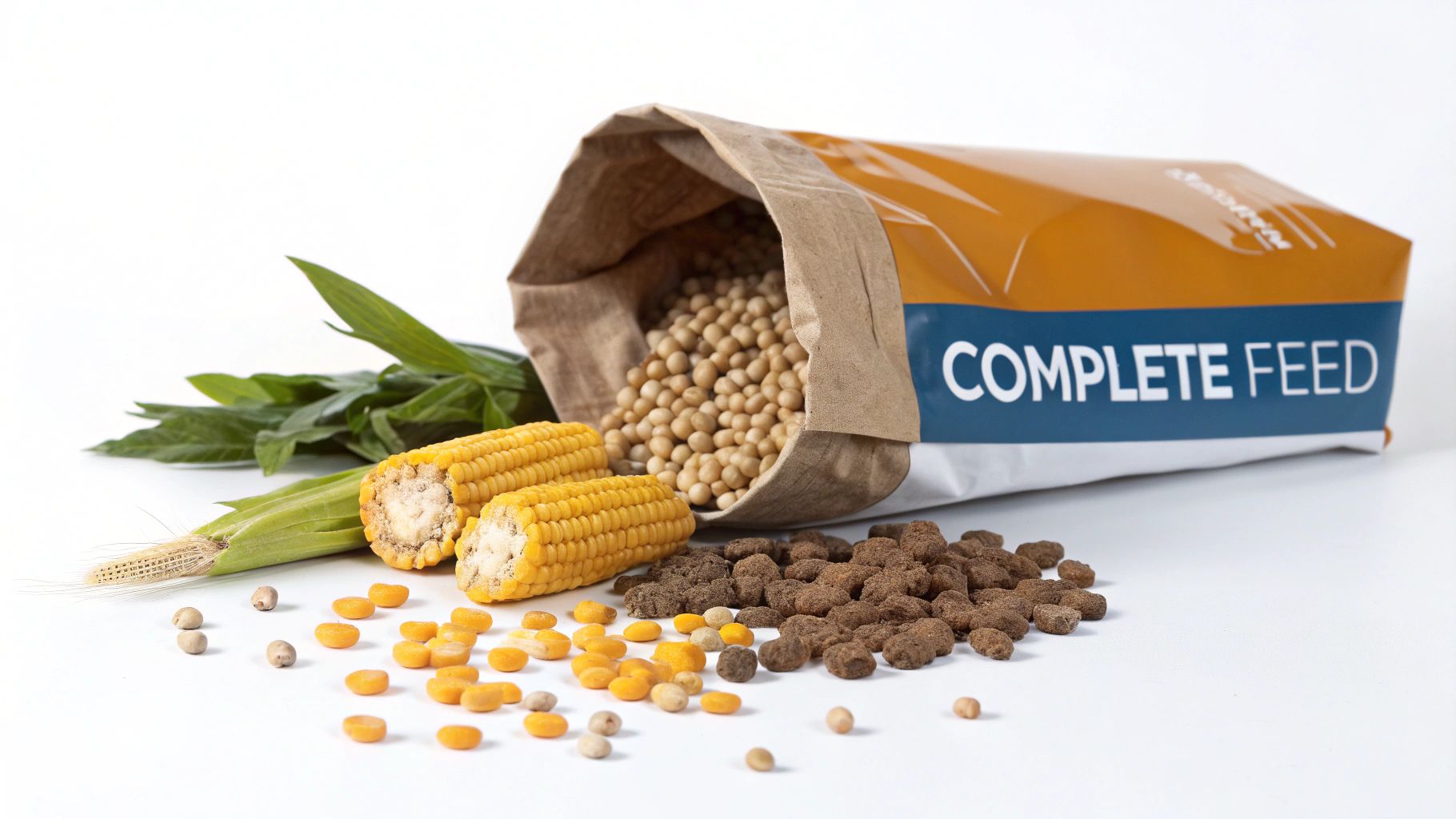
Ever glanced at a bag of chicken feed and felt a bit overwhelmed? It’s not just a random jumble of seeds and grains. A good "complete" chicken feed is more like a master-planned meal, with every single ingredient chosen to play a specific, vital role in your flock’s life.
A great way to wrap your head around what’s inside is to think of it like building a house. Each part of the feed is a different building material, essential for constructing a strong, healthy bird.
- Protein: This is the lumber and framework of the house. It's absolutely crucial for building muscle, growing new feathers, and, of course, forming the very structure of an egg.
- Carbohydrates: Think of these as the fuel for the construction crew. Grains like corn deliver the raw energy chickens need for all their daily bustling, from scratching in the dirt to laying eggs.
- Fats: These are the insulation and wiring. They’re a super-concentrated energy source and are essential for helping your chickens absorb key vitamins that keep their internal systems running smoothly.
- Vitamins & Minerals: These are the nuts, bolts, and electrical systems holding the whole structure together. Calcium is the most famous one, providing the literal foundation for strong eggshells, but countless other micronutrients are working behind the scenes to support immunity and overall health.
This is precisely why commercial feeds are so reliable—they remove all the guesswork from chicken nutrition, ensuring your flock gets a perfectly balanced diet in every peck.
The Science Behind the Blend
Putting together a quality chicken feed is a serious science. Poultry nutritionists are the architects, carefully selecting ingredients to meet the unique demands of a chicken at every stage of its life. After all, a tiny, fluffy chick has completely different needs than a full-grown hen laying an egg a day. The feed formula reflects that.
The bulk of most feeds is made up of staple grains—corn, wheat, and barley are common—which provide the carbohydrates for energy. To that base, they add a high-quality protein, with soybean meal being a top choice because it contains the right building blocks (amino acids) that chickens need.
A laying hen’s diet should contain between 15-18% protein to support consistent egg production. If that number dips too low, you'll almost certainly see a drop in the number and quality of eggs.
But it doesn't stop there. The blend is then fortified with a precise premix of vitamins and minerals. This ensures that every single bite delivers what a chicken needs for everything from strong bones and glossy feathers to a tough immune system. Without this step, chickens could easily develop nutritional deficiencies, leading to poor health and a sputtering egg supply.
Once you understand these core components, you’re in a much better position to make the smartest choices for your flock’s dinner plate.
The Power Trio: Protein, Carbs, and Fats
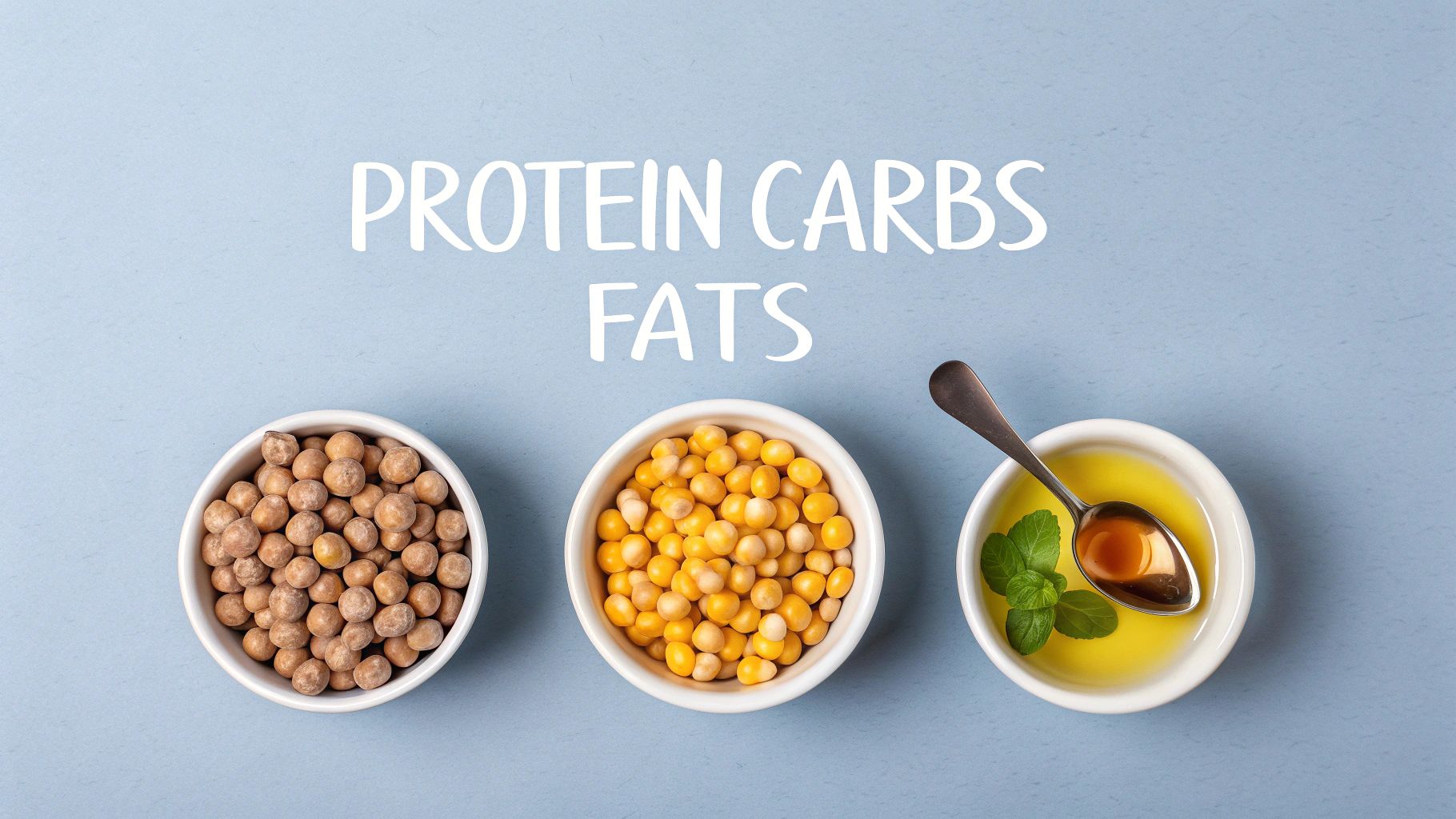
At the very heart of any good chicken feed, you'll find a powerhouse trio of macronutrients: protein, carbohydrates, and fats. Just like with our own diets, getting this balance right is the absolute key to a healthy, energetic, and productive flock.
Think of them as a crew, each with a critical job. Carbs are the immediate fuel for the day's work. Protein provides the essential building blocks for growth and repair. Fats serve as a dense, long-term energy reserve and help with countless bodily functions. When they're combined in the right ratios, they create the nutritional foundation for everything your chickens do.
This isn't just a happy accident; it's the result of decades of poultry science figuring out exactly what birds need to thrive.
Carbohydrates: The Fuel for the Flock
Carbohydrates are the high-octane fuel that powers a chicken's world. They deliver the raw energy needed for all the important stuff—scratching in the dirt, dust bathing, maintaining body temperature, and of course, the incredibly demanding process of laying an egg.
Without enough carbs, a chicken becomes lethargic and simply can't keep up.
The undisputed king of carbs in chicken feed is corn. Its high starch content is easy for a chicken's digestive system to break down, providing a quick and efficient energy boost. Corn's global dominance is no joke—it held a whopping 51% revenue share in the worldwide poultry feed market in 2023, an industry valued at over USD 213 billion.
In major poultry hubs like the U.S., where farmers raise over 9 billion broilers each year, abundant domestic corn is what keeps feed both effective and affordable.
Protein: The Building Blocks of Life
If carbs are the fuel, protein is the lumber, bricks, and mortar. It's absolutely crucial for developing strong muscles, growing healthy feathers, maintaining a robust immune system, and, of course, forming the very substance of an egg.
A diet that's short on protein will quickly lead to stunted growth, weak birds, and a sharp drop in egg laying. It’s that simple.
Proteins themselves are made of smaller units called amino acids. Chickens need 22 different amino acids to function, and while they can make some on their own, there are several "essential" ones they must get from their food. This is why ingredients like soybean meal are so popular; they deliver not just crude protein, but the right kinds of essential amino acids.
For a laying hen, the sweet spot for protein is between 15% and 18% of her total feed. If it dips below that, her body has to make a tough choice between its own upkeep and producing an egg—and egg production is always the first thing to get cut.
By making sure their feed has high-quality protein, you are directly supporting their ability to grow strong, stay healthy, and keep those eggs coming. To really dive deep into this topic, take a look at our guide on the best protein for chickens.
Fats: The Concentrated Energy Source
Fats and oils wear two important hats in a chicken's diet. First, they're an incredibly dense source of energy, packing more than twice the punch of carbohydrates gram for gram. This is a super-efficient way to increase the calorie count of a feed without adding a ton of extra bulk.
Just as important, fats are required for the body to absorb fat-soluble vitamins—specifically vitamins A, D, E, and K. These nutrients are vital for everything from good eyesight and bone strength to proper blood clotting. Without enough fat in the diet, a chicken can't make use of these vitamins, even if they're present in the feed.
You'll typically find fats in feed from sources like:
- Vegetable oils (like soybean oil)
- Animal fats
- The fat naturally present in ingredients like corn and sunflower seeds
Let's break down how this all comes together for a healthy chicken.
Macronutrient Roles in Chicken Feed
This table shows exactly what each macronutrient does, where it comes from, and what you'll see in a healthy, well-fed bird.
| Macronutrient | Primary Function in Chickens | Common Ingredient Source | Visible Health Impact |
|---|---|---|---|
| Carbohydrates | Provides immediate energy for daily activities, metabolism, and warmth. | Corn, wheat, sorghum, barley | Active, energetic birds; consistent daily activity. |
| Protein | Builds and repairs tissue, muscle, feathers, and forms eggs. | Soybean meal, fish meal, canola meal | Strong growth, glossy feathers, and steady egg production. |
| Fats | Serves as a dense energy reserve; aids absorption of vitamins A, D, E, K. | Vegetable oils, animal fats, oilseeds | Healthy skin, good feather quality, and sustained energy levels. |
This powerful trio forms the core of your flock's diet. Each one brings something unique and necessary to the table, and their careful balance is what turns a simple bag of feed into a recipe for success.
Vitamins and Minerals for Peak Performance
If protein, carbs, and fats are the heavy lifters in your flock's diet, then vitamins and minerals are the unsung heroes. Think of them as the fine-tuning crew that makes the difference between a chicken just getting by and one that's truly thriving. Without them, even the most protein-rich diet won't get the job done.
Let's put it this way: if protein builds the egg itself, calcium is the raw material for the shell. If carbs give a hen the energy to lay, Vitamin D is the key that unlocks her body's ability to even use that calcium. These tiny components are responsible for everything from feather quality and bone strength to a strong immune response.
Understanding their roles transforms you from someone who just fills the feeder into a proactive flock manager who can spot potential issues before they become real problems.
The Calcium and Phosphorus Partnership
No mineral is more famous in the chicken world than calcium, especially for laying hens. Every day, a hen performs an incredible biological feat, pulling calcium from her system to form a strong shell. This process demands a massive and constant supply.
A calcium shortage shows up fast, and it’s a classic chicken keeper frustration: soft-shelled, rubbery, or even shell-less eggs.
But here’s the thing—calcium doesn't work in a vacuum. It has a crucial partner: phosphorus. For a chicken's body to properly absorb and use calcium, the two must exist in the right ratio, which is typically around 2:1 in a good layer feed. If that balance is off, the hen can't effectively use the calcium, even if there seems to be plenty of it in her diet.
A single eggshell is made of about 94% calcium carbonate. To produce it, a hen has to mobilize roughly 10% of her body's total calcium—a staggering fact that shows just how critical a steady dietary supply is.
This is why just tossing extra oyster shells at a flock with eggshell problems doesn't always work. The real solution is a scientifically formulated feed where this mineral balance has already been perfected. For anyone looking to supplement, it's vital to choose wisely. You can learn more about finding the right chicken feed with calcium in our detailed guide.
Key Vitamins and Their Critical Jobs
Beyond the mineral duo, a whole host of vitamins play specialized roles that are just as vital for a healthy flock. They act as the spark plugs for countless biological processes, making sure everything runs smoothly from the inside out.
Here are a few of the most important players you'll find listed in the contents of chicken feed:
- Vitamin D: This is the "sunshine vitamin," and it's calcium's non-negotiable partner. Vitamin D is absolutely essential for absorbing calcium in the gut. Without it, a hen could eat calcium-rich foods all day and still lay soft-shelled eggs because her body simply can't process it.
- Vitamin A: This one is a powerhouse for good vision, a strong immune system, and the health of the mucous membranes in the respiratory tract. A deficiency can make your birds more susceptible to respiratory illnesses and can also cause a drop in egg production.
- Vitamin E: Working as a team with the mineral selenium, Vitamin E is a potent antioxidant. It helps protect cells from damage and keeps the immune system firing on all cylinders, helping your birds fight off common diseases.
- B Vitamins: This whole group (including B12, riboflavin, and niacin) is all about energy. They are the workers that help convert the carbs and fats in the feed into usable fuel, keeping your flock active, alert, and energetic.
A high-quality commercial feed is always fortified with a vitamin premix to guarantee your flock gets every one of these micronutrients in the right amounts. This balanced, all-in-one approach is the most reliable way to prevent the subtle deficiencies that can quietly undermine your flock's health and bring egg production to a screeching halt.
Matching the Feed to Your Flock's Age
One of the biggest mistakes a new chicken keeper can make is thinking one bag of feed works for all birds. It just doesn't. A chicken's nutritional needs change dramatically from the day it hatches to the day it lays its first egg, and beyond.
Think of it like feeding a person—you wouldn't give a newborn a steak dinner, and you wouldn't keep a teenager on baby formula. Getting the feed right for each life stage is absolutely crucial for raising a healthy, productive flock. Commercial feeds are carefully formulated to support each specific developmental phase, setting your birds up for a long and healthy life.
This handy timeline shows exactly how a chicken's diet should evolve.
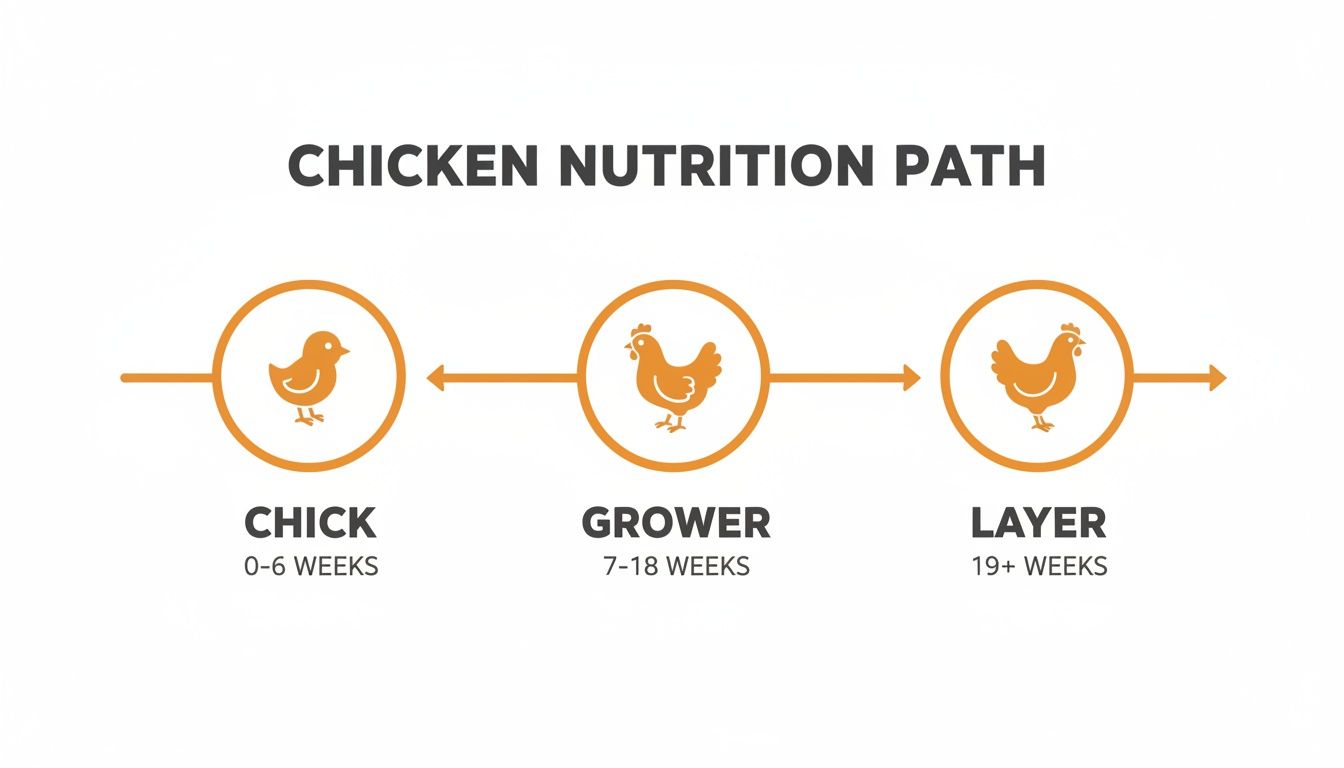
As you can see, it all comes down to adjusting protein and calcium levels at the right times. This ensures they grow strong without putting unnecessary stress on their developing bodies.
Stage One: Chick Starter Feed (0 to 8 Weeks)
From the moment they hatch, chicks are on a mission to grow, and they do it at an incredible speed. For the first six to eight weeks, their bodies are working overtime, building bone, muscle, and organs. To fuel this explosive development, they need one thing above all else: protein.
This is where Starter feed is non-negotiable. It’s formulated with the highest protein content of any chicken feed, usually between 20-24%. This protein provides the essential amino acid building blocks they desperately need.
You'll typically see two versions on the shelf:
- Medicated: This type includes a small amount of a coccidiostat (like amprolium) to help your chicks build immunity to coccidiosis, a common and often deadly intestinal parasite. It's a great safety net.
- Non-Medicated: This is the same high-protein formula, just without the medication. It's the right choice if your chicks have already been vaccinated against coccidiosis or if you're raising them in an impeccably clean brooder.
Stage Two: Grower Feed (8 to 20 Weeks)
Once your fluffy chicks start looking more like awkward teenagers—around the eight-week mark—their growth rate starts to level off. They're no longer in that frantic building phase, which means their dietary needs are shifting once again.
It's time to switch to Grower feed. With a protein content of about 16-18%, it gives them everything they need to mature at a healthy, steady pace. Just as importantly, it has a lower calcium level than layer feed. Young pullets (female chickens) aren't laying eggs yet, so their bodies can't handle the extra calcium.
Giving a young pullet high-calcium layer feed too early can lead to serious kidney damage. Making the switch to a proper grower feed is a critical step in protecting their long-term health.
Stage Three: Layer Feed (20+ Weeks)
The big moment arrives around 18-20 weeks old, often announced by the appearance of your flock's very first egg. This is the signal that your hens are ready for their final dietary change: Layer feed. Their bodies have shifted from construction mode to production mode.
Layer feed has a slightly lower protein content (around 16%) but is packed with calcium—usually 3.5% to 5%. This huge boost in calcium is essential for forming strong, solid eggshells day after day. If your hens aren't getting enough, you'll quickly see the results in the form of thin, soft, or even shell-less eggs.
This specialized formula gives your hens the exact nutrients they need to be healthy, happy egg-layers. For a deeper dive into these formulas, check out our guide to the different kinds of poultry feeds.
How to Read a Chicken Feed Label
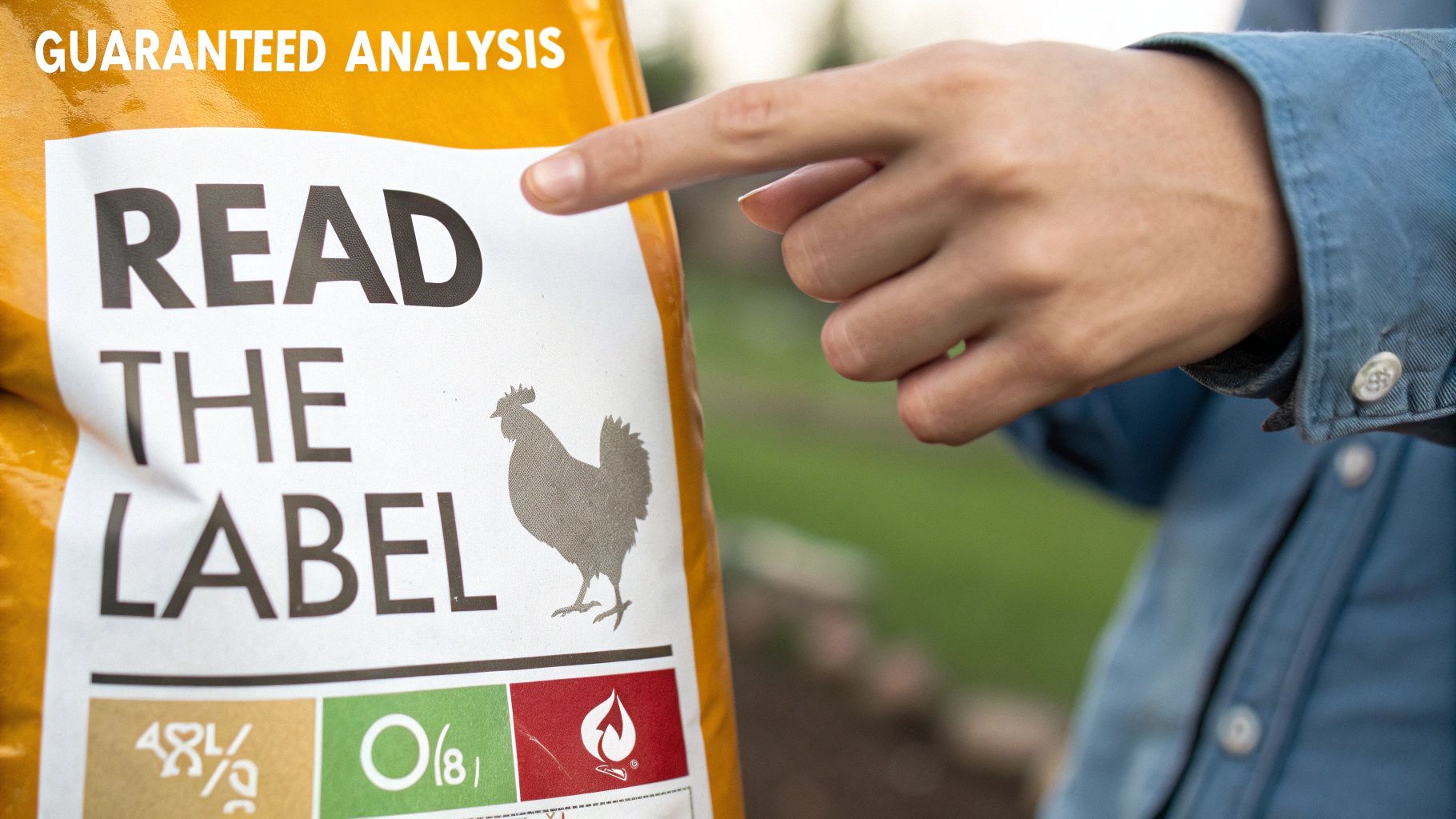
That paper tag stitched onto every bag of chicken feed is more than just a price tag—it’s a nutritional roadmap. Learning to read it is one of the most empowering things you can do as a chicken keeper. It helps you see right through the flashy marketing to understand exactly what you’re putting in your flock's feeders.
At first, the label might seem like a confusing wall of text. But really, you just need to focus on two key parts: the Guaranteed Analysis and the Ingredient List. These two sections give you the complete picture of what's inside.
The Guaranteed Analysis
This is your first stop and, honestly, the most important part of the label. It’s a legally required breakdown that provides a clear snapshot of the feed's core nutritional value. It tells you the guaranteed minimums and maximums of key components, so you know precisely what you're getting.
The table below breaks down the essential numbers you'll find on the tag and what they mean for your laying hens.
Understanding Your Feed Tag Guaranteed Analysis
| Nutrient | What It Measures | Ideal Range for Layers |
|---|---|---|
| Crude Protein (min.) | The total protein content, crucial for growth, feathering, and egg production. | 16% - 18% |
| Crude Fat (min.) | The energy source in the feed. Essential for vitamin absorption. | 3% - 5% |
| Crude Fiber (max.) | The indigestible part of the feed. Important for gut health, but too much is a problem. | Maximum of 7% |
| Calcium (min./max.) | Absolutely critical for strong eggshells. Usually shown as a range. | 3.5% - 4.5% |
| Phosphorus (min.) | Works with calcium for bone health and eggshell formation. | Around 0.4% - 0.6% |
By zeroing in on these numbers, you can quickly determine if a bag of feed is the right choice for your flock's age and purpose. It's the most reliable way to compare different brands side-by-side.
Key Takeaway: The Guaranteed Analysis is your quality control checklist. It cuts through marketing fluff and gives you the hard data needed to ensure a feed truly meets your flock's specific dietary needs.
The Ingredient List
Once you've checked the numbers, it's time to see where those nutrients are coming from. The ingredient list tells you exactly that. Ingredients are always listed in descending order by weight, meaning the first few items on the list make up the majority of the feed.
For example, soybean meal is a powerhouse protein source in most chicken feeds. It perfectly complements the energy from corn with the amino acids birds need for muscle and feather development. The scale of this industry is massive—in 2023, total animal feed production hit 1.29 billion metric tons, with poultry being the biggest consumer. The broiler sector alone grew by 3.5%, using 385.04 million metric tons of feed, which you can read more about in these poultry sector trends from the USDA.
When you scan the list, look for high-quality, specific ingredients at the top, such as:
- Ground Corn
- Soybean Meal
- Wheat Middlings
You'll want to be a bit wary of vague terms like "grain products" or "plant protein products." These collective terms can sometimes hide inconsistent or lower-quality ingredients. A specific list is almost always a sign of a better feed and gives you confidence in the contents of chicken feed you're buying.
Nutritional Boosts and Healthy Supplements
Think of your flock's complete feed as their main course—it has all the core nutrients they need to thrive. But sometimes, they need a little extra support, and that's where targeted supplements come in. They aren't meal replacements, but rather a concentrated boost delivered right when your chickens need it most.
These nutritional boosts are particularly helpful during stressful times. Things like molting, weathering extreme heat or cold, or even just the social shuffle of adding new birds can tax a chicken's system. The right supplement can help them bounce back quicker and stay in top form.
Why Black Soldier Fly Larvae Are a Superior Choice
When you start looking at high-impact supplements, Black Soldier Fly Larvae (BSFL) are in a league of their own, especially when you compare them to common treats like mealworms. Sure, both offer a protein punch, but BSFL pack a much more well-rounded nutritional profile that directly benefits laying hens.
The real difference-maker is the calcium. Premium BSFL, like the ones from Pure Grubs, can have up to 85% more calcium than mealworms. That’s not a small number—it's a game-changer for eggshell quality. This extra calcium is easily absorbed, helping your hens form strong, solid shells and cutting down on those frustrating soft or broken eggs.
A supplement should solve a problem. The high calcium in BSFL directly supports eggshell integrity, while their rich protein profile provides the essential amino acids needed for rapid feather regrowth during a molt.
This makes BSFL a truly strategic tool, not just an empty-calorie snack. You’re giving them something that actively reinforces two of a hen's most demanding jobs: laying eggs and growing feathers.
Using Supplements Correctly
The golden rule with any supplement is moderation. Treats and supplements should never be more than about 10% of your flock’s total diet. Their job is to enhance the already balanced contents of chicken feed, not throw that balance out of whack.
So, when is it a good idea to bring in a supplement like BSFL?
- During a Molt: A chicken has to regrow thousands of feathers, which demands a massive amount of protein. A daily handful of grubs can provide the building blocks they need to feather out faster and get back to laying.
- For Stronger Eggshells: If you start seeing weak or thin shells, the extra calcium from BSFL offers a direct, natural fix.
- As a Training Tool: Let's be honest, chickens go crazy for them! This makes grubs a perfect high-value reward for taming your flock or luring them back into the coop at dusk.
By using supplements smartly, you can give your flock targeted support that keeps them healthy, productive, and resilient through all the little challenges life throws their way.
Chicken Feed FAQs: Your Questions Answered
When you're getting started with chickens, a walk down the feed aisle can feel overwhelming. Let's clear up some of the most common questions that pop up for backyard chicken keepers so you can feel confident you're doing right by your flock.
Can My Chickens Just Live on Kitchen Scraps?
It’s tempting, but unfortunately, no. While your chickens will go wild for leftovers, thinking of kitchen scraps as their main meal is a recipe for disaster. It's much better to think of them as a fun, occasional treat—like a side salad, not the whole dinner.
A properly formulated layer feed is the foundation of their diet. It's scientifically balanced by poultry nutritionists to provide the exact protein, calcium, and vitamin levels needed for strong eggshells and overall health. A scraps-only diet will almost certainly lead to nutritional gaps, poor egg quality, and even serious health issues over time. It just can't match the consistent balance in the contents of chicken feed.
What’s the Deal with Pellets, Crumbles, and Mash?
These are just different shapes and sizes of the same balanced feed. The form you choose really just depends on the age of your birds and your goal for feeding time.
- Mash: This is the most basic form—fine, like a coarse flour. It's the unprocessed base for the other types.
- Crumbles: Think of this as broken-up pellets. The smaller, bite-sized pieces are perfect for chicks and younger birds that can't handle a full pellet yet.
- Pellets: Here, the mash is compressed into a solid nugget. This is fantastic for adult birds because it stops them from being picky eaters and just picking out their favorite grains. Every bite is a complete one.
Does "Made in the USA" Actually Matter for Feed?
Absolutely, especially when you're buying treats and supplements. A Made in the USA label isn't just a marketing gimmick; it means the product was made under strict safety and quality control standards. That transparency is huge for your flock's health.
When it comes to supplements like Pure Grubs, that label is your assurance that they were raised and processed in regulated facilities. It means they've been tested and cleared of nasty contaminants like heavy metals, giving you real peace of mind.
If I Use a "Complete" Feed, Do I Still Need Grit and Oyster Shells?
Yep, you sure do. It’s a common point of confusion, but they serve totally different purposes than the feed itself. Think of it this way: the complete feed provides all the nutrients, but grit and oyster shells provide the tools and extra building blocks.
Grit isn't food at all; it's a digestive aid. Chickens don't have teeth, so they store these tiny stones in their gizzard to physically grind down their food. On the other hand, oyster shells are a pure calcium supplement. Offering it free-choice allows a laying hen to take exactly what she needs, right when she needs it, to form a strong eggshell.
For a reliable, high-calcium supplement made right here in the USA, trust Pure Grubs. Our Black Soldier Fly Larvae provide the protein and calcium boost your flock needs for stronger eggs and healthier feathers. Learn more and give your flock a treat you can feel good about at https://puregrubs.com.