

Finding the Best Protein for Chickens
When it comes to your flock's nutrition, picking the right protein isn't just about hitting a number on a feed bag. It's about providing the fundamental building blocks for health, from vibrant feathers to the perfect daily egg. After years of raising chickens, I've seen firsthand that the quality of the protein makes all the difference.
So, what's the best protein for chickens? In my experience, Black Soldier Fly Larvae (BSFL) consistently come out on top. They pack a powerful combination of digestible protein, a complete amino acid profile, and a natural calcium boost that directly supports strong eggshells and healthy feathering.
Why Quality Protein is a Game-Changer for Your Flock
Think of protein as the fuel that runs your flock. It's essential for almost everything they do, from laying nutrient-rich eggs to growing back a full, beautiful set of feathers after a molt.
When chickens don't get enough high-quality protein, you'll see the signs: egg production might drop off, shells can become thin and brittle, and they'll look ragged during their molt. A lack of good protein can even leave them looking listless and vulnerable to illness.
The secret lies in the amino acid profile. Chickens need certain essential amino acids that their bodies can't make, so their diet has to provide them. A "complete" protein source delivers all of these in the right ratios, which is why just glancing at the protein percentage isn't the whole story. The type of protein is what truly counts.
The Foundation of a Thriving Flock
A diet built on excellent protein delivers clear, tangible benefits you can see every day in the coop.
- Consistent Egg Production: Laying hens need a diet with at least 16% protein just to keep up with the daily demands of egg formation. The better the protein, the more reliable the supply.
- Stronger Eggshells: Some protein sources, especially BSFL, come with a high-calcium bonus. This is a game-changer for producing thick, sturdy shells that don't crack the moment you pick them up.
- Beautiful, Healthy Feathers: Did you know feathers are made of roughly 85% protein? During a molt, a hen’s protein requirements can literally double. Supplementing is key to helping them regrow feathers quickly and with less stress.
- A Robust Immune System: Just like in humans, protein is crucial for building antibodies and keeping the immune system primed to fight off whatever comes its way.
Here’s a look at the common ingredients in commercial poultry feed, showing where protein fits in.
This chart shows how ingredients like soybean meal and corn form the base, but it also highlights why adding a high-quality supplemental protein can elevate your flock's nutrition. For a more comprehensive look, check out our guide on what constitutes the best food for chickens.
It's not just chicken keepers who are focused on protein. It’s a global trend. Recent research shows that 61% of consumers increased their protein intake in 2024, with chicken being a go-to source. Discover more insights about these consumer protein trends on cargill.com.
Comparing the Top 5 Chicken Protein Sources
Trying to figure out what to feed your flock can feel like a full-time job. When it comes to protein, the options are vast, and each one brings something different to the table. The "best" protein really depends on your flock's needs—are you aiming for stronger eggs, helping them through a tough molt, or just keeping them healthy and happy?
Let's walk through the most common choices, starting with the baseline and moving into some more powerful supplements.
The Foundation: Commercial and Plant-Based Feeds
For most chicken keepers, Commercial Layer Feed is the starting point. It’s formulated to be an all-in-one meal, providing a balanced diet with everything your hens need for consistent egg production. Typically, these feeds contain 16-18% protein. While dependable, the quality and origin of the protein sources inside can vary a lot from brand to brand.
A key ingredient you'll often find in these feeds is Soybean Meal. It’s the most common plant-based protein out there because it's cheap and readily available. The downside? Soy can be harder for chickens to digest and contains certain "anti-nutrients" that might hinder the absorption of other vital minerals unless it's been properly processed.
Animal-Based Proteins: From the Sea to Your Backyard
If you're looking for a serious protein punch, Fishmeal is a powerhouse. It's an animal-based protein that's loaded with omega-3 fatty acids and a high protein percentage. However, many flock owners are rightly concerned about its sustainability and the potential risk of heavy metals, which can be a real deal-breaker.
This is where insect proteins have stepped in and completely changed the game.
Mealworms are probably the best-known insect treat. Chickens go absolutely wild for them, and with a protein content of around 50%, they make an fantastic supplemental snack. They're especially useful during the fall molt when your flock's protein demands skyrocket.
Then you have Black Soldier Fly Larvae (BSFL), which are more than just a treat—they're a nutritional superstar. What makes BSFL unique isn't just their high protein; it's their perfectly balanced calcium-to-phosphorus ratio. This natural balance is a game-changer for building strong eggshells and promoting solid bone health, making them one of the most effective supplements you can offer.
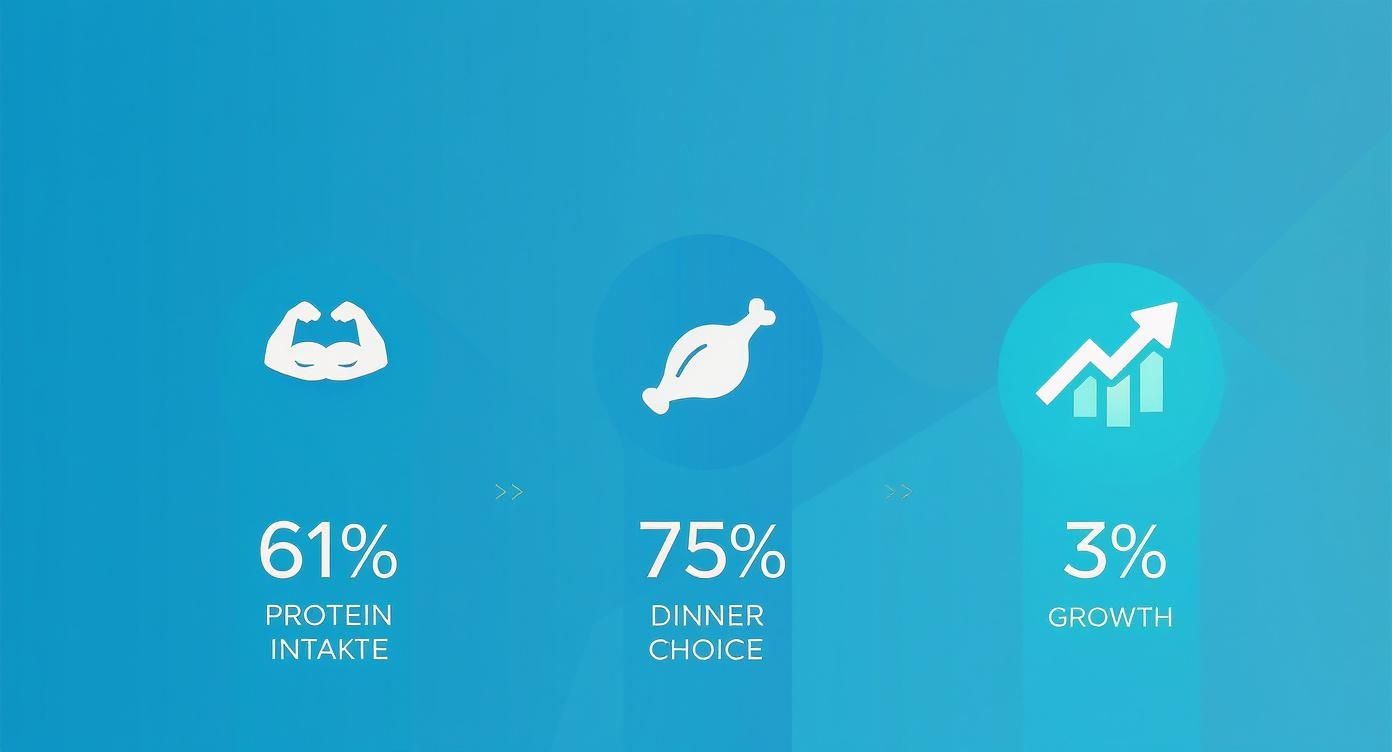
As you can see, the demand for high-quality, reliable protein is on the rise, and that includes what we feed our birds. You can learn even more about the different high-protein foods for chickens in our detailed guide.
Now, let's break down how these sources really compare side-by-side.
At-a-Glance Protein Source Comparison
To make things a bit simpler, here’s a quick rundown of the key players. This table gives you a snapshot of what each source offers, helping you see where they shine.
| Protein Source | Typical Protein Percentage | Key Nutrient Highlight | Primary Use Case | Sustainability Factor |
|---|---|---|---|---|
| Commercial Feed | 16-18% | Balanced vitamins/minerals | Daily complete nutrition | Varies by brand/source |
| Soybean Meal | ~48% | Plant-based amino acids | Common feed ingredient | Monoculture farming |
| Fishmeal | 60-72% | Omega-3 fatty acids | High-protein supplement | Concerns of overfishing |
| Mealworms | ~50% | High in fat & protein | High-value treat, molting | Moderate |
| BSFL (Pure Grubs) | 45-50% | Perfect Ca:P ratio | Eggshell & bone health | High (circular economy) |
While each one has its place, the data shows that for supplemental feeding, insect proteins—and especially BSFL—offer a nutritional profile that's hard to beat. Now, let's dive deeper into the nitty-gritty of what these numbers actually mean for your flock.
A Closer Look at the Nutrition in Each Protein Option
Smart chicken keepers know that looking past the simple protein percentage on a feed label is where you can really start to unlock your flock's health potential. The real value of any protein source goes much deeper, involving a complex mix of amino acids, key minerals, and—most importantly—how easily your chickens can actually use those nutrients. After all, a high protein number doesn't mean much if it's indigestible or missing the essential building blocks for good health.
This deeper dive is what separates a merely adequate diet from an optimal one. Let's break down each common protein source and measure it against the metrics that truly impact everything from eggshell strength to feather quality. This will show you exactly why not all proteins are created equal and which ones really deliver the best results for your flock.
Protein Quality and Amino Acid Profile
When we talk about "protein quality," we're really talking about the balance of essential amino acids. Chickens can't produce certain amino acids on their own, so they absolutely must get them from their diet. Two of the most important for poultry are methionine and lysine; they are directly tied to healthy feather growth and consistent egg production.
A protein is considered "complete" when it has all the essential amino acids in the right proportions. Generally, animal-based proteins like fishmeal and insects provide a far superior, more complete profile than most plant-based options.
Soybean meal, for instance, is high in overall protein but is known to be deficient in methionine. This is precisely why commercial feed manufacturers often add synthetic methionine to their formulas to make up for it. If you rely on soy alone without that extra boost, you might see slower feather regrowth during a molt or even smaller eggs.
Key Insight: This is where Black Soldier Fly Larvae (BSFL) really shine. They naturally have a robust and balanced amino acid profile, loaded with both methionine and lysine. That makes them a complete protein source that can support demanding jobs like molting and daily laying without needing any synthetic additives.
Calcium to Phosphorus Ratio
The balance between calcium and phosphorus (Ca:P) is one of the most vital nutritional factors for laying hens, but it’s something many people overlook. To absorb calcium properly and form strong eggshells, a hen needs a Ca:P ratio of at least 2:1. If her diet has too much phosphorus compared to calcium, it can actually block her body from using the calcium she eats, leading straight to thin, weak, or even shell-less eggs.
This is a really common problem with a lot of popular treats. For example:
- Mealworms: They have a terrible Ca:P ratio, often as low as 1:13. Feeding lots of mealworms without also offering a free-choice calcium source like oyster shell can actively sabotage your goal of getting stronger eggshells.
- Soybean Meal: This also has an imbalanced ratio, with far more phosphorus than calcium.
This mineral imbalance is where Black Soldier Fly Larvae stand out as a nutritional powerhouse.
BSFL are a bit of a natural wonder in this regard. They naturally have a nearly perfect Ca:P ratio, often right around 2:1 or even better. This means the calcium they provide is incredibly bioavailable—it's ready for the hen's body to put to immediate use for building strong eggshells and maintaining bone density. This makes them one of the single most effective supplements for specifically improving eggshell quality.
Digestibility and Bioavailability
Digestibility is a simple concept: it’s how much of a protein your chicken can actually break down and absorb. A highly digestible protein means less waste and more efficient nutrition. Bioavailability then takes it a step further, referring to how much of that absorbed nutrient the body can actually use.
It’s no surprise that animal-based proteins are typically more digestible for chickens than plant-based ones. Fishmeal has great digestibility, which is why it’s been a staple in animal feeds for so long, though it comes with its own set of issues.
Insect proteins, especially BSFL, also boast incredibly high digestibility. The protein and fat in larvae are in a form that's very easy for a chicken's digestive system to handle, closely mimicking what they'd find while foraging naturally. You can read more about their unique makeup in our guide to dried Black Soldier Fly Larvae.
On the other hand, plant proteins like unprocessed soybeans contain "anti-nutritional factors" such as trypsin inhibitors. These compounds can get in the way of protein digestion and block the absorption of other important nutrients. While modern processing gets rid of some of these, they're still a valid concern for anyone looking for a cleaner, more natural diet for their flock.
Safety and Contaminants
Making sure your flock's food is safe is non-negotiable, especially since contaminants can find their way into the eggs you and your family eat. Every protein source carries its own potential risks you need to be aware of.
With fishmeal, the biggest worry is the risk of heavy metals like mercury and arsenic, as well as PCBs. These toxins build up in the fatty tissues of fish, and the levels depend entirely on where the fish were caught. The rendering process itself can also create biogenic amines like histamine, which can cause health problems.
For soybean meal, the main concerns are mycotoxins (toxins from mold) if it isn’t stored correctly, plus the fact that it’s one of the most common GMO crops. While many people are perfectly fine with GMOs, those looking for a non-GMO diet have to be extra careful when sourcing feed.
This is where the origin of insect proteins becomes critically important. BSFL and mealworms that are raised on clean, controlled pre-consumer food waste pose a much lower risk of contamination.
But the country where they are grown matters immensely.
Pure Grubs' Commitment to Safety: We tackle this issue head-on by growing our Black Soldier Fly Larvae exclusively in the USA in FDA-compliant facilities. Every single batch is rigorously tested for heavy metals—including lead, arsenic, mercury, and cadmium—to guarantee a safe, clean protein for your flock. This domestic, controlled process gives you a level of safety and transparency that’s often missing from imported insect feeds.
Choosing a protein that's not only nutritionally superior but also verifiably safe gives you peace of mind. You know you're providing the absolute best for your birds and your family. By thinking about these deeper nutritional factors, you can make a truly informed choice that will support the long-term health and productivity of your entire flock.
Matching the Right Protein to Your Flock's Needs
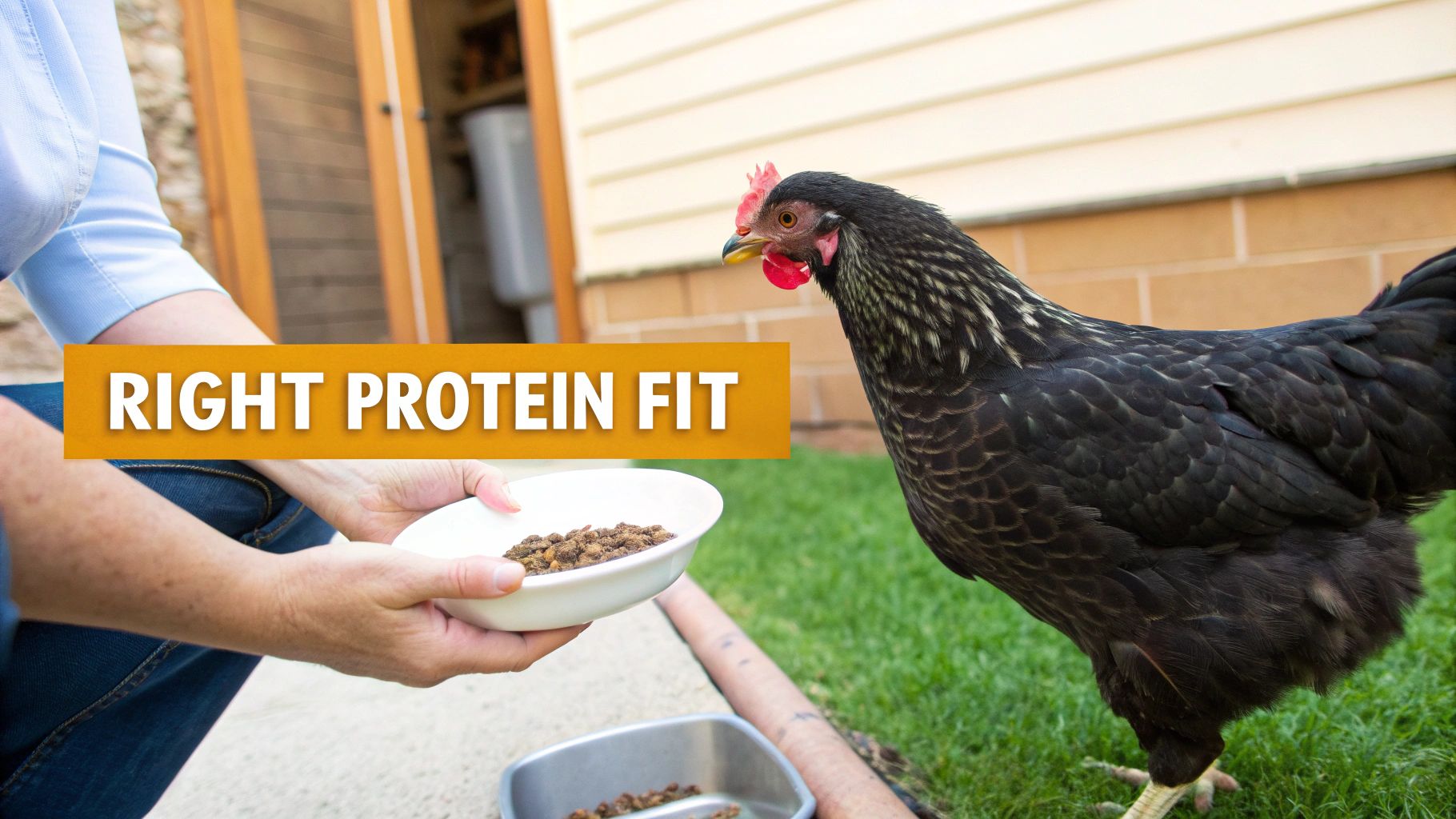
Knowing the science behind protein is great, but the real test is applying it to your own birds. There's no single "best" protein for every chicken; it's all about picking the right tool for the job at hand. A flock's needs shift with the seasons and their age, so a savvy chicken keeper knows how to tweak their diet for peak health and productivity.
Instead of hunting for one perfect solution, think about matching the protein source to your specific goals. Are you trying to fix weak eggshells? Prepping the flock for the stress of a winter molt? Or just giving your new chicks the best possible start? The right supplement can make a world of difference, turning your feeding routine from simple maintenance into a powerful management tool.
For Boosting Eggshell Strength
Seeing thin, brittle, or cracked eggs in the nesting box is a classic sign your hens need help, and the culprit is almost always calcium. You can put out oyster shells, of course, but the real issue is often how well their bodies can actually use that calcium.
This is where Black Soldier Fly Larvae (BSFL) truly shine. They have a naturally perfect calcium-to-phosphorus ratio of around 2:1, which is the key to making calcium highly bioavailable. Your hens can absorb and put it to work right away, directly strengthening their eggshells.
- When to Use: I recommend offering BSFL daily as a treat, especially if you start seeing poor shell quality or during the peak laying months of spring and summer.
- Why It Works: Unlike mealworms, whose poor Ca:P ratio can actually get in the way of calcium absorption, BSFL provide a direct, usable source that fixes the root of the problem.
Real-World Application: If you start finding those dreaded soft-shelled eggs, try swapping your flock's usual afternoon scratch grains or mealworms for a handful of BSFL. You should see a noticeable difference in shell thickness and strength within a couple of weeks.
It's a simple change that directly targets eggshell integrity without overcomplicating your feeding routine. You're giving them a solution that works with their biology.
For Supporting Feather Regrowth During Molt
The annual molt is one of the toughest times for a chicken. Shedding and regrowing an entire coat of feathers is a massive undertaking, and it’s incredibly draining on their protein reserves. Since feathers are made of about 85% keratin (a protein), a molting bird's dietary protein needs can practically double.
Your goal here is to provide a high-octane, easily digestible protein loaded with the specific amino acids needed to build new feathers, like methionine and lysine. A fast, efficient molt means less stress on your birds and a quicker return to laying eggs.
For this specific challenge, both BSFL and fishmeal are excellent choices because of their complete amino acid profiles. That said, when I weigh the safety and sustainability factors, USA-grown BSFL from a reputable source like Pure Grubs is the cleaner, more reliable choice, hands down. You get all the benefits without the potential risk of heavy metals found in some fishmeal.
For a Sustainable Protein Alternative
More and more, backyard chicken keepers are thinking about the environmental impact of their flock. If sustainability is high on your list, insect-based proteins are the obvious winners over traditional choices like soy and fishmeal.
Soybean meal is frequently tied to large-scale monoculture farming and even deforestation, while fishmeal production can contribute to overfishing and damage marine ecosystems. Insect farming, especially with BSFL, offers a much greener way forward.
- A Circular System: BSFL are nature's ultimate recyclers. They thrive on pre-consumer food waste, turning organic matter that would otherwise rot in a landfill into top-tier animal protein.
- Low-Impact Farming: Raising insects uses a fraction of the land, water, and feed required for traditional livestock or massive crop operations.
When you choose BSFL, you're not just giving your flock fantastic nutrition—you're also casting a vote for a more sustainable food system. It’s a win for your chickens and a win for the planet.
For Growing Chicks and Pullets
From hatch day until they lay that first egg, young birds are growth machines. Their bodies are working overtime building strong bones, healthy muscles, and their first set of feathers. This critical period demands a diet packed with high-quality protein and perfectly balanced minerals.
A good starter or grower feed should always be their primary food source, but supplementing with BSFL can give them a serious leg up. The balanced protein fuels muscle and feather growth, while the easy-to-absorb calcium helps build a strong skeletal frame that will support them for their entire lives. Investing in their nutrition early on pays off down the road with healthier, hardier, and more productive adult chickens.
Making the Final Choice for Your Flock's Health
https://www.youtube.com/embed/sKFH-FYCSSg
Choosing the best protein for your chickens means looking beyond a single percentage on the label. You have to consider the whole nutritional picture. While every source we've discussed has its place, the evidence consistently points to one that stands out for overall flock health, productivity, and your peace of mind.
After digging into the amino acid profiles, mineral balance, and safety of each option, Black Soldier Fly Larvae (BSFL) emerge as the superior all-around choice for most backyard flocks. They deliver a powerful combination of benefits that directly solves the most common challenges for laying hens, molting birds, and growing chicks.
The Clear Winner for All-Around Nutrition
What really sets BSFL apart is their naturally balanced nutritional profile. They aren't just another high-protein treat; they are a complete supplemental powerhouse that fixes several problems at once.
- Optimal Calcium Balance: Their nearly perfect 2:1 calcium-to-phosphorus ratio is a total game-changer for eggshell strength. Unlike mealworms, which can actually get in the way of calcium absorption, BSFL deliver it in a form that chickens can easily use.
- Complete Amino Acid Profile: BSFL are loaded with essential amino acids like methionine and lysine—the critical building blocks for vibrant feather regrowth during a molt and for maintaining consistent egg production.
- High Digestibility: As an insect-based protein, BSFL are a natural fit for a chicken’s digestive system. This means your birds absorb more of the good stuff with less waste.
This natural synergy of nutrients makes them an incredibly efficient supplement. You’re not just adding protein; you're providing usable calcium and vital amino acids in one simple, natural package.
How to Source and Introduce BSFL to Your Flock
Making the switch to a higher-quality protein is easy. The single most important step is picking a reputable supplier who is transparent about their safety standards.
I always recommend looking for BSFL that are grown in the USA in FDA-compliant facilities. This is your best guarantee of a clean, safe product, free from the heavy metals and contaminants that can be a real concern with some imported feeds or fishmeal. Brands like Pure Grubs offer this level of quality control, with every single batch tested for safety.
To introduce them, just start by tossing a small handful out as a treat. Chickens find their texture and movement irresistible, so you won't have to do much convincing. You can scatter them on the ground to trigger their natural foraging instincts or simply mix them into their regular feed for an extra boost.
Final Recommendation: For any chicken keeper wanting to improve eggshell quality, help their flock through a fast and healthy molt, and provide a clean, sustainable protein, Black Soldier Fly Larvae are the definitive best choice. Their nutritional superiority and safety record make them a smart investment in your flock's long-term health and productivity.
The global demand for high-quality protein continues to climb, affecting everything from our own diets to animal feed. For instance, China's poultry sector saw a stunning 7% year-on-year increase in production in early 2025, largely because consumers are shifting to chicken as their main protein. This trend, detailed in a USDA report on poultry market dynamics, just highlights how crucial it is to choose efficient and sustainable protein sources like BSFL to support poultry health around the world.
Your Top Protein Questions Answered
Even when you've done your homework on protein, questions always pop up when you're actually out in the coop. Putting that knowledge into practice the right way is what really matters for keeping your flock healthy and avoiding any issues. Let's tackle some of the most common things chicken keepers wonder about.
Getting these answers right will help you tweak your flock's diet like a pro. This is where we go from theory to tangible results, like stronger eggshells and vibrant feathers.
How Much Extra Protein Do My Chickens Actually Need?
This is the big question, and the honest answer is: it really depends on what they're already eating and what they're going through. If your flock is on a solid layer feed with 16-18% protein, think of any extra protein as a targeted boost, not a whole new meal plan.
A great guideline to live by is the 10% treat rule. All the fun stuff, including high-protein snacks, shouldn't be more than 10% of their total daily diet. For a regular-sized chicken, that works out to about one or two tablespoons of a supplement like Black Soldier Fly Larvae per bird, each day.
Of course, during really demanding times—like a hard molt or a bitter cold snap—you can bump that amount up a bit to help them meet those higher energy needs.
Can I Give My Flock Too Much Protein?
Yes, you can absolutely overdo it. As essential as protein is, forcing their bodies to process too much can lead to some real health problems. A diet that's consistently too high in protein puts a serious strain on their kidneys, which have to work overtime to get rid of the excess nitrogen.
Keep an eye out for a few tell-tale signs of protein overload:
- Bedding that's constantly wet or sticky from loose droppings.
- A sharp ammonia smell in the coop, which comes from that excess nitrogen breaking down.
- Your chickens are drinking way more water than usual as their bodies try to flush everything out.
Just stick to the 10% treat rule and make sure the foundation of their diet is always a quality commercial feed designed for their age and purpose.
The Bottom Line: More isn't always better. The real goal is a balanced diet where supplemental protein fills in the gaps, not takes over the whole plate. A measured approach keeps your flock healthy and ensures that extra protein is put to good use.
What's the Best Way to Introduce a New Protein Source?
Chickens are naturally curious, but they can also be a little suspicious of new things. The trick to introducing something new, like BSFL, is to make it feel like an exciting treat, not a strange new chore.
Start small. Toss a few on the ground to get their foraging instincts going—they can't resist a good scratch-and-peck session. You could also mix a small handful into their regular feed or sprinkle some over a familiar snack like scratch grains to get them started. Once they get that first taste, you'll find they become big fans very quickly.
Is It Safe to Give Insect Protein to Chicks?
Absolutely. In fact, it’s a fantastic addition to a young chick's diet. High-quality insect proteins like BSFL offer protein that's easy for their little systems to digest, along with the essential amino acids they desperately need for healthy muscle, bone, and feather development.
For the really tiny ones, just crush the dried larvae up a bit to make them easier to manage. It gives them a serious nutritional advantage right from the start, setting them up to grow into strong, robust adults. Just remember, it’s a supplement, not a replacement for their complete starter or grower feed.
Ready to give your flock the safest, most nutritionally complete protein boost available? Pure Grubs offers USA-grown Black Soldier Fly Larvae, rigorously tested for safety and packed with the perfect balance of calcium and protein for stronger eggs and healthier birds. Upgrade your flock’s nutrition today at https://puregrubs.com.