

A Complete Guide to Chicken Feed Mixes for a Healthy Flock
When you walk down the feed store aisle, it's easy to get overwhelmed by the sheer number of options. But here’s the most important thing to remember: choosing the right chicken feed is the single most important factor for a healthy, happy flock.
This isn’t just about filling a feeder; it’s about providing the exact fuel your birds need to thrive, grow strong, and lay beautiful eggs.
The Foundation of a Thriving Flock
A chicken’s nutritional needs are a moving target. What a tiny, fluffy chick needs to eat is drastically different from the diet of a fully-grown, egg-laying hen. Think of it like this: you wouldn't feed a newborn baby the same meal as a marathon runner.
A "one-size-fits-all" bag of feed just won't cut it. Trying to get by with the wrong formula can lead to all sorts of problems, from poor growth to a drop in egg production. Understanding what’s in those chicken feed mixes is the first step to becoming a more confident, successful chicken keeper.
Core Nutritional Components
Every bag of quality chicken feed is built on a foundation of five key nutritional pillars. Getting these right is non-negotiable.
- Protein: This is the essential building block for everything from muscle to feathers. Protein demand is at its peak for fast-growing chicks and tapers off as they get older.
- Carbohydrates: Think of this as pure energy. Carbs fuel all of a chicken's daily activities, from scratching and foraging to simply staying warm.
- Fats: A dense source of energy that also plays a crucial role in helping chickens absorb certain vitamins.
- Vitamins: These are the unsung heroes responsible for a strong immune system, healthy bones, and countless metabolic functions.
- Minerals: You can't have strong eggshells without minerals. Calcium and phosphorus are the star players here, vital for both skeletal health and egg integrity.
A well-fed hen is a productive and resilient hen. Proper nutrition is your flock's first line of defense, making them far better equipped to handle stress and fend off common illnesses.
This isn't just a backyard concern; it's a massive global industry. The poultry feed market is expected to grow from USD 260.0 billion in 2025 to a staggering USD 364.0 billion by 2035. For homesteaders and backyard chicken keepers, feed can easily account for up to 70% of the total cost of raising chickens, which makes every bag a significant investment.
When you master the basics of chicken nutrition, you're doing more than just buying feed. You’re learning to read labels with a critical eye, anticipate your flock's needs as they grow, and make smart choices that result in healthier birds and better eggs. Our complete chicken feeding guidelines can help you build a solid routine from day one. Understanding the "why" behind the feed is what sets you up for years of success.
Matching the Right Feed to Every Life Stage
Just like people need different foods as babies, teenagers, and adults, a chicken's nutritional needs change dramatically as it grows. You can't just pick one "perfect" feed and stick with it. Giving your flock the right chicken feed mix at each life stage is one of the most important things you can do to raise healthy, productive birds.
Think of it like this: you wouldn't feed a newborn a steak, and you wouldn't expect a growing kid to get by on a diet meant for a senior citizen. The same logic applies to chickens. Each formula—starter, grower, and layer—is carefully crafted to support them through a specific phase of development. Getting this right helps prevent health issues and sets them up for a long, happy life.
This timeline gives you a great visual for the typical feeding schedule as your flock goes from a fluffy chick to a teenage pullet and finally to a mature, egg-laying hen.
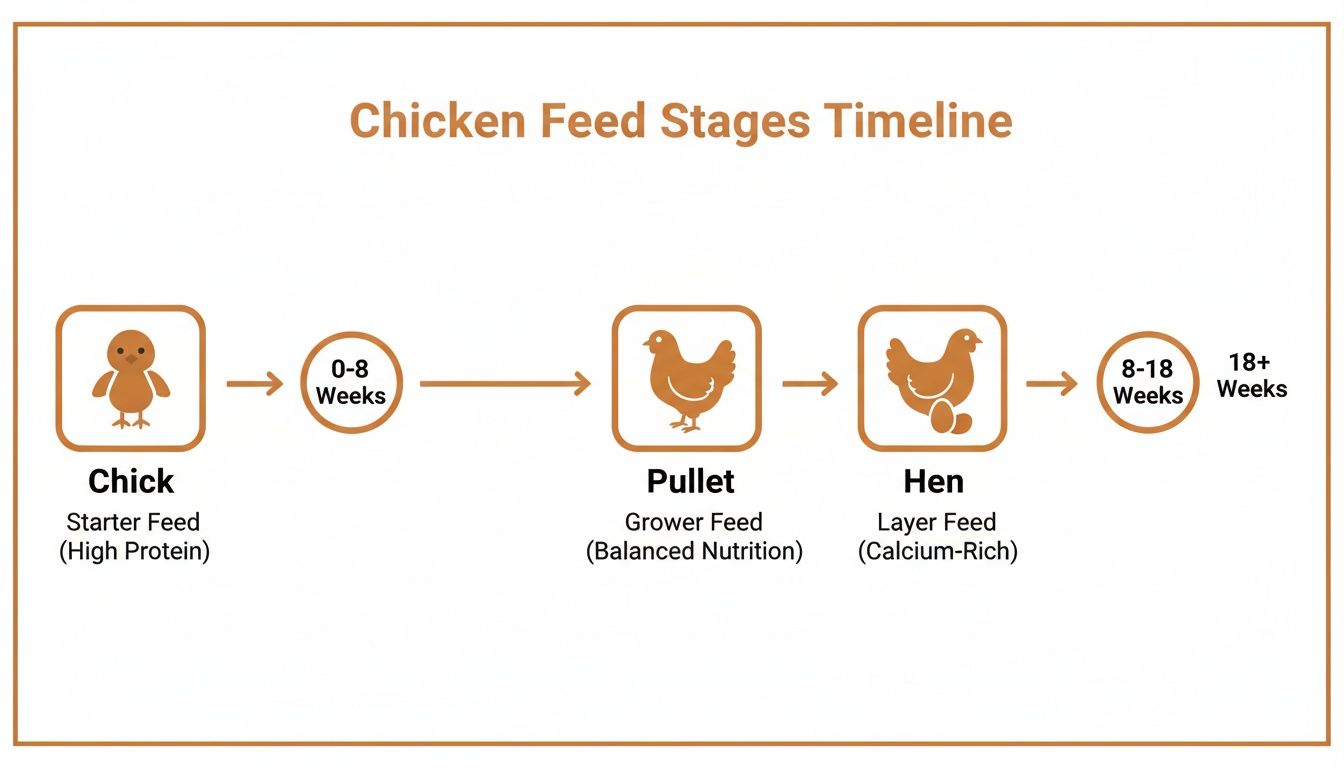
As you can see, the protein levels start high and then drop, while other nutrients, especially calcium, ramp up once the birds mature and start laying.
Starter Feed: The High-Protein Kickstart
From the day they hatch until they’re about six to eight weeks old, chicks are in a period of absolutely explosive growth. Starter feed is basically their version of baby formula, and it’s packed with the highest protein content they’ll ever need—usually between 20-24%. All that protein is the critical building block for developing strong bones, healthy organs, and their first full set of feathers.
When you go to buy starter feed, you'll generally find two choices:
- Medicated: This type contains a small amount of a coccidiostat called amprolium. It’s designed to help prevent coccidiosis, a nasty and often fatal intestinal parasite that is very common in young chicks. It’s a fantastic safety net, especially if you're new to raising chickens.
- Unmedicated: If your chicks were vaccinated for coccidiosis at the hatchery or if you're confident in your brooder sanitation and prefer to avoid medications, this is the way to go.
There's no single right answer here; it really depends on your setup and comfort level. What's non-negotiable, though, is giving them a proper starter feed to get them off to a robust start.
Grower Feed: The Awkward Teen Phase
Once your chicks have outgrown the brooder and are moved to the coop, they enter what I like to call their "teenage" phase. Now called pullets, this stage lasts from about eight weeks until they lay their first egg around 18-20 weeks. During this time, you'll switch them over to grower feed.
Grower feed has a lower protein level, typically around 16-18%, and less calcium than their final adult diet. This drop in protein is completely intentional. If you give them too much protein now, it can push them to start laying eggs before their bodies are fully mature, which can lead to serious health problems like egg binding. Grower feed gives them everything they need for steady, healthy development without rushing things.
Pro Tip: Switching feeds too suddenly can really mess with a chicken's digestive system. The best way to transition from one feed to the next is to do it slowly over a week. Just start mixing a little of the new feed in with the old, gradually increasing the ratio each day.
Layer Feed: The Egg Production Powerhouse
The day you find that very first egg is a huge milestone! It also means it's time to switch your flock to their permanent adult diet: layer feed. This formula is what will sustain your hens throughout their egg-laying years.
The protein level stays in that 16-18% range, similar to grower feed. The big difference is the massive boost in calcium, which jumps up to 3.5-5%. This extra calcium is absolutely essential for forming strong, solid eggshells day after day. Without it, you'll end up with thin, brittle shells, and the hen will start pulling calcium from her own bones, which can be dangerous.
For a closer look at the nutritional science behind these diets, you can explore the different types of chicken feeds in more detail.
One last critical point: never give layer feed to young, non-laying pullets or roosters. The high calcium content is designed only for actively laying hens. In other birds, it can cause severe kidney damage over time. Each feed is a specific tool for a specific job.
How to Read a Feed Bag Like an Expert
Ever walk into a feed store and feel a bit overwhelmed? All those bags look the same, but the labels are packed with terms that might as well be in another language. Learning to decode what's on that tag is probably the single most important skill you can pick up to make sure your flock is getting the top-notch nutrition they need to thrive.
Honestly, this skill is more crucial now than ever before. The science behind chicken feed mixes has come a long, long way, blossoming into a massive global industry. We're talking about a market valued at USD 216.82 billion in 2025, and it's on track to hit USD 332.40 billion by 2035. That growth is driven by a focus on creating fortified mixes that truly boost a flock’s health. By understanding the label, you're tapping directly into all that research for your own birds. You can discover more insights on the poultry feed market's growth to see just how big it is.
The Three Main Forms of Feed
Before you even get to the nutritional numbers, the first thing you'll notice is that chicken feed comes in three main textures: mash, crumbles, and pellets. Each has its own place, and knowing the difference helps you pick the right one for your flock's age and habits.
- Mash: This is the most basic form—just a loose, unprocessed mix of ground-up grains and supplements. It’s the go-to for baby chicks since they can't handle anything bigger. The downside? It can be messy, and chickens are notorious for picking out their favorite bits and flicking the rest onto the floor.
- Crumbles: Think of crumbles as the happy medium. They’re basically just pellets that have been broken down into smaller, easier-to-eat pieces. This texture is perfect for growing pullets who are too big for mash but not quite ready for full-sized pellets.
- Pellets: This is what most adult chickens eat. Pellets are made by taking mash and using heat and pressure to squish it into a uniform bite. This process is brilliant because it locks all the nutrients together, completely stopping picky eating. Every single mouthful is a balanced meal.
So, your choice really boils down to the age of your flock and how much feed waste you can tolerate.
Decoding the Guaranteed Analysis Label
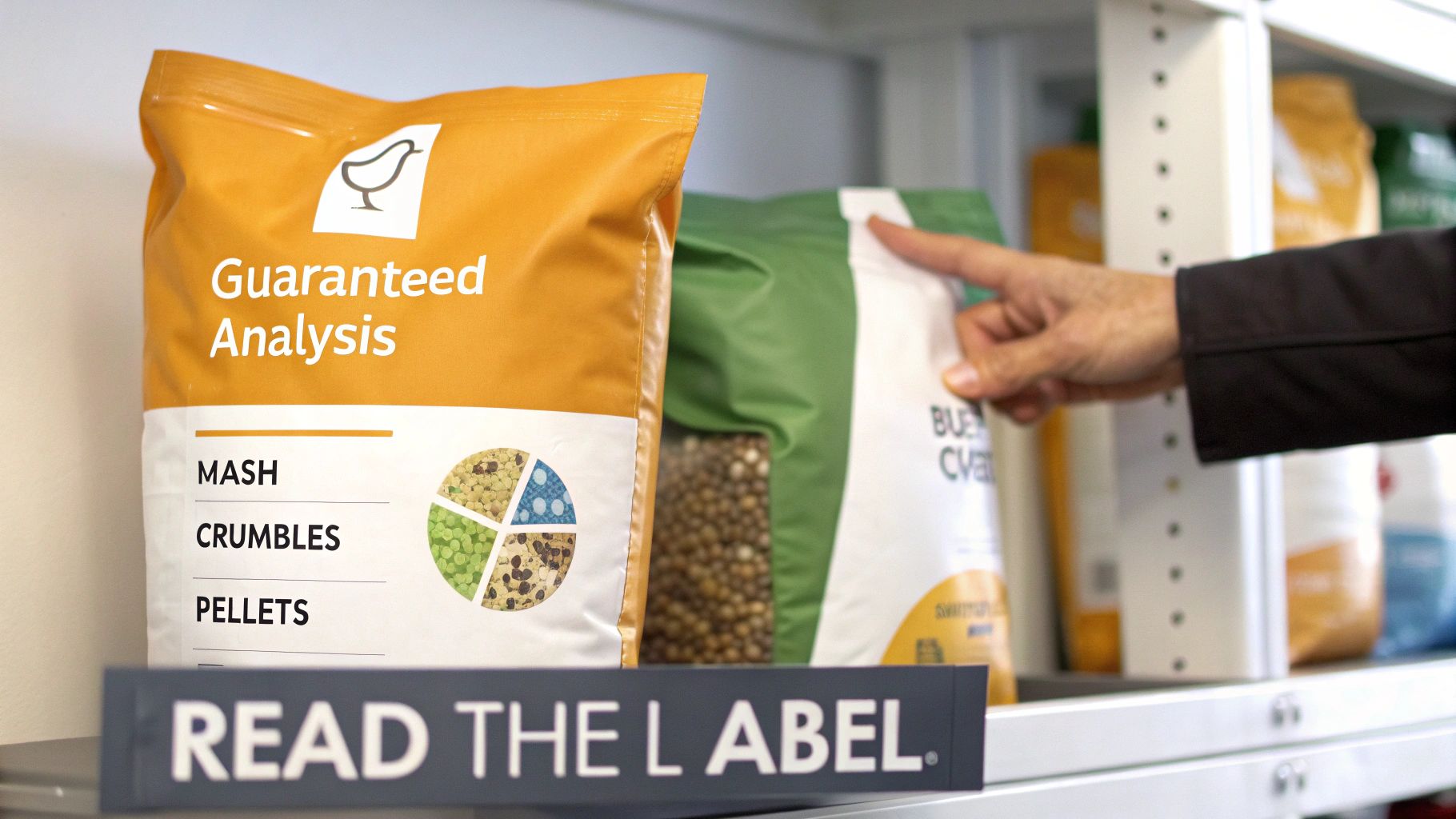
On every single bag of commercial chicken feed, you'll find a tag with a section called the "Guaranteed Analysis." This is where the real truth lies. It’s a legally required breakdown that tells you the minimum and maximum amounts of key nutrients in that specific feed.
Think of the Guaranteed Analysis as the nutrition facts label on your own food. It cuts right through the fancy marketing claims and tells you exactly what you're getting in terms of protein, fat, fiber, and crucial minerals.
Here’s what you should be looking for:
- Crude Protein (min): This is one of the most important numbers on the bag. It shows the minimum percentage of protein, which is the fuel for growth, feather production, and, of course, egg laying. Layer feed should be around 16-18%, while a starter feed for chicks will be much higher at 20-24%.
- Crude Fat (min): Fat is pure energy. Your chickens need it to stay warm and power through their busy day of scratching and foraging. A good layer feed will usually have a minimum of 2.5-3.5% crude fat.
- Crude Fiber (max): A little fiber is great for digestion, but too much can cause problems. This "max" value ensures the fiber content doesn't get so high that it blocks the absorption of other important nutrients. You typically want to see this number kept below 5%.
- Calcium (min/max): For your laying hens, this is a non-negotiable. You absolutely need to see a minimum of 3.5% calcium to support strong eggshells. The maximum value is also listed because too much calcium can be harmful to roosters or non-laying birds.
By simply comparing the Guaranteed Analysis on a few different bags of chicken feed mixes, you can make a decision based on hard data, not just a pretty picture on the packaging. It’s a simple habit that will help you find the best nutrition and value for your flock’s specific needs.
Crafting Your Own Custom Chicken Feed Mixes
For a lot of chicken keepers, mixing your own feed feels like the final frontier of self-sufficiency. It gives you complete control over your flock's diet, letting you choose every last ingredient to be organic, non-GMO, or sourced from the farm down the road. It’s an incredibly rewarding feeling, but it's also a serious responsibility.
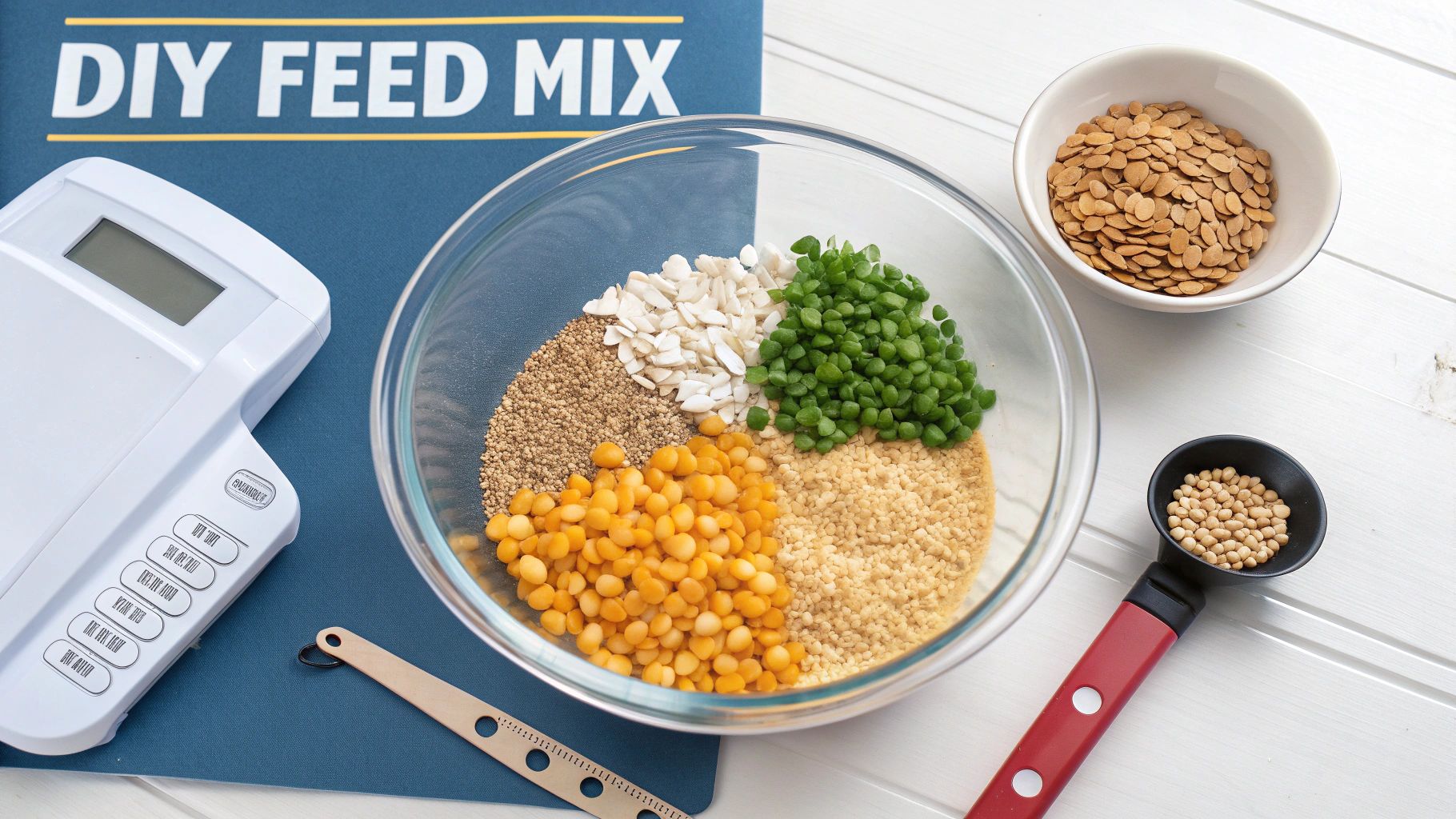
When you go the DIY route, you essentially become your flock’s personal nutritionist. Those commercial feeds are formulated by scientists to make every single pellet a perfectly balanced meal. When you mix your own, that job falls squarely on your shoulders. Get the balance wrong, and you could be looking at nutritional deficiencies, a drop in egg production, or even health problems.
That said, with a solid recipe and good-quality ingredients, you can absolutely create a feed that helps your flock thrive. The trick is to stick to a proven formula that hits all the right nutritional notes, especially when it comes to protein and calcium.
A Simple DIY Grower Feed Recipe
During that awkward "teenage" phase from about 8 to 18 weeks, your pullets need a feed that fuels steady growth without rushing them into laying eggs too early. This grower recipe lands right around 17-18% protein, which is the sweet spot for this critical stage of development.
This mix is designed to be simple, using whole-grain ingredients you can usually track down at a local feed mill or farm supply store.
Grower Feed Ingredients (by parts):
- 3 parts Whole Corn (for energy and carbohydrates)
- 3 parts Wheat (a great source of both protein and energy)
- 2 parts Field Peas (a real powerhouse of plant-based protein)
- 1 part Oats (for extra fiber and valuable nutrients)
- 1 part Fish Meal (a concentrated protein boost to get you to that target percentage)
To put it all together, just dump the ingredients into a large, clean container and mix them up thoroughly. You want to make sure everything is evenly distributed so your birds get a balanced mouthful with every peck.
A Balanced DIY Layer Feed Recipe
The moment your hens start laying, their nutritional needs change in a big way. They actually need a little less protein than they did when they were growing, but they need a major boost in calcium to create strong eggshells day after day. This recipe is formulated for about 16-17% protein and gives productive hens the foundation they need.
Heads Up: With this recipe, you'll offer calcium separately. This is the best way to do it, as it lets hens self-regulate and take only what their bodies tell them they need. You should never mix oyster shell directly into the main feed if you have roosters or non-laying birds in the same flock.
Layer Feed Ingredients (by parts):
- 5 parts Whole Corn
- 3 parts Wheat
- 2 parts Field Peas
- 1 part Oats
- 1/2 part Fish Meal
Mix these ingredients just like you did for the grower feed. The non-negotiable step here is to provide a separate, free-choice source of calcium.
- Free-Choice Calcium: Make sure your hens always have access to a separate dish filled with crushed oyster shell or even crushed, dried eggshells. A laying hen instinctively knows when she needs more calcium and will help herself.
Common Pitfalls to Avoid
Making your own chicken feed mixes is incredibly empowering, but a few common mistakes can easily trip you up. Knowing what to watch out for is the first step to making sure your homemade feed is helping, not hurting, your flock.
- Ignoring the Calcium-to-Phosphorus Ratio: This is easily the most critical—and trickiest—part of poultry nutrition. Too much of one mineral without the right amount of the other can block the absorption of both. Sticking to a tested recipe is your best defense against this imbalance.
- Forgetting Free-Choice Grit: Chickens don’t have teeth! They rely on tiny stones (grit) in their gizzard to grind down whole grains. If your flock isn't free-ranging on gravelly soil, you must provide a separate container of poultry grit at all times.
- Inconsistent Mixing: If you don't mix the feed well, one hen might scoop up a beakful of high-protein peas while her flockmate gets mostly corn. Over time, this leads to an unbalanced diet across the entire flock.
- Improper Storage: Homemade feed doesn't have the preservatives that commercial mixes do. You need to store it in a sealed, rodent-proof container in a cool, dry place and try to use it within a few weeks to prevent it from going moldy or losing its nutritional punch.
Boosting Nutrition with Smart Supplementation
Think of your flock’s complete commercial feed as their foundation—the carefully balanced daily meal that gives them everything they need to be healthy. It’s the bedrock of their diet. Smart supplementation, on the other hand, is like giving them a targeted multivitamin. It offers a powerful boost, especially during tough times like the annual molt, a stressful heatwave, or a period of heavy laying.
The secret is to remember that supplements are additions, not replacements. It's surprisingly easy to throw off the perfect balance of their main feed by overdoing it with treats or adding the wrong things. But when you get it right, supplements can take your flock’s vitality to the next level, leading to better eggs and happier, healthier birds.
The Power of High-Value Insect Protein
Chickens are little dinosaurs at heart. They are hardwired to scratch, peck, and hunt for insects, which provide them with crucial protein and other nutrients. Giving them a high-quality insect supplement is one of the best ways to honor that natural instinct while delivering a serious nutritional punch. In this arena, Black Soldier Fly Larvae (BSFL) have really proven themselves to be the superior choice for backyard flocks.
Unlike a lot of other common insect treats, BSFL are a true nutritional powerhouse, especially when it comes to calcium. This is where a product like Pure Grubs really shines. These U.S.-grown BSFL are a clean, sustainable protein source that you can see making a difference in your flock:
- Stronger Eggshells: Laying hens need a ton of calcium, and Pure Grubs deliver up to 85% more calcium than mealworms. This gives your hens the exact mineral they need to produce those thick, sturdy eggshells you love to see.
- Vibrant Feathers: That high protein content—around 40%—is absolutely vital during the annual molt. It gives their bodies the fuel needed to regrow a lush, healthy coat of feathers much more quickly.
- Natural Foraging Behavior: Tossing a handful of grubs into the run gets everyone moving. It encourages that natural scratching and pecking, keeping your flock active, engaged, and mentally stimulated.
Choosing a Safe and Reliable Grub
Let's be clear: not all insect supplements are created equal. Where the grubs come from and how they're processed matters immensely for the safety of your flock and the eggs you eat. Pure Grubs are produced in FDA-compliant facilities right here in the United States, which means they follow strict safety and quality standards from start to finish.
Each batch is tested for heavy metals like lead, arsenic, and mercury. This step is critical, as it ensures that no harmful contaminants are passed from the grubs into your hens and, ultimately, into their eggs.
This commitment to safety gives you peace of mind. You know you're giving your flock a clean, high-quality supplement, not some mystery product imported from overseas.
How to Dose and Serve BSFL
Adding BSFL to your routine couldn't be easier. A good rule of thumb is to offer about 10-12 grubs per chicken per day. You can scatter them on the ground to get your chickens foraging or simply mix them into their regular feed as a tasty top-dressing.
During times of high nutritional demand, like a brutal winter cold snap or the middle of a heavy molt, it's fine to increase this amount slightly. Just remember, these are a high-protein treat, so moderation is key to keeping their overall diet in balance.
Other Safe Supplements and Treats
Beyond insects, a few other things can be a great addition to your flock’s diet. Just remember the golden rule: treats and supplements should never make up more than 10% of their total food intake.
- Kitchen Scraps: Leafy greens, melon rinds, berries, and leftover cooked grains are all fantastic. Steer clear of anything salty, sugary, or heavily processed. Also avoid toxic items like raw potato peels, avocado, and onions.
- Herbs: Many herbs offer great health benefits! Mint, oregano, and parsley are flock favorites and are perfectly safe to offer fresh from the garden.
- Grit: This one is non-negotiable if your chickens don't free-range on gravelly soil. Grit is just tiny stones that chickens store in their gizzard to grind up food. It should always be available in a separate container, free-choice, so they can take what they need.
- Oyster Shell: For your laying hens, providing a separate, free-choice source of calcium is a must. Crushed oyster shell lets them regulate their own intake, ensuring they have what they need for strong eggshells. To dive deeper into this, check out our guide on the best calcium supplements for chickens.
Got Questions About Chicken Feed? You're Not Alone.
Even the most seasoned chicken keepers run into questions. When you're standing in the feed store aisle, it's easy to feel a little overwhelmed. Let's clear up some of the most common head-scratchers so you can feed your flock with confidence.
Can I Just Feed Everyone the Same Layer Feed?
Ah, the one-bag solution. It sounds so simple, but it’s a classic mistake that can cause real problems. The short answer is no, and here's why.
Layer feed is loaded with calcium—we're talking 3.5% to 5% of the mix. This is fantastic for your laying hens, who need it to pump out eggs with strong shells day after day. But for everyone else in the flock? It's overkill.
For roosters, growing pullets, and little chicks, that much calcium is actually harmful. Their bodies can't process the excess, which can lead to kidney damage over time. It’s always best to separate your flock by age and feed them accordingly.
If you absolutely must keep a mixed-age flock together, the safest workaround is to use a general "flock raiser" feed that has lower protein and calcium levels. Then, set up a separate dish of crushed oyster shell, available free-choice. This way, your laying girls can get all the calcium they need without forcing it on the rest of the coop.
How Do I Keep My Chicken Feed From Going Bad?
Proper storage is a huge deal. It protects your feed investment and, more importantly, your flock's health. The enemy here is moisture and pests. Your mission is to keep the feed cool, dry, and locked up tight.
Your best bet is a galvanized metal can with a snug-fitting lid. It’s the perfect defense system: it keeps moisture out (which stops mold in its tracks) and it's impenetrable to mice and other critters. Plastic bins can work in a pinch, but a determined rodent can and will chew right through them.
Tuck the container away in a cool, dry spot like a garage or shed, well away from direct sunlight. A good rule of thumb is to only buy what your flock will eat in about two months. Over time, the vitamins and fats in the feed will start to break down, and it just won't be as nutritious.
Never feed your flock anything that smells musty, looks clumpy, or has visible mold. Mold produces mycotoxins that are seriously dangerous for chickens. When in doubt, throw it out. It's not worth the risk.
How Can I Stop My Chickens From Wasting So Much Feed?
It's infuriating, isn't it? Chickens are masters at flinging feed everywhere but their mouths. It feels like you're just throwing money on the ground. Luckily, you can outsmart them.
A few simple tweaks can make a world of difference:
- Get a Better Feeder: Gravity-fed tube feeders or treadle feeders (the kind that only open when a chicken steps on the platform) are great at minimizing waste. They make it much harder for a bird to rake the feed out.
- Don't Fill It to the Top: This is the easiest fix of all. Only fill your feeders about halfway. When they're brimming full, it's just an open invitation for chickens to sling it everywhere.
- Try Pellets or Crumbles: If you're using a fine mash, switching to a pelleted or crumbled feed can dramatically cut down on waste. It’s just harder for them to toss around.
- Check the Height: The lip of the feeder should be about level with your chickens' backs. If it's too low, they'll scratch at it with their feet like they're foraging in the dirt.
When Should I Switch My Chicks from Starter to Grower Feed?
Moving your fuzzy little chicks from starter to grower feed is a big step! The timing is pretty important for their long-term health. You’ll want to make this switch when they’re between 6 and 8 weeks old.
Why then? Starter feed is packed with protein to fuel that explosive early growth. But after six weeks, that high-protein diet can actually cause them to grow too fast, potentially leading to health problems down the road. Switching to a lower-protein grower feed ensures they mature at a steady, healthy pace.
To avoid any tummy troubles, don't just swap the bags one day. Do it gradually over a week.
A Simple Transition Plan:
- Days 1-2: Mix 75% starter with 25% grower.
- Days 3-4: Go for a 50/50 blend.
- Days 5-6: Shift to 25% starter and 75% grower.
- Day 7: You’re all in on grower feed!
This gentle transition gives their digestive systems time to adjust, making the move into their "teenage" phase smooth and stress-free.
Ready to give your flock a nutritional boost they'll love? Treat them to Pure Grubs, the USA-grown Black Soldier Fly Larvae packed with protein and up to 85% more calcium than mealworms for stronger eggshells and vibrant feathers. Give your chickens the safe, high-quality supplement they deserve. Shop Pure Grubs today!