

Your Ultimate Guide to Chicken Feeding Guidelines
Welcome to the world of chicken nutrition! Let's get right to the heart of it: what you put in your flock's feeder directly shapes their health, the quality of their eggs, and even their overall happiness. The secret isn't complicated—it's all about giving them the right balance of nutrients for their specific stage in life.
The Foundation of a Healthy Flock
I like to think of a great feeding plan as a simple, three-part harmony. The melody is a high-quality complete feed that covers all the essential bases. Then you have the harmony—healthy, purposeful treats that add enrichment. And holding it all together is the rhythm: constant access to fresh, clean water. Get that balance right, and you're on your way to raising truly vibrant, productive birds.
Good nutrition is so much more than just keeping the feeder full. It’s a direct investment in your flock's future. A well-fed hen is a picture of health: she'll lay consistently, her eggs will have strong, smooth shells, her feathers will shine, and she'll be active and alert. This guide is designed to take the guesswork out of the process and help you build a routine that gets you there.
From Feed to Flourishing
The link between a chicken's diet and its health is incredibly direct. You can see the results of good nutrition almost immediately. On the flip side, poor feeding habits can cause a whole host of problems that are entirely preventable.
When you nail their diet, you'll see real, tangible benefits:
- Consistent Egg Production: Hens with the right mix of protein, calcium, and vitamins are reliable layers. It’s that simple.
- Superior Eggshell Quality: Strong, durable eggshells depend on one key ingredient: calcium. Getting this right prevents those frustrating soft or brittle eggs.
- Enhanced Immunity: A diet packed with the right nutrients gives your chickens a robust immune system, helping them fight off common flock illnesses.
- Vibrant Plumage and Health: Protein is the building block for feathers. A flock with glossy, full plumage isn't just showing off—it's a clear sign of excellent health.
One of the biggest mistakes I see new chicken keepers make is killing their flock with kindness. It's so tempting to overdo it with treats, but this actually dilutes the balanced nutrition in their main feed and can cause serious deficiencies.
Throughout this guide, we'll walk through practical feeding guidelines you can start using today. We’ll also look at how a high-quality, functional treat like Pure Grubs Black Soldier Fly Larvae can fit perfectly into your plan. By offering a concentrated burst of calcium and protein, they act as a powerful supplement that boosts—rather than disrupts—your flock’s essential nutrition, setting everyone up for success.
Decoding Your Flock's Nutritional Needs
Just like people, a chicken’s dietary needs change dramatically from the time they’re tiny, peeping fluffballs to when they become productive adult hens. You wouldn't feed a toddler the same meal as a marathon runner, right? The same idea applies to your flock.
Getting their nutrition right at each stage is one of the most important things you can do as a chicken keeper. It’s all about providing the right fuel at the right time, and it really boils down to three key phases.
From Chick to Pullet: Starter and Grower Feeds
A newly hatched chick is basically a growth machine, doubling its size over and over in just a few short weeks. To power that incredible development, they need a diet loaded with high-quality protein.
Starter Feed is essentially the "infant formula" for chicks. It packs a serious protein punch, typically 20-24%, giving them the crucial building blocks for strong bones, muscles, and healthy organs. It comes in a fine crumble that's easy for their tiny beaks to manage.
Once your chicks hit the 6 to 8-week mark, they enter their awkward teenage phase and are called pullets. Their explosive growth starts to level out, and that’s your cue to switch them over to Grower Feed.
Grower feed dials back the protein just a bit, usually to around 16-18%. This encourages a more steady, healthy rate of development rather than rushing them into laying too early. More importantly, it has a much lower calcium content than what adult hens need. Giving them high calcium levels too soon can lead to kidney damage down the road, so making this switch is a non-negotiable step for their long-term health.
This core diet of a complete feed, supplemented with healthy treats and constant access to fresh water, is the bedrock of good chicken keeping.
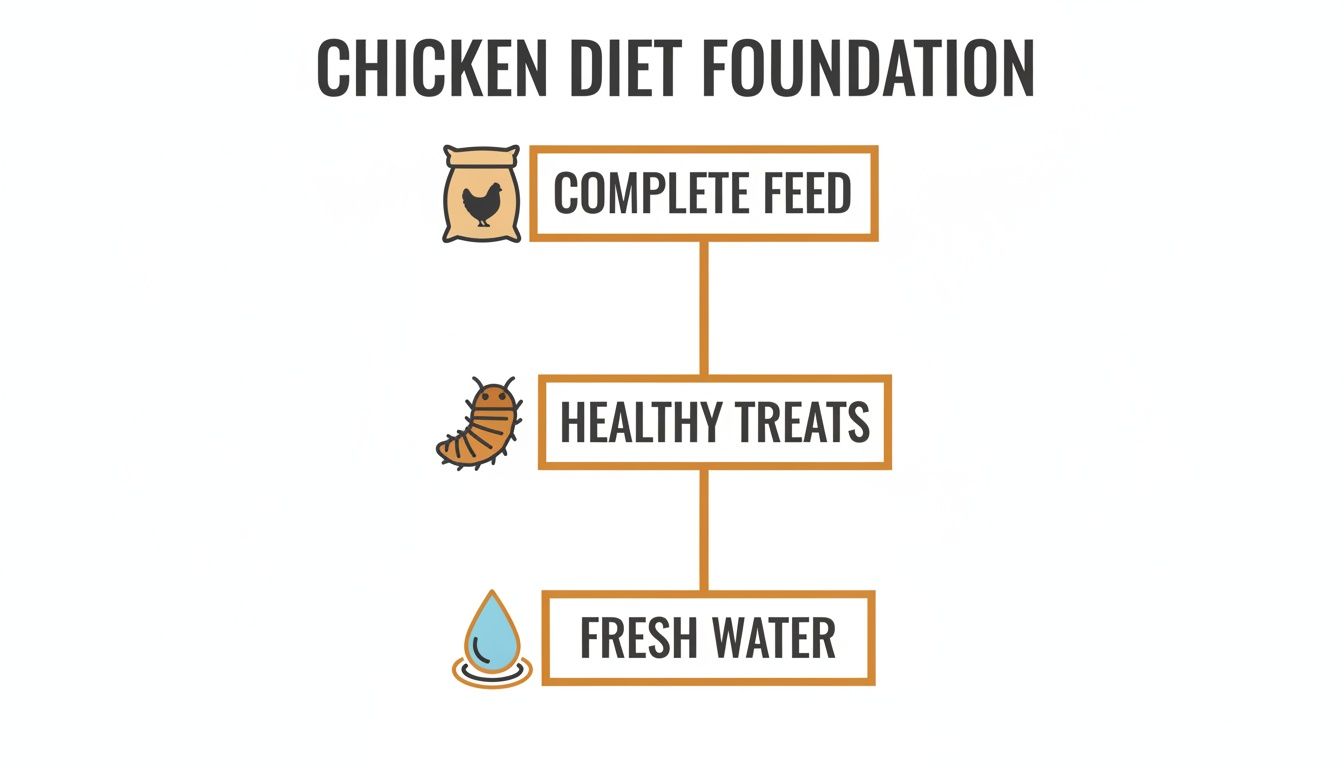
As you can see, everything is built on that foundation of a complete, age-appropriate feed.
Fueling Egg Production with Layer Feed
Sometime between 18 and 22 weeks old, your pullets will start squatting, their combs will redden, and you’ll know that first precious egg is on its way. That’s the signal to make the final and most important dietary transition: introducing Layer Feed.
Think of layer feed as the meal plan for a hardworking athlete. It’s scientifically designed to support the immense daily effort of producing an egg. The protein level stays consistent with grower feed (16-18%), but it gets a massive boost in one specific mineral: calcium.
Every single day, a laying hen performs a metabolic miracle. To create one strong eggshell, she pulls about 2 grams of calcium—roughly 10% of her entire body’s supply—from her system. Her diet has to replace that calcium daily, or her body will start stealing it from her own bones.
This is exactly why layer feed is so critical. It provides all the necessary calcium (usually 3.5-5%) to form strong, smooth eggshells without forcing a hen to sacrifice her own skeletal health. You can take a closer look at the different kinds of poultry feeds to see just how these formulas are tailored for different needs.
Nailing these three feed transitions is one of the best things you can do for your flock. It ensures their bodies get exactly what they need, when they need it, setting them up for a long, healthy, and productive life.
Applying the 90/10 Rule for a Balanced Diet
If there's one golden rule in the world of chicken feeding, it’s the 90/10 rule. This isn't just some casual guideline; it’s the absolute foundation for a healthy flock, strong egg production, and vibrant birds. Getting this right is probably the most important thing you can do for their daily care.
The concept is beautifully simple. At least 90% of what your chickens eat every day must be their complete, age-appropriate feed. The other 10% is where the fun comes in—this is your budget for healthy treats, tasty snacks, and foraging goodies.
Think of it this way: the 90% is their balanced, expertly prepared main course. It has all the protein, vitamins, and minerals they need to thrive. The 10% is like a healthy, delicious side dish. If you let them fill up on the side dish first, they won't have room for the essential meal, and their health will eventually suffer for it.
Why Sticking to the Rule Matters
I get it—it's incredibly fun to spoil your flock. They come running when they see you, clucking with excitement for a handful of goodies. It's a fantastic way to bond. But overdoing it is one of the most common mistakes new chicken keepers make.
When chickens fill up on "junk food" like too much scratch grain, table scraps, or even healthy but incomplete snacks, they naturally eat less of their main feed. This effectively waters down their nutrition, leading to a host of problems:
- Nutritional Gaps: They start missing out on the critical protein, calcium, and vitamins that are precisely balanced in their feed.
- Egg Production Slump: A drop in protein and calcium is a surefire way to see fewer eggs in the nesting box.
- Weak Eggshells: Not enough calcium leads directly to thin, brittle, or even shell-less eggs.
By sticking closely to the 90/10 rule, you guarantee their core nutritional needs are met before they get any extras. Treats become a true supplement, not a dietary problem.
Following this guideline is the single most effective way to prevent "killing them with kindness." It keeps your flock’s health on track while still allowing for the joy and enrichment that treats provide.
Putting the 90/10 Rule into Practice
So, what does this actually look like on a daily basis? It’s easier to visualize than you might think. For an average adult hen consuming around 1/4 pound (about 110-120 grams) of feed a day, the 10% treat allowance comes out to just 1-2 tablespoons per bird.
That's not a lot, which is precisely why the quality of the treat you choose is so important. You want every single gram to be beneficial.
This is where a high-value, functional treat like Pure Grubs really makes a difference. Instead of giving them empty calories found in something like scratch grains, you’re providing a powerful punch of protein and bioavailable calcium.
By using Pure Grubs for that 10% allowance, you’re not just giving a treat. You’re strategically supplementing their diet to directly support robust feather growth and strong eggshells. You're making every bite count.
Here’s a simple table to help you visualize what this looks like for different types of chickens in your flock.
Daily Feeding Guide Per Chicken
This table breaks down the 90/10 rule into practical, daily amounts. It helps illustrate how to balance complete feed with a healthy treat like Pure Grubs.
| Chicken Type | Daily Complete Feed (Approx.) | Daily Treats (Max 10%) | Example Treat Portion (Pure Grubs) |
|---|---|---|---|
| Standard Laying Hen | 1/4 lb (113g) | ~0.4 oz (11g) | ~1-2 Tablespoons |
| Bantam Hen | 1/8 lb (57g) | ~0.2 oz (6g) | ~1/2-1 Tablespoon |
| Growing Pullet (12-18 wks) | 1/5 lb (90g) | ~0.3 oz (9g) | ~1 Tablespoon |
| Rooster | 1/4 lb (113g) | ~0.4 oz (11g) | ~1-2 Tablespoons |
Remember, these are great starting points. You can always adjust based on your flock's specific breed, activity level, and the climate. For a deeper dive into choosing the right kinds of snacks, be sure to check out our guide on the best snacks for chickens.
The Critical Role of Calcium in Egg Production
Think about a single, perfect egg. That smooth, strong shell is the result of a nightly metabolic miracle. To create it, your hen undertakes a massive biological project, pulling huge amounts of calcium from her diet—and even from her own bones—to build that protective outer layer.
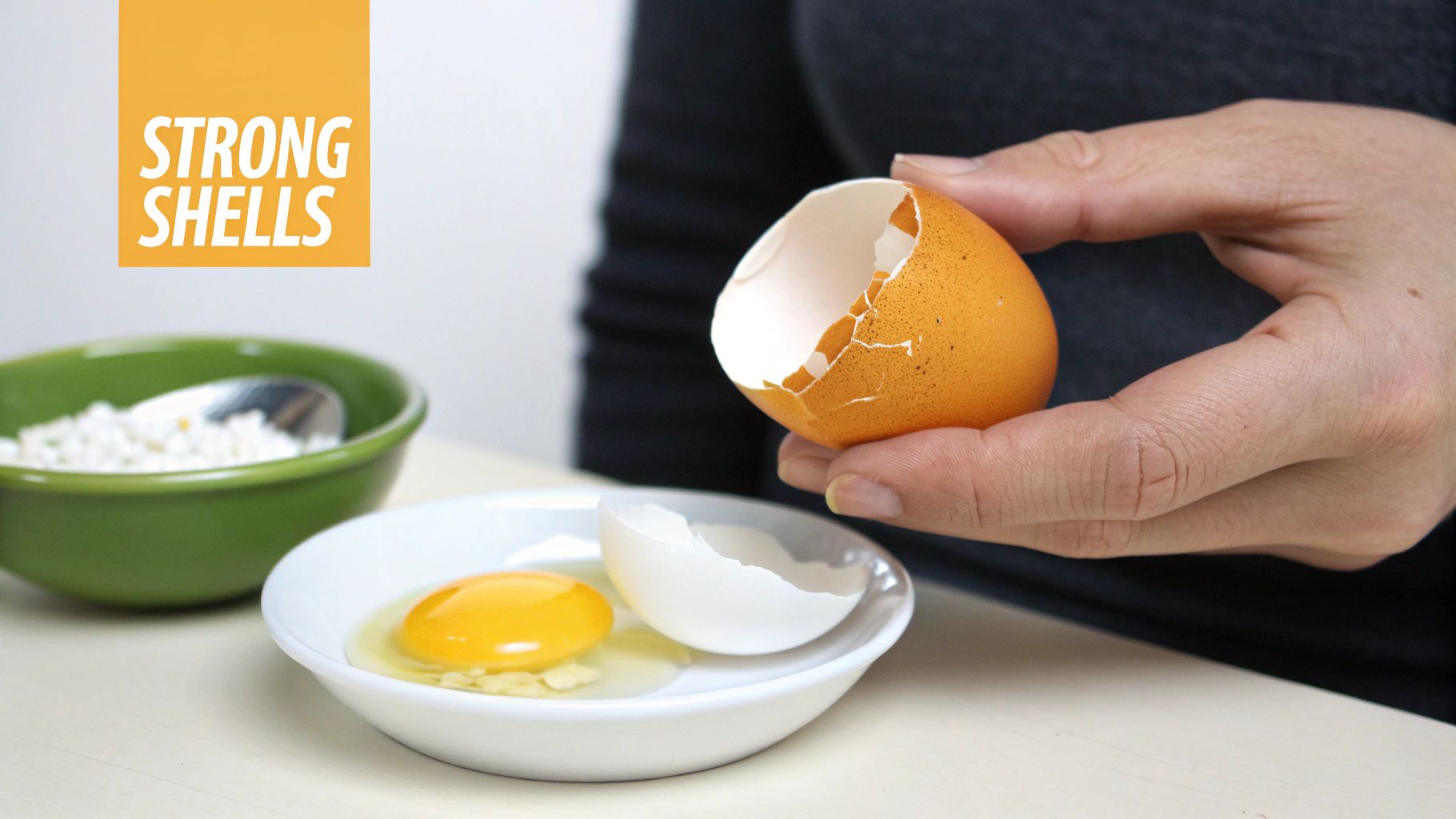
This whole incredible process hinges on one thing: a constant, reliable supply of dietary calcium. When that supply drops, you’ll see the consequences in the nesting box pretty quickly. You might find eggs with paper-thin shells that crack at the slightest touch or, even more alarming, bizarre shell-less "eggs" that look like sad little water balloons. These are clear distress signals that your hen isn't getting what she needs.
Sourcing the Right Kind of Calcium
Not all calcium is created equal. A high-quality layer feed is the non-negotiable foundation of your flock's diet, providing the bulk of what a hen needs daily. Many of us also offer free-choice calcium, like crushed oyster shell or even baked and crushed eggshells, so the girls can take what they need, when they need it.
But a smart choice in treats can play a powerful supporting role here, especially for high-production breeds. This is where the decision between common insect treats becomes so important for your flock’s health and the quality of your eggs.
Your choice of treat isn't just a fun snack; it's a strategic nutritional decision. For laying hens, choosing a treat high in bioavailable calcium is one of the smartest investments you can make in the quality of your eggs.
This is exactly why Black Soldier Fly Larvae (BSFL) are such a superior choice over the more traditional dried mealworms. The nutritional difference isn't small—it’s a total game-changer for egg production.
The Clear Advantage of BSFL Over Mealworms
When you put BSFL and mealworms side-by-side, the difference in calcium is just staggering. A busy laying hen needs a lot of it—somewhere around 3.0–4.0 grams of calcium every single day. Her layer feed is formulated to provide this.
But here’s the kicker: studies show that high-calcium supplements like dried Black Soldier Fly Larvae (BSFL) can deliver up to ~85% more calcium than mealworms. Just a small daily handful of a high-calcium BSFL treat adds a meaningful boost to her intake, supporting her needs without throwing her core diet out of whack.
This makes BSFL, like Pure Grubs, so much more than a simple treat. They’re a functional supplement that directly addresses the single most demanding nutritional need of a laying hen. By choosing BSFL, you're actively investing in stronger eggshells and healthier birds. For a more detailed breakdown, feel free to explore our guide on the best calcium supplements for chickens.
Calcium Showdown: BSFL vs. Mealworms
To really see the difference, a direct comparison makes it crystal clear why Black Soldier Fly Larvae are the smart choice for laying hens.
| Nutrient Feature | Pure Grubs BSFL | Typical Dried Mealworms |
|---|---|---|
| Average Calcium Content | High (1.5% - 2.5% by weight) | Very Low (~0.03% - 0.1% by weight) |
| Calcium-to-Phosphorus Ratio | Excellent (naturally balanced, often >1.5:1) | Poor (inverted, requires supplementation) |
| Impact on Eggshells | Directly supports strong shell formation | Negligible impact; can worsen ratio issues |
| Nutritional Role | Functional treat & calcium supplement | Primarily a protein-only treat |
The data speaks for itself. While both are great protein sources, only BSFL deliver the substantial, naturally balanced calcium that a hen's body can easily absorb and use to build eggshells.
Even worse, the inverted calcium-to-phosphorus ratio in mealworms can actually force a hen’s body to pull more calcium from her bones just to process the phosphorus. Over time, this makes the problem worse, not better. By choosing Pure Grubs, you’re not just giving a treat; you're actively supporting the very foundation of egg production.
Safe and Smart Feeding Practices
Giving your chickens the best nutrition isn't just about what's in the bag of feed. It’s also about how you handle that feed from the moment you bring it home. Smart, safe practices are the final piece of the puzzle, protecting your flock from hidden dangers like mold, bacteria, and even contaminants you can't see.
Think of your feed storage like a pantry for your flock. If you leave food out on the counter, it's going to spoil or attract pests. It's the same with chicken feed. When it’s exposed to moisture and air, it can grow mold and develop mycotoxins, which are seriously harmful to a chicken's respiratory and digestive health. Not to mention, an open bag is an open invitation for rodents and bugs to help themselves, contaminating the supply and spreading disease.
That's why an airtight, rodent-proof container is an absolute must-have. A galvanized metal can with a tight lid or a heavy-duty plastic bin will do the trick. It keeps the feed dry, fresh, and locked away from critters, preserving all that nutrition you paid for.
Cleanliness Is Key to Flock Health
Just as important as clean feed is clean dinnerware. Your flock's feeders and waterers can get pretty grimy, fast. If left unchecked, they become breeding grounds for nasty bacteria that can spread through the entire flock in no time.
A little daily upkeep goes a long way. A quick rinse of the feeders and waterers each day, followed by a good weekly scrub with soap and water, can head off many common health problems. This simple routine is a cornerstone of good flock management and a small time investment that pays off big in preventing illness.
The link between cleanliness and health couldn't be more direct. A clean coop, fresh water, and uncontaminated feed are your flock's best line of defense against disease. It's what allows them to truly thrive.
The Hidden Risks in Unregulated Treats
While you can control the cleanliness of your coop, some risks are invisible, especially when it comes to treats. With insect-based treats becoming more popular, it's crucial to know that they aren't all created equal. Many imported, unregulated insect products can pose a serious risk to your flock and, potentially, your family.
The way insects are raised and processed directly impacts their safety. Troublingly, some imported insect products have been found to be contaminated, leading the industry to push for stricter safety standards, particularly around heavy metal screening. Reputable U.S. suppliers now recognize the need to test each batch for things like arsenic, lead, and mercury, and to be transparent about where their products come from. You can get more context on these industry-wide shifts by reviewing the analysis of global poultry markets on spglobal.com.
This isn't something to take lightly. Heavy metals can build up in a hen's system and get passed into her eggs, creating a potential health issue for anyone who eats them.
This is why choosing a trusted, USA-sourced product like Pure Grubs is so important. By working exclusively with American growers and producing our grubs in FDA and AAFCO-compliant facilities, we can stand behind our safety protocols. Every single batch is independently tested for heavy metals, giving you the peace of mind that the treats you're giving your flock are as safe as they are nutritious.
Your Daily and Weekly Feeding Schedule
One of the best things you can do for your flock is to get them on a consistent routine. Chickens, like many animals, thrive on predictability. It cuts down on their stress and, honestly, it makes your life a whole lot easier, too.
A good schedule doesn't have to be complicated. In fact, simple is usually better. It turns all the theory about feeding into a confident, daily practice.
A Simple Daily Routine
Here’s a straightforward three-step rhythm that covers all the bases from sunup to sundown.
-
Morning Check (First Light): Your first stop of the day should be the coop. Check their main feeder and make sure it’s topped off with their complete feed so they have what they need for the entire day. Just as important, refresh their water—clean, fresh water is non-negotiable for healthy birds. This is also the perfect time to do a quick visual health check.
-
Mid-Day Treat Time (Afternoon): This is the fun part! The afternoon is the ideal time to offer a little enrichment. Scatter a measured amount of treats, like 1-2 tablespoons of Pure Grubs per chicken, to get them scratching and foraging like they would naturally. It’s also a great training opportunity. You can easily teach them to come when you call, which makes getting them back in the coop at night a breeze.
-
Evening Lock-Up (Dusk): As the light starts to fade, it's time for one last round. Do a quick headcount to make sure everyone is safely inside, give the feed and water one final look, and secure the coop for the night to keep them safe from predators.
This simple cycle gives your flock structure and ensures their most basic needs are always met.
Structuring Your Weekly Plan
While their complete feed is the daily staple, you can absolutely add some variety throughout the week—as long as you stick to the 90/10 rule. A weekly plan helps you rotate treats, introduce different nutrients, and just keep things interesting for your flock.
The Goal of a Weekly Schedule: Introduce variety and enrichment without disrupting the core nutrition of their complete layer feed. When you offer something new, always introduce it one at a time to see how your flock reacts.
Here’s a sample schedule you can tweak to fit your own flock:
- Monday, Wednesday, Friday: These are great days for high-value, functional treats. Think Pure Grubs. They deliver that extra protein and a big dose of calcium to help with strong eggshells.
- Tuesday, Thursday: Offer some flock-safe greens. A bit of kale, a few spinach leaves, or some chopped lettuce from the garden provides vitamins and keeps them busy.
- Saturday: Use this day for other healthy kitchen scraps. Things like watermelon rind, berries, or even some plain cooked oatmeal are always a hit. Just be sure to avoid toxic foods like avocado pits, onions, or raw potatoes.
- Sunday: Let them be chickens! If you have a safe, predator-proof area, let them out to forage for their own natural treats like bugs, worms, and tasty weeds.
Following a plan like this takes the guesswork out of feeding and helps you confidently manage your flock's diet for peak health and happiness.
Common Questions About Chicken Feeding
Even the most seasoned chicken keeper runs into questions now and then. You can have the perfect plan, but chickens have a way of making you second-guess things. Let's tackle some of the most common feeding questions I hear from fellow flock owners.
Most of the time, the answers circle back to those core principles we've already covered, especially that all-important 90/10 rule.
How Do I Know if I Am Feeding My Chickens the Right Amount?
Your chickens are the best report card you'll get. Forget measuring everything down to the last gram and start by simply observing your flock. Are they active, bright-eyed, and busy? When you pick one up, does she feel solid but not overly heavy or bony? That's your first clue you're on the right track.
As a general rule of thumb, an adult laying hen will eat about 1/2 cup (or 1/4 lb) of layer feed each day. Think of this as your starting point.
If they demolish their food in minutes and act like they haven't eaten in a week, you might need to increase the amount slightly. On the other hand, if you consistently find feed left over at the end of the day, you can probably cut back. And don't forget to check the nesting boxes—strong, smooth eggshells are a fantastic sign that their nutritional needs, especially for calcium, are being met.
Can My Chickens Eat Kitchen Scraps?
Absolutely, but think of them as a special dessert, not the main course. Kitchen scraps fall squarely into that 10% treat category, so they should never replace their carefully formulated feed. Giving them too many scraps is a fast way to throw their entire diet off balance.
A few safe and healthy options include:
- Tough leafy greens like kale and chard
- Melon rinds (a summer favorite!)
- A bit of leftover cooked oatmeal
- Peels from carrots, beets, or cucumbers
Steer clear of anything toxic, like avocado pits and skin, uncooked beans, onions, or large amounts of citrus. And it should go without saying, but never feed them anything spoiled or moldy. Their feed is their foundation; scraps are just a fun bonus.
Why Did My Hens Stop Laying After I Gave Them a New Treat?
This is a classic problem, and nine times out of ten, the culprit is over-treating. When those tasty snacks start making up more than 10% of their diet, your hens will naturally fill up on the fun stuff and ignore their balanced layer feed. It’s like letting a kid eat a whole bag of candy before dinner.
This quickly leads to a protein or calcium deficit, and the first thing a hen’s body does when it's short on resources is shut down the egg factory.
The fix is simple: cut out all treats immediately for a few days. Make sure their feeder is full of their primary layer feed and nothing else. Once you see egg production get back to normal, you can slowly reintroduce a small, measured amount of a high-quality treat that actually adds nutritional value.
By keeping a close eye on your flock's health and behavior, you can easily dial in their diet for peak performance. When you do reach for a treat, make it count. A high-protein, high-calcium option like Pure Grubs gives them a boost they'll love without disrupting their nutritional foundation.
Ready to support your flock's health with a superior, USA-grown treat? Explore Pure Grubs today.