


Broody Chickens Symptoms: Recognize, Treat, and Prevent
Is one of your hens suddenly acting strange? Maybe she's glued to the nesting box, puffing up her feathers, and making odd, deep clucking sounds you've never heard before. If this sounds familiar, you're likely dealing with a case of broodiness. These are the classic broody chickens symptoms, a powerful maternal instinct that can completely change a hen's personality.
Decoding a Broody Hen
First off, broodiness isn't an illness. It's a natural, hormone-fueled drive that tells a hen it's time to stop laying eggs and start hatching them. Her entire world shrinks down to one goal: sitting on a clutch of eggs—whether they're fertile, infertile, or not even there at all.
This sudden shift is triggered by a cocktail of factors. Genetics play a huge role, but so do hormones like prolactin and environmental cues like longer daylight hours and warmer temperatures. It’s a fascinating, instinctual process, but it can be jarring for a chicken keeper when their friendly hen suddenly transforms into a feathered, growling guardian of the nest.
Broody Versus Sick a Quick Guide
One of the trickiest things for new chicken owners is telling the difference between a broody hen and a sick one. Some of the signs can look similar at a glance, but their underlying motivations are completely different. A broody hen is intensely focused and defensive of her space, while a sick hen is usually listless, withdrawn, and uninterested in her surroundings. Getting this right is critical for her well-being.
To help you figure it out, this decision tree provides a quick visual path to follow.
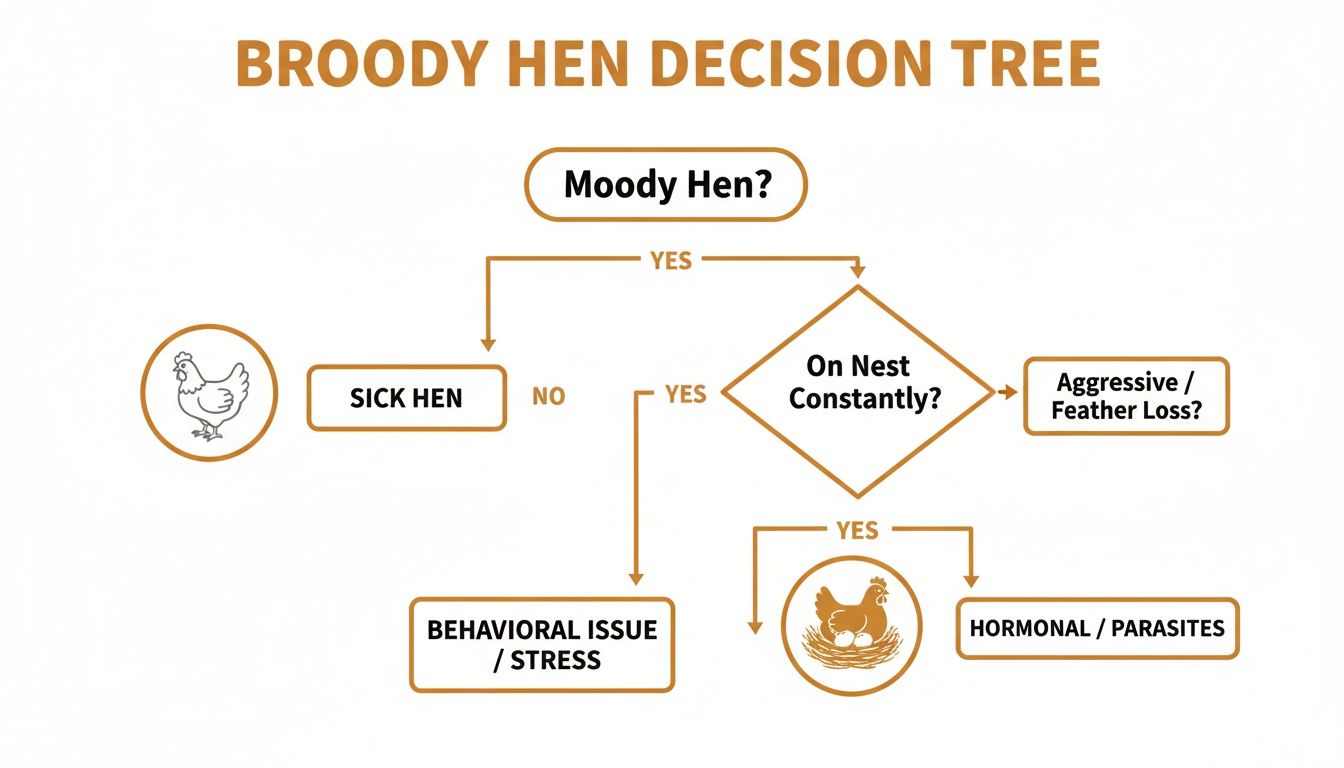
The flowchart helps simplify your diagnosis by focusing on one key difference: a broody hen's energy is all directed toward the nest. A sick hen, on the other hand, just shows a general lack of energy for everything.
To help you quickly assess the situation, here’s a side-by-side comparison of common behaviors.
Broody Hen vs Sick Hen Quick Symptom Checker
| Symptom | Broody Hen Behavior | Sick Hen Behavior |
|---|---|---|
| Posture | Flattened "pancake" on the nest, feathers puffed out. Stands defensively if approached. | Hunched over, tail down, head tucked in. May be wobbly or unsteady. |
| Nesting | Refuses to leave the nesting box for more than a few minutes. Fiercely protects it. | May hide in the nesting box but is generally lethargic and uninterested, not defensive. |
| Appetite | Eats and drinks very little, maybe once a day. Stools are large and infrequent. | Shows little to no interest in food or water. May have diarrhea or abnormal droppings. |
| Vocalization | Makes low, guttural growls or hisses when approached. May peck aggressively. | Mostly silent and unresponsive. May make weak, pained noises if handled. |
| Energy | Intense, focused energy on protecting the nest. Can be surprisingly aggressive. | General lethargy and weakness. Avoids interaction with the flock. |
This table isn't a substitute for veterinary advice, but it’s a great starting point for understanding what you're seeing in the coop.
One of the clearest signs is the immediate halt in egg-laying. A broody hen stops producing new eggs almost overnight once she's decided to sit. This happens because she's collected her clutch—usually 8-12 eggs—and her body's hormones tell her the factory needs to shut down.
This hormonal shift is powerful. In a small flock, a few broody hens can slash your overall egg production by 20-50%. Certain breeds, like Silkies or Cochins, are wired for it, making them up to 80% more prone to go broody. On the flip side, production breeds like White Leghorns have had the instinct almost entirely bred out of them, showing a near-zero incidence. For a deeper dive, you can find more insights about hen hormones and behavior in the full research.
The Telltale Behavioral Signs of a Broody Hen
When a hen goes broody, it’s like a switch flips in her brain. One day she’s a happy-go-lucky member of the flock, and the next, she’s a single-minded, nest-obsessed mother-to-be. These personality shifts are some of the most obvious and fascinating signs you’ll see.
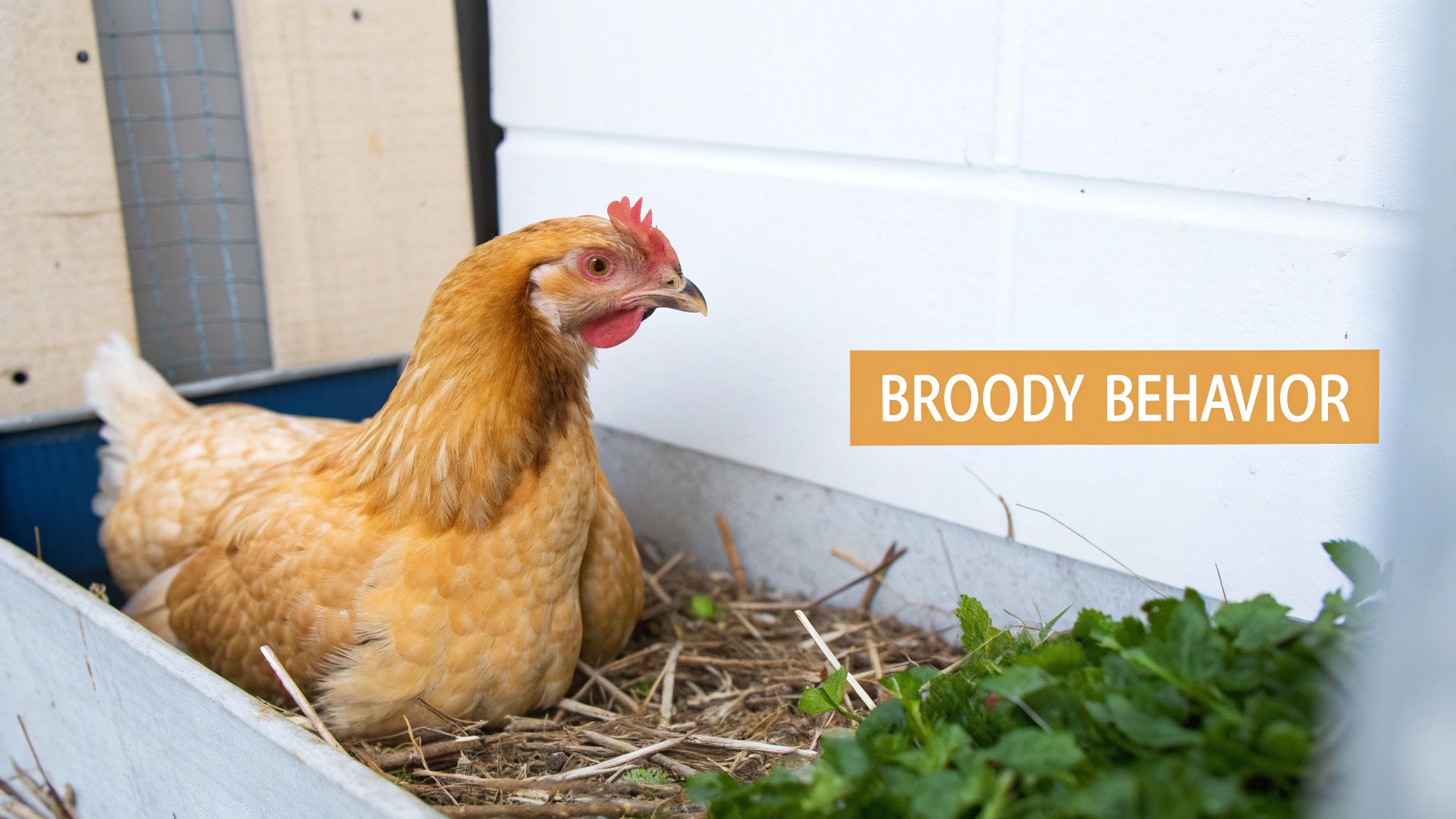
The number one sign? Her absolute, unwavering devotion to the nesting box. A hen in laying mode will hop in, lay her egg, and get on with her day. A broody hen, on the other hand, stays put. She’ll stubbornly sit on a nest—whether it has eggs or not—for over 20 hours a day.
This intense commitment to the nest is what leads to other issues. Broody hens often neglect their own health, and it's not uncommon for them to lose 10-20% of their body weight in just a couple of weeks from barely eating or drinking. This self-neglect also makes them an easy target for parasites. You can find more detail on broody hen health risks on Dine a Chook's blog.
Her New Defensive Posture and "Attitude"
Once a hen has claimed a nesting spot, she will guard it with a fierceness that can be shocking if you've never seen it before. Her sweet, friendly personality gets shelved in favor of a powerful protective instinct.
Try to get close, and you’ll see a dramatic transformation. She’ll puff up every single feather on her body, instantly making herself look bigger and far more intimidating. It’s a classic "don't mess with me" display meant to ward off any perceived threat—which, in her mind, includes you.
This puffed-up stance is usually paired with a whole new set of sounds you might not have heard from her before.
- The Broody Growl: This is a low, rumbling, guttural noise that comes from deep in her chest. It’s an unmistakable warning that clearly says, "Back off."
- Hissing and Squawking: If the growl doesn't do the trick, she’ll often escalate to hissing or sharp, angry squawks to really drive her point home.
- Aggressive Pecking: A broody hen will absolutely lunge and peck at any hand that gets too close to her or her eggs. This isn't a gentle, curious peck; it's a fast, sharp strike meant to deter you.
A broody hen's protective instincts are so strong that she may peck handlers 70-80% more aggressively when disturbed. She is no longer your friendly backyard pet; she is a fierce guardian protecting her future clutch.
Differentiating Broodiness From Sickness
It's easy to see this sudden aggression and reclusive behavior and worry that your hen is sick. But there’s a crucial difference: focus. A broody hen’s energy is laser-focused on her nest. She’s alert, defensive, and ready to rumble if you get too close.
A sick chicken, by contrast, is usually lethargic, withdrawn, and completely uninterested in her surroundings—including the nesting box. If you're concerned that hormones aren't the cause, you need to look for other signs. A great place to start is by learning about the common symptoms of illness in chickens in our detailed guide.
By recognizing these specific behavioral changes—the obsessive nest-sitting, the puffed-up posture, the unique growls, and the uncharacteristic aggression—you can confidently identify when one of your hens has gone broody.
It’s not just the dramatic nesting behavior that gives a broody hen away. Her body goes through some pretty remarkable physical changes, all driven by hormones to turn her into the perfect living incubator. While the puffed-up, defensive posture is pure theater, these other shifts are all about business.
Observing these subtle signs can confirm what you already suspect about her state of mind.
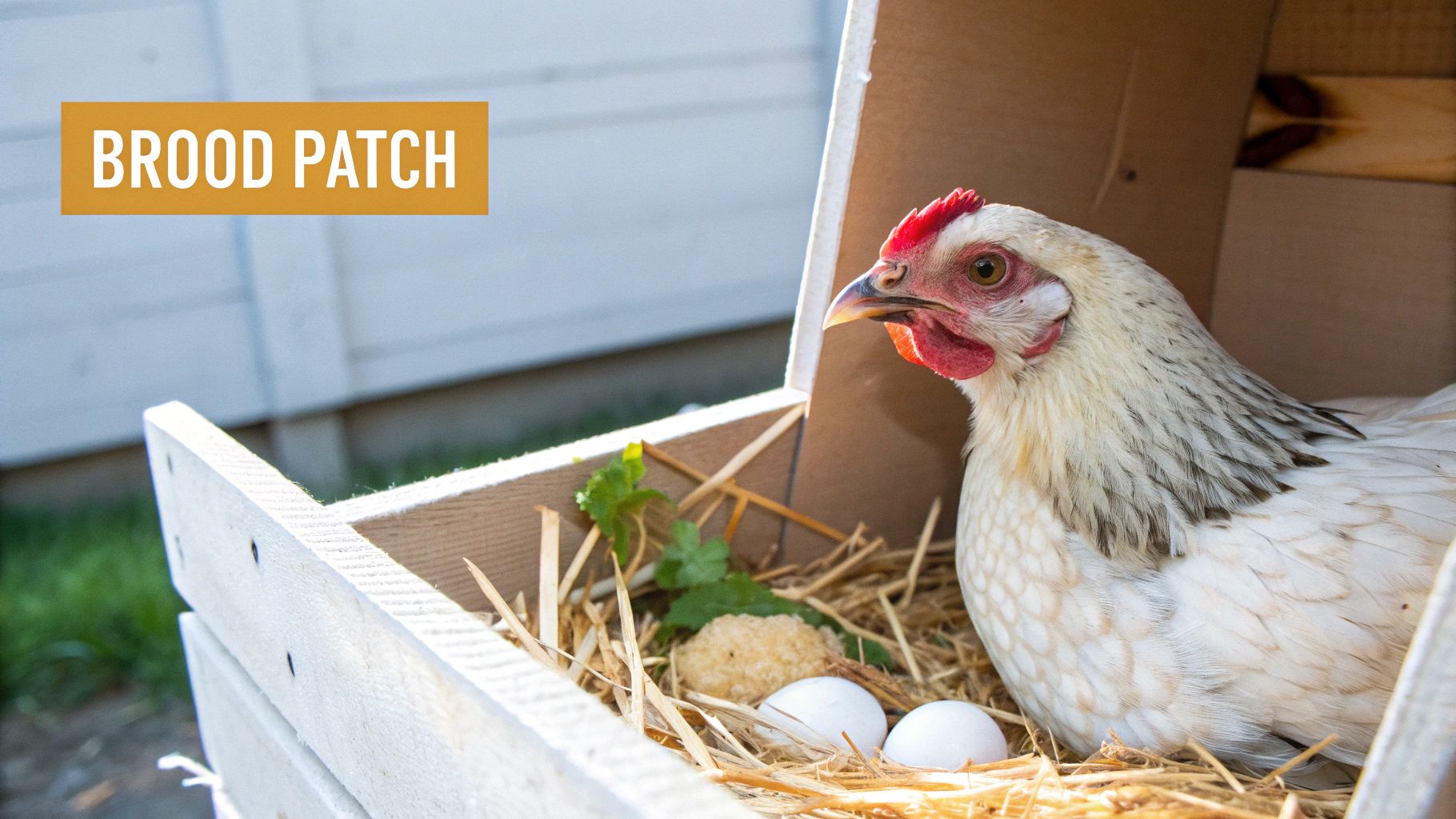
One of the most definitive physical signs is something you might only find if you gently lift her off the nest. You’ll often discover a bare patch of skin on her belly where she has purposefully plucked out her own feathers.
Don’t panic—it isn't mites or a sign of stress. This is her brood patch, and it's a brilliant bit of biological engineering. This patch allows for direct skin-to-egg contact, which is the most effective way to transfer her body heat and keep the eggs at a stable 99.5°F. The warm, moist skin also helps maintain the humidity needed for a successful hatch.
Changes in Eating and Digestion
A broody hen's dedication to her nest is so all-consuming that it completely overrides her normal daily routine. She won't be out foraging with the flock; instead, she might only leave the nest once or maybe twice in a 24-hour period for a lightning-fast trip to eat, drink, and relieve herself.
This minimalist schedule results in one of the most notorious—and frankly, disgusting—signs of broodiness a chicken keeper will ever witness.
- Infrequent, Giant Droppings: Since she holds it in all day, her droppings become enormous when she finally goes. This isn't your average chicken poop; it's a massive, incredibly foul-smelling bomb that can take you by surprise.
- Minimal Food and Water Intake: Those quick breaks are just to grab the bare minimum. This drastic reduction in consumption leads to noticeable weight loss and can easily put her at risk for dehydration, especially when the weather gets warm.
A hen's maternal drive is absolute. She will put the warmth and safety of her eggs above her own fundamental needs. This is why it’s so critical for you to keep a close eye on her; her powerful instincts won't always protect her own health.
When you see the brood patch combined with these bizarre digestive habits, you have clear physical proof of deep broodiness. While the giant "broody poop" can be alarming the first time you see it, it’s a perfectly normal part of this instinctual cycle. Understanding these signs helps you confidently distinguish broodiness from a potential illness and reminds you why monitoring her weight and hydration is crucial during this demanding period.
Understanding What Triggers Broodiness
A hen doesn't just wake up one morning and decide to be a mom. Her shift from a reliable egg-layer to a determined sitter is a powerful biological response, triggered by a specific cocktail of hormones, environmental cues, and even her own genetics. Knowing what flips this switch can help you see it coming in your own flock.
At the center of it all is a hormone called prolactin. You can think of it as the "motherhood hormone." When prolactin levels spike, it essentially hijacks a hen's brain. The urge to lay eggs shuts down, and an all-consuming instinct to incubate the eggs she already has takes over.
The Role of Hormones and Environment
This hormonal surge isn't random. It’s usually set in motion by signals from the environment that tell a hen’s body it's the perfect time to raise a family.
These external cues are pretty straightforward:
- Lengthening Daylight Hours: The long, sunny days of spring and early summer are a huge catalyst. It's nature's way of saying warmer weather and plenty of food are right around the corner.
- A Full Nesting Box: Seeing and feeling a clutch of eggs build up is a powerful psychological trigger. If you let eggs pile up, you're basically sending a hen an open invitation to start sitting on them.
- Warm Temperatures: Consistent warmth makes the idea of sitting still for three weeks much more appealing and signals that conditions are ideal for tiny, fragile chicks.
It's a perfect storm of instinct. The right hormones meet the right environmental cues, and suddenly your hen's entire focus shifts from laying to hatching. This is exactly why you're more likely to deal with a broody hen in May than in November.
Genetic Predisposition in Certain Breeds
Beyond the season and the hormones, some hens are just born to be mothers. Genetics play a massive role here. Over centuries, certain breeds have been praised and selected for their strong maternal instincts, so the tendency to go broody is baked right into their DNA.
If you have any of these breeds, you can pretty much count on managing broodiness at some point:
- Silkie
- Cochin
- Orpington
- Brahma
On the flip side, most modern, high-production layers have had that broody instinct intentionally bred out of them. It's all about maximizing egg numbers. Breeds like Leghorns and other commercial hybrids are far less likely to go broody because their genetics tell them to lay, not sit. This is also a key piece of the puzzle when figuring out why chickens might stop laying eggs for other reasons.
By understanding what sets off this fascinating behavior, you'll be much better equipped to manage it when it pops up in your coop.
How to Manage Your Broody Hen
So, you've spotted the tell-tale broody chickens symptoms and confirmed your hen has a serious case of baby fever. This puts you at a fork in the road. What you do next really boils down to one question: do you want to welcome a new batch of fluffy chicks, or would you rather have your hen get back to her usual egg-laying routine? Either way, you need a plan, because managing this powerful instinct is key to her health and the peace of your coop.
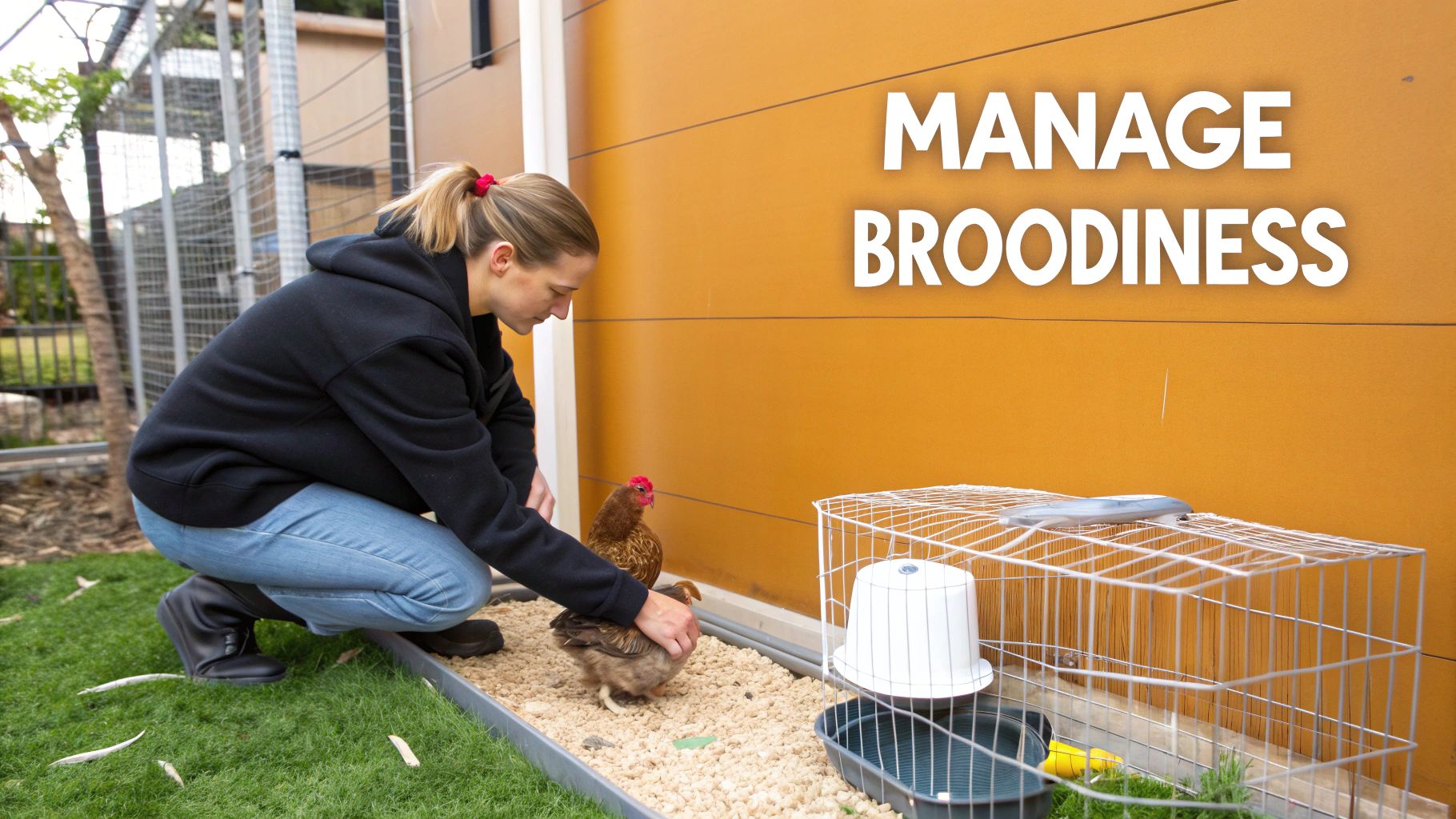
Letting a hen sit on an empty or infertile nest for weeks on end is not healthy. It's an incredible strain on her body; she'll lose a significant amount of weight and become a prime target for mites and lice. You have two clear paths forward.
Supporting a Broody Hen to Hatch
If you have a rooster and the thought of tiny chicks running around sounds like a delight, then letting your hen follow her instincts is a fantastic experience. She'll handle almost all the hard work, but a little support from you can make all the difference in ensuring a successful hatch and keeping her safe.
Your main job is to give her a secure, private space where she won't be bothered by the rest of the flock. Think of it as a maternity ward.
- Set Up Her Private Suite: Gently move your hen and her chosen clutch of fertile eggs to a separate, quiet coop or a large dog crate. This keeps her and the future chicks safe from nosy or aggressive flock members.
- Provide Room Service: Place her food and water right next to the nesting area. Broody hens only leave the nest for a few minutes each day, so having everything within beak’s reach is crucial for keeping her strength up.
- Perform Daily Wellness Checks: Pop in to see her every day. Make sure she's still getting up for a bite and a drink, and check her for any signs of parasites like mites or lice, which love to take advantage of a bird that isn't moving around much.
A hen will instinctively sit on her eggs for roughly 21 days—the standard incubation period for chickens. Your role isn't to micromanage her; it's simply to create a safe, supportive environment that lets her instincts shine.
How to Humanely Break a Broody Hen
If you don't have a rooster, or you’re just not looking to expand your flock right now, then helping her snap out of it is the kindest thing you can do for her health. The goal is to gently reset her hormones and break the obsessive nesting cycle. It usually only takes a few days.
A common and effective method involves a temporary setup often called a "broody breaker" or "broody jail," which is designed to cool her down and make nesting impossible.
- Create a Breezy Bottom: Place her in a wire-bottomed cage or a dog crate that's been elevated off the floor on a couple of bricks. The air circulating underneath cools her breast and belly, making it hard to maintain the high body temperature her hormones are telling her to create. This physical change sends a powerful signal to her system to stop being broody.
- Ensure Comfort and Care: This isn't about punishment; it's a hormonal intervention. Make sure she has plenty of fresh food and water right there in the crate. Keep her in a safe, well-ventilated spot, protected from harsh weather.
- Give it Time: Let her out for a short, supervised period each day. If she makes a beeline straight for the nest box, she needs a little more time in the breaker. Most hens get the message within three days and are ready to rejoin the flock.
Whether you're cheering on her motherly ambitions or gently guiding her back to her old self, making a clear decision is the best way to manage this natural behavior. Acting promptly will keep your hen healthy and get her back to being a happy, productive member of your flock.
Supporting Her Post-Broody Recovery
Whether she just hatched a clutch of fluffy chicks or you’ve gently nudged her out of her broody trance, a hen’s work isn't over yet. The recovery phase is absolutely crucial. Think about it: she’s just finished an endurance test, sitting tight for weeks and often forgetting to eat or drink properly. She's going to need some help getting back on her feet.
Your number one priority should be her nutrition. Most broody hens lose a surprising amount of weight and burn through their body's nutrient stores. Your job is to help her refuel. She needs top-notch feed, packed with protein and calcium, to rebuild her strength, grow back the feathers on her brood patch, and get her system ready for egg-laying again.
Reintegration and Nutritional Support
Getting her back in with the rest of the flock is the next step. After being isolated in her own little world, she may have slipped a few rungs down the pecking order ladder. Keep a close eye on her for the first few days back with the group to make sure she’s not getting pushed away from the feeder or waterer.
A little extra TLC in the food department can seriously speed up her comeback.
- Protein-Rich Treats: Help her rebuild that lost muscle and regrow feathers by offering some high-protein snacks.
- Extra Calcium: Her body is depleted of the calcium needed for making strong eggshells. Make sure you have a separate dish of crushed oyster shells available so she can take what she needs.
- Fresh Water: A broody hen can easily get dehydrated. Always have clean, fresh water accessible to encourage her to drink up.
Key Takeaway: A hen coming out of a broody spell is in a delicate state. The fastest way to get her back to being a healthy, productive member of the flock is to immediately provide access to high-protein, calcium-rich foods to help her regain lost weight.
For a deeper dive into boosting a hen's diet during demanding times, check out our guide on what to feed molting hens—many of the same nutritional principles apply here
Your Broody Hen Questions Answered
When you're faced with your first broody hen, a million questions can pop into your head. Let's walk through some of the most common ones that chicken keepers ask, so you can feel confident in how you handle the situation.
How Long Will My Hen Stay Broody?
You can pretty much set your clock to this one. A hen's natural broody cycle lasts for 21 days, which is exactly how long it takes for a chicken egg to incubate and hatch. Her body is wired for that specific timeline.
If she isn't sitting on fertile eggs that are developing, however, this hormonal state can stretch on for weeks longer. That's when things get risky for her health, and why we often need to step in.
Can a Hen Go Broody Even Without Eggs?
Oh, absolutely. This surprises a lot of new flock owners. Broodiness is a hormonal drive, plain and simple. It has nothing to do with whether there are actually eggs in the nest box.
A hen in the grip of this powerful instinct will happily sit on an empty nest, a few golf balls, or even a rock she's taken a fancy to. It's proof that her maternal instincts are running the show, which is why simply collecting eggs every day often isn't enough to stop her.
Many people think a hen needs a clutch of eggs to trigger broodiness. The truth is, her hormones are calling the shots, telling her it's time to sit, hatch, and raise babies—whether they exist or not.
Is It Cruel to “Break” a Broody Hen?
When done gently and correctly, it's not cruel at all. In fact, for a hen without fertile eggs to hatch, breaking her broodiness is one of the kindest things you can do for her health.
Think about it: a dedicated broody hen barely eats, drinks, or poops. She loses a significant amount of weight and her immune system weakens, making her an easy target for mites and lice. Gently nudging her out of that cycle allows her to get back to being a healthy, active member of the flock.
After a broody spell, your hen needs to rebuild her strength. Giving her a high-protein, calcium-rich supplement can make all the difference. Pure Grubs are USA-grown and packed with the exact nutrients she needs to regain weight and get back to laying strong-shelled eggs. Explore Pure Grubs today and give her the best post-broody care.