

What to Feed Molting Hens for Fast Feather Regrowth
When your hens start looking a bit scraggly and the egg basket stays empty, their bodies are basically sending up a flare gun. They need nutritional backup, and fast. To get them through this stressful but completely normal process, you'll want to focus on high-quality protein—the absolute foundation for new feathers—along with the right balance of minerals and amino acids. This means temporarily switching up their diet from the standard layer feed is key for a speedy, healthy recovery.
Understanding a Molting Hen's Nutritional Needs
If you've ever walked out to your coop and been greeted by a flurry of feathers and a few miserable-looking birds, you know the annual molt has begun. This isn't just a bad hair day for your flock; it's a full-on biological reset. A hen's body makes a dramatic shift, diverting all its resources away from making eggs and pouring them into the incredibly demanding job of growing thousands of new feathers.
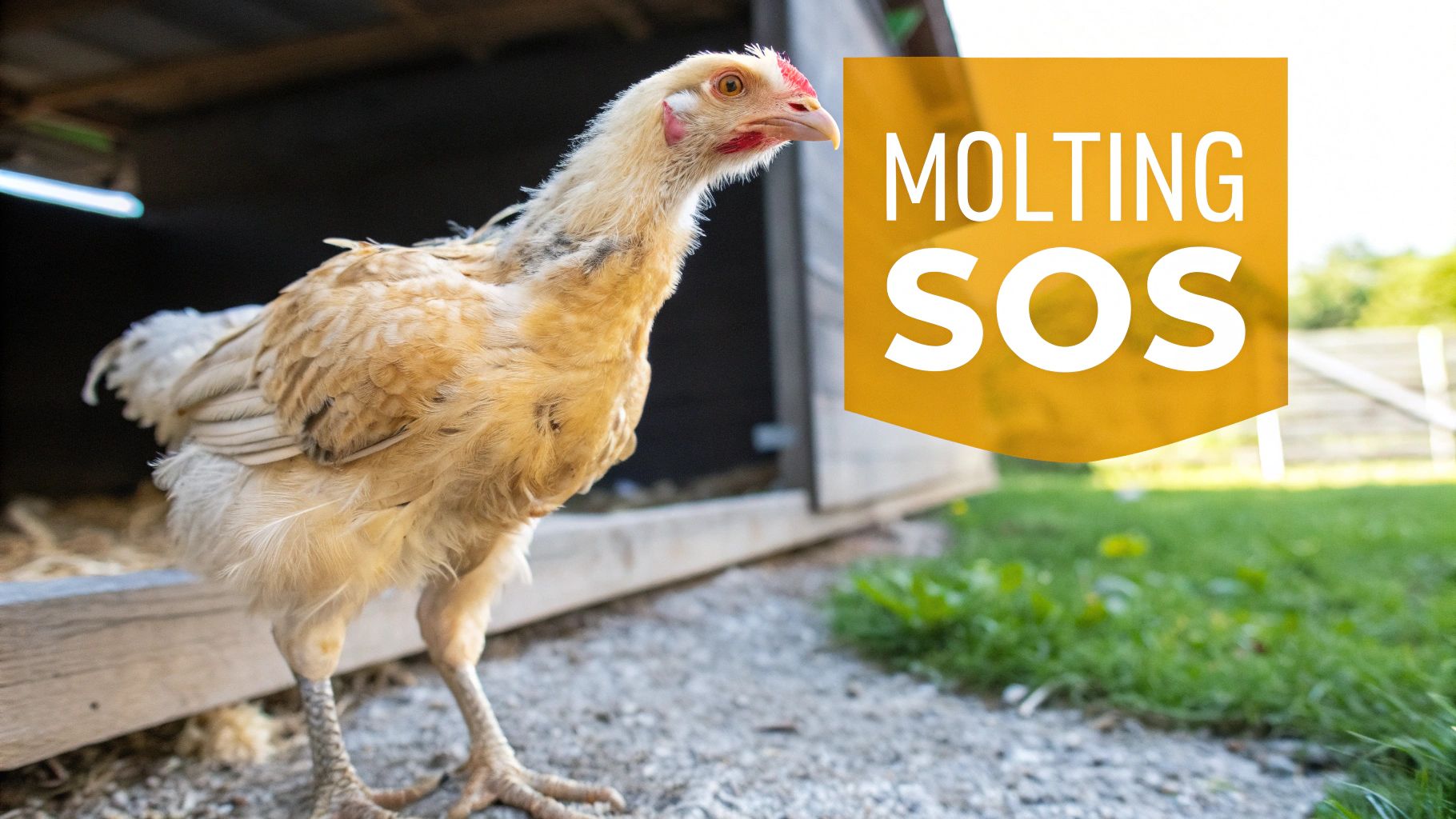
During this time, her usual 16% layer feed just won't cut it. I like to think of it like an athlete prepping for a marathon—their caloric and protein needs go through the roof. The same thing is happening with your hens. Their bodies are working overtime, and their diet needs to support that intense effort.
The Big Shift: From Eggs to Feathers
The most significant change is the massive demand for protein. Feathers are made of about 85% keratin, a fibrous protein that takes a huge nutritional investment to produce. This is exactly why egg production grinds to a halt; a chicken simply doesn't have the resources to build feathers and eggs at the same time.
But the molt isn't just about feathers. It also gives the hen’s reproductive system a much-needed break and allows her to replenish her body's mineral stores, especially calcium. Laying eggs day after day can pull a lot of calcium from her bones, and the molt is nature's way of letting her rebuild those reserves for the next laying season.
Key Takeaway: Molting isn't a sickness; it's a natural, energy-draining process. A hen's body is doing more than just making new feathers—it's repairing and resetting its entire system for long-term health and future egg production.
Why Standard Layer Feed Misses the Mark
Your everyday layer feed is perfectly formulated for one primary job: making strong eggshells and rich yolks. But when the molt starts, that nutritional balance is thrown completely out of whack.
- Protein Becomes Priority #1: The need for amino acids—the building blocks of protein—suddenly becomes far more important than the high calcium levels found in layer feed.
- Energy Needs Fluctuate: While growing feathers is hard work, hens are also less active and aren't laying, which changes their overall caloric requirements.
- Mineral Balance Is Different: Calcium is still important for rebuilding bone density, but the high concentration in layer feed can be too much when there are no eggshells to form.
To help you see the difference at a glance, here’s a quick comparison of how a molting hen’s dietary needs change from her normal laying routine.
Key Nutritional Shifts for Molting Hens
| Nutrient Focus | Standard Laying Diet | Essential Molting Diet |
|---|---|---|
| Protein | Moderate (16-18%) for egg production. | High (20-22%) to build new feathers (85% keratin). |
| Calcium | Very High (3.5-5%) for strong eggshells. | Lowered (~1-2%) to prevent kidney strain; focus is on bone replenishment, not shell formation. |
| Energy (Calories) | Balanced for daily activity and laying. | Slightly reduced as hens are less active and not laying, but still sufficient for feather growth. |
| Vitamins & Minerals | Geared towards reproductive health and yolk quality. | Boosted for immune support, stress reduction, and skin/feather health (e.g., Biotin, Zinc). |
Understanding these shifts is the first step in building a diet that truly supports your flock. Research backs this up, showing that for backyard chickens, a balanced ration of 15–17% protein and slightly lower energy is ideal, which is a much gentler approach than the severe feed restrictions sometimes used in commercial settings. For more ideas on how to supplement their diet, you can explore our guide on healthy food for chickens to find treats that complement their main feed.
Powering Feather Production with High-Quality Protein
When your hen starts dropping feathers, her body kicks into overdrive for one single, massive job: growing an entirely new coat. This isn't just a minor touch-up; it's a complete, head-to-toe renovation that demands a staggering amount of protein. Feathers are made of about 85% keratin, and producing thousands of them from scratch is one of the most taxing things a hen’s body will ever do.
During this time, her standard 16-17% layer feed just won't cut it. Trying to get through a molt on regular feed is like asking a construction crew to build a skyscraper with only enough materials for a small shed—it’s just not going to happen efficiently. To get her through the molt quickly and in good health, you'll need to switch her to a feed with a much higher protein content, somewhere in the 20-22% range. You'll often see these marketed as "grower" or "feather fixer" formulas, and they’re designed specifically for this intense period of growth.
The Role of Amino Acids
Here’s something a lot of chicken keepers don't realize: not all protein is created equal, especially when it comes to feather-making. The quality of the protein is just as important as the quantity. The real magic is in the amino acids, which are the building blocks of protein. For making feathers, two sulfur-rich amino acids are non-negotiable:
- Methionine: This is a key ingredient in keratin. It’s often the limiting amino acid in poultry diets, which means if there isn’t enough of it, feather growth grinds to a halt.
- Cystine: This one works hand-in-hand with methionine to form the strong, interlocking structure that makes feathers so resilient.
If your hens don't get enough of these specific amino acids, you'll notice the molt dragging on, and the new feathers that do grow in might look weak or ragged. This is why you can’t just toss any old protein source their way; you need to target the ones that are loaded with these feather-building powerhouses.
Boosting Protein with Wholesome Foods
On top of switching their main feed, you can really help your flock by offering some targeted protein-packed treats. It’s a great way to ensure they’re getting everything they need while giving them something exciting to peck at. Just remember, we're aiming for nutrient-dense foods, not junk food.
Some of my favorite high-protein additions include:
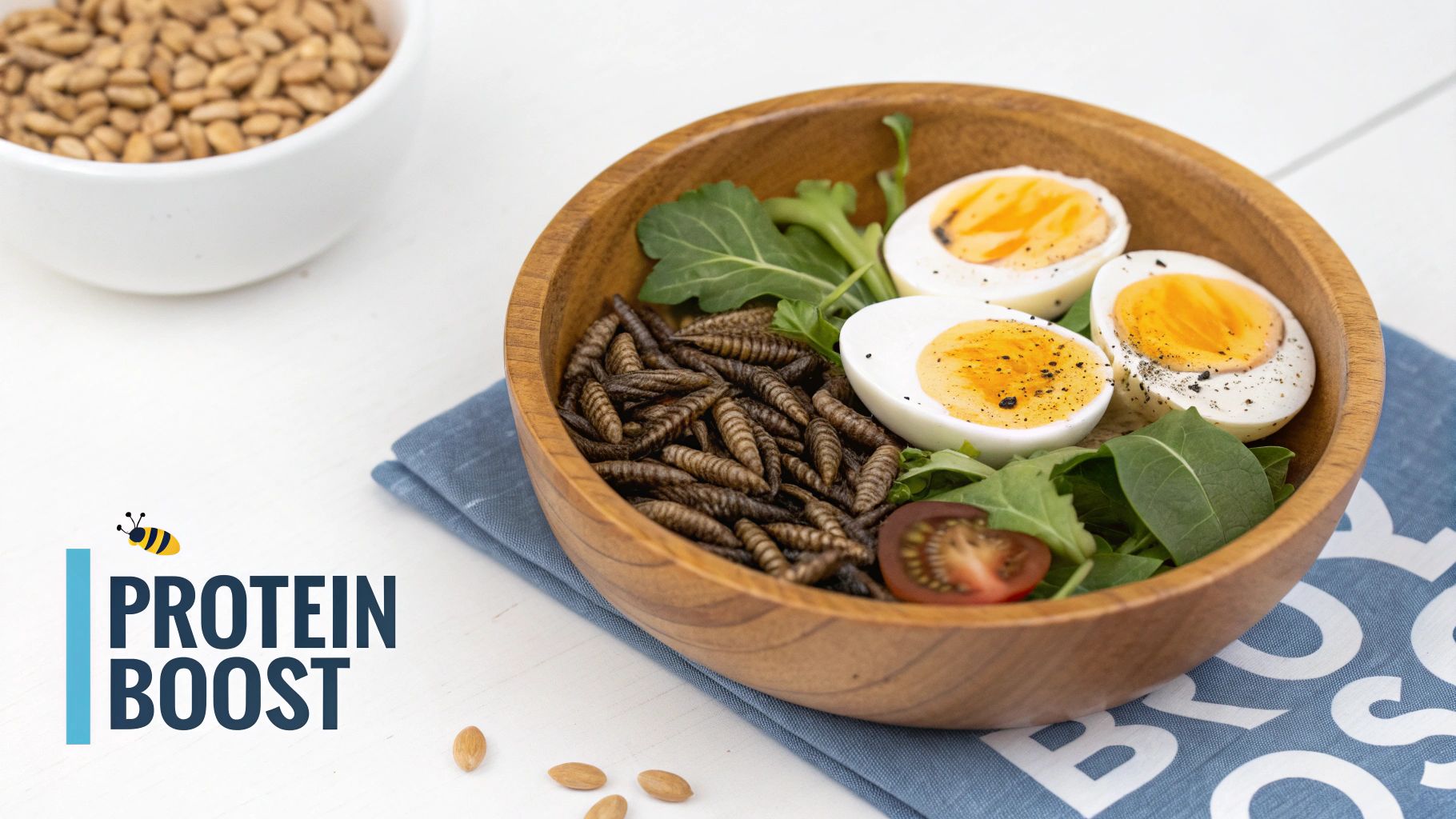
- Cooked Eggs: It might feel a bit weird feeding eggs back to your chickens, but scrambled or hard-boiled eggs are a perfect, easily digestible protein source for them during a molt.
- Legumes and Seeds: Cooked lentils, peas, and soybeans are fantastic. I also love giving my flock black oil sunflower seeds and flaxseeds, which provide both protein and the healthy fats needed for good feather sheen.
- Fish Meal: You only need a small amount, but fish meal offers a serious punch of protein and those valuable omega-3 fatty acids.
By providing a mix of high-quality protein sources, you ensure your hens get a wide range of essential amino acids. This targeted approach helps them rebuild their feathers more efficiently, cutting down on the stress and duration of the molt.
The Superior Supplement: Black Soldier Fly Larvae
If there’s one supplement I swear by for molting hens, it's Black Soldier Fly Larvae (BSFL). These little insects are a true superfood for chickens, delivering a highly concentrated source of protein and the exact amino acids they're craving. It turns out that getting enough amino acids is one of the most critical factors for a successful molt. Research has even shown that increasing amino acids like lysine can dramatically improve a hen's performance after she recovers. High-protein grubs, which can contain 35–45% crude protein, are a perfect way to meet these needs without overloading their diet with energy.
BSFL are especially rich in methionine—the very amino acid needed for building strong keratin. A daily handful of Pure Grubs gives your flock a direct line to these feather-building blocks, helping them grow back a lush, vibrant, and healthy set of feathers. It’s such an easy and effective way to give them the premium nutrition they need, right when they need it most. To see what other options are out there, take a look at our guide to high-protein foods for chickens.
Balancing Minerals for Bone Health and Future Eggs
When your hens stop laying during the molt, it’s natural to wonder if they still need all that calcium. The answer is a resounding yes, but what their bodies do with it changes completely. This break from egg production is a vital opportunity for a hen to focus on her own health.
Think of it like this: all season long, she’s been making daily withdrawals from her body’s “calcium bank”—her bones—to form strong eggshells. The molt is her chance to finally make some deposits, rebuilding her own skeletal density so she’s strong and ready for the next laying season.
The Great Calcium Debate
It’s all about finding that sweet spot. While your girls definitely need calcium to repair their bones, they don't need the super-high levels found in a typical layer feed (which can be 3.5-5%). With no eggs to produce, all that extra calcium has nowhere to go and can seriously stress their kidneys.
This is why many experienced keepers, myself included, switch to a high-protein grower or flock raiser feed and simply offer crushed oyster shell in a separate dish. This free-choice method is brilliant because it lets each hen self-regulate. She’ll take exactly what her body tells her it needs, without being forced to consume the high dose mixed into a layer ration.
Expert Tip: Keep an eye on the oyster shell dish. If your flock is ignoring it, that's fine. If you see them visiting it regularly, that's a great sign their bodies are hard at work rebuilding those crucial mineral reserves.
More Than Just Calcium
Calcium gets all the glory, but a few other unsung heroes are just as critical for a smooth molt and a strong comeback. These trace minerals handle everything from feather quality to immune support—incredibly important when your chickens are feeling run down and vulnerable.
Here are a couple of the big ones:
- Zinc: This is a powerhouse for skin and feather integrity. Zinc is directly involved in creating keratin, the very protein that feathers are made of. A good supply ensures their new coat comes in strong and healthy.
- Manganese: Essential for solid bone formation, manganese helps a hen’s body actually use the calcium she’s eating to strengthen her skeleton.
A good quality feed should have these covered, but giving some nutrient-packed treats provides a welcome boost. Things like pumpkin seeds (a fantastic source of zinc) and dark leafy greens can help round out their mineral intake beautifully. For a deeper look at this, check out our guide on calcium-rich foods for chickens.
How BSFL Help Restore Balance
Getting the minerals right is non-negotiable for molting hens. The same nutrients that build feathers are also tasked with restoring bone density and prepping the reproductive system for another round of laying. Research shows that even with standard layer rations providing 3.5–4.5% calcium, a hen’s bone density can still dip over time.
This is where a high-calcium treat like Black Soldier Fly Larvae really shines. Some BSFL products deliver up to 80–100% more calcium than mealworms, giving your flock a concentrated source to rebuild their skeletal reserves and ultimately produce stronger eggshells down the road. You can read more on the nutritional findings from Iowa State University that back this up.
By focusing on a diet rich in protein and carefully balanced with the right minerals, you're doing more than just getting your flock through a tough time. You're investing in their long-term health, ensuring they emerge from the molt rested, re-feathered, and ready to reward you with plenty of high-quality eggs.
A Practical Feeding Plan for Molting Hens
Knowing the science behind molt nutrition is great, but putting it into practice in the coop is what really matters. A good feeding plan isn't a one-size-fits-all solution; it needs to change as your hens move through the different stages of their molt. By adjusting their diet from the first feather drop to the peak of "pin cushion" ugliness and through to recovery, you can dramatically cut down on stress and get them back to their glossy-feathered selves much faster.
This staged approach takes the guesswork out of the equation. You're giving them exactly what they need, right when they need it, ensuring they have all the building blocks for a quick, healthy rebound.
Stage One: The First Few Feathers
It usually starts small. You’ll notice a few extra feathers on the coop floor, maybe around the head and neck area. Your hens will still be acting pretty normal, but internally, their bodies have already started shifting resources away from egg-laying and toward feather production. This is your signal to start tweaking their diet.
During this early phase, the goal is to gently ramp up their protein. You don't need to make a huge change overnight, but it's definitely time to begin the transition away from their standard layer feed.
- Your Game Plan: Start mixing their regular 16% layer feed with a higher-protein 20-22% grower or "feather fixer" formula. I like to start with a 75/25 blend (75% layer, 25% grower) and then gradually increase the high-protein feed over about a week until that's all they're getting.
- A Little Extra Boost: This is a great time to introduce a small daily sprinkle of high-protein treats. Think a teaspoon of black oil sunflower seeds or a few tasty Pure Grubs per bird.
This slow and steady transition helps their digestive systems adjust without any shock, while also stocking up their nutritional reserves for the big feather drop that's just around the corner.
Stage Two: The Peak of the Molt
Okay, this is when your flock will look their absolute worst. You'll see bald patches, and your girls might seem a bit grumpy or sensitive to being handled. Their bodies are in overdrive, and their nutritional demands are at an all-time high. This is where your dedicated feeding plan really shows its worth.
Everything is now focused on one thing: regrowing thousands of new feathers. They need a high-protein feed as their foundation, backed up by nutrient-packed, easy-to-digest extras.
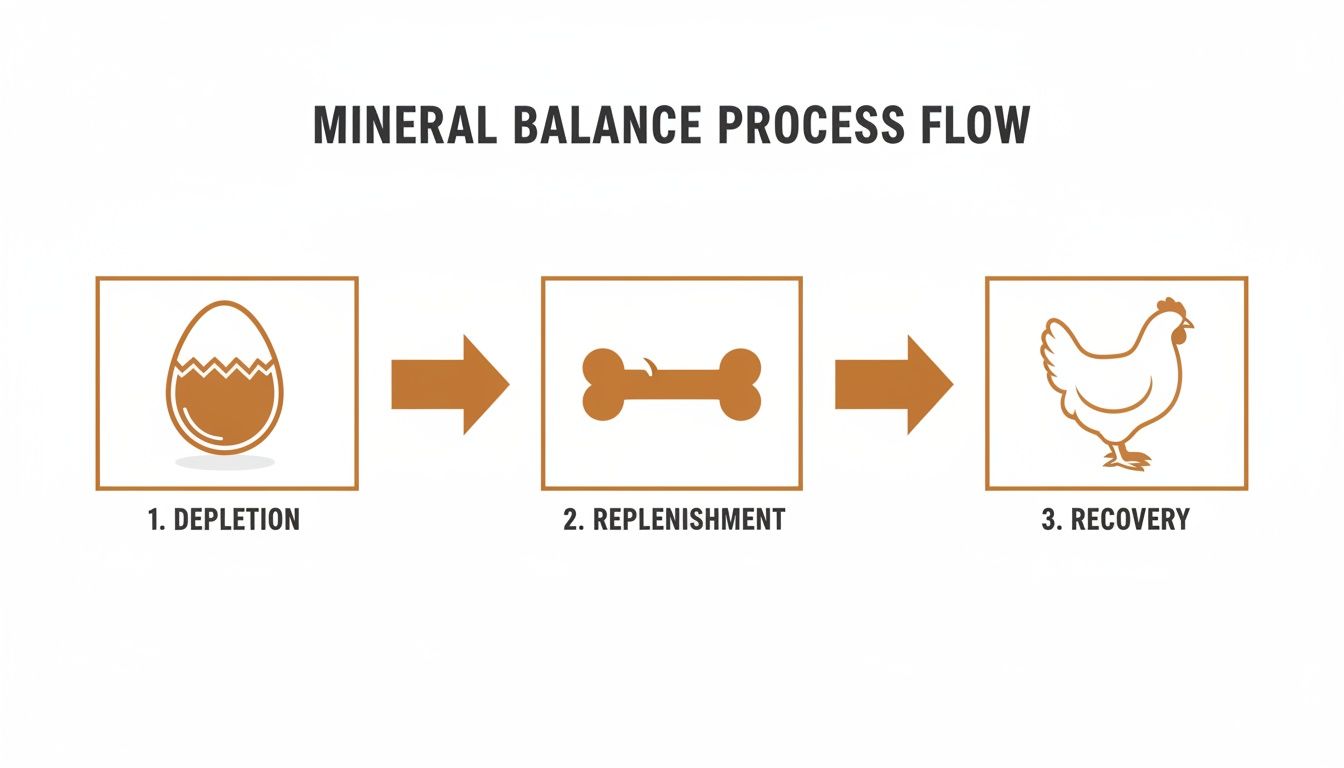
As you can see, the molt is a critical recovery period. Their bodies are working hard to replenish the very mineral stores they'll need for future egg production.
To support this intense process, a robust daily menu is key. Here’s a look at what a day's meals might look like during this demanding phase.
Sample Daily Menu for Peak Molt
| Meal | Primary Feed | High-Value Supplement |
|---|---|---|
| Morning | Free-choice access to 22% protein grower feed. | 1 tablespoon of Pure Grubs per hen, scattered to get them foraging. |
| Midday | Continued access to their high-protein feed. | A small handful of chopped, dark leafy greens like kale or spinach. |
| Late Afternoon | Top up their feeder with fresh high-protein feed. | A sprinkle of black oil sunflower seeds or a small scoop of cooked lentils. |
Providing this kind of consistent, high-quality nutrition every single day minimizes stress and gives their bodies the steady fuel they need to push through this tough time efficiently.
My Two Cents: Consistency is your best friend during peak molt. A reliable, nutrient-dense diet is the single most important thing you can provide to help them rebuild without setbacks.
Stage Three: Recovery and That New Feather Sheen
You can finally breathe a sigh of relief when you see that beautiful shimmer of new pin feathers covering your hens' bare skin. They're on the home stretch! The hardest part is over, but their nutritional needs are still high as they finish growing and hardening those new feathers.
Don't jump the gun and switch back to layer feed too soon. Keep them on that high-protein diet until they're fully feathered out and, ideally, have started laying again. Making the switch too early can halt their progress.
- Stick with Protein: Keep the 20-22% grower feed as their main food source.
- Focus on Healthy Fats: Continue offering treats like sunflower seeds and flax seeds. The omega fatty acids in these are fantastic for creating that beautiful, waterproof sheen on their new coat.
- Watch for the First Egg: That first egg is the most reliable sign that a hen's body has finished the molt and is ready to get back to business. Once laying becomes consistent again, you can slowly transition them back to their standard 16% layer feed over a week.
By following this practical, stage-by-stage plan, you’re doing more than just feeding your molting hens—you’re actively managing their health. This proactive approach ensures they come out the other side not just with new feathers, but stronger, healthier, and ready for another great laying season.
Common Molting Diet Mistakes and How to Avoid Them
Knowing what to feed your molting hens is a great start, but knowing what not to do is just as critical. Even with the best intentions, some very common feeding habits can actually slow down their recovery, add unnecessary stress, and sometimes create new health problems. If you want to get your flock through the molt smoothly, you’ll need to sidestep these frequent pitfalls.
Think of this as your troubleshooting guide. By understanding why these mistakes are so problematic, you can keep your birds on the fast track to a full and healthy recovery.
Mistake 1: Overloading on Low-Protein Treats
It's completely natural to want to spoil your hens when they look so miserable and scraggly. The temptation to toss them their favorite scratch grains, corn, or kitchen scraps is strong, but this is one of the easiest ways to derail their recovery. These treats are mostly carbs and lack the high-quality protein their bodies are screaming for.
-
Why It's a Problem: When a hen gorges on these "junk foods," she simply doesn't have room for the good stuff—her nutrient-packed feed. This creates a massive protein deficit right when she needs a surplus, and it can easily drag out the molting process for weeks longer than it should take.
-
What to Do Instead: Focus on high-value, protein-rich treats. A small handful of Pure Grubs, some scrambled eggs, or even a spoonful of cooked lentils will give them the amino acids they need for feather growth without the empty calories. Just remember to keep all treats, even the healthy ones, to no more than 10% of their total daily food intake.
Mistake 2: Continuing with Standard Layer Feed
This is a mistake I see all the time. Many flock owners don't realize that their trusty, everyday layer feed can actually work against a molting hen. It’s formulated with high calcium levels, typically 3.5% to 5%, to produce strong eggshells. When a hen stops laying, that excess calcium can put a huge strain on her kidneys.
-
Why It's a Problem: Without any eggshells to build, all that extra calcium has nowhere to go. Her body has to work overtime to process and get rid of it, which is incredibly taxing on a system that’s already under immense stress. It’s like putting high-octane racing fuel in a car that’s just idling in the garage.
-
What to Do Instead: Make the switch to a high-protein grower or flock raiser feed. Look for one with 20-22% protein and a much lower calcium content of around 1%. Then, offer crushed oyster shells in a separate container, completely free-choice. This simple change allows each hen to take only the calcium her body needs to rebuild her bone stores, putting her in full control.
A hen's internal wisdom is remarkable. By offering calcium on the side, you empower her to self-regulate her intake, ensuring she gets exactly what she needs for bone recovery without overloading her system.
Mistake 3: Forgetting About Hydration
We talk so much about feed that it's easy to overlook water. But water is arguably the most critical nutrient of all, especially during a molt. It’s involved in every single metabolic function, including the massive job of regrowing thousands of feathers. A dehydrated hen simply cannot molt efficiently.
-
Why It's a Problem: Even mild dehydration can slow down the transport of nutrients, amplify stress, and bring the entire feather-building process to a grinding halt. Those new pin feathers are also full of blood, and proper hydration is essential to support that vascular development.
-
What to Do Instead: Make sure your flock has constant access to fresh, clean water. I always recommend putting out multiple waterers in both the coop and the run. This is especially important if a shy or picked-on molting hen is being kept away from the main station by more assertive flock members. Adding a splash of poultry electrolytes can also give them a much-needed boost to fight stress and keep their cells functioning well during this demanding time.
Answering Your Top Questions About Feeding Molting Hens
Even with a solid plan, you're bound to have questions when you see your flock looking a little rough. Molting can be a weird time for chicken keepers, so let's clear up some of the most common concerns about what to feed them and how to help them through it.
How Long Should I Keep My Hens on a High-Protein Diet?
This is a great question, and the timing really matters for a speedy recovery. You'll want to make the switch to a high-protein feed—something in the 20-22% range—as soon as you see the first real signs of feather drop.
Keep them on this specialized feed for the entire molt. The idea is to give them that extra nutritional firepower until their new feathers are all the way in and they've started laying again. This whole process can take anywhere from 4 to 12 weeks, sometimes longer, depending on the bird.
Once you see them back to laying regularly, you can slowly transition them back to their usual 16-17% layer feed. I like to do this over a week or so, mixing the two feeds together, to avoid any tummy troubles.
Are Scratch Grains a Good Idea During the Molt?
I'd recommend putting the scratch grains on hold while your girls are molting. They go absolutely wild for it, I know, but scratch is mostly just carbs and very low in protein. It's essentially junk food for chickens—a fun treat, but it doesn't offer the nutrients they desperately need for new feathers.
If they fill up on low-protein scratch, they won't eat enough of their nutrient-packed main feed. This can actually slow down the molting process by creating a protein deficit.
What to Offer Instead: Stick with high-protein treats that actually help with feather production. A small handful of black soldier fly larvae, a spoonful of scrambled eggs, or some cooked lentils are much better options that directly support their recovery.
Is It Normal for Hens to Stop Laying Eggs While They Molt?
Yes, absolutely. It's completely normal and you should expect them to stop laying during a major molt. Their bodies have to make a choice, and they divert all available resources—especially protein and calcium—away from making eggs and toward the massive job of growing thousands of new feathers.
A hen’s system just can’t do both at the same time. You can expect egg-laying to pick back up a few weeks after they’re fully re-feathered and have built their nutritional reserves back up. Seeing that first egg is the best sign that the molt is officially over.
How Can I Help My Hen Seem Less Stressed During Her Molt?
Molting is tough on a chicken. It's physically demanding and just plain uncomfortable. Besides getting their diet right, there are a few simple things you can do to make them more comfortable and help them bounce back faster.
- Keep the Water Coming: Fresh, clean water is always a must, but it's critical now. I sometimes add a poultry electrolyte supplement to their water to help them manage the stress and stay hydrated.
- Hands Off: Those new pin feathers are incredibly sensitive because they have a blood supply. Try to avoid handling your molting hens unless you absolutely have to. It can be painful for them and even cause bleeding if a feather gets broken.
- Give Them a Safe Haven: A clean, dry, and draft-free coop is more important than ever. If you notice any flock mates picking on a molting hen (they can be real bullies), you might need to separate her for a little while so she can recover in peace.
A low-stress environment is just as important as knowing what to feed molting hens. When you combine a great diet with some thoughtful care, you're giving them everything they need to get back to their happy, fluffy selves in no time.
For a premium, high-protein treat that directly supports feather regrowth, trust Pure Grubs. Our USA-grown Black Soldier Fly Larvae provide the essential amino acids and high calcium your flock needs for a speedy recovery and strong eggshells. Give your molting hens the best at https://puregrubs.com.