

Wild Bird Feeders Near Me: A Local Buyer's Guide
You search for “wild bird feeders near me” after noticing the same pattern at the kitchen window: a few sparrows working the lawn, perhaps a robin crossing the fence, but no steady stream of visitors. The empty hook on the porch promises more activity, yet the feeder you buy will only help if it matches the birds in your area, keeps seed dry, and can be cleaned without becoming a chore.
Local shopping solves part of that problem. You can handle the feeder, inspect its ports, ask what works in your neighborhood, and return a poor fit without repacking a bulky box. The rest depends on placement, hygiene, food choice, and knowing when a feeder should come down. The practical goal isn't to attract birds. It's to create a feeding station that birds can use safely and that you can maintain consistently.
Why a Good Feeder Changes What You See Outside
A feeder outside the kitchen window changes birdwatching from a passing glimpse into a repeatable routine. Finches take turns at a tube feeder, a cardinal settles on a hopper perch, and a chickadee carries one seed back toward cover. The design determines which birds can feed comfortably, while the location determines whether they return.
Repeated visits also sharpen identification skills. You learn which species arrive first, which wait for larger birds to leave, and which seed disappears fastest. In poor light, a bird's silhouette, bill shape, wing bars, and feeding posture may reveal more than color. A feeder gives you regular chances to check those details against a field guide.
The practice has deep roots. Bird feeding in the United Kingdom appears in recorded tradition as far back as the 6th century. Public campaigns intensified during the harsh winter of 1890–1891, and Punch described it as a national pastime by 1910, according to the historical overview of bird feeding. In the United States, a 2015 WBFI survey reported about 52.5 million households, or 42.1% of U.S. households, buying wild bird feed at least sometimes (WBFI market summary). That figure describes the survey period, not current participation.
Practical expectation: A feeder brings birds close. It does not replace cover, nesting space, water, or natural food.
The practical payoff of buying locally is inspection. Lift the feeder, open its lid, test the latch, and check whether rain can drain instead of pooling beside seed. A model that looks attractive but traps damp food will create cleaning problems and may discourage repeat use. Staff at an independent garden center may also know which designs handle local squirrels, wet weather, or winter exposure. For broader yard planning, 10 backyard ideas for Minnesota homes offers context for combining feeding with other habitat features.
Hygiene and placement decide whether activity remains safe. Keep the station away from dense ambush cover for cats, provide nearby escape cover without pressing the feeder against branches, and remove spoiled seed promptly. Wash the feeder on a regular schedule, especially when several birds use it heavily or sick birds appear.
Native plants, brushy cover, and clean water can support species that never visit a seed port. This guide to how to attract wild birds explains how those elements work together. The feeder is the viewing point, not the whole ecosystem.
Where to Shop for Bird Feeders Locally
The nearest place selling bird feeders isn't automatically the right place to buy one. Local channels differ in build quality, knowledgeable help, price, and the kind of stock they carry. Use the store type to narrow your search, then inspect the actual feeder before paying.
| Channel | Typical Strength | Main Trade-off |
|---|---|---|
| Independent garden center | Better-grade cedar, recycled plastic, and informed staff | Higher prices and a selection that may lean decorative |
| Farm or ranch co-op | Bulk seed, practical tube feeders, and sturdy hoppers | Fewer aesthetic choices and seasonal availability |
| Big-box hardware chain | Basic feeders at accessible prices | Resin and thin steel models may age quickly |
| Local nursery | Feeders paired with native plants and habitat advice | Usually carries only a small selection |
Independent garden centers are often the best starting point when you want advice rather than a shelf comparison. Their staff may recognize the local mix of finches, cardinals, jays, and nuisance species, and they tend to carry feeders built for repeated outdoor use. The trade-off is cost, and some stores prioritize attractive cedar houses or painted designs over easy cleaning.
Farm and ranch co-ops deserve more attention. They commonly stock bulk seed, pole-mounted tube feeders, and straightforward hopper designs. You may find less polished styling, but the hardware often makes sense for a working yard. Check seasonal stock before making a special trip, especially if you're looking for suet cages, Nyjer feeders, or replacement parts.
Big-box hardware stores are convenient when you need a basic feeder immediately. They can be a sensible choice for testing whether birds use a new location, but inspect resin thickness, metal seams, and how the roof fastens. A low purchase price won't feel low if the feeder warps, rusts, or traps damp seed.
Local nurseries may carry only a few options, yet they can help you pair a feeder with shrubs or native plants that provide cover. That combination often works better than adding a second decorative feeder to an exposed lawn.
The in-store inspection
Before choosing, run a simple physical check:
- Open the seed chamber: Make sure the lid lifts easily and the interior has no narrow corners that trap old seed.
- Test the baffle: Move it gently and confirm it won't swing into the feeding ports or jam after installation.
- Lift it one-handed: You should be able to carry a full or partly full feeder without losing control.
- Check the base: Look for drainage holes, a removable tray, and seams that don't leave sharp edges.
- Ask a direct question: “Which feeder do you use at home?” A specific answer is more useful than a general sales pitch.
Matching Feeder Style to the Birds You Want
The birds you want to attract should determine the feeder, not the other way around. Feeder design affects where birds perch, which seed they can reach, how much waste drops below, and how easily rain or droppings reach the food. A decorative feeder can look impressive and still suit the wrong species.
| Feeder Type | Birds Most Likely | Key Limitation |
|---|---|---|
| Tube feeder | Finches, chickadees, and goldfinches | Small ports and perches limit larger birds |
| Hopper feeder | Cardinals, grosbeaks, jays, and titmice | Larger perches can invite starlings and squirrels |
| Platform or tray | Broad range of visiting species | Rain, ground predators, and contamination reach the seed easily |
| Suet cage | Woodpeckers, nuthatches, and wrens | Requires a separate suet product and regular cleaning |
| Nyjer mesh feeder | Goldfinches and other finches | Specialized food means fewer overall visitors |
| Ground tray | Doves, juncos, and towhees | Greater exposure to predators, feces, and damp ground |
Tube feeders are a dependable choice for small songbirds. Narrow ports suit finches and chickadees, while short perches give larger nuisance birds less room to settle. If goldfinches are the priority, choose a dedicated Nyjer mesh feeder rather than filling a broad hopper with Nyjer.
Hopper feeders suit birds that prefer stable, open perches. Cardinals, grosbeaks, jays, and titmice often use them readily, particularly when the feeder holds sunflower-based seed. Weight-sensitive perches can discourage squirrels, but test the mechanism before buying. Some close too easily for the birds you want, while others provide little real resistance.
Platform feeders bring the broadest mix of visitors because they impose few physical restrictions. Their open construction also leaves seed exposed to rain, droppings, saliva, and close-contact feeding. The low profile can place birds nearer to ground predators, so use a tray only where you can keep the surrounding area clean and visible. More enclosed designs usually make hygiene easier to manage in a busy yard.
Suet cages attract birds that may ignore seed. Woodpeckers and nuthatches cling to the cage, and wrens may investigate when it hangs near cover. A separate dish for dried insect treats can complement the setup without forcing every bird to use the same feeder. For easier monitoring, clear bird feeders let you check seed levels and spot buildup before it becomes a problem.
Nectar or sweet foods need an ant moat, while a pole or hanging system may need a squirrel baffle that interrupts the climbing route. Keep those accessories matched to the feeder rather than treating them as universal fixes.
In a busy yard, two small feeders often work better than one large feeder. They spread birds out, reduce crowding, and let you offer different foods while giving each species a more suitable feeding position.
Materials, Capacity, and Build Quality
Two feeders can look identical under store lighting yet perform very differently after months of rain, sun, seed dust, and squirrel pressure. Choose by the combination of weather resistance, cleaning access, and visibility into the seed chamber, not by the material name alone.
| Material | Durability | Cleaning Ease | Best For |
|---|---|---|---|
| Metal | Often resists chewing and impact, especially with a good finish | Good when parts separate cleanly | Busy yards and squirrel pressure |
| Plastic | Light and inexpensive, but quality varies | Easy if smooth and removable | Beginners and temporary setups |
| Glass | Clear and easy to inspect | Very easy, though breakable | Sheltered locations and close observation |
| Recycled composite | Quiet, heavy, and weather-resistant | Can be harder to deep-clean | Permanent installations with moderate traffic |
Metal generally handles abuse better than thin plastic, but the finish determines how long it stays useful. Powder-coated or well-sealed metal tolerates repeated handling, while exposed steel can rust around seams and fasteners. Thick plastic may serve well for years, but lower-quality plastic can become brittle or discolored under strong ultraviolet exposure. Press the body lightly and inspect the lid, port inserts, tray connection, and seams. Flexing parts often reveal weak construction faster than a product label does.
Glass offers the clearest view of the food. You can notice damp seed, insect activity, or a low supply without opening the feeder. It also washes easily, though a fall can break the container and scatter parts. Use glass in a sheltered position where it will not swing into a wall, post, or hard surface.
Recycled composite feeders feel substantial and often stay quieter when birds strike the ports. Their weight improves stability, while textured surfaces and complicated molding can make thorough washing harder. Select models with removable feeding components and seams you can reach with a brush.
Capacity should match your routine
A small feeder stays fresher because it is refilled more often and inspected each time. It suits a lightly visited yard or anyone who wants close control over seed condition. A large hopper reduces refill work, but seed can sit for longer while birds are still learning the station.
Feed is a repeat purchase. A feeder is usually replaced when it breaks, wears out, or no longer fits the yard. That difference matters when deciding whether a larger hopper will save effort or hold food long enough to spoil.
Look for rolled seams instead of sharp stamped edges, removable lids rather than awkward hinged roofs, drainage holes at low points, and seed ports that keep rain away from the chamber. Check whether the tray can come off without tools and whether the empty feeder can be washed, rinsed, and dried fully. A feeder that is attractive but difficult to clean can undermine the hygiene routine that keeps birds returning safely. Choose capacity only after considering how often you can inspect the seed and remove damp or contaminated food.
Placement, Cleaning, and Seasonal Care
A feeder can look perfect on the shelf and still fail in the yard if birds cannot reach cover safely or the seed stays damp. Location affects escape routes, window collisions, predator access, moisture, and how easily fallen seed can be removed. Treat placement and cleaning as one routine. A station that is difficult to reach will eventually become difficult to keep clean.
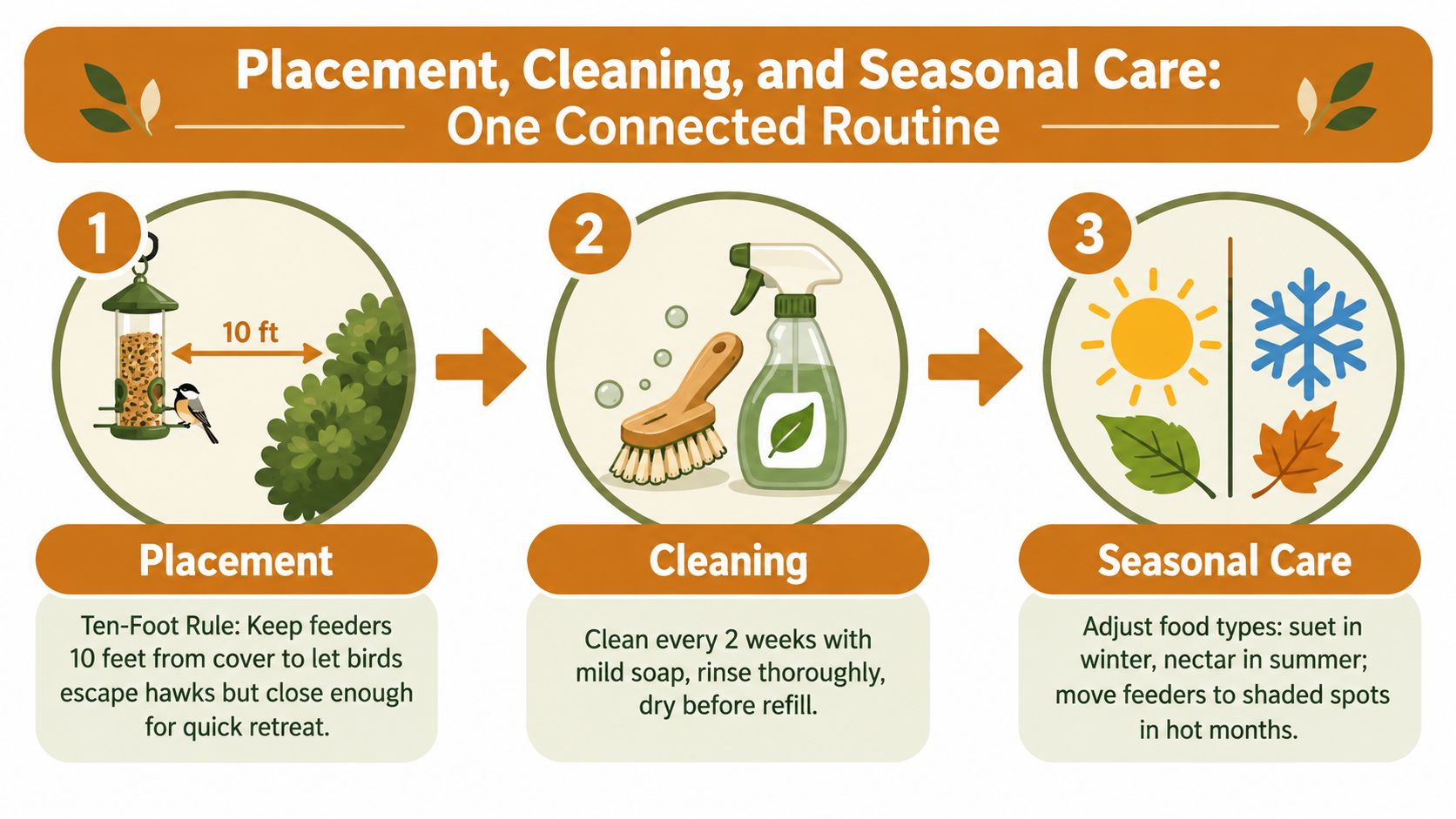
Use the ten-foot rule as a starting point. Set the feeder about ten feet from dense cover, close enough for a quick retreat but far enough that a cat cannot use the shrub as an ambush point. Research on feeder placement and pathogen spread also indicates that moving a heavily used feeder roughly 20 feet can reduce disease risk by spreading out bird activity (research on feeder placement and pathogen spread).
Keep the feeder at least five to six feet above the ground when practical, with clear sightlines around it. Place it very close to a window or well away from one, rather than at an intermediate distance. Birds leaving a feeder may strike reflective glass, so add visible window markers where needed.
Dappled shade generally works better than full afternoon sun. It slows heat buildup and helps seed remain usable, while overhead cover can reduce exposure to driving rain. Avoid placing the feeder directly below a branch used by roosting birds, since droppings can fall into the food.
Build a routine you can actually keep
Match the schedule to bird traffic and weather:
- Weekly: Empty stale food, remove husks, wipe the ports, and check for dampness or mold.
- Every two to four weeks: Scrub the feeder with soap and water. Disinfect it with a 9:1 water-to-bleach solution, rinse completely, and let every part dry before refilling (feeder hygiene guidance).
- At seasonal changes: Take the feeder apart, clean hidden joints and trays, inspect fasteners, and replace cracked or rusting components.
Clean more often when surfaces remain wet or visibly dirty. A CDC-linked investigation into wild-songbird outbreaks associated with feeder and birdbath congregation recommends cleaning at least monthly, with more frequent cleaning in dirty or wet conditions (CDC-linked investigation). If a sick bird appears, or several dead birds gather nearby, pause feeding and contact local wildlife authorities instead of adding more food.
Seasonal food choices can change, but hygiene does not. Suet suits colder weather, while fruit or jelly may attract migrants where those foods match local species. Nectar feeders need particularly close attention in warm weather. For cold-weather planning, see this guide on how to feed birds in winter.
Boosting Appeal with Treats and Online Backup
Seed feeders favor birds adapted to seeds. They won't fully serve insect-eating species, and nesting birds often need animal protein for young. Adding a small dish of dried insects can broaden the visitors you see, particularly among bluebirds, wrens, chickadees, and other birds that forage for insects away from seed stations.
Dried grubs are practical because they store easily and can be offered in a separate dish or shallow suet-style tray. Keeping them separate from the seed mix makes it easier to see which birds use them and prevents moist or oily treats from coating the regular feeder. Live mealworms can raise interest further, but they need a separate supplier and a feeding routine. Dried options are less demanding for a first trial.
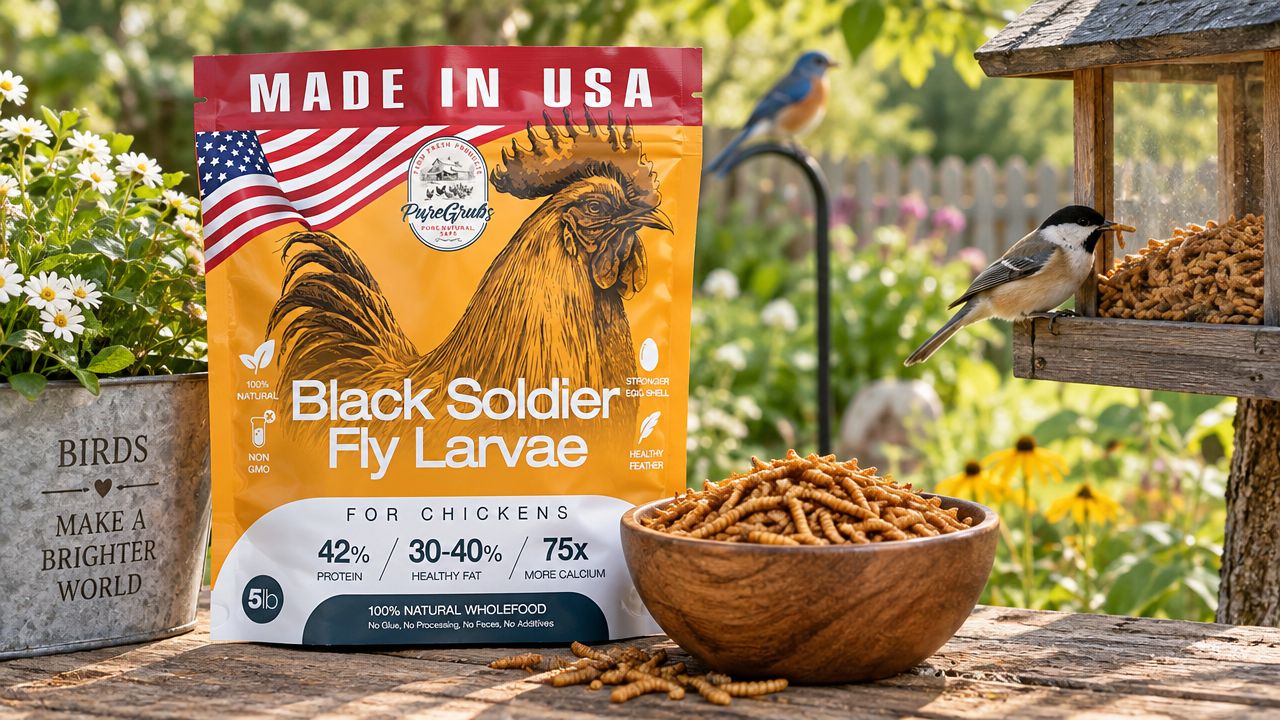
One option designed for poultry and also listed for wild birds is USA GROWN BLACK SOLDIER FLY LARVAE FOR CHICKENS. The catalog snapshot describes the dried larvae as USA-grown, plant-fed, free from additives and preservatives, with 36–42% crude protein, 30–40% healthy fats, and 75 times more calcium than mealworms according to the product information. Treat those figures as product specifications, not as a reason to replace a varied wild-bird diet.
Use local and online shopping differently
Local stores are better for the feeder itself. You can test the latch, examine the mounting hardware, and choose a model that fits the pole or hook already in your yard. Specialty foods, unusual feeder parts, bulk seed, and insect treats may be easier to order online, although shipping can reduce the value of heavy items and delivery doesn't help when you need a replacement today.
The useful arrangement is a split one. Buy the structure locally, where fit and durability matter, then use online ordering as a back-of-house supply for food variety. Offer a modest amount first, observe who takes it, and remove anything that becomes damp or ignored.
Your First Weekend With a New Feeder
Set up the feeder on Saturday morning, but don't fill it to the brim. Mount it securely or place it on a pole, give it a gentle wiggle, and add a small amount of the food you chose for your target birds. A new station may stay quiet while birds locate it and decide that the surroundings feel safe, so first-day silence isn't a failure.
Use Saturday afternoon to correct practical problems. Tighten a loose bracket, add a baffle, move the hook away from a collision-prone window, or place a seed catch beneath a messy port. Check the ground for scattered food and choose a location you can sweep without stepping into a shrub bed.
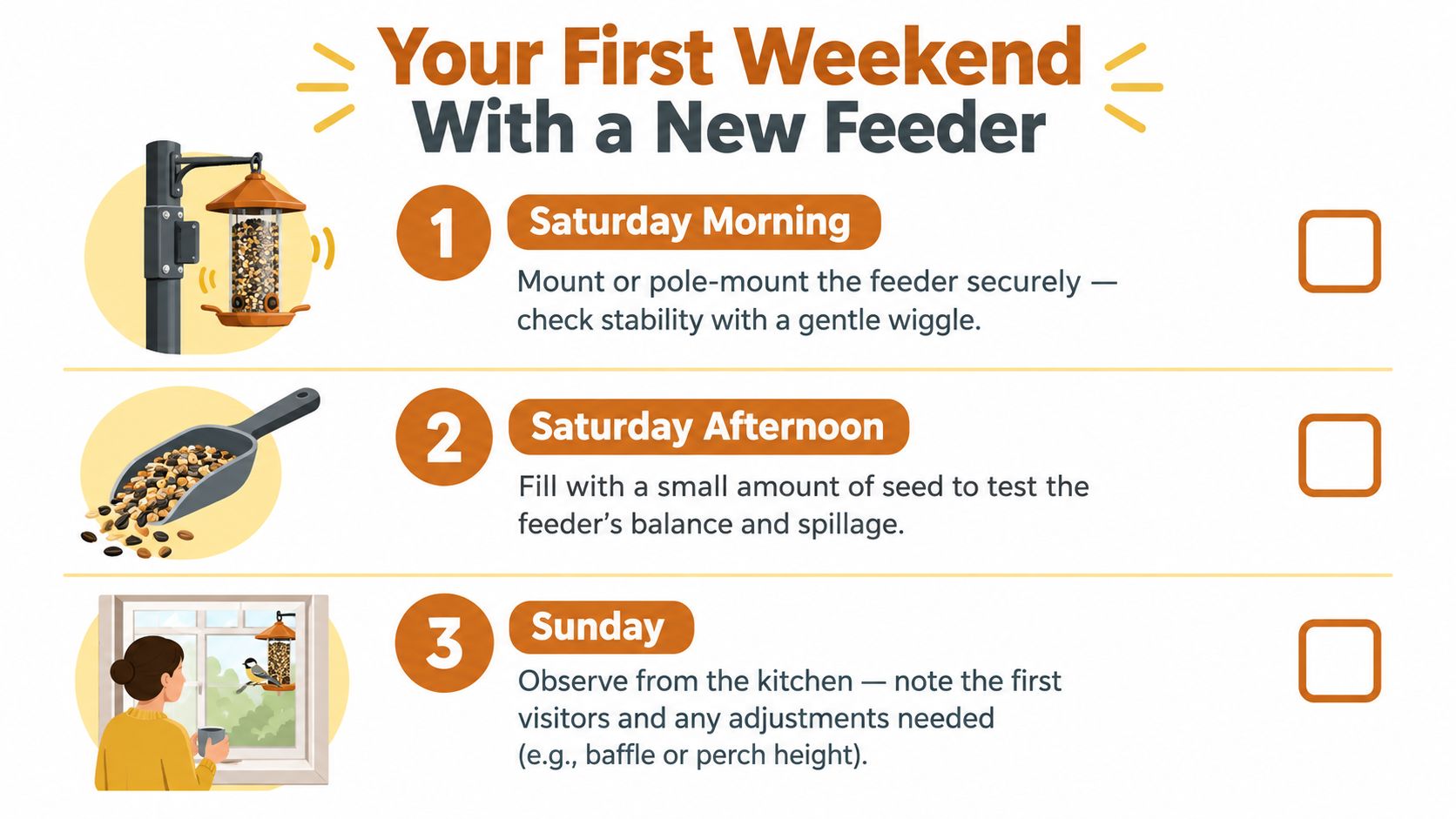
On Sunday morning, top up only after checking the seed. Add fresh water nearby if you can maintain it clean, then watch from the kitchen and record species, arrival times, aggressive behavior, and how quickly each food disappears. A notes app turns guesswork into a useful refill pattern.
The complete formula is straightforward: choose a feeder you can maintain, match its architecture to local birds, place it with cover and windows in mind, and keep the feeding surface clean. A local shop helps you make the right physical choice, while supplementary foods can add variety without turning the station into an uncontrolled buffet.
Pure Grubs offers USA-grown, dried Black Soldier Fly Larvae that can serve as a separate insect treat for wild birds alongside a clean seed setup. Visit Pure Grubs to review the larvae product and decide whether an insect-based supplement fits the birds visiting your feeder.