

What Foods Can Chickens Eat A Guide for a Happy Flock
When people ask me, "what foods can chickens eat?" I always come back to one simple guideline: the 90/10 rule. It’s the easiest way to make sure your flock is getting everything they need. Think of it this way: 90% of their diet must come from a high-quality, complete commercial feed, and the other 10% can be fun, healthy treats.
Following this rule ensures they get the essential nutrition for a healthy, productive life, while still getting to enjoy some variety.
Your Quick Guide to Feeding Chickens Safely
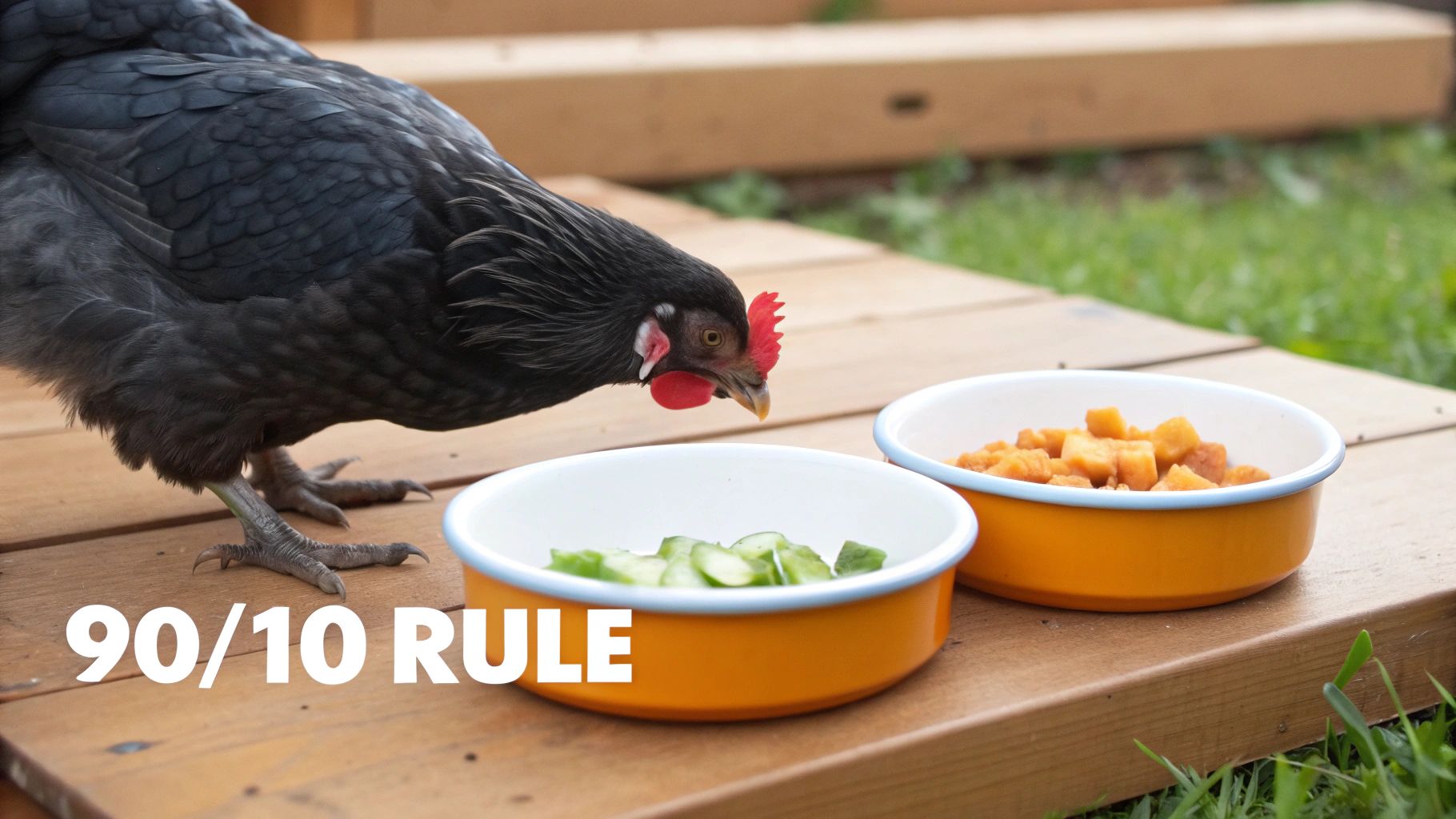
Figuring out your flock's diet doesn't need to be a head-scratcher. Just imagine their complete feed as the main course at dinner. It's been scientifically formulated by experts to deliver the perfect balance of protein, calcium, vitamins, and minerals they need for everything from growing strong to producing those beautiful, solid eggshells.
Everything else—kitchen scraps, garden weeds, or special store-bought snacks—is just a side dish.
Treats are fantastic for keeping your chickens happy and entertained, and they can add some great supplemental nutrition. The key is to never let them replace the main meal. If you overdo it with the snacks, you risk diluting their core diet, which can lead to health problems down the road. Sticking to that 90/10 rule is your best bet for keeping things perfectly balanced.
Quick Reference Safe Treats vs Foods to Avoid
For a simple, at-a-glance guide, I've put together this table that breaks down some common household foods into what's safe and what you absolutely need to steer clear of.
| Safe & Healthy Treats (In Moderation) | Foods to Avoid (Potentially Toxic) | Limit These Foods (Feed Sparingly) |
|---|---|---|
| Leafy Greens (lettuce, kale, spinach) | Avocado (pit and skin) | Bread & Pasta (low nutritional value) |
| Berries (blueberries, strawberries) | Uncooked Beans (contain hemagglutinin) | Dairy (chickens are lactose intolerant) |
| Cooked Grains (oats, rice, quinoa) | Green Potato Skins (contain solanine) | Salty or Sugary Foods (can cause issues) |
| Squash & Pumpkin (seeds are great) | Chocolate, Onions & Garlic | High-Fat Meats or Processed Snacks |
Keeping this list handy makes it easy to quickly decide if that leftover salad or handful of berries is a good choice for your flock.
The real secret to a happy, healthy flock is meeting their biological needs first and their culinary curiosity second. Their feed is the foundation; the treats are just a bonus.
It's also worth noting that you should always rely on credible poultry nutrition sources, not just general market data. For instance, you might see a report saying the global chicken market was valued at $312.11 billion in 2022, but that number is all about human consumption trends. It tells us nothing about the specific dietary needs of a backyard chicken.
By starting with this simple framework, you can feel confident you're making smart, safe choices for your flock every single day. If you want to get into the nitty-gritty of daily routines, check out our complete chicken feeding guidelines.
The Foundation of a Healthy Chicken Diet
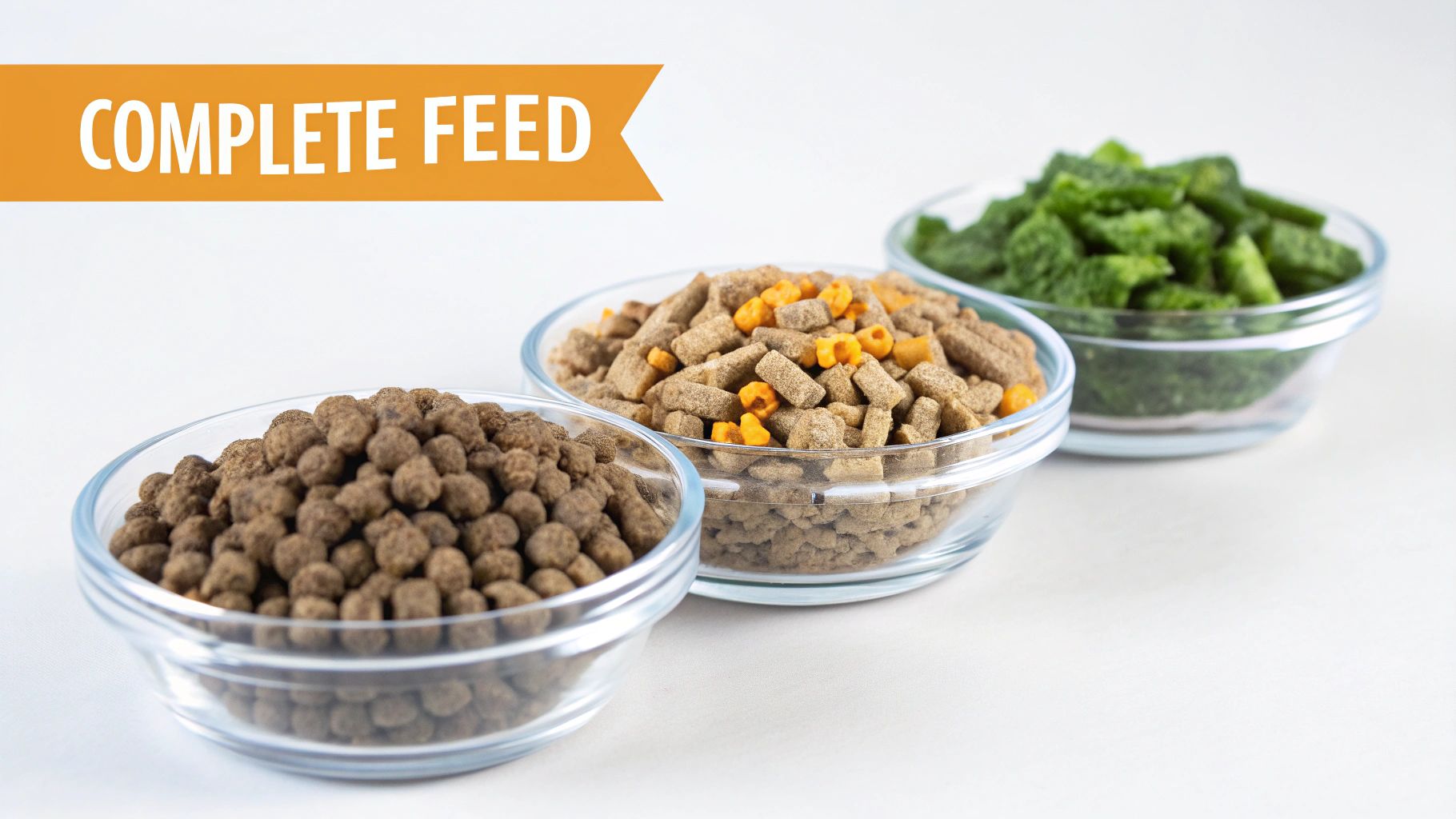
Before we get into the fun stuff—like which kitchen scraps are a hit and which are a miss—we need to talk about the absolute cornerstone of your flock's diet: commercial complete feed. Think of it as their daily multivitamin and balanced meal all rolled into one. It’s not just filler; it’s the non-negotiable foundation for their health.
This stuff is called "complete" for a very good reason. Poultry nutritionists have spent decades perfecting these formulas to deliver the exact blend of nutrients a chicken needs to not just survive, but truly thrive. Making this the bulk of their diet takes all the guesswork out of raising healthy birds.
What's Actually in the Bag?
A quality chicken feed is so much more than a simple mix of grains. It’s a carefully crafted recipe that fuels everything from brilliant feather growth to the perfect egg. When you read the tag on a feed bag, you’re looking at a blueprint for a healthy chicken.
Every good feed is built around a few key components:
- Protein: This is the engine for muscle, feathers, and overall growth. Laying hens need a feed with 16-18% protein to keep up with the demands of producing eggs day after day.
- Calcium: For laying hens, this is the single most critical mineral. It’s what makes eggshells strong and keeps a hen's own bones from becoming brittle.
- Vitamins & Minerals: A whole host of micronutrients are in the mix, like Vitamin D to help absorb that all-important calcium and Vitamin A for good eyesight and a robust immune system.
A complete feed is your nutritional safety net. It guarantees that even after a day of foraging for tasty bugs and getting a few healthy treats, your flock has covered all its essential bases.
Without this balanced foundation, chickens can run into trouble. Nutritional gaps can lead to a whole slew of problems, from soft-shelled eggs and poor feathering to a weaker immune system that just can't fight off illness.
Pellets, Crumbles, or Mash?
Walk into any feed store and you'll see commercial feed in a few different forms. The one you choose often comes down to the age of your flock and, frankly, how much feed you want to see wasted.
You'll almost always find these three options:
- Pellets: These are tidy, compressed cylinders of feed. They are by far the easiest to manage and produce the least amount of waste, since it's hard for a chicken to selectively pick through them or flick them out of the feeder.
- Crumbles: This is exactly what it sounds like—pellets that have been broken up into smaller, more manageable pieces. Crumbles are perfect for adolescent birds (pullets) or smaller bantam breeds that might struggle with a full-sized pellet.
- Mash: A loose, finely ground feed that looks a bit like sandy soil. This is the go-to for baby chicks, as it's easy for them to eat. For adult birds, however, it can get pretty messy, as they tend to rake their beaks through it, sorting for the tastiest bits.
Building a Chicken Salad Bar with Safe Treats
Once your flock is on a high-quality complete feed, you can start having some real fun with the "salad bar"—that 10% of their diet that comes from healthy treats and scraps. This is a fantastic way to keep your birds entertained, boost their nutrition, and cut down on your kitchen waste. It's a win-win, turning your leftovers into a gourmet experience for your feathered friends.
The trick is offering a variety of safe foods, prepared in a way that's easy for them to peck and swallow. While we might hear about global chicken consumption trends—with some countries eating tens of thousands of kilotons a year—the needs of your backyard flock are much more personal. They thrive on thoughtful, varied extras. You can see some of those global food stats over at World Population Review.
Vibrant Veggies They Will Love
Most vegetables from your kitchen or garden will be a huge hit. They're packed with vitamins and minerals, and tossing some into the run provides excellent foraging entertainment. Leafy greens like romaine, kale, and spinach are almost always devoured in minutes.
A little prep work can make all the difference in helping them enjoy their veggies.
- Shred or Grate: Tougher stuff like carrots, beets, and squash are much easier for them to handle when shredded.
- Chop Finely: Break down broccoli, cauliflower, and cabbage into small, bite-sized bits.
- Cook the Hard Stuff: While they can eat pumpkin and zucchini raw, cooking hard winter squashes makes them soft and irresistible.
Just remember to offer veggies in moderation. Even the best things can cause a bit of digestive upset if they overdo it.
Fruits for a Sweet Treat
To a chicken, fruit is basically candy. They go absolutely wild for it. Berries—strawberries, blueberries, raspberries—are perfect because they're already bite-sized. On a hot day, a chunk of watermelon is a welcome treat, providing both a snack and extra hydration.
Think of fruit as a dessert for your flock. It's a high-sugar treat that should be given sparingly, not as a daily staple. A few chopped pieces per bird is plenty.
Always be sure to remove any pits or large seeds from fruits like apples, peaches, and cherries. These can contain trace amounts of cyanide, and while one seed is unlikely to cause a problem, it's just good practice to get rid of them. Slicing up an apple or mashing a banana also helps ensure everyone in the flock gets a fair share.
Wholesome Grains and Legumes
Cooked grains are a wonderful source of energy, and there's nothing chickens love more than scratching through a warm, soft meal, especially when it's cold outside.
Some of the best options include:
- Oats: Always serve them cooked. Raw oats can expand in their crop and cause issues, but a warm oatmeal mash is a beloved winter snack.
- Rice: Cooked white or brown rice is perfectly safe and easy for them to digest.
- Quinoa and Lentils: Just make sure they're fully cooked. This makes the nutrients available and prevents any digestive upset.
Whatever you do, never give your chickens uncooked rice or dry beans. Cooked beans are a fantastic source of protein, but raw, dry beans contain a toxin called hemagglutinin that is extremely dangerous for birds. For a ton more ideas, check out our guide to the best snacks for chickens.
Boosting Health with Protein and Calcium
You can tell a lot about a chicken's health by looking at its feathers and the eggs it lays. Glossy, full feathers and strong, solid eggshells aren't accidents—they're the direct result of a diet rich in high-quality protein and calcium. Think of these two nutrients as the foundation for your flock's most important work.
When a hen is laying an egg almost daily or going through the intense process of a molt, her nutritional needs go through the roof. A standard complete feed, while excellent for maintenance, often can't keep up with these peak demands.
If a hen doesn't get enough calcium from her food, her body will find it somewhere else: by pulling it directly from her bones to form an eggshell. This can lead to brittle bones and serious health problems down the road. Likewise, since feathers are made of about 85% protein, a full molt can drain a chicken’s reserves, leaving her weak and vulnerable. That's why smart, targeted treats are so important. They’re not just snacks; they're a concentrated nutritional boost when your flock needs it most.
The Power of Protein-Packed Treats
When it comes to protein and calcium, not all treats are created equal. For a long time, dried mealworms were the go-to supplement. Today, however, we know there's a much better option: dried Black Soldier Fly Larvae (BSFL). While both are fantastic protein sources, BSFL have a secret weapon—a far superior calcium-to-phosphorus ratio.
The right calcium-to-phosphorus ratio is absolutely critical. Without it, a chicken's body can't properly absorb and use the calcium she eats, no matter how much is available in her diet.
To put it simply, BSFL can naturally contain up to 85% more calcium than mealworms. This makes them an incredible two-in-one supplement, delivering the protein needed for feather growth and the calcium needed for strong shells. Other great high-protein options include:
- Scrambled Eggs: It might sound a little strange, but feeding cooked eggs back to your chickens gives them a perfectly balanced and easily digestible protein kick.
- Legumes: Cooked beans and lentils are another excellent choice, but be sure they are thoroughly cooked—never raw.
To give you a better idea of how to balance your flock's treats, here’s a quick visual guide to some of the safest and most popular options.
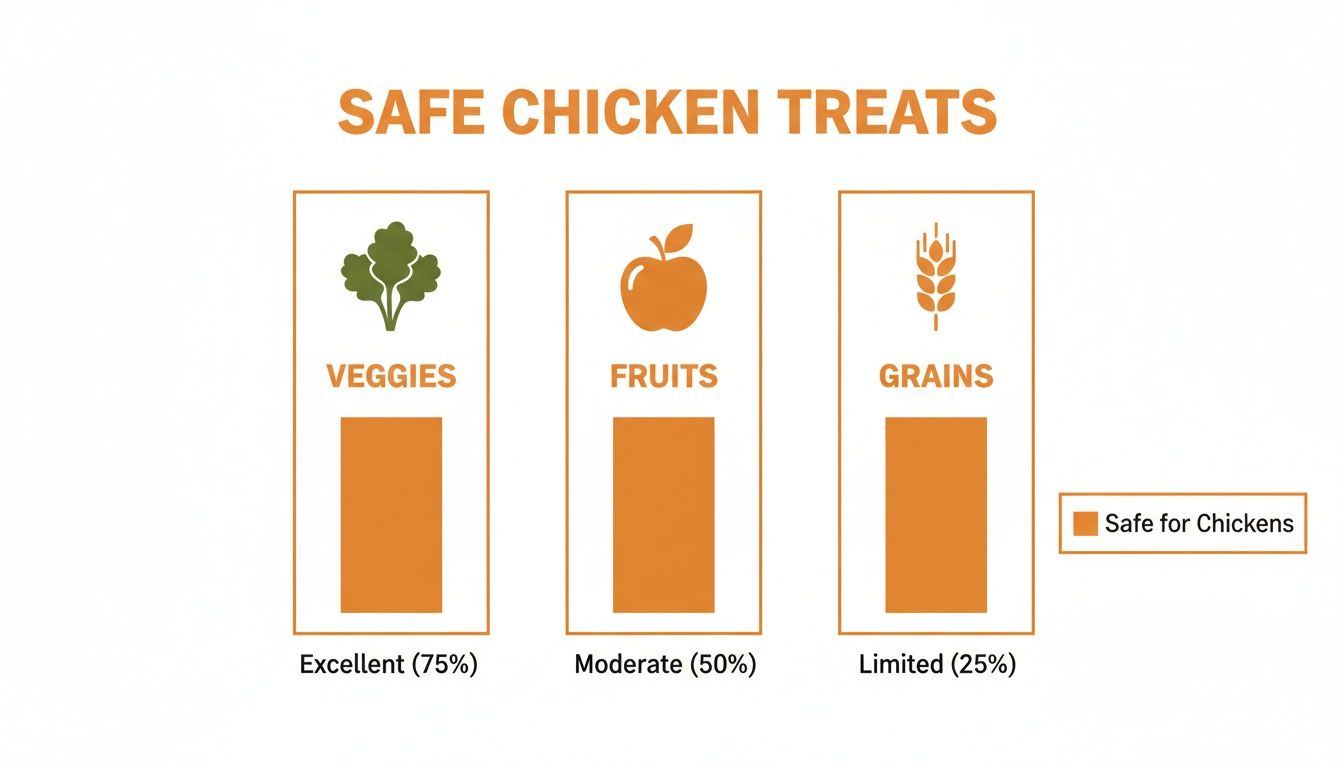
As you can see, while chickens enjoy a variety of foods, vegetables should make up the bulk of their supplemental snacks.
When choosing a high-protein treat, it helps to see the numbers side-by-side.
Comparing Common Protein Treats for Chickens
| Treat Type | Average Protein % | Calcium Content | Key Benefit |
|---|---|---|---|
| BSFL (e.g., Pure Grubs) | 40% | Extremely High | Excellent calcium-to-phosphorus ratio for shell strength. |
| Mealworms | 50% | Very Low | High in protein but poor for calcium needs. |
| Scrambled Eggs | 13% | Moderate | Perfectly balanced protein, but lower concentration. |
| Sunflower Seeds | 21% | Low | Good source of healthy fats and protein. |
This comparison makes it clear why BSFL are a top-tier choice, providing a balanced profile that supports multiple biological needs at once.
Supporting Egg Production and Feather Growth
Working these high-value supplements into your flock's diet is easy. When you see your birds start to drop feathers during a molt, start offering a daily handful of BSFL like Pure Grubs. This gives them the exact raw materials they need to grow strong, beautiful new feathers without depleting their bodies.
For your laying hens, that extra calcium translates directly into thicker, more durable eggshells, which means fewer cracked or soft-shelled eggs in the nesting box.
By strategically supplementing your flock’s feed, you’re doing more than just giving them a treat. You're providing the high-octane fuel they need to not just survive, but thrive. If you want to dig deeper into this topic, be sure to check out our detailed guide on high-protein foods for chickens.
A Warning List: Foods That Can Harm Your Flock
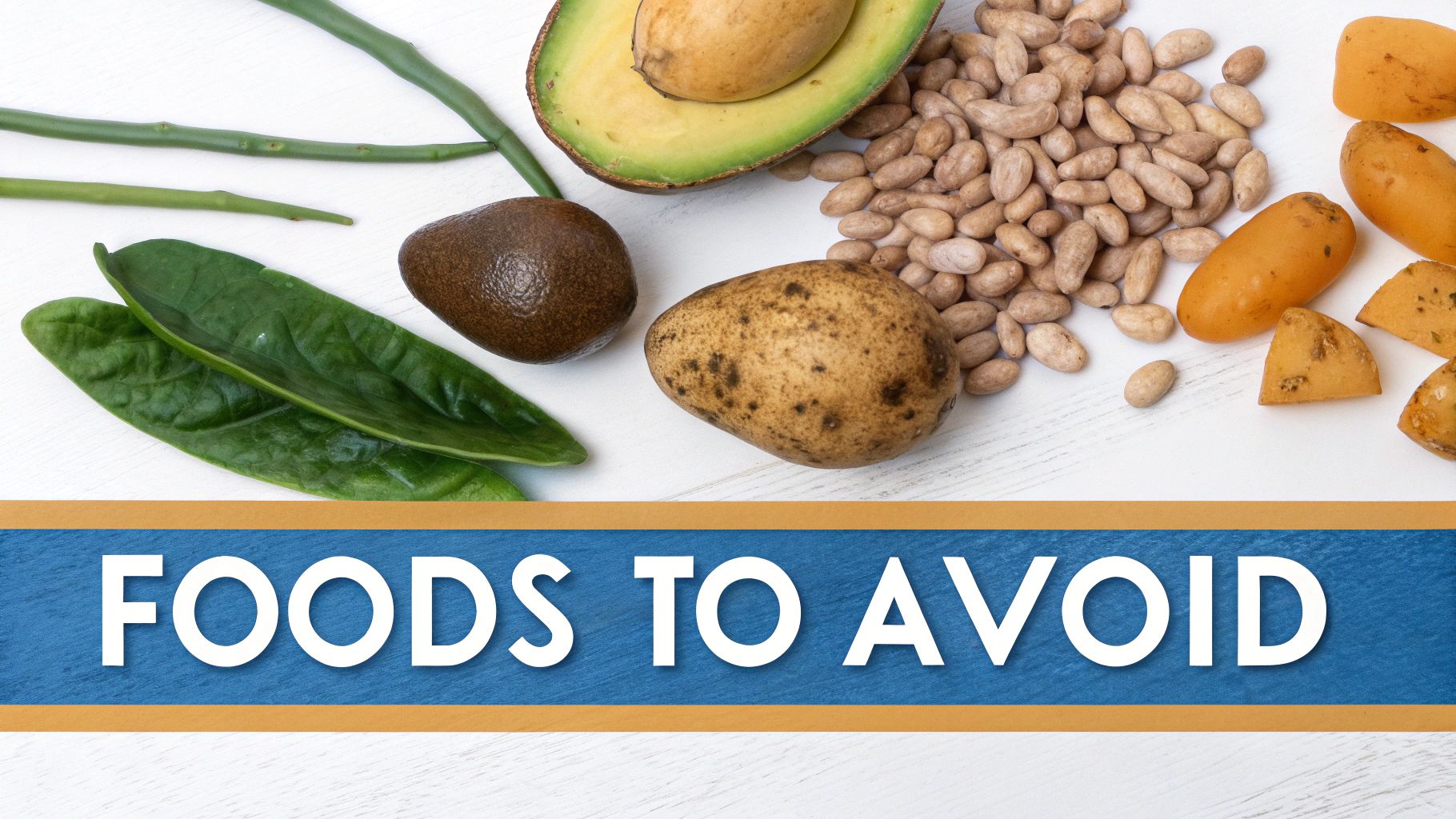
Knowing what your chickens can eat is only half the battle. The other, arguably more important half, is knowing what they absolutely cannot. Just because a food is perfectly healthy for you doesn't mean it's safe for your birds. Some very common kitchen scraps contain compounds that can make a chicken seriously ill, or worse.
Keeping a mental checklist of these off-limits foods is a fundamental part of responsible chicken keeping. This isn't about being paranoid; it's about protecting your flock from completely preventable harm.
Truly Toxic Foods: The "Never Ever" List
Some foods contain natural toxins that a chicken's digestive system simply isn't built to handle. These should be considered strictly forbidden. No exceptions.
This list includes a few surprising kitchen staples:
- Uncooked Beans: Raw or even just dried beans, particularly kidney beans, contain a nasty toxin called phytohaemagglutinin. It's extremely poisonous to birds. If you're going to share beans, make sure they are cooked until completely soft.
- Avocado Pits and Skin: These parts of the avocado contain a compound called persin, a fungicidal toxin that can lead to respiratory distress and heart failure in chickens. The flesh itself is generally considered okay in small amounts, but honestly, it doesn't offer much nutritional benefit, so it's best to just avoid it altogether.
- Green Potato Skins and Sprouts: When potatoes are exposed to light, they turn green and produce a toxic compound called solanine. This stuff is concentrated in the peel and any new sprouts, and it can cause serious neurological damage.
Also on the "never feed" list are onions, garlic, chocolate, and anything with caffeine or alcohol. Onions and garlic contain thiosulphates that can destroy red blood cells and cause anemia, while the others are just plain toxic to most animals, including your flock.
Foods to Limit or Serve with Caution
Beyond the downright dangerous stuff, there's a gray area of foods that aren't poisonous but can cause problems if fed too often or in large quantities. Think of these as chicken junk food—they fill them up without providing real nutrition and can throw their balanced diet out of whack.
Remember the 90/10 rule. A chicken's health is built on a foundation of complete feed. Junk food, even in small amounts, displaces the essential nutrients they need for strong eggshells and a robust immune system.
Keep a close eye on these items:
- Salty Snacks: Chickens don't process salt efficiently. Too much can quickly lead to dehydration and even kidney failure.
- Sugary Treats: Just like with people, sugary foods can cause digestive upset and lead to obesity, which puts a huge strain on a chicken's legs and internal organs.
- Processed Foods: Things like white bread, crackers, and pasta are low-nutrient fillers that can contribute to poor health over time.
- Dairy Products: Most chickens are lactose intolerant. Feeding them dairy can result in a messy case of diarrhea and general digestive discomfort.
Getting accurate information on chicken diets is absolutely critical for their welfare, yet there's a lot of conflicting advice out there. This really highlights the need for credible, science-backed guidance for backyard keepers. For a deeper dive into poultry nutrition research, check out the resources available on the National Center for Biotechnology Information's website.
When in doubt, always play it safe. Stick to their complete feed and treats you know are safe.
Common Questions About Feeding Chickens
Alright, we’ve covered the fundamentals of a good chicken diet, but that’s when the real-world questions start popping up. It's one thing to know the rules, and another to apply them when you've got a handful of kitchen scraps or a hen laying soft-shelled eggs. Let's dig into those common situations so you can feel completely confident in your day-to-day feeding routine.
Think of this as troubleshooting for your flock's diet. We're connecting the dots between the "what" and the "how," making sure that core 90/10 rule becomes second nature in your own backyard.
How Often Should I Give My Chickens Treats?
Treats are all about moderation. The golden rule is that they should never make up more than 10% of what your chickens eat in a day. You want them to fill up on their complete, nutrient-packed feed first.
The easiest way to do this is to save treats for the afternoon. By then, they’ve already spent the morning eating the food they actually need. A small handful of scratch grains or some tasty grubs per chicken is plenty. I often use treats to my advantage, like scattering a little something to coax everyone back into the coop at night. It’s a great way to bond with them without overdoing it.
A treat should be just that—a treat. It’s a fun snack for enrichment and bonding, not a substitute for the balanced nutrition they get from their main feed.
Are All Kitchen Scraps Safe for Chickens?
This is a big one. While feeding scraps can be a fantastic way to reduce waste, you have to be picky. Not everything we eat is safe for a chicken's digestive system. Knowing what to toss in their run versus what to toss in the compost is critical.
Plenty of scraps are perfectly fine and healthy for them:
- Veggie Peels: Carrots, cucumbers, and squash peels are a big hit.
- Leafy Tops: The green tops from beets or celery are a nutritious snack.
- Cooked Grains: A bit of leftover rice, oatmeal, or quinoa is a welcome treat.
On the other hand, you must avoid the toxic food list we covered earlier. Never give them avocado pits, onion or garlic skins, uncooked beans, or anything that looks even slightly moldy. And stay away from scraps loaded with salt, sugar, or processed fats—they provide no nutritional value and can cause serious health problems. When in doubt, just leave it out.
How Can I Help My Hens Lay Stronger Eggs?
If you're seeing weak or soft-shelled eggs, the culprit is almost always a lack of calcium. Starting with a high-quality layer feed is non-negotiable, but some hens, especially your best layers, just need a little extra support.
The best approach has two parts. First, offer crushed oyster shells in a separate dish, completely free-choice. Your hens instinctively know when they need more calcium and will take only what their bodies require. Second, supplement with high-calcium treats. Dried Black Soldier Fly Larvae (BSFL) are fantastic for this because their calcium-to-phosphorus ratio is far better than mealworms, meaning your hens can actually absorb and use that calcium effectively.
Can My Chickens Eat Weeds and Grass?
Yes, absolutely! Foraging is what chickens were born to do. It’s enriching, keeps them busy, and lets them snack on nutrient-dense greens like clover, dandelions, and chickweed.
But there’s one non-negotiable rule: your yard must be 100% free of pesticides, herbicides, and other chemicals. Chickens will peck at everything, so a treated lawn is a serious hazard. If you’re not sure if a plant is toxic, it’s always safest to pull it out. Letting your flock free-range while you're out in the yard with them is the best way to ensure they get all the benefits of foraging without any of the risks.
When your hens need that extra boost for stronger eggshells and healthier feathers, look no further than Pure Grubs. Our USA-grown Black Soldier Fly Larvae are packed with the optimal calcium your flock needs. Learn more and give your flock the best at puregrubs.com.