

What Do You Feed Turkeys A Guide for Every Life Stage
Turkeys have very specific dietary needs that change dramatically as they grow up, not unlike the way a human baby's diet is completely different from a teenager's or an adult's. The backbone of a healthy turkey diet is a high-quality, grain-based feed, usually a mix of corn and soybeans, that’s been carefully formulated with the right amount of protein for each life stage. Getting this right is the absolute key to raising strong, healthy birds.
The Blueprint for a Healthy Turkey Diet
If you want to know what to feed turkeys, start by thinking of yourself as a nutritionist for a rapidly growing family. A tiny poult needs a ton of protein to fuel its explosive growth, while a mature turkey needs more carbohydrates and energy to maintain its large frame.
Luckily, commercial feeds take the guesswork out of it. They’re specifically designed to deliver exactly what a turkey needs, when it needs it. You'll typically find three main types, each serving a distinct purpose:
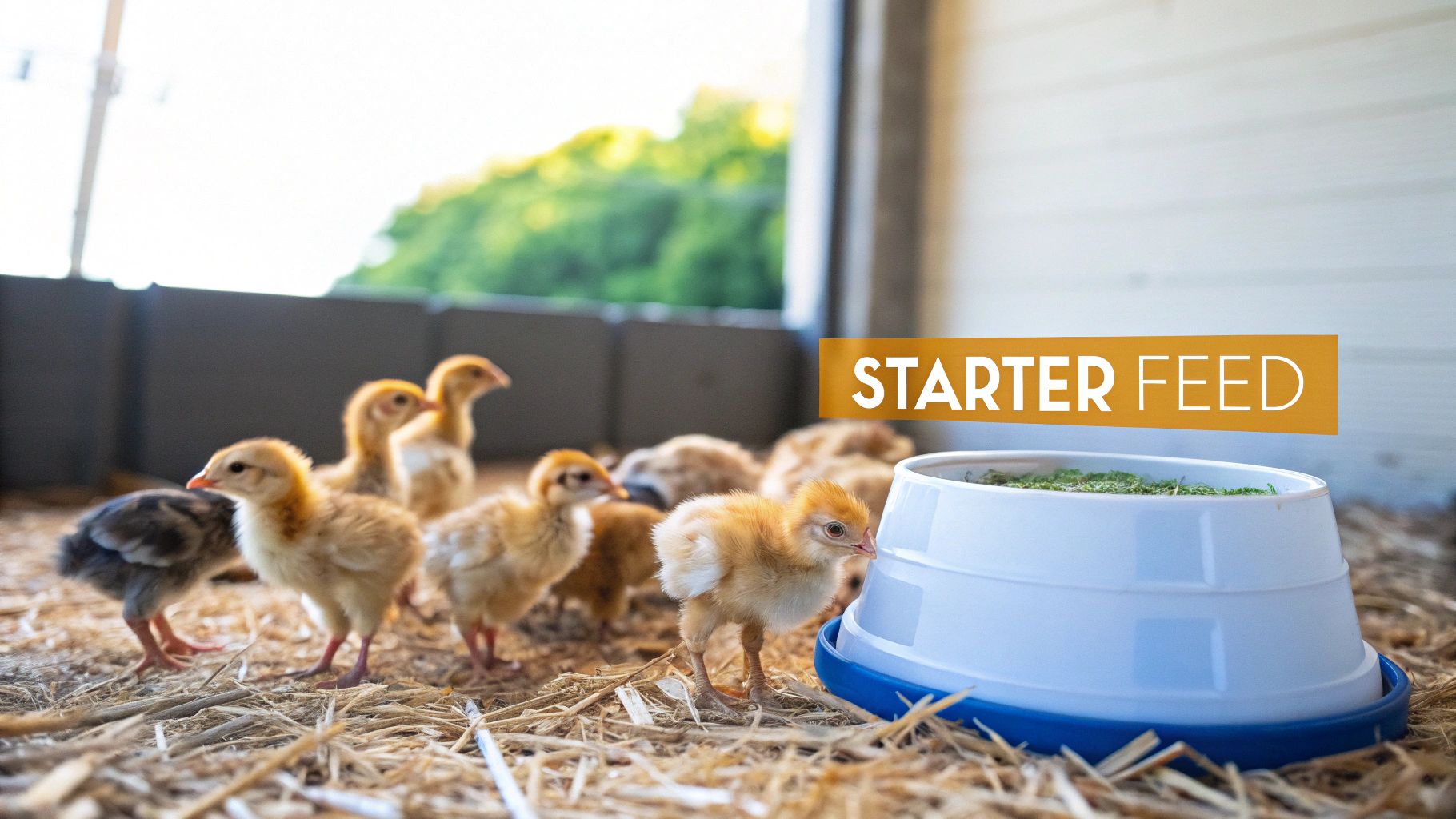
- Starter Feed: This is the high-octane fuel for baby turkeys (poults). It’s packed with protein—usually 24-28%—to support the incredible growth and organ development that happens in their first few weeks.
- Grower Feed: As your turkeys enter their awkward "teenage" phase, you'll switch to a grower feed. The protein drops a bit (to around 18-22%) to support more gradual, steady muscle and bone development.
- Finisher Feed: This is the final stage. The protein is lower (around 16%), and the carbohydrate content is higher. The goal here is to help the bird put on healthy weight as it approaches maturity.
The rule of thumb is simple: match the feed to the turkey's age. Giving the wrong formula—like a low-protein finisher feed to a young poult—can seriously stunt its growth and impact its health down the line.
To help you remember what to use and when, here's a quick look at how a turkey's diet progresses.
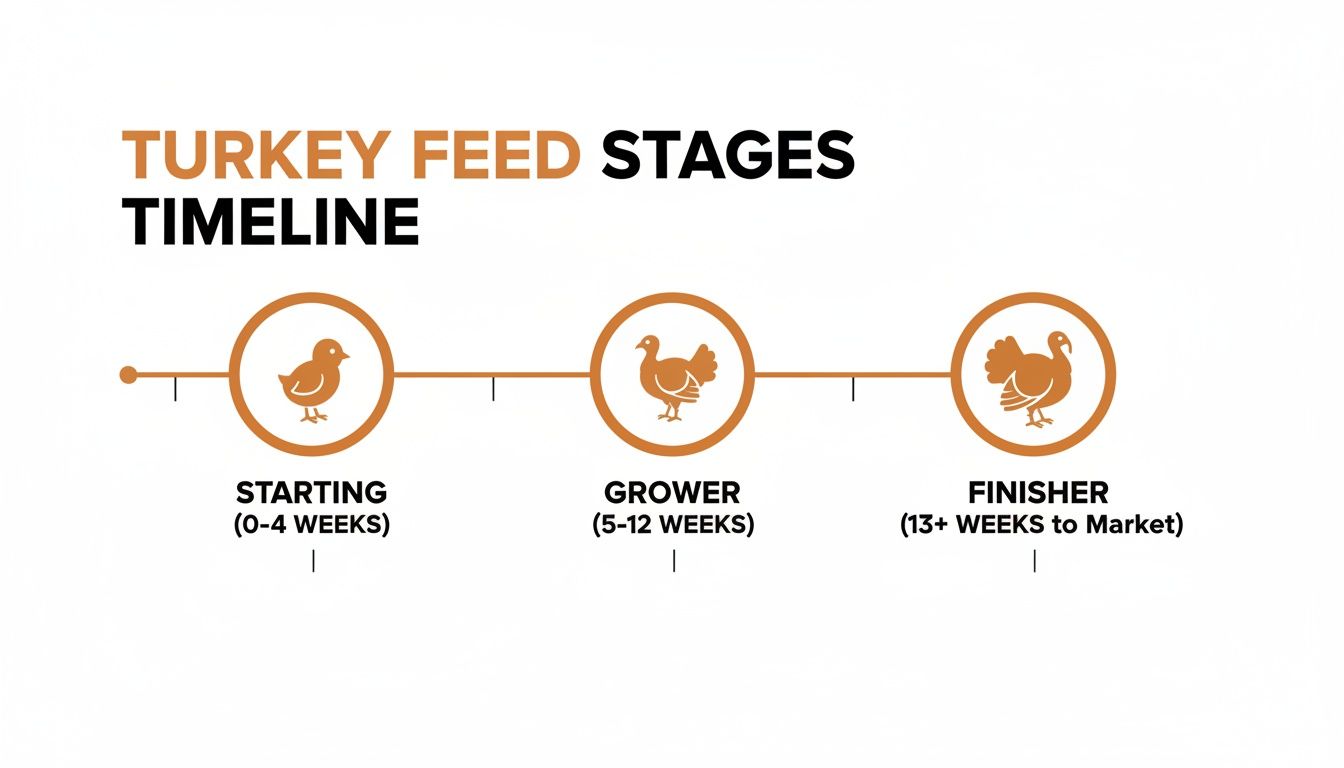
This kind of precision nutrition is what makes modern turkey farming possible. Just to give you an idea of the scale, turkeys in the United States ate an incredible 10.9 million tons of feed in 2023. The vast majority of that—between 60-70%—was a base of corn and soybeans designed for optimal growth. You can dig deeper into these statistics and their industry impact over at the North American Renderers Association.
Turkey Feed At a Glance by Life Stage
For a quick reference, this table breaks down the feed requirements for each stage of a turkey's life.
| Life Stage | Age Range | Feed Type | Protein Content | Primary Purpose |
|---|---|---|---|---|
| Starter | 0–4 Weeks | Starter Crumbles | 24-28% | Fuel rapid growth, immune system, and organ development. |
| Grower | 5–12 Weeks | Grower Pellets | 18-22% | Support steady muscle gain and skeletal frame growth. |
| Finisher | 13+ Weeks | Finisher Pellets | ~16% | Promote healthy weight gain and fat deposition. |
Following this simple progression will ensure your turkeys get the balanced nutrition they need to thrive from the moment they hatch until they are fully grown.
Feeding Turkey Poults for a Powerful Start
The first eight weeks of a turkey poult's life are absolutely critical. This is their rocket-launch phase, a period of explosive growth that lays the foundation for their entire future. Think of it like the first year for a human baby—every single thing they eat is fuel for rapid, foundational development.
This is not the time to be cutting corners on feed. For this stage, you need a high-quality Turkey Starter or Game Bird Starter feed, period. These specialized formulas pack a serious protein punch, typically between 24-28%. This isn't just a suggestion; it's a non-negotiable requirement for building strong bones, healthy organs, and a tough immune system. This high-protein crumble should be their only main meal.
Encouraging Poults to Eat and Drink
Sometimes, brand-new poults are a little clueless and need a nudge to find their food and water. You're their guide in these first few days, and a few simple tricks can prevent "starve-outs," a common and heartbreaking issue where young birds just fail to eat.
- Make it Obvious: For the first couple of days, forget the feeder. Sprinkle their starter crumbles right onto a clean paper towel or a colorful paper plate. The texture and contrast will catch their eye and get them pecking.
- Tap and Peck: Gently tap your finger in the feed, then in the water. This mimics what a mother hen would do and triggers their natural instinct to investigate with their beaks.
- The Shiny Trick: A few shiny, clean marbles or pebbles in the feeder can pique their curiosity. When they peck at the shiny objects, they'll inevitably get a mouthful of feed.
Just as vital as food is constant access to fresh, clean water. Poults can dehydrate in the blink of an eye. Keep their waterer full and scrub it out daily to keep nasty bacteria at bay. Always use a shallow dish or a specific poult waterer to prevent any risk of accidental drowning.
A poult’s body is a growth factory working 24/7. Even a few hours without the right protein or clean water can cause a serious setback. Your job is to create a stress-free environment where food and water are always easy to find.
The Right Feed for the Right Start
Using the correct type of feed is everything. You'll see all sorts of bags at the feed store, but a standard chick starter just won't cut it. It simply doesn't have enough protein. Turkeys grow way faster than chickens and their little bodies have much higher metabolic demands. For a closer look at the different options out there, check out our guide on the kinds of poultry feeds.
Giving them a turkey- or game-bird-specific starter ensures they get that concentrated nutrition they need for their incredible growth curve. A powerful start like this builds a resilient foundation for a healthy, robust adult turkey.
Navigating the Transition to Grower and Finisher Feeds
Once your turkeys hit the eight-week mark, their nutritional needs start to change. They’re leaving that explosive, fragile poult stage behind and entering a new phase focused on building a strong frame and healthy muscle. This is your cue to begin transitioning them from that high-octane starter crumble to a grower formula.
Think of it like an athlete's training regimen. The starter feed was all about packing on mass quickly. Now, they're moving into a more sustained performance phase that requires a balanced, steady-energy diet. Grower feed provides just that, with a slightly lower protein content—typically around 18-22%—and more energy from grains.
This careful calibration is precisely what allows the modern U.S. turkey industry to produce a staggering 6.6 billion pounds of turkey annually, as reported in 2024. The entire system hinges on matching protein sources, like soybean meal, to the bird’s specific life stage. You can dig deeper into these numbers with these U.S. turkey industry statistics from the Agricultural Marketing Resource Center.
The Shift to Finisher Feed
Around sixteen weeks of age, as your birds start looking more like full-grown turkeys, it’s time for one last dietary change. The final step is switching to a finisher feed, which has the lowest protein content of all, usually dialing down to about 16%. At this point, the goal isn't rapid growth; it's about helping the turkeys add a healthy layer of fat and complete their development. Finisher feed shifts the focus from protein to energy-rich carbohydrates.
The secret to both of these transitions—from starter to grower, and then grower to finisher—is to take it slow. Abruptly changing their food can really shock a turkey's digestive system, leading to stress, digestive upset, and even illness. A gradual approach is always the best way to go.
A sudden switch in feed formulation is like abruptly changing a car's fuel type. The system needs time to adjust, and a gradual mix prevents digestive upset, ensuring your turkeys stay healthy and continue to thrive without interruption.
How to Transition Feeds Smoothly
To keep everyone’s gut happy, you’ll want to mix the new feed in with the old over the course of about a week. This gives their system plenty of time to adapt. A simple schedule like this works wonders:
- Days 1-2: Start with a mix of 75% old feed and 25% new feed.
- Days 3-4: Move to a 50/50 blend of old and new.
- Days 5-6: Shift the balance to 25% old feed and 75% new feed.
- Day 7: Your birds are ready for 100% of the new feed.
This timeline is a great rule of thumb, but always remember to watch your birds. Fast-growing commercial breeds like the Broad-Breasted varieties will likely follow this schedule closely. Slower-growing heritage breeds, on the other hand, might need to stay on their grower feed for a little longer. Let their development be your ultimate guide.
Understanding Grit and Calcium Supplements
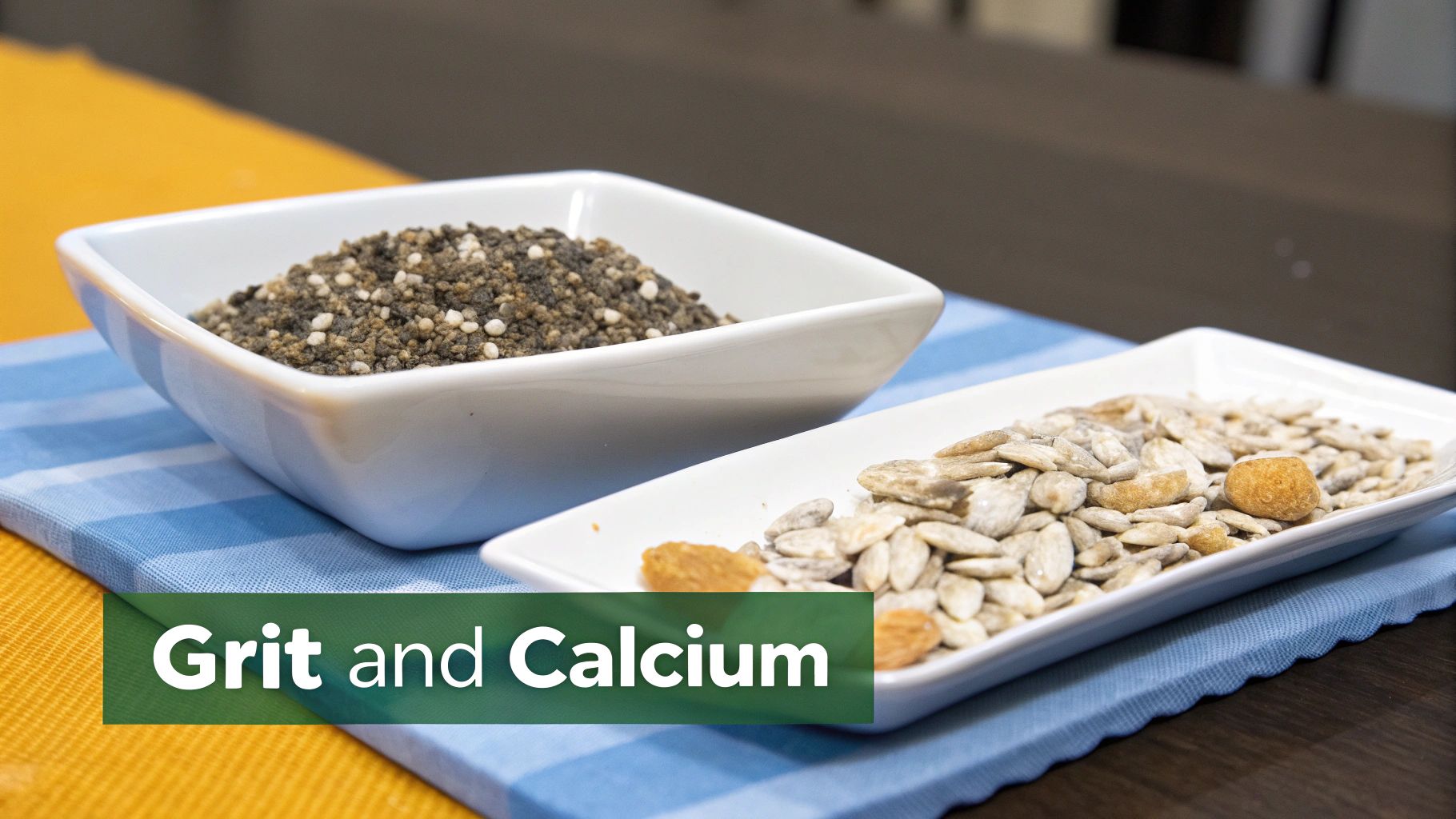
Think of a good commercial feed as the main course for your turkeys. It’s packed with nutrients, sure, but without two key supplements, your birds can’t actually use that nutrition properly. Grit and calcium are non-negotiable for a healthy flock.
The feed is the fuel, but these supplements are the engine parts that make everything run. Without them, even the best food in the world won’t do much good. After all, turkeys don’t have teeth, so they rely on a powerful internal organ—the gizzard—to do all the grinding.
Grit: The Turkey's Teeth
Grit is, quite literally, the "teeth" of a turkey. When a bird swallows its food, it lands in the gizzard, a muscular powerhouse that contracts and crushes everything down. But for this to work, the gizzard needs something abrasive to grind against. That’s where grit comes in.
You'll want to offer insoluble grit, like crushed granite, because it won't break down in the digestive system. The size of the grit matters and needs to change as your birds grow:
- Poults: Start with fine, sand-like chick grit.
- Juveniles: Move up to a medium-sized grower grit.
- Adults: Offer a coarse, pea-sized granite grit.
Some folks assume that turkeys on a diet of only crumbles or pellets don't need grit. That’s a common mistake. It's still crucial for a healthy digestive system, especially if your birds ever forage or get treats.
Calcium: The Bone and Eggshell Builder
Calcium is the other must-have supplement, and it's absolutely vital for laying hens. To form a single strong eggshell, a hen’s body draws an enormous amount of calcium—about 20 times the amount found in her entire skeleton over a single laying season. If she doesn’t get enough from her diet, her body will start stealing it from her own bones, leading to brittle bones and thin, fragile eggshells.
The gold standard for calcium is crushed oyster shell. Its large, flaky texture breaks down slowly, providing a steady release of calcium overnight right when the hen's body is working hard to form the eggshell.
Even if you aren't raising your turkeys for eggs, every bird in your flock needs calcium for strong, healthy bones. Many people also look into how insect-based treats can help meet this need. You can learn more by reading this guide to the best calcium supplements for poultry.
Here’s the most important rule for both supplements: always offer them free-choice. Put the grit and oyster shell in separate, dedicated containers, and never mix them into the feed. Your turkeys are smart—they instinctively know how much they need and will take just the right amount to keep themselves healthy.
Enriching Their Diet With Safe Treats and Foraging
While a top-quality commercial feed should always be the cornerstone of your turkey's diet, they are curious birds that absolutely thrive on a bit of variety. Offering treats and letting them forage isn't just a nice extra—it provides crucial mental stimulation and rounds out their nutrition.
The trick is to keep it all in balance. A good rule of thumb to live by is the 90/10 rule: 90% of their daily food should come from their balanced feed, and only 10% should be reserved for treats. This ensures they're getting all the essential vitamins and minerals they need without filling up on the fun stuff first.
Choosing Safe and Healthy Treats
So, what makes a good treat? Many kitchen scraps that you might otherwise toss are fantastic for your flock. Leafy greens like kale and spinach, juicy berries, chunks of melon, and cooked squash are always big hits. If you want to give them a real protein kick, some scrambled eggs will make you their favorite person.
But here's a critical point: not all human food is safe for turkeys. It's vital to know what to give and what to strictly avoid to keep your birds healthy.
Just because a food is healthy for us doesn't automatically make it safe for turkeys. Their digestive systems are different, and some very common foods can be toxic to them, leading to serious illness or worse.
To make it simple, I've put together a quick guide on what's safe and what's a definite no-go.
Safe vs Unsafe Treats for Your Turkeys
Here’s a clear comparison of common kitchen scraps and natural foods that are safe for turkeys versus those that are toxic or unhealthy and should be avoided.
| Safe Treats (In Moderation) | Why It's Good | Unsafe Foods (Avoid Completely) | Why It's Harmful |
|---|---|---|---|
| Leafy Greens (Kale, Lettuce) | Provides vitamins and minerals. | Avocado (Skin and Pit) | Contains persin, a toxin fatal to birds. |
| Berries & Melon | Rich in antioxidants and hydration. | Raw Onions & Garlic | Can cause anemia and respiratory issues. |
| Scrambled Eggs | Excellent source of protein. | Chocolate & Caffeine | Contains theobromine, which is toxic. |
| Cooked Squash | Packed with vitamins A and C. | Salty or Sugary Foods | Can lead to dehydration and obesity. |
Knowing this list is the first step to treating your flock responsibly and keeping them out of harm's way.
The Power of Foraging and Natural Insects
Beyond what you hand-feed them from the kitchen, one of the best things you can do for your turkeys is to encourage their natural foraging instincts. Letting them roam around a safe, enclosed pasture allows them to scratch, peck, and explore for hours.
This isn't just entertainment; it's how they find their own high-protein, high-calcium snacks. They'll gobble up insects, seeds, and fresh greens, which perfectly supplement their diet.
Insects are an especially prized find. You can mimic this natural behavior by offering high-calcium insect treats like Black Soldier Fly Larvae (BSFL). They're a fantastic supplement that taps directly into their omnivorous nature. If you're curious, you can learn more about the benefits of using Black Soldier Fly Larvae for birds in our detailed guide. These grubs do wonders for supporting strong eggshells in laying hens and promoting healthy feather growth.
Solving Common Turkey Feeding Problems
Even the best-laid plans can go sideways when you're raising turkeys. You'll inevitably run into a few challenges, from feed scattered all over the coop to squabbles breaking out at dinner time. Knowing how to spot and solve these common issues is the key to keeping your flock healthy and your feed bill in check.
One of the first things you'll notice is just how messy turkeys can be. They're notorious for flicking and spilling their feed everywhere, which is not only a waste of money but also a dinner bell for rodents and other pests. The right feeder can make all the difference here. Consider hanging feeders adjusted to your turkeys' back-height, deep trough-style feeders, or even treadle feeders that a bird has to step on to access the food. These designs go a long way in cutting down on spillage.
Managing Flock Dynamics and Health
In every flock, a pecking order quickly establishes itself. This can sometimes lead to a few "bully" birds hogging the food, leaving the more timid ones without enough to eat. The fix is surprisingly simple: add multiple feeding stations and spread them out. This one change gives everyone a chance to eat in peace.
Learning to read the subtle signs of a nutritional problem is another vital skill. If you see poor feathering, notice a bird seems unusually tired, or spot splayed legs in young poults, their diet is often the culprit. This is exactly why using a high-quality, age-appropriate commercial feed as the core of their diet is so important—it covers all their essential bases.
Proper feed storage is just as crucial as the feed itself. You have to keep it in a cool, dry place, sealed up in a rodent-proof container. Damp or contaminated feed can quickly grow mold and lose its nutritional value, becoming a serious health risk to your flock.
The global poultry industry understands this well. Turkey's poultry sector, for example, is so massive it relies on huge corn imports, which make up 60-65% of their feed rations. Their entire system is built on providing feed with 18-22% protein to maintain flock health. You can find more insights into global animal feed markets at imarcgroup.com.
By focusing on smart storage and managing how your flock interacts, you can make sure your feeding strategy leads to a thriving, healthy group of birds.
Got Questions About Feeding Turkeys? We've Got Answers
When you're figuring out what to feed your turkeys, it feels like the same questions pop up time and again. Let's tackle some of the most common ones so you can keep your flock healthy and growing strong.
Can My Turkeys Just Eat Chicken Feed?
It's a question every new turkey owner asks. While it might seem convenient to use one feed for all your birds, it's not the best move, especially for young poults.
Turkey starter crumbles pack a much bigger protein punch—we're talking 24-28%—compared to standard chick starter. That extra protein isn't just a nice-to-have; it's the essential fuel turkeys need to support their explosive growth rate. Giving them chicken feed is like trying to fuel a race car with regular gasoline—it'll run, but not like it's supposed to.
How Much Feed Does a Grown Turkey Really Eat?
Planning your feed budget is a must. During their major growth spurt, you can expect a turkey to eat about one pound of feed for every three pounds of body weight they gain.
Once they hit maturity, that amount levels out. A full-grown turkey will typically eat somewhere between a half-pound and a full pound of feed each day. The exact amount depends on their breed, size, and how much they're foraging.
Keep in mind that free-ranging turkeys will supplement their diet with insects, seeds, and greens, which can naturally reduce their consumption of commercial feed. Monitoring their feeder will give you the best idea of your flock's specific needs.
Is Medicated Feed a Must-Have for Poults?
This is a big one. Medicated starter feed contains a coccidiostat, which is a drug designed to prevent coccidiosis—a nasty intestinal parasite that can be deadly for young birds.
If you're raising poults in a brooder, where a Coccidia outbreak can spread like wildfire, medicated feed is often a smart safety net. However, if your poults are being raised by a mother hen, she'll help them build natural immunity, and you might be able to skip it.
What Are the Best High-Protein Treats for Turkeys?
Everyone loves giving treats! While a few kitchen scraps are fine, some options are far better for your flock's health. You can't go wrong with these:
- Scrambled Eggs: An incredible, easy-to-digest source of protein they'll go crazy for.
- Mealworms and Crickets: These tap into their natural instinct to forage for insects.
- Black Soldier Fly Larvae (BSFL): This is the gold standard of insect treats. Not only are they packed with protein, but they're also loaded with calcium—perfect for building strong bones and (for your hens) sturdy eggshells.
For a premium, high-calcium treat that supports feather growth and overall vitality, explore the USA-grown Black Soldier Fly Larvae from Pure Grubs. Our all-natural grubs are a safe and healthy supplement your turkeys will love. Discover the difference at puregrubs.com.