

What do chicken eat for food? A Backyard Keeper's Guide
So, you're wondering what to feed your chickens. The simplest and most important answer is a balanced commercial feed. This isn't just a random mix of grains; it's a carefully crafted diet designed by poultry experts to give your flock everything they need to grow, thrive, and lay beautiful eggs.
The Building Blocks of a Healthy Chicken Diet
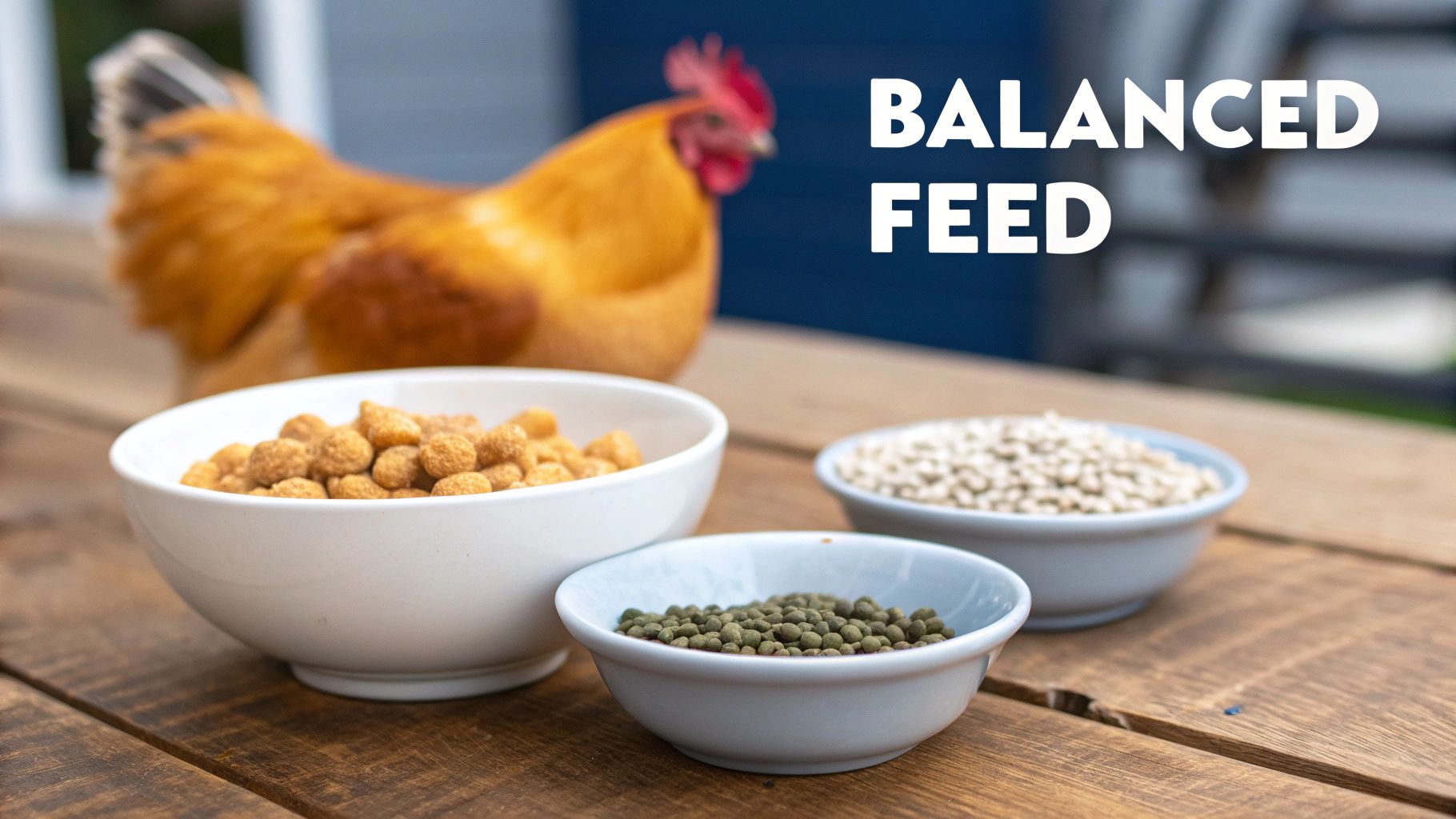
Think of a good commercial feed as the ultimate, all-in-one meal for your flock. It removes all the guesswork, ensuring they get the right mix of nutrients for their specific age and purpose, whether they're tiny chicks or hardworking laying hens. Just like we need a balanced plate to feel our best, chickens have their own set of non-negotiables.
To really get a feel for what makes a good diet, you have to understand the core components. Knowing what they do makes it clear why a quality feed is the cornerstone of a healthy flock.
The Role of Protein and Carbohydrates
For a chicken, protein is the engine of growth. It's what builds muscle, powers feather production, and, of course, creates eggs. If you skimp on protein, your chicks will struggle to grow, and your hens' egg-laying will slow down or stop altogether. That's why commercial feeds are packed with high-protein sources like soybean meal.
Carbohydrates are the fuel. Grains like corn provide the raw energy chickens burn every day doing chicken things—scratching in the dirt, foraging for bugs, and just keeping their bodies warm. These grains are the foundation of nearly every poultry feed you'll find.
A chicken's diet is a powerful engine for production. In the US alone, broiler chickens consumed an incredible 61.5 million tons of feed in 2023, showcasing their immense need for grain-heavy, balanced nutrition. Complete feeds dominate the market, providing a reliable nutritional base for millions of birds. You can dig into more poultry feed consumption trends to see the big picture.
Why Vitamins and Minerals Matter
Vitamins and minerals are the unsung heroes of the chicken world. They're needed in tiny amounts, but without them, things go wrong fast. Let’s look at the key nutrients that are absolutely essential for a healthy flock.
Essential Nutrients in a Chicken's Diet
This table breaks down the nutritional power players your chickens need to stay healthy and productive.
| Nutrient Category | Primary Role in Chicken Health | Common Food Sources |
|---|---|---|
| Protein | Essential for growth, feather development, and egg production. The building block of life. | Soybean meal, fish meal, meat and bone meal, corn gluten meal. |
| Carbohydrates | The primary energy source for daily activities, body heat, and metabolism. | Corn, wheat, barley, oats, and other grains. |
| Fats & Oils | A concentrated energy source; also crucial for absorbing fat-soluble vitamins. | Vegetable oils, animal fats. |
| Calcium | Absolutely critical for strong bones and, most famously, for creating hard eggshells. | Oyster shell, limestone, bone meal. |
| Phosphorus | Works hand-in-hand with calcium for bone health and is vital for energy metabolism. | Dicalcium phosphate, meat and bone meal. |
| Vitamins | Support immune function (A, E), calcium absorption (D), and overall metabolic health. | Found in fortified feeds, fresh greens, and sunlight (for Vitamin D). |
| Trace Minerals | Small but mighty nutrients like manganese and zinc that support skeletal and feather integrity. | Included in vitamin/mineral premixes added to commercial feeds. |
A complete commercial feed is expertly fortified with this entire suite of micronutrients, heading off common problems before they can start. This gives you a solid, reliable foundation that you can then supplement with healthy, fun treats.
Choosing the Right Feed for Every Life Stage
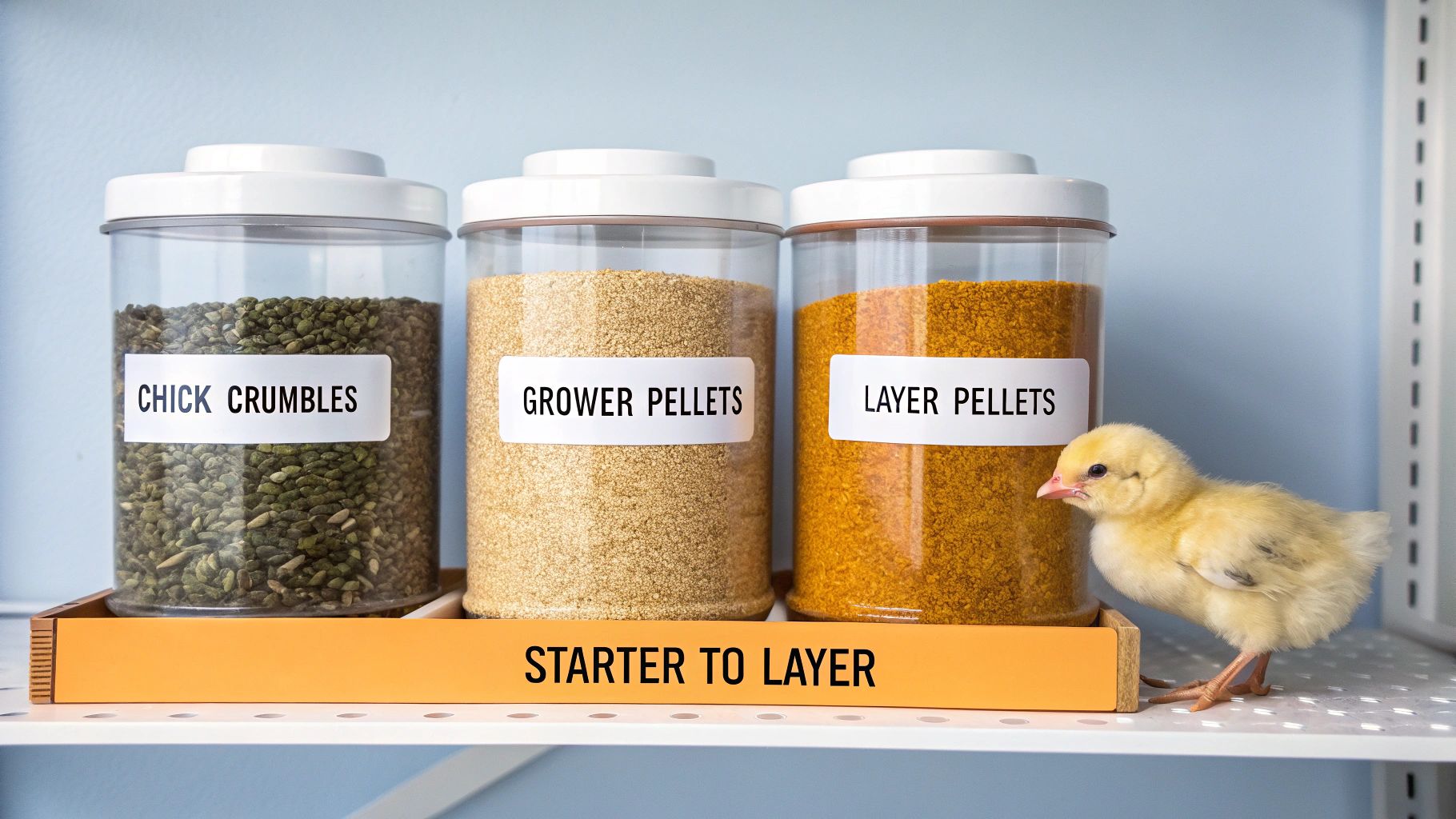
A chicken’s dietary needs change just as much as a human’s do from infancy to adulthood. Getting their feed right at each stage is one of the most critical things you can do for their health. I know walking into a feed store can be a bit overwhelming with all the bags and options, but it’s simpler than it looks.
Each type of commercial feed is specifically formulated to support a chicken’s development, whether it's a fluffy chick or a hardworking hen. The formulas are all about balance—getting the right mix of protein, vitamins, and minerals for that exact phase of life.
From Chick Starter to Layer Feed
For the first six to eight weeks, baby chicks are on chick starter. This feed is packed with protein, usually around 20-24%, to fuel their explosive growth and get those first feathers in. It comes as a fine "crumble," which is easy for their tiny beaks to peck. You'll often see "medicated" starter options, which help protect the vulnerable chicks from coccidiosis, a nasty intestinal parasite.
Once they hit about eight weeks old, it’s time to move them over to grower feed. Think of this as the "teenage" formula. The protein drops a bit to between 16-18%, which supports their steady growth without pushing them too hard before their bodies are ready to lay.
Then, when your hens start laying their first eggs (usually around 18 to 20 weeks), you make the final switch to layer feed. This is their adult diet. It has about 16% protein but, most importantly, it's fortified with a big boost of calcium. Hens need that extra calcium to form strong eggshells day after day. Without it, their bodies will pull calcium from their own bones, leading to brittle bones and other health problems.
Providing the wrong feed at the wrong time can cause real problems. Giving high-calcium layer feed to a young chick can damage their kidneys, while not giving it to a laying hen will lead to weak eggshells and poor health. Matching the feed to their age isn't just a suggestion—it's essential.
Understanding Feed Forms
So, you’ve got the formula figured out, but what about the texture? Commercial feed comes in a few different forms, and picking the right one helps prevent waste and makes sure everyone gets what they need.
- Mash: This is a fine, unprocessed feed that looks a bit like sand or soil. It’s perfect for baby chicks, but older birds can get picky and sling it everywhere, wasting a lot.
- Crumbles: This is basically mash that's been lightly pressed into small, bite-sized pieces. It’s a great choice for growing birds because it’s easy to eat and they can’t be as selective.
- Pellets: Pellets are just crumbles that have been compressed into uniform, solid cylinders. This is the cleanest and most efficient option for adult chickens, as it guarantees they get a complete nutritional package in every single bite.
Getting the feed right is fundamental to raising a healthy flock. If you want to dig a little deeper, you can explore the different types of feeds for poultry to find the perfect match for your birds.
Beyond the Feed: Safe and Healthy Treats to Enrich Your Flock's Diet
Think of your flock's main feed as their complete, balanced meal—it has everything they need to thrive. Treats, on the other hand, are the fun stuff. They're the equivalent of a healthy snack or dessert that adds variety, brings a little joy to their day, and encourages their natural instinct to peck and forage.
But just like with kids and candy, moderation is everything. Treats should never take the place of their specially formulated feed. A great rule of thumb is the 10% rule: treats should make up no more than 10% of your flock’s total daily diet. This simple guideline ensures they’re still getting the core nutrition they need to stay healthy and lay well.
Great Treat Options for Your Flock
Chickens are adventurous eaters and will happily try a wide range of foods. The best choices are always whole, unprocessed options that you'd feel good about eating yourself. Here are a few flock favorites that are both safe and healthy.
- Leafy Greens and Veggies: Chickens go wild for dark leafy greens like kale, Swiss chard, and small amounts of spinach. They also love pecking at broccoli, cucumbers, and pumpkins—carving up a leftover pumpkin after Halloween is a fantastic boredom buster!
- Fruits: Berries, melons, and bananas are always a hit. Apples are great too, just be sure to remove the seeds first. Because of the natural sugar content, think of fruits as a special, occasional snack.
- Grains: Cooked rice, oats, and cracked corn are fantastic for a little energy boost. Tossing a handful of scratch grains on the ground is a perfect way to get them scratching and foraging, just like they would in the wild.
Overdoing it with treats can create picky eaters who start ignoring their balanced feed. It’s the same as a child filling up on cookies before dinner—they miss out on the vital nutrients they need. For chickens, treats are dessert, not the main course.
The Power of Protein-Packed Snacks
Protein is absolutely essential for chickens, especially when they're growing new feathers during a molt or laying eggs consistently. While their feed provides the daily requirement, a high-protein treat can give them a fantastic boost right when they need it most.
There's a reason the entire global poultry market relies on high-protein sources. For those of us with backyard flocks, we can mimic their natural insect-foraging diet with something like Black Soldier Fly Larvae (BSFL).
High-quality, USA-grown options like Pure Grubs are a game-changer. They provide a plant-based protein punch and are packed with calcium, which is crucial for strong, healthy eggshells. Offering a safe, tested, and reliable snack like this supports everything from feather health to immunity, giving your birds a wholesome treat that actually does them good.
By mixing in a thoughtful variety of safe veggies, fruits, and high-quality protein snacks, you’re not just feeding your chickens—you’re enriching their lives. You'll boost their health and make treat time the highlight of everyone's day.
Unlocking The Power Of Protein-Rich Insect Treats
If you really want to know what a chicken wants to eat, just turn them loose in the yard for a few minutes. They're natural-born foragers, and their instincts scream for one thing: wriggling, protein-packed insects. Tossing them a handful of insect treats isn't just a fun snack—it's speaking their language and giving them a powerful nutritional kick.
Of course, not all bugs are created equal in the treat world. Black Soldier Fly Larvae (BSFL) are quickly becoming the top choice for savvy chicken keepers, and there's a good reason for that. They pack a nutritional punch that other common treats, like mealworms, just can't compete with.
The BSFL Advantage: Calcium For Superior Eggshells
The biggest difference-maker is the calcium. Think of it this way: if you need to build strong bones, you don't reach for a glass of water—you grab a glass of milk. The same idea applies to your hens and the quality of their eggshells.
Pure Grubs BSFL contain up to 85% more calcium than standard mealworms. That's not just a small bump; it's a game-changing advantage that leads directly to stronger, thicker eggshells and fewer heartbreaking soft-shelled or broken eggs.
This incredible calcium content also does wonders for your hens' skeletal health. Laying an egg is hard work, and it pulls a lot of calcium from their own bodies. A calcium-rich treat helps them replenish those reserves, keeping your girls healthy, strong, and productive.
For a deeper dive into this little superfood, check out our complete guide to Black Soldier Fly Grubs.
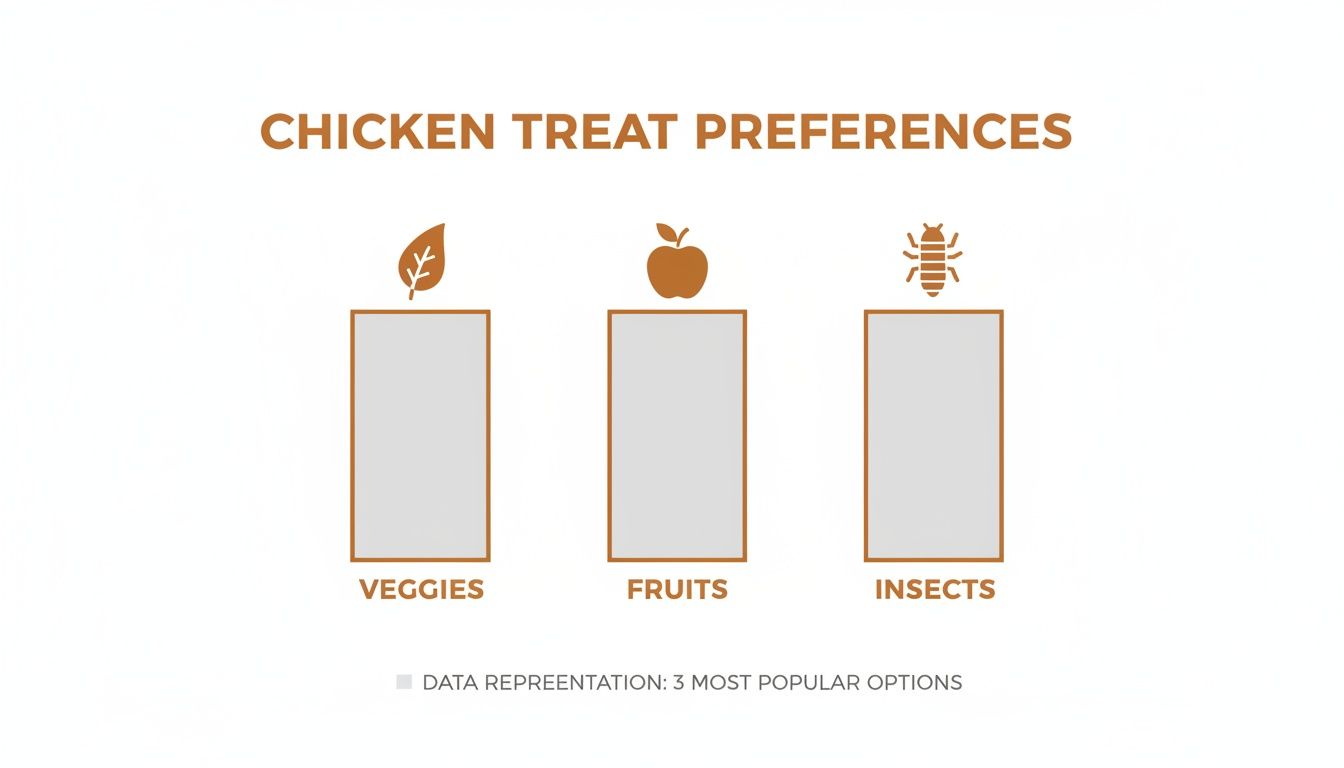
As you can see, insects provide that concentrated dose of protein and essential minerals that you just won't find in fruits and veggies alone.
BSFL vs Mealworms: A Nutritional Showdown
It's one thing to say BSFL are better, but seeing the numbers side-by-side makes the choice crystal clear. Here’s a quick look at how Pure Grubs' BSFL stack up against mealworms.
| Nutrient | Pure Grubs BSFL | Mealworms |
|---|---|---|
| Protein | Min 45% | Min 50% |
| Fat | Min 35% | Min 25% |
| Calcium | 2.3% | 0.05% |
| Phosphorus | 0.8% | 0.8% |
While mealworms have a slight edge in protein, the astronomical difference in calcium is what truly matters for laying hens. BSFL provide a balanced, natural boost that supports egg production from the inside out.
Quality And Safety You Can Trust
When you're choosing a treat for your flock, you're also choosing a source. A lot of insect treats are imported with very little oversight, which can leave you guessing about quality and safety. This is where picking a reputable, USA-grown product really matters.
Pure Grubs' BSFL are a perfect example. They are grown right here in the USA, water-washed, and tested for heavy metals in FDA-compliant facilities. You get a clean, additive-free treat that strengthens eggshells and boosts the vitality of your flock.
Knowing that you're giving your chickens a clean, safe, and incredibly nutritious snack is priceless. It’s peace of mind that contributes directly to their health and the quality of the eggs your family enjoys.
Common Foods That Are Toxic to Chickens
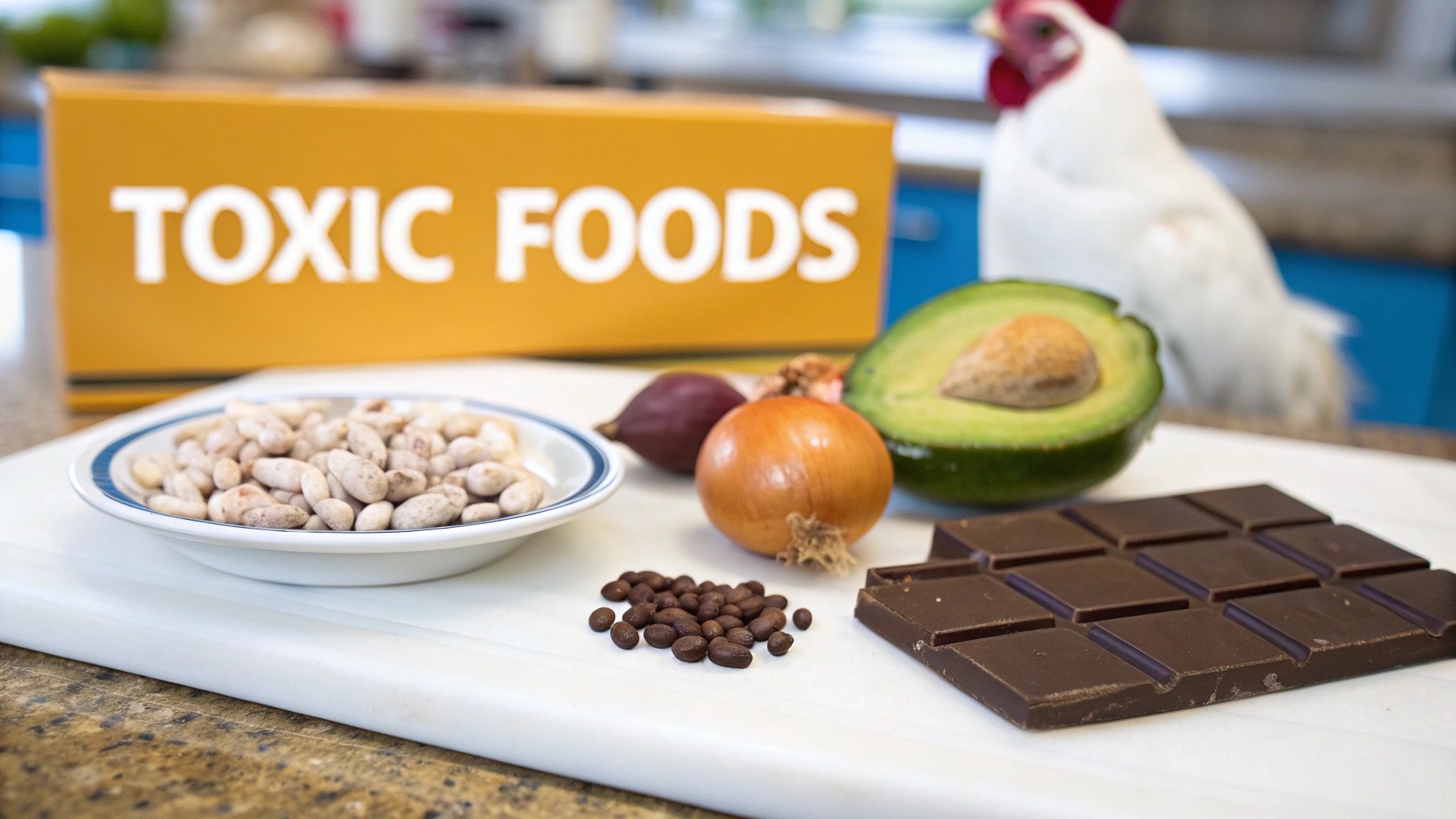
Knowing what your chickens can eat is only half the battle. You also have to know which foods are flat-out dangerous. It’s surprising how many common kitchen scraps and garden plants, things that seem totally harmless to us, can be toxic to a chicken.
What looks like a simple treat can quickly turn into a serious health risk. A huge part of being a responsible chicken keeper is protecting your flock from accidental poisoning. Once you learn to spot the hazards, you can create a safe space for your birds to scratch, forage, and enjoy treats without you having to worry.
Household Foods to Never Feed Chickens
It’s always tempting to share leftovers with the flock, but some human foods are a definite no-go. A chicken's digestive system is built differently than ours, and what we eat without a second thought can cause severe illness or even death in a bird.
Here are some of the most common culprits to keep far away from the coop:
- Avocado (Skin and Pit): These parts of the avocado contain a toxin called persin. It’s incredibly toxic to birds and can lead to sudden respiratory distress and heart failure.
- Uncooked or Dried Beans: Raw beans are loaded with phytohaemagglutinin, a natural compound that is extremely poisonous to chickens. While cooking destroys the toxin, it’s often just safer to skip beans altogether.
- Chocolate and Caffeine: Both contain theobromine, a compound toxic to most animals, including chickens. It can cause serious heart problems and is often fatal.
- Onions and Garlic: When fed in large amounts, these contain thiosulphate, which can destroy a chicken’s red blood cells and cause anemia. A tiny bit probably won’t hurt, but it's best to play it safe and avoid them.
- Moldy or Spoiled Food: This one is simple: never feed your chickens anything you wouldn’t eat yourself. Mold produces mycotoxins that can cause devastating illness and death.
A safe coop requires a vigilant gatekeeper. Before you toss any scraps out to the birds, do a quick check to make sure they're fresh, mold-free, and not on the "toxic" list. When in doubt, throw it out.
Toxic Plants in the Yard and Garden
Your own backyard can also hide a few dangers. Many popular ornamental and garden plants are poisonous if a curious chicken decides to take a bite. If you let your flock free-range, it’s crucial to walk their foraging area and remove any potential threats. For a deeper dive, check out this comprehensive list of foods harmful to chickens.
Keep an eye out for these common plants in particular:
- Rhubarb Leaves: The leaves are packed with oxalic acid, which can cause kidney failure.
- Nightshades: The leaves, stems, and unripe fruits of tomato, potato, and eggplant plants contain solanine. This toxin can cause digestive upset and neurological damage. Ripe fruits from these plants are generally fine in moderation.
- Ornamental Flowers: Pretty flowers like azaleas, rhododendrons, daffodils, and tulips are all toxic to chickens.
By understanding not just what chickens eat for food but also what they must avoid, you can keep your flock happy, healthy, and, most importantly, safe.
Common Questions About Feeding Your Chickens
Raising chickens is a learning process, and it's totally normal for questions to pop up along the way. When it comes to their diet, things can seem complicated at first, but don't worry—the answers are usually pretty straightforward.
Think of this section as your go-to cheat sheet for those "what if" moments. We'll walk through some of the most common feeding puzzles that backyard chicken keepers run into.
Can I Feed My Chickens Kitchen Scraps?
Absolutely, but you have to be smart about it. Leftover salads, veggie peels, fruits, and cooked grains can be fantastic treats for your flock. They add a little excitement to the daily routine and let your birds enjoy some variety, much like they would when foraging.
The key is knowing what’s safe. Stick to healthy, whole foods and stay far away from the toxic list—that means no onions, avocados, raw beans, or chocolate. It’s also wise to skip anything heavily processed, sugary, or super salty. Most importantly, only offer scraps that are fresh. Moldy food can be deadly for a chicken. Always remember the 10% rule: treats and scraps should be a fun supplement, not a replacement for their balanced feed.
How Much Water Does a Chicken Drink in a Day?
Water is the single most critical nutrient for a chicken—no contest. A single, full-grown chicken will drink about a pint of water on a normal day, but that can easily double when the temperature soars. Water is essential for everything they do, from digesting food and regulating body temperature to, of course, laying eggs.
An egg is roughly 75% water. A hen deprived of water can stop laying in less than 24 hours. Without it for long, a chicken’s health will decline rapidly.
Your flock needs unlimited access to clean, fresh water, period. That means a daily check of their waterers is non-negotiable. A quick scrub prevents the growth of algae and nasty bacteria that can make your birds sick.
Do My Laying Hens Need Extra Calcium?
A good-quality commercial layer feed is already formulated with the calcium most hens need. That said, offering a little extra on the side is a fantastic practice. It lets each hen decide for herself if she needs a boost.
The best way to do this is to offer crushed oyster shells in a separate little dish, not mixed into their main feed. Never mix it directly into their food. This simple step ensures that the hens who need more can get it, while others aren't forced to consume too much. Thin, soft, or even missing eggshells are the classic signs of a calcium deficiency. You can also offer a high-calcium treat like Black Soldier Fly Larvae, which are a natural and exciting way to support strong shell formation.
Why Did My Chickens Suddenly Stop Eating?
It’s definitely concerning when your birds go off their feed. A sudden hunger strike is usually a sign that something is off. Here are the first things you should check:
- Check the Feed: Has it gone stale? Did it get wet and become moldy? Chickens are picky about freshness and will turn their beaks up at spoiled food.
- Look for Stress: Did you just add new birds? Has a hawk been circling? Bullying, predators, or any big change to their routine can cause enough stress to put them off their dinner.
- Rule Out Sickness: A sick chicken almost always stops eating. Look closely for other signs, like lethargy, fluffed-up feathers, or strange-looking droppings.
- Cut Back on the Treats: Sometimes, the simplest answer is the right one—they're just full! If you've been a bit heavy-handed with the snacks, dial it back for a couple of days and see if their appetite for their real food returns.
If your chicken isn't eating for more than a day or two, or if you spot any other signs of illness, it's time to get some advice from a vet.
For a treat that supports strong eggshells and mimics their natural diet, trust Pure Grubs. Our USA-grown Black Soldier Fly Larvae are a safe, high-calcium snack your flock will love. Shop Pure Grubs today.