

What Do Bluebirds Eat in Winter: Essential Foods and Winter Feeding Tips
When winter arrives, the world changes for a bluebird, and so does its menu. The plentiful insects of summer vanish, forcing a dramatic dietary shift to fruits and berries. This switch isn't just a preference; it's the key to their survival, giving them the energy they need to make it through the freezing cold.
The Bluebird's Winter Survival Diet
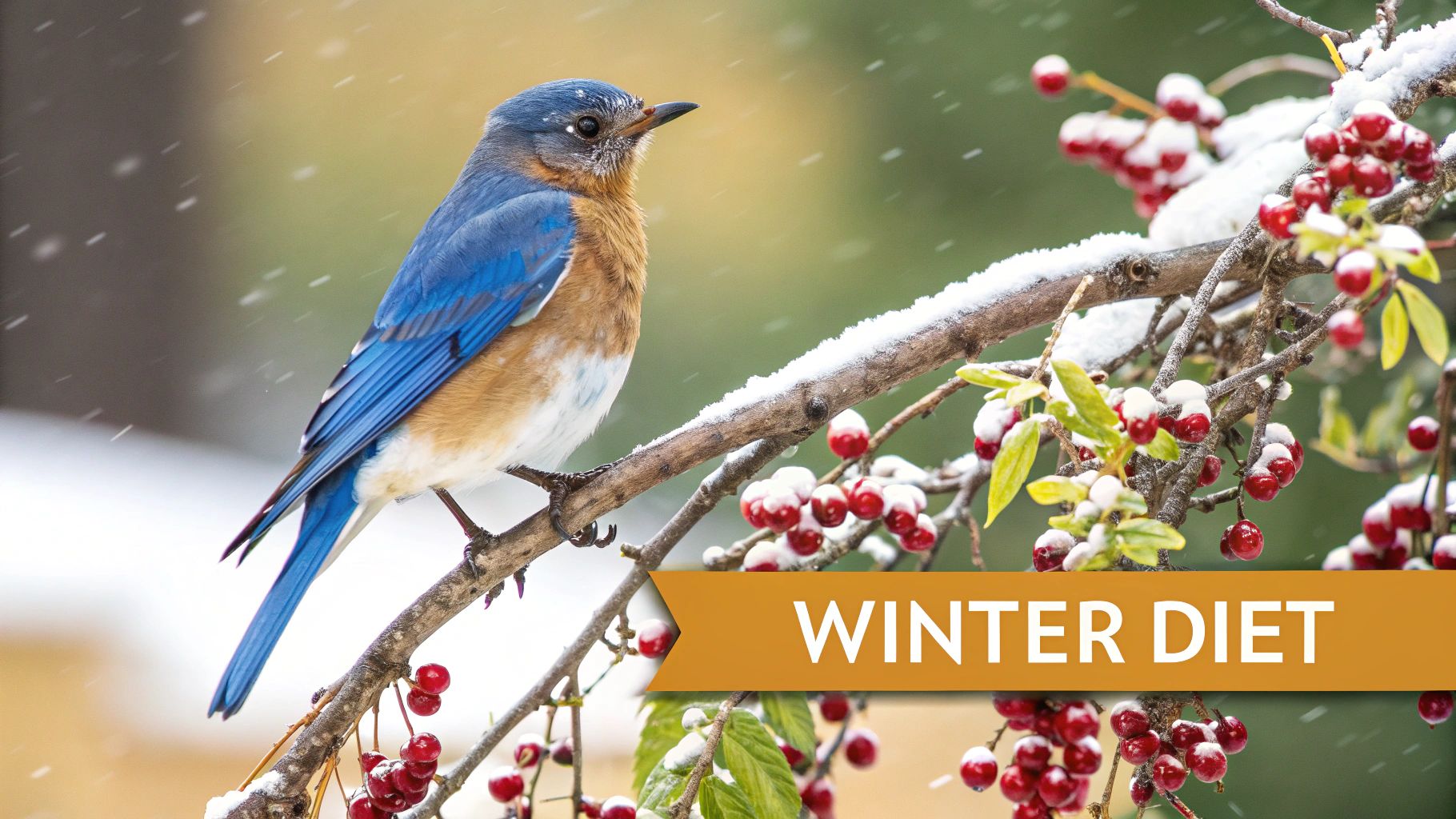
As the temperature drops and insects disappear, bluebirds have to get resourceful. Imagine your favorite restaurant closing for the season—you’d have to find a new spot to eat. For bluebirds, winter berries become that new go-to spot, serving as an essential, high-energy fuel source.
This seasonal adaptation is a brilliant survival tactic. While they are true insect-eaters for most of the year, their ability to become temporary frugivores (fruit-eaters) is what gets them through the lean months.
From Insects To Berries: A Necessary Switch
The change is drastic. While insects and other invertebrates make up about 68% of a bluebird's diet throughout the year, that number takes a nosedive once the cold sets in. During winter, their diet flips to become roughly 32% fruits, berries, and seeds.
This isn't just anecdotal; a major United States Biological Survey of 855 eastern bluebirds confirmed this exact seasonal shift. It’s a fascinating look into their adaptability. You can learn more about bluebird diets and find out what other wild birds eat in our detailed guide.
Bluebirds must find reliable food sources to generate enough body heat to survive. Berries from native plants act as tiny, energy-packed fuel pellets that keep their internal furnaces running.
Key Natural Foods For Winter Survival
So, what are bluebirds actually eating out there in the snow? They zero in on persistent fruits—the ones that stubbornly cling to branches long after the leaves are gone.
Here are some of their most important winter staples:
- Sumac: Those fuzzy, red berry clusters are a top-tier, high-fat food source.
- Eastern Red Cedar: Its small, waxy blue berries provide critical sustenance.
- American Holly: A visual feast of bright red berries that are packed with nutrition.
- Flowering Dogwood: The vibrant red fruits are a favorite, not just for bluebirds but for many birds.
To make it even clearer, here's a quick look at how these different food types help bluebirds pull through the winter.
Bluebird Winter Food Sources at a Glance
This table breaks down the main food categories bluebirds rely on in winter, offering a few examples and explaining why each one is so vital for their survival.
| Food Category | Primary Examples | Why It's Essential for Winter |
|---|---|---|
| High-Fat Berries | Sumac, Mistletoe, Poison Ivy | Provides concentrated energy to generate crucial body heat. |
| Sugar-Rich Fruits | Dogwood, Holly, Eastern Red Cedar | Offers quick, accessible energy for foraging and daily activities. |
| Overwintering Bugs | Dormant Spiders, Insect Eggs, Larvae | A rare but valuable protein boost found in bark crevices. |
From this, it's easy to see that a mix of fatty and sugary fruits, with the occasional insect snack, is the perfect recipe for a bluebird's winter resilience.
Why Bluebirds Switch from Bugs to Berries
Imagine your favorite restaurant suddenly boarded up its windows for the entire winter. You’d have to find a new spot to eat, wouldn't you? That's exactly what bluebirds face when the first hard frost hits. Their dramatic shift from a diet of insects to one of berries isn't a preference—it’s a matter of pure survival.
During spring and summer, bluebirds are master insect hunters, snatching up grasshoppers, crickets, and caterpillars in open meadows. But as the temperature drops, that protein-rich buffet vanishes. Insects either die off or burrow deep into dormancy, hidden away from even the sharpest bluebird eyes. This forces the birds to make a crucial pivot, becoming temporary frugivores, or fruit-eaters.
This change is a brilliant adaptation that allows them to stick around when many other insect-eating birds migrate south. Their entire foraging strategy changes, shifting from scanning the ground for bugs to meticulously searching the branches of trees and shrubs for any fruit that has held on.
The Science of Survival Fuel
Think of a bluebird's winter diet like stocking your own pantry before a blizzard. You wouldn't load up on leafy greens; you'd go for high-energy, long-lasting foods. For bluebirds, winter berries are the ultimate survival fuel, packed with the fats and sugars they desperately need to generate body heat.
Fruits from plants like poison ivy, sumac, and Eastern red cedar provide a massive caloric punch. That energy is absolutely critical for making it through a long, freezing night, which can drain a small bird's reserves in a hurry. Without these natural fuel sources, their ability to keep their internal furnace running drops to dangerous levels.
A bluebird’s winter survival is a constant energy equation. The calories consumed from berries must be greater than the energy expended just staying warm and searching for the next meal.
This dietary flexibility is the secret to their success. Without access to high-energy fruits, survival rates would plummet—in really harsh conditions, a bluebird might need to eat its own body weight in food every single day just to stay warm. Their adaptability has been a key factor in their population recovery across major North American regions like the U.S. Northeast and Midwest, as you can see from insights on the Eastern bluebird's diet.
From Hunter to Gatherer
Switching from bugs to berries also requires a completely different skill set. Instead of actively chasing down moving prey, bluebirds become methodical gatherers. They have to learn to identify which specific plants hold their fruit well into the winter, often returning to the same reliable patches of shrubs day after day.
This behavioral change really highlights their intelligence and resourcefulness. While offering supplemental food can give them a critical boost during extreme weather, their natural ability to find and rely on berries is what ultimately allows us to enjoy the stunning sight of their vibrant blue feathers against a snowy landscape. To help them out, learning about the best bird feeder food is a fantastic place to start.
2. How to Plant a Bluebird Winter Buffet
If you want to see bluebirds flocking to your yard all winter, forget the feeder for a moment. The single best thing you can do is plant a natural, self-sustaining buffet right outside your window. When you landscape with the right native plants, you’re creating a reliable food source that’s always open, offering both a meal and shelter through the harshest months.
It’s really just landscaping with a purpose. Instead of choosing plants purely for their looks, you're designing a small ecosystem that gives back to local wildlife. The best part? Native plants are already perfectly suited to your local climate, which means less work for you and a healthier, more resilient yard.
This simple decision tree shows exactly how a bluebird’s menu changes with the weather.
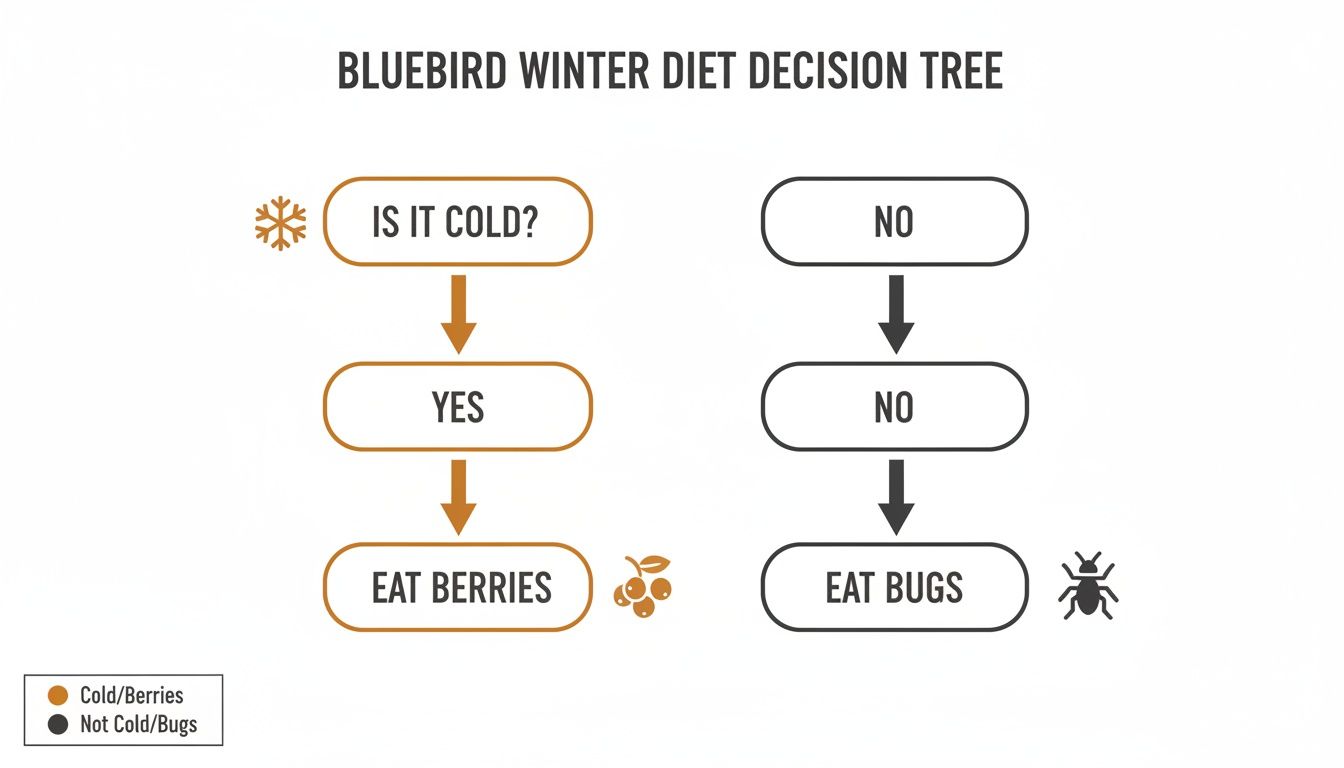
As you can see, berries aren't just a side dish. They're a critical survival food when the cold locks away their usual insect prey.
Top Native Plants to Attract Winter Bluebirds
When you're choosing plants for your bluebird garden, the goal is to find species that produce small, persistent fruits. I'm talking about the kinds of berries that hang on tight to their branches long into winter, providing a lifeline when everything else is gone or buried in snow.
Here are some of the most reliable, bluebird-approved plants that are proven winners for winter sustenance.
| Plant Name | Berry Season | Sun Needs | Additional Benefits |
|---|---|---|---|
| Eastern Red Cedar (Juniperus virginiana) | Fall through Winter | Full Sun | Offers dense evergreen cover from wind and predators. |
| American Holly (Ilex opaca) | Fall through Winter | Full Sun to Part Shade | Classic winter beauty; plant male & female for berries. |
| Flowering Dogwood (Cornus florida) | Fall | Part Shade | Bright red, high-fat berries are a bluebird favorite. |
| Staghorn Sumac (Rhus typhina) | Fall through Winter | Full Sun | Fuzzy red clusters persist when other food is scarce. |
| Winterberry (Ilex verticillata) | Fall through Winter | Full Sun to Part Shade | A deciduous holly with stunning red berries on bare stems. |
These plants are just the beginning, but they form a fantastic foundation for any wildlife-friendly garden. The key is variety and choosing what’s native to your specific area.
In fact, conservation projects focusing on planting species like dogwood, hawthorn, and American holly have helped boost wintering bluebird flocks by 20-30% in some monitored areas since the 1980s. It’s amazing what a few good plants can do. If you're interested in digging deeper, you can explore more about how native planting supports bluebird populations on AvianReport.com.
Don’t Forget the Water
While a berry buffet is the main attraction, there’s one other thing that’s absolutely essential: a reliable water source. It’s easy to forget, but when natural puddles and streams freeze solid, finding a drink can be even harder for birds than finding food.
A heated birdbath is one of the most effective ways to attract a wide variety of birds to your yard in winter, including bluebirds. They need water for drinking to stay hydrated and for preening to keep their feathers in top insulating condition.
Try placing a heated birdbath near some natural cover, like a shrub or small evergreen. This gives the bluebirds a safe place to retreat if they feel threatened, making them far more likely to stop by for a drink. Adding this one simple feature can turn your yard from a simple feeding station into a true winter sanctuary, providing everything these beautiful birds need to thrive until spring.
Your Guide to Supplemental Winter Feeding
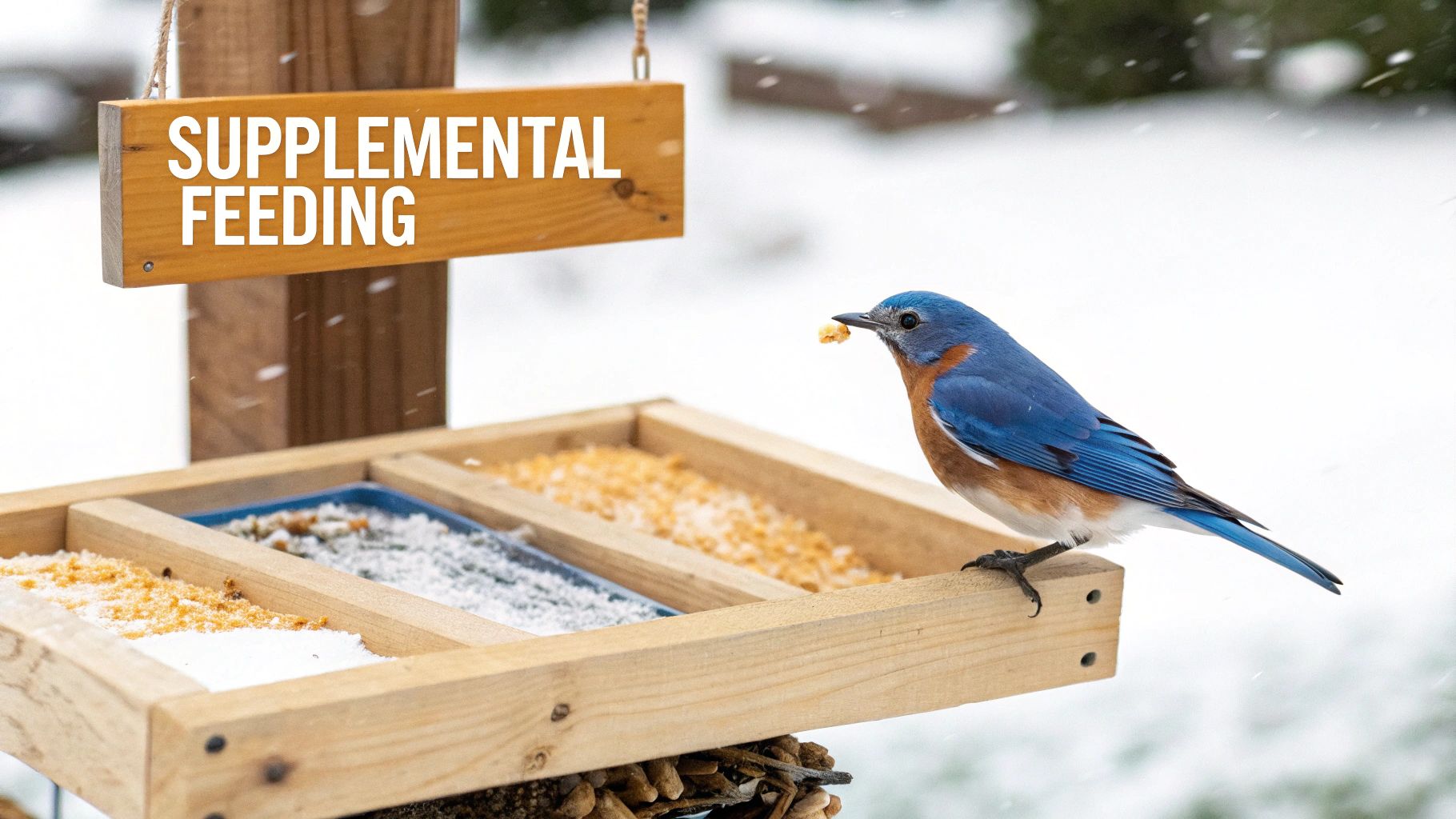
While the best way to help bluebirds is with a well-planted, berry-filled yard, there are times when a little extra help can be a true lifesaver. Think of supplemental feeding as an emergency pantry for birds.
When a sudden ice storm coats every last berry in a thick, impenetrable glaze, a well-stocked feeder provides the critical, high-energy fuel they need to survive the cold. The goal isn't to replace their natural diet, but to step in when nature's cupboards are bare. An easy meal can be the difference between a bluebird making it through a brutal cold snap or succumbing to the elements, especially for those toughing it out in the northern parts of their range.
Choosing the Right Foods for Winter
So, what should you put out? The key is to mimic the high-fat, high-protein foods they’d find naturally. Bluebirds have very specific needs, and your standard bag of birdseed just won't cut it. You want to offer foods that pack the biggest energy punch in the smallest, most digestible package.
Here are the top choices for a bluebird winter menu:
- Mealworms (Live or Dried): This is, without a doubt, the bluebird's favorite treat. Mealworms are an incredible source of the protein and fat they crave, closely mirroring the insects they hunt in warmer months.
- Black Soldier Fly Larvae (BSFL): A fantastic and nutritionally dense alternative. Dried BSFL are loaded with protein and offer way more calcium than mealworms, which is a huge bonus for bone and feather health.
- Suet (with a twist): Plain suet is a good source of fat, but suet cakes embedded with dried berries or insects are even better. This combination of fat and fruit is exactly what they're looking for.
- Chopped Fruits: A small offering of rehydrated raisins, currants, or blueberries can be a welcome treat, providing a quick hit of sugary energy on a frigid day.
A critical mistake is putting out a typical seed mix. Bluebirds aren't seed-eaters; their beaks simply aren't built to crack shells. Foods like millet, cracked corn, and bread offer little nutritional value and can do more harm than good.
Feeder Types and Safe Placement
Putting out the right food is only half the battle—you need the right delivery system. Bluebirds can be a bit timid and are easily chased off by more aggressive birds like starlings and house sparrows. That’s where specialized feeders become essential.
To set up a successful and safe feeding station, keep these things in mind:
- Feeder Style: Your best bet is a platform feeder with a roof to keep the food dry or, even better, a specialized bluebird feeder. These often have side entry holes just big enough for a bluebird but too small for bigger, bossier birds to squeeze through.
- Location, Location, Location: Place the feeder in a relatively open spot, about 10-15 feet away from dense shrubs. This gives bluebirds a clear view to watch for predators like hawks, while still providing a quick escape route to nearby cover if they need it.
- Keep It Clean: Just like our own kitchens, a bird feeder needs regular cleaning to stay healthy. Make sure to clear out old, uneaten food and wash the feeder with a simple solution of one part vinegar to nine parts water to prevent mold and the spread of disease.
By providing the right food in a safe, clean feeder, you create a reliable haven that will help your local bluebirds get through the winter's toughest stretches. For more in-depth tips, check out our guide on how to attract bluebirds to a feeder.
More Than Food: A Bluebird's Winter Survival Guide
Figuring out what do bluebirds eat in winter is just one piece of the puzzle. While high-energy berries and a few supplemental mealworms keep their internal furnaces running, how they behave and where they shelter are just as critical for surviving the cold.
A bluebird's winter life is a constant, delicate balance of energy gained versus energy lost. To tip those scales in their favor, they adopt some fascinating strategies to conserve every single precious calorie. They don't just eat; they work together.
The Power of Huddling Together
When the temperature really drops, bluebirds use a brilliant tactic called communal roosting. Instead of trying to tough out a freezing night alone, small flocks cram into sheltered cavities to huddle together. By sharing body heat, each bird dramatically reduces the energy it needs to burn just to stay warm.
It’s a simple, genius solution. This behavior is crucial because bluebirds have to spend all day eating just to make it through one long, cold night. They often roost in flocks of up to 100 or more birds in woodlands or nesting cavities. Their foraging is closely tied to this, as they typically hunt within 16 to 65 feet from their perches in winter, though sometimes they'll venture up to 130 feet for a meal. You can find more details about their winter foraging habits at AvianReport.com.
A bluebird’s winter shelter is just as important as its next meal. A protected, insulated space to spend the night can be the difference between freezing and surviving until morning.
Providing a Safe Winter Haven
Here’s where you can make a real difference. Many people take down their birdhouses once nesting season is over, but leaving them up provides a ready-made roosting spot for bluebirds and other cavity-nesters. These boxes offer life-saving protection from biting winds, snow, and predators.
If you want to go the extra mile, consider putting up a dedicated roost box. These are designed specifically for winter shelter and have a few key differences:
- A Smart Design: The entrance hole is at the bottom, not the top. Since heat rises, this simple change helps trap warmth inside.
- Internal Perches: They often have staggered dowels or small ledges inside, giving multiple birds a place to perch without getting in each other's way.
- Thicker Walls: More insulation means a more stable temperature inside, even when it’s frigid outside.
Try placing a roost box in a spot that gets morning sun but faces away from the prevailing winds. By offering both high-energy food and a safe, warm place to sleep, you're creating a complete support system. You're giving these beautiful birds everything they need to stick around and grace your yard until spring finally returns.
Busting a Few Myths About Winter Bluebird Feeding
When you start looking into what bluebirds eat in winter, you'll inevitably run into some well-meaning but misguided advice. Let's clear up a few of the most common myths so you can be sure your efforts are actually helping these beautiful birds.
Myth 1: Feeders Make Birds Lazy
One of the most persistent myths is that putting out food will make birds lazy and dependent. This couldn't be further from the truth. Bluebirds are wild, incredibly resourceful foragers who have survived for millennia without our help.
A feeder is just one stop on their daily route. Think of it as a convenient, energy-saving snack bar, not a three-course meal. It becomes most critical during severe weather, like a sudden ice storm that coats all their natural berry sources in a sheet of ice.
Myth 2: Bluebirds Won't Eat Dried Mealworms
You'll often hear people claim that bluebirds will only eat live, wiggling mealworms. While they certainly seem to prefer the live ones (who wouldn't?), they absolutely will eat dried mealworms once they figure out what they are.
The trick is consistency. If you keep offering dried mealworms in the same spot, the birds will learn to recognize it as a reliable, high-protein food source. It just takes a little patience.
Myth 3: Feeding Stops Bluebirds From Migrating
This is a newer myth, and it’s a big one. Some people worry that offering food in northern areas will confuse bluebirds and stop them from flying south. Migration, however, is a powerful instinct triggered by things like the changing length of daylight, not the presence of a feeder.
In reality, bluebird ranges have been shifting northward for years.
Supplemental feeding doesn't halt migration. It supports the birds that are already choosing to overwinter in your area, often because of milder winters and more available habitat. Your feeder isn't an anchor; it's a lifeline.
Recent data from the Christmas Bird Count shows a surprising increase in bluebirds in northern states like Maine. This is partly because suburban landscapes, with all their berry-producing shrubs, are providing more winter food. This trend makes your backyard support more valuable than ever. You can read more about their expanding winter presence in these findings shared by the National Audubon Society.
Your Winter Bluebird Questions, Answered
When you start feeding bluebirds in the winter, a few questions always pop up. Let's tackle some of the most common ones I hear from fellow birders, so you can feel confident you're giving your local bluebirds the best possible care.
Can Bluebirds Eat Regular Birdseed?
That's a definite no. Bluebirds just aren't built for it. Their beaks are soft and slender, perfect for plucking a berry or snatching an insect, but they can't crack open tough shells like a cardinal or a finch can.
While you might see one occasionally peck at a stray sunflower chip, they get very little nutrition from it. For them, winter survival is all about high-energy foods like fruits, suet, and especially insects—think mealworms or black soldier fly larvae (BSFL). Your best bet is to stick with feeders offering these specific foods.
How Do I Keep Mealworms From Freezing?
Ah, the classic winter challenge! Nobody wants to serve up a tray of "wormsicles." When the temperature really drops, the trick is to change how you offer them. Instead of filling the feeder once in the morning, try putting out just a small handful at a time, a few times a day.
Positioning the feeder in a spot that gets direct morning sun can also make a huge difference. A little bit of solar warmth goes a long way.
A couple of other things you can try:
- Serve Them Fresh: Keep your live mealworms indoors where it's warm and only put out what the birds will eat quickly.
- Go Heated: If you live in a particularly cold climate, investing in a heated feeder dish can be a game-changer.
Will Feeding Bluebirds Stop Them From Migrating?
This is probably the biggest myth in the bird-feeding world. Let me put your mind at ease: you will not stop a bird from migrating.
Migration is an ancient, powerful instinct triggered by things far beyond our control, like the changing length of daylight and massive weather fronts. A reliable feeder doesn't anchor them; it simply offers a lifeline to the birds that have already decided to stick around for the winter. Think of your feeder as a crucial support station, not a trap.
Is Offering Water in Winter a Good Idea?
It's not just a good idea—it's one of the most helpful things you can do. Finding liquid water can be even harder for a bird than finding food when every puddle and pond is frozen solid.
Birds need to drink to stay hydrated, of course, but they also need to bathe to keep their feathers in top condition. Clean, perfectly aligned feathers are essential for trapping air and providing life-saving insulation against the cold. A heated birdbath is an absolute magnet for bluebirds and all other winter wildlife.
For a nutritious, high-calcium treat that supports feather health and provides essential energy, consider Pure Grubs. Our USA-grown Black Soldier Fly Larvae are a safe, clean, and bird-approved alternative to mealworms. Shop Pure Grubs today.