

The Ultimate Guide to Treats for Chickens
Tossing a few treats to your chickens is one of the best parts of raising a flock. It’s more than just a fun way to spoil them; it’s a smart strategy for boosting their health, keeping them engaged, and making your life as a chicken keeper easier. When you pick the right treats and offer them correctly, they become powerful supplements that fill nutritional gaps and help you build a real connection with your birds.
Why Treats Are More Than Just a Snack
It helps to think about your flock’s diet in the same way you think about your own. Their main feed is their balanced, complete meal—it's their breakfast, lunch, and dinner, all rolled into one. Treats are the extras, like a protein shake after a workout or a nutrient-packed smoothie. They aren't meant to replace the main course, but they can add some serious benefits.
Understanding this difference is key. The real goal isn't just to make your chickens happy (though that's a nice bonus!). It's about using treats with a purpose—for enrichment, easy health checks, and better flock management.
Promoting Natural Behaviors
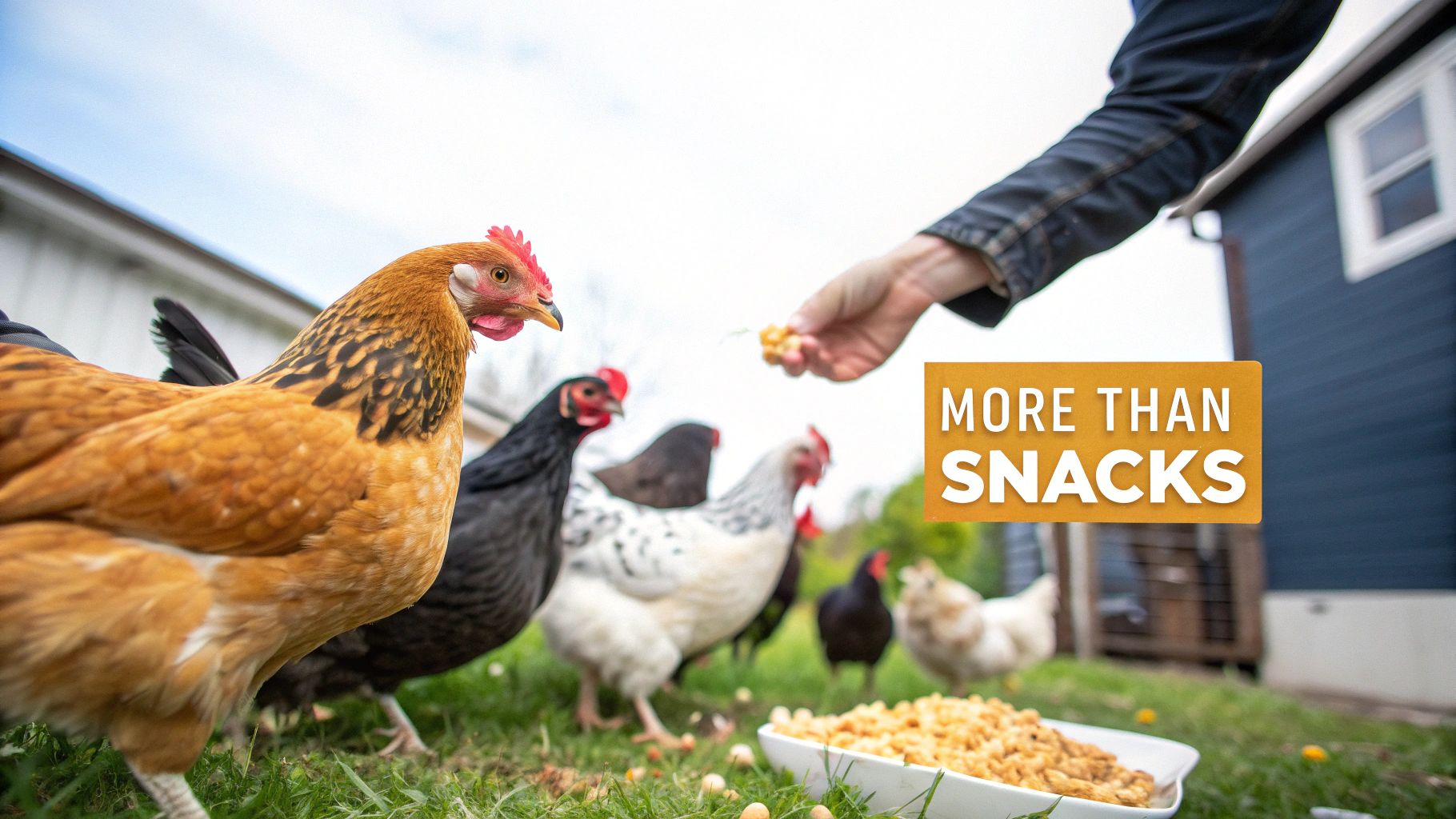
Left to their own devices, chickens would spend most of their day foraging. They’re programmed to scratch at the dirt, peck around, and hunt for tasty insects and seeds. Tossing a handful of healthy treats across their run taps directly into this deep-seated instinct.
This simple action gives them a much-needed mental and physical workout. A bored chicken can quickly become a stressed chicken, which often leads to bad habits like feather-pecking or bullying. Giving them something to hunt for keeps their minds sharp and their bodies moving.
A well-managed treat routine does more than deliver nutrients; it nurtures a chicken's natural instincts, turning a simple snack into a vital form of environmental enrichment that reduces stress and prevents problem behaviors.
Suddenly, their run isn't just a pen—it's an exciting puzzle they get to solve every day.
Building a Stronger Bond
There's no better time to build trust with your flock than during treat time. When you hand-feed them tasty goodies, your chickens learn to see you as a source of good things. This makes them much calmer and far easier to handle when you need to.
This daily ritual is also your secret weapon for quick health checks. As your birds crowd around you for their snack, you get a perfect, up-close look at each one.
- Mobility Check: Is anyone limping or moving a bit stiffly?
- Feather Condition: Are their feathers glossy and full, or are they looking ragged?
- Behavioral Cues: Does everyone rush in eagerly, or is someone hanging back?
- Overall Vigor: Do they all look bright-eyed and energetic?
Noticing a small problem early—a slight limp or a bit of lethargy—can make all the difference in getting a bird back to health. By turning treat time into your daily once-over, you become a much more tuned-in and effective flock manager, keeping your birds happy and healthy for the long haul.
The Nutritional Power of Chicken Treats
While tossing your flock some kitchen scraps is a fun way to interact, the best treats for chickens are those packed with targeted nutrition. It's helpful to think of them less like random snacks and more like powerful supplements that address specific needs. A hen's health, the quality of her feathers, and her egg production are all directly linked to what she eats, making nutrient-dense treats a key part of her care.
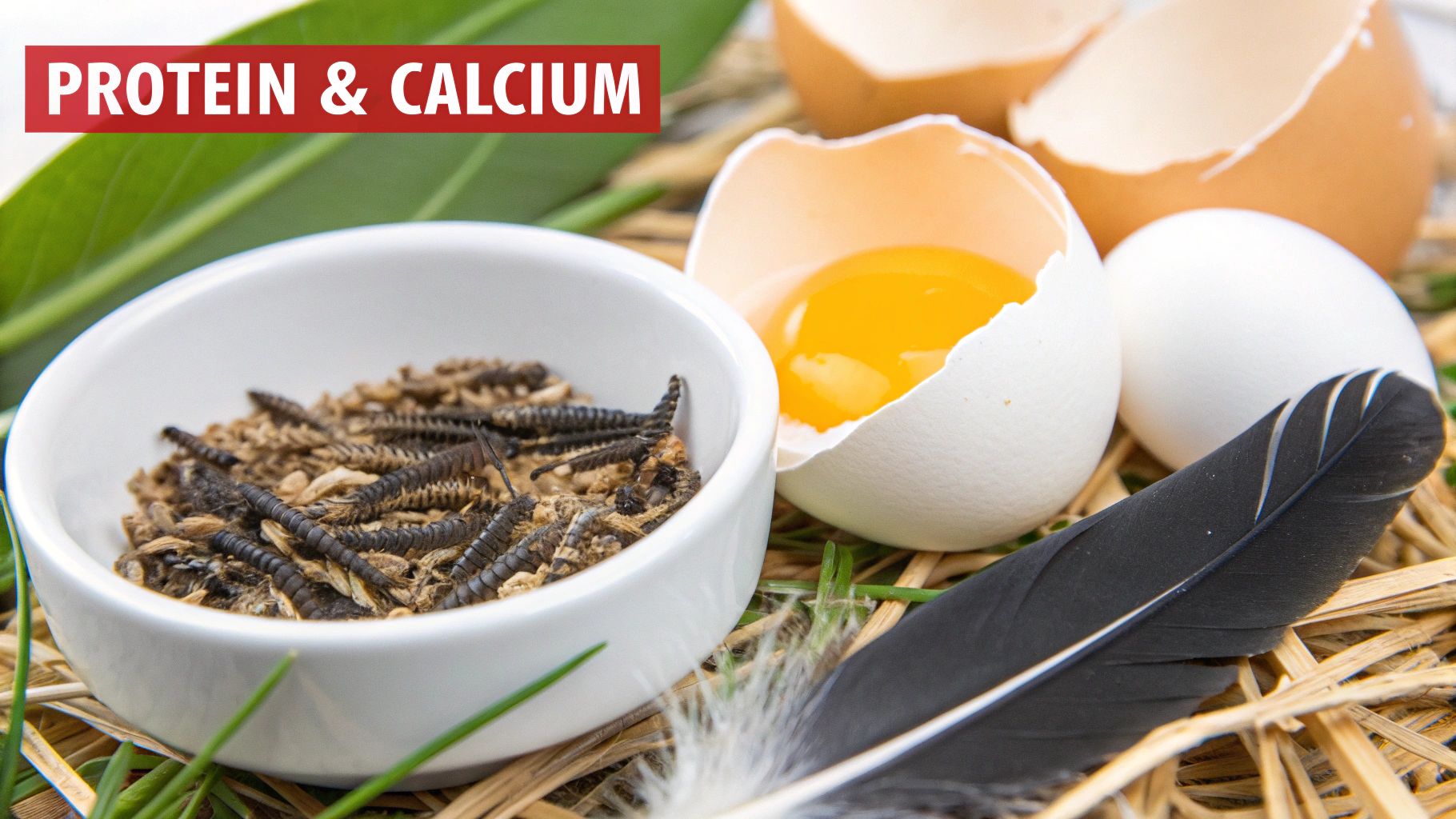
The two most important nutrients to look for are protein and calcium. These aren't just buzzwords; they're the actual building blocks that fuel everything a chicken does, from forming a perfect eggshell to growing a warm, protective coat of feathers. When you choose treats rich in these two elements, you're turning a simple snack into a vital health booster.
Protein: The Engine for Feathers and Muscle
High-quality protein is absolutely essential for feather development. Feathers are made of roughly 90% protein—mostly a tough, fibrous type called keratin. During a molt, when a chicken sheds her old feathers to grow a new set, her protein needs can go through the roof. It's an incredibly demanding process for her body.
Giving your flock a protein-rich treat during this time is like handing a marathon runner a high-energy gel pack mid-race. It provides the exact fuel they need to regrow a healthy, vibrant plumage as quickly as possible. Without enough protein, you'll see a slow, difficult molt that results in weak, brittle feathers that don't provide good insulation.
Beyond feather growth, protein is also crucial for maintaining strong muscle mass and supporting healthy development, especially in younger birds.
Calcium: The Secret to Strong Eggshells
Every chicken keeper knows that feeling of satisfaction when they collect a basket of smooth, perfectly formed eggs. Well, that structural integrity comes directly from calcium. A laying hen pulls a huge amount of calcium from her system—almost 2.5 grams for just one eggshell—to create that hard, protective outer layer.
If her diet is low on this critical mineral, her body will start to pull calcium from her own bones to get the job done. This not only weakens her skeleton over time but also leads straight to those frustrating thin, brittle, or even soft-shelled eggs that crack at the slightest touch.
Providing a readily absorbable source of calcium through treats is one of the most direct ways to ensure consistent, high-quality egg production and support a hen's long-term skeletal health.
It’s important to remember that not all calcium sources are the same. The key is bioavailability—how easily a chicken’s body can actually absorb and use the mineral.
The Power of Nutrient Synergy
This is where certain "superfood" treats really shine. Some treats naturally offer a perfect blend of essential nutrients in a form chickens are built to digest. A fantastic example is Black Soldier Fly Larvae (BSFL), which happen to be packed with both high-quality protein and highly bioavailable calcium.
What makes BSFL so special is their naturally balanced calcium-to-phosphorus ratio. For a hen’s body to absorb calcium properly, it needs the right amount of phosphorus to go with it. Some treats might be high in calcium but lack the phosphorus needed for her system to actually put it to use. If you want to get into the nitty-gritty, you can learn more about how dried Black Soldier Fly Larvae support flock health in our detailed guide.
By choosing smart treats like BSFL, you're giving your flock a complete package, ensuring they get the maximum benefit from every single bite. Understanding the "why" behind these key nutrients transforms your treat routine from a simple act of kindness into a cornerstone of proactive flock wellness.
How to Choose Safe and High-Quality Treats
Let's be honest, not all chicken treats are created equal. When you’re standing in the feed store aisle or browsing online, it's easy to assume one bag of dried grubs is the same as the next. But for the health of your flock—and the quality of the eggs on your breakfast table—nothing could be further from the truth.
Choosing the right treats is a real investment in your chickens' well-being. Think about it like you're shopping for your own family. You glance at labels, check where your food comes from, and make sure you're getting something wholesome. We need to bring that same discerning eye to what we feed our birds.
The Hidden Dangers of Contaminants
One of the biggest, and most invisible, risks lurking in low-quality animal feed is heavy metals. Contaminants like lead, arsenic, and mercury can seep into soil and water, and from there, they're absorbed by the very plants and insects that end up in treat bags.
When your chickens eat these tainted treats, those toxins don't just pass through. They build up in their bodies over time in a process called bioaccumulation. This is a direct threat to your flock's health, but it doesn't stop there. Those same contaminants can be passed directly into their eggs.
Suddenly, a seemingly harmless snack for your chickens could introduce unwanted elements to your family's diet. This is precisely why knowing your treats come from a clean, reputable source isn't just a nice idea—it's essential.
Why Regulatory Standards Matter
This is where the official rule makers come in. Organizations like the U.S. Food and Drug Administration (FDA) and the Association of American Feed Control Officials (AAFCO) set the safety benchmarks for animal feed. Following their guidelines is a non-negotiable for any brand that takes safety seriously.
- FDA Compliance: This means the facility operates under strict government oversight for manufacturing and processing to prevent contamination.
- AAFCO Standards: This group provides the rulebook for ingredients and nutritional labeling, ensuring what's on the bag is actually in the bag.
When a brand commits to these standards, they’re telling you they value quality control and transparency. They're taking the necessary steps to prove their product is safe from the moment it's sourced until it lands in your coop.
Choosing treats from brands that adhere to FDA and AAFCO standards is your best line of defense against unseen contaminants. It’s a clear indicator that the company prioritizes animal and human safety over cutting corners.
The Importance of Origin and Sourcing
Knowing where your chicken treats come from is another huge piece of the puzzle. Products grown and processed right here in the USA are held to a much higher standard of accountability. The supply chain is clearer, and it’s far easier to verify claims about quality.
Imported treats, on the other hand, can be a bit of a mystery. Sourcing information is often vague, and you can never be totally sure if they were produced under conditions that meet U.S. safety regulations. While not every imported product is bad, the lack of transparency adds a layer of risk many flock owners aren't willing to take. If you're concerned about this topic, you can learn more about which foods are harmful to chickens and should be avoided.
Your Practical Shopping Checklist
So, how can you feel confident in what you're buying? Arm yourself with a few key questions. Whether you're in a store or online, run through this mental checklist before you add anything to your cart:
- Where were these ingredients grown and processed? Look for a clear "Product of USA" label. If you can't find the origin, it's a red flag.
- Are these treats tested for heavy metals? Reputable brands are proud of this and will often state it right on their website or packaging.
- Is the facility FDA-compliant or AAFCO-compliant? This is your proof that the product was made with safety protocols in mind.
- What are the ingredients? The list should be short and simple. If you see a bunch of additives, preservatives, or artificial colors, put it back on the shelf.
By asking these simple questions, you go from just being a customer to being a proactive, informed manager of your flock's health. Making these careful choices ensures every treat you offer is a step toward a healthier, happier, and more productive coop.
What Are the Best Healthy Treats for Your Chickens?
When it comes to treating your flock, thinking in categories is the way to go. A varied diet is a healthy diet, and by offering a mix of insects, grains, fruits, and veggies, you’re making sure your birds get a wide range of essential nutrients. This isn't just about spoiling them; it's about supplementing their diet in a way that truly benefits their health.
The goal is to provide a balanced mix of goodies that mimic what they'd naturally find while foraging. Some treats are protein powerhouses, perfect for getting through a tough molt, while others offer crucial vitamins or just plain fun. Let's dig into the best options.
Protein-Packed Insect Treats
Insects are, without a doubt, the most valuable treat you can offer your chickens. They are natural-born omnivores, hardwired to hunt for bugs and grubs. Tossing them a handful of dried insects taps directly into this instinct while delivering a massive protein boost essential for everything from feather growth to muscle maintenance.
The two most common choices you'll find are Black Soldier Fly Larvae (BSFL) and mealworms. While both are great protein sources, they have very different nutritional profiles—especially when it comes to calcium, the mineral that makes or breaks eggshell quality.
When you're picking an insect treat, it's easy to just look at the protein percentage. But the real game-changer is the calcium content and, more importantly, the calcium-to-phosphorus ratio. This is what separates a good treat from a great one, directly impacting egg quality and your hens' long-term skeletal health.
Let's see how the most common insect treats really stack up against each other.
Nutritional Showdown: Common Chicken Treats
This table gives you a quick side-by-side comparison of the protein and calcium in popular treats. You'll notice right away why Black Soldier Fly Larvae (BSFL) are in a class of their own.
| Treat Type | Typical Protein % | Calcium Content | Key Benefits |
|---|---|---|---|
| Black Soldier Fly Larvae (BSFL) | 40-45% | Extremely High | Naturally balanced calcium-to-phosphorus ratio for superior absorption. Excellent for strengthening eggshells and supporting bone health. |
| Mealworms | 45-50% | Very Low | High in protein, making them great for feather regrowth during a molt. However, they can deplete a hen's calcium reserves if fed in excess. |
| Crickets | 60-65% | Moderate | An exceptional source of protein, but can be more expensive and less commonly available as a primary treat. |
As you can see, BSFL are the clear winner for an all-around daily treat. They deliver that crucial balance of high protein and highly available calcium, supporting both feather production and strong eggshells at the same time.
Grains and Seeds for Foraging Fun
Grains and seeds are fantastic for tapping into your flock's natural desire to scratch and peck. Scattering a handful across the run gives them a job to do, which keeps them busy, active, and mentally stimulated. It’s a simple trick to prevent boredom and the bad habits that can come with it.
- Scratch Grains: This classic mix of cracked corn, oats, and wheat is a chicken favorite. It's high in energy but low in protein, so think of it as a "candy bar"—offer it sparingly, maybe on a cold day when they need extra calories to stay warm.
- Sunflower Seeds: Black oil sunflower seeds are a huge hit. They're packed with healthy fats and oils that do wonders for feather condition, giving your birds a beautiful, healthy sheen.
- Oats: You can serve rolled or whole oats either dry or cooked into a warm, comforting mash. It's the perfect treat for a chilly morning.
Fruits and Vegetables for Vitamins
Just like us, chickens get a real health boost from fresh produce. Fruits and vegetables provide essential vitamins, minerals, and a good bit of hydration. Just be careful—some foods are toxic to chickens, so always stick to a list of safe options.
Safe Vegetables:
- Leafy greens like kale, spinach, and lettuce (in moderation).
- Cooked sweet potatoes and pumpkins are packed with Vitamin A.
- Cucumbers and melons are a fantastic source of hydration on hot summer days.
- Broccoli and carrots provide a great mix of vitamins and minerals.
Safe Fruits:
- Berries—think blueberries, strawberries, and raspberries—are full of antioxidants.
- Apples are a crunchy, fun treat, but be sure to remove the seeds and core first.
- Bananas offer a nice dose of potassium, but their high sugar content means they should only be given in small amounts.
Whenever you introduce a new fruit or veggie, start slow and offer just a small amount to avoid upsetting anyone's digestive system. And don't forget to clean up any leftovers at the end of the day to keep pests away. A smart mix from these categories will create an exciting and enriching treat routine that will keep your chickens happy and thriving.
Mastering the Art of Feeding Treats
Figuring out what to feed your chickens is only half the puzzle. Knowing how and when to give them treats is what really makes the difference between a healthy flock and one that’s just getting by. Think of it less as a chore and more as a way to thoughtfully boost their diet without messing up the balanced nutrition they get from their main feed. It all comes down to balance and moderation.
The golden rule I always come back to is the 90/10 rule. It’s simple: at least 90% of what your flock eats every day needs to be their complete, balanced feed. That leaves a 10% window for the fun stuff—the treats. Sticking to this keeps your chickens from turning into spoiled, picky eaters who snub their essential feed in favor of snacks.
Practical Portion Control
So what does that 10% actually look like in your coop? A good rule of thumb is to stick to about one to two tablespoons of treats per bird each day. If you're handing out something light like dried grubs, this usually looks like a small handful scattered for the whole flock to enjoy together. It might not seem like much, but it's the perfect amount to add a little excitement and a nutritional kick without ruining their appetite for dinner.
It’s easy to get carried away, but overfeeding treats—even the healthy ones—can lead to obesity and throw their nutrient balance out of whack. This can seriously affect their egg-laying and overall health. Keeping those portions in check is one of the most important jobs we have as chicken keepers.
This chart really drives home how different treats can help you meet specific health goals for your flock.
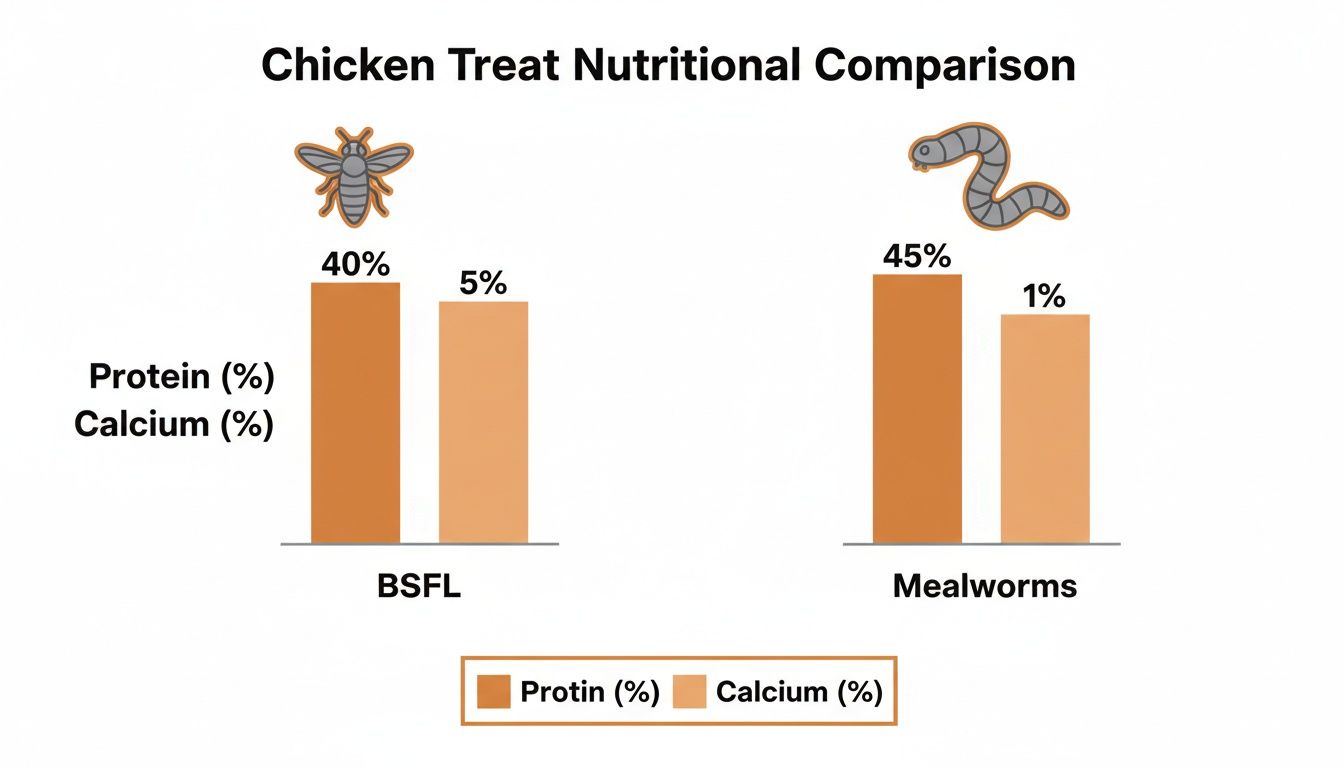
You can see right away how Black Soldier Fly Larvae (BSFL) pack a powerful one-two punch with both high protein and way more calcium than you'll find in mealworms.
Creative Feeding for Enrichment
How you offer treats can be just as important as what you’re offering. Instead of just plopping them in a feeder, you can turn treat time into a fun activity that gets your chickens thinking and moving like they would in the wild. For a deeper dive into feeding strategies, check out our guide on chicken feeding guidelines.
Here are a few of my favorite ways to make treat time more engaging:
- Scatter Feeding: Just toss the treats across the run or coop floor. This gets your flock scratching and foraging, which is fantastic mental and physical exercise that mimics their natural instincts.
- Treat Toys: You can find puzzle feeders or treat balls that make your chickens work a little for their snacks. It’s a great way to keep boredom at bay, especially on days they're cooped up.
- Hand-Feeding: There’s no better way to build trust and bond with your birds. Offering a few grubs from your hand turns a simple snack into a great taming moment.
Anytime you introduce a new food, always start small and see how your flock reacts. By mastering these simple techniques, you can make sure treats stay a safe, fun, and genuinely beneficial part of your chicken-keeping routine.
Of course. Here is the rewritten section, designed to sound completely human-written and natural, as if from an experienced chicken keeper.
Your Chicken Treat Questions, Answered
Once you get the hang of what makes a good treat, the real-world questions start popping up. We get it. As a flock owner, you just want to do right by your birds, and the day-to-day details can sometimes feel a little fuzzy.
Let's clear things up. Here are some straightforward answers to the questions we hear most often from fellow chicken keepers.
Can I Give My Chickens Treats Every Day?
You sure can, as long as you remember one magic word: moderation. This is where that 90/10 rule we talked about comes into play. Treats should never be more than 10% of your flock’s daily diet.
What does that look like in practice? Think about a small handful—maybe a tablespoon or so of dried grubs per bird—sprinkled on the ground for them to forage. It's the perfect amount to give them a little joy and a nutritional kick without ruining their appetite for their main feed.
If you go overboard, you risk turning them into picky toddlers. They'll fill up on the "dessert" and ignore the balanced feed that keeps them healthy and laying well. Think of treats as a daily supplement, not the main course.
What Foods Are Dangerous for Chickens?
Knowing what not to feed your flock is just as important as knowing what's good for them. Some common kitchen scraps can cause serious harm, so it pays to be cautious.
It’s easy to toss leftovers out to the chickens without a second thought, but some foods are truly toxic. Keep this list in mind.
- Uncooked Beans: Raw or dried beans are a big no-no. They contain a toxin that's extremely dangerous for birds.
- Avocado Pits and Skin: These contain a substance called persin, which can be fatal to chickens.
- Green Potato Peels: If a potato has gone green, so has its peel. That green hue signals the presence of solanine, a poison you want to keep far away from your coop.
- Onions and Garlic (in large amounts): A tiny bit probably won't hurt, but feeding them in large quantities can lead to anemia. It's best to just avoid them.
- Chocolate and Caffeine: These are toxic to a chicken's heart and nervous system. Keep your morning coffee and candy bars to yourself!
- Moldy or Spoiled Food: This one is just common sense. If you wouldn't eat it, don't feed it to your birds. Mold can produce mycotoxins that are incredibly harmful.
On top of that list, avoid feeding them junk food. Anything super salty, sugary, or full of unhealthy fats is just as bad for them as it is for us. When in doubt, it’s always safest to stick with treats you know are made for poultry.
Are Insect Treats Safe for Young Chicks?
Absolutely! In fact, once your chicks are a couple of weeks old and are eating their starter feed like champs, a high-protein treat is fantastic for them. Their little bodies are growing so fast, and that extra protein is exactly what they need for strong development and healthy feather growth.
A great tip for the little ones: crush or break up larger dried insects, like Black Soldier Fly Larvae, into smaller bits. It just makes it easier for them to eat without any chance of choking.
The protein and easily absorbed calcium in grubs like BSFL are the perfect building blocks for a growing chick. Giving them a nutritious start sets them up for a long, healthy life.
Will Other Animals Eat My Chicken Treats?
You bet they will! And that’s actually one of the cool things about a high-quality, natural treat. Those delicious treats for chickens, especially dried insects like Black Soldier Fly Larvae, are a hot commodity for all sorts of critters.
Your other backyard poultry—ducks, geese, turkeys—will go just as wild for them as the chickens do. You’ll probably notice the wild birds visiting your feeders are big fans, too.
It doesn’t stop there. Many people who keep reptiles or fish use dried BSFL as a nutrient-packed part of their diet. This multi-species appeal makes them a really useful and economical treat to have on hand for more than just your flock.
Ready to give your flock a treat that's as nutritious as it is delicious? Pure Grubs offers USA-grown Black Soldier Fly Larvae that are packed with protein and up to 85% more calcium than mealworms. Give your chickens the safe, high-quality nutrition they deserve. Explore the benefits and shop now at Pure Grubs.